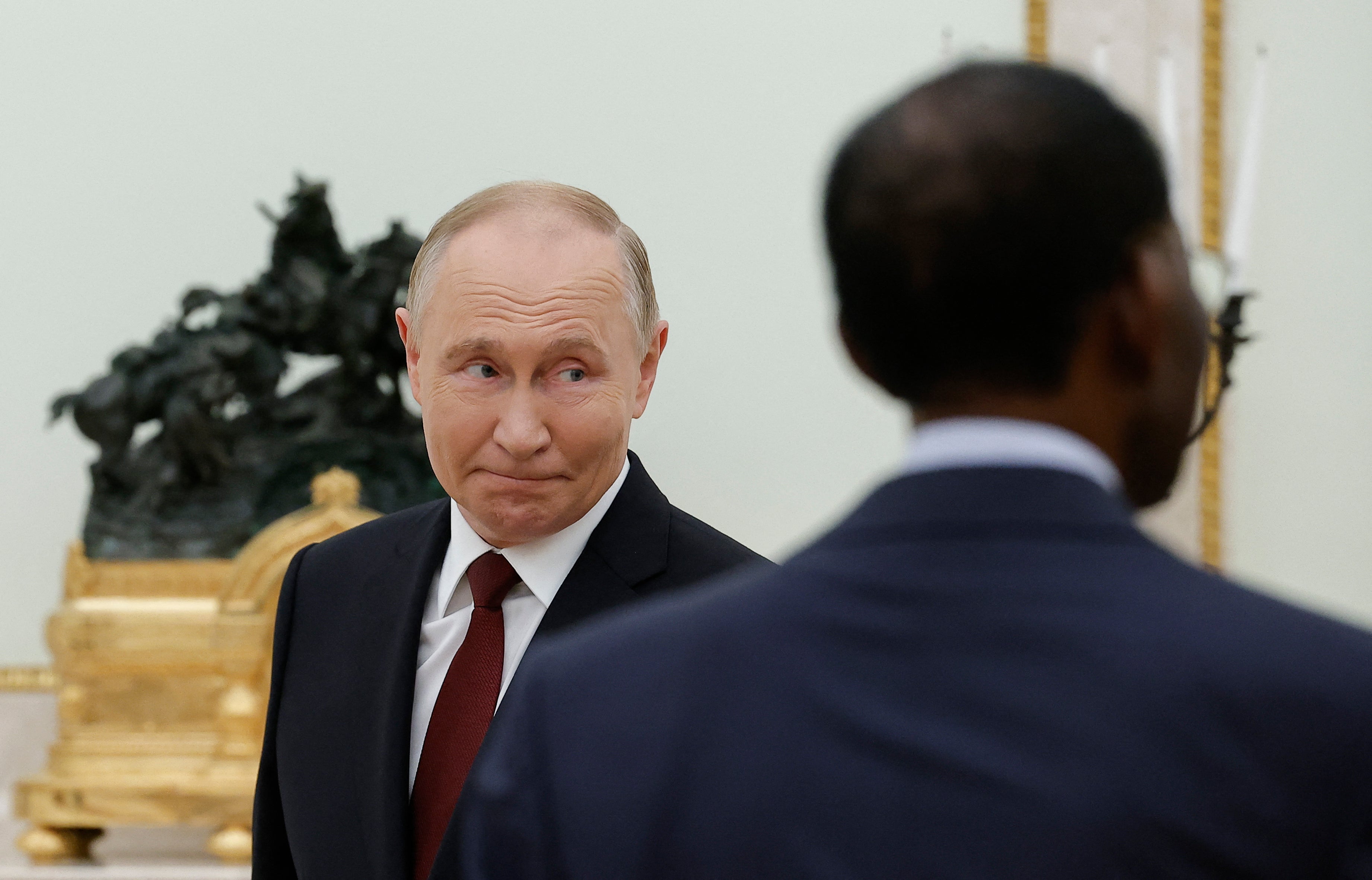
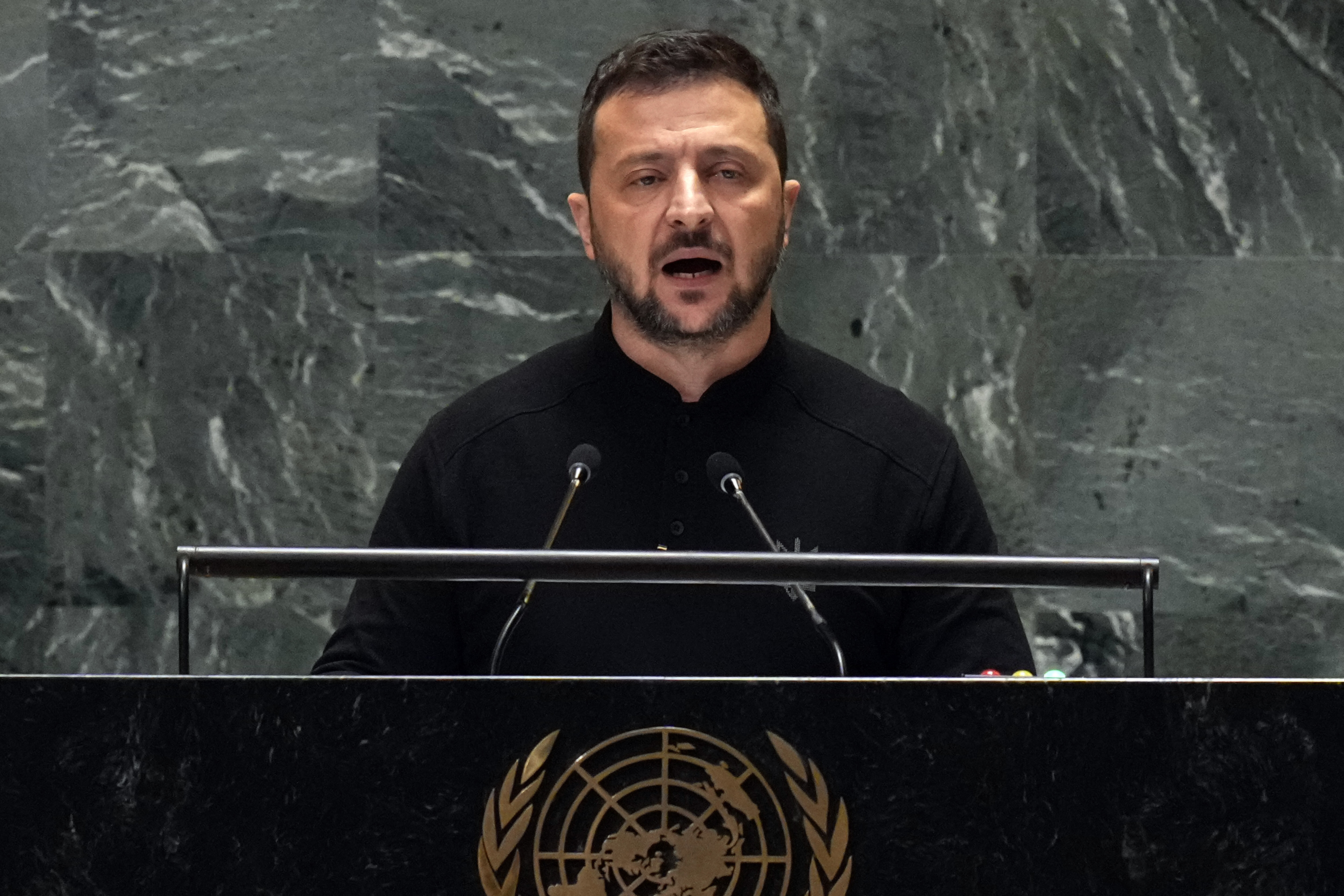
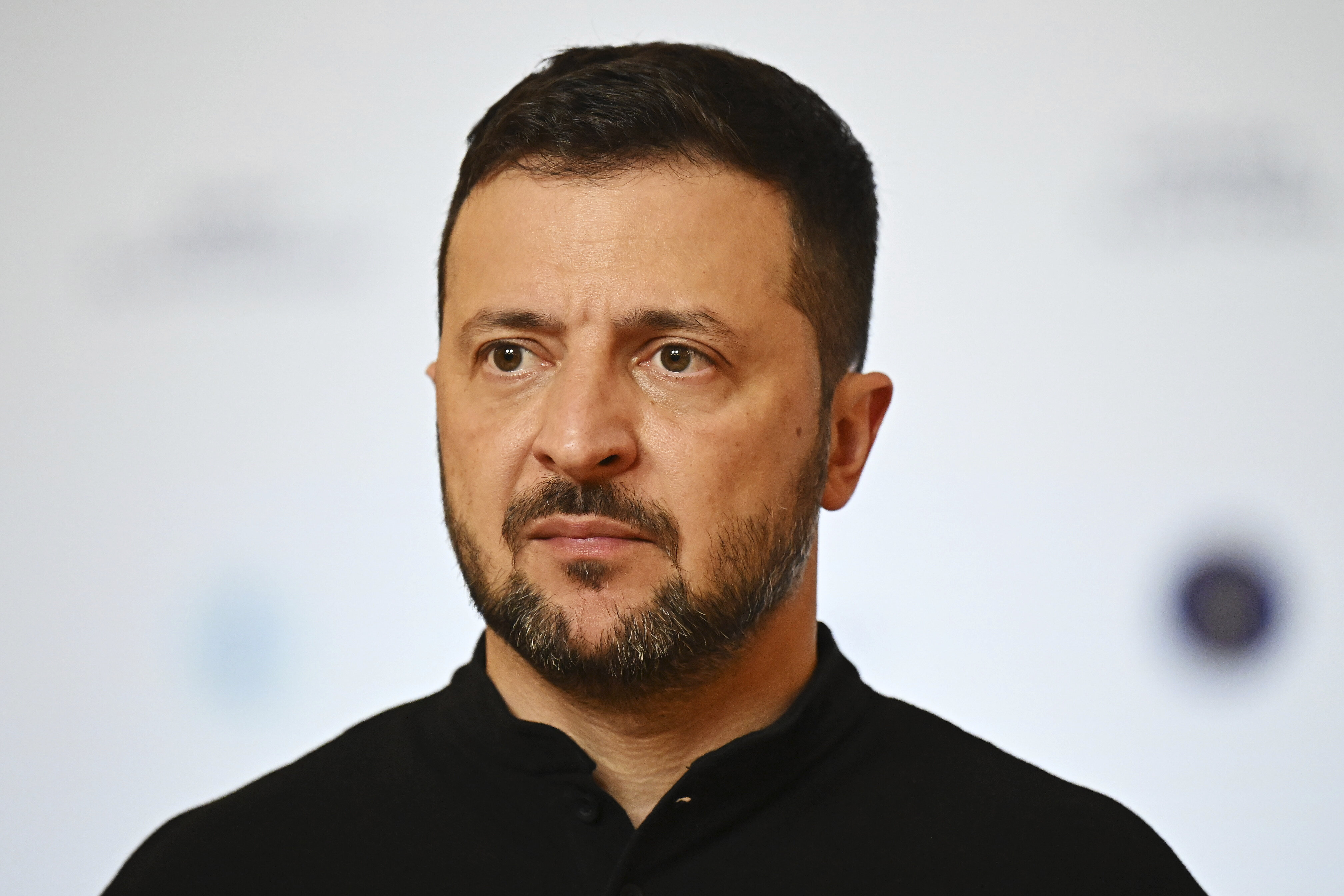
German chancellor Olaf Scholz has defended his recent phone call to Vladimir Putin, but admitted what the Russian president had to say was not “good news”.
The two leaders spoke for an hour for the first time in almost two years on Friday, where Scholz tried to encourage the Russian president to end the war in Ukraine.
Advertisement
Speaking to reporters on Sunday, Scholz said: “It was important to tell [Putin] that he cannot count on support from Germany, Europe and many others in the world waning.
“The conversation was very detailed but continued to a recognition that little has changed in the Russian president’s views – and that is not good news.”
His defence came after Ukrainian president Volodymyr Zelenskyy slammed their conversation.
He said it had opened a “Pandora’s box”, adding: “Now there may be other conversations, other calls. Just a lot of words,
“And this is exactly what Putin has long wanted: It is extremely important for him to weaken his isolation.”
Advertisement
According to the Russian state news agency TASS, Scholz also said: “I don’t think that it will be a good idea to organise talks between the American and Russian president soon while the head of government of one of European’s leading countries doesn’t engage in talks.
“Some people in Germany think it right but I am not among them.”
The chancellor has to contend with pressure from both the left and right within Germany right now, all of whom are pushing for more diplomatic talks to end the European war ahead of snap elections in three months’ time.
However, Scholz claimed to reporters that he had requested to speak to Putin “many times” in the past.
The Kremlin’s spokesperson Dmitry Peskov offered far less information on their exchange than Scholz.
He only told reporters: “As far as I know it was quite a businesslike conversation, detailed and quite frank, as the sides laid out their positions mutually.”
The leaders’ conversation comes as the war approaches its three-year mark.
Less than 48 hours after the leaders’ conversation, Russia launched a huge missile attack on Ukraine and its energy infrastructure, with missiles reaching to the country’s most western points.
Advertisement
Moscow also alleged Putin had told the German chancellor that any agreement to end the war needed to reflect “new territorial realities” and acknowledge Russia’s security demands such as making sure Ukraine does not join Nato.
In a statement after the call, the German government said: “The federal chancellor urged Russia’s willingness to negotiate with Ukraine with the aim of achieving a just and lasting peace and emphasised Germany’s unwavering determination to keep Ukraine in the peace process.”
The call, the first between the two since December 2022, reportedly lasted around an hour.
The leaders supposedly agreed communication would continue between their aides.
He added that there will be “no new Minsk Agreement”, referring to the ceasefire deals between Ukraine and Russia struck in 2014 and 2015.
Scholz and Putin’s conversation came shortly after Donald Trump won a second term in the White House.
The Republican has repeatedly said he would end the war in Ukraine within 24 hours of being inaugurated in January, but has not specified how he intends to do so.
Advertisement
It has sparked fears that Trump would push Kyiv to cede occupied land to Russia.
In his September debate with Vice President Kamala Harris, Republican presidential nominee Donald Trump was asked if he wanted Ukraine to be victorious in its efforts to fight off Russia’s brutal invasion.
“I want the war to stop,” Trump, now president-elect, replied. “That is a war that is dying to be settled. I will get it settled before I even become president.”
Advertisement
Now, after Trump’s win Tuesday, Ukraine and its allies in the US are preparing for the worst — a complete end to US military aid, forcing the embattled European country to choose between capitulation and limping along — and hoping Trump’s affinity for Russian President Vladimir Putin won’t win out.
What hopes they have appear to rest on the idea that Trump considers himself the consummate dealmaker — and if he wants to have any leverage in trying to broker a peace, he needs to help Ukraine keep the pressure on Russia on the battlefield.
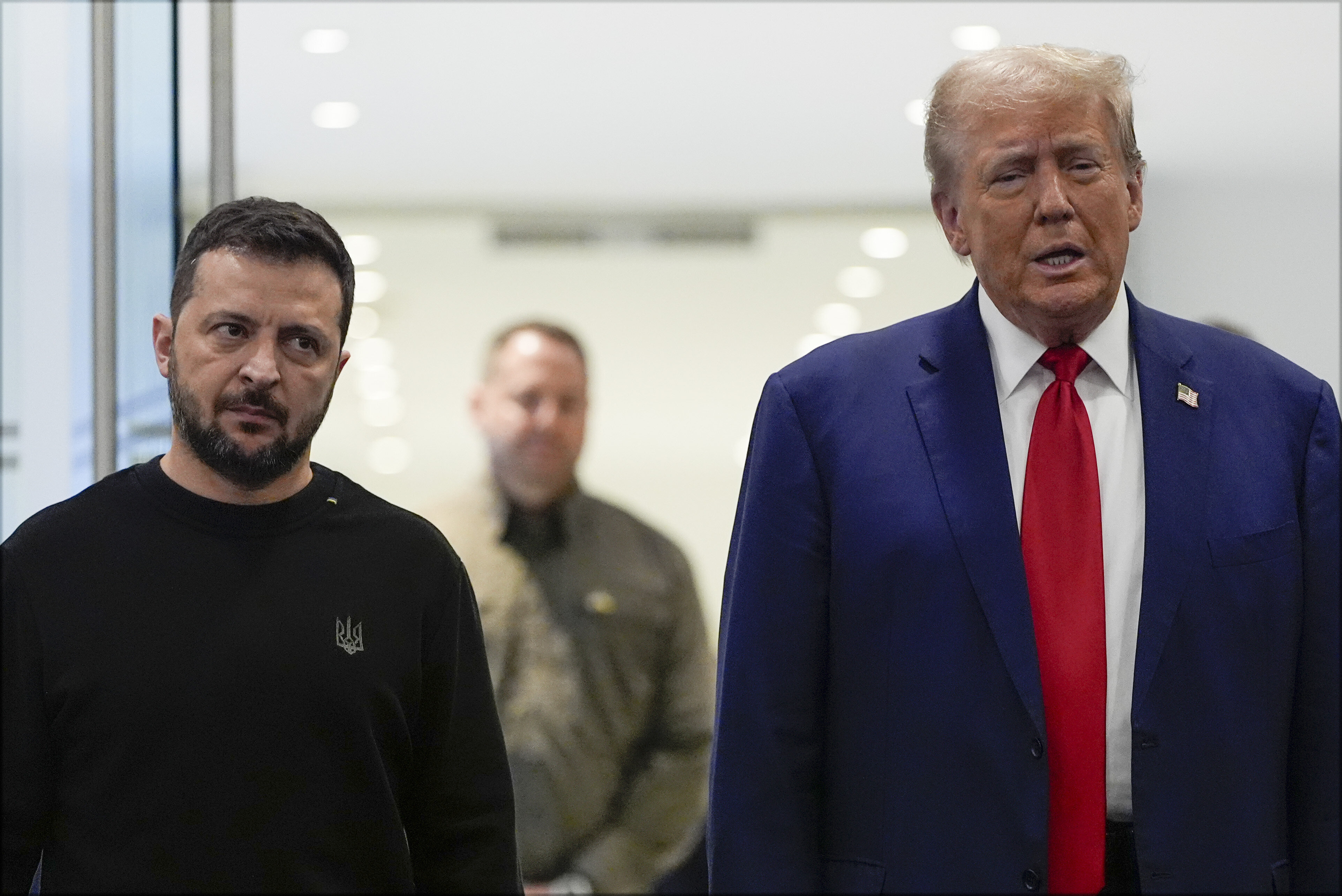
Donald Trump meets with Ukraine’s President Volodymyr Zelenskyy at Trump Tower on Sept. 27 in New York.
via Associated Press
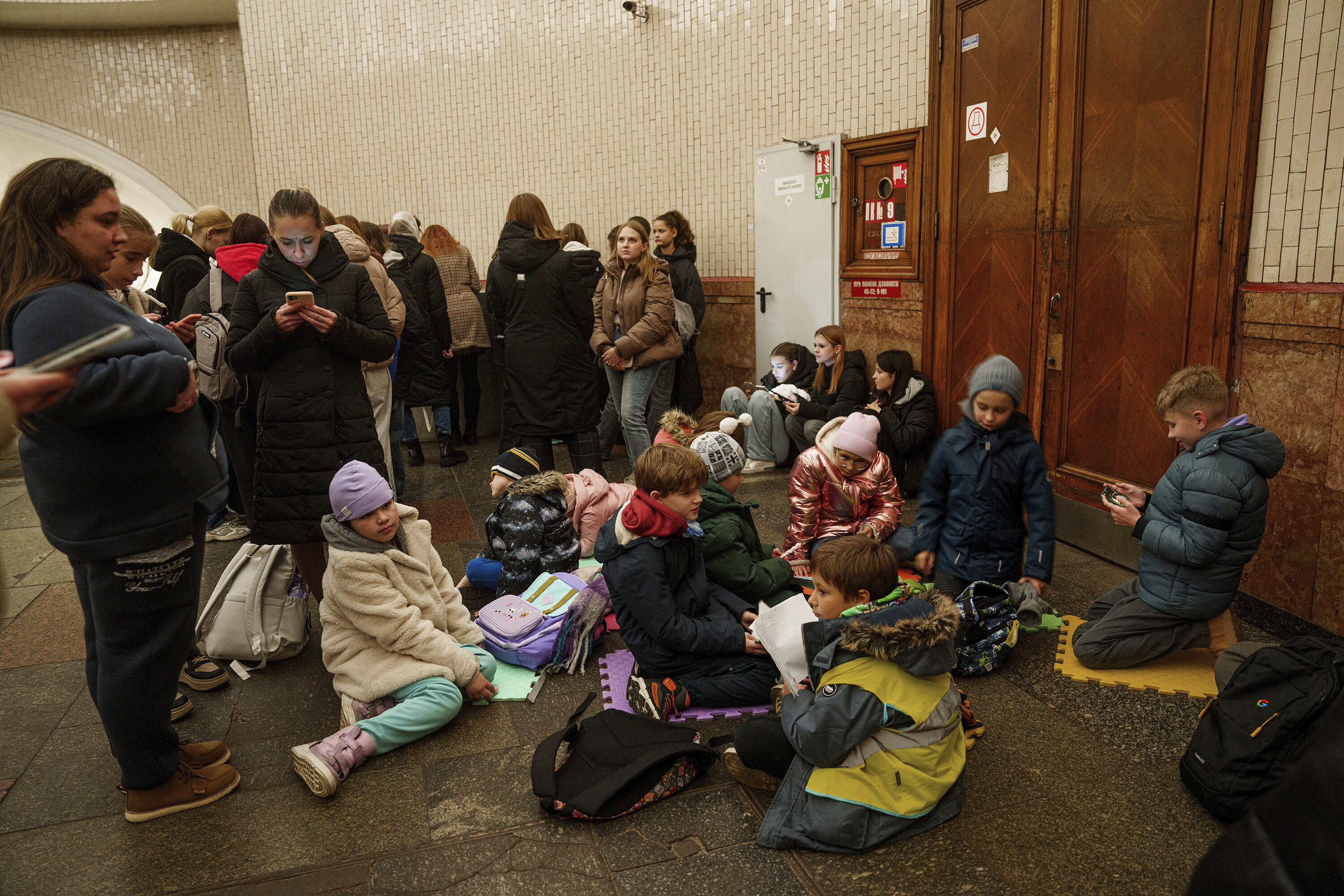
Putin, through his military, has sought to show Ukrainians this week the cost of continuing to resist. On Thursday, waves of armed drones led to an eight hour air alert in in Kyiv, keeping many of its residents huddled in the subway for safety.
Advertisement
In the Black Sea port city of Odesa, Russian drones armed with thermobaric bombs hit residential areas Thursday, local media reported. These bombs contain two stages — an initial explosive that spreads a flammable accelerant, and a second stage that ignites that fuel, drawing the air out of the surrounding area to make a larger explosion. In addition to the blast, these “vacuum bombs” literally suck the air out of the lungs of those nearby.
Stopping these attacks will require more US military aid, on top of the $52.7 billion already committed to Ukraine since the invasion began in February 2022. The Biden administration has been criticised by Ukrainian officials and military experts for providing too little aid to Ukraine, and too slowly, even as Ukraine’s president, Volodymyr Zelenskyy, has asked for new weapons to strike into the interior of Russia.
After the election, the pro-Ukraine advocacy group Razom urged Congress to pass a new aid package in the post-election lame duck session before Trump takes office in January.
Children sit on a floor inside Arsenalna metro station during air alert in Kyiv, Ukraine on Wednesday.
via Associated Press
Advertisement
“The aid package must enable Ukrainians to survive the winter, push Putin’s forces back, and give President-elect Trump the flexibility he needs to act from a position of strength,” Razom said.
“Failure to urgently pass a supplemental package risks undermining President-elect Trump’s position before he assumes office.”
Why would Republicans in Congress agree to fund more weapons for a war Trump has said he would like to end, and has signalled he will end, by threatening to cut off weapons to Ukraine?
Leverage, according to Doug Klain, policy analyst for Razom.
Biden is planning to exhaust the current amount of so-called drawdown authority by the end of the year. Drawdown authority allows the president to declare some US weapons to be surplus, and thus available to be sent to allies abroad. It has been one of the main ways US weaponry has been donated to Ukraine.
Trump would need to go back to Congress to get similar authority if Biden follows through.
That would give Trump a way to show Russia he wasn’t going to just ”[let] Putin do what he wants,” Klain said.
Advertisement
Drawdown authority is discretionary — Trump alone could decide whether to use it or not. Being able to credibly threaten to send Ukraine more weapons without needing congressional approval would bring a recalcitrant Putin to the bargaining table, the argument goes.
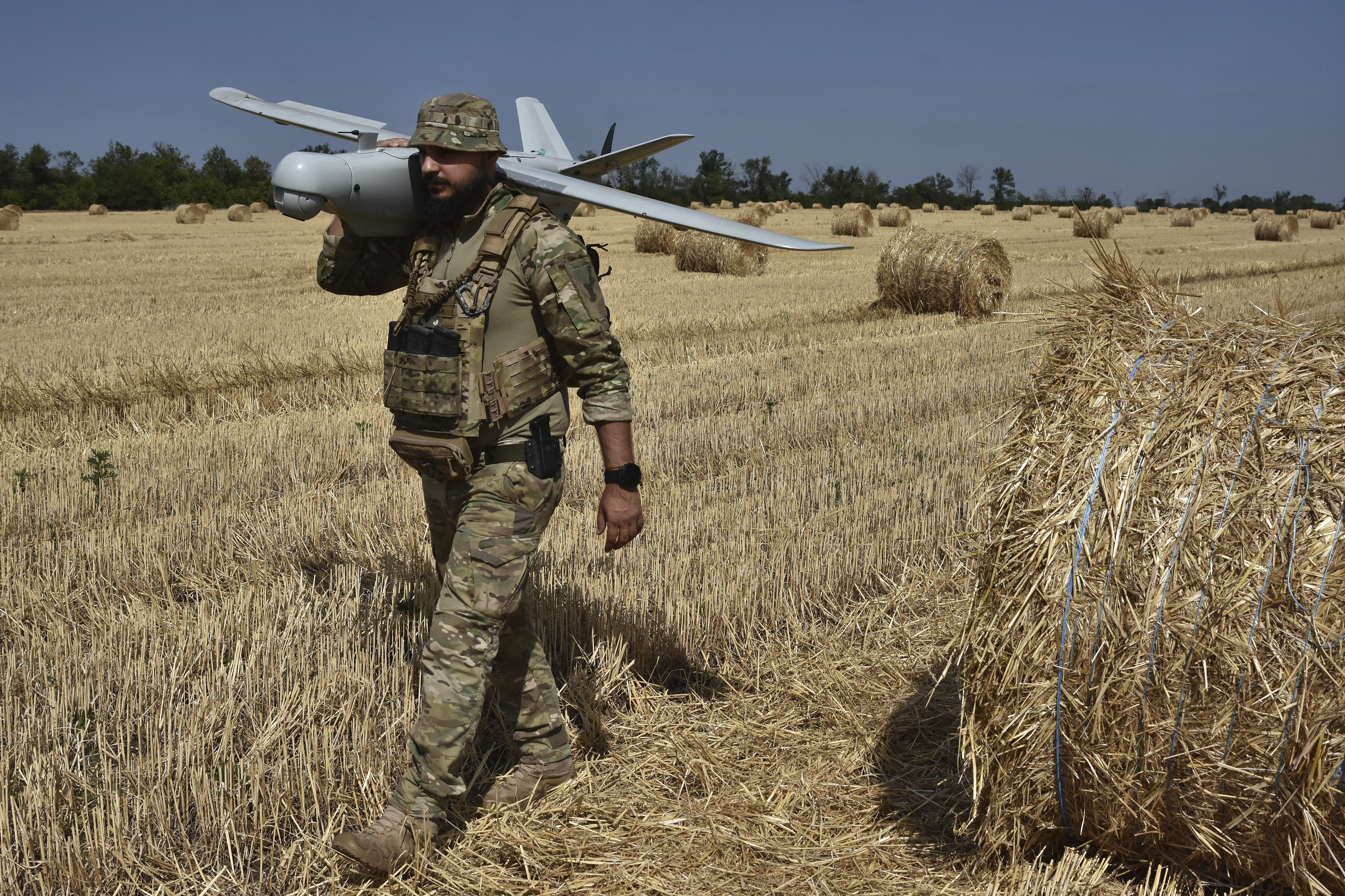
A soldier of Ukraine’s National Guard 15th Brigade carries a reconnaissance drone Leleka on a wheat field near the front line in Zaporizhzhia region in Ukraine in July.
via Associated Press
“All that Republicans would be doing by passing a new supplemental during the lame duck session is giving Trump options,” Klain said.
A spokesperson for House Speaker Mike Johnson (Republican, Louisana) told HuffPost that the Republican majority had no interest in taking up a Ukraine supplemental soon. In April, Johnson put his political life on the line by bringing forward a Ukraine funding bill to the House floor, against the wishes of many in his party.
Oleksiy Goncharenko, a Ukrainian parliament member representing Odesa, also held onto the idea of Trump as a wild card.
Advertisement
“Yes, there are a lot of challenges, but also there are possibilities,” Goncharenko told HuffPost. “What’s good about Trump? Good is that he’s unpredictable, not only for us, but for Putin, too.”
Goncharenko said the world was devolving from a rules-based international order to “a deals-based international order.”
“I think that President Trump will try to make a deal with Putin. But the question is, will he succeed or not? And if he will not succeed, how will he react?”
The bedrock assumption underlying much of Trump’s thinking about Ukraine may be that Putin — after losing, by Kyiv’s count, 700,000 soldiers in just under 1,000 days — would be happy simply to consolidate his gains in eastern and southern Ukraine in return for a ceasefire.
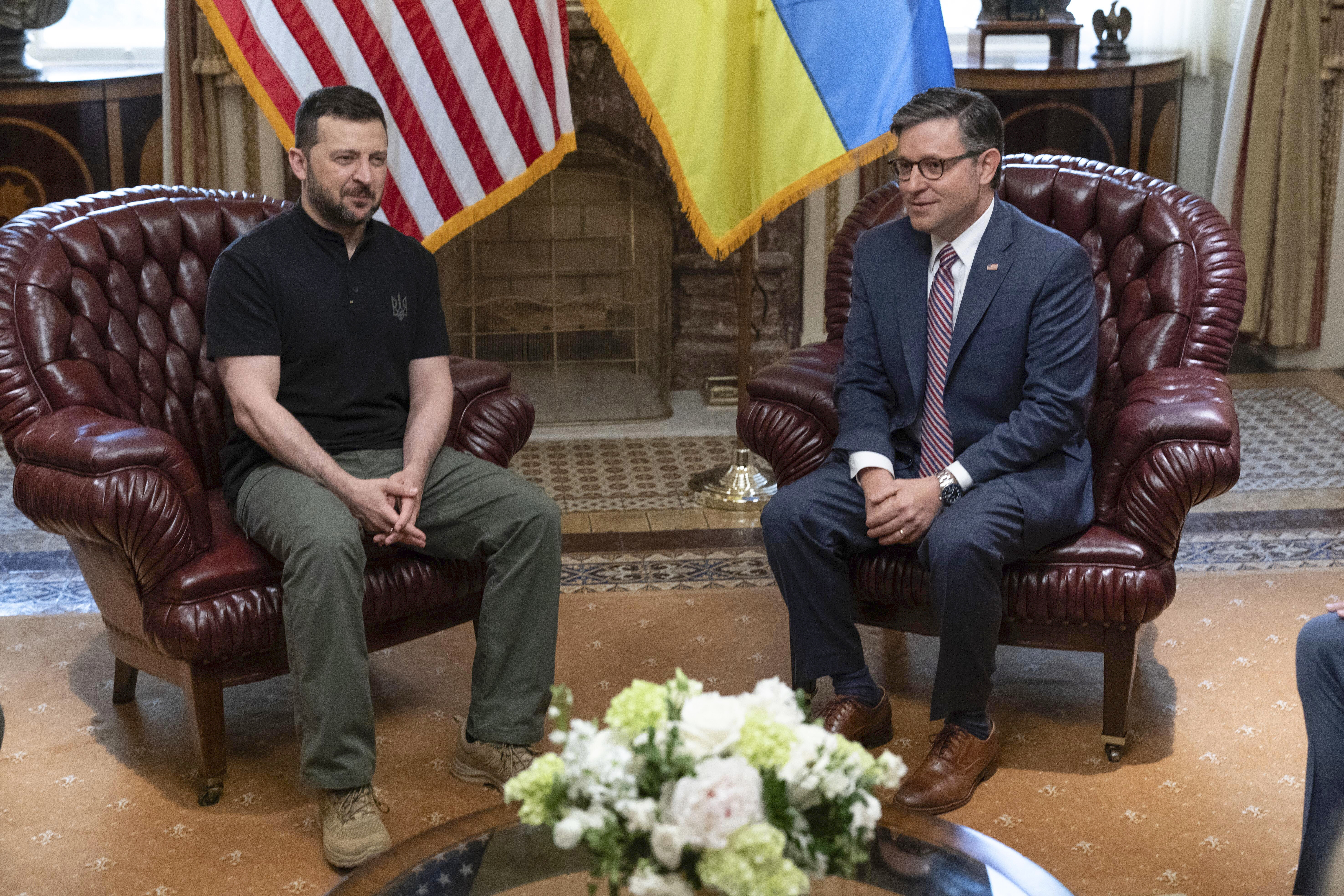
Speaker of the House Mike Johnson (R-La.), right, meets with Ukrainian President Volodymyr Zelenskyy at the Capitol July 10 in Washington.
via Associated Press
Advertisement
But Ukrainians believe Putin would use a ceasefire to rearm for another war, and even Russian public officials hint that he would not have achieved his objective if the war were to end now.
“We control only what we do. We can’t control what the Russians do. And the Russians are very clear about what they’ll do,” Klain said.
Another assumption that may be behind Trump’s thinking — that Ukrainians would simply give up and accept Russian control over Ukraine’s territory — is also questionable.
Advertisement
“Ukraine will never, ever accept Ukrainian territories to be Russian. Not Donald Trump, nor anybody else, will make us accept this. But the question is how to reclaim them,” Goncharenko said.
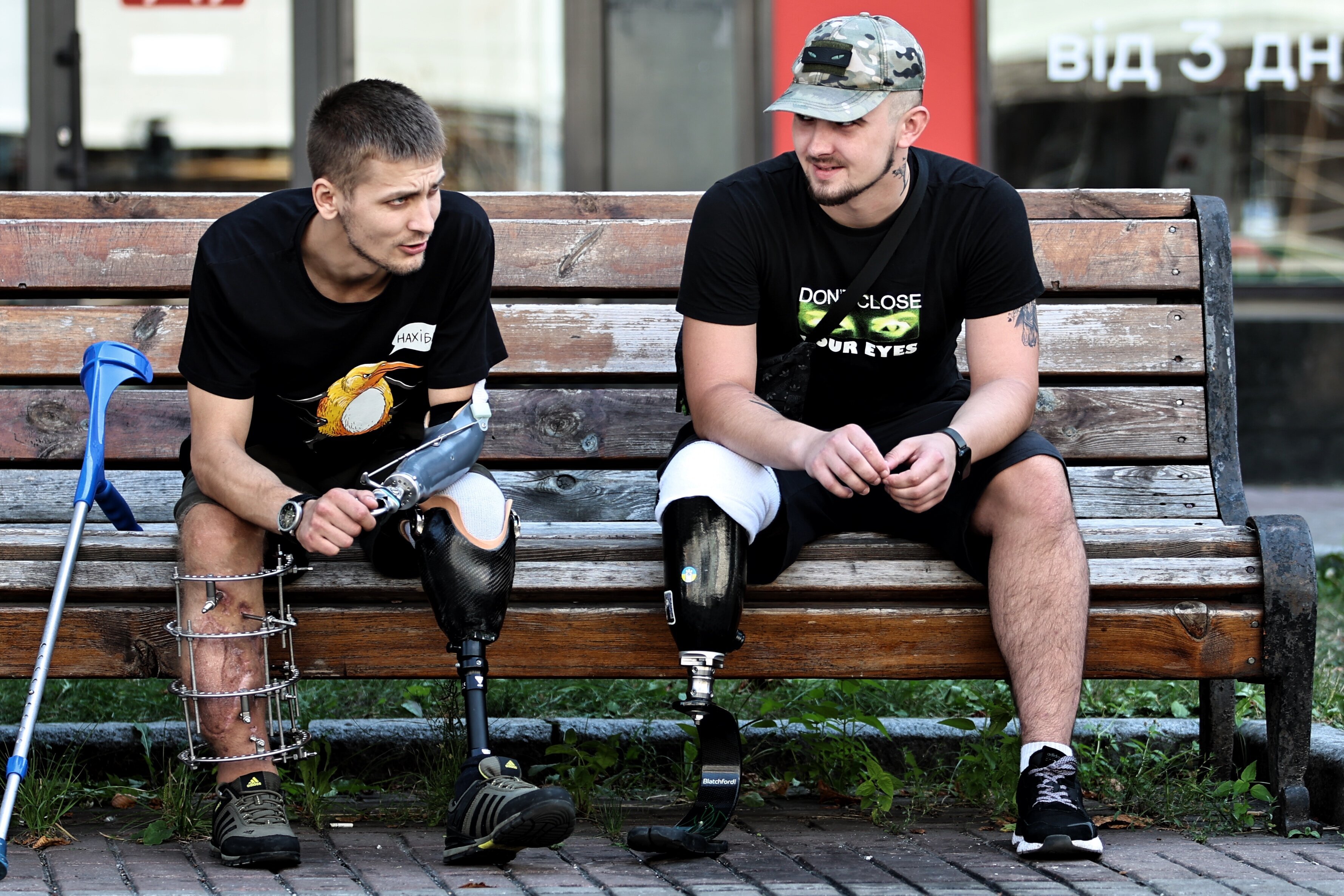
Ukrainian military veterans with amputations rest on bench on Khreshchatyk street in August in Kyiv, Ukraine.
Global Images Ukraine via Getty Images
Goncharenko did say he thought Zelenskyy made “a big mistake” in visiting a Scranton, Pa., artillery factory in September to thank the workers there. Zelenskyy made the visit while in the US to speak to the United Nations and consult with Washington. But the visit included no Republican elected officials, leading top Republicans to slam it as partisan.
The Times did not report what the subject of the call was, but Musk is a key supplier to the Ukrainian military as the CEO of satellite Internet provider Starlink, which has become vital for Ukraine’s battlefield communications. Ukraine’s Donbas region, one of the key fronts in the war, is also rich in rare earth minerals, such as lithium, that are important in the production of electric cars — like those built by Tesla.
Advertisement
Ukrainians could take heart that Trump appears to be considering at least one well-known Ukraine hawk for a top job in his administration. House Armed Services Committee Chair Mike Rogers (Republican, Alaska) is reportedly under consideration to lead the Pentagon.

Children from Gymnasium No. 6 head to a basement set up with classrooms during an air alert in Zaporizhzhia, Ukraine, Sept. 3. The city is building a dozen subterranean schools designed to be radiation- and bomb-proof.
via Associated Press
Goncharenko was philosophical about what was next in the conflict. Given Trump’s stance and Harris’ stout defence of Ukraine aid, the choice of who Ukrainians should root for had been an easy one.
But Goncharenko said he personally was not despairing.
“We are where we are,” Goncharenko said. “We can’t change anything [in the U.S.]. We just can’t. So we just need to watch what will happen and we should do the best we can do.”
Vladimir Putin has finally responded to the international claims he spoke to Donald Trump on multiple occasions after the latter left the Oval Office.
Journalist Bob Woodward claimed in his new book War that, according to a former White House aide, “there have been multiple phone calls between Trump and Putin, maybe as many as seven in the period since Trump left the White House in 2021”.
Advertisement
Trump’s campaign said the claims were completely fabricated. His spokesperson replied: “None of these made up stories by Bob Woodward are true and are the work of a truly demented and deranged man who suffers from a debilitating case of Trump Derangement Syndrome.”
Putin has just replied to Woodward’s claim, which were first reported on October 8, today.
Responding to a reporter’s question at the BRICS conference in Kazan, the Russian president said: “It’s nonsense.”
He continued: “But when Trump says that he wants to put an end to the war in Ukraine, I think that he is sincere.”
The former US president has sparked concerns among Western officials over his stance towards the conflict.
Advertisement
He has repeatedly said he wants the war to end but has refused to say who he wants to win, suggesting he may force Ukraine to cede land to Moscow.
Putin did use the press conference to confirm that he is in contact with the North Korean leader Kim Jong Un, over potentially deploying troops to fight alongside Russia.
Alluding to his defence pact with Pyongyang, he said: “We ratified the treaty on strategic partnership which contains Article 4 and we have never shied away from the fact that North Korea is serious about its commitment to us.
“It’s up to us how we implement Article 4. We are in contact with our North Korean partners.”
According to The Telegraph, he also chuckled when asked about troops already being deployed to fight in Russia, before adding: “The satellite images you spoke of, this is a serious allegation.
“It means that something is happening, but let me tell you one thing, it wasn’t the actions of Russia that led to the escalation in Ukraine.”
Advertisement
It’s widely believed that Moscow invaded Ukraine and tried to seize Kyiv in 2022 in a land grab, although Putin blames NATO’s eastward expansion.
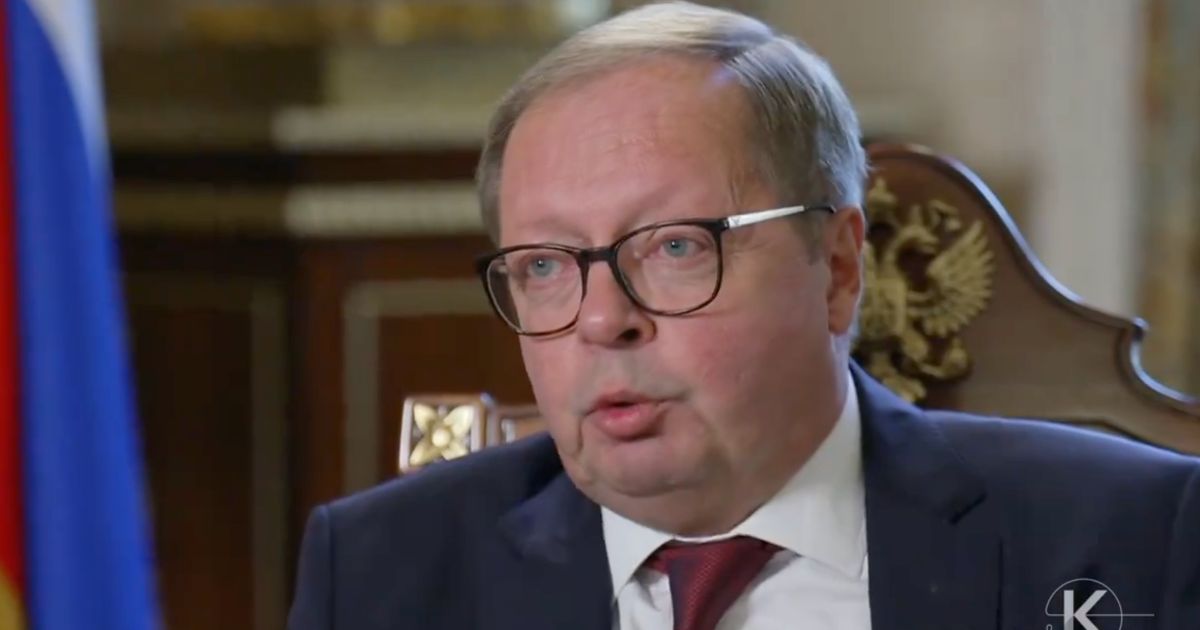
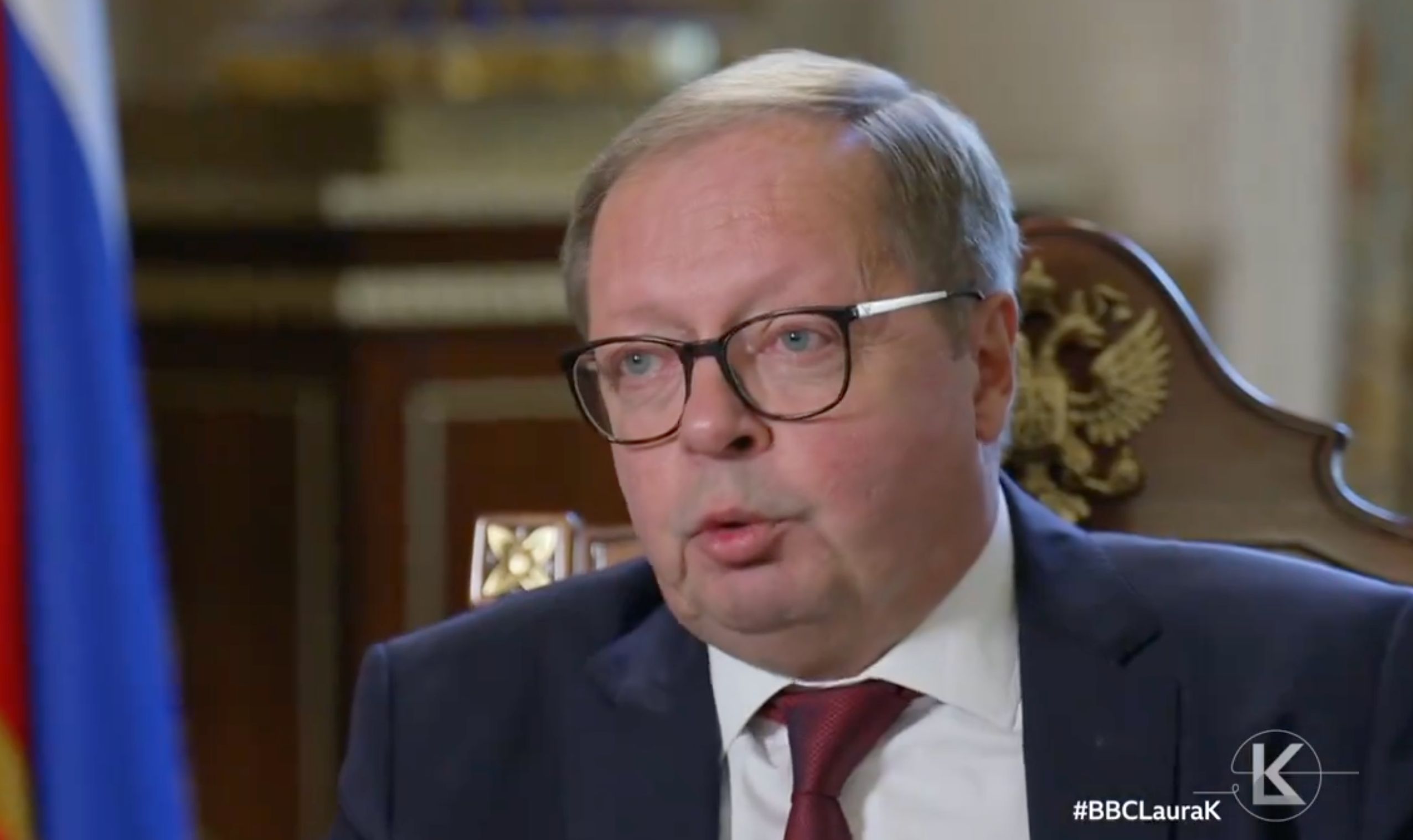
The Russian ambassador to the UK has claimed there was one aspect of the Ukraine war which is “worrying” the Kremlin.
Speaking to the BBC’s Sunday with Laura Kuenssberg, Andrey Kelin slammed Ukrainian president Volodymyr Zelenskyy’s supposed “victory plan,” which he has been presenting to Western allies, suggesting it was a concern.
Advertisement
The ambassador claimed: “What is worrying us is there is no peace in the peace plan presented by Zelenskyy. He did not want peace negotiations.
“He continues to ask for more and more Nato, European Union assistance, defence packages, anything. But nothing about negotiations at all.”
Ukraine has made it clear the war is not over until it reclaims all of its land from Russia, including Crimea, which was annexed in 2014.
But Moscow says it will only end the war when it can officially claim the Ukrainian land it currently occupies.
Advertisement
When Kuenssberg pointed out that Zelenskyy has said he will not negotiate with the Kremlin, Kelin smiled and said: “Fine, then he will lose more and more terrain.”
Russia currently occupies around 18% of Ukraine’s entire territory.
Ukraine did turn the tables and seize a comparably small Russian region called Kursk in August, but its troops are now slowly losing ground.
She said: “Are you comfortable, as an experienced diplomat of many decades, with having to rely on support from pariah states like North Korea and Iran?”
He said: “For you perhaps, it is pariah states – for us, it is normal people.”
The ambassador added that just because those countries have “different views” should not stop Russia having a relationship with them.
Advertisement
Kuenssberg then suggested: “Isn’t the truth here that you and Vladimir Putin are both sitting in grand luxury refusing to budge while thousands of civilians – Russians and Ukrainians – are suffering as a result of this conflict, which your government could bring to an end and yet you persist with it?”
He said the UK and its allies could end the war if they stopped aiding Ukraine, adding: “Stop the armament supplies, do it!”
As Kelin insisted that the war was not putting a strain on Russia, Kuenssberg then changed tactic, and asked: “Does the suffering in this war ever keep you awake at night?”
He said: “No one likes the war, and we stand for the quickest diplomatic and political settlement.”
When she asked her question again, he said: “Yes, well, sometimes I feel like and I anticipate the end of it, the quickest end of it. And I hope it will end sometime.”
Kelin also used the interview to claim the UK is waging a proxy war against Russia by supporting Ukraine, even though Putin ordered the invasion of the neighbouring European country back in 2022.
Advertisement
“You think we’re at war with your country?” Kuenssberg pushed.
He replied: “I think you are aggressive, that you are waging a proxy war against Russia.”
He also claimed Zelenskyy is “desperate” and “losing the conflict”.
“The end of this phase will mean the end of Ukraine,” he said, adding: “Defeat, over the course, is in view.”
As expected, Kelin’s comments were quite at odds with the most recent message coming from the UK government about the war.
Vladimir Putin personally ordered the Salisbury Novichok poisonings, the UK government and one of the victims told an inquiry into the attack today.
Former Russian double agent Sergei Skripal, who offered up Moscow secrets to the UK and his daughter Yulia fell unconscious back in 2018 after touching the nerve agent which had been placed on the front door handle of their home.
Advertisement
Both of them, along with a police officer who went to visit them, fell critically ill but recovered.
Four months later, a member of the public, Dawn Sturgess, died after being exposed to the poison after her partner found a counterfeit perfume bottle which authorities believe was used to smuggle the nerve agent in.
Her partner also fell ill but recovered.
Skripal, who has not spoken publicly since the incident, sent a statement to the inquiry into Sturgess’s death today which pinned the blame squarely on the Russian president.
He said: “I believe Putin makes all important decisions himself. I therefore think he must have at least given permission for the attack.”
He added: “I have read that Putin is personal[ly] very interested in poison and likes reading books about it.”
Advertisement
However, Skripal admitted he had no concrete evidence to back up his claim.
“I do not know for certain how Putin personally viewed me. As far as I know I never spoke to him, although I was in the same room as him two times many years ago,” he said.
He added: “I never thought the Russian regime would try to murder me in Great Britain”.
A senior foreign office official, Jonathan Allen, also gave a statement to the inquiry suggesting the UK government had come to a similar conclusion based on “current assessments”.
“In light of the required seniority under Russian law to approve assassinations of suspected terrorists outside Russia, and that this incident concerned a politically sensitive target (Mr Skripal was a UK citizen, and was targeted on UK soil), it is HMG’s view that President Putin authorised the operation,” Allen’s statement read.
Three Russians – and alleged GRU military intelligence officers – have been charged in absentia by the UK over the attempted murder of the Skripals, although all three deny it, along with the Kremlin.
No formal case has been brought against them over Sturgess’s death.
Lawyers for her family called for Putin not to “cower behind the walls of the Kremlin” and to look her relatives “in the eyes and answer the evidence against him”.
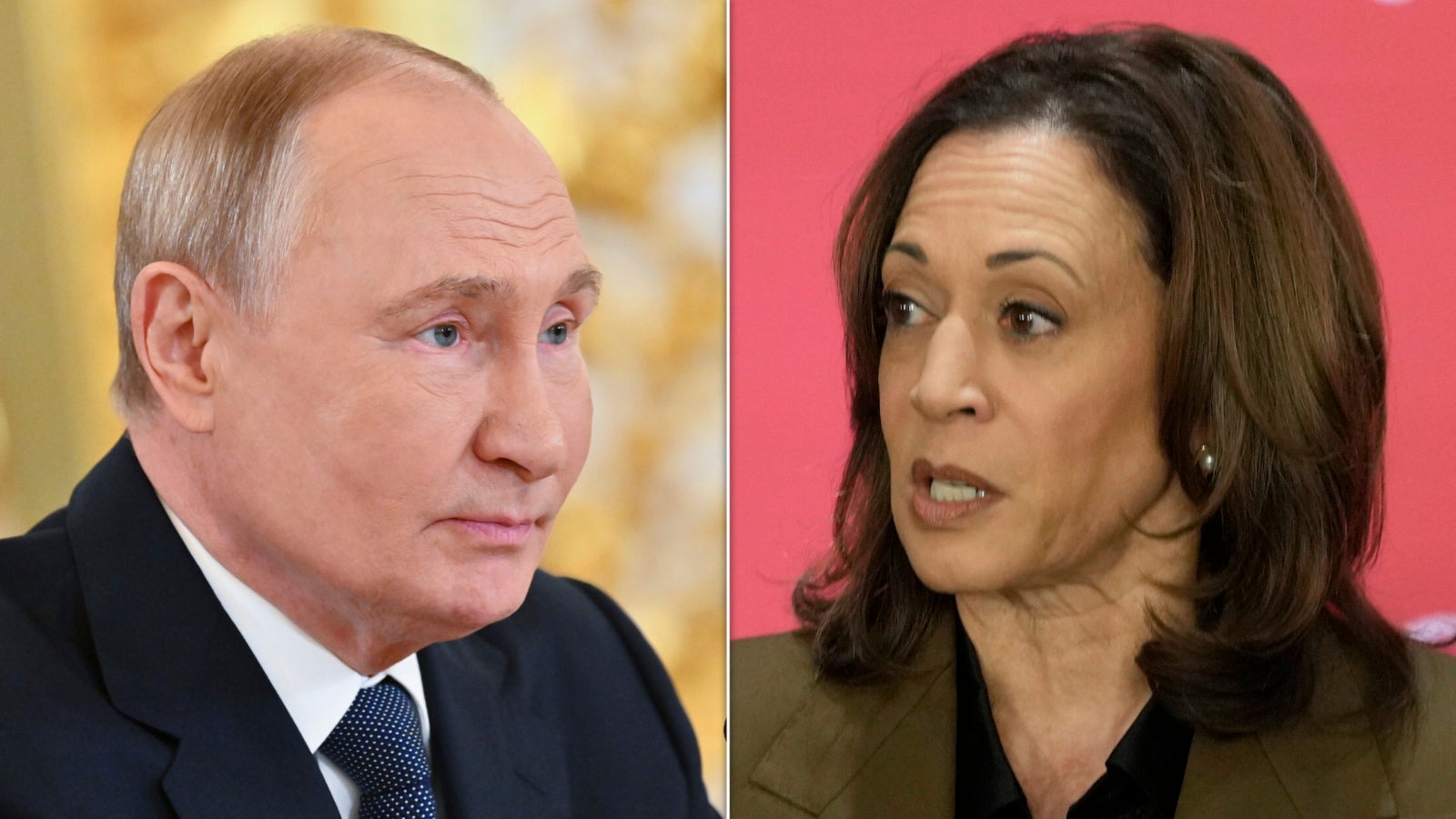
The Democratic nominee, who is up against Donald Trump in November’s US presidential election, slammed the Russian president in a radio interview this week.
Advertisement
She criticised him earlier this week while discussing reports Trump sent the Russian president Covid tests at the height of the pandemic – claims the Republican nominee has denied, but Moscow says are true.
The Kremlin spokesperson Dmitry Peskov responded to Harris’ remarks with a fresh dig on Saturday, according to Reuters news agency and Russian outlets.
Peskov reportedly told a Russian TV interviewer: “The lofty political establishment of the United States of America, to all appearances, is infused with such a political culture.
“This is probably the quintessence of the very model of international relations that they are trying to foist on the entire world, a model that most in the world are beginning to like less and less.”
Advertisement
Russian state news outlet TASS also suggested Harris was following “the example of her boss”, Joe Biden.
Tensions between the US and Russia have been in decline ever since Putin ordered the invasion of Ukraine back in 2022.
The US, along with the rest of the West, has regularly supported Kyiv via investment and sending weapons to Ukraine.
For the most part, the West has tried to avoid being directly involved in a conflict with Moscow – and by cutting most diplomatic relations, Europe and the US have left Russia pretty isolated on the world stage.
Advertisement
Moscow has regularly attacked the West, and particularly the US, in retaliation.
Putin sarcastically endorsed Harris to be the next US president because of her “infectious laugh” last month, triggering the White House to tell Moscow to stop commenting on the US election.
The Democrats have also used Trump’s supposed friendship with Putin during the election campaign.
When slamming both Trump and Putin this week, Harris told Howard Stern on his SiriusXM show: “I believe Donald Trump has this desire to be a dictator.
“He admires strongmen and he gets played by them because he thinks that they’re his friends.
“And they are manipulating him full time and manipulating him by flattery.”
She added: “This guy who was president of the United States is sending them to Russia to a murderous dictator for his own personal use.
“This person who wants to be president again who secretly is helping out an adversary when the American people are dying by the hundreds every day and in need of relief.”
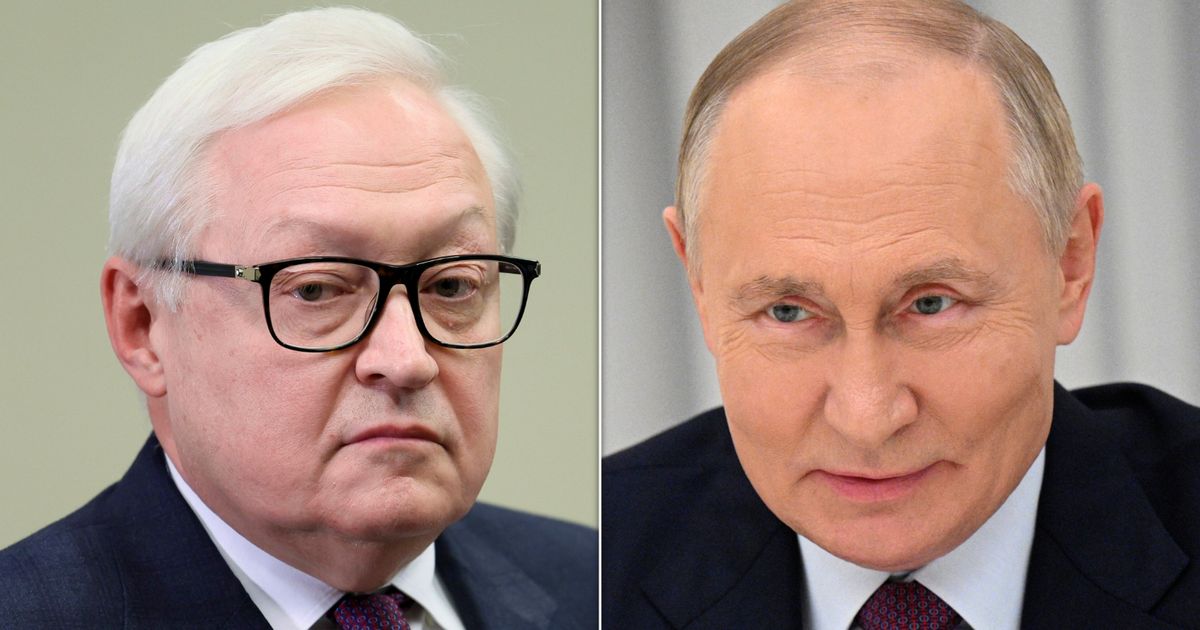
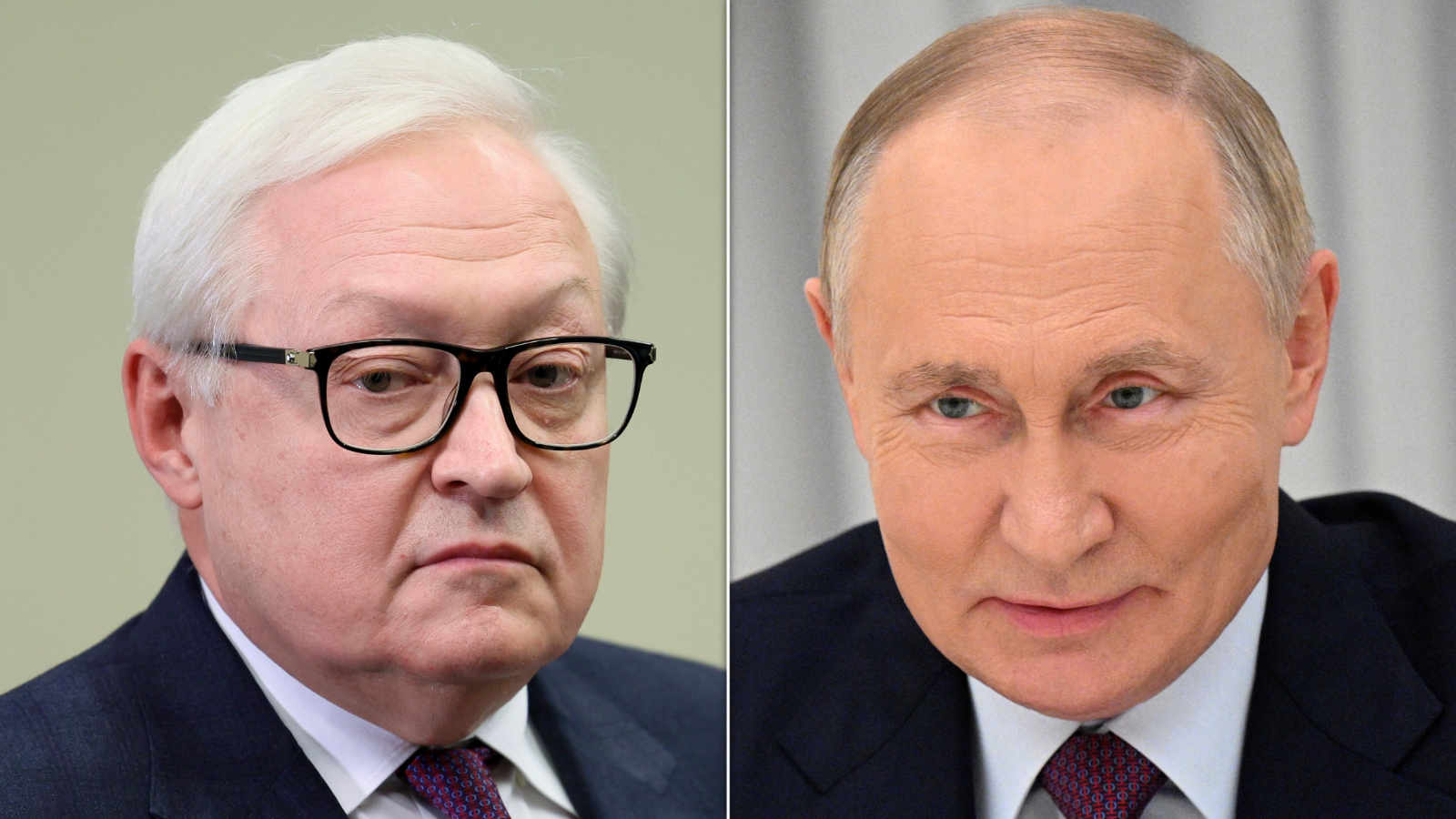
One of Vladimir Putin’s ministers has a new theory about the “root cause” of the Ukraine war – and, unsurprisingly, he doesn’t say the Russian president’s own land grab is to blame.
Russia’s deputy foreign minister, Sergei Ryabkov, pinned the two-and-a-half year conflict on the US and Ukraine’s “fantasies” on Thursday.
Advertisement
According to Russian state news agency TASS, Ryabkov said: “It has been repeatedly said that Washington’s policy of connivance with Kyiv’s most destructive, far-reaching plans and fantasies is by and large the root cause [of] this acute crisis, fraught with high risks and the possibility of sliding into a full-scale conflict between Russia and the historic West.”
Putin decided to invade Ukraine in February 2022, baselessly claiming Kyiv was run by “neo-Nazis” – Ukraine quickly wrote it off as a land grab and has been trying to expel the Russians ever since.
Like the rest of the West, the US has been supporting Ukraine in its self-defence by providing weapons and substantial funds.
But Washington has so far refused to let Kyiv fire Western-supplied missiles into Russian land out of fear it would expand the regional conflict into a global war.
Advertisement
The Pentagon said last month that “no one capability” would change the outcome of the war, but has not officially ruled out changing the restrictions around using long-range missiles.
And Ryabkov claimed these words were still not enough to reassure Moscow that the conflict would escalate.
He said: “We need not some signals, but real evidence that there is an understanding of the futility of unconditional support for the minions in Kyiv, and of the dangers that are exacerbated in a situation where this policy is not revised.”
Russia has been bombarding Ukraine for more than two years.
Two months ago, Ukrainian troops shocked its allies – and enemies – by invading Russia, marking the first time since since World War 2 that a foreign force had occupied its land.
It was a stunning way to turn the tables on Vladimir Putin, who has occupied around 18% – just over 100,000 sq km – of Ukrainian land for the best part of the last two and a half years.
While the 1,000 sq km land grab in Kursk was seen as a huge morale boost to the beleaguered Ukrainian troops, the Kremlin was expected to quash it with an iron fist.
Even though Kyiv forces have achieved some noteworthy victories on the Ukrainian frontline, it was thought that the Russian army – which Statista reports has at least 400,000 more active soldiers than its opponents – would overpower the Ukrainians, especially on their own territory.
In fact, Western officials believed it was “inevitable” the Ukrainian troops would be forced out of Kursk pretty quickly.
Advertisement
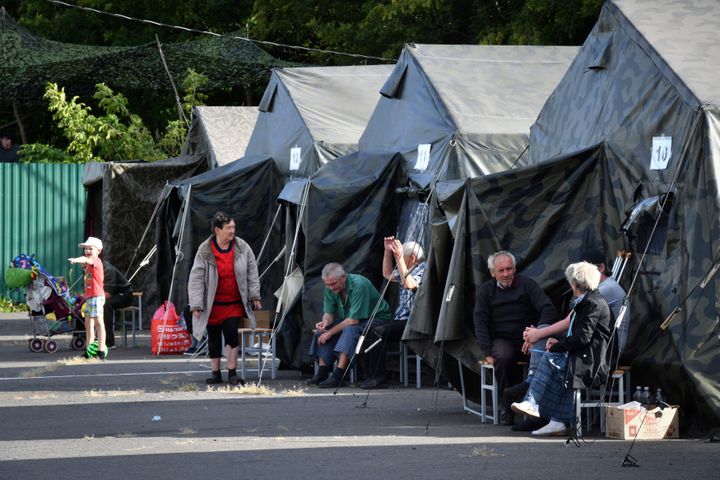
But within the first week, as many as 180,000 Russian civilians had been evacuated from the area, and there was no significant sign that the Ukrainian troops were about to be removed.
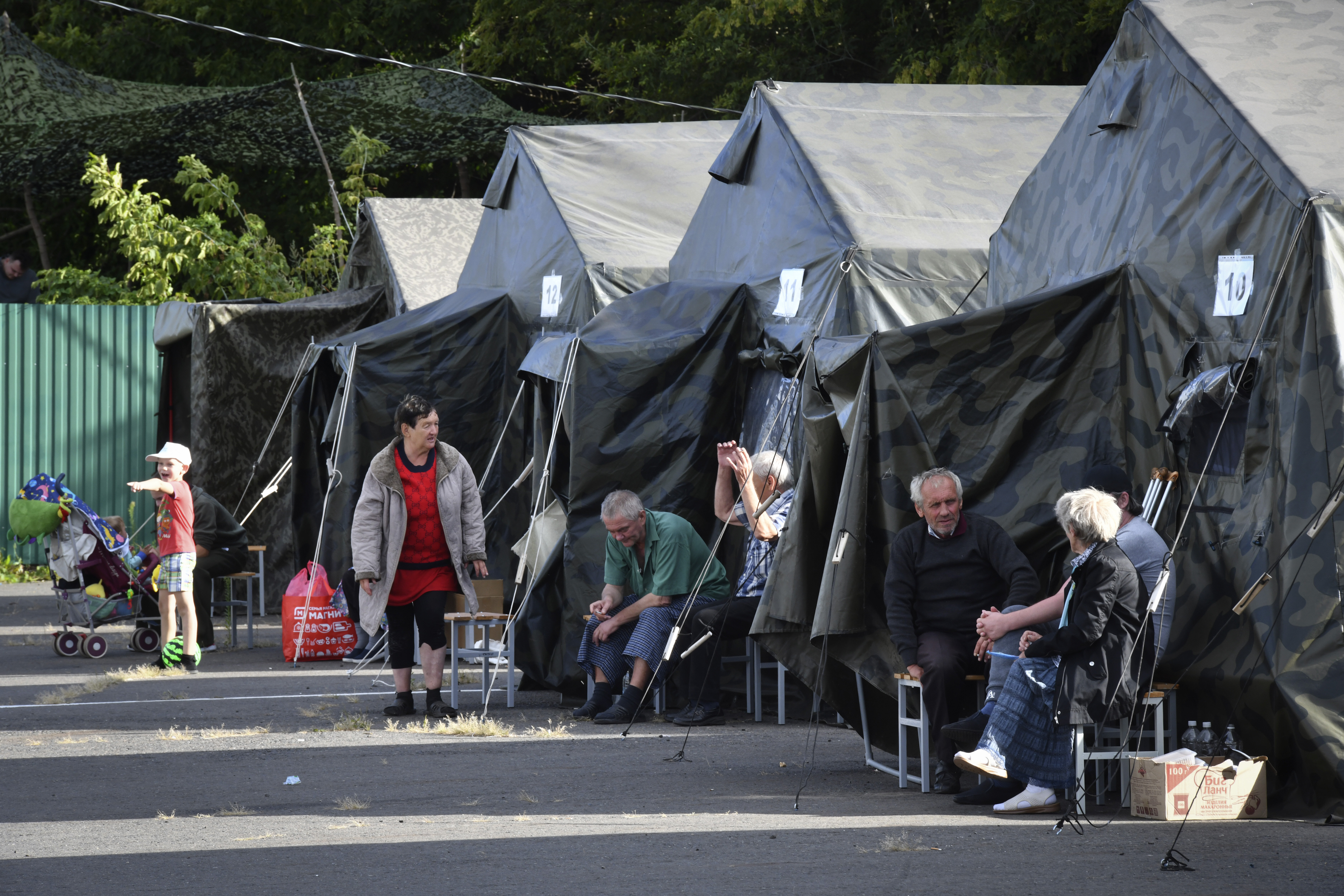
People evacuated from a fighting between Russian and Ukrainian forces in Kursk region sit next to tents at a temporary residence centre in Kursk, Russia, Monday, Aug. 12, 2024.
via Associated Press
Putin himself barely acknowledged the “events” unfolding in Western Russia but did look pretty uneasy about the incursion in televised meetings with his security officials.
His words left Western insiders “worried” that Russia would retaliate as soon as it had the right command and control in place.
Advertisement
But, a source told HuffPost UK earlier this week: “So far, they’ve not succeeded, which is slightly against our initial expectations.”
They noted that Putin’s plan to resolve the “humiliation of losing Russian sovereign territory” has not been “terribly effective”.
To further hammer home the Kremlin’s inaction, reports seized by the Ukrainians and published by the Guardian last month claimed Russia was aware of the Kursk incursion a long time in advance – possibly since late 2023. But Moscow did nothing.
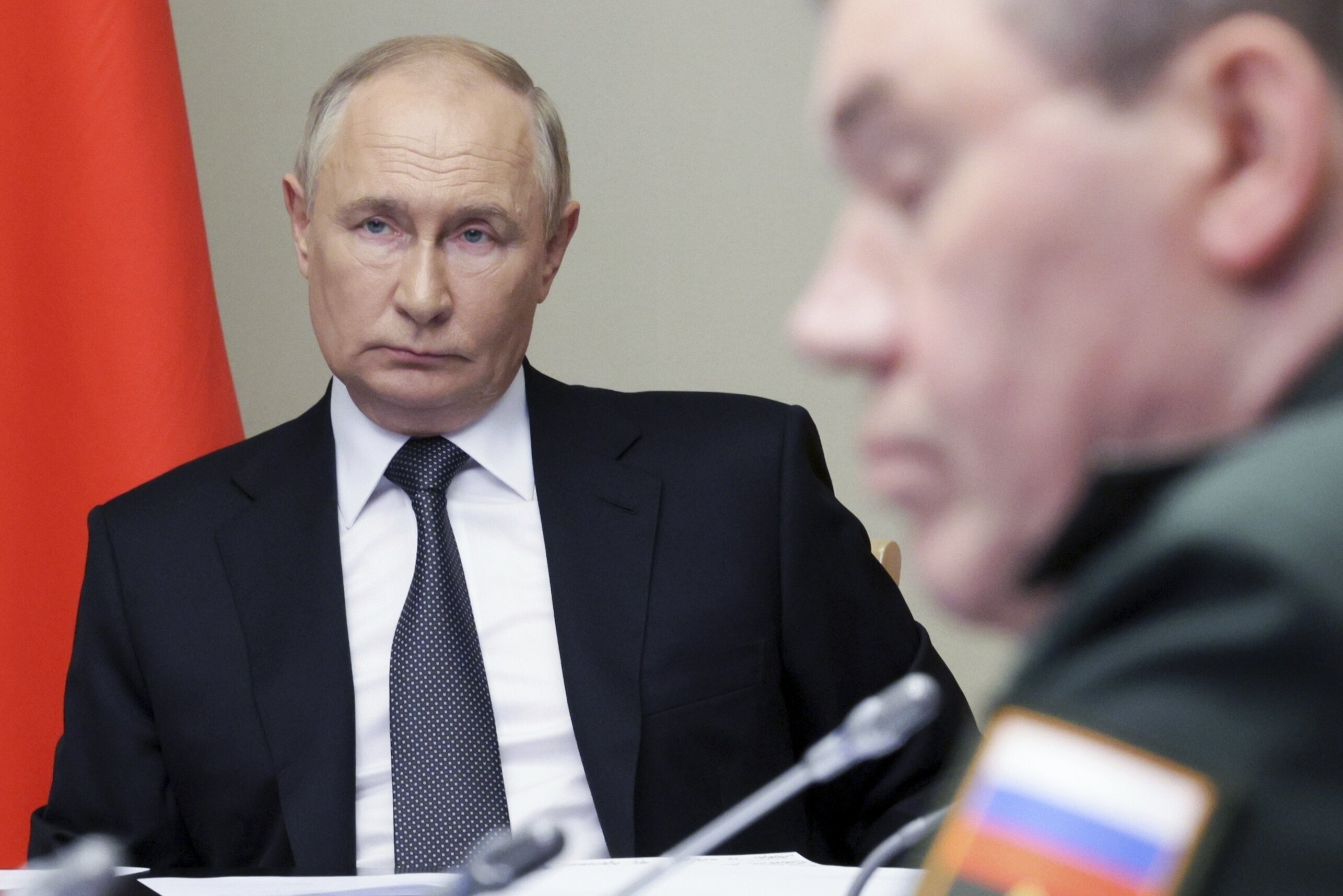
Putin, left, leads a meeting with top security and defence officials at the Novo-Ogaryovo state residence outside of Moscow, Russia, on Aug. 12, 2024.
Instead, Russia is relying on an estimated 38,000 poorly trained conscripts to fight in Kursk while its more experienced soldiers are trying to gain ground in Ukraine’s Donbas region.
Putin appears happy enough to keep it that way – after all, it means sticking to the Kremlin’s promise not to deploy conscripts to the frontline in Ukraine but still means they are helping the war effort.
These battalions are not exactly being very effective, though, and are reportedly attacking settlements in Kursk with no Ukrainian troops present, according to Kyiv’s military.
A Ukrainian spokesperson, Vadym Mysnyk, said: “The local population doesn’t understand why they are being hit [by Russian forces] because the [Ukrainian] military is not even nearby.
“But the locals are suffering, they are forced to hide in basements for several hours and sometimes spend half a day there.”
Advertisement
Western officials also suggested to HuffPost UK that Putin’s reluctance to use any troops other than conscripts comes down to an unwillingness to mobilise over fear of backlash from the Russian public.
Putin’s most high-profile attempt to call up reservists backfired spectacularly in September 2022.
The disaster in Kursk is also having a knock-on effect for Russian forces in Ukraine.
The US-based think tank, the Institute for the Study of War (ISW), claimed on Friday that the incursion had “significantly complicated the development of Russia’s operational reserves”.
Ukrainian president Volodymyr Zelenskyy told the New Yorker in September: “It has slowed down the Russians and forced them to move some of their forces to Kursk on the order of 40,000 troops. Already, our fighters in the east say that they are being battered less frequently.
Advertisement
“I’m not saying it’s a resounding success or will bring about the end of the war or the end of Putin. What it has done is show our partners what we’re capable of.”
This impact on the Ukrainian frontline will likely continue until Putin “decides that the benefits of more effective force-generation policies, such as another partial mobilisation call up of Russian reservists, outweigh the risk of societal backlash”, according to the ISW.
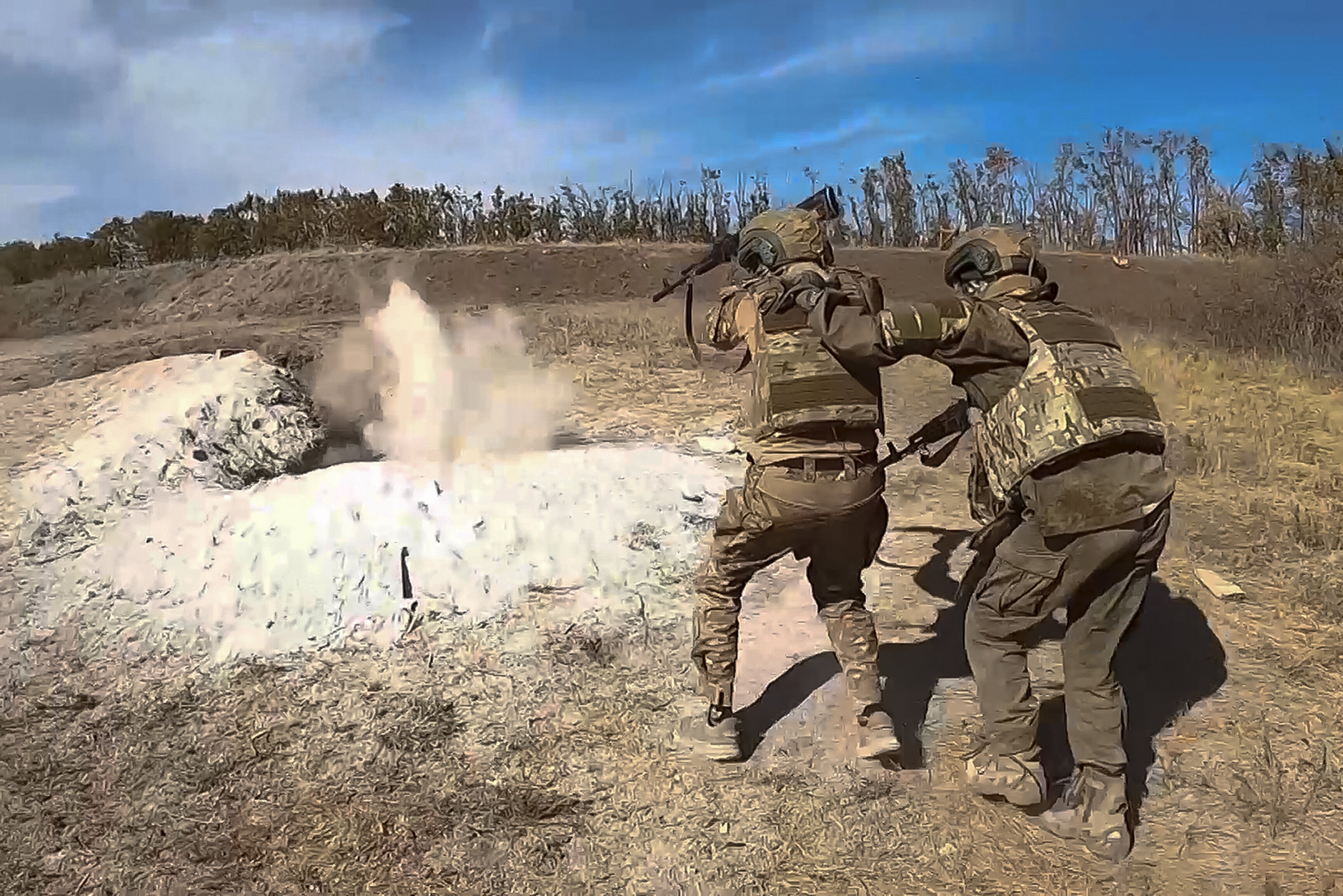
In this photo released by Russian Defence Ministry Press Service on Wednesday, Oct. 2, 2024, Russian soldiers attend combat training for assault units at an undisclosed location in Ukraine.
via Associated Press
Western officials also said that “much to [their] surprise”, they realised in the early stages of the war that Russian kit was not as good as expected – while Ukraine has been innovative with its own weaponry.
“Russia just took a long time to learn lessons and to adapt and evolve in the way they were fighting,” an insider said.
Advertisement
They summarised that it’s a “much more level playing field” now, and it’s hard to say who “has the upper hand” between the two warring countries.
The president is pre-occupied by the state of the economy, too. He has just increased defence spending in Russia by 25%, but cut 15% in social needs and kept a very high interest rate in place.
A source told HuffPost UK: “One of the reasons he’s worried about mobilising is that he will take further manpower, labour, out of the market.”
Still, there is no doubt that there will be domestic downsides to this inaction, as even Russian voices are speaking up.
Political analyst Sergei Mikheyev told Russian state TV in August: “It leads to demobilisation and international demotivation. There needs to be an understanding that time is of the essence.”
Advertisement
The Kursk incursion appears to have changed the war in two not insignificant ways; boosting Ukraine’s morale, and dampening Russia’s.
And, as the president’s indecision over the offensive looks likely to allow the long-term impacts of the Ukrainian offensive to play out, only time will tell just how much it damages Putin.
The Ukrainian president told the United Nations General Assembly that his intelligence agencies had uncovered his Russian counterpart’s deadly intentions.
He said the revelation was further proof of the need for the international community to continue to put pressure on Putin to end the war.
Zelenskyy said: “Recently I received another alarming report from our intelligence. Now Putin does seem to be planning attacks on our nuclear power plants and their infrastructure, aiming to disconnect the plants from the power grid.
“With the help of satellites, by the way, of other countries, Russia is getting images and detailed information about the infrastructure of our nuclear power plants.
“But what does this really threaten? Any missile or drone strike, any critical incident in the energy system, could lead to a nuclear disaster. A day like that must never come.
“Moscow needs to understand this and this depends, in part, on your determination to put pressure on the aggressor. These are nuclear power plants. They must be safe.”
He added: “If, God forbid, Russia causes a nuclear disaster at one of our nuclear power plants, the radiation will not respect state borders, and unfortunately various nations could feel the devastating effects.”
Republican nominee and former US president Trump has only said that he wants the war in Ukraine to end, not who he wants to win.
Pundits believe Trump could even end up pushing Ukraine to cede land to Putin just in an effort to end the violent conflict.
Still, in a weekend interview with the New Yorker, Zelenskyy did not name which politicians he was talking about when he expressed concerns about Putin’s relationships with international counterparts.
Zelenskyy said: “A lot of world leaders want to have some sort of dealings with Putin, to reach agreements, to conduct some business with him.
Advertisement
“I look at such leaders and realise that they are very interested in playing this game—and for them, unfortunately, it really is a game.
“But what makes a real leader? A leader is someone whom Putin needs for something, not a person who needs Putin.
“Flirting with him is not a sign of strength.”
While the war in Ukraine has left Putin pretty isolated on the world stage – particularly when it comes to former allies in the West – he still has a handful of supporters, like China’s Xi Jinping and India’s Narendra Modi.
However, if Trump were to be re-elected and reduce US support for Ukraine, there’s little doubt that would shift the war into Russia’s favour.
When questioned about Trump’s plans to “stop” the Ukraine war, Zelenskyy said: “My feeling is that Trump doesn’t really know how to stop the war even if he might think he knows how.
Advertisement
“With this war, oftentimes, the deeper you look at it the less you understand.
“I’ve seen many leaders who were convinced they knew how to end it tomorrow, and as they waded deeper into it, they realised it’s not that simple.”
He also said he believes Trump’s running mate, JD Vance, is “too radical” and has a plan to “give up our territories” as part of a Ukrainian sacrifice.
Zelenskyy declared it to be an “awful idea” and said while there was “no way this could ever happen”, Vance was still sending “dangerous signals”.
He added: “Whichever president or vice-president raises this prospect—that ending the war hinges on cementing the status quo, with Ukraine simply giving up its land—should be held responsible for potentially starting a global war.
“Because such a person would be implying that this kind of behaviour is acceptable.”