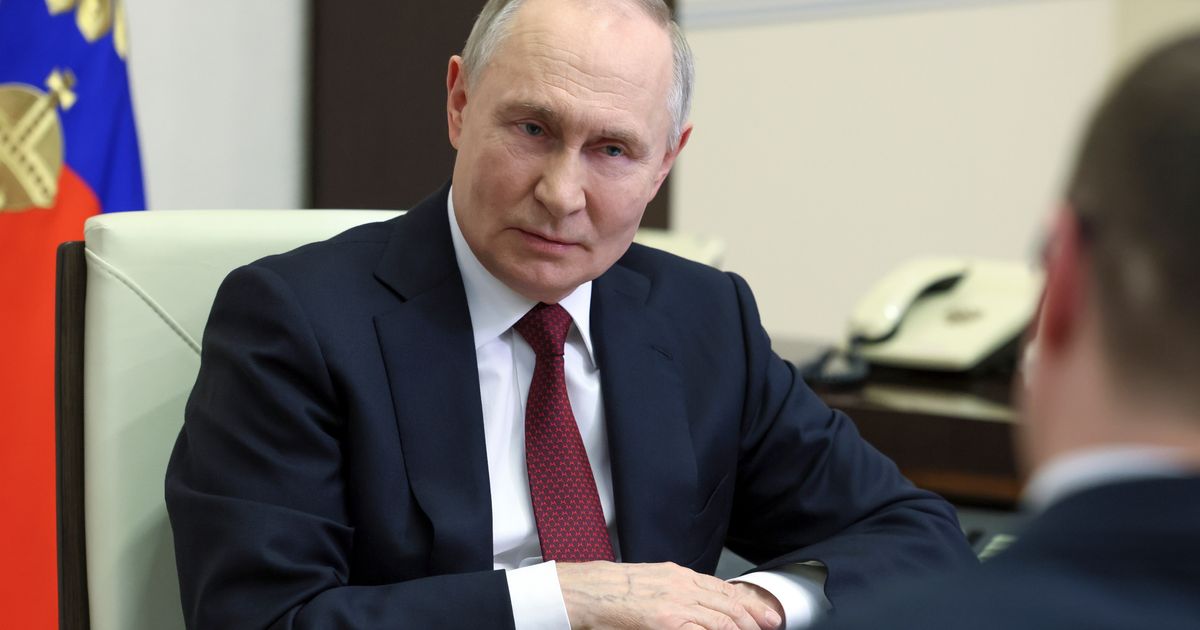
Vladimir Putin’s army has just endured two of its “most costly” months of war, according to the UK.
The ministry of defence (MoD) announced in its latest update on social media that January 2025 was “likely the second most costly month” for Russia after its forces sustained a staggering 48,240 casualties.
The Mod put the average daily casualty rate at around 1,556.
But the worst period of loss for the Russian army was December 2025, when casualties hit 48,670, according to reports from the Ukraine’s General Staff shared by the MoD.
Advertisement
The intelligence officers believe average daily loss rate was therefore a little higher in December, reaching 1,570 per day.
The MoD said that is “the highest average daily casualty rate of the conflict thus far” – although it does not look like that number will drastically drop any time soon.
Putin’s troops has already sustained a staggering 50,000 casualties just in the first six weeks of 2025.
Advertisement
The MoD also claimed Russia has endured more than 837,000 casualties since invading Ukraine in February 2022, almost three years ago.
The MoD said: “Russia’s casualty rate will likely continue to average above 1,000 a day in February 2025, reflecting the high tempo of Russian operations and offensives.”
These are all estimates as Russia does not regularly reveal its casualty rate.
Ukraine normally keeps its losses to itself too, but its president Volodymyr Zelenskyy recently announced his army had lost more than 45,100 throughout the war, with another 390,000 injured since the war began.
Advertisement
The shocking number is still much lower than the estimates for their Russian opponents.
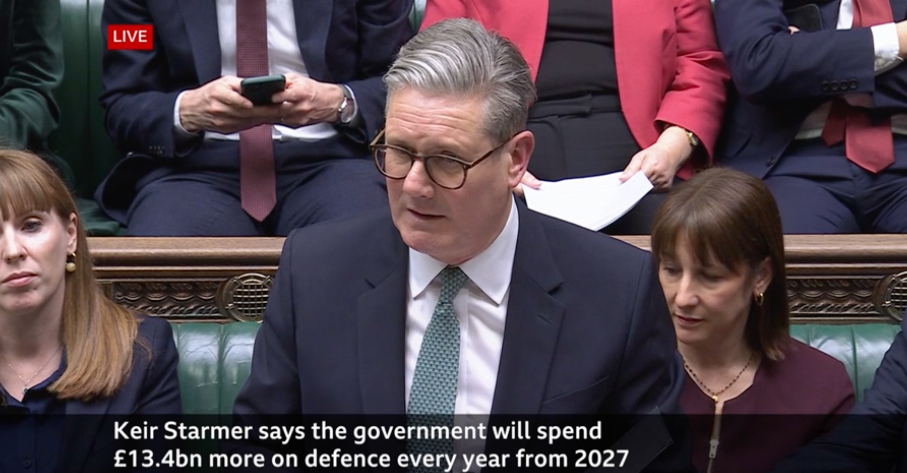
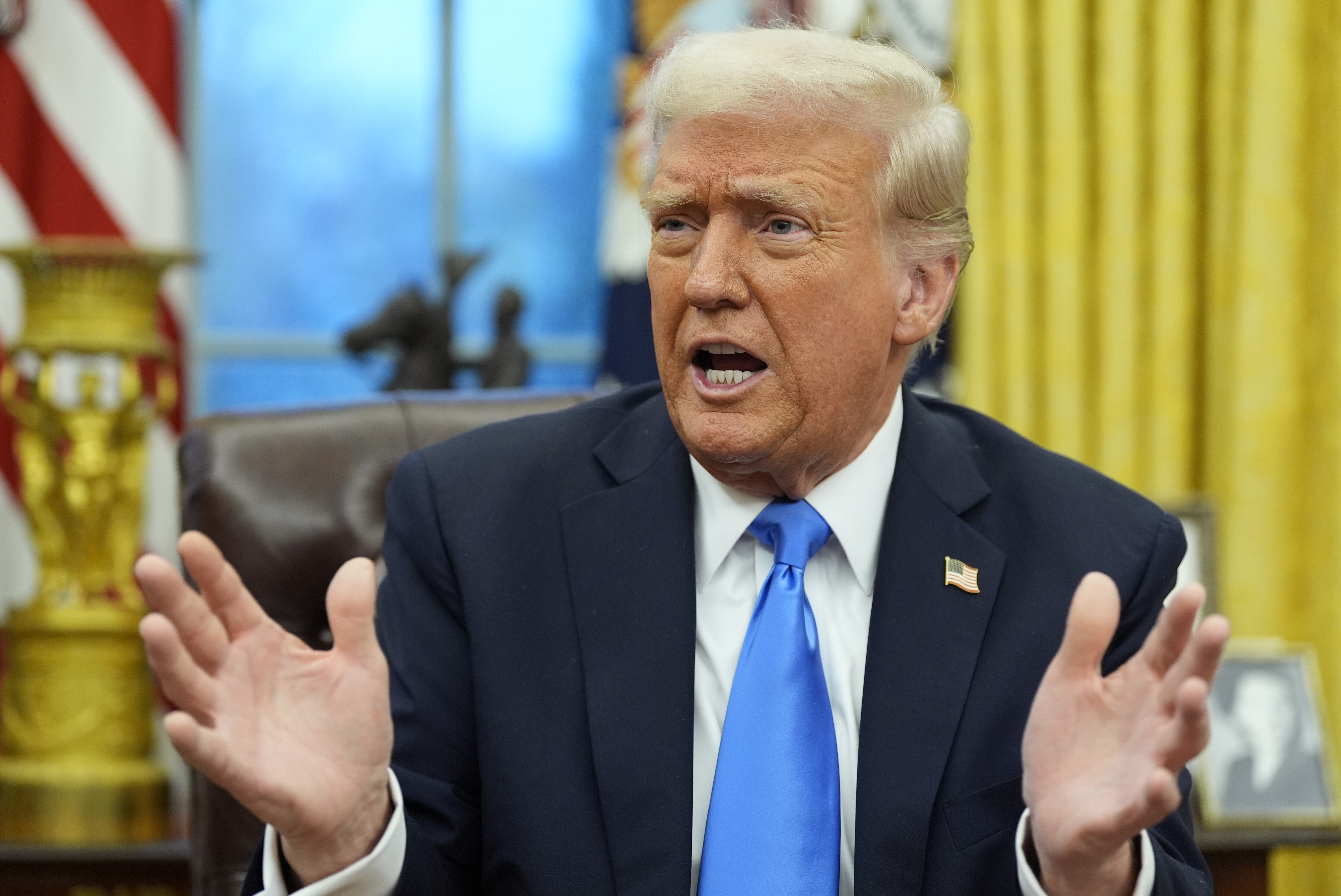
Putin had already been accused of using “meat-grinder tactics” by UK prime minister Keir Starmer last autumn, but he now seems to be forcing his troops to push forward into Ukraine, even if there’s an even greater rate of loss, after Donald Trump’s election.
This has sparked fears Trump may force Ukraine to cede any occupied land to Russia in a potential peace deal – and at the moment, Moscow controls around a fifth of its beleaguered neighbour.
Anonymous Western sources told the BBC that, as of mid-January, there have been 4,000 casualties among the 11,000-strong contingency who were sent to help Putin’s troops fight off Ukraine’s attack in the Russian region of Kursk.
Advertisement
The overall casualty rate – a stat which includes those killed, wounded, missing or captured – is allegedly 36% among the North Korean troops.
That’s much higher than the previous estimates from South Korea’s spy agency, which claimed around 300 North Korean soldiers have been killed in the war and 2,700 have been injured.
Officials also told the broadcaster that it’s not clear where the soldiers are being treated, or if they will be replaced.
Advertisement
Russia has not confirmed or denied North Korean troops are fighting alongside its own since they were first deployed in autumn.
Putin arranged a mutual defence agreement with his North Korean counterpart Kim Jong Un last summer, and both countries agreed to defend the other if attacked by a third party.
It’s thought Ukraine’s incursion into Kursk in August was seen as an attack on Russia – so Putin was able to call on North Korean troops to bolster his beleaguered army to defend the region.
Advertisement
Putin has been ploughing through his own soldiers, forcing them forwards on the frontline using what UK prime minister Keir Starmer described as “meat-grinder” tactics.
The UK’s ministry of defence said earlier this month Russia is estimated to have suffered more than 790,000 casualties since the war began.
The MoD also warned that North Korean – also known as DPRK – troops were struggling to integrate with their Russian peers.
Advertisement
The intelligence officers said: “Russian and DPRK forces are almost certainly experiencing interoperability difficulties.
“The two forces do not share a common language and DPRK troops almost certainly have difficulties integrating into Russia’s command and control structure.”
North Korean troops have “highly likely sustained significant combat casualties” already and “only achieved tactical gains”, the intelligence claimed in the latest update on X.
Advertisement
Ukrainian president Volodymyr Zelenskyy confirmed earlier this month that his troops had seized two North Korean soldiers in Kursk for the first time.
He offered a prisoner swap, hoping to secure the release of Ukrainians held by Russia.
“Ukraine is ready to hand over Kim Jong Un’s soldiers to him if he can organise their exchange for our warriors who are being held captive in Russia,” Zelenskyy said.
His 2024 election campaign was no exception, only this time, he was promising to stop wars, too.
Trump claims to be such a good mediator that he is not even afraid to do deals with ruthless dictators – like Vladimir Putin.
While the rest of Ukraine’s allies have refused to consider organising a truce with the Kremlin until Kyiv initiates it, Trump has already pledged to end the three-year war within his day.
Advertisement
But, with his inauguration less than a month away, just how likely is it that Trump will be able to secure a deal?
And will actually stop the war – or just appease Putin, temporarily?
Will Trump actually be able to set up some kind of Ukraine-Russia peace deal?
That depends on your definition of a deal.
According to senior consulting fellow of Chatham House’s Russia and Eurasia Programme, Keir Giles, Trump will probably be able to force Moscow and Kyiv to agree to something which he can portray as a deal.
However, Giles told HuffPost UK: “Is it going to be something that is durable, sustainable and actually ensures fighting comes to an end on a more or less permanent basis? Almost certainly not.”
Advertisement
Giles said it all comes down to the US president-elect and the Russian president finding a “mutual point of interest that sells”.
For Trump, that most likely means living up to his own promises of ending the war – at least, for now – while, for Putin, it means weakening Ukraine and taking as much of its land as he can.
Giles also warned: “Putin has given every indication during Trump’s first presidency that he knew precisely how to play him in order to get the maximum possible benefit function.”
Advertisement
There is a chance the Russian president may be able to get his way in exchange just for appearing to stop the war – while possibly still hoping to take more of eastern Europe.
It is worth remembering that Trump and Putin appeared to strike up quite the friendship during the Republican’s first term in office, and the president-elect even praised Putin’s invasion in 2022, calling it “genius” and “savvy”.
There is, of course, a third albeit less powerful player in these negotiations, Ukraine, who previously refused to negotiate with Putin unless all Russian troops were withdrawn from Ukrainian land.
“There’s a mutual interest between Trump and Putin to do something but of course the wild card is Ukraine, which would prefer to survive,” Giles said, adding: “The likelihood of Ukraine agreeing to something that blights its future permanently is pretty slim.”
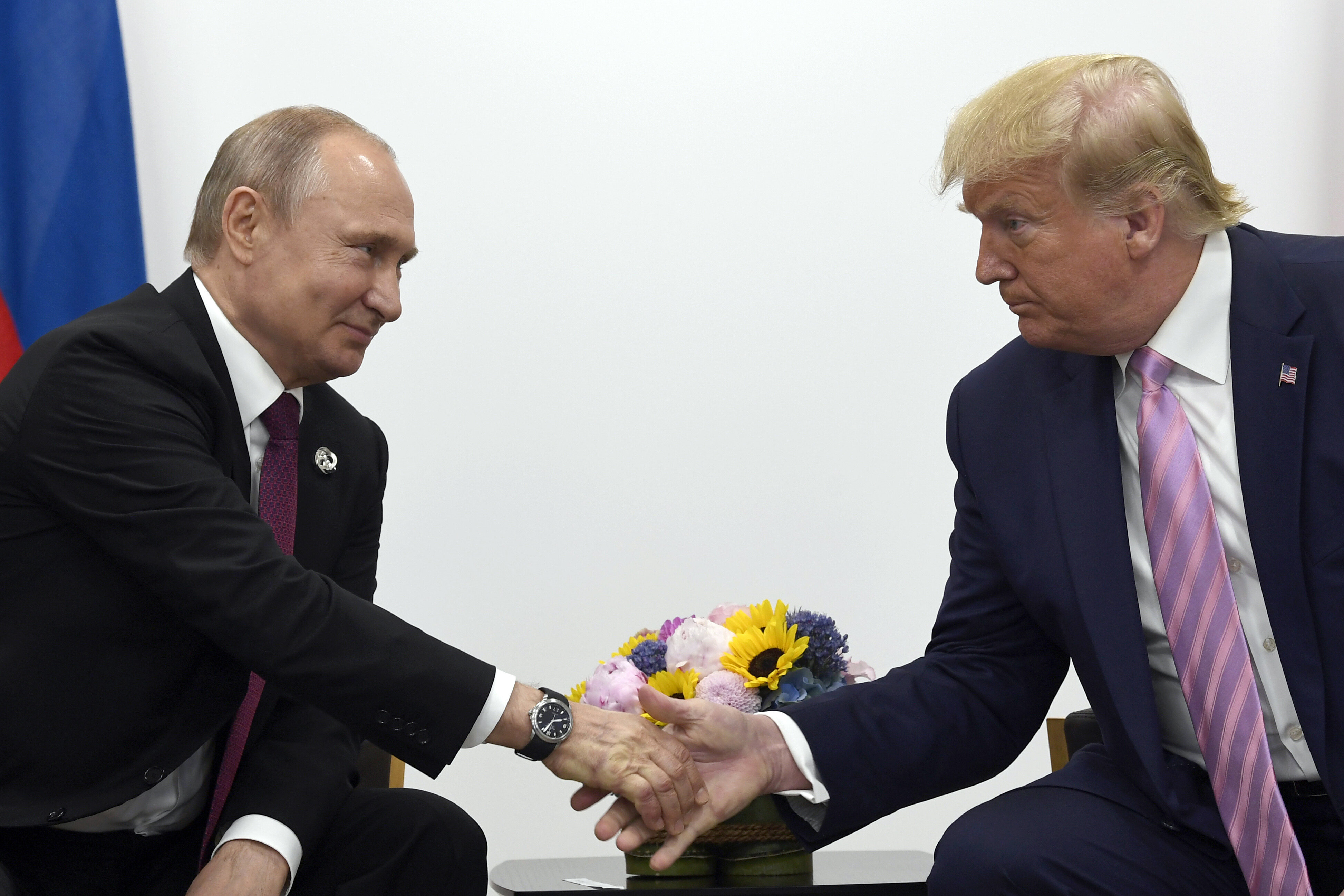
President Donald Trump, right, shakes hands with Russian President Vladimir Putin
via Associated Press
Advertisement
Why would Putin agree to a pause in the fighting?
Putin has made it clear that his main objective is to seize the whole of Ukraine.
So Putin may be more inclined to press pause on the conflict, so he can keep his troops in the occupied parts of Ukraine.
Giles also noted there would be some diplomatic benefit to freezing the war, saying: “To some extent Putin will want to make Trump look good if they’re looking for future cooperation.”
Advertisement
Meanwhile, Steve Forbes, of Forbes Media, claimed Putin would be rooting for the kind of deal Hitler got from Neville Chamberlain in Munich 1938 – in exchange for a chunk of Czechoslovakia – which only lasted a few months before World War 2 began.
As Forbes claimed: “Like Hitler, Putin won’t be appeased, that’s why he must be thwarted.”
Giles also seemed questioned the idea of just trying to placate the Russian president because of the impact it would have on the rest of Europe.
He said: “The problem is it also buys time for Putin to rebuild its forces without Ukraine destroying them almost as fast as they can be rebuilt.
Advertisement
“And precedent suggests the danger is that as soon as a ceasefire is declared, whether or not is a real and durable one, that will give western Europe the opportunity to pretend the problem has gone away and to ease off its own paltry efforts to actually rebuild its defence.”
Former adviser to the Ukrainian government, Yuliya Kazdobina claimed Putin does not have any interest at all in ending his invasion long-term.
She said: “As Donald Trump attempts to implement his campaign promise and end the war in Ukraine, he is likely to discover that his famed deal-making skills are no match for Putin’s single-minded obsession with the destruction of Ukraine.
“In words and deeds, Putin has repeatedly demonstrated his commitment to wiping Ukraine off the map.
“In such circumstances, any talk of a compromise settlement is dangerously delusional.
“Until Putin is forced to recognise Ukraine’s right to exist, any peace deals will be temporary and the threat of further Russian aggression will remain.”
Similarly, a Western military source told HuffPost UK: “If negotiation means capitulation on his terms, I think he’s ready to do that. But he is not ready for a genuine negotiation about Ukraine’s future sovereignty.”
Advertisement

Soldiers of Ukraine’s 1st Separate Mechanised Battalion
via Associated Press
Is a Trump peace deal the best option for Ukraine?
The best outcome for Ukraine would be if Trump were to reject any request from Putin, throw his weight fully behind Ukraine and lift any restrictions on US weaponry to Kyiv – but that’s pretty unlikely to happen considering the recent promises from his incoming administration.
The details of the president-elect’s potential agreement are still unclear, but it’s believed he wants to take Ukraine’s potential Nato membership off the table and propose Zelenskyy concedes some land to Moscow – even though that was a red line for Kyiv in the past.
Advertisement
According to Forbes, Trump can still get a “great deal” for Kyiv without asking all the Russian forces in Crimea and the eastern part of the country.
He said: “Indeed a settlement will realistically involve the Kremlin getting formal control of a few pieces of territory in the east, where it can claim the population is predominantly Russian.
“But either way the people there should have the right to emigrate elsewhere.”
He claimed that Ukrainians might have to pull out of Kursk, the Russian region which Kyiv seized in August.
Advertisement
“But the final deal must unmistakably leave Ukraine an independent nation with strong security arrangements,” he said.
He also suggested Ukraine could avoid Nato membership – one of Putin’s red lines – by having permanent military bases in the country, funded by frozen Russian assets.
However, others believe Ukraine should not be forced into any kind of negotiation.
“We can’t talk about peacekeepers when there’s no peace. And why is there no peace? Because Russia does not want peace.”
Labour MP David Taylor told HuffPost UK: “Talks of any form of deal are for the Ukrainian people and their president.
“They are the ones who have been engaged in a bloody war, fighting tooth and nail for freedom against Russian tyranny.”
Advertisement
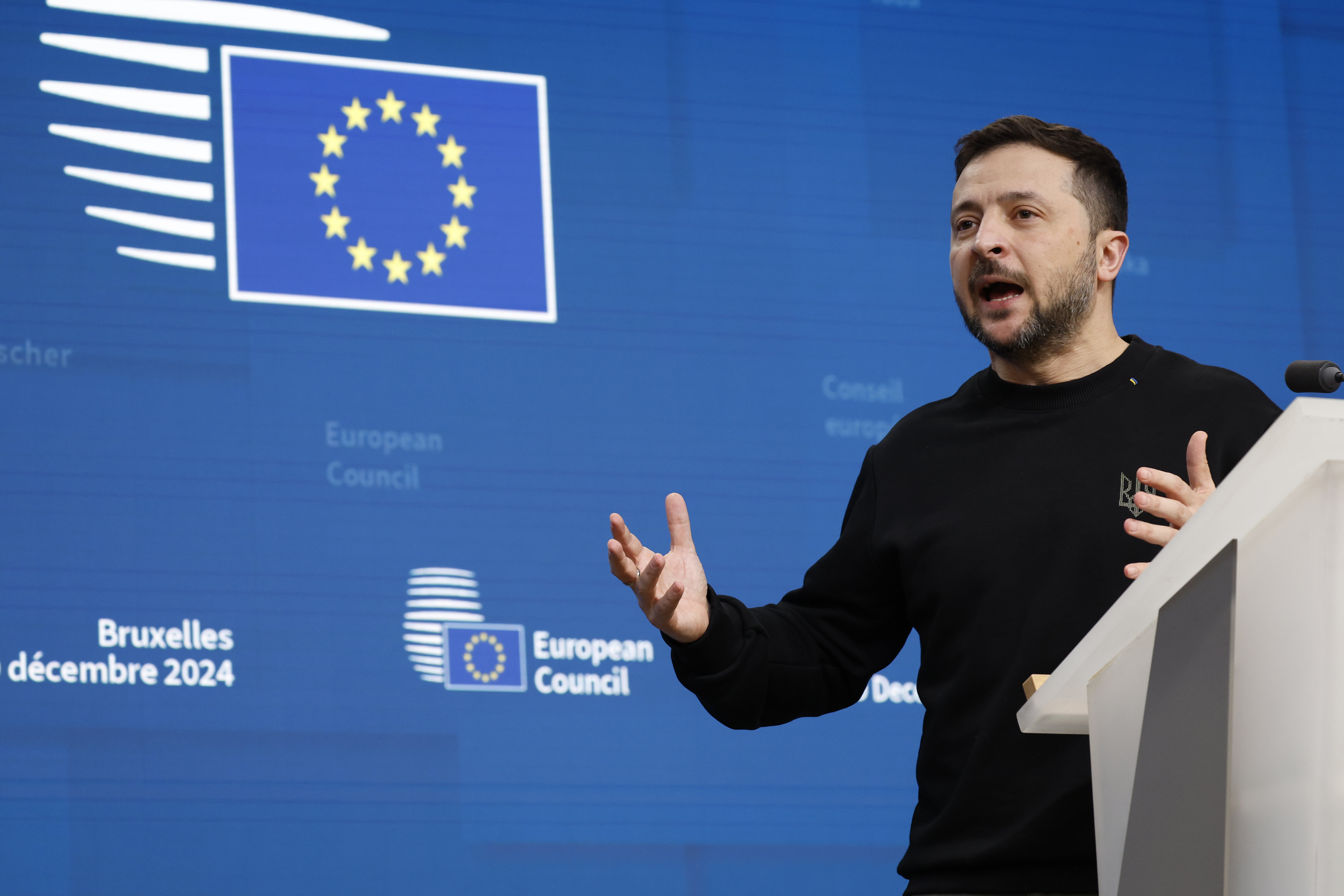
Ukraine’s President Volodymyr Zelenskyy speaks addresses a media conference during an EU summit in Brussels, Thursday, Dec. 19, 2024.
via Associated Press
What happens if Ukraine rejects any peace deal?
In the unlikely scenario that Ukraine rejects any deal with Russia, Giles suggested the White House might utilise the authority it has over Kyiv as the country’s most powerful ally.
He said: “Trump can use leverage against Kyiv far more effectively than he can on Putin for example, by freezing aide to Ukraine.”
Advertisement
Without the US, Kyiv would be less restrained in terms of how it fights Moscow.
For instance, Washington famously dragged its feet when it came to authorising Kyiv’s use of its long-range missiles against Russia, and only gave its permission in November after months of pleading from Ukrainian president Volodymyr Zelenskyy.
But Giles said: “Ukraine will be able to continue fighting with or without support [from the US].
“Let’s not forget that in the run up to the full scale invasion when all the predictions that were coming from the US in particular – not from the UK – was that Ukraine would be overrun swiftly, all of the planning and support for Ukraine was for after it was overrun.
“The last time that happened, 1944-45, resistance actually continued for more than a decade afterwards.”
Advertisement
Yet, Giles was wary that Ukraine can only succeed if it still has the backing from its other allies.
He added: “If Europe is unable to or unwilling to step up to fill the gap [from the US], then the prospects for Ukraine are dire.”
However, Kyiv may well choose to discard its own red lines rather than lose the US as an ally.
Zelenskyy has been presenting Trump with his “victory plan” for months, and appears to softening his language around negotiations.
While making it clear he does not want any other country to negotiate with Putin without Ukraine’s backing, he pointed out that Kyiv is not exactly in a strong position right now.
Advertisement
“Are we in NATO? We don’t know. Will we be part of the EU? Yes, in the future, but when?” he said.
“Under these circumstances, sitting down at the negotiating table with Putin means giving him the right to dictate terms in our part of the world.
“First, we need to develop a model, an action plan, or a peace plan – call it what you will. Then we can present it to Putin or, more broadly, to the Russians.”
He said in December that his troops can only count on “diplomatic pressures” to oust Russia from Ukraine’s occupied territories, as his troops “do not have the strength” to remove them by force.
Advertisement
As Giles explained: “Ukraine might at some point reach the calculus that it is better to freeze the conflict for the sake of national survival.
“But that certainly won’t be an end of the long-term war.”
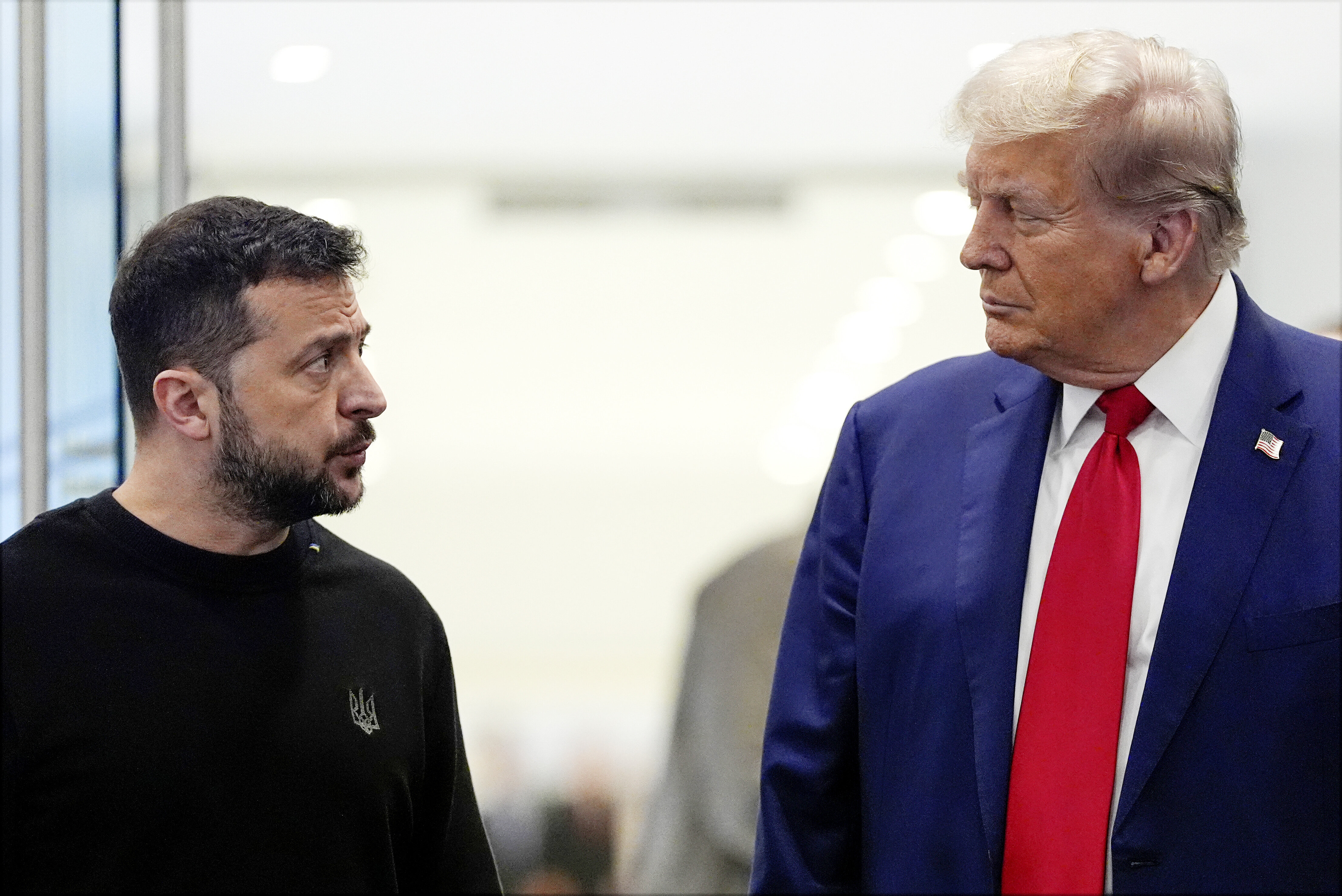
Former President Donald Trump meets with Ukraine’s President Volodymyr Zelenskyy at Trump Tower, Friday, Sept. 27, 2024
Volodymyr Zelenskyy has called on the world to be “united and stronger than ever” against Vladimir Putin as the UK said Russia is making “further gains” in Ukraine.
According to the latest intelligence update from the Ministry of Defence, Moscow’s troops are advancing on the “key logistical hub” of Pokrovsk in Donetsk after gaining control of the nearby village of Shevchenko.
Advertisement
In a post on X, the MoD said: “Russia will likely continue to make gains towards Pokrovsk whilst continuing to advance westwards to the south of the town.”
Zelenskyy, the Ukrainian president, revealed that in the last week alone, Russia has used nearly 630 guided aerial bombs, around 550 strike drones, and over 100 missiles against his country.
He said: “I am grateful to the warriors defending Ukraine and to our partners who understand our need to bolster Ukraine’s air defences to save the lives of our people.
Advertisement
“Now, the world must be united and stronger than ever. Only through strength can we together force Russia and its allies to give up terror and achieve a just peace.”
This week alone, Russia has used nearly 630 guided aerial bombs, around 550 strike drones, and over 100 missiles of various types against Ukraine.
I am grateful to the warriors defending Ukraine and to our partners who understand our need to bolster Ukraine’s air defenses to… pic.twitter.com/9U58GWjyg8
— Volodymyr Zelenskyy / Володимир Зеленський (@ZelenskyyUa) December 15, 2024
Meanwhile, Zelenskyy has also announced that Ukraine will support humanitarian efforts in Syria following the fall of its former president, Bashar al-Assad.
Advertisement
He said: “For Ukraine, this is important: the calmer the situation in such regions, the more actively the world can help us achieve peace.
“It is precisely for this reason that Moscow tries so hard to ignite more conflicts and wars in various parts of the world, fuelling instability and adding to global challenges.”
The president said a “grain from Ukraine” programme would allow his country to provide Syria with food.
Advertisement
“We call on everyone worldwide to join stabilisation efforts to ensure that the war—ignited over a decade ago in Syria with the involvement of Iran and Russia—can finally come to an end,” he said in a post on X.
Nato’s chief has urged the alliance’s members to adopt a “wartime mindset” over the growing threat from Russia in the coming years.
The secretary general, Mark Rutte, said all of Nato’s members should consider increasing defence spending above the current target of 2% of GDP.
Advertisement
Speaking in Brussels, he said: “Russia is preparing for long-term confrontation, with Ukraine and with us.
“We are not ready for what is coming our way in four to five years. It is time to shift to a wartime mindset and turbocharge our defence production and defence spending.”
Ukraine wants to join Nato, but might be pressured to drop that bid in order to secure a peace deal with Russia when president-elect Donald Trump enters the White House next month.
Rutte said Nato members spent more than 3% of their GDP on defence during the Cold War, when tensions between the US and Russia were high.
He also said Nato need to be aware of China’s ambitions, especially when it comes to its intentions towards Taiwan.
Advertisement
His comments will be seen as an attempt to pre-empt Trump, who is expected to repeat his calls for all Nato member states to increase their defence spending.
At the moment, many member states spend less than the 2% on defence.
Around 23 of the 32 members are expected to reach the target amount by the end of the year.
The UK currently spends just over 2%, but defence secretary John Healey reiterated last week that the UK is “totally committed to increasing defence spending to 2.5% of GDP”.
Advertisement
He said 2.5% of GDP on defence would be “a level we haven’t seen in this country since 2010, when Labour was last in government”.
Labour has not put clear timeline on that promise, though.
Less than a week after he was elected in July, PM Keir Starmer also said the government have a “cast iron” commitment” to hiking defence spending.
He said: “At a time when we face multiple threats at home and abroad, we must make sure we are ready to defend ourselves.”
Advertisement
Yet he prefaced that this increase in defence would have to be “within our fiscal rules” and that a “strategic review needs to come first”.
In response to Rutte’s comments, a spokesman for Keir Starmer said: “We’ve said we’ll set out a pathway to 2.5% in the spring and we hope other allies will follow suit in due course.”
Vladimir Putin seemed to overlook the international arrest warrant out against him while calling for everyone to adhere to the law.
The International Criminal Court issued an arrest warrant for the Russian president in March 2023 over his alleged involvement in the abduction of children from Ukraine.
Advertisement
The Court’s 124 signatory countries are therefore expected to arrest him if he ever sets foot on their land – meaning his travel plans have been significantly scaled down over the last 18 months.
Russia itself is not a signatory of the statute and has denied the claims against Putin.
Still, according to Russian state news agency TASS, the president claimed: “We stand united in advocating for the establishment of a just and democratic world order founded on genuine equality and adherence to international law, free from all forms of discrimination, coercion, and sanctions pressure, settling regional conflicts and crises, as well as combating the terrorist threat.”
Speaking in his message to participants of the Russia-Islamic World Strategic Vision Group events in Malaysia, he also emphasised the “great importance” on strengthening ties with Muslim countries.
Advertisement
He continued: “In the current challenging international climate, it is significant that our positions on key regional and global issues are largely aligned.”
It’s worth noting that Putin is currently offering up asylum to Bashar al-Assad, the Syrian dictator who was toppled at the weekend – Moscow propped up his brutal regime for years.
Putin is also allied with North Korean leader Kim Jong Un who is known for oppressing his civilians.
Advertisement
The Russian president himself is thought to have fixed the recent election so he could secure a fifth term in office.
Putin has also brushed off the impact of the arrest warrant on his life recently, claiming in October: “Decisions of this kind are very easy to circumvent, it is enough to sign an intergovernmental agreement and that’s it – the jurisdiction of the ICC will be limited.”
Speaking after Syrian rebels ousted Bashar al-Assad, who had ruled Turkey’s neighbour since 2000, Erdogan heaped praise on Russia’s authoritarian leader.
Advertisement
He said: “Now, there are only two leaders in the world. They are myself and Vladimir Putin.
“I am not saying this because one of them is me. But I have been in office for 22 years, nearly as long as Mr Putin. The rest are gone.”
Vladimir Putin’s deputy defence minister may have accidentally revealed Moscow’s estimate of its losses in Ukraine.
Until now, the exact number of those Russian deaths or casualties have been kept firmly under wraps.
Ana Tsivilyova, who is also the daughter of Putin’s cousin, told a meeting with lawmakers that the Kremlin had tens of thousands of appeals from relatives who are searching for missing or dead soldiers.
Advertisement
Speaking in a video published by the independent Astra Telegram channel, she said: “The ministry of internal affairs takes [DNA samples] absolutely free of charge at its own expense, and enters into its database for all the relatives who have applied to us. I’ve already said 48,000.”
Shortly after she let this detail slip, Russia’s defence committee chief Andrei Kartapolov cut in and told viewers: “I earnestly ask you not to use these figures anywhere.
“This is such sensitive, closed information. And when we draw up the final documents, we should not include these figures anywhere.”
Tsivilyova replied: “I didn’t give the numbers of missing people, but the number of requests to us. Many of them will be found. So this number is specifically requests, not data.”
Advertisement
The video was published by popular Telegram channel Astra and streamed at the time on the website for the parliament’s lower house, the Duma.
The exchange reportedly took place on 26 November. Reuters noted that it was not on the site on 4 December.
It remains unclear exactly how many troops have died in the war on either the Ukrainian or the Russian side.
Independent Russian news site Mesiazone and the BBC Russian service confirmed the names of 82,050 soldiers who had died in Ukraine as of 6 December
Meanwhile, Western intelligence estimates that Russian losses – dead or injured – exceed 700,000.
In fact, the UK’s Ministry of Defence reported that November was also the costliest month for the war, with casualties reaching 1,500 a day.
Advertisement
The Kremlin is thought to be reluctant about revealing the true extent of the losses so the Russian public remain unaware of the real wartime impact.
Putin is also pushing ahead at Russia’s fastest rate of the war yet to gain as much land as possible as US president-elect Donald Trump is expected to push for a peace deal once in office.
Speaking to US journalist Tucker Carlson – who interviewed the Russian president in February – Putin’s foreign minister Sergei Lavrov said Russia will use “any means” to prevent defeat by the West this week.
Lavrov said the West must take Russia’s “red lines” seriously – although he also admitted Russia and the US were not at war right now, despite the aggressive rhetoric from Putin.
He said: “And in any case, this (war) is not what we want. We would like to have normal relations with all our neighbours, of course… especially with a great country like the United States.”
Advertisement
He also said Donald Trump was a “very strong person, a person who wants results”.
The US president-elect has promised to end the war on his first full day back in the White House, but has not explained how he would do so, sparking fears he could pressure Ukraine to cede land to Russia.
Lavrov told Carlson any potential peace deal has to acknowledge the realities on the ground – as Russia controls 20% of Ukraine – and exclude any chance of Ukraine joining Nato.
Russian forces are making “rapid advances” in Ukraine amid fresh hope of a peace deal in the conflict.
The latest intelligence update from the UK Ministry of Defence (MoD) said Putin’s troops “are attacking behind established Ukrainian defences” as the third anniversary of the beginning of the war approaches.
Advertisement
It came after Volodymyr Zelenskyytold Sky News that he could be willing to give up territory already occupied by Russia to bring about a ceasefire.
In return, the Ukrainian president said land still held by Kyiv could come under “the Nato umbrella”.
He said his country could then seek to get back the land it has lost “in a diplomatic way” in the future.
Any peace deal must also contain a”guarantee that [Russian President Vladimir] Putin will not come back” for more Ukrainian territory, Zelenskyy said.
Advertisement
His comments come as Russia appears to be gaining the upper hand in the war.
The MoD update posted on X said: “In Donetsk oblast, Russian forces have made rapid advances towards the eastern flank of Velyka Novosilka.
“The town has been situated on the front line since 2022 and has acted as a lynchpin of Ukraine’s defensive line.”
The MoD said the area is now “vulnerable to Russian attacks due to the loss of Vuhledar, 30 km to the east, in October”.
They added: “This enabled increased Russian advances into less well defended areas in western Donetsk oblast.
“Russian forces are attacking behind established Ukrainian defences and threatening the primary logistics routes to the town.”
Advertisement
Meanwhile, Zelenskyy has thanked the UK for its ongoing support for Ukraine.
In a video posted on X, he said: “We value the UK’s decision to impose sanctions on Russia’s shadow tanker fleet. This keeps the world on the right track—a course toward justice. Toward ensuring that Russia feels its responsibility for this war, for its consequences, and is compelled towards peace. The world is able to ensure this.”
This week, I want to highlight several of our partners for their significant support: Lithuania – a new batch of military aid has arrived, including weapons, ammunition, and spare parts for armored vehicles.
Russian President Vladimir Putin on Thursday said he expects Donald Trump “will find a solution” on the Ukraine war, adding that he hopes the US president-elect recognises he is “not safe.”
Speaking to reporters in Kazakhstan following a security summit, Putin said President Joe Biden’s decision to allow Ukraine to use US-supplied long-range missiles to strike deeper inside Russia could perhaps be part of an effort by Biden to create challenges for the incoming Trump administration.
Advertisement
In either case, Putin said Trump “is an intelligent and already quite experienced person,” according to CNN.
“I think he will find a solution,” he said.
Trump, who has refused to answer whether it would be in the best interest of the US for Ukraine to defeat Russia, has said he could strike a deal between both sides in the conflict “within 24 hours” but has not explained what a potential agreement would entail.
During his remarks, Putin also referred to what he described as “uncivilised methods” deployed against Trump during the campaign, citing the attempts on his life.
“By the way, in my opinion, he is not safe now,” Putin said, according to Reuters.
“Unfortunately, in the history of the United States various incidents have happened. I think he is intelligent and I hope he’s cautious and understands this,” Putin added, the news agency reported.
Advertisement
In July, a gunman targeted Trump while he was delivering a speech at a campaign rally in Pennsylvania. Trump’s ear was injured, and a rallygoer died in the attack.
Two months later, US Secret Service agents shot at a man who pointed a rifle through a fence at Trump’s West Palm Beach club as the then-presidential candidate was playing golf. Trump was unharmed.
The Russian leader also decried what he described as “humiliating, unfounded judicial procedures” against Trump, without going into further details on the criminal cases the president-elect has faced.
Trump was found guilty in May of 34 counts of falsifying business records to cover up an alleged sexual encounter with adult film actress Stormy Daniels in the lead-up to the 2016 presidential election. The judge overseeing the case has postponed the sentencing hearing indefinitely.
Special counsel Jack Smith has also moved to dismiss the criminal cases he brought against Trump over his efforts to overturn the 2020 election and his alleged mishandling of classified documents after leaving the White House in January 2021.
Advertisement
The only criminal indictment against Trump that is still technically proceeding is his Georgia racketeering case.