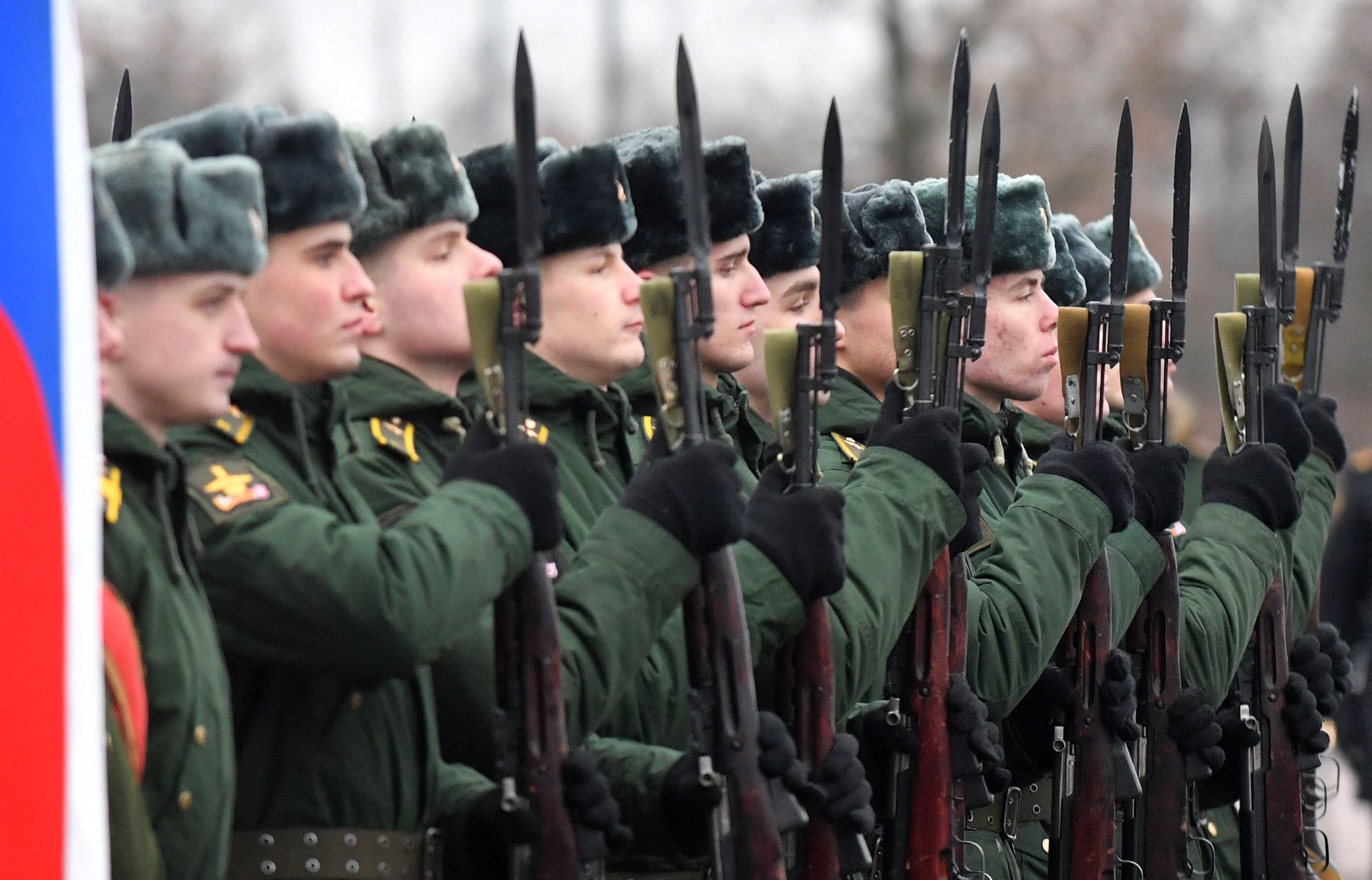
Russia is trying to recruit troops from neighbouring countries in an attempt to replace those injured or killed on the front line in Ukraine, according to UK officials.
Online adverts offering thousands of pounds to those who sign up to fight have been published in Armenia and Kazakhstan.
Advertisement
The Ministry of Defence (MoD) said there had also been “recruitment efforts” among the ethnic Russian population in Kazakhstan’s northern Qostanai region.
That is in addition to attempts to persuade central Asian migrants to fight for Russia in Ukraine by offering them fast-track citizenship and salaries of up to £3,300.
“There are at least six million migrants from central Asia in Russia, which the Kremlin likely sees as potential recruits,” the MoD said in its latest update posted on X, formerly Twitter.
“Russia likely wishes to avoid further unpopular domestic mobilisation measures in the run up to the 2024 Presidential elections.
Advertisement
“Exploiting foreign nationals allows the Kremlin to acquire additional personnel for its war effort in the face of mounting casualties.”
It emerged last week that thousands of Russian troops are being prosecuted for refusing to return to fight in Ukraine amid plummeting morale.
Nearly 100 Russian soldiers a week after being convicted for refusing to go into battle as the war drags on.
“If this trend continues, there will be approximately 5,200 convictions a year for refusing to fight,” the MoD said.
The MoD revealed last month that up to half of Russian fatalities in the war could also have been prevented “with proper first aid”, while crude battlefield medical treatment is causing a huge number of preventable fatalities and amputations.
Vladimir Putin is unlikely to hit his target for recruiting volunteers to the Russian army despite massively increasing their wages, according to UK intelligence.
On the eve of the invasion of Ukraine in February last year, a Russian lieutenant earned 81,200 rubles – around £672 – per month.
Advertisement
According to the UK’s Ministry of Defence (MoD), by October last year, even those ranked as privates were being paid 195,000 rubles – around £1,615 – a month as Putin tried to boost the numbers signing up to serve.
In their latest intelligence update on X, formerly Twitter, the MoD said some in the junior ranks of the Russian army are now on more than 200,000 rubles – £1,650 – a month
“This is over 2.7 times the Russian national average salary of 72,851 rubles,” they said. “By way of comparison, 2.7 times the average UK salary would equate to over £90,000 a year.
“It is highly likely that the salary and additional benefits are a strong incentive for personnel to join up, especially to those from the poorer areas of Russia.”
Advertisement
However, the MoD said Russia was still “unlikely to meet its targets for recruiting volunteers to the ranks” despite the massive boost in soldiers’ pay.
The MoD revealed last month that up to half of Russian fatalities in the war could also have been prevented “with proper first aid”, while crude battlefield medical treatment is causing a huge number of preventable fatalities and amputations.
Yevgeny Prigozhin pushed himself into the international spotlight just two months ago. Now, he’s thought to be dead.
While his reputation had been building since autumn last year, he became a household name after leading a failed military coup which aimed to seize control of one of Moscow’s government departments.
Advertisement
As chief of the mercenary group, Wagner PMC, Prigozhin became infamous for his brutality and his open criticism of the Kremlin’s management of the war in Ukraine.
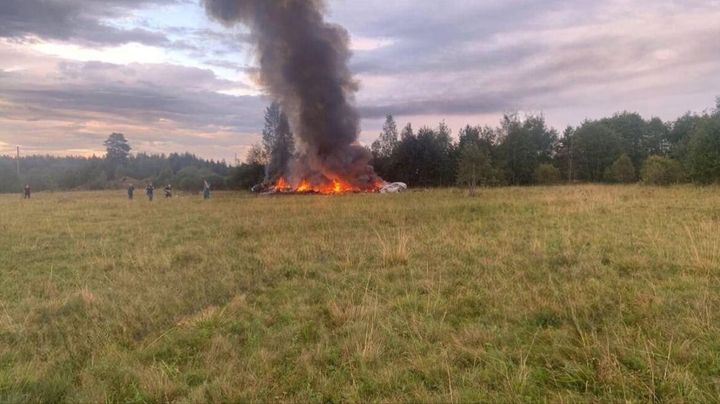
Moscow has denied any involvement in the plane crash which reportedly killed 10 people in Russia on Wednesday, but suspicion towards the authoritarian regime has been building.
After all, Prigozhin arguably posed the biggest domestic threat to Vladimir Putin’s regime since the president had first assumed power, more than 20 years ago – and that’s why his sudden (supposed) death has so much mystery around it.
While solid evidence of the Wagner chief’s death is yet to materialise, here’s what specialists believe happened – and their theories as to why.
Advertisement
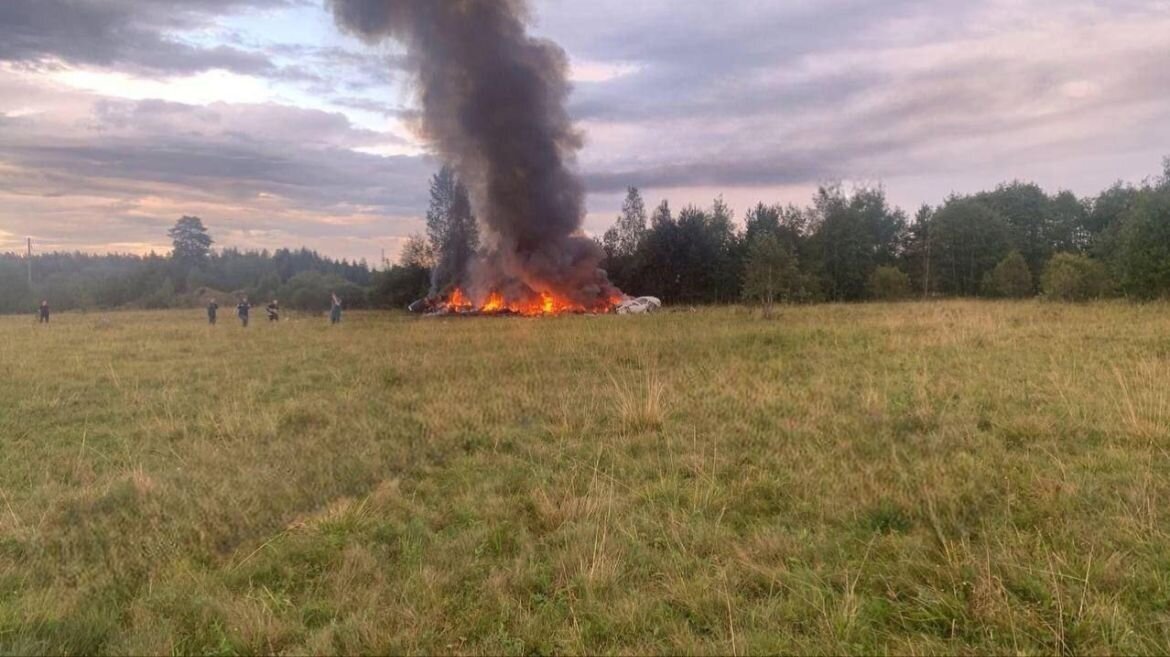
A view of site after a private jet, allegedly carrying Wagner head Yevgeny Prigozhin and other passengers crashed in Russia’s northwestern Tver region, Russia on August 23, 2023.
Anadolu Agency via Getty Images
So, what actually happened that day?
The plane, a private jet belonging to Prigozhin, crashed half an hour after take off from Moscow, while it was on its way to St Petersburg. It’s not clear what the purpose of the trip was.
Rescuers found 10 bodies, but there’s been no official details about who was found, and officials around the world are still trying to find out more about the crash.
If reports are true, and those on board were made up of aviation staff and several high-ranking members of the Wagner group, it’s not clear why they were all flying together. The mercenaries are known for being careful about their security, according to AP news agency.
Further details about what caused the private jet to explode are unclear.
However, Kremlin spokesperson Dmitry Peskov has denied any allegations that Moscow was involved.
“Of course, in the West those speculations are put out under a certain angle and all of it is a complete lie,” he said.
As of Friday afternoon, the Wagner Council of Commanders had still not released a public statement addressing the plane crash.
What suggests the crash was planned?
Early analyses of the events seems to suggest the circumstances around the crash were a little suspicious, according to the US-based think tank, the Institution for the Study of War (ISW).
Its specialists noted the incident happened exactly two months after the armed rebellion, and that Putin was attending a publicly televised concert at the time.
This even has eerie echoes of when Soviet state TV showed Swan Lake while the Soviet Union was falling, in August 1991.
Advertisement
The ISW also noted that the explosion was probably caused by Russian air defences.
That would mean Russian aviation could directly avenge “what was one of the deadliest days for Russian aviation since the start of the full-scale invasion”, ISW analysis suggests, as 13 Russian Army pilots were killed in the failed Wagner coup.
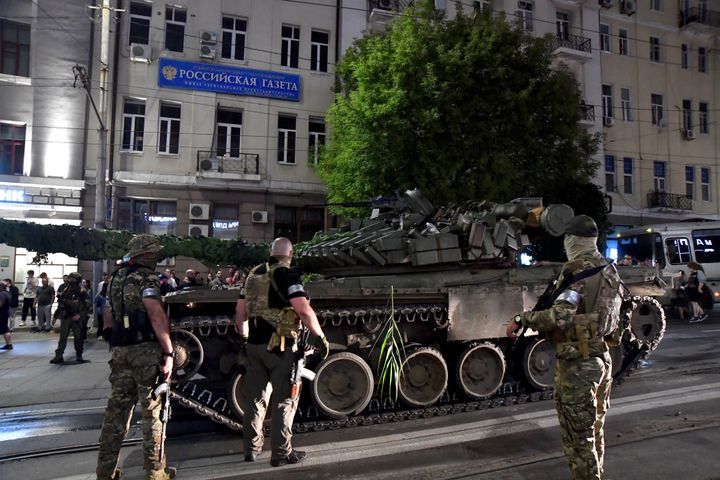

Members of the Wagner Group prepare to depart from the Southern Military District’s headquarters and return to their base in Rostov-on-Don, Russia on June 24, 2023.
Anadolu Agency via Getty Images
Was the Russian ministry of defence hoping to ‘eliminate’ the Wagner leader?
There are reportedly 25,000 private mercenaries in the Wagner group, an organisation technically set up outside of Russian law but operating on behalf of the Kremlin since 2014.
However, when Prigozhin started to criticise the Russian ministry of defence, claiming his troops were better than the official Russian forces and more successful on the frontlines of the Ukrainian war, it tried to shut the group down.
According to ISW, the Kremlin and the Russian ministry of defence had been trying to shut down Prigozhin’s authority and weaken the group since the rebellion.
Advertisement
It said: “The assassination of Wagner’s top leadership was likely the final step to eliminate Wagner as an independent organisation.”
The think tank added: “It is possible that Russian officials capitalised on Prigozhin’s panic and impulsivity to eliminate Wagner’s top-most leadership.”
Advertisement
Without Prigozhin – and his rumoured second-in-command Dmitry Utkin, who was also allegedly killed in the plane crash – Wagner would struggle.
And, by Thursday, ISW said the group will no longer exist as a “quasi-independent parallel military structure’, while a report from Reuters suggested Wagner would only exist as an extension of the Kremlin.
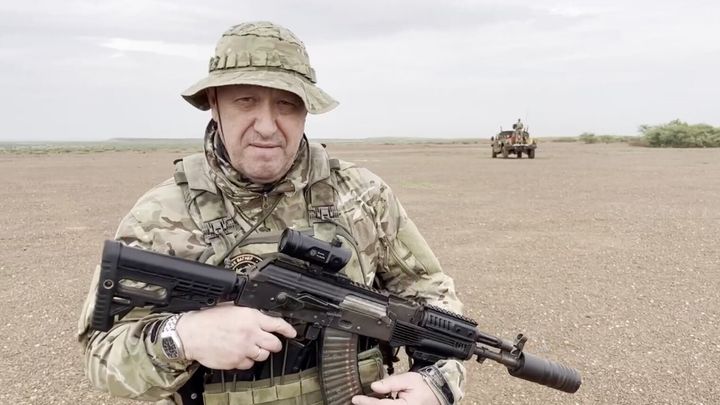
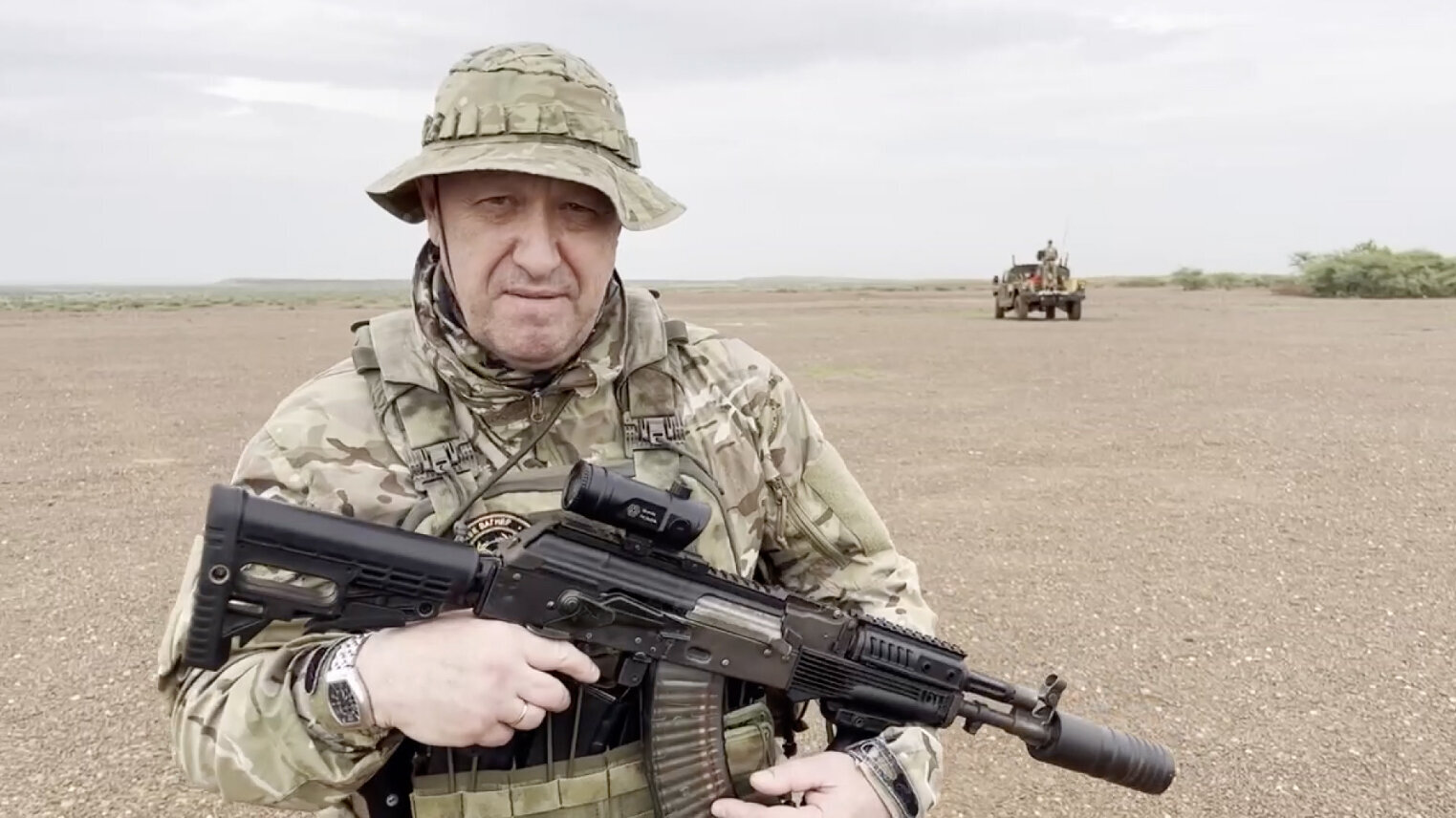
A screen grab captured from a video shared online on August 21 shows Yevgeny Prigozhin, the founder of the Russian private security company Wagner, in a video for the first time after his rebellion against the Russian administration.
Anadolu Agency via Getty Images
Why do experts believe Putin was directly involved?
Although he was initially quiet over Prigozhin’s supposed death, he did acknowledge it on Thursday.
He briefly brushed over the rebellion and said Prigozhin had a “difficult fate” and made”serious mistakes” – while implying the Wagner chief had still been carrying out Putin’s own orders in recent months.
This plays into Prigozhin’s own claims that his coup was never an attack on Putin’s leadership, but on the Russian ministry of defence and its management of the war.
Advertisement
The ISW said: “Prigozhin likely underestimated how seriously his rebellion had personally humiliated Putin. Prigozhin had also apparently overestimated the value of his own loyalty to Putin. ”
That’s why the specialists conclude “Putin almost certainly ordered the Russian military command to shoot down Prigozhin’s plane”.
The think tank explained: “The entirety of the Russian political and security sphere likely viewed Prigozhin’s continued survival following Wagner’s rebellion as at Putin’s discretion.”
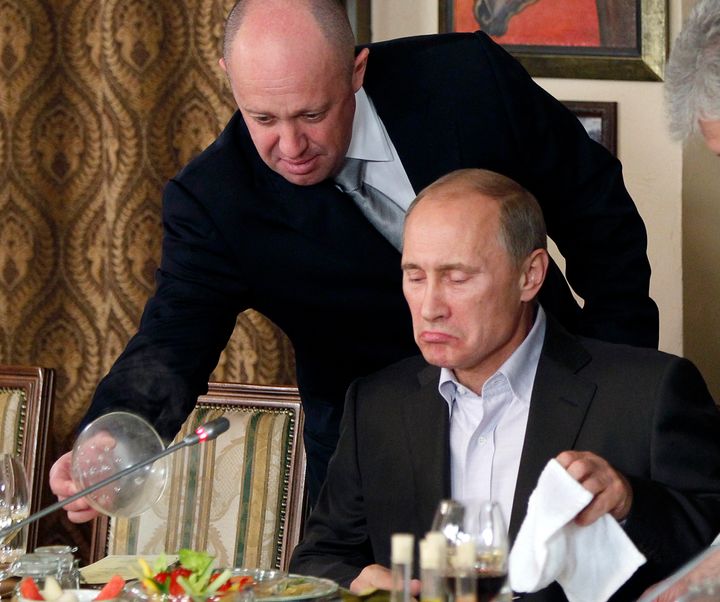
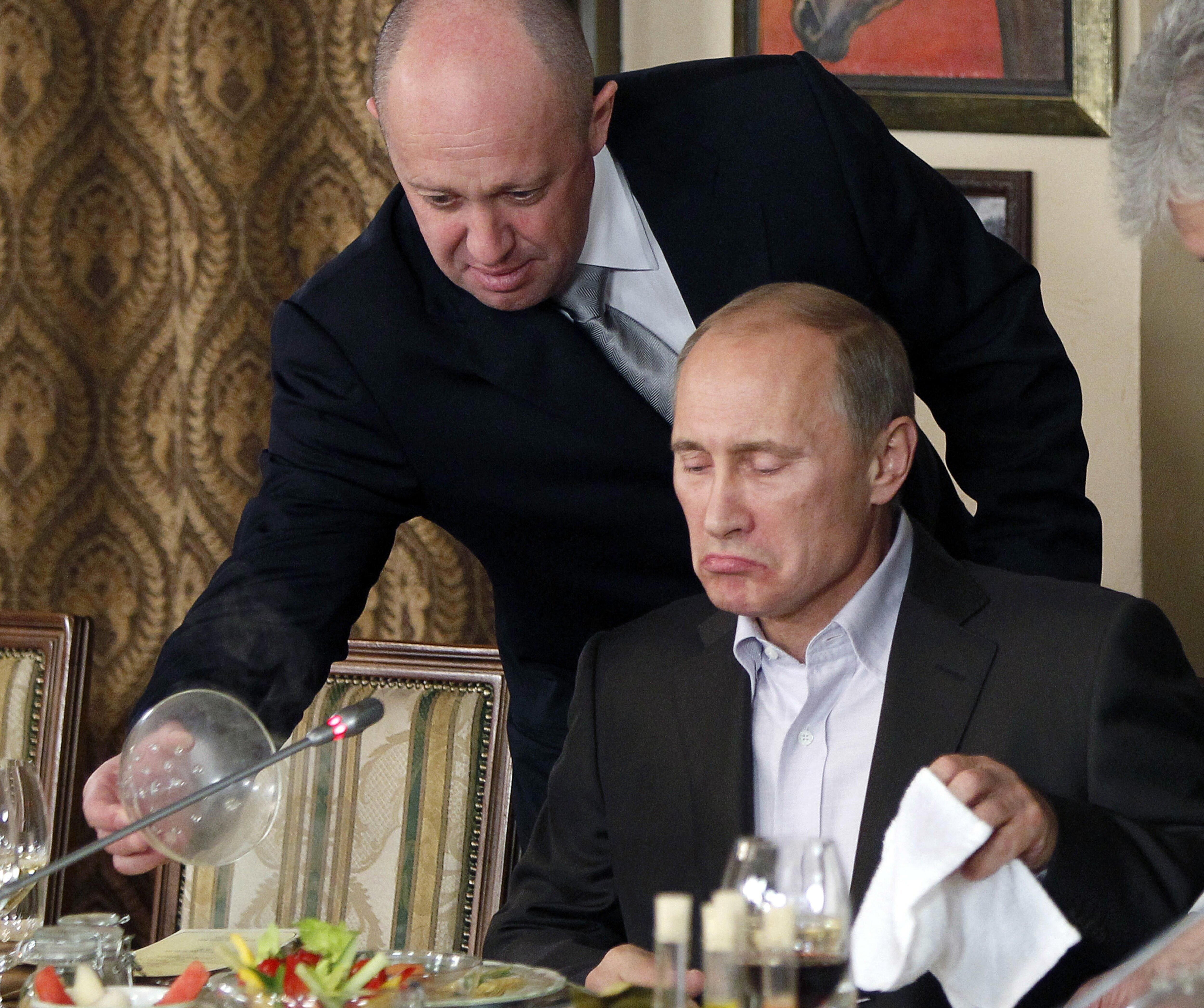
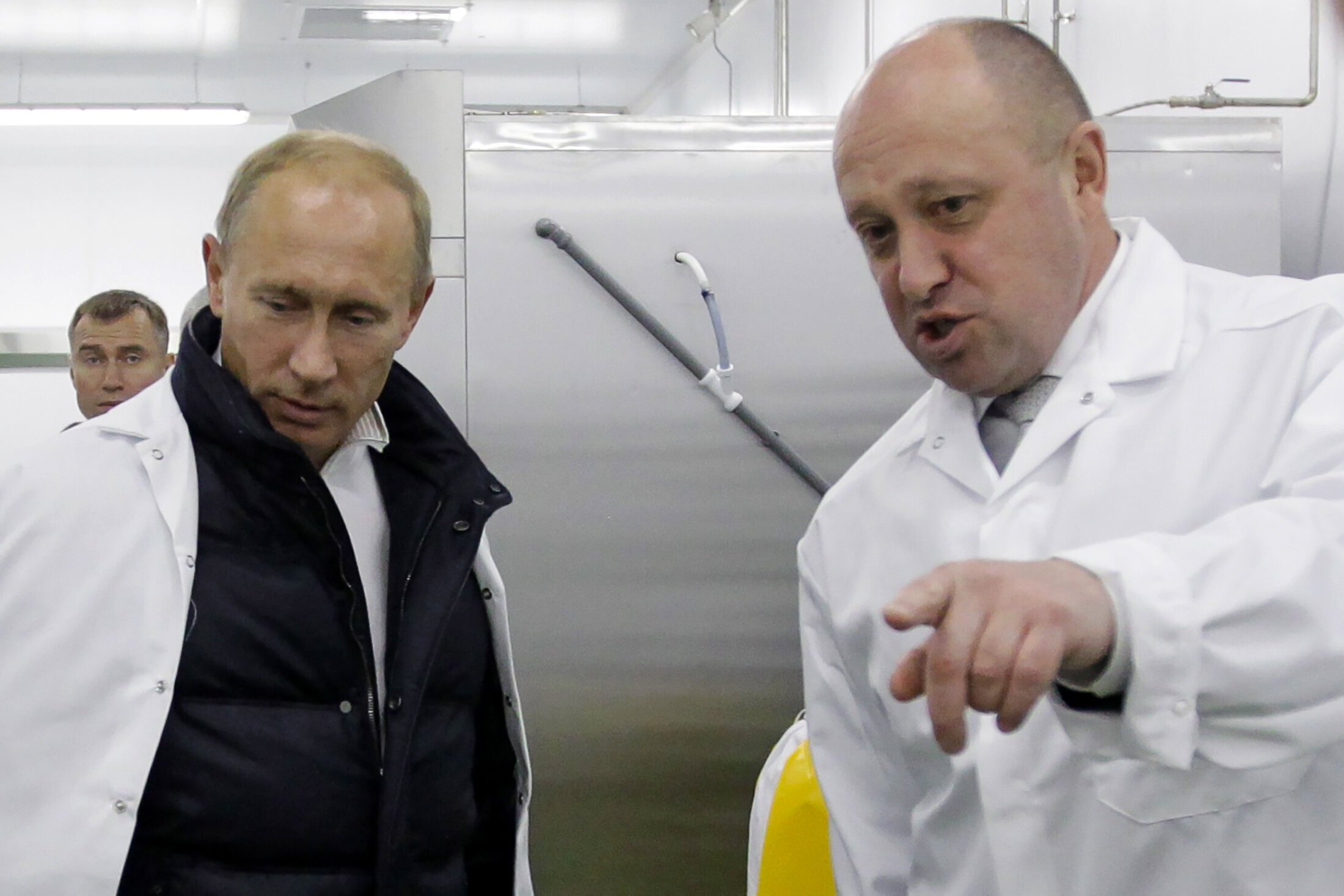
The two men were once close allies, with Prigozhin even nicknamed “Putin’s chef” for a time.
Yevgeny Prigozhin, top, serves food to Russian Prime Minister Vladimir Putin at Prigozhin’s restaurant outside Moscow, Russia, on Nov. 11, 2011.
via Associated Press
Why did the crash happen two months after the coup?
ISW suggested Putin may have decided that Prigozhin was far enough removed from Wagner by then that he could kill him without turning him into a martyr for the group.
Advertisement
Alternatively, Prigozhin’s attempts to establish more influence abroad may have a red line which the two negotiated with Belarus after the attempted coup.
Perhaps it was telling that the incident happened just days after the Wagner chief actually issued his first public appearance in months, through that promotional video in Africa.
CIA director William Burns even predicted last month that the Wagner mercenary leader would face backlash from Putin for the coup – even if the Russian president had to wait a long time to exact his revenge.
He said: “Putin is someone who generally thinks that revenge is a dish best served cold.
“In my experience, Putin is the ultimate apostle of payback so I would be surprised if Prigozhin escapes further retribution for this.”
The ISW also speculated that this timing could be an ideal distraction for the war, which is not exactly going well for Russia right now.
Advertisement
It said: “The Kremlin may have decided to ostentatiously kill Prigozhin at this time in part to shift focus in the Russian information space away from the frontlines in Ukraine amidst notable Ukrainian advances.”
What happens now?
The Kremlin appears to have ordered an investigation into the incident.
A special commission with the Federal Agency for Air Transport, Rosaviatsiya, was set up to look into what happened in the crash, including the weather and the dispatch services.
The Russian Investigative Committee has initiated a criminal case over traffic safety and air transport, too.
Russian State Duma Deputy, Yevgeniy Popov said in the Russian information space that the incident may be framed as a terrorist act which happened on board.
Meanwhile, the Russian state TV channels have remained pretty quiet about the incident.
And this incident doesn’t mean power is safely back in Putin’s hands, according Emily Ferris, expert on Russian security for the Royal United Service Institute.
Advertisement
She told the Metro that the consequences of Prigozhin’s rebellion are still yet to be felt in Putin’s regime.
“Shat it may have done is suggest to the political elite that a future without Putin could be considered, and this is a dangerous idea that Putin would be keen to quash. The effects of this have not yet been borne out,” Ferris said.
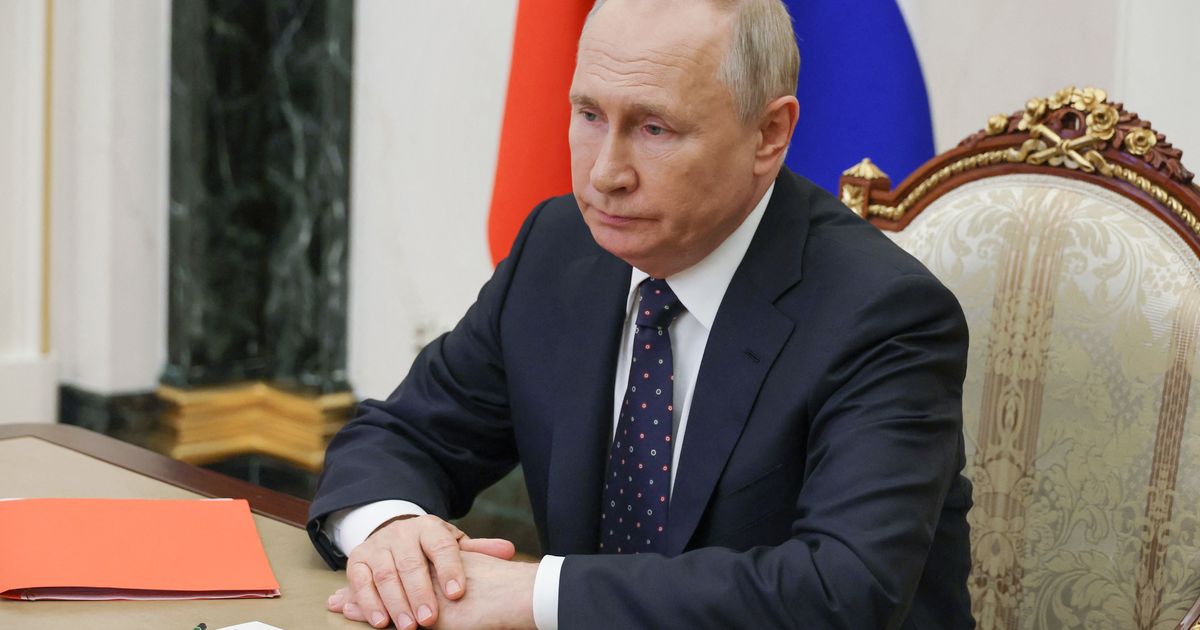
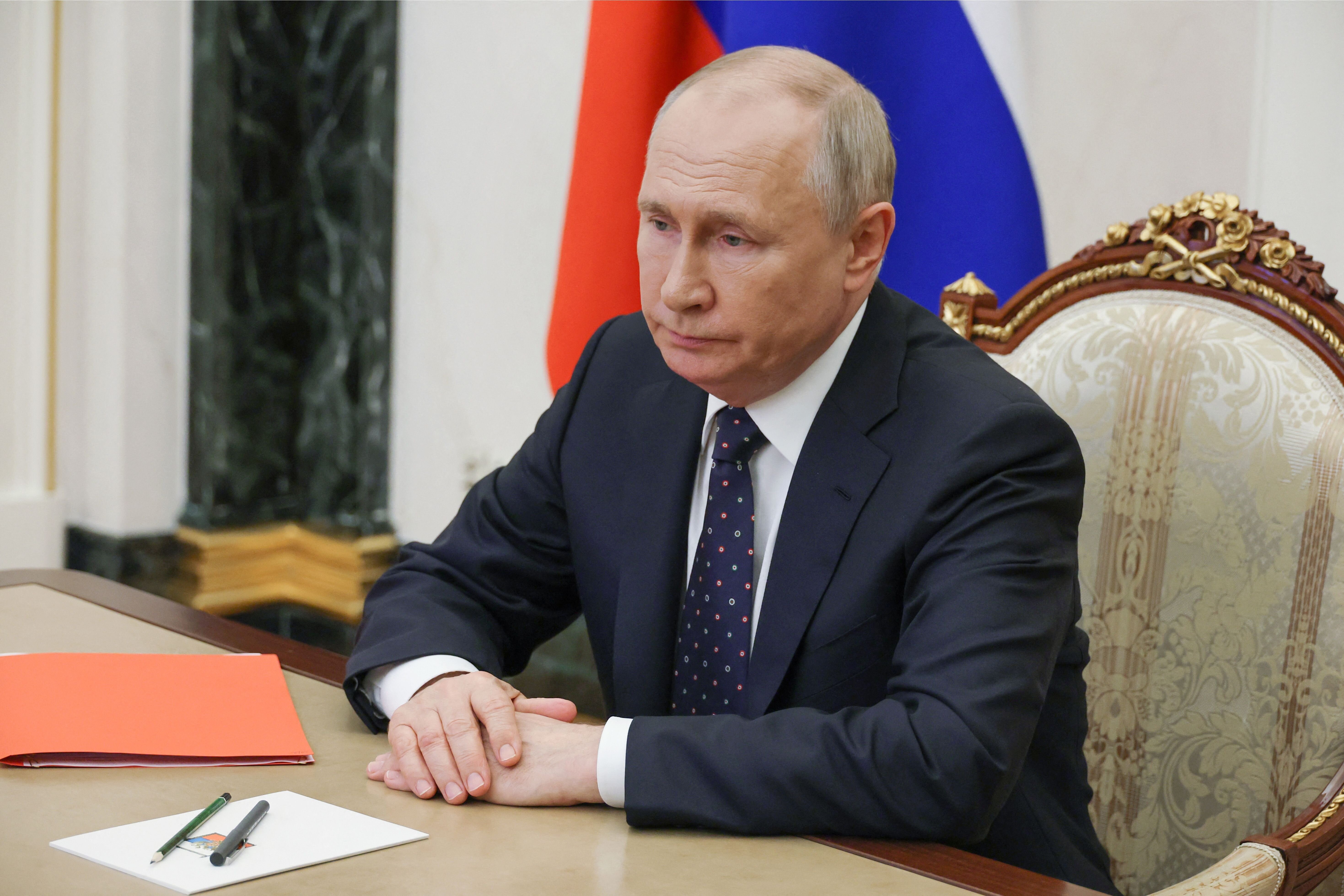
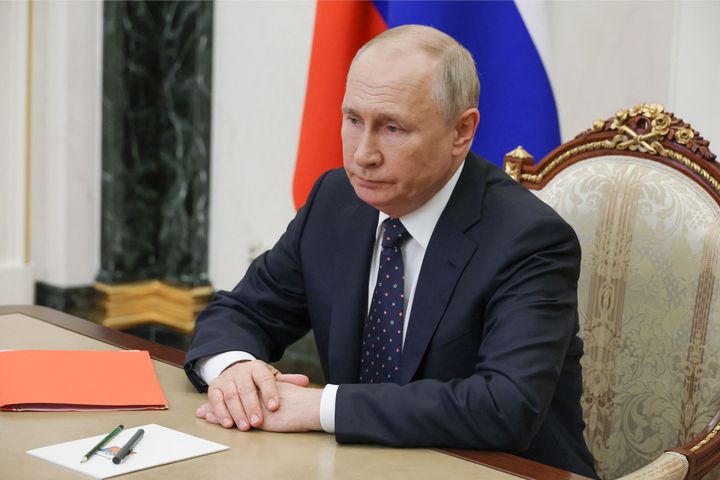
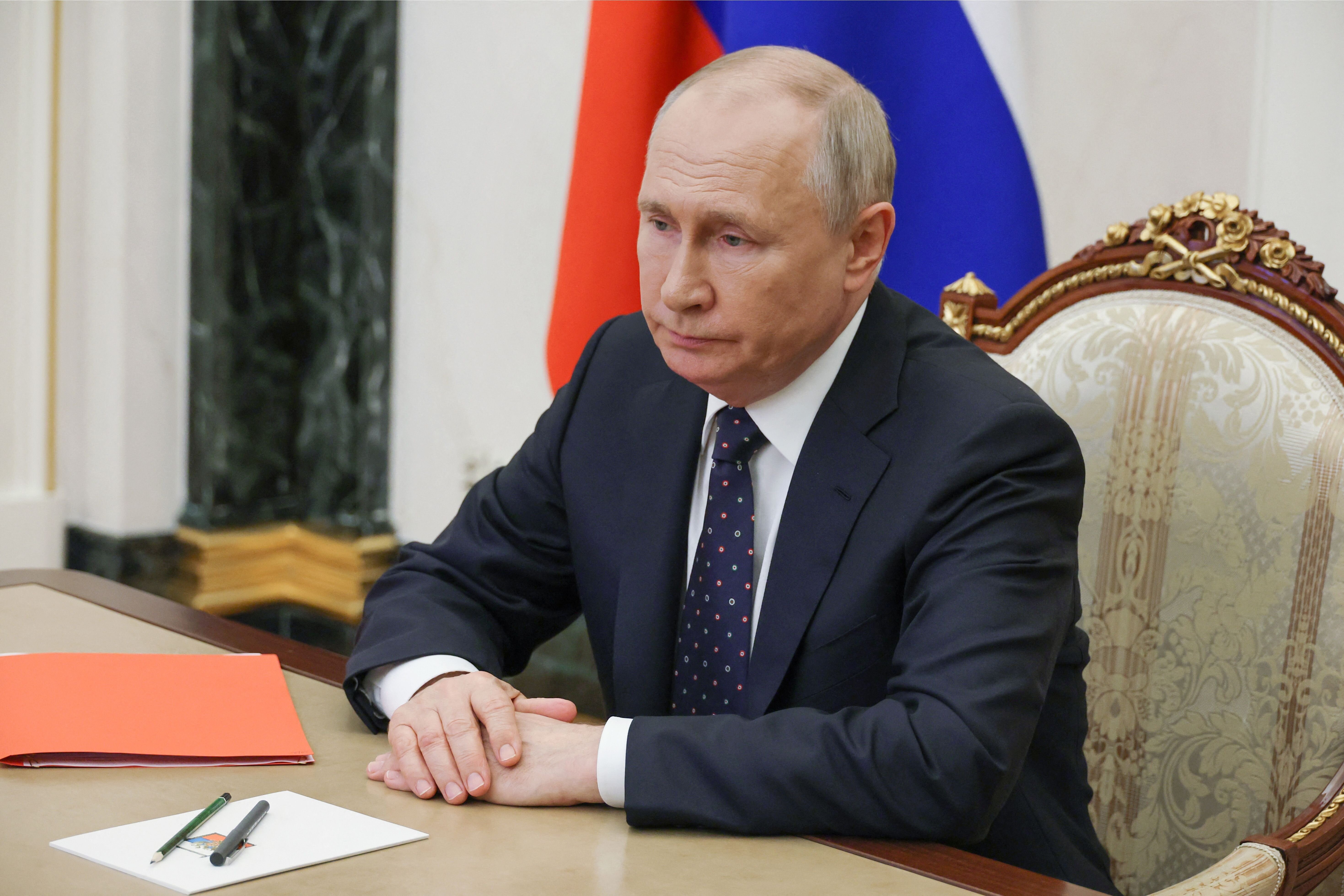
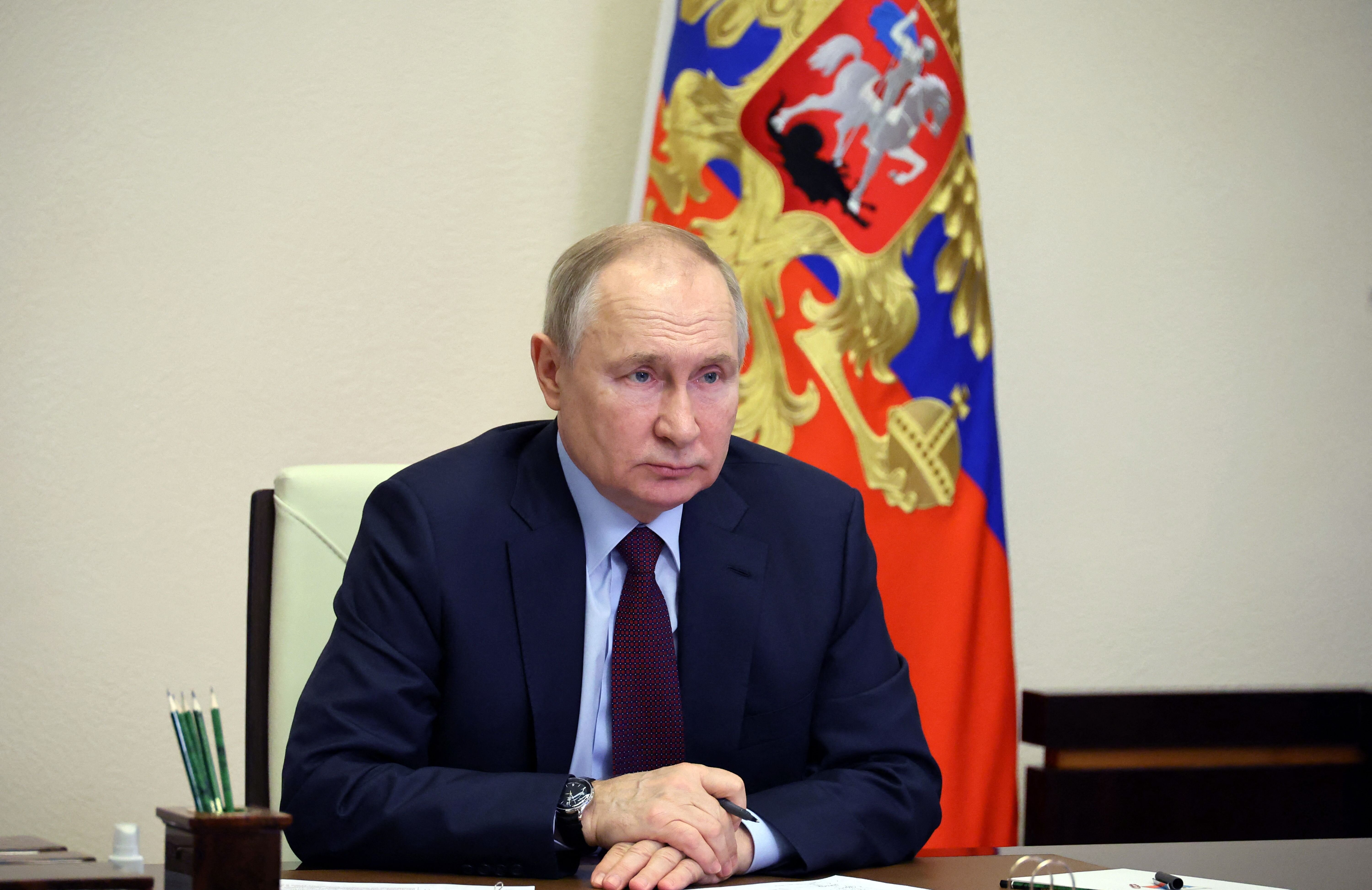
In this pool photograph distributed by Russian state owned agency President Vladimir Putin chairs a meeting with Security Council permanent members via video link in Moscow, on August 25, 2023.
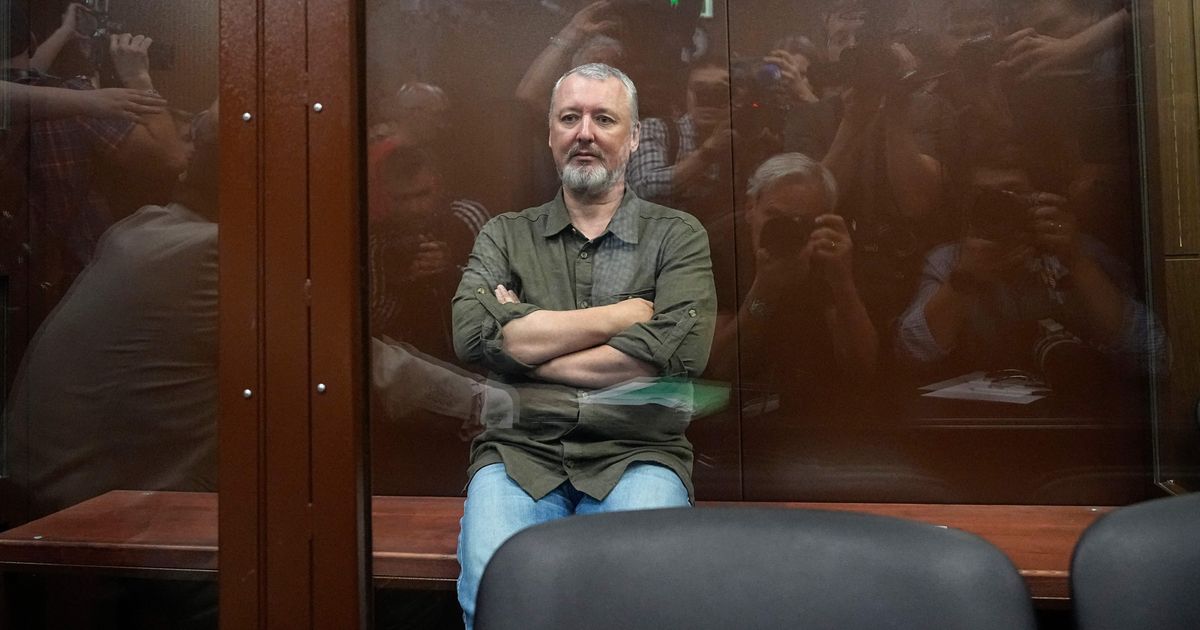
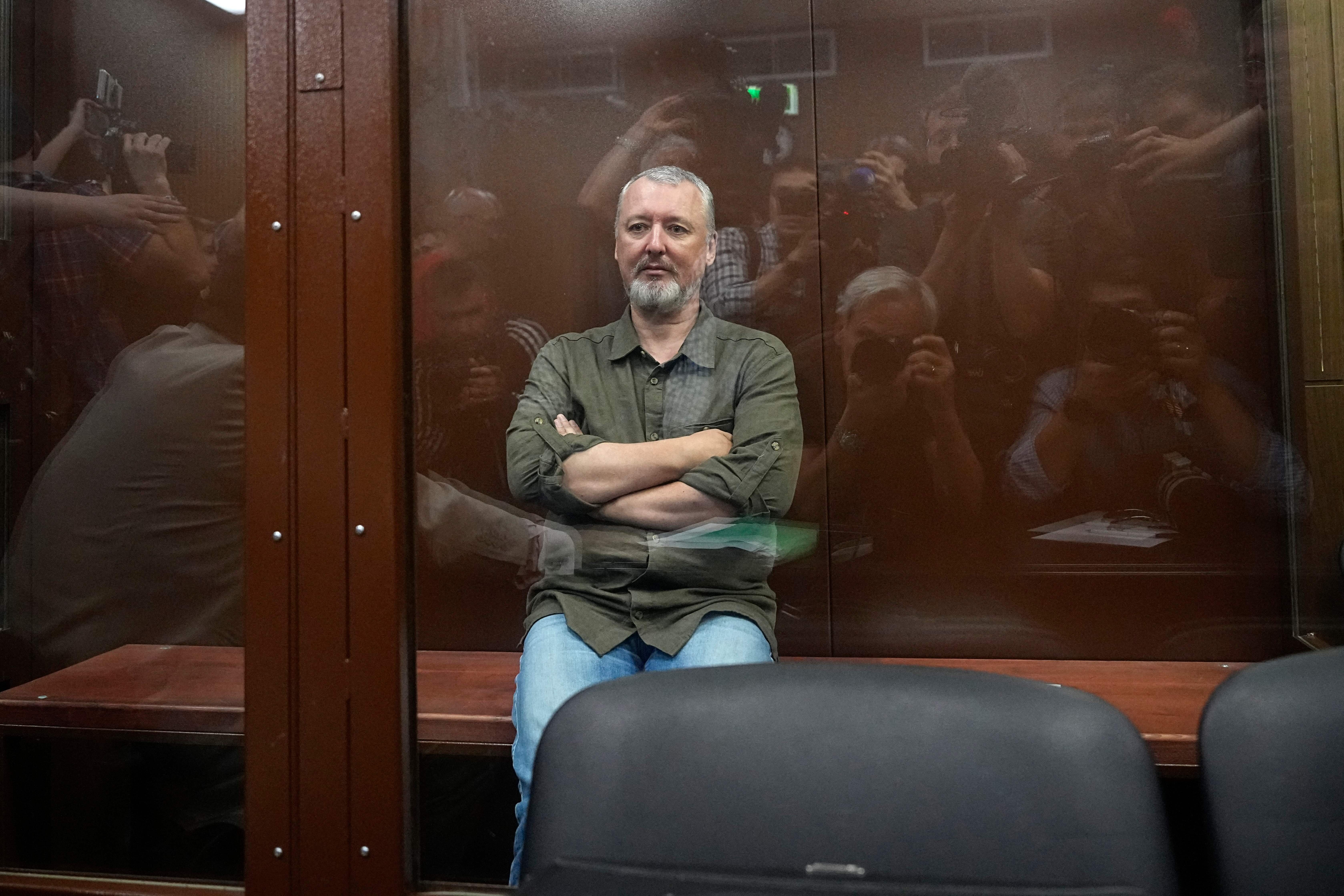
A prominent Russian military blogger has been arrested after criticising Vladimir Putin’s handling of the war in Ukraine.
Igor Girkin, who is also a former intelligence officer, has been accused of “extremism” by the Kremlin.
Advertisement
If convicted, he could face five years in prison.
UK intelligence said Girkin has “long been a critic of the Russian Ministry of Defence’s conduct of the war”.
“However, in recent days his comments turned to direct criticism of Russian president Vladimir Putin and his time in power,” the latest update from the UK Ministry of Defence (MoD) added.
“The move is likely to infuriate fellow members of the mil-blogger community – and elements within the serving military – who largely see Girkin as an astute military analyst and patriot.”
The MoD said Girkin had “played a major role in Russia’s war in the Donbas from 2014 and spent months on the front line in 2022”.
Advertisement
They added that last month’s failed mutiny attempt by the Wagner Group had likely emboldened Putin’s critics to speak out.
“The taboo against unmasked criticism of the Putin regime has significantly weakened,” the MoD said.
Referring to Putin, Girkin wrote earlier this week: “The country won’t survive another six years with this talentless coward in power.”
The Times reported that Girkin, who is also known as Igor Strelkov, was found guilty last year by a court in the Hague of shooting down Malaysia Airlines Flight MH17 over eastern Ukraine in 2014, causing the death of all 298 people on board.
With Russia refusing to extradite him, he was sentenced to life in prison in his absence.
Vladimir Putin’s days as Russian president may be “numbered in a handful” after the mercenary Wagner Group launched an apparent coup attempt, according to the former head of the British army.
Lord Dannatt, the former chief of the general staff, said Ukraine could use the chaos engulfing the Putin regime to “really change the battlefield situation” in the war.
Advertisement
He spoke as Wagner troops continued their advance towards Moscow and the Russian president accused them of “treason”.
The dramatic developments came after months of tension between Wagner boss Yevgeny Prigozhin and Putin – his former ally – came to a head on Friday night.
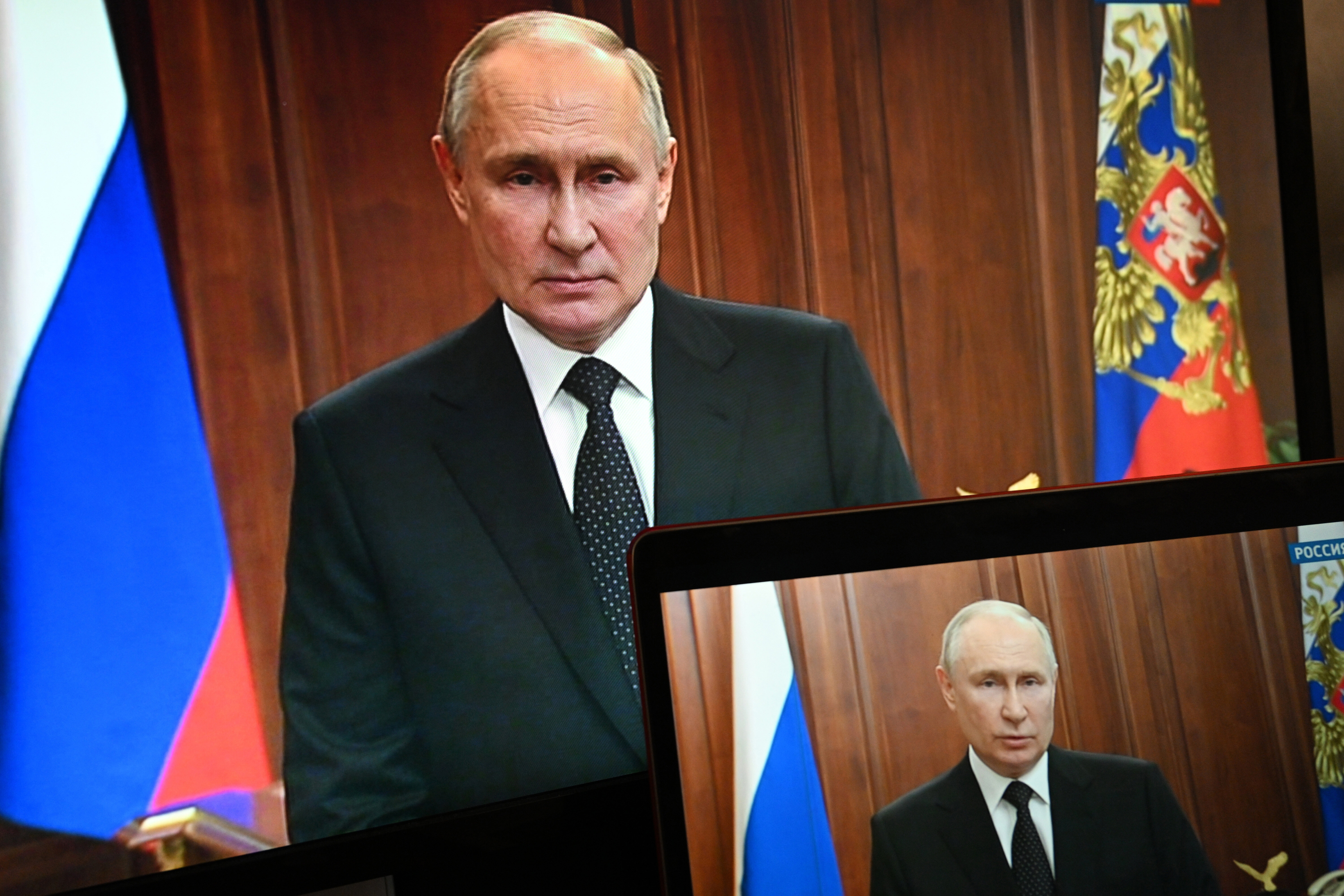
In a televised address on Russian TV this morning, Putin accused the Wagner Group of “a stab in the back” after they had initially fought alongside his troops in Ukraine.
Advertisement
He said: “Russia will defend itself and repel this move. We are fighting for the life and security of our citizens.”
Speaking on Times Radio, Lord Dannatt said: “Now, if they [Ukrainian forces] have found by now, one or two weak spots, this could well be the moment where there is huge confusion within Russia, huge confusion amongst the Russian military commander control for the Ukrainians to launch their … manoeuvre brigade groups into a potential breakthrough situation, andreally change the battlefield situation in Ukraine”
He added: “If that were to happen, allied with what Prigozhin is doing, then Putin’s days are numbered in a handful, and probably even less.”
Rishi Sunak called for all sides to “be responsible and to protect civilians”.
He spoke after foreign secretary James Cleverly chaired a meeting of the government’s emergency COBRA committee.
In their daily intelligence update on the war, the UK Ministry of Defence said the long-running tensions between the Wagner Group and the Russian military had “escalated into outright military confrontation”.
Advertisement
They said: “Over the coming hours, the loyalty of Russia’s security forces, and especially the Russian National Guard, will be key to how the crisis plays out.
“This represents the most significant challenge to the Russian state in recent times.”
Yevgeny Prigozhin said ammunition promised to his troops – some of whom were recruited directly from prison to join the war – has not arrived.
Advertisement
He said that was affecting the Wagner Group’s ability to help Russia hold on to the key city of Bakhmut.
His comments come just weeks after he accused Russian military chiefs of “treason”.
Prigozhin said that orders were signed on February 22 for the group, which is fighting alongside Russian forces, to be sent fresh ammunition the following day. However, most of it never arrived.
In a video uploaded at the weekend, Prigozhin said the lack of ammunition could be “ordinary bureaucracy or a betrayal”.
According to the BBC, he said: “If we step back, we will go down in history as the people who took the main step to lose the war.
Advertisement
“And this is precisely the problem with the [ammunition shortage]. This is not my opinion, but that of ordinary fighters.
“What if they [the Russian authorities] want to set us up, saying that we are scoundrels – and that’s why they are not giving us ammunition, not giving us weapons, and not letting us replenish our personnel, including [recruiting] prisoners?”
He went on to insist that without his group, Russia’s war in Ukraine would be a failure.
“If Wagner PMC [private military company] were to now retreat from Bakhmut, then the entire front – which PMC Wagner today is cementing – would crumble,” he said.
Who are the Wagner Group?
The Wagner private military company (also known as Wagner PMC) really took off in 2014.
It was the same year that Russia had seized the Ukrainian peninsula of Crimea and separatists in the Donbas region of Ukraine started to push back against Kyiv.
Headed up and financed by Prigozhin, the covert group of mercenaries began showing up to support the Russian troops in unmarked green uniforms.
Since then, it has grown exponentially, taking on thousands of soldiers who can come straight from elite backgrounds or prison.
Private military contractors are forbidden in Russia, so the whole group works outside of the country’s law.
That means this is a covert group of significant military force and political influence which – according to Vox – makes money by serving Moscow, and exploiting natural commodities in target countries.
Even Prigozhin denied any link to the group until September 2022 when he admitted he founded it.
Prigozhin is also an associate of Vladimir Putin, and was previously nicknamed “Putin’s chef” because of his expanse of catering companies which catered to the Kremlin.
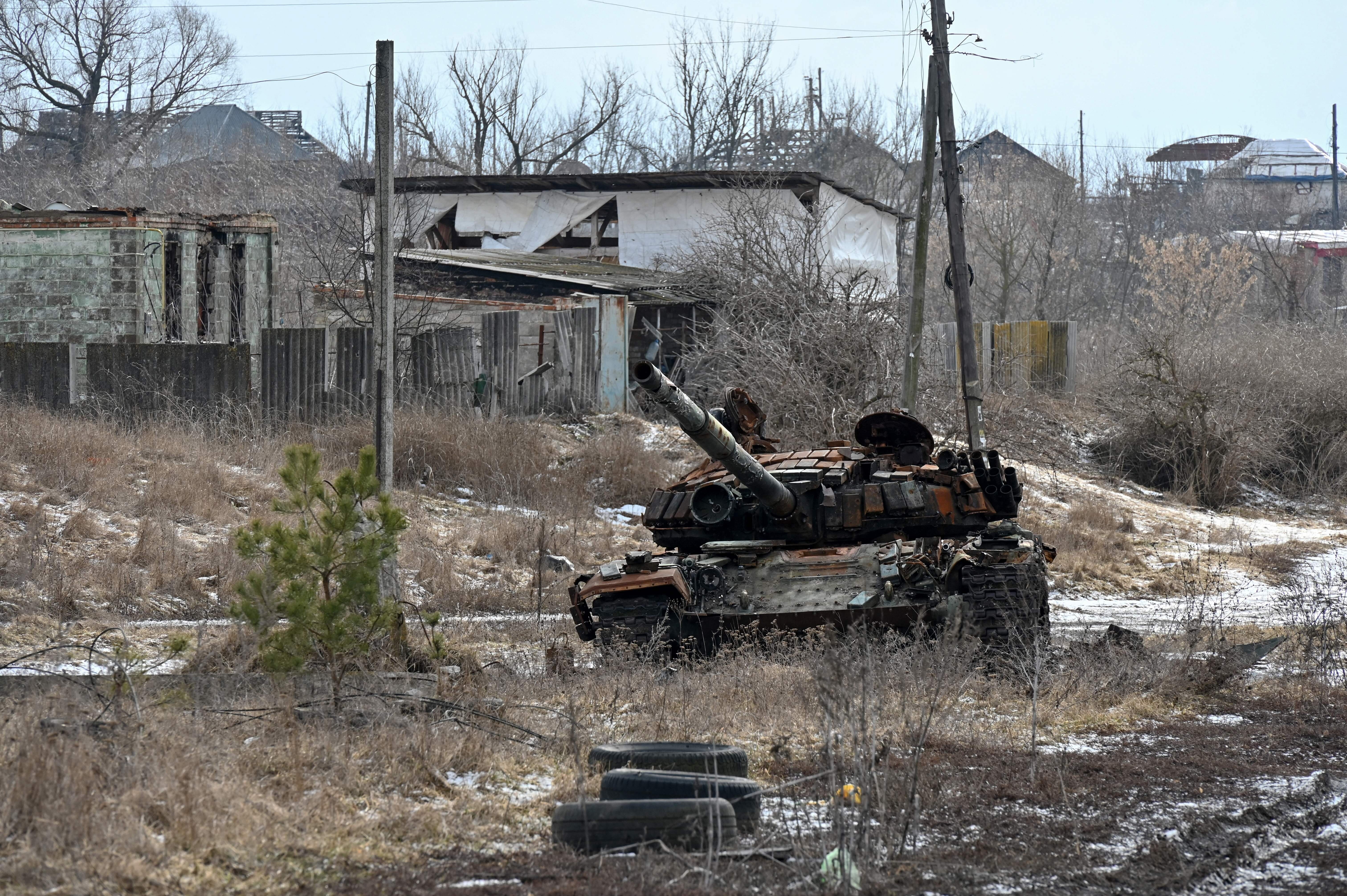
Russia is being forced to use 60-year-old tanks because of the heavy losses it has sustained in the Ukraine war.
According to the UK’s Ministry of Defence (MoD), the “vintage” T-62 vehicles have been brought out of storage and re-purposed so they can be sent into battle.
Advertisement
Armoured personnel carriers dating back to 1954 have also been deployed by Russia, the MoD said in its latest intelligence update.
It emerged yesterday that Russian reservists are being sent to war armed with shovels.
“The Russian military has continued to respond to heavy armoured vehicle losses by deploying 60-year-old T-62 main battle tanks (MBT),” the MoD said.
“There is a realistic possibility that even units of the 1st Guards Tank Army, supposedly Russia’s premier tank force, will be re-equipped with T-62s to make up for previous losses.”
The update went on: “In recent days, Russian BTR-50 armoured personnel carriers, first fielded in 1954, have also been identified deployed in Ukraine for the first time.
Advertisement
“Since summer 2022, approximately 800 T-62s have been taken from storage and some have received upgraded sighting systems which will highly likely improve their effectiveness at night.
“However, both these vintage vehicle types will present many vulnerabilities on the modern battlefield, including the absence of modern explosive reactive armour.”
In their update yesterday, the MoD said Russian mobilised reservists were “ordered to assault a Ukrainian concrete strong point armed with only ‘firearms and shovels’”.
One reservist described being “neither physically nor psychologically” prepared for the brutality of arm-to-arm combat.
Advertisement
The MoD said the shovels were likely MPL-50 “entrenching tools being employed for hand-to-hand combat”.
“Little changed since it was designed in 1869, its continued use as a weapon highlights the brutal and low-tech fighting which has come to characterise much of the war,” the intelligence update said.
Migrant workers are being prevented from leaving Russia so they can be enlisted in the army according to British officials.
The Ministry of Defence suggested the move was part of efforts by Moscow to ensure there is a “high number of personnel” available to be enlisted.
Advertisement
In their latest intelligence update on the war in Ukraine – which reaches its first anniversary next month – the MoD also said the Kremlin policy of “partial mobilisation” remains in place.
That was set up last September and saw 300,000 reservists called up to the Russian army.
According to the MoD, media reported on January 22 that migrant workers from Kyrgyzstan with dual passports were prevented from leaving Russia because “their names were on mobilisation lists”.
“Separately, on January 23, 2023, Russian presidential spokesperson Dmitry Peskov said that the decree on ‘partial mobilisation’ continues to remain in force, claiming the decree remained necessary for supporting the work of the armed forces,” the MoD update said.
“Observers had questioned why the measure had not been formally rescinded.
“The Russian leadership highly likely continues to search for ways to meet the high number of personnel required to resource any future major offensive in Ukraine, while minimising domestic dissent.”
Advertisement
It was revealed over the weekend that mandatory military training will be introduced in Russian secondary schools from September.
Two weeks ago it also emerged that Russia could increase the age limit for army conscripts in an attempt to boost the size of its military.
The current age limit for routine military conscription in Russia is 27.
But Andrey Kartapolov, the head of the Russian State Duma Defence Committee, proposed increasing that to 30.
Meanwhile, Boris Johnson has claimed Vladimir Putin threatened to kill him last year as he made a last-ditch attempt to prevent the invasion of Ukraine.
The new commander of the Russian army in Ukraine has faced pushback over his attempt to clamp down on “non-standard haircuts” among his troops, the UK has claimed.
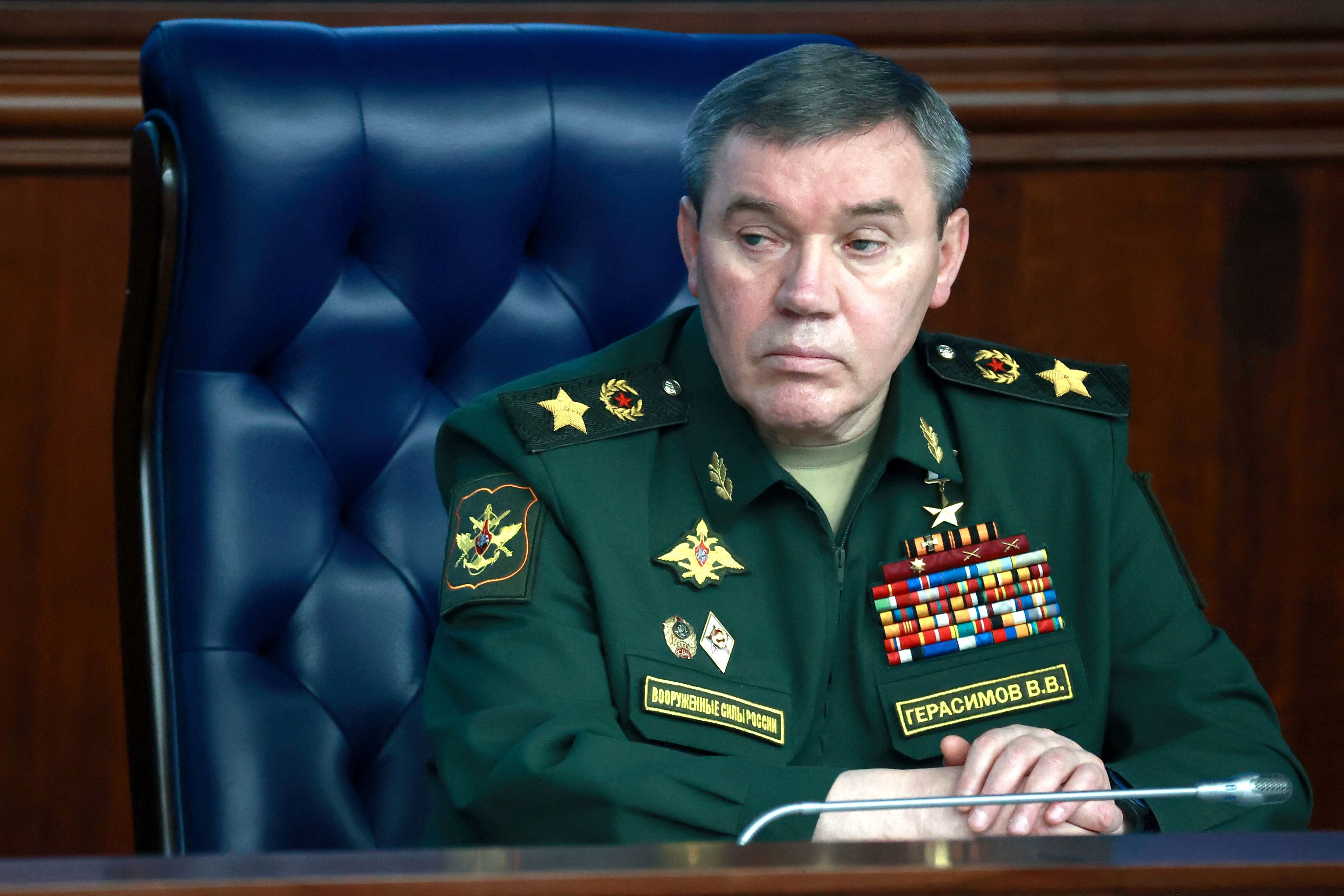
General Valery Gerasimov, Russia’s Chief of the General Staff and the newly appointed commander in Ukraine, has reportedly started off his new job by trying to “improve deployed troops’ day-to-day discipline”.
Advertisement
In its daily update, the UK’s ministry of defence (MoD) alleged that Gerasimov was looking to target “non-regulation uniform, travel in civilian vehicles, the use of mobile phones, and non-standard haircuts”.
However, the MoD claimed: “The measures have been met with sceptical feedback.”
The UK officials suggested that “some of the greatest derision has been reserved for attempts to improve the standard of troops’ shaving”.
It continued: “Officials in the Donetsk People’s Republic described the prioritisation of a ‘farce’ that would ‘hamper the process of destroying the enemy’.”
A proxy private military company, the Wagner group, perceived as an informal arm of the Russian state, also pushed back against the new rules.
The MoD claimed Wagner owner, Yevgeny Prigozhin, lashed out at the official advice from the Kremlin, saying: “War is the time of the active and courageous, and not of the clean-shaven.”
The UK officials also pointed out: “The Russian force continues to endure operational deadlock and heavy casualties; Gerasimov’s prioritisation of largely minor regulations is likely to confirm the fears of his many sceptics in Russia.
“Along with Defence Minister Sergei Shoigu, he is increasingly seen as out of touch and focused on presentation over substance.”
Advertisement
This is just the latest sign that all is not well within the Russian army ranks.
According to previous claims from the MoD, Russia is even using “poorly-training convicts” to bolster its armed forces.
And by February 24, the war – which the Kremlin expected to last just a matter of days – will have stretched out to a year, with just 15% of Ukrainian land under Russian control.
The appointment of Gerasimov to lead the campaign in Ukraine was seen as a sign that Russia was trying a new tactic to turn the war in its favour.
He replaced General Sergei Surovikin, nicknamed General Armageddon for his brutal strategies, who will now serve as Gerasmiov’s deputy.
Advertisement
Russia’s army Chief of General Staff Valery Gerasimov
Vladimir Putin has replaced the army chief in charge of Russian troops in Ukraine because his invasion of the country is failing, according to UK intelligence.
Chief of the general staff (CGS) Valery Gerasimov, the head of the Russian military, has taken over from General Sergei Surovikin, who will now be one of his three deputies.
Advertisement
In their latest intelligence update on the war, the Ministry of Defence said: “This is a significant development in Russian president Vladimir Putin’s approach to managing the war.
“The deployment of the CGS as theatre commander is an indicator of the increasing seriousness of the situation Russia is facing, and a clear acknowledgement that the campaign is falling short of Russia’s strategic goals.”
The MoD also said the surprise move “is likely to be greeted with extreme displeasure by much of the Russian ultra-nationalist and military blogger community, who have increasingly blamed Gerasimov for the poor execution of the war”.
Advertisement
They said that in contrast, Surovikin “has been widely praised by this community for his championing of a more realistic approach”.
The changes are further evidence of Russia’s struggles in Ukraine.
Earlier this week, Kyiv denied Russia’s claim that it had killed more than 600 Ukrainian troops in a deadly attack.
It came after Vladimir Putin suggested a 36-hour ceasefire last week, so Russian citizens could mark the Orthodox Christmas, although shelling began very soon after.
Ukraine’s military intelligence has also alleged that Russia is looking to mobilise as many as 500,000 conscripts in mid-January, on top of the 300,000 brought into the army back in October.
Advertisement
Russia has denied any plans for a second wave of mobilisation – it’s worth noting that the September call-up sparked protests across the country.