When conversation drifted into fantasy, one man grabbed a hammer and prepared for war.


When conversation drifted into fantasy, one man grabbed a hammer and prepared for war.

Researchers at Queen Mary University of London have proposed a striking idea that links the deepest laws of physics to the existence of life itself. Their work suggests that the Universe’s fundamental constants sit within an extremely narrow range that allows liquids to flow in ways living cells depend on. If those constants were even slightly different, water, blood, and other life-supporting fluids could behave so differently that complex organisms might never have emerged at all.
The study, published in Science Advances in 2023, builds on earlier work by physicist Kostya Trachenko and colleagues showing that liquid viscosity is tied directly to fundamental physical constants. That finding established a lower limit for how “runny” liquids can be. The newer research extended the idea into biology, asking whether the same physical rules that shape the cosmos may also quietly determine whether cells can function.
Why Liquid Flow Matters for Life
Life depends on movement at microscopic scales. Nutrients must travel through cells, proteins need to fold correctly, and molecules constantly diffuse through watery environments. All of this relies on viscosity, the property that determines how easily a liquid flows.
According to the researchers, the Universe appears to operate within a surprisingly narrow “bio-friendly” window where viscosity and diffusion remain suitable for life. If the constants governing physics shifted by only a few percent, liquids essential to biology could become dramatically thicker or thinner.
“Understanding how water flows in a cup turns out to be closely related to the grand challenge to figure out fundamental constants. Life processes in and between living cells require motion and it is viscosity that sets the properties of this motion. If fundamental constants change, viscosity would change too impacting life as we know it. For example, if water was as viscous as tar life would not exist in its current form or not exist at all. This applies beyond water, so all life forms using the liquid state to function would be affected.”
The team says the consequences would extend far beyond drinking water or oceans. Human blood, cellular fluids, and the chemistry that powers life all rely on carefully balanced flow properties.
“Any change in fundamental constants including an increase or decrease would be equally bad news for flow and for liquid-based life. We expect the window to be quite narrow: for example, viscosity of our blood would become too thick or too thin for body functioning with only a few per cent change of some fundamental constants such as the Planck constant or electron charge.” Professor of Physics Kostya Trachenko said.
A New Twist on Cosmic Fine-Tuning
Physicists have long debated why the Universe’s constants appear finely tuned. Tiny differences in values such as the electron charge or the strength of fundamental forces could prevent stars from forming heavy elements needed for planets and life.
What makes this research unusual is that it shifts the discussion from stars and galaxies down to the level of living cells. Previous fine-tuning arguments often focused on nuclear reactions inside stars. This work argues that even if stars and heavy elements still formed, life might remain impossible if liquids could not flow properly inside organisms.
That introduces a second layer of fine-tuning. The constants not only appear compatible with a universe full of matter, but also with biological systems that depend on delicate liquid dynamics.
The researchers even suggest that multiple stages of tuning may have occurred. In the paper, Trachenko compares the possibility to biological evolution, where traits emerge independently over time. The idea remains speculative, but it raises the possibility that nature may favor stable physical structures in ways scientists do not yet fully understand.
Later Research Expanded the Idea
Since the original publication, scientists have continued exploring how viscosity, diffusion, and fluid behavior connect to fundamental physics. Follow-up theoretical work reviewed how liquid motion inside cells may place additional limits on the values of physical constants, especially in systems involving biochemical “machines” such as molecular motors.
Other researchers have also examined how viscosity itself may arise from deeper physical laws. A 2023 analysis highlighted growing evidence that liquid viscosity may be linked to universal physical limits rather than simply being a property measured in laboratories.
Together, these studies are helping reshape an old scientific mystery. Instead of viewing the constants of nature only through the lens of cosmology and particle physics, scientists are increasingly asking whether the conditions needed for flowing liquids and functioning cells should also be part of the equation.
Could Physics and Biology Be More Connected Than We Thought?
The idea remains highly theoretical, and many physicists would caution that there is still no accepted explanation for why the constants of nature have their observed values. But the research opens an unexpected path for thinking about one of science’s biggest questions.
For decades, the mystery of fundamental constants was mostly explored through black holes, stars, and subatomic particles. This work suggests the answer may also involve something much closer to everyday life: the simple ability of liquids to flow through living cells.
The woman, 35, says she was praying for a baby and was “overjoyed” to be “blessed with five at once”.
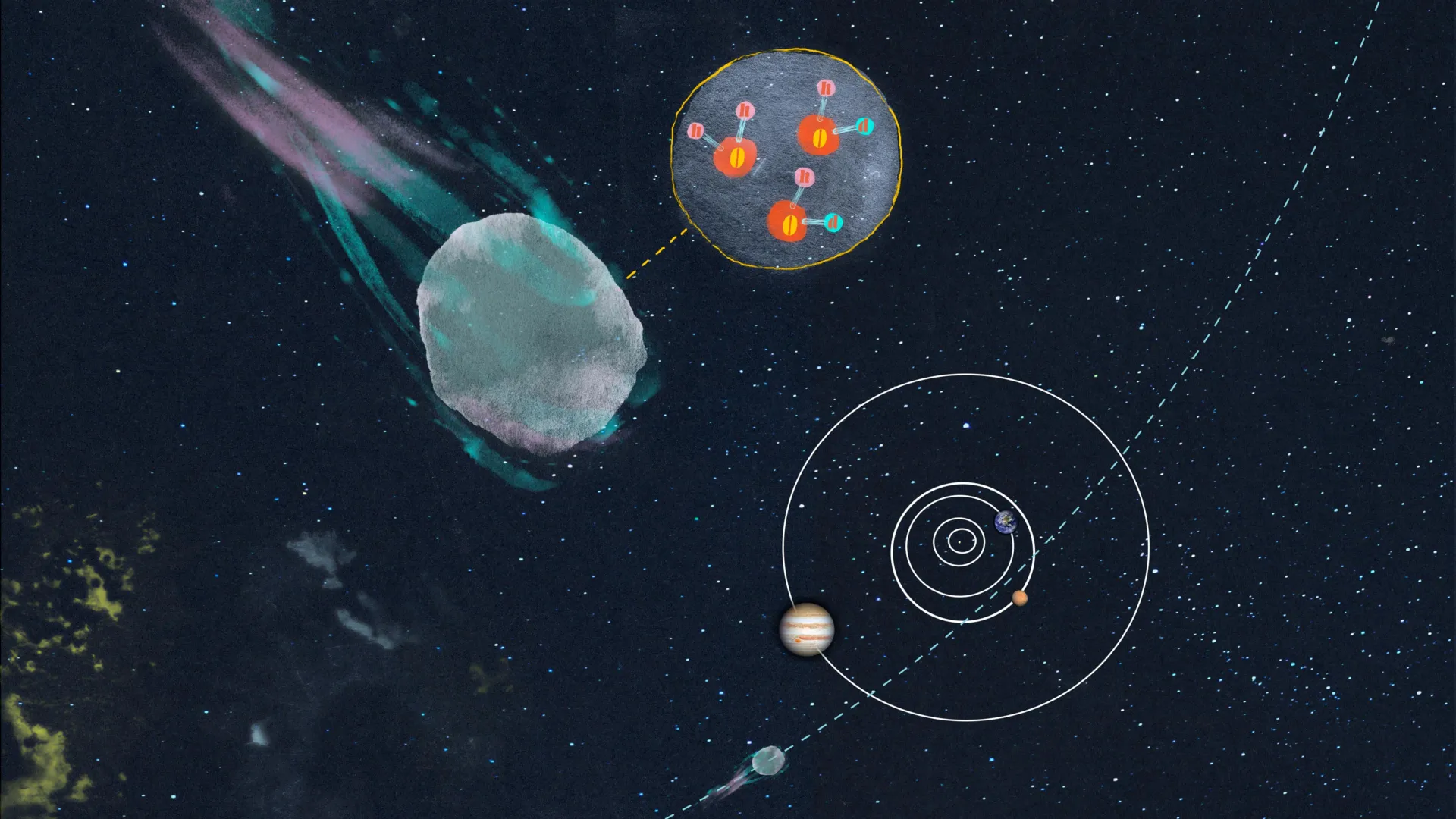
Less than a year ago, astronomers spotted a comet passing through our solar system that originated far beyond it. The object, known as 3I/ATLAS, is only the third confirmed interstellar visitor ever detected, and scientists are now uncovering clues about the alien environment where it formed.
A new study led by researchers at the University of Michigan suggests the comet was born in conditions far colder than those that shaped our own solar system. The findings come from an analysis of the comet’s unusual water composition, which revealed extraordinarily high levels of deuterium, a heavier form of hydrogen.
The research was published in the journal Nature Astronomy and received support from NASA, the U.S. National Science Foundation and Chile’s National Research and Development Agency.
“Our new observations show that the conditions that led to the formation of our solar system are much different from how planetary systems evolved in different parts of our galaxy,” said Luis Salazar Manzano, lead author of the study and a doctoral student in the U-M Department of Astronomy.
Alien Comet Contains Unusual “Heavy Water”
Water molecules are made up of two hydrogen atoms and one oxygen atom, giving water its familiar H2O formula. In ordinary water, hydrogen atoms contain only a proton. But some forms of water contain deuterium, an isotope of hydrogen that includes both a proton and a neutron.
Researchers discovered that 3I/ATLAS contains an exceptionally high amount of this deuterium-rich water. While small amounts of heavy water exist on Earth and in comets within our solar system, the levels found in 3I/ATLAS were dramatically higher.
“The amount of deuterium with respect to ordinary hydrogen in water is higher than anything we’ve seen before in other planetary systems and planetary comets,” Salazar Manzano said.
According to the researchers, the deuterium ratio in the comet was about 30 times higher than what has been measured in comets from our solar system and roughly 40 times higher than the ratio found in Earth’s oceans.
Clues About a Frozen Birthplace
Scientists use deuterium levels as a kind of chemical fingerprint that reveals the conditions present when celestial objects formed. By comparing these ratios with those found closer to home, researchers can infer what kind of environment produced the comet.
The team concluded that 3I/ATLAS likely formed in a much colder region with lower radiation levels than the environment that created the planets and comets in our solar system.
“This is proof that whatever the conditions were that led to the creation of our solar system are not ubiquitous throughout space,” said Teresa Paneque-Carreño, co-leader of the study and assistant professor of astronomy at U-M. “That may sound obvious, but it’s one of those things that you need to prove.”
How Scientists Studied 3I/ATLAS
The researchers said the study was only possible because astronomers detected 3I/ATLAS early enough for detailed follow-up observations.
After the discovery, Salazar Manzano and collaborators secured observing time at the MDM Observatory in Arizona, where they detected some of the first signs of gas emissions from the comet (MDM stands for Michigan, Dartmouth and the Massachusetts Institute of Technology, the observatory’s original partners).
Salazar Manzano then teamed up with Paneque-Carreño, who brought expertise using the Atacama Large Millimeter/submillimeter Array, or ALMA, in Chile. ALMA’s instruments are sensitive enough to distinguish deuterated water from ordinary water, allowing the team to precisely measure the ratio between the two.
The researchers say this marks the first time scientists have successfully performed this type of water analysis on an interstellar object.
“Being at the University of Michigan and having access to these facilities was the key to making this work possible,” Salazar Manzano said. “We were part of a team that was very talented and very experienced in multiple areas, all of us complemented each other and that’s what allowed us to analyze and interpret these data sets.”
More Interstellar Visitors Could Be Found
The study also demonstrates that astronomers may soon be able to chemically analyze additional interstellar objects to better understand how planetary systems form across the galaxy.
So far, scientists have identified only three known interstellar objects entering our solar system, but researchers expect that number to rise as more advanced observatories begin searching the skies.
Paneque-Carreño emphasized that preserving dark night skies will be essential for spotting these faint visitors.
“We need to be taking care of our night skies and keeping them clear and dark so we can detect these tiny and faint objects,” she said.
Additional support for the research came from the Michigan Society of Fellows and the Heising-Simons Foundation. ALMA is operated through a partnership involving the European Southern Observatory, the NSF and Japan’s National Institutes of Nature Sciences in cooperation with the Republic of Chile.
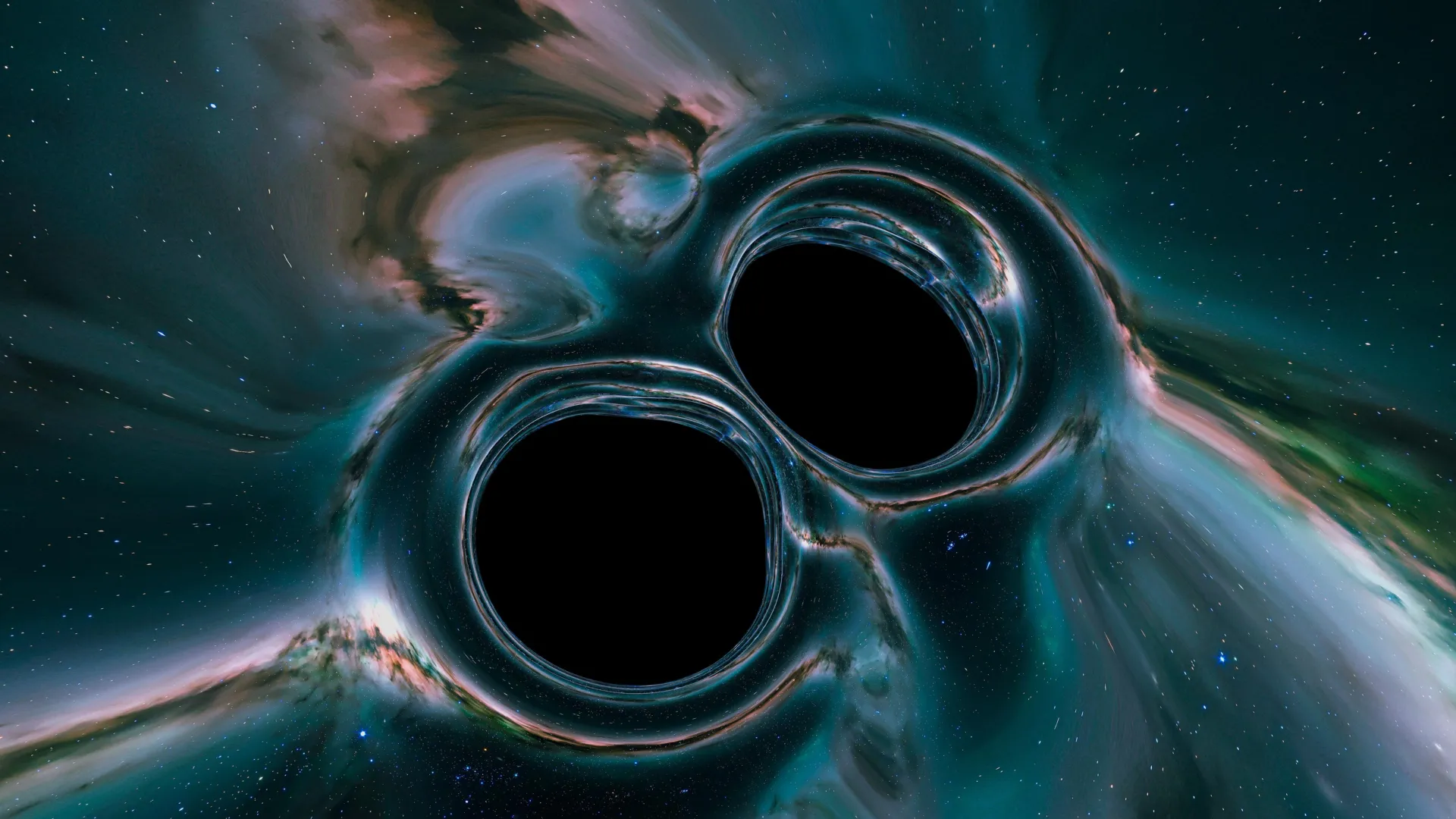
Scientists studying gravitational waves believe they may have uncovered how the Universe creates its biggest black holes. Instead of forming directly from collapsing stars, these enormous objects appear to grow through repeated black hole collisions inside extremely crowded star clusters.
The new research, led by Cardiff University, examined version 4.0 of LIGO-Virgo-KAGRA’s Gravitational-Wave Transient Catalog (GWTC4), which contains 153 reliable detections of merging black holes.
Researchers focused on whether the largest black holes in the catalog could be “second-generation” objects. In this scenario, black holes formed from dying stars collide with each other, then merge again in dense stellar environments where stars are packed up to a million times more tightly than around our Sun.
The findings, published in Nature Astronomy, suggest the most massive black holes detected through gravitational waves belong to a separate class with a very different history from smaller black holes.
Gravitational Waves Reveal Two Black Hole Populations
“Gravitational-wave astronomy is now doing more than counting black hole mergers,” explains lead author Dr. Fabio Antonini from Cardiff University’s School of Physics and Astronomy.
“It is starting to reveal how black holes grow, where they grow, and what that tells us about the lives and deaths of massive stars. This is exciting because we can use the information to test our understanding of how stars and clusters evolve in the Universe.”
By analyzing the gravitational-wave signals, the team identified two distinct groups:
Researchers say the spin behavior of the heavier black holes was especially revealing.
“What surprised us most was how clearly the high-mass black holes stand out as a separate population,” recalls co-author Dr. Isobel Romero-Shaw, Ernest Rutherford Fellow at Cardiff University.
“Unlike the lower-mass systems we analyzed, which were generally slowly-spinning, the higher-mass systems are consistent with having more rapid spins, oriented in seemingly random directions. This is the exact signature you would expect if black holes were repeatedly merging in dense star clusters.
“That makes the cluster origin much more compelling than it was with earlier catalogs.”
Evidence for the Black Hole “Mass Gap”
The study also strengthens evidence for a mysterious “mass gap” predicted by astrophysicists for decades. According to this theory, stars above a certain size should explode so violently that they are destroyed completely instead of collapsing into black holes.
This would create a forbidden range where black holes formed directly from stars should not exist.
The researchers identified this transition in black holes with masses around 45 times greater than the Sun.
Dr. Antonini said: “In our study we find evidence for the long-predicted pair-instability mass gap — a range of masses where stars are not expected to leave behind black holes at all. Gravitational-wave detectors have successfully found black holes that appear to sit in or near that gap, which we identify at around 45 solar masses.
“So, the key question now is are these black holes telling us that our models of stellar evolution are wrong, or are they being made in another way?
“The biggest black holes in the current sample seem to be telling us about cluster dynamics, not just stellar evolution.
“Above about 45 solar masses the spin distribution changes in a way that is hard to explain with normal stellar binaries alone but is naturally explained if these black holes have already been through earlier mergers in dense clusters.”
Black Holes Could Help Scientists Study Nuclear Physics
The researchers say the discoveries may eventually help scientists investigate processes deep inside massive stars.
The team used the transition near the mass gap to study an important nuclear reaction linked to helium burning in stellar cores.
“In the future, gravitational-wave data may help scientists study nuclear physics, because the mass limit set by pair instability depends on the nuclear reactions taking place in the cores of massive stars,” added co-author Dr. Fani Dosopoulou, a research associate at Cardiff University.
The condition affects one in 10 women in the UK and can cause debilitating pain and infertility.
Lucy Woodham answers your questions on the outbreak of hantavirus on board a cruise ship
Everyone knows that movement is good for you. Yet, as we age, studies show that low-impact exercise is especially beneficial for the physical and cognitive health of older adults. If you’re looking for a low-impact exercise tool that will make a low impact on your wallet, we spotted a compact, adjustable rowing machine that’s loved by users in their 50, 60s, 70s and even 80s, for making working out more accessible and fun. Even better? It’s currently 20% off, if your fast enough to snag the lightning deal.
Advertisement
Per the American Sport And Fitness Association, “low-impact exercise” means movements that don’t have forceful landings or cause “shock absorption” in your joints — like running and jumping do. Generally, these movements include having one foot on the ground at all times, making them a great option for older folks and people with mobility limitations, according to the National Library of Medicine.
Advertisement
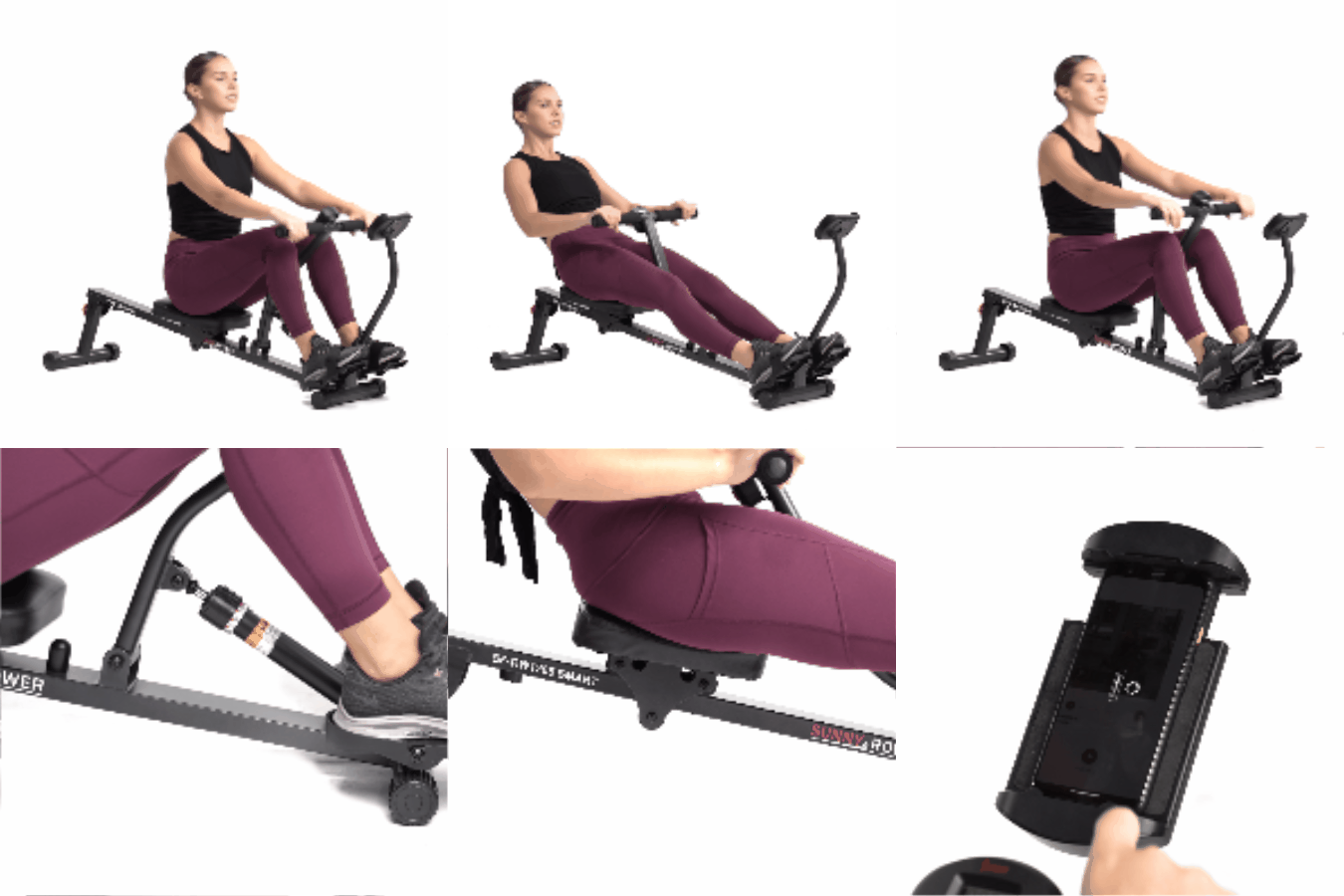
Of course, something like indoor rowing (i.e., rowing on a rowing machine), an entirely seated exercise, lets you fluidly move and groove without lifting your feet at all. When you use a rowing machine, you engage your legs, arms and core, without putting vertical weight or extra stress on your body. In fact, a government study looking at the effects of indoor rowing on visually impaired people called it a “safe whole-body exercise,” noting that the stability of being seated and repetitive continuous motion of indoor rowing made it a great option for those with visual impairments or who struggle with balance.
In short: it’s compact, lightweight, easy to assemble, works out your whole body without wearing your out and comes with a great app. Plus, it’s a lot cheaper than similar models. As reviewer Carole wrote, “I’m an 86 year old female so if I can do it anyone can!”
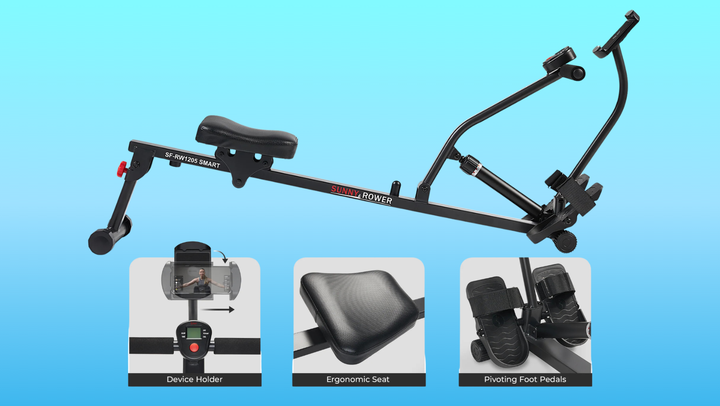
The machine is designed with a sliding seat, strapped foot pedals and a spot to hold your phone. 12 levels of hydraulic resistance let you engage different muscle groups with the turn of a knob. A digital monitor helps track speed, time, calories burned, and more with the digital monitor.
Advertisement
With the rower, you’ll get free access to the brand’s app, offering over 1,000 trainer-led workouts, challenges, video tours and more.
Advertisement
Unlike a treadmill or elliptical, this portable rowing machine lets you sit as you move. A reviewer who broke a vertebra falling down stairs said the machine came recommended by their physical therapist, “because it forces you to remain in the proper posture” and “will work your back without added tension,” they wrote. Another person recovering from an accident with “several injuries” wrote the machine “did not interfere with my healing but yet gave me the low impact exercise I needed.”
Reviewers call it “perfect for an older person who needs exercise without impact,” with a 70-year-old reviewer calling it “ideal” for bringing gentle movement to those who “haven’t exercised for years.”
Another reviewer in their 70s says the machine is “excellent for elderly workout,” especially if you are trying to get more movement for your health.
Advertisement
“I find that it exercises my core and arms and legs. I get into a steady rhythm that is not slow but not rapid either,” they said. “My aim is to get my heart beating, work up a sweat, and work on my core. I’ve lost ten pounds in two months, look slimmer, have fewer back issues due to a stronger core, and have even mitigated my COPD [chronic obstructive pulmonary disease] somewhat.”
Reviewers in their 80s love the machine for working “the entire body” and building range of motion in their legs. “My hip pain is greatly reduced because of the increased blood flow and my upper body strength is noticably improved,” one wrote. “Gives this 80 plus year old just the type of mild challenge that I found to be just right” another said.
There “could not be a more relaxing way to get fit,” one reviewer noted. And how is this? Fair question.
Advertisement
Because the machine is so easy to move and store, many use it around the house while watching TV or winding down for the day. “I use it in the morning while watching the news, then in the evening if I’m watching TV – makes me feel not-as-guilty for a relaxing night in,” reviewer Jane wrote. “Light to move around but doesn’t wobble when you’re on it,” reviewer Amy added. “Put it in front of the TV and row row row your boat to health,” noting that since rowing their “mood has increased drastically.”
Another who compliments how relaxing the continuous rowing motion is, says the machine provides a “full body workout while in a ‘flow’ state.” “If you love swimming, or swinging on swings, you’ll love this,” they said.
Basically, it’s a must-have for any exercise preferences, needs or challenges you’ve got going on!
Advertisement
“I am an 80-yr-old with circulation problems, bad hip. This machine works the entire body and I get a good range of motion in the legs. My hip pain is greatly reduced because of the increased blood flow and my upper body strength is noticably improved. The machine was easy for me to assemble myself and light enough to move easily, the price exceedingly reasonable for the quality of the product and the resulting benefits.. Admittely, I use it with the least tension but over time, who knows?” — Amazon customer
“Very easy install. Light to move around but doesn’t wobble when you’re on it. It gives you a good workout if you put in the effort. Put it in front of the TV and row row row your boat to health! I’ve had this for two weeks now. I track my workouts with the ‘weights’ exercise on my fitbit. I am addicted to this. I average 45 minutes per day which my fitbit says is about 400 calories lost. My mood has increased drastically. I can tell my body is getting a workout. I can feel the burn’” — Amy
“I really didn’t expect something this nice for such a low price. The best bargain in-home exercise equipment I’ve encountered. Gives this 80 plus year old just the type of mild challenge that I found to be just right. It’s easy to make resistance adjustments to suit the level of training you’re interested in. Higher tension for strength or lower for a longer aerobic session. The device seems to be quite durable and sturdy even though it’s relatively light in weight. I more than 5-stars were available, I’d give this device an extra or two.” — geezerdly
“I had massive back surgery with 4 rods and 31 screws. I also had total bilateral knee replacements. I have struggled with finding a way to exercise especially for my upper back and arms that still exercised my legs. This little rowing machine is perfect without causing pain and strain against the rods. I had it assembled in 10 minutes. So light weight and easy to use, move and store. I highly recommend this product, not for serious athletes, but for older adults or anyone with limited ability to exercise due to health issues.” — Kelley F. Birk
“For an amateur rower this is a perfect thing for starters. It gives you a decent workout, and tightens your core, shoulders and back. It’s not super intense cardio like an elliptical or treadmill, but incredibly low impact. Also, this takes so little space, and folds up out of the way when I don’t need it.” — Tia H
“I purchased this as a 60+ year old female to help keep in shape over the winter. I love to walk, but always slack off in the cold weather. I wanted something low-tech, small, quiet (I live in an upper floor apartment) and fairly inexpensive. This checked all the boxes. I have been using it for 3 weeks now and have no issues. It’s doing exactly what I purchased it for!” — K Miller
The Real Deal: We use deal trackers and commerce experience to sift through “fake” hike-and-drop deals and other deceptive sales tactics. Products will usually be rated at least 4 stars with a minimum 15% discount. (And when there’s an exception, we’ll tell you why.)
Advertisement
Some passengers potentially exposed to hantavirus have already taken flights to numerous countries.
The origin of the outbreak is still unknown, with the World Health Organisation saying investigations are “still under way”.
