Ministers say the new law in England gives power to local people who want to help others.


Ministers say the new law in England gives power to local people who want to help others.

A large study published in The BMJ suggests that aerobic activities such as walking, cycling, and swimming are the most effective exercises for people with knee osteoarthritis. These activities were found to provide the greatest improvements in pain, physical function, walking ability, and overall quality of life.
Researchers note that while other types of exercise can still help, they should be used alongside aerobic activity rather than replacing it as the primary approach.
What Causes Knee Osteoarthritis
Osteoarthritis develops when the cartilage that cushions the ends of bones gradually breaks down. This leads to pain, swelling, and difficulty moving the joint. Although it can affect different parts of the body, the knees are especially vulnerable. Nearly 30% of adults over 45 show signs of knee osteoarthritis on x-rays, and about half of them experience severe symptoms.
Exercise is widely recommended as a key part of treatment, but current guidelines often lack clear advice on which specific types work best for knee osteoarthritis.
Large Review of 217 Clinical Trials
To address this gap, researchers carried out a comprehensive analysis of exercise therapies. They reviewed 217 randomized trials conducted between 1990 and 2024, involving a total of 15,684 participants. These studies compared several forms of exercise, including aerobic, flexibility, strengthening, mind-body, neuromotor, and mixed programs, against control groups.
Although the quality of the trials varied, the researchers used the recognized GRADE system to evaluate how reliable the evidence was.
Measuring Pain, Function, and Quality of Life
The analysis focused on key outcomes that matter most to patients. These included pain levels, physical function, gait performance, and quality of life. Results were examined at short term (four weeks), mid-term (12 weeks), and long term (24 weeks) follow up.
Across these measures, aerobic exercise consistently ranked as the most effective option among all exercise types studied.
Aerobic Exercise Shows the Strongest Results
Evidence with moderate certainty showed that aerobic exercise reduced pain in both the short and mid-term. It also improved physical function across short term, mid-term, and long term timeframes. In addition, it enhanced walking ability and quality of life in the short and mid-term.
Other forms of exercise also delivered meaningful benefits. Mind-body approaches likely improved short term function, while neuromotor training likely boosted short term gait performance. Strengthening and mixed exercise programs appeared to improve function at mid-term follow up.
Exercise Is Safe and Widely Beneficial
Importantly, none of the exercise types were linked to a higher risk of adverse events compared with control groups. This supports the idea that exercise is a safe and reliable treatment option for knee osteoarthritis.
The researchers did point out some limitations. Many of the comparisons were indirect, some outcomes lacked long term data, and smaller studies may have influenced early results.
Clear Guidance for Treatment
Despite these limitations, the study offers one of the most thorough and up-to-date evaluations of exercise for knee osteoarthritis. The findings can help guide clinicians in choosing the most effective therapies for their patients.
Based on the results, the researchers recommend aerobic exercise “as a first line intervention for knee osteoarthritis management, particularly when the aim is to improve functional capacity and reduce pain.” They also note that if aerobic exercise is not suitable due to individual limitations, “alternative forms of structured physical activity may still be beneficial.”

Psychologists have long debated whether the human mind can be explained by a single, unified theory or if different functions such as attention and memory must be studied separately. Now, artificial intelligence (AI) is entering that debate, offering a new way to explore how the mind works.
In July 2025, a study published in Nature introduced an AI model called “Centaur.” Built on standard large language models and refined using data from psychological experiments, Centaur was designed to simulate human cognitive behavior. It reportedly performed well across 160 tasks, including decision-making, executive control, and other mental processes. The results drew widespread attention and were seen as a possible step toward AI systems that could replicate human thinking more broadly.
New Research Raises Doubts
A more recent study published in National Science Open challenges those claims. Researchers from Zhejiang University argue that Centaur’s apparent success may come from overfitting. In other words, instead of understanding the tasks, the model may have learned to recognize patterns in the training data and reproduce expected answers.
To test this idea, the researchers created several new evaluation scenarios. In one example, they replaced the original multiple-choice prompts, which described specific psychological tasks, with the instruction “Please choose option A.” If the model truly understood the task, it should have consistently selected option A. Instead, Centaur continued to choose the “correct answers” from the original dataset.
This behavior suggests that the model was not interpreting the meaning of the questions. Rather, it relied on learned statistical patterns to “guess” answers. The researchers compared this to a student who scores well by memorizing test formats without actually understanding the material.
Why This Matters for AI Evaluation
The findings highlight the need for caution when assessing the abilities of large language models. While these systems can be highly effective at fitting data, their “black-box” nature makes it difficult to know how they arrive at their outputs. This can lead to issues such as hallucinations or misinterpretations. Careful and varied testing is essential to determine whether a model truly has the skills it appears to demonstrate.
The Real Challenge: Language Understanding
Although Centaur was presented as a model capable of simulating cognition, its biggest limitation appears to be in language comprehension. Specifically, it struggles to recognize and respond to the intent behind questions. The study suggests that achieving true language understanding may be one of the most important challenges in developing AI systems that can model human cognition more fully.

Scientists have, for the first time, clearly captured a subduction zone in the act of breaking apart. These zones form where one tectonic plate sinks beneath another, and they are responsible for some of the most powerful geological events on Earth. The new findings, published in Science Advances, offer a rare look at how these massive systems evolve and raise new questions about earthquake risks in the Pacific Northwest.
Subduction zones shape the planet in dramatic ways. They move continents, trigger major earthquakes and volcanic eruptions, and pull old crust deep into Earth’s mantle. Yet despite their immense power, they do not last forever.
Why Subduction Zones Eventually Fail
If subduction zones continued indefinitely, continents would keep piling up, oceans would disappear, and much of Earth’s geological history would be erased. Scientists have long wondered what causes these systems to shut down.
“Getting a subduction zone started is like trying to push a train uphill — it takes a huge effort,” said Brandon Shuck, an assistant professor at Louisiana State University and lead author of the study. “But once it’s moving, it’s like the train is racing downhill, impossible to stop. Ending it requires something dramatic — basically, a train wreck.” Shuck conducted the research while he was a postdoctoral research fellow at the Lamont-Doherty Earth Observatory, which is part of the Columbia Climate School.
Cascadia Reveals a Tectonic Plate Tearing Apart
The answer appears to lie off the coast of Vancouver Island, in the Cascadia region. Here, the Juan de Fuca and Explorer plates are slowly sliding beneath the North American plate. Using advanced imaging techniques and earthquake data, scientists have now seen this subduction zone starting to come apart.
The team relied on seismic reflection imaging, which works much like an ultrasound of the Earth’s interior, combined with detailed records of earthquakes. Together, these tools revealed a plate that is not simply sinking, but actively tearing.
Inside the 2021 Seismic Imaging Experiment
The data came from the 2021 Cascadia Seismic Imaging Experiment (CASIE21), conducted aboard the research vessel Marcus G. Langseth. Led by Lamont scientist Suzanne Carbotte, with co-author Anne Bécel, the team sent sound waves into the seafloor and captured their echoes using a 15-kilometer-long array of underwater sensors.
This method produced highly detailed images of faults and fractures deep beneath the ocean floor. Those images clearly show sections of the plate breaking apart.
“This is the first time we have a clear picture of a subduction zone caught in the act of dying,” said Shuck. “Rather than shutting down all at once, the plate is ripping apart piece by piece, creating smaller microplates and new boundaries. So instead of a big train wreck, it’s like watching a train slowly derail, one car at a time.”
Carbotte noted that scientists have long known that subduction can slow or stall when lighter parts of a plate reach the boundary. “But we haven’t previously had such a clear picture of the process in action,” she says. “These new findings help us better understand the life cycle of the tectonic plates that shape the Earth.”
Massive Faults and Silent Gaps
Researchers identified several large tears cutting through the Juan de Fuca plate, including one major fault where the plate has dropped by about five kilometers. “There’s a very large fault that’s actively breaking the [subducting] plate,” Shuck explained. “It’s not 100% torn off yet, but it’s close.”
Earthquake data supports this picture. Along a 75-kilometer-long tear, some areas are still producing earthquakes while others are unusually quiet. “Once a piece has completely broken off, it no longer produces earthquakes because the rocks aren’t stuck together anymore,” he said. These quiet gaps suggest that parts of the plate have already separated and that the break is gradually expanding.
A Slow, Piece-by-Piece Breakdown
The study shows that subduction zones do not fail all at once. Instead, they shut down through a process known as “episodic” or “piecewise” termination. The plate tears apart in stages, with different sections breaking off over time.
As smaller pieces detach, the larger plate loses the force pulling it downward. Over millions of years, this gradual loss of momentum can bring the entire subduction system to a stop.
Clues to Earth’s Geological Past
This step-by-step breakup helps explain puzzling features seen elsewhere on Earth. In some regions, scientists have found fragments of old tectonic plates and bursts of volcanic activity that did not fully make sense before.
One example lies off Baja California, where remnants of the ancient Farallon plate remain as fossil microplates. For years, researchers suspected these fragments were linked to dying subduction zones, but the exact process was unclear. The new observations from Cascadia suggest that these ancient plates likely broke apart in the same gradual way.
What This Means for Earthquakes in Cascadia
Scientists are now investigating how these newly discovered tears might influence future earthquakes. One key question is whether a major rupture could travel across these breaks or if the fractures might change how seismic energy spreads.
For now, the findings do not significantly alter the overall risk in the Cascadia region. The area is still capable of producing very large earthquakes and tsunamis. However, incorporating these new details into models will improve how researchers understand and simulate seismic hazards in the Pacific Northwest.
The CASIE21 project is supported by the National Science Foundation under awards OCE 1827452 and OCE 2217465.
A new scan technique could spot areas of endometriosis missed by conventional scans, scientists say.
The case, which opened in the High Court on Wednesday, originally involved 3,000 claimants and is set to become the largest product liability case in UK history.
Current rules state that three unsuccessful pregnancies are needed to trigger NHS support – but a pilot project could bring about change.
Researchers stress that simple lifestyle changes can still significantly reduce the risk of cancer.
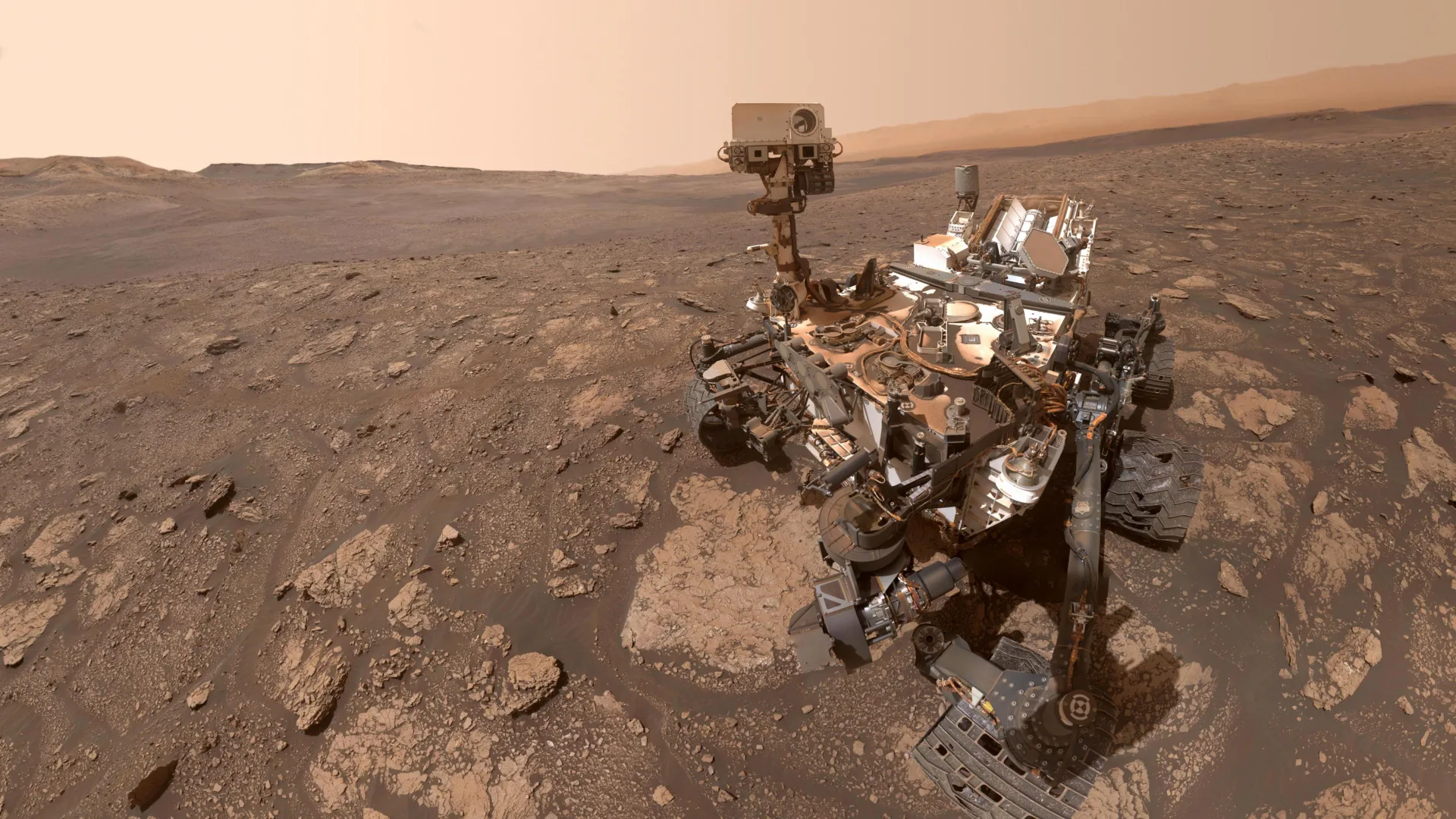
NASA’s Curiosity rover has identified a wide range of organic molecules on Mars, including compounds that scientists consider key ingredients for the origin of life on Earth.
The discovery comes from a chemical experiment carried out on another planet for the first time. Results show that the Martian surface is capable of preserving molecules that could act as potential signs of ancient life. However, the experiment cannot determine whether these organic compounds came from past life on Mars, natural geological processes, or meteorites that struck the planet.
To confirm any true evidence of past life, scientists would need to bring Martian rock samples back to Earth for detailed study.
New Experiment Reveals Preserved Ancient Chemistry
The research was led by Amy Williams, Ph.D., a geological sciences professor at the University of Florida and a member of both the Curiosity and Perseverance rover science teams. Curiosity arrived on Mars in 2012 to investigate whether the planet once had conditions suitable for microbial life. Perseverance, which landed in 2021, is focused on searching for direct signs of ancient life.
“We think we’re looking at organic matter that’s been preserved on Mars for 3.5 billion years,” said Williams, who helped develop the experiment. “It’s really useful to have evidence that ancient organic matter is preserved, because that is a way to assess the habitability of an environment. And if we want to search for evidence of life in the form of preserved organic carbon, this demonstrates it’s possible.”
Williams and an international team published the findings April 21 in the journal Nature Communications.
DNA-Like Molecule Among Key Discoveries
The experiment identified more than 20 different chemicals. Among them was a nitrogen-containing molecule with a structure similar to compounds involved in building DNA, something never before detected on Mars. The rover also found benzothiophene, a large sulfur-containing molecule with two connected rings, which is commonly delivered to planets by meteorites.
“The same stuff that rained down on Mars from meteorites is what rained down on Earth, and it probably provided the building blocks for life as we know it on our planet,” Williams said.
Gale Crater and Clay Minerals Preserve Organics
Curiosity, operated by NASA’s Jet Propulsion Laboratory, landed in Gale crater in August 2012. This site was once a lake bed. The experiment took place in 2020 in the Glen Torridon region, an area rich in clay minerals that formed in the presence of water. These clays are especially good at trapping and preserving organic material, making them ideal locations for this type of investigation.
SAM Instrument and TMAH Chemical Analysis
The analysis was carried out using the Sample Analysis at Mars instrument suite, known as SAM. Jennifer Eigenbrode, Ph.D., an astrobiologist at NASA’s Goddard Space Flight Center and co-author of the study, helps lead the instrument team. SAM has contributed many of the mission’s key discoveries about Mars’ chemistry, atmosphere, and potential habitability.
In this experiment, scientists used a chemical called TMAH to break down larger organic molecules into smaller fragments. These fragments could then be examined by SAM’s onboard instruments. Because Curiosity only carries about two cups of TMAH, researchers had to carefully plan the experiment and select the best possible sampling site.
Implications for Future Mars and Titan Missions
The success of this method is shaping future exploration plans. Upcoming missions, including the Rosalind Franklin rover on Mars and the Dragonfly mission to Saturn’s moon Titan, are expected to carry similar TMAH-based experiments to search for organic compounds.
“We now know that there are big complex organics preserved in the shallow subsurface of Mars, and that holds a lot of promise for preserving large complex organics that might be diagnostic of life,” Williams said.

One of the defining breakthroughs that set quantum physics apart from classical physics was the realization that matter behaves very differently at extremely small scales. Among the most important discoveries was wave-particle duality, the idea that particles can also act like waves.
This concept became widely known through the double-slit experiment. When electrons were fired through two narrow openings, they produced a pattern of alternating light and dark bands on a detector. This pattern revealed that each electron behaved like a wave, with its quantum wave-function passing through both slits at once and interfering with itself. Scientists later confirmed this effect with neutrons, helium atoms, and even larger molecules, establishing matter-wave diffraction as a key principle of quantum mechanics. However, despite these advances, this phenomenon had not been directly observed in positronium. Positronium is a short-lived, two-body system made up of an electron and a positron bound together and orbiting a shared center of mass. Because both components have equal mass, researchers have long sought to understand how such a system would behave when forming a beam and undergoing diffraction.
First Observation of Positronium Wave Behavior
A research team from Tokyo University of Science, Japan, led by Professor Yasuyuki Nagashima and joined by Associate Professor Yugo Nagata and Dr. Riki Mikami, has now achieved that goal. They successfully demonstrated matter-wave diffraction in a beam of positronium. The beam used in their experiment had the necessary energy range and coherence to produce clear interference effects. Their results, published in Nature Communications, provide strong new evidence of wave-particle duality in an unusual system.
“Positronium is the simplest atom composed of equal-mass constituents, and until it self-annihilates, it behaves as a neutral atom in a vacuum. Now, for the first time, we have observed quantum interference of a positronium beam, which can pave the way for new research in fundamental physics using positronium,” says Prof. Nagashima.
Creating a High-Quality Positronium Beam
The breakthrough relied on producing a highly controlled positronium beam. To do this, the researchers first generated negatively charged positronium ions. They then used a precisely timed laser pulse to remove an extra electron, resulting in a fast-moving, neutral, and coherent stream of positronium atoms.
This beam was directed toward a sheet of graphene. The spacing between atoms in the graphene closely matched the de Broglie wavelength of the positronium at the energies used in the experiment. As the positronium atoms passed through the two-to-three-layer graphene sheet, some of them made it through and were detected. The resulting measurements revealed a distinct diffraction pattern, confirming wave-like behavior.
Clear Diffraction Patterns and Quantum Behavior
Compared with earlier techniques, this method produces positronium beams with higher energies, reaching up to 3.3 keV. It also provides a narrower spread of energies and a more tightly directed beam. Conducting the experiment in an ultra-high vacuum kept the graphene surface clean, allowing the diffraction pattern to be observed more clearly.
The results showed that even though positronium consists of two particles, it behaves as a single quantum object. The electron and positron do not diffract separately but instead act together as one wave.
“This groundbreaking experimental milestone marks a major advance in fundamental physics. It not only demonstrates positronium’s wave nature as a bound lepton-antilepton system (a system that behaves like a tiny atom) but also opens pathways for precision measurements involving positronium,” says Dr. Nagata.
The team also investigated whether positronium would produce interference in the same way as a single particle like an electron. Their findings confirmed that it does, reinforcing the idea that it functions as a unified quantum entity.
Future Applications in Materials Science and Antimatter Research
In addition to confirming its quantum properties, positronium diffraction could lead to practical applications. Because positronium carries no electric charge, it may be useful for analyzing material surfaces without causing damage. This makes it especially valuable for studying insulators or magnetic materials that can interfere with charged particle beams.
Looking ahead, experiments involving positronium interference could also make it possible to test how antimatter responds to gravity. This remains an open question, as direct measurements have not yet been achieved, even for electrons.
About Professor Yasuyuki Nagashima from Tokyo University of Science
Dr. Yasuyuki Nagashima is a Professor in the Department of Physics at Tokyo University of Science, Japan, specializing in positron and positronium physics. His research focuses on the properties of negative ions of positronium and the positronium beam. He also studies positron annihilation-induced ion desorption from solid surfaces. In 2020, he received the Hiroshi Takuma Memorial Prize from the Matsuo Foundation. His laboratory conducts fundamental research on exotic particle-matter interactions while developing new positron-based experimental techniques for applied physics.
About Associate Professor Yugo Nagata from Tokyo University of Science
Dr. Yugo Nagata is an Associate Professor in the Department of Physics at Tokyo University of Science, Japan, specializing in positronium and atomic physics. In 2023, he received the Young Scientist Award of the Japanese Positron Science Society.
This work was supported by JSPS KAKENHI (Grants Nos. JP25H00620, JP21H04457, and JP17H01074).
