
Burrowing snakes have far worse eyesight than their ancestors

The ancestor of all living snakes probably had substantially better vision than present-day burrowing snakes, according to new research.

An international team of scientists — led by the Natural History Museum and the University of Plymouth — carried out the first detailed analysis of gene sequence data for any species of the so-called “blindsnakes” (Scolecophidia), a group of small-eyed burrowers.

They found that seven of the 12 genes associated with bright-light vision in most snakes and lizards species are not present in scolecophidians.

This, they say, demonstrates extensive vision gene loss over tens of millions of years of evolutionary history, similar to that which has also been observed in burrowing mammals with reduced vision.

It also challenges the hypothesis that all snakes living across the world today evolved from extreme burrowers, because the vision genes lost in scolecophidians are present in most other living snakes. The researchers say it would be extremely unlikely for such genetic deficiencies to have been reversed through evolution.

Scolecophidians are dedicated burrowers and form one half of the oldest divergence in the snake tree. They comprise approximately 460 of the approximately 3,850 currently recognised living snake species, and likely diverged from their closest living relatives (Alethinophidia, which includes all other living snakes) more than 65 million years ago.

Scolecophidians are typically small, cylindrical, burrowing snakes with reduced eyes and small mouths, strikingly different from the more familiar alethinophidians, which include pythons, vipers, and cobras.

For this research, published in Genome Biology and Evolution, scientists generated new gene-sequence data for the dark-spined blind snake (Anilios bicolor) and the prong-snouted blind snake (Anilios bituberculatus), both of which are common across southern Australia.

They then compared their results with similar data for functional vision genes among other species of snakes and lizards.

Lead author Dr David Gower, Head of the Life Sciences Vertebrates Division at the Natural History Museum, said: “Our data and analytical results provide clear evidence for very substantial reduction of elements of the visual system of burrowing scolecophidian snakes. We already knew that snakes lost some vision genes and eye structures during their evolution from lizards, but most were nonetheless retained. It is highly unlikely that functional copies of a large number of vision genes were lost from the ancestral snake but subsequently re-evolved in most living snakes. As a result, our study strongly suggests that the ancestor of all living snakes was unlikely to have been as extreme a burrower as living scolecophidian snakes.”

The same team of researchers published a study in May 2020, which revealed that the visual systems of sea snakes have undergone remarkable adaptation to life underwater for 15 million years.

Dr Bruno Simões, Lecturer in Animal Biology at the University of Plymouth, led that research and is senior author on the current study. He said: “The nature of the ancestral snake has been highly debated. It has been suggested that it had evolved a reduced visual system as a result of a possible burrowing ecology. Our research provides new information on the likely ecology and environment of the ancestral snake and suggests that the highly subterranean lives and reduced eyes of living scolecophidian snakes likely evolved as specialisms rather than being the retention of primitive characteristics. This study also shows convergent evolution between subterranean snakes and burrowing mammals with the loss of similar genes, especially those associated with bright-light and colour vision.”

Story Source:

Materials provided by University of Plymouth. Original written by Alan Williams. Note: Content may be edited for style and length.


Share Button

Large future changes in climate variability

There is growing public awareness that climate change will impact society not only through changes in mean temperatures and precipitation over the 21st century, but also in the occurrence of more pronounced extreme events, and more generally in natural variability in the Earth system. Such changes could also have large impacts on vulnerable ecosystems in both terrestrial and marine habitats. A scientific exploration of projected future changes in climate and ecosystem variability is described in a new study published in the journal Earth System Dynamics, representing the result of a broad collaborative partnership between the IBS Center for Climate Physics (ICCP) at Pusan National University in South Korea and the Community Earth System Model (CESM) project at the National Center for Atmospheric Research (NCAR) in the US.

The team conducted a set of 100 global Earth system model simulations over 1850-2100, working with a “business-as-usual” scenario for relatively strong emissions of greenhouse gases over the 21st century. The runs were given different initial conditions, and by virtue of the butterfly effect they were able to represent a broad envelope of possible climate states over 1850-2100, enabling sophisticated analyses of changes in the variability of the Earth system over time. The nominally one-degree (~100km) resolution of the model, in conjunction with the 100-member set of runs, represented an unprecedented set of technical challenges that needed to be met before advancing to the goal of assessing how climate variability is impacted by sustained anthropogenic changes to the climate system. “We met these challenges by using the IBS/ICCP supercomputer Aleph, one of Korea’s fastest supercomputers” says Dr. Sun-Seon Lee from the ICCP, a co-author of the study who ran the simulations together with her NCAR colleague Dr. Nan Rosenbloom. For the project, approximately 80 million hours of supercomputer time were used, and approximately 5 Petabytes of disc space (approximately 5000 normal hard discs) were required for storage of the model output.

The main finding of the study is that the impact of climate change is apparent in nearly all aspects of climate variability, ranging from temperature and precipitation extremes over land to increased number of fires in California, to changes in bloom amplitude for phytoplankton in the North Atlantic Ocean. Each of these changes has important impacts for sustainable resource management. As an example, occurrences of extreme precipitation events over the 21st century (between 2000-2009 and 2090-2099) indicate that extremes are expected to become more commonplace over many regions. These projected changes in precipitation extremes are in fact representative of the omnipresence of changes in extremes in the future across a broad range of climate and ecosystem variables, which has important implications for future adaptation strategies.

“In addition to large-scale changes in extreme events, our study also identified large-scale changes in the structure of the seasonal cycle over the 21st century, showing an enhanced growing season length over the continental regions north of 50°N,” says Dr. Keith Rodgers from the ICCP, first author of the study and a co-lead of the CESM2 Large Ensemble Project. Largely due to mean state warming and ensuing changes in the timing of the retreat and advance of winter snow cover, by the end of the 21st century growing season length is projected to increase by three weeks.

Taken together, the computer simulations reveal that across our planet we can expect widespread changes in climate variability, ranging in timescales from synoptic storms to seasons to that of El Niño to decades. Dr. Gokhan Danabasoglu, a co-author of the study and a co-lead of the project, says “an important step moving forward will be to identify more fully the potential societal impacts and to communicate the implications for adaptation strategies.” This broader study has already motivated a number of more specialized scientific investigations using the tremendous volume of output from the simulations, spanning topics from marine ecosystem impacts to hydrological changes that affect water supply.

The National Center for Atmospheric Research is sponsored by the US National Science Foundation and managed by the University Corporation for Atmospheric Research.

Story Source:

Materials provided by Institute for Basic Science. Note: Content may be edited for style and length.
Share Button

The Best Meal Kits For Older People Who Live Alone

My 90-something grandma is a badass boss who lives alone, takes care of herself and loves to cook. After working as a chef and nutritionist for close to 30 years, she could tell you how to make the perfect Cornish game hen like she’s giving directions to the local Dunkin’ Donuts.

Yet, as a party of one, she’s reluctant to buy bushels of herbs or large amounts of produce she knows she won’t use. That, coupled with COVID precautions keeping her away from the store, mean her menu has been looking a little bleak. So in the name of flavor and encouraging older folks to feel independent and strong, I’m gearing up to get her a meal delivery kit for the holidays. But with more options than there are Kardashians, it’s daunting to choose the perfect one.

According to Barbara Ruhs, a registered dietitian and founder of The Market RD, it’s imperative that older folks eat consistent, nutrient-dense meals. “As we age, some nutrients are not absorbed as well,” Ruhs told HuffPost. “Pre-made meals can make it easier for seniors to consume adequate nutrition.”

Retired physical therapist and home-health care specialist Cathy Ellis added that getting nutritious food delivered at home can help with recovery illness or injury. Rather than risking falling or being in public, older folks can have their pantry stocked from the inside of their own house.

Philly resident Shelby Guercio sends meal kit deliveries to her mom, who is 62, and grandmother, who is 100, in small-town Massachusetts. “My mom lives alone and works two jobs and is so busy that I worry about her being able to eat full, fresh meals after a long day of work or in between jobs,” Guercio said. “With meal kits just showing up at my mom’s door, she can either cook it quick and drop it off for my grandma, or easily bring the ingredients over and cook them at my gram’s house.”

Guercio said that sending over meal kits is easier than having her mom and grandmother drive a long way to the grocery store. Additionally, using meal kits means her mom and grandma are introduced to new foods they wouldn’t be able to get at their local store. “They live in an area where [meal] delivery takes an extra day, but still shows up fresh,” she said.

Chef Jake Minigiello says meal kits can be a low-stakes way to introduce older folks to different, but doable, ingredients and methods of cooking, especially because the pre-portioned ingredients allow you to try something new without committing to buying a whole container of it. “It’s good how they just send you the exact amount of ingredients you need for a recipe to cut that waste out,” Minigiello said.

Although meal kits may cut down on food waste, the packaging and shipping required has been the subject of criticism. And the costs of these kits can be a barrier for many shoppers. While delivery makes food more readily available, the high price points mean it’s only really available to those who can afford it. (It’s also import to note that Amazon Fresh, Top Box and Hungry Harvest, all listed below, accept EBT/SNAP.)

When exploring meal kit and food delivery options, you may also want to consider the work behind the scenes, and how those employees are treated. If worker’s rights are important to you as a consumer, find a brand that works for your kitchen and your ethics.

“Of course, a local, subsidized, sustainable alternative would be amazing, but let’s be real ― if that existed, it definitely wouldn’t exist [in rural areas] for all the old people,” Guercio said. “You can hardly even get Grubhub out there.”

If you’re looking to get a loved one started on a meal kit or trying to find the perfect one for yourself, we’ve rounded up the best meal kits for smaller portioned food and dietary restrictions.

HuffPost may receive a share from purchases made via links on this page. Every item is independently selected by the HuffPost Shopping team. Prices and availability are subject to change.

Martha Stewart & Marley Spoon, for name recognition and more “meat and potatoes”-type meals

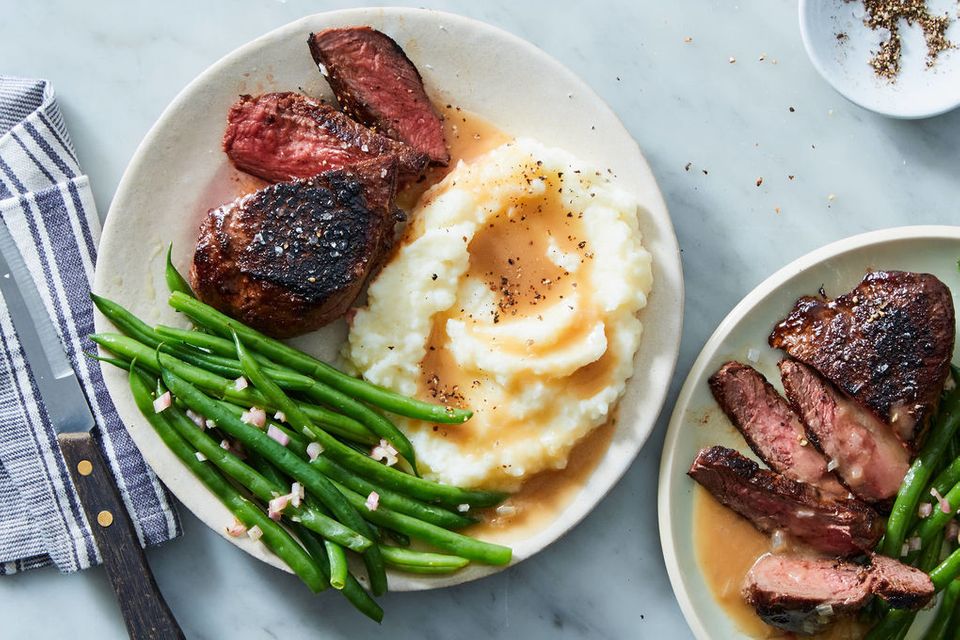
Why it works for older folks: Per Ellis, trusting a new food source can be an adjustment for someone who’s homebound and into a routine. For something that feels a little more familiar, the Martha Stewart & Marley Spoon kit has a name they recognize and recipes they’ve likely had before. While the service does offer international cuisines and Instagrammable smoothie bowl meals, they also have comforting classics like pork tenderloin and parsnips and cheese ravioli.

How it works: Ten days before the food come to you, you get an email telling you to choose your dinners from 40 weekly recipes. You can chose up to six meals a week and portions come for two people or for four. (The more meals you order, the cheaper each becomes.) You can skip or decline an order up to five days before its scheduled delivery date, and can plan meals up to seven weeks in advance. Deliveries are made to most of the contiguous U.S. states, but you should check your zip code before ordering.

How much? Shipping is always $8.99. For a two-person portion, meals range from $9.49 to $11.99 per portion, depending on how frequent the deliveries are.

Check out Martha Stewart & Marley Spoon.

Dinnerly, for more frequent food and less paper/packaging

Why it works for older folks: As Ruhs described, when we get older, nutrients like B12, calcium and vitamin D are not absorbed as well by the body. Because of this, it’s extra important that older folks eat consistent, nourishing meals. With Dinnerly, you have to receive at least three two-person meals a week, meaning you or your loved one will have a stocked fridge. For more stubborn folks or people who may not ask for help when they’re hungry, this subscription will ensure they have ingredients for at least six meals. Dinnerly also uses fewer paper products and packaging than other kits, so it won’t fill the house with trash.

How it works: After creating an account, you log on to choose your recipes and which day you want your ingredients delivered. There tons of dietary options like no meat, low-carb, dairy-free and low-calorie, and easy-cook options like “under 30 minutes” and “one-pot” meals. It’s important to note that Dinnerly uses digital recipes; there is not a paper flyer like other kits, so some understanding of a smartphone or computer is needed.

How much? Shipping is $8.99 and two-portion meals range from $5.59 to $5.89 per portion.

Check out Dinnerly.

Hungry Harvest, for discounted produce and SNAP/EBT users

Why it works for older folks: As Ruhs shares, older folks are at risk of not getting enough veggies. Hungry Harvest is a produce subscription box that accepts SNAP/EBT and comes in various sizes. For those who live alone, the “mini-harvest” comes with one type of green, three veggies and 2 to 3 pieces of fruit. You can set it for every other week to ensure there’s fresh produce in the house, without too much food going to waste or going bad.

How it works: As of now, Hungry Harvest only delivers in Maryland, Washington, D.C., Virginia, Greater Philadelphia, Southern New Jersey, Northern Delaware, South Florida, the Triangle area and Charlotte in North Carolina and the Detroit metro area. Select the size of harvest you want and weekly or biweekly deliveries.

How much? The mini harvest is $15 per box with $3.49 shipping. Shipping is free on orders over $29.99.

Check out Hungry Harvest.

Purple Carrot, for single-serving pre-made, veggie-packed meals to help with lowering LDL cholesterol

Why it works for older folks: Ruhs notes that it’s common for older folks to not consume enough veggies. Purple Carrot is an all plant-based meal kit that sends both fully pre-made meals and ingredients that you cook. Either pop it in the microwave or choose to chef something up (most recipes have around six steps.)

How it works: First, you choose between meal kits or prepared meals. For kits, you pick your number of servings (two or four) and how many dinners you want (three or four). Prepared meals come in single servings and you can get six, eight or 10 a week. There are options like high-protein, gluten-free, “easy” meals or “Chef’s Choice” meals, where you don’t choose. To skip a delivery, just alert the website before 11 p.m. ET on Tuesdays.

How much? For meal kits, servings are $9.99 to $11.99 per serving depending on how frequent the meals are delivered. Prepared meals are $12.99 each, regardless of frequency.

Check out Purple Carrot.

SNAP-Eligible Amazon Fresh, for maximum convenience

Why it works for older folks: If they already use Amazon, they may know how to work the website and feel comfortable ordering from it. Additionally, Amazon Fresh makes it easy to send groceries to someone else. Stock their fridge with a click of a button.

How it works: Amazon Fresh delivers in most of the continental U.S., but check the zip code to make sure. Then, like ordering anything from Amazon, click around and find what you like. Delivery is often available same-day or the next day. Check out the SNAP-eligible page to use your SNAP/EBT on Amazon Fresh.

How much? Just like the grocery store, each item is priced separately. When using SNAP/EBT, delivery is free even if you’re not an Amazon Prime member.

Check out SNAP-Eligible Amazon Fresh.

Hungry Root, for actual food that looks like groceries

Why it works for older folks: Ellis shared that getting groceries delivered helps ensure people’s safety and lowers risk of injury or illness that can come from going out to the market. If you’re feeling skeptical about the “Jetsons”-eqsue futuristic feel of meal kits, Hungry Root may be the way to go. Instead of packaged and proportioned ingredients made for set meals, Hungry Root is a subscription grocery service that sends a selection of actual groceries and access to a bank of recipes. The packages come as if someone went to the market for you and dropped it at your door, meaning the products are all more familiar, and the recipe bank correlates to what you have, letting you decide what you want to make and how.

How it works: Upon signing up, you take a quiz to develop your grocery plan. Select “fresh veggies” for a vegetable selection every week, and “premium proteins” for meatballs, chicken breasts, Beyond meats and more. You can select “ready to eat” meals for things that only need the microwave or heating up on a stovetop. Every week Hungry Root will send you their suggestions for foods they think you’d like, and recipes you can make with the groceries.

How much? Plans start at $65 and are totally customizable.

Check out Hungry Root.

Sunbasket, for single-serving dietary restrictions and lots of options for all three meals (and snacks)

Why it works for older folks: From “carb-conscious” to “diabetes-friendly,” Sunbasket has a wealth of options for different dietary needs. Choose from pre-made meals that just need heating or meal kits that generally take between 15-45 minutes to make. In addition to dinners, Sunbasket has breakfast options like oatmeal and yogurt, snacks like granola and protein bars, and other fare like juice or red sauce.

How it works: First, decide if you want the prepared meals or meal kits. Then select all your dietary preferences and restrictions, like “low sodium” or “avoid lamb.” Each week, you’ll get to see a bank of recipes and pre-made meals that fit your needs. Choose the one(s) you want, then pick the day of delivery.

How much? Shipping is $7.99.Prepared meals are for one, and start at $9.99 a serving for up to 10 meals week. Meal kits come in servings of two or four, for two to five dinners a week, from $11.49 to $14.49 per serving, depending on frequency.

Check out Sunbasket.

Green Chef, for protein-packed options that are highly customizable

Why it works for older folks: “Obtaining enough protein is important to maintain muscle mass,” Ruhs said, “which can be very important to avoid falls that can lead to broken bones.” To help your loved one get enough protein, Green Chef has an array of keto, paleo and plant-based high protein meals. With options like gluten-free, grain-free, soy-free and legume-free, Green Chef is good for ensuring those with dietary restrictions still eat nourishing meals.

How it works: Select the “type” of meal you want — “Keto/Paleo,” “balanced” (no diet restrictions) or “plant-powered” (vegan and vegetarian options) — then choose if you want two, four or six portions and if you want three or four meals a week.

How much? Shipping is $9.99. A two-portion meal ranges from $11.49-$11.99 per serving, depending on frequency.

Check out Green Chef.

Top Box Foods, for a more personal delivery and EBT/SNAP users

Why it works for older folks: A community-driven food resource, Top Box Foods is an anti-hunger non-profit that delivers grocery staples and food boxes geared at making recipes. Because it’s community-run, they partner with churches, community organizations, housing facilities and schools. It’s less transactional and robotic than other meal kits, and you’ll likely get to know your delivery person.

How it works: As of now, Top Box Foods delivers food around Illinois, Georgia and Louisiana. You place your order before the stated date each month and get your groceries about four days later. On the website, you can choose if you want pantry staples like oatmeal and milk or a box to make a meal. They have a bank of recipes to help you chose your groceries.

How much? Take Box Foods takes EBT/SNAP. There is no delivery fee. Boxes range from $9-$23, depending on the selection, and individual items are priced separately.

Check out Top Box Foods.

EveryPlate, for easy cooking and less decision making

Why it works for older folks: EveryPlate has fewer weekly options to choose from, meaning less decision-making and more relaxing and eating. All of EveryPlate’s recipes have only six steps for cooking and most take under 30 minutes to cook. It’s a more manageable kit that doesn’t demand 45 minutes of zesting for every meal.

How it works: You choose your meal preferences, such as “classic” (full display recipes) “veggie” (vegetarian recipes) “family” (kid-friendly recipes) or “easy” (all under 30 minutes, often using fewer dishes). Then you decide how many meals you want a week and what day you want the delivery. You can cancel or postpone at any time online. You can even order “protein packs” alongside your meals, which are chicken breasts and cuts of meat. The minimum is three meals per week.

How much? For a two-portion meal, it’s $4.99 to $5.49 per portion, depending on how many meals you get per week.

Check out EveryPlate.

Share Button

NHS Tracker: How is the NHS in your area coping?

Waits for emergency care are worsening – use the BBC look-up to find out how busy your local service is.

Share Button

Covid: England braces for Plan B rule changes amid Omicron fears

The new measures, some of which start from Friday, include Covid passes and tougher mask rules.

Share Button

Covid: Omicron hospital admissions could reach 1,000 a day – scientific advisers

The BBC has seen minutes of a meeting of scientific advisers which warn of NHS pressure from Omicron.

Share Button

Covid: Pfizer says booster shot promising against Omicron

The company says a third dose of its vaccine could improve protection against the new variant.

Share Button

Devising new meat alternatives with 3D printing — and cocoa butter

No longer just a dream of vegetarians and vegans, fake meat is becoming more widely available in grocery stores and restaurants. And more options are almost certainly on the way. In a study reported in ACS Food Science & Technology, one team has developed a new combination of plant-based ingredients tailored for 3D printing meat alternatives. Their most successful recipes required an odd-sounding addition: cocoa butter, derived from cocoa beans of chocolate fame.

From animal welfare to environmental sustainability, there are plenty of reasons people choose to avoid eating meat derived from animals. Many current meat alternatives rely on plant-based proteins, most often from soy and wheat, which can readily mimic the texture and nutritional value of the real thing. While 3D printing has already been tested for meat alternatives, none of the current formulations include proteins from these particular plants. So, Songbai Liu and Shanshan Wang wanted to figure out an approach to making a meat “dough” with soy and wheat protein that could be produced effectively with a 3D printer.

The researchers tested soy and wheat proteins in formulations containing several other ingredients using a 3D printer. They evaluated their concoctions based on the accuracy with which the dough could be laid down by the printer and how well it held its form. They also examined its texture and microstructure. The experiments revealed the importance of several additional ingredients, including the emulsifier Tween-80 and sodium alginate to control the texture. Heat-sensitive cocoa butter turned out to be a particularly important ingredient, making the dough more fluid at warm temperatures for printing, but then hardening afterward at room temperature, allowing the dough to retain its printed shape. One drawback, however, is that people who cannot eat wheat gluten or soy because of allergies or celiac disease would not be able to partake of the new alternatives. To address this issue, the researchers attempted to replace the soy protein with that from peas, but the resulting dough was too soft for printing. Even so, these experiments have identified a new strategy for formulating meat alternatives using this versatile technology, according to the researchers.

The authors acknowledge funding from the National Key Research and Development Program, the Zhejiang Public Welfare Technology Research Program, the Qinghai Science and Technology Program and the Foundation of Fuli Institute of Food Science at Zhejiang University.

Story Source:

Materials provided by American Chemical Society. Note: Content may be edited for style and length.

Share Button

Impaired-driver sensor could pave the way for safer vehicles

The bipartisan infrastructure bill recently signed into law by President Joe Biden includes a requirement for automakers to install driver monitoring systems that detect intoxicated or impaired drivers. Current systems rely on cameras, which have limitations. Now, researchers reporting in ACS Applied Electronic Materials have made heat-resistant, pressure-detecting sensors that, when attached to seats, can tell whether a driver is drowsy or has a sudden illness, signaling a future smart car to take action.

Most current drowsiness detection systems use an exterior, forward-looking camera to monitor lane position or sudden, exaggerated corrections. Others use an interior camera to check a driver’s face or eyes for signs of nodding off. Camera-based systems, while useful, have drawbacks. For example, an exterior camera could be blocked by mud, and an interior camera could be less effective at night. Scientists have previously explored using piezoelectric sensors — self-powered materials that accumulate an electrical charge in response to pressure — for monitoring a driver’s posture, which changes when a person falls asleep, has a sudden health emergency or is intoxicated. However, existing piezoelectric sensors cannot withstand high temperatures, a requirement for electrical and electronic equipment in vehicles. Toshimi Nagase and colleagues wanted to develop flexible, heat-resistant piezoelectric sheet sensors that could be embedded in a vehicle’s seat to monitor the driver’s posture.

The researchers prepared zinc oxide-based films directly on a polyimide surface and then screen-printed a silver paste on both sides to obtain a piezoelectric sheet. They connected a coaxial cable to detect changes in electrical charge with pressure and then folded the sheet in half around the cable. The sensor sheet resisted heating up to 250 F, with no changes in its properties. After showing that the sensor could discriminate changes in mechanical load, the team placed a sensor in the back of a chair. By detecting a seated person’s slight body movements, the sensor allowed the researchers to calculate the person’s respiration and pulse rates. Two other sensors attached to the seat of a chair could sense when a person leaned left or right with their upper body, which could indicate drowsiness.

The researchers say that in the future, a monitoring system based on the sensors might detect changes in vital signs or body posture, triggering a self-driving car to find a safe location and then stop. The vehicle could also contact emergency healthcare providers, depending on the situation. To get to that point, the next step is to test the piezoelectric sensors in a car, where vehicle motions and vibrations will contribute to background noise in the measurements, the team says.

Story Source:

Materials provided by American Chemical Society. Note: Content may be edited for style and length.

Share Button

2,700-year-old leather armor proves technology transfer happened in antiquity

Researchers at the University of Zurich have investigated a unique leather scale armor found in the tomb of a horse rider in Northwest China. Design and construction details of the armor indicate that it originated in the Neo-Assyrian Empire between the 6th and 8th century BCE before being brought to China.

In 2013, a nearly complete leather scale armor was found in the tomb of an approx. 30-year-old male near the modern-day city of Turfan in Northwest China. This unprecedented find, which survived the millennia thanks to the area’s extremely arid climate, provided the international team led by Patrick Wertmann from the Institute of Asian and Oriental Studies of the University of Zurich with new insights on the spread of military technology during the first millennium BCE.

Scale armors protect the vital organs of fighters like an extra layer of skin without restricting their mobility. The armors were made of small shield-shaped plates arranged in horizontal rows and sewn onto a backing. Due to the costly materials and laborious manufacturing process, armors were very precious, and wearing them was considered a privilege of the elite. It was rare for them to be buried with the owner. However, the emergence of powerful states with large armies in the ancient world led to the development of less precious but nevertheless effective armors made of leather, bronze or iron for ordinary soldiers.

Standard military equipment for horsemen

The researchers used radiocarbon dating to determine the age of the armor to between 786 and 543 BCE. It was originally made of about 5,444 smaller scales and 140 larger scales, which together with leather laces and lining weighed between 4 and 5kg. The armor resembles a waistcoat that protects the front of the torso, hips, the sides and the lower back of the body. It can be put on quickly without the help of another person and fits people of different statures.

“The armor was professionally produced in large numbers,” says Patrick Wertmann. With the increasing use of chariots in Middle Eastern warfare, a special armor for horsemen was developed from the 9th century BCE. These armors later became part of the standardized equipment of military forces of the Neo-Assyrian Empire, which extended from parts of present-day Iraq to Iran, Syria, Turkey and Egypt.

Two armors, distinct units

While there is no direct parallel to the 2,700-year-old armor in the whole of Northwest China, there are some stylistic and functional similarities to a second contemporary armor of unknown origin held by the Metropolitan Museum of Art in New York (the Met). It is possible that the two armors were intended as outfits for distinct units of the same army, i.e. the Yanghai armor for cavalry and the armor in the Met for infantry.

It is unclear whether the Yanghai armor belonged to a foreign soldier working for the Assyrian forces who brought it back home with him, or whether the armor was captured from someone else who had been to the region. “Even though we can’t trace the exact path of the scale armor from Assyria to Northwest China, the find is one of the rare actual proofs of West-East technology transfer across the Eurasian continent during the early first millennium BCE,” says Wertmann.

Story Source:

Materials provided by University of Zurich. Note: Content may be edited for style and length.

Share Button