MIT scientists turn chaotic laser light into powerful brain imaging tool

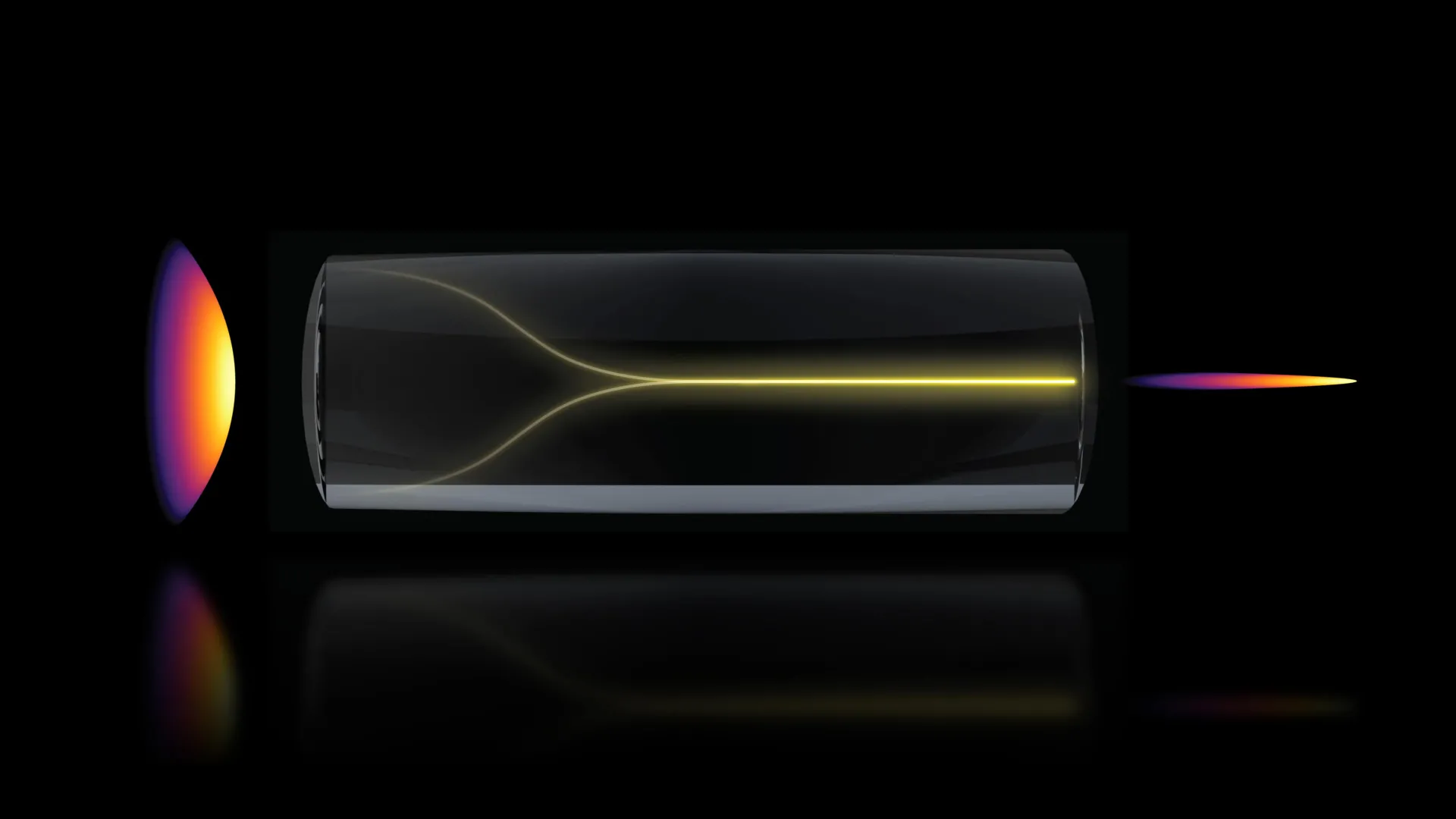
Researchers at MIT have identified an unexpected effect in optical physics that could lead to a faster and more detailed way to image living tissue. Under specific conditions, what normally looks like a scattered and disordered laser signal can reorganize itself into a narrow, highly focused “pencil beam.”

With this self-formed beam, the team produced 3D images of the human blood-brain barrier at speeds about 25 times faster than the current gold-standard approach, while preserving similar image quality. The method also makes it possible to watch individual cells absorb drugs in real time. This could help scientists evaluate whether treatments for conditions such as Alzheimer’s or ALS are actually reaching their intended targets in the brain.

“The common belief in the field is that if you crank up the power in this type of laser, the light will inevitably become chaotic. But we proved that this is not the case. We followed the evidence, embraced the uncertainty, and found a way to let the light organize itself into a novel solution for bioimaging,” says Sixian You, assistant professor in the MIT Department of Electrical Engineering and Computer Science (EECS), a member of the Research Laboratory for Electronics, and senior author of a paper on this imaging technique.

She is joined on the paper by lead author Honghao Cao, an EECS graduate student; EECS graduate students Li-Yu Yu and Kunzan Liu; postdocs Sarah Spitz, Francesca Michela Pramotton, and Federico Presutti; Zhengyu Zhang PhD ’24; Subhash Kulkarni, an assistant professor at Harvard University and the Beth Israel Deaconess Medical Center; and Roger Kamm, the Cecil and Ida Green Distinguished Professor of Biological and Mechanical Engineering at MIT. The paper appears today in Nature Methods.

A Surprising Laser Behavior Emerges

The finding began with an observation that did not fit expectations.

The researchers had previously built a precise fiber shaper, a device that allows careful control of laser light traveling through a multimode optical fiber, which is capable of carrying high levels of power.

Cao gradually increased the laser power to test the limits of the fiber.

Normally, increasing power causes the light to scatter more due to imperfections inside the fiber. Instead, as the power approached the threshold where the fiber might be damaged, the light suddenly concentrated into a single, extremely sharp beam.

“Disorder is intrinsic to these fibers. The light engineering you typically need to do to overcome that disorder, especially at high power, is a longstanding hassle. But with this self-organization, you can get a stable, ultrafast pencil beam without the need for custom beam-shaping components,” You says.

Conditions That Enable Self-Organizing Light

To reproduce this effect, the team identified two key requirements.

First, the laser must enter the fiber at a perfectly aligned, zero-degree angle, which is stricter than standard practice. Second, the power must be increased until the light begins interacting directly with the glass material of the fiber.

“At this critical power, the nonlinearity can counter the intrinsic disorder, creating a balance that transforms the input beam into a self-organized pencil beam,” Cao explains.

Such conditions are rarely explored because researchers typically avoid high power levels to prevent damaging the fiber. Precise alignment is also not usually necessary since multimode fibers can already carry large amounts of energy.

When combined, however, these factors allow the system to produce a stable beam without complex optical engineering.

“That is the charm of this method — you could do this with a normal, optical setup and without much domain expertise,” You says.

Sharper Imaging With Fewer Artifacts

Tests showed that this pencil beam is both stable and highly detailed compared to similar beams. Many conventional beams produce “sidelobes” — blurred halos that reduce image clarity.

In contrast, this beam remains clean and tightly focused.

The researchers then applied the technique to image the human blood-brain barrier, a dense layer of cells that shields the brain from harmful substances but also blocks many drugs.

Faster 3D Imaging of the Blood-Brain Barrier

Scientists often need to observe how drugs move through the blood vessels in this barrier and whether they successfully reach brain tissue. Traditional optical methods typically capture one 2D slice at a time, requiring repeated scans to build a complete 3D image.

Using the new pencil beam approach, the team generated rapid, high-precision images while also tracking how cells absorb proteins in real time.

“The pharmaceutical industry is especially interested in using human-based models to screen for drugs that effectively cross the barrier, as animal models often fail to predict what happens in humans. That this new method doesn’t require the cells to have a fluorescent tag is a game-changer. For the first time, we can now visualize the time-dependent entry of drugs into the brain and even identify the rate at which specific cell types internalize the drug,” says Kamm.

“Importantly, however, this approach is not limited to the blood-brain barrier but enables time-resolved tracking of diverse compounds and molecular targets across engineered tissue models, providing a powerful tool for biological engineering,” Spitz adds.

The system produced cellular-level 3D images with improved quality and did so roughly 25 times faster than existing methods.

“Usually, you have a tradeoff between image resolution and depth of focus — you can only probe so far at a time. But with our method, we can overcome this tradeoff by creating a pencil-beam with both high resolution and a large depth of focus,” You says.

Future Applications and Next Steps

Looking ahead, the researchers aim to better understand the physics behind this self-organizing beam and the mechanisms that allow it to form. They also plan to extend the method to other applications, including imaging neurons, and to explore ways to bring the technology into practical use.

This work was funded, in part, by MIT startup funds, the National Science Foundation (NSF), the Silicon Valley Community Foundation, Diacomp Foundation, the Harvard Digestive Disease Core, a MathWorks Fellowship, and the Claude E. Shannon Award.


Share Button

‘My Ends Were Dry, Frizzy, And Honestly Just Sad’ — Until This $15 Hair Mask

Sometimes, your regular shampoo and conditioner just don’t cut it, especially if your strands are changing due to age, a new environment or hormones. Thankfully, we’ve spotted a deep-conditioning mask that handles everything from dullness to frizz to more extensive damage. Briogeo’s “Don’t Despair, Repair!” at-home treatment that reviewers say makes hair “noticeably softer and less dry,” in as little as 15 minutes. Several reviewers swear this “saved” their hair to the point of straight-up happy tears. Its 2-ounce tube is $15 and if you need more, we spotted the more big jar for 50% off, TODAY only, as part of Sephora’s flash Hair Faves sales, running through May 4.

Reviewers say this quick, weekly treatment is “the real deal” for trading heartbreaking damage for salon-like soft and bouncy hair at home.

“My ends were dry, frizzy, and honestly just sad—but after using Briogeo Don’t Despair, Repair! once a week, my hair feels softer, smoother, and way more manageable,” one user, wrote about the magic in a tub. ”…I leave it on for about 10–15 minutes and rinse, and it instantly makes my hair feel like I just left a salon.”

“I had been experiencing so much shedding and breakage that I was gravely concerned and quite honestly, growing desperate,” another person wrote about their pre-mask curly challenges.

“After one use (yes just one) I can already tell a major difference in my hair! My curls have more definition and there is a “bounce” to them again. I haven’t seen my hair have that ‘bounce’ in so long! It made me so happy I literally teared up!! I’m looking forward to seeing the health of my hair improve even more thanks to this wonderful product! Definitely a 10 out of 10!!! ❤️”

Whether using it on straight, curly or multi-textured hair, several people love how easy the mask is to apply.

Say good by to kitchen concoctions and long stints underneath a dryer. Made with plant protein, biotin, algae extract and almond, argan and rosehip oils, this leave-in mask is designed to strengthen, repair and hydrate your hair quickly. The brand advises one-time application weekly for just 10 minutes, in place of your regular conditioner. Just let it sit, then rinse.

However, some users shared that they had a smooth experience with positive changes, even if they didn’t follow the directions to a tee. “The jar is actually bigger than I expected, well packaged and so soft and easy to glide through your hair,” shopper Florence said.

“Read directions because the product recommends you leave on for 10 minutes before rinsing,I didn’t have 10 minutes to wait and my hair still became manageable and looks wonderful again!”

And several folks report the product not only being easy to use but making styling their hair easier after rinse-out — from detangling to styling.

It’s especially loved by people with dry, gray hair and damage from hot tools and coloring.

One reviewer, who tried the mask from a Sephora sample, called the mask a “miracle tamer of the crazy white hairs!” “I am starting to go white (not gray, seriously, white) and those white hairs are course and have a mind of their own,” they wrote. “This seemed to tame them and keep them in line with the rest of my hair. To me that’s everything. Nothing worse than crazy white hairs sticking out everywhere.”

Others call the conditioner “great for greying hair,” especially for capturing the “shine and bounce” of the salon. “You’re going to be thrilled with the smooth and silky feel of the mask that’s done its magic,” one said. ”…Styling after using the mask is a breeze again and you’re going to look like you just walked out of the salon! When the grey hair shines, it looks healthy and blends better with the rest of your hair.”

Reviewers who had damaged hair from salon treatments report similair results. “I recently had my hair professionally colored, and it definitely dried out my hair,” one said, noting that after using the “magic” mask one time, “I’m shocked at how soft it is, and tangle free!”

“My hair felt like broom straw after it was bleached (never again!) and I bought this as a Hail Mary,” another wrote. “After 1 use my hair felt almost back to normal, after the 2nd use it felt soft, luxurious, and wonderful.”

Reviewers love this deep conditioning mask for making their locks softer and smoother. Read more 5-star Amazon reviews, then try the smaller size at Amazon for $15 or grab the large size on sale at Sephora.

“This hair mask is the real deal. My ends were dry, frizzy, and honestly just sad—but after using Briogeo Don’t Despair, Repair! once a week, my hair feels softer, smoother, and way more manageable. It smells amazing (clean and fresh without being too strong), and the texture is super creamy without weighing my hair down. I leave it on for about 10–15 minutes and rinse, and it instantly makes my hair feel like I just left a salon. Bonus: it’s clean and cruelty-free, which makes me feel even better about slathering it all over my head. Total game-changer for damaged or color-treated hair.” — Aura’s Of Amara

“This stuff is magic. I recently had my hair professionally colored, and it definitely dried out my hair. I had heard wonderful things about the whole Don’t Despair, Repair line and I decided to try this mask and the protein treatment. I just dried my hair and I’m shocked at how soft it is, and tangle free! Definitely give this a try if you have dry or damaged hair – I loved it so much I ordered the matching shampoo and conditioner! Can’t wait to try the whole line together!” — Phaedra

“I’m 60+ and found out that when you have enough gray hair going, it comes in dull and lifeless, a little wiry and has a mind of its own. You may leave the salon with shine and bounce to discover all that disappears when you shampoo and condition yourself at home. Here is the solution. After shampooing, rinse, then load a small scoop of this mask onto your hair, massaging it into your scalp and through to the ends (I have longer than shoulder length hair ) don a conditioning cap to keep your wet hair from dripping everywhere and wait 10 minutes. Then rinse it out, add your usual conditioner and rinse again. You’re going to be thrilled with the smooth and silky feel of the mask that’s done its magic. Plus the confidence that you’ve elected to use a product that is not full of harmful petroleum chemicals, preservatives and the like, that seep into your scalp and cause breakouts, hormone disruption and other additives that they secretly add to lots of hair products. Styling after using the mask is a breeze again and you’re going to look like you just walked out of the salon! When the grey hair shines, it looks healthy and blends better with the rest of your hair. Love this stuff!” — Belinda W

“Everyone’s hair is different. My hair is superfine, dyed, thinning and old (I am 73). I got a sample of this wonderful product a while ago and I am still rejoicing that it found me. It is great to be able to buy it in a larger quantity. My thin hair has much more volume and body after using this product. It is shiny and has a great texture. It never weighs my hair down and never dries it out. I simply love how my hair looks after using it.” — J.E. preston

Looking for more body and volume in your conditioned hair? Who isn’t! Check out these three on-sale finds for giving your strands a boost, courtsey of HuffPost Shopping.

Amazon

Werb’s volume dry texture spray (15% off)

Deemed a “godsend for really fine hair” this dry texture spray from Verb is loved for bringing volume and bounce to thin strands. Reviewers say its like a dry shampoo and hair spray mix, that holds hair in place and gives you body for days. Get it for 15% off.

Promising review: “Best stuff ever. This is the perfect balance between dry shampoo and hairspray. My hair is SO fine and thin, that any presence of oil looks like my hair is slicked back. I can get an extra WEEK out of one wash because of this stuff! It also really helps plump up my braids and ponytails. Ponytails are bouncy and lush, and braids look nice and big, instead of skinny rat tails! Having really fine hair (basically a type 1A/1B) I missed out on the 90s holdover of perms, floofs, super tall bangs, and volume to the max—and I finally can get it” — Moriah

Amazon

A K-Beauty root-enhancing rosemary water spray (15% off)

Another win for thinning hair — rosemary. More than a cooking herb, the plant is a potent, government-studied ingredient in body care, namely for boosting thinning or balding hair. We’ve covered the stuff quite a bit, speaking to dermatologists and even trichologists (hair and scalp specialists, yes that’s a thing) about rosemary’s ability to condition and strengthen hair, soothe the scalp and even its potential to accelerate new hair growth. Needless to say, we’re all for adding rosemary to your routine, so when we spotted this root-enhancing rosemary water spray from Korean beauty brand Aromatica and saw it was on sale, we knew we needed to tell the people. The spray is already cheaper on Amazon than it is on the brand’s website, so this sale is closer to 40% off its list price.

Amazon

The Ordinary’s multi-peptide serum for hair loss (23% off)

In a previous story about the best shampoos for hair loss, Dr. Dendy Engelman, a board-certified dermatologist at Shafer Clinic Fifth Avenue in New York City, mentioned that peptides, a common ingredient in anti-aging skin care, are actually a great ingredient for supporting the scalp and reducing shedding.

Armed with Engelman’s insights, we’ve got our eyes on this multi-peptide serum for hair density by the Ordinary, which reviewers call “magic in a bottle.” The serum is fragrance-free and sulfate-free (derms have previously warned against using sulfates if you’re concerned about hair loss, because they can strip the scalp of natural oils, leading to dryness and inflammation). It’s also so easy to use as a lightweight, water-based leave-in serum: Just apply a few drops to your clean, dry scalp once a day (the brand recommends at bedtime). Even better? It’s currently 23% off.

The Real Deal: We use deal trackers and commerce experience to sift through “fake” hike-and-drop deals and other deceptive sales tactics. Products will usually be rated at least 4 stars with a minimum 15% discount. (And when there’s an exception, we’ll tell you why.)

Share Button

Scientists finally solve mystery of strange “golden orb” found 2 miles deep

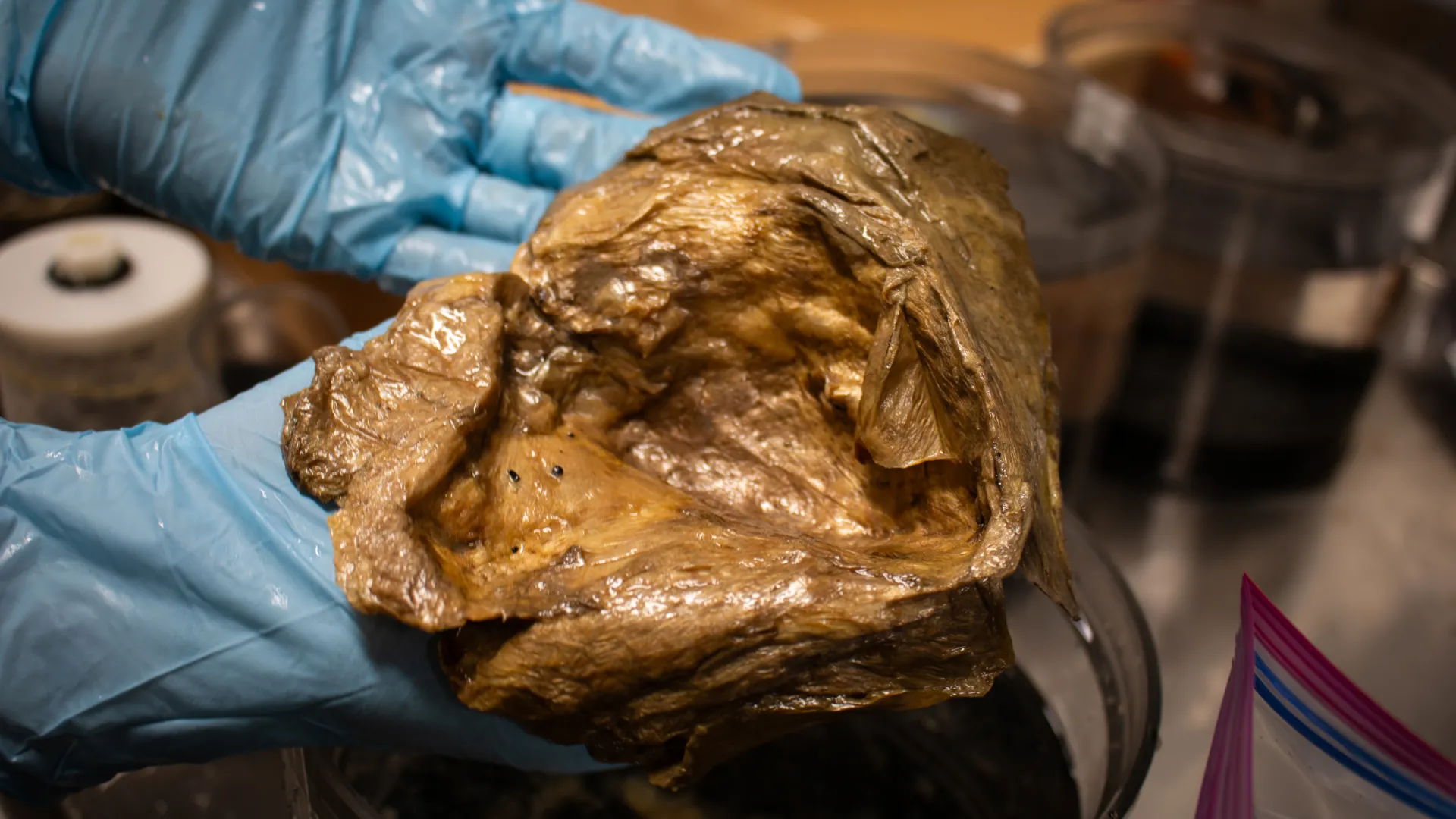
A strange object known as the “golden orb” puzzled scientists and captured public attention after it was collected during a 2023 NOAA expedition. More than two years later, researchers have finally identified what it is.

The unusual golden mass, discovered at a depth of 3,250 meters (over 2 miles) in the Gulf of Alaska, turned out to be the remains of dead tissue from a giant deep-sea anemone called Relicanthus daphneae. Specifically, it was part of the anemone’s base, which anchors the animal to rocky surfaces on the seafloor.

During NOAA Ocean Exploration missions aboard NOAA Ship Okeanos Explorer, encountering unfamiliar organisms is not unusual. In many cases, scientists can quickly identify these finds by sharing knowledge and collaborating. However, some discoveries resist easy answers, and the “golden orb” became one of those rare, lingering mysteries.

[See link to video below article.]

Discovery in the Gulf of Alaska

In 2023, the remotely operated vehicle Deep Discoverer (launched from Okeanos Explorer) was exploring more than 2 miles below the surface in the Gulf of Alaska when it spotted something unusual. Resting on a rock was a rounded, golden object with a small opening, unlike anything the team had seen before.

The discovery raised immediate questions. Could it be an egg case, a sponge, or something entirely new? Some even wondered whether a creature had entered or exited through the opening. The unusual appearance sparked widespread curiosity and speculation.

To investigate further, the team carefully collected the object using a suction sampler and sent it to the Smithsonian National Museum of Natural History (NMNH) for detailed study.

A Complex Investigation Using DNA and Microscopy

Solving the mystery of the “golden orb” took years of careful analysis. Unlike more straightforward identifications, this case required multiple scientific approaches and specialized expertise.

“We work on hundreds of different samples and I suspected that our routine processes would clarify the mystery,” explains Allen Collins, Ph.D, zoologist and director of NOAA Fisheries’ National Systematics Laboratory, which is physically located within the Smithsonian National Museum of Natural History. “But this turned into a special case that required focused efforts and expertise of several different individuals. This was a complex mystery that required morphological, genetic, deep-sea and bioinformatics expertise to solve.”

Researchers from NOAA Fisheries and the Smithsonian used an integrative taxonomic approach, combining physical examination with genetic testing. Early analysis showed that the object did not have typical animal features. Instead, it consisted of fibrous layers packed with cnidocytes (stinging cells), indicating it likely belonged to a cnidarian, the group that includes corals and anemones.

Further study by National Systematics Lab scientist Abigail Reft identified the cells as spirocysts, which are unique to the Hexacorallia subgroup of cnidarians. Scientists also compared the specimen to a similar object collected in 2021 during an expedition aboard Schmidt Ocean Institute’s Research Vessel Falkor, finding matching cellular structures.

Genetic Evidence Confirms the Answer

Initial DNA barcoding attempts did not provide clear results, possibly because the sample contained genetic material from other microscopic organisms. To get a more definitive answer, the team turned to whole-genome sequencing.

This deeper analysis confirmed the presence of animal DNA and revealed a strong genetic match to the giant deep-sea anemone Relicanthus daphneae. Sequencing of mitochondrial genomes from both specimens showed they were nearly identical to a known reference genome for this species.

What the Golden Orb Really Was

With all the evidence combined, scientists concluded that the “golden orb” was not an egg, sponge, or unknown organism. It was a leftover structure from a deep-sea anemone, specifically the base that once attached the animal to the seafloor.

Although this discovery answers the question of the orb’s identity, it also highlights how much remains unknown about life in the deep ocean.

The Deep Ocean Still Holds Many Mysteries

“So often in deep ocean exploration, we find these captivating mysteries, like the ‘golden orb’. With advanced techniques like DNA sequencing, we are able to solve more and more of them,” said CAPT William Mowitt, acting director of NOAA Ocean Exploration. “This is why we keep exploring — to unlock the secrets of the deep and better understand how the ocean and its resources can drive economic growth, strengthen our national security, and sustain our planet.”

Even with this mystery solved, scientists emphasize that the deep sea continues to be one of the least understood environments on Earth, filled with discoveries still waiting to be made.

Share Button

This hidden kind of stress may be damaging your memory as you age

Stress that people turn inward may be quietly increasing the risk of memory loss in older Chinese Americans, according to new research from Rutgers Health.

The study, published in The Journal of Prevention of Alzheimer’s Disease, was conducted by researchers at the Rutgers Institute for Health, Health Care Policy and Aging Research. It explored a range of factors that could either raise or reduce the risk of cognitive decline in Chinese adults over age 60.

This group was selected in part because older Chinese Americans have often been overlooked in research on brain aging, leaving important gaps in understanding how memory loss develops in this population.

“With the number of older Asian Americans growing significantly, it’s vital to better understand the risk factors of memory decline in this understudied population,” said Michelle Chen, a core member of the Center for Healthy Aging Research at Rutgers and the study’s lead author.

Cultural Pressures and Hidden Emotional Strain

The researchers noted that cultural expectations may play a role in shaping mental health outcomes. The model minority stereotype — which portrays Asian Americans as consistently successful, educated and healthy — can create added pressure while also masking emotional struggles.

At the same time, many older immigrants face challenges such as language barriers and cultural differences, which can contribute to ongoing stress. While these issues are not unique to Asian Americans, the researchers say they may be particularly relevant in this context.

“Stress and hopelessness may go unnoticed in aging populations, yet they play a critical role in how the brain ages,” said Chen, who is also an assistant professor of neurology at Rutgers Robert Wood Johnson Medical School. “Because these feelings are modifiable, our goal is for this research to inform culturally sensitive stress-reduction interventions to mitigate these feelings in older adults.”

Large Study Tracks Memory Changes Over Time

To better understand these effects, the team analyzed data from the Population Study of ChINese Elderly (PINE), the largest community-based cohort study focused on older Chinese Americans. The dataset included interviews conducted from 2011 to 2017 with more than 1,500 participants living in the Chicago area.

The researchers examined three key sociobehavioral factors: stress internalization, neighborhood or community cohesion and external stress alleviation.

Key Finding Points to Internalized Stress

Among these factors, internalized stress stood out. This form of stress includes feelings of hopelessness and a tendency to absorb stressful experiences rather than express or resolve them. It was strongly linked to worsening memory across three waves of the PINE study.

In contrast, the other factors did not show a significant connection to changes in memory over time.

Implications for Prevention and Support

Because internalized stress can potentially be addressed, the findings suggest an opportunity to develop targeted strategies that support emotional well-being and cognitive health in older adults. The researchers emphasize the importance of culturally sensitive approaches that take into account the unique experiences of aging immigrant populations.

The study was supported by the Rutgers-NYU Resource Center for Alzheimer’s and Dementia Research in Asian and Pacific Americans, co-led by William Hu of Rutgers Institute for Health and Rutgers Robert Wood Johnson Medical School. Coauthors include Yiming Ma, Charu Verma, Stephanie Bergren and William Hu of Rutgers Institute for Health.

Share Button

Students build a “cosmic radio” to listen for dark matter

Modern cosmology is often associated with massive observatories, advanced instruments, and large international collaborations backed by significant funding. However, meaningful progress does not always require such scale. Even in the complex search for dark matter, smaller teams with creative approaches and institutional support can still make important contributions.

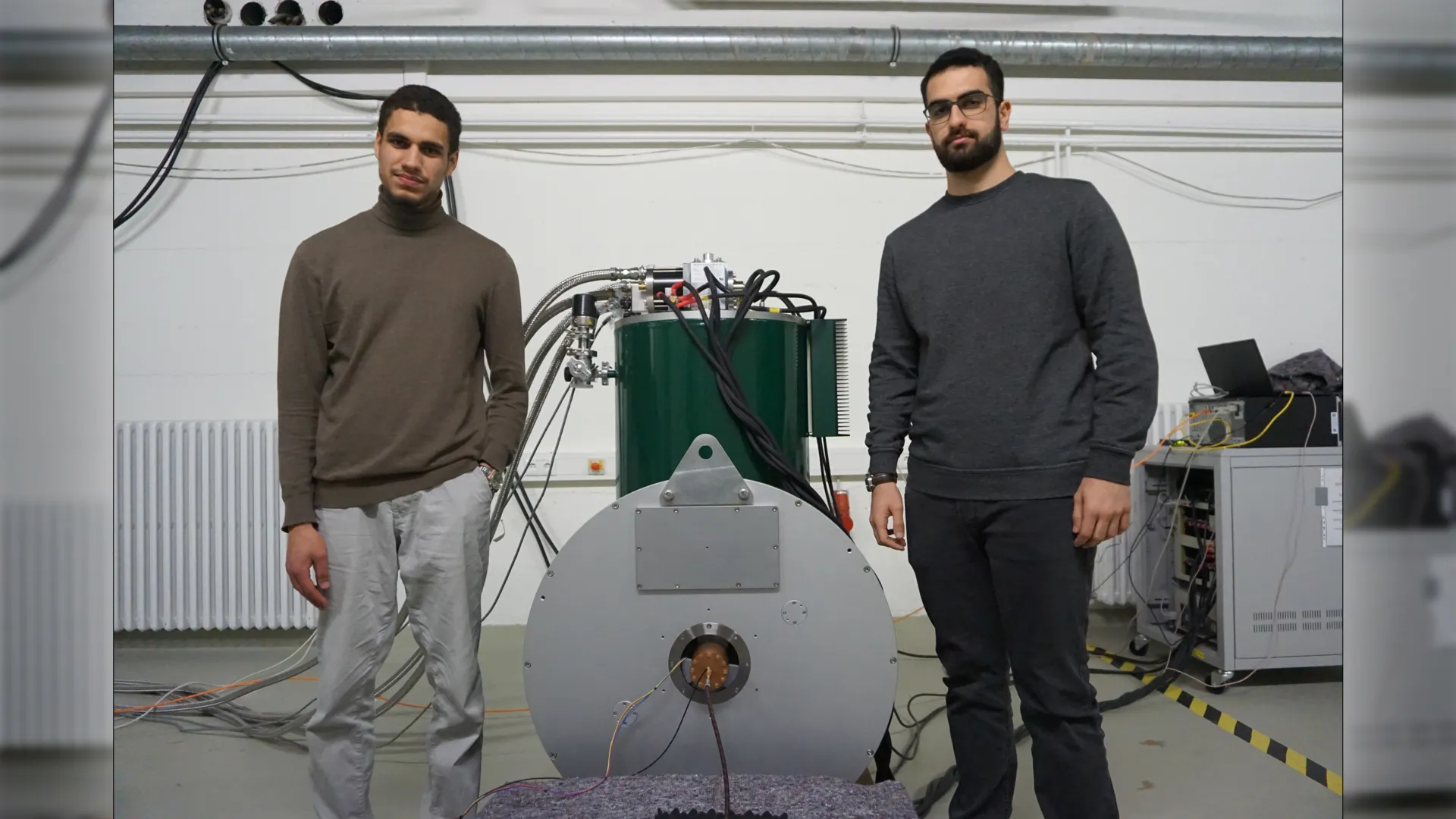
A recent study published in the Journal of Cosmology and Astroparticle Physics (JCAP) highlights this idea. A group of undergraduate students from the University of Hamburg designed and built a cavity detector to search for axions, which are among the leading candidates for dark matter. Despite working with limited resources, they were able to establish new experimental limits on axion properties, demonstrating that smaller experiments can still advance one of physics’ biggest unresolved problems.

Student Funding and Institutional Support

The project was funded through a student research grant from the University of Hamburg, provided by the Hub for Crossdisciplinary Learning. This program supports independent research projects led by students.

“We were kind of embedded in the research group of the MADMAX dark matter experiment,” explains Nabil Salama, one of the study’s authors and a current M.Sc. student in Physics at the University of Hamburg. “MADMAX carries out a similar experiment on a much larger and more complex scale, and we benefited from their expertise and support.”

“We are very grateful for this help,” he adds, “and also to the University of Hamburg and the Quantum Universe Cluster of Excellence, which provided funding, access to key equipment such as the magnet, and invaluable support from researchers.”

Building a Simple Detector to Search for Axions

“The benefit of working with dark matter, or axions, is that we expect it to be present everywhere in our galaxy,” says Agit Akgümüs, the study’s first author, who is pursuing an M.Sc. in Mathematical Physics at the University of Hamburg. “So essentially, no matter where you perform the experiment, you have some dark matter on your hand you can do experiments with.”

Using their funding, the team assembled a compact experimental setup centered on a resonant cavity made from highly conductive materials. They also integrated the required electronics, cabling, structural supports, and measurement tools.

“The detector we built is essentially the simplest version of a cavity detector for dark matter,” says Salama.

The students did not begin entirely from scratch. They made use of existing facilities, equipment, and guidance provided by the university and collaborating research groups. After construction, the system was carefully tested, calibrated, and operated to collect data.

“We reduced very complex experiments to their essential components,” says Salama. “The result is a less sensitive setup, limited to a small search window, but still capable of producing new scientific data.”

No Detection, but Important New Constraints

“The search for axions involves exploring a wide range of possible parameters,” adds Akgümüs. “Our experiment covers only a small region, with limited sensitivity, but it still helps narrow down the possibilities. To actually find the particle, we need either much larger experiments or many different ones, each probing a specific region.”

After completing their data collection, the team did not detect any signal that could be attributed to axions. However, this outcome still carries scientific value. It allows researchers to rule out the existence of axions with certain characteristics within the tested mass range, especially those that would interact more strongly with photons. By excluding these possibilities, the study helps refine the search and guide future experiments.

A Model for Scalable Dark Matter Experiments

“I think the point of our experiment is that things can be done on a smaller scale,” says Salama. Akgümüs adds: “Our results are naturally more limited than those of larger experiments. Performance scales with resources and complexity. However, we have shown that it is possible to reduce these setups to a much smaller scale — even to projects developed almost independently by students — while still producing real scientific data.”

During peer review, one referee made an especially notable observation, Salama recalls. The referee suggested that once the axion is discovered and its properties — especially its mass — are known, experiments like this could become much more accessible and might even be used in teaching laboratories.

“We were told that setups like ours could one day become standard student lab experiments,” says Salama. “In a way, we may have anticipated that future, showing that it is already possible to build and operate such an experiment on a small scale.”

Share Button

Care home manager struck off over ‘horrific’ restraining of disabled person

A tribunal hearing criticised Janette Donnelly’s use of force at Millport Care Centre was “unnecessary”.

Share Button

UK healthy life expectancy falls by two years in past decade

Poor housing, obesity and the effects of deprivation have been suggested as underlying cause.

Share Button

This one change to your exercise routine could add years to your life

Regularly engaging in a variety of physical activities could be one of the most effective ways to extend lifespan, according to research published in the open access journal BMJ Medicine. The findings suggest the relationship is not simply about doing more exercise. Instead, benefits appear to level off after a certain point, indicating there may be an optimal amount of activity.

The results also show that variety itself matters. People who participate in different types of physical activity tend to have a lower risk of death regardless of how much total exercise they do. Still, the researchers emphasize that staying active overall remains important.

Why Exercise Variety Matters

Physical activity has long been linked to better physical and mental health, along with a reduced risk of death. However, it has been less clear whether certain types of exercise offer unique advantages, or whether mixing activities provides additional benefits beyond total volume.

To investigate this, researchers analyzed data from two major long-term studies: the Nurses’ Health Study (121,700 female participants) and the Health Professionals Follow-Up Study (51,529 male participants). These studies tracked participants for more than 30 years, with regular updates on lifestyle, health history, and exercise habits collected every 2 years through questionnaires.

Decades of Data on Movement and Lifestyle

Participants reported a wide range of physical activities over time. Since 1986, this included walking, jogging, running, cycling (including stationary machines), lap swimming, rowing or callisthenics, tennis and squash or racquetball.

Later surveys added more detail, covering weight training or resistance exercise; lower intensity exercise, such as yoga, stretching, and toning; vigorous tasks like lawn mowing; moderate outdoor work such as maintenance and gardening; and heavy outdoor work like digging and chopping.

Participants also reported how many flights of stairs they climbed daily, based on the estimate that each flight takes 8 seconds to ascend.

The analysis included 111,467 participants for total physical activity and 111,373 participants for activity variety. To measure activity levels, researchers used MET scores, calculated by multiplying the average time spent on each activity (in hours/week) by its MET value. METs indicate how much more energy an activity uses compared to resting.

Activity Levels, Habits, and Health Profiles

Across both groups, individuals could report up to 11 or 13 different activities depending on the study. Walking was the most common form of leisure exercise, while men were more likely than women to jog or run.

People who reported higher overall activity levels were generally healthier. They were less likely to smoke or have high blood pressure or high cholesterol. They also tended to have a lower body weight (lower BMI), eat healthier diets, drink alcohol, maintain stronger social connections, and take part in a wider range of activities.

Exercise and Risk of Death Over 30 Years

During more than three decades of follow-up, 38,847 participants died, including 9901 from cardiovascular disease, 10,719 from cancer, and 3,159 from respiratory disease.

Higher levels of physical activity, along with most individual types of exercise except swimming, were linked to a lower risk of death from any cause. However, the relationship was not linear. The benefits of total activity appeared to level off after about 20 weekly MET hours, suggesting there may be a point beyond which additional activity provides less added benefit.

Which Activities Were Linked to Lower Risk

Walking showed one of the strongest associations, with those who walked the most having a 17% lower risk of death compared with those who walked the least. Climbing stairs was linked to a 10% lower risk.

Other activities were also associated with reduced risk when comparing the least active to the most active participants. Tennis, squash, or racquetball were linked to a 15% lower risk. Rowing or callisthenics showed a 14% reduction. Weight training or resistance exercises and running were each linked to a 13% lower risk. Jogging was associated with an 11% reduction, while cycling showed a smaller 4% decrease.

The Added Benefit of Exercise Variety

Engaging in a wider range of activities was linked to even greater benefits. After accounting for total exercise levels, participants who performed the most diverse set of activities had a 19% lower risk of death from all causes.

They also showed a 13-41% lower risk of death from cardiovascular disease, cancer, respiratory disease, and other causes compared with those who engaged in fewer types of activity.

Study Limitations and What It Means

This research is observational, which means it cannot prove cause and effect. The researchers also point out several limitations. Physical activity was self-reported rather than directly measured, which may affect accuracy.

In addition, MET scores were calculated under the assumption that participants were fully engaged in each activity, and the lack of detailed information on intensity could have led to some misclassification of energy use. The study population was also mostly White, which may limit how widely the findings apply.

Even so, the researchers conclude: “Overall, these data support the notion that long term engagement in multiple types of physical activity may help extend the lifespan.”

Share Button

Blood vessels found in T. rex bones are rewriting dinosaur science

Despite decades of effort, scientists have never recovered dinosaur DNA. Most paleontology research today still focuses on searching for traces of original organic material in fossils, but DNA has not survived the passage of time.

Much of what we understand about dinosaurs comes from fossilized bones and teeth. These durable remains preserve well, but they offer only limited insight into how these animals actually lived.

Soft tissues, on the other hand, can reveal far more. These rare fossilized materials include muscles and ligaments, pigments or even skin (like scales or feathers). They provide important clues about appearance, movement, and behavior.

Another type of soft tissue sometimes preserved inside bones is blood vessels. My research team and I identified preserved blood vessels in a Tyrannosaurus rex fossil, and our findings were recently published in Scientific Reports.

A Discovery That Began With Physics

As an undergraduate physics student at the University of Regina, I joined a research group that used particle accelerators to study fossils. During that time, I used advanced 3D imaging techniques to examine a T. rex bone and noticed structures that appeared to be blood vessels.

Nearly six years later, I am now pursuing a PhD, continuing to apply physics-based methods to improve how fossils are analyzed.

The Largest T. Rex Ever Found

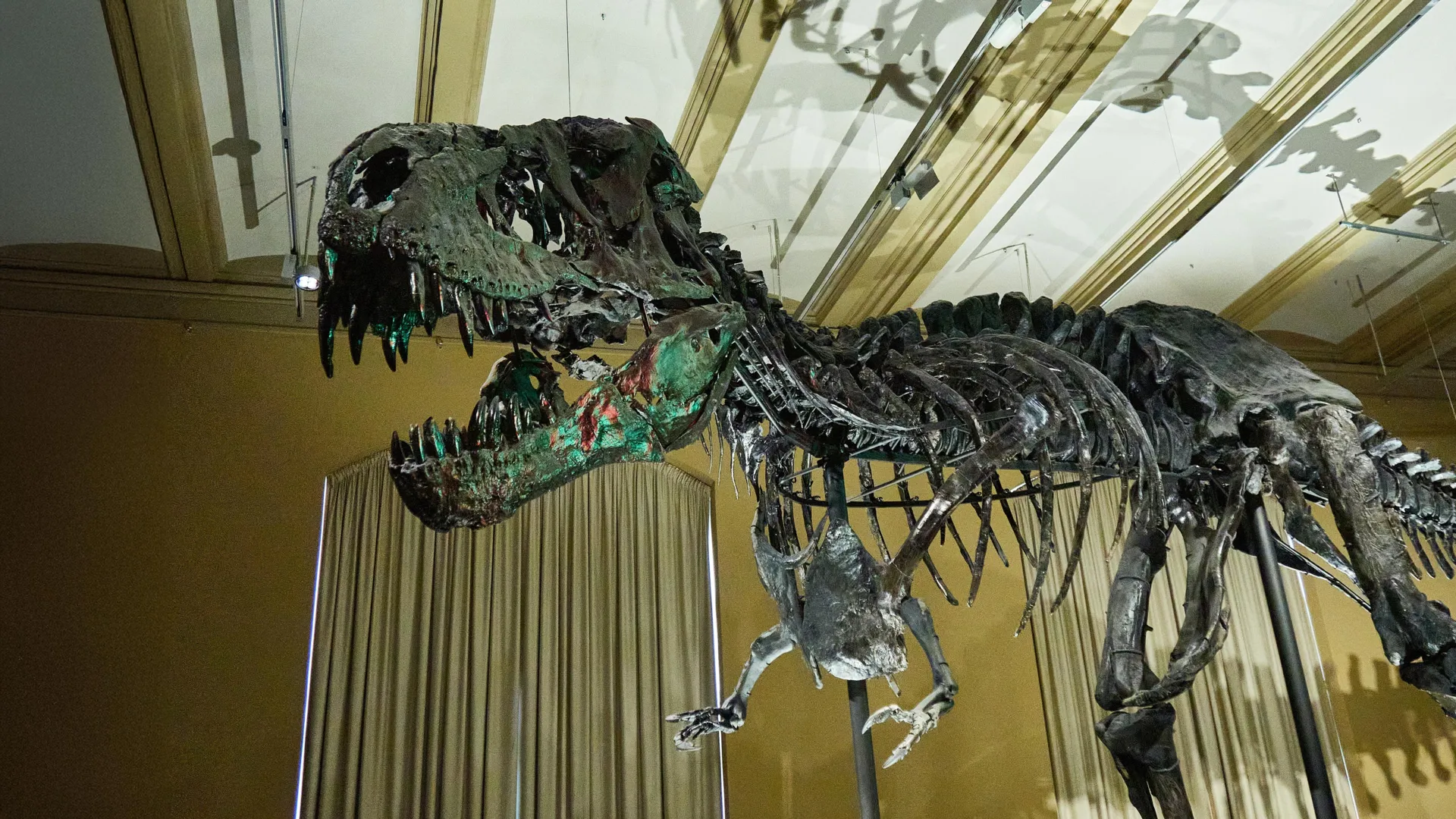
The preserved vessels came from an extraordinary specimen known as Scotty. Housed at the Royal Saskatchewan Museum in Canada, Scotty is the largest T. rex ever discovered and one of the most complete.

Evidence suggests Scotty lived a difficult life around 66 million years ago. Many of its bones show signs of injury, possibly from combat with another dinosaur or from disease. One rib stands out, showing a large fracture that had only partially healed.

When bones are damaged, the body increases blood vessel activity in the affected area to support healing. The structures we observed in Scotty’s rib appear to be part of that process, forming a dense network of mineralized vessels that we reconstructed using 3D models.

Advanced Imaging Reveals Hidden Structures

Studying the inside of fossil bones presents two major challenges. First, researchers need to look inside without damaging the specimen. Second, fossilized bones are extremely dense because minerals have replaced the original organic material over millions of years.

We initially considered using an computed topography (CT) scan, similar to those used in medicine. While this method is non-destructive, standard CT scanners cannot penetrate the dense structure of large fossils.

Instead, we turned to synchrotron light, a powerful form of high-intensity x-rays produced at specialized particle accelerator facilities. This technique allowed us to visualize tiny internal features such as blood vessels with remarkable clarity.

Synchrotron imaging also made it possible to analyze the chemical composition of the structures. The vessels had been preserved as iron-rich mineralized casts, which is a common fossilization process. Interestingly, they appeared in two distinct layers, reflecting a complex environmental history that contributed to their preservation.

What Blood Vessels Reveal About Dinosaur Life

The partially healed fracture in Scotty’s rib offers a rare opportunity to study how a T. rex recovered from injury. By examining the preserved blood vessels, researchers can gain insight into healing processes and survival strategies in large predatory dinosaurs.

This work may also provide a basis for comparison with other dinosaur species and with modern animals such as birds, which are closely related to dinosaurs.

The findings could guide future fossil discoveries as well. Bones that show signs of injury or disease may be more likely to preserve blood vessels or other soft tissues, helping scientists target promising specimens.

With the combination of physics, paleontology, and advanced imaging technologies, researchers are beginning to uncover details about dinosaur biology that were once thought impossible to study.

Share Button

DNA research just rewrote the origin of human species

A sweeping genetic analysis is challenging one of the simplest versions of the human origin story: the idea that all modern humans arose from a single ancestral population in Africa. Instead, the research points to a more intricate beginning, with early human groups spread across Africa, mixing for long stretches of time before some of their differences became visible in the DNA of people living today.

The study, published in Nature in 2023, compared genetic material from present day African populations with fossil evidence from early Homo sapiens populations. The result was a model of human evolution that replaces a clean family tree with something more like a network of deeply connected branches.

A More Complex Beginning in Africa

Scientists broadly agree that Homo sapiens originated in Africa. The harder question is how early human groups separated, moved, reconnected, and shaped one another across the continent.

Brenna Henn, professor of anthropology and the Genome Center at UC Davis and corresponding author of the study, said the uncertainty comes from gaps in both fossils and ancient DNA.

“This uncertainty is due to limited fossil and ancient genomic data, and to the fact that the fossil record does not always align with expectations from models built using modern DNA,” she said. “This new research changes the origin of species.”

The work was co led by Henn and Simon Gravel of McGill University. Their team tested several competing ideas about human evolution and migration in Africa, drawing from models proposed in paleoanthropology and genetics. The analysis included genome data from southern, eastern and western Africa.

The Nama Genomes Added a Key Clue

A major part of the study came from 44 newly sequenced genomes from modern Nama individuals in southern Africa. The Nama are an Indigenous population known for carrying unusually high levels of genetic diversity compared with many other living groups.

Researchers collected saliva samples from people in their villages between 2012 and 2015, while participants were going about daily life. Those samples helped the team examine whether human origins fit a single source model or something broader and more interconnected.

The best fitting model suggested that the earliest population split among early humans still detectable in living people happened roughly 120,000 to 135,000 years ago. Before that split, two or more weakly differentiated Homo populations had been exchanging genes for hundreds of thousands of years.

Even after the split, movement and mating continued between these early groups. The researchers describe this as a weakly structured stem, meaning the roots of modern humans were not one isolated population, but a loose set of connected populations with ongoing gene flow.

Not One Branch, But a Network

That network like model may explain human genetic diversity better than older models, according to the authors. Instead of needing to assume major contributions from an unknown archaic hominin population in Africa, the model shows how patterns in modern DNA could have emerged from structure within ancestral human populations themselves.

“We are presenting something that people had never even tested before,” Henn said of the research. “This moves anthropological science significantly forward.”

Co-author Tim Weaver, a UC Davis professor of anthropology who studies early human fossils, said the results shift how scientists should think about older explanations.

“Previous more complicated models proposed contributions from archaic hominins, but this model indicates otherwise,” he said.

Weaver contributed comparative fossil expertise to the study, helping connect genetic models with what early human remains looked like.

What This Means for Ancient Fossils

The model also has consequences for how scientists interpret the fossil record. According to the authors, only 1 to 4% of genetic differentiation among living human populations can be traced to variation between these ancestral stem populations.

Because the early branches continued mixing, they were probably similar in appearance. That means fossils with very different physical traits (such as Homo naledi) are unlikely to represent lineages that directly contributed to the evolution of Homo sapiens, the authors said.

In other words, the roots of humanity may have been geographically and genetically widespread, but not necessarily divided into sharply different human forms. The deeper picture is one of movement, contact, and repeated mixing across Africa.

Later Research Adds More Depth

Work published after the 2023 study has continued to show how important African genomic diversity is for understanding human origins. A 2024 Nature Ecology & Evolution study reported 9,000 years of genetic continuity in southernmost Africa, highlighting the region’s long and unusually deep human population history.

A later Nature study analyzed genomes from 28 ancient southern African individuals dated between 10,200 and 150 years before present. That work found that ancient southern Africans carried genetic variation outside the range seen in living people and identified Homo sapiens specific variants that may shed light on adaptation and evolution within Africa.

Together, these findings strengthen a bigger message: human origins were not a single spark in one place. They were shaped by many populations, deep African diversity, and long periods of connection across the continent.

Additional co-authors of the 2023 study include Aaron Ragsdale, University of Wisconsin, Madison; Elizabeth Atkinson, Baylor College of Medicine; and Eileen Hoal and Marlo Möller, Stellenbosch University, South Africa.

Share Button