Perimenopause: The Women’s Health Issue No One’s Talking About Enough

Arianna Sholes-Douglas remembers the moment her body was in the grips of perimenopause ― though she didn’t recognize it for what it was at the time, despite being an OB-GYN and integrative health physician focusing on women’s health. Sholes-Douglas was performing a C-section, a surgery she estimates she had done over a thousand times, and her brain just blanked.

“I had a total brain freeze. I couldn’t remember what to do,” she recalled. “It was very scary, and I didn’t know who to talk to or what to do.”

At first, she worried it was early-onset Alzheimer’s. But the big changes she’d been experiencing in cognitive function were hormonal. She was going through perimenopause, the transitional period before menopause when a woman’s body starts making less estrogen until eventually her ovaries stop releasing eggs.

And she’s not alone about being in the dark. Many Gen X women and cusp millennials — who are at the age range when perimenopause has begun or could soon start — have far too little support and information.

“We haven’t been educated. Patients haven’t been educated. Doctors haven’t been educated. There really hasn’t been a resource that’s been reliable for women, so they are caught off-guard,” said Sholes-Douglas, who went on to write the book “The Menopause Myth: What Your Mother, Doctor, and Friends Haven’t Told You About Life After 35.”

“Because in their minds, they’re thinking menopause is an old lady issue,” she added. “They think it’s only relevant when they stop having a period.”

But that’s not true. So here are three important things “Xennial” women should know about perimenopause:

It can start in your 30s or 40s.

There aren’t lines around when perimenopause begins, in part because it varies by individual and also because the types of symptoms are so broad. The term perimenopause really just means “around menopause.”

It’s also a stretch of time that can drag on for a while. Many women start to experience symptoms five or even 10 years before they stop having a period (though the average is about four years). And given that full menopause can happen when women are in their 40s or 50s, perimenopause can begin when they’re in their early 40s or even mid-30s.

“Since 5% to 7% of women are fully menopausal by age 45 (they’ve gone that magical full year without a period), they could be experiencing these symptoms at age 40, not thinking a thing about menopause — because these symptoms can be very vague and don’t come with a big sign ‘You are entering perimenopause,’” said Mary Jane Minkin, an OB-GYN with Yale University and founder of the informational website Madame Ovary.

You’re still able to get pregnant during perimenopause.

If you’re a woman in your 30s or 40s who is planning to have children (and many women are) and you’re fretting that you might instead enter perimenopause, don’t freak out. It’s very much still possible for women to get pregnant during this phase, though it’s definitely worth bringing up with your doctor if you have concerns.

The symptoms go way beyond hot flashes.

When most people think menopause, they think of hot flashes. And many (if not most) women getting closer to menopause will experience hot flashes, or brief feelings of being overheated, at some point — ranging from pretty mild to really severe.

But there are so many other symptoms that can come along with perimenopause, including missed periods or periods that are heavier or lighter than usual, mood swings, changes in cholesterol levels and bone density, urinary incontinence and cognitive fuzziness.

“Many [women] get disrupted sleep ― usually falling asleep quickly as they are exhausted, but are then up at 1 a.m., sometimes with a hot flash, sometimes without. They may have headaches, they may be achy, they may have some vaginal dryness or urinary leakage (although that usually comes later),” Minkin said.

Perimenopause can affect your sexual health and well-being, as well. “The sexual aspect part of perimenopause is something I deal with a lot,” Sholes-Douglas said. “Women are very much caught off-guard when they experience a decline in libido, vaginal pain, vaginal dryness — and they don’t know why.”

But while the possible symptoms associated with perimenopause are wide-ranging, they all really come back to the hormonal changes women go through in the run-up to menopause, as estrogen and progesterone levels fall — or rise and fall in uneven spikes.
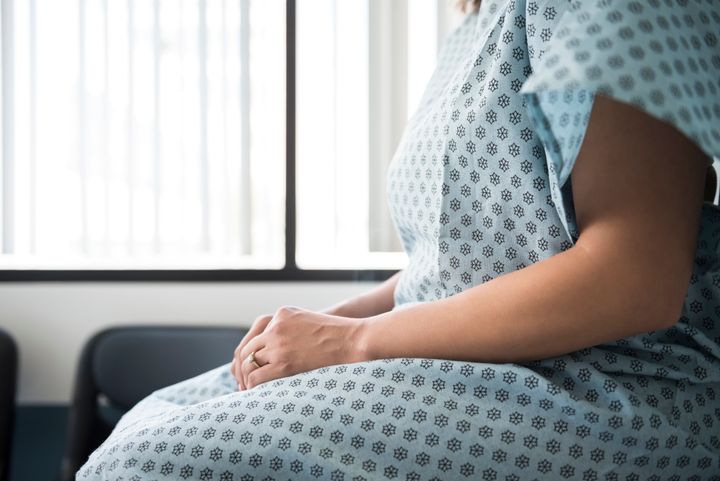
Finding appropriate care is not always easy for women during perimenopause.

Finding appropriate care is not always easy for women during perimenopause.

Finding adequate care and support can still be difficult.

Though there’s far more information available to women and health care providers now than had been the case a few decades ago, and many active support communities have flourished, perimenopause is still something women aren’t adequately educated about, according to experts.

Minkin said Gen X women are probably “slightly better prepared, but not dramatically so.” Sholes-Douglas was more emphatic: “Most women are just not prepared.”

There are a few reasons for this, one of which is that there simply isn’t a test doctors can perform to see if women have entered perimenopause.

“Hormone levels may not show much,” Minkin said. For example, a doctor might do an estradiol test to check your estrogen levels, but since normal levels during a menstrual cycle range wildly (from 45 to 350 picograms per milliliter), it’s hard to know where your level should be.

“Let’s say we draw a blood level of 50. Well, is that normal? It may be. But if your level should be 300, that’s low,” Minkin explained.

“It’s a tough diagnosis to make at the time,” she added. “When the patient goes that year without the period, you can then say, ‘Well, hey that was all perimenopausal!’”

On top of which there is a lack of consensus about how to treat symptoms of perimenopause even if it is clear that’s the issue. Hormone therapy, which involves taking supplemental hormones, is one option, but some past studies have indicated it can come with other health risks. Some doctors might recommend lifestyle changes to help manage symptoms; in other cases, women might take medications to more directly address such symptoms as vaginal dryness or mental health changes.

Unfortunately, a lot of this ends up falling on women. They end up needing to connect the dots in their own symptoms and find health care providers who have experience dealing with perimenopause. Which is why it is so important for Xennial women to be aware of what’s happening in their bodies now, or what lies just ahead.

“I’ve had countless patients tell me they went to the doctor and told them they suspected they were perimenopausal, and the doctor said: ‘Oh, you’re too young for that. You’re too young for that,’” Sholes-Douglas said.

“You should not assume that your doctor is going to know more about this than you do,” she added. “On some level, obviously they will. But don’t underestimate the power you have.”

Share Button

Covid: Younger adults still at risk of serious organ damage – study

Adults below the age of 50 are almost as likely to suffer from medical complications as the over-50s.

Share Button

Visibly transparent radiative cooler under direct sunlight

Since the Paris Climate Agreement that took effect in 2016, 121 countries have pledged to become carbon neutral by 2050 as the world tries to reduce its fuel consumption. The Korean government also unveiled its 2050 Carbon Neutral Strategy on December 7, 2020 and declared Carbon Zero, making transition to new and renewable energy a topic of conversation. Recently, a joint research team from POSTECH and Korea University has developed a radiative cooling material that can reduce energy consumption by selectively reflecting or transmitting sunlight.

A research team led by Professor Junsuk Rho, Ph.D. candidate Minkyung Kim, and Dr. Dasol Lee of POSTECH’s departments of mechanical engineering and chemical engineering, and a team led by Professor Heon Lee and Soomin of the Department of Materials Science and Engineering at Korea University have together developed a transparent radiative cooler that transmits visible light while reflecting near-infrared light, and radiates heat in the atmospheric window where the wavelength range is between 8 and 13 micrometers (?m). Recognized for its significance, this study was featured as the front cover paper of the latest issue of Advanced Optical Materials.

Radiative cooling is a technology that lowers the temperature of an object by absorbing less energy from the sun and emitting radiant heat. Conventional radiative cooling materials developed so far have been limited to transparent emitters that transmit all light under direct sunlight and opaque radiative coolers that reflect all solar energy. For this, transparency is an important characteristic in practical applications of radiative cooling, but the transmitted sunlight trapped in an inner space is generally the main cause of the increasing temperature.

The joint research team focused on developing a transparent radiative cooler to solve this problem. Taking advantage of the characteristics of light, the researchers proposed a material that can transmit visible light, reflect near-infrared light, and emit mid-infrared rays.

The radiative cooling material developed by the researchers in this study exhibits both transparency and radiative cooling effect by selectively reflecting near-infrared light. In an outdoor rooftop experiment, the researchers found that the interior temperature of the high-absorbing chamber in the cooler box was lowered by 14.4 °C and the temperature of the material itself was lowered by 10.1 °C even when paint was applied.

“The radiative cooler developed this time can be used as a window of a building or an observatory that needs to maintain transparency, or as a window in an amusement ride or a vehicle,” explained Professor Junsuk Rho of POSTECH. “It can even take on color because it retains its cooling effect when paint is applied to it.”

Story Source:

Materials provided by Pohang University of Science & Technology (POSTECH). Note: Content may be edited for style and length.

Share Button

A genome of photosynthetic animals decoded

Plants, algae and some bacteria are able to perform photosynthesis, which is the process of transforming sunlight energy into sugar. Animals are generally unable to use this process to acquire energy, but there are a few known exceptions to this. Some sea slugs take up chloroplasts from the algae that they consume into their cells. These chloroplasts retain their ability to perform photosynthetic activity within the animal cells for several months, and thus provide them with photosynthesis-derived nutrition. This process is called “kleptoplasty,” and it has attracted much attention due to its amazing uniqueness in making animals photosynthetic for over 50 years.

A pressing question is how these sequestered chloroplasts retains their photosynthetic capability without algal nuclei. Since the genome of the algal nucleus encodes most of the proteins required for photosynthesis, chloroplasts isolated from algal cells instantly lose their photosynthetic capability. Nevertheless, algae-eating sea slugs retain this photosynthetic capability for months. There have been numerous debates about the mechanisms underlying the phenomenon of sequestered chloroplasts retaining photosynthetic capabilities over the long term. A widely accepted hypothesis accounting for kleptoplasty is the horizontal gene transfer of the photosynthesis genes from algae to sea slug.

A team of researchers at the National Institute for Basic Biology (NIBB), in addition to collaborators from seven other Japanese institutions, have published the genome of the sea slug, Plakobranchus ocellatus type black, in eLife. “Since the sea slug is a non-model organism, its genome analysis was very tough in comparison to model organisms such as the mouse and the fruitfly. Furthermore, there was no high-quality genetic information for them. This situation consequently hindered the verification of the hypothesis of algae-derived horizontal gene transfer,” said Shuji Shigenobu, a genome scientist and professor at NIBB who is the corresponding author of the paper, “But we succeeded in accurately revealing the genome information of the sea slug.” Scientists are ready to settle the arguments concerning the horizontal transfer of algal genes to the animal nucleus based on newly unveiled genome data. “We looked at the genome very carefully, but we found no evidence of photosynthetic genes encoded on the sea slug genome, ” he said.

“We are embarking upon a new challenge to answer the question: how does the sea slug retains this function without horizontal gene transfer?,” said Taro Maeda, the first and co-corresponding author of the paper. “Our genome data also provides clues to this. We have found several candidate genes related to the long-term maintenance of photosynthetic activity. These genes related to protein metabolism, oxidative stress tolerance, and innate immunity should be subsequently highlighted in future studies.”

The mechanisms underlying kleptoplasty are still elusive. Further understanding of this phenomenon may lead us to innovative biotechnologies, which, for example, could bestow photosynthetic abilities to other various animal cells in the future.

Story Source:

Materials provided by National Institutes of Natural Sciences. Note: Content may be edited for style and length.

Share Button

High-ranking hyena mothers pass their social networks to their cubs

Hyenas are a highly social species, living in groups that can number more than 100. But within their clans, there is order: A specific matrilineal hierarchy governs societies in this species where females are dominant to males.

While researchers have intensively studied the social structure of hyenas and other animals, it’s only recently that scientists have begun to investigate how this structure arises. A new study led by Penn biologists, which relies upon 27 years of detailed observations of hyena social behavior collected by researchers at Michigan State University, pulls back the curtain on how social order comes to be.

Their findings show that hyenas inherit their mother’s social networks, so their social connections resemble their mother’s. However, offspring of higher-ranking individuals more faithfully replicate their mother’s interactions, winding up with social networks that more closely resemble their mother’s than do offspring of females that rank lower on the clan’s social ladder. The team reported their findings in the journal Science.

“We knew that the social structure of hyenas is based in part on one’s rank in the agonistic hierarchy, which we know is inherited from mothers” says Erol Akçay, a study coauthor and associate professor in Penn’s School of Arts & Sciences. “But what we found, that affiliative, or friendly interactions, are also inherited, hadn’t been shown.”

“This is a very simple process of social inheritance that we show works very, very well,” says Amiyaal Ilany, a senior lecturer at Israel’s Bar-Ilan University. “Individuals that were born to higher rank are more accurate in their inheritance, and they have good reason to do so. It fits well with what is already known about inheritance of rank. There are very strict rules about what place you sit in the hierarchy if you are a hyena.”

The work builds on a theoretical model of social network inheritance Akçay and Ilany developed in 2016. According to that simple framework, animals establish their networks by “social inheritance,” or copying their mother’s behaviors. The model fit well with snapshots of real-world social networks from not only hyenas but also three other social species: bottle-nosed dolphins, rock hyrax, and sleepy lizards.

In the new work, the team aimed to refine their model to better understand the intricacies of social inheritance in hyenas. They were fortunate to have a robust dataset collected by Akçay and Ilany’s coauthor, zoologist Kay Holekamp of Michigan State University, consisting of 27 years of detailed accounting of a clan’s social interactions.

“We realized we could use that dataset to directly test our model, to see if social ties are inherited or not,” Akçay says.

Field biologists from Holekamp’s research group had meticulously tracked how hyenas in a clan interacted, including who spent time with whom as well as the social rank of each member. To do so, researchers spent months getting to know each member of the clan by sight.

“They are there year-round, every day, identifying individuals by their specific spot patterns and other characteristics,” Ilany says.

These observations allowed Akçay, Ilany, and Holekamp to map out hyenas’ social networks based on which individuals spent time close together.

“This use of proximity to track social networks isn’t possible with humans, as two strangers might randomly get into an elevator together,” Ilany says. “But with hyenas, if one individual gets within a few meters of another, that suggests that they have a social connection.”

With this picture of each individual’s social affiliations in hand, the researchers compared the social networks of mothers to their offspring. “We developed a new metric to measure social inheritance, to track how faithfully an offspring’s network reproduces its mother’s network,” Akçay says.

Hyena cubs stick close to their mothers for the first couple years of life, so the networks of mothers and their offsprings were quite similar to start. However, the researchers noticed that even as the young stopped spending so much time in close proximity to their mothers they still sustained quite similar networks, particularly for female offspring, who generally remain members of the clan for life. “We have data in some cases showing that the network similarity between mothers and offspring, especially female offspring, was still very high after six or so years,” says Ilany. “You may not be seeing your mother as often, or she even may have died, but you still have similar friends.”

This pattern was especially strong for the higher-ranking mothers, for whom social inheritance was the strongest in the group.

“That is kind of intuitive because things like that happen in human society as well,” Akçay says. “It happens so much we take it for granted. We inherit social connections, and there’s a lot of social science research that shows that this has a huge influence on people’s life trajectory.”

Offspring of lower-ranking mothers were less likely to reproduce their mother’s social networks, perhaps trying to compensate for their more lowly origins by associating with a greater variety of individuals.

There is no genetic inheritance of rank or close associates in this species, so in Holekamp’s opinion one of the most remarkable things about the phenomenon documented here is that the youngsters’ relationships with their mothers’ close associates are all learned very early in life. One explanation for why inheritance of social networks works better for high- than for low-ranking hyenas may be that low-ranking females tend to go off on their own more often to avoid competition with higher-ranking hyenas, so their cubs have fewer learning opportunities than cubs of high-ranking females.

Mother-offspring pairs with more similar social networks also lived longer, the team found. This effect on survivorship may owe to the fact that offspring who spend more time with their mothers and thus replicate their social networks benefit from the increased care.

Social rank also had an effect on survivorship and reproductive success.

“Rank is super important,” says Akçay. “If you’re born to a lower-ranked mother, you are less likely to survive and to reproduce.”

The researchers note that social network inheritance likely contributes to a group’s stability and also has implications for how behaviors are learned and spread through groups.

The study also underscores how factors other than genetics hold sway in key evolutionary outcomes, including reproductive success and overall survival. “A lot of things that are considered by default to be genetically determined may depend on environmental and social processes,” says Ilany.

Share Button

‘Virginity-repair’ surgery set to be banned

Plans to outlaw the practice in England and Wales have been tabled in Parliament.

Share Button

National Food Strategy: Tax sugar and salt and prescribe veg, report says

Boris Johnson says he will consider the proposal, but finds the idea of extra taxes on people unattractive.

Share Button

Medics fear surge in winter viruses alongside Covid

A potential triple whammy of viruses prompts calls for more testing to reduce spread this autumn.

Share Button

‘Neuroprosthesis’ restores words to man with paralysis

Researchers at UC San Francisco have successfully developed a “speech neuroprosthesis” that has enabled a man with severe paralysis to communicate in sentences, translating signals from his brain to the vocal tract directly into words that appear as text on a screen.

The achievement, which was developed in collaboration with the first participant of a clinical research trial, builds on more than a decade of effort by UCSF neurosurgeon Edward Chang, MD, to develop a technology that allows people with paralysis to communicate even if they are unable to speak on their own. The study appears July 15 in the New England Journal of Medicine.

“To our knowledge, this is the first successful demonstration of direct decoding of full words from the brain activity of someone who is paralyzed and cannot speak,” said Chang, the Joan and Sanford Weill Chair of Neurological Surgery at UCSF, Jeanne Robertson Distinguished Professor, and senior author on the study. “It shows strong promise to restore communication by tapping into the brain’s natural speech machinery.”

Each year, thousands of people lose the ability to speak due to stroke, accident, or disease. With further development, the approach described in this study could one day enable these people to fully communicate.

Translating Brain Signals into Speech

Previously, work in the field of communication neuroprosthetics has focused on restoring communication through spelling-based approaches to type out letters one-by-one in text. Chang’s study differs from these efforts in a critical way: his team is translating signals intended to control muscles of the vocal system for speaking words, rather than signals to move the arm or hand to enable typing. Chang said this approach taps into the natural and fluid aspects of speech and promises more rapid and organic communication.

“With speech, we normally communicate information at a very high rate, up to 150 or 200 words per minute,” he said, noting that spelling-based approaches using typing, writing, and controlling a cursor are considerably slower and more laborious. “Going straight to words, as we’re doing here, has great advantages because it’s closer to how we normally speak.”

Over the past decade, Chang’s progress toward this goal was facilitated by patients at the UCSF Epilepsy Center who were undergoing neurosurgery to pinpoint the origins of their seizures using electrode arrays placed on the surface of their brains. These patients, all of whom had normal speech, volunteered to have their brain recordings analyzed for speech-related activity. Early success with these patient volunteers paved the way for the current trial in people with paralysis.

Previously, Chang and colleagues in the UCSF Weill Institute for Neurosciences mapped the cortical activity patterns associated with vocal tract movements that produce each consonant and vowel. To translate those findings into speech recognition of full words, David Moses, PhD, a postdoctoral engineer in the Chang lab and one of the lead authors of the new study, developed new methods for real-time decoding of those patterns and statistical language models to improve accuracy.

But their success in decoding speech in participants who were able to speak didn’t guarantee that the technology would work in a person whose vocal tract is paralyzed. “Our models needed to learn the mapping between complex brain activity patterns and intended speech,” said Moses. “That poses a major challenge when the participant can’t speak.”

In addition, the team didn’t know whether brain signals controlling the vocal tract would still be intact for people who haven’t been able to move their vocal muscles for many years. “The best way to find out whether this could work was to try it,” said Moses.

The First 50 Words

To investigate the potential of this technology in patients with paralysis, Chang partnered with colleague Karunesh Ganguly, MD, PhD, an associate professor of neurology, to launch a study known as “BRAVO” (Brain-Computer Interface Restoration of Arm and Voice). The first participant in the trial is a man in his late 30s who suffered a devastating brainstem stroke more than 15 years ago that severely damaged the connection between his brain and his vocal tract and limbs. Since his injury, he has had extremely limited head, neck, and limb movements, and communicates by using a pointer attached to a baseball cap to poke letters on a screen.

The participant, who asked to be referred to as BRAVO1, worked with the researchers to create a 50-word vocabulary that Chang’s team could recognize from brain activity using advanced computer algorithms. The vocabulary — which includes words such as “water,” “family,” and “good” — was sufficient to create hundreds of sentences expressing concepts applicable to BRAVO1’s daily life.

For the study, Chang surgically implanted a high-density electrode array over BRAVO1’s speech motor cortex. After the participant’s full recovery, his team recorded 22 hours of neural activity in this brain region over 48 sessions and several months. In each session, BRAVO1 attempted to say each of the 50 vocabulary words many times while the electrodes recorded brain signals from his speech cortex.

Translating Attempted Speech into Text

To translate the patterns of recorded neural activity into specific intended words, the other two lead authors of the study, Sean Metzger, MS and Jessie Liu, BS, both bioengineering doctoral students in the Chang Lab used custom neural network models, which are forms of artificial intelligence. When the participant attempted to speak, these networks distinguished subtle patterns in brain activity to detect speech attempts and identify which words he was trying to say.

To test their approach, the team first presented BRAVO1 with short sentences constructed from the 50 vocabulary words and asked him to try saying them several times. As he made his attempts, the words were decoded from his brain activity, one by one, on a screen.

Then the team switched to prompting him with questions such as “How are you today?” and “Would you like some water?” As before, BRAVO1’s attempted speech appeared on the screen. “I am very good,” and “No, I am not thirsty.”

The team found that the system was able to decode words from brain activity at rate of up to 18 words per minute with up to 93 percent accuracy (75 percent median). Contributing to the success was a language model Moses applied that implemented an “auto-correct” function, similar to what is used by consumer texting and speech recognition software.

Moses characterized the early trial results as a proof of principle. “We were thrilled to see the accurate decoding of a variety of meaningful sentences,” he said. “We’ve shown that it is actually possible to facilitate communication in this way and that it has potential for use in conversational settings.”

Looking forward, Chang and Moses said they will expand the trial to include more participants affected by severe paralysis and communication deficits. The team is currently working to increase the number of words in the available vocabulary, as well as improve the rate of speech.

Both said that while the study focused on a single participant and a limited vocabulary, those limitations don’t diminish the accomplishment. “This is an important technological milestone for a person who cannot communicate naturally,” said Moses, “and it demonstrates the potential for this approach to give a voice to people with severe paralysis and speech loss.”

Co-authors on the paper include Sean L. Metzger, MS; Jessie R. Liu; Gopala K. Anumanchipalli, PhD; Joseph G. Makin, PhD; Pengfei F. Sun, PhD; Josh Chartier, PhD; Maximilian E. Dougherty; Patricia M. Liu, MA; Gary M. Abrams, MD; and Adelyn Tu-Chan, DO, all of UCSF. Funding sources included National Institutes of Health (U01 NS098971-01), philanthropy, and a sponsored research agreement with Facebook Reality Labs (FRL), which completed in early 2021.

UCSF researchers conducted all clinical trial design, execution, data analysis and reporting. Research participant data were collected solely by UCSF, are held confidentially, and are not shared with third parties. FRL provided high-level feedback and machine learning advice.

Share Button

Dogs may not return their owners’ good deeds

Domestic dogs show many adaptations to living closely with humans, but they do not seem to reciprocate food-giving according to a study, publishing July 14 in the open-access journal PLOS ONE, led by Jim McGetrick and colleagues at the University of Veterinary Medicine in Vienna, Austria.

The researchers trained 37 domestic dogs to operate a food dispenser by pressing a button, before separating the button and dispenser in separate enclosures. In the first stage, dogs were paired with two unfamiliar humans one at a time. One human partner was helpful — pressing their button to dispense food in the dog’s enclosure — and one was unhelpful. The researchers also reversed the set-up, with a button in the dog’s enclosure that operated a food dispenser in the human’s enclosure. They found no significant differences in the dogs’ tendency to press the button for helpful or unhelpful human partners, and the human’s behavior in the first stage did not affect the dog’s behavior towards them in free interaction sessions after the trials.

Previous studies have demonstrated that dogs are capable of directing helpful behaviors towards other dogs that have helped them previously — a behavior known as reciprocal altruism — and research suggests dogs are also able to distinguish between cooperative and uncooperative humans. However, the present study failed to find evidence that dogs can combine these capabilities to reciprocate help from humans. This finding may reflect a lack of ability or inclination among dogs to reciprocate, or the experimental design may not have detected it. For example, the authors suggest that the dogs may not have understood the experiment because humans are typically the food-giver in the relationship, not the receiver, or because the dogs failed to recognize the connection between the human’s helpful behavior and the reward.

The authors add: “In our study, pet dogs received food from humans but did not return the favour.”

Story Source:

Materials provided by PLOS. Note: Content may be edited for style and length.

Share Button