The exemption will apply to vaccinated UK residents and under-18s arriving in England from 19 July.


The exemption will apply to vaccinated UK residents and under-18s arriving in England from 19 July.
A prescription is no longer needed for certain progesterone-only pills, the UK’s drug regulator says.
Men were 30% more likely than women to test positive for the virus in the past two weeks, a study suggests.

Injecting sulphur into the stratosphere to reduce solar radiation and stop the Greenland ice cap from melting. An interesting scenario, but not without risks. Climatologists from the University of Liège have looked into the matter and have tested one of the scenarios put forward using the MAR climate model developed at the University of Liège. The results are mixed and have been published in the journal The Cryosphere.
The Greenland ice sheet will lose mass at an accelerated rate throughout the 21st century, with a direct link between anthropogenic greenhouse gas emissions and the extent of Greenland’s mass loss. To combat this phenomenon, and therefore global warming, it is essential to reduce our greenhouse gas emissions. Every day new ideas emerge to slow down global warming, such as the use of solar geoengineering, a climate intervention that consists of artificially reducing solar radiation above the ice caps and thus limiting the melting of the ice. How can this be done? The idea is to inject sulphur into the stratosphere, a stable meteorological zone located between 8 and 15 km above sea level in the atmosphere,” explains Xavier Fettweis,climatologist and director of the Climatology Laboratory at ULiège. The sulphur will then act as a sort of mirror that will reflect part of the solar radiation back into space.” An intervention which therefore makes it possible to reduce the amount of sunshine on earth, similar to what happens during volcanic eruptions. In 1991, the eruption of Pinatubo (Philippines) injected millions of tonnes of sulphur dioxide into the stratosphere, causing a drop in global temperatures of around 0.5°C. This observation led to the development of solar geoengineering scenarios. Are these scenarios really reliable and risk-free? This is what the ULiège climatologists wanted to test.
We used a plausible scenario of solar geoengineering (G6solar) that would reduce global warming by a factor of 2 on a global scale compared with the most pessimistic scenario in which nothing would be done about the climate,” continues Xavier Fettweis. By forcing the MAR (Regional Atmospheric Model) developed at ULiège to use this scenario, we show that the reduction in solar radiation associated with this scenario would make it possible to locally reduce the melting at the surface of the Greenland ice sheet by 6% in addition to the global reduction in global warming. While these results seem encouraging, the researchers insist that this type of scenario would not be sufficient to maintain the ice cap in a stable state by the end of this century. Moreover, this type of intervention is not without risk since it could have a significant impact on the ozone layer and on water cycles and precipitation, accentuating the disparities between wet and dry regions. Only solar geoengineering scenarios, which are much more ambitious but becoming unrealistic and dangerous, would make it possible to save the cap,” concludes Xavier Fettweis. We are talking here about human and intentional intervention in the climate. A plan B that is not! It is therefore urgent to drastically reduce our greenhouse gas emissions by means that we know but are struggling to implement.
Story Source:
Materials provided by University of Liege. Note: Content may be edited for style and length.
More than 32,500 confirmed cases have been reported in the country, up 43% on the same day last week.

Coastal communities across the world are increasingly facing up to the huge threats posed by a combination of extreme storms and predicted rises in sea levels as a result of global climate change.
However, scientists at the University of Plymouth have developed a simple algorithm-based model which accurately predicts how coastlines could be affected and — as a result — enables communities to identify the actions they might need to take in order to adapt.
The Forecasting Coastal Evolution (ForCE) model has the potential to be a game-changing advance in coastal evolution science, allowing adaptations in the shoreline to be predicted over timescales of anything from days to decades and beyond.
This broad range of timescales means that the model is capable of predicting both the short-term impact of violent storm or storm sequences (over days to years), as well as predicting the much longer-term evolution of the coast due to forecasted rising sea levels (decades).
The computer model uses past and present beach measurements, and data showing the physical properties of the coast, to forecast how they might evolve in the future and assess the resilience of our coastlines to erosion and flooding.
Unlike previous simple models of its kind that attempt forecasts on similar timescales, ForCE also considers other key factors like tidal, surge and global sea-level rise data to assess how beaches might be impacted by predicted climate change.
Beach sediments form our frontline of defence against coastal erosion and flooding, preventing damage to our valuable coastal infrastructure. So coastal managers are rightly concerned about monitoring the volume of beach sediment on our beaches.
The new ForCE model opens the door for managers to keeping track of the ‘health’ of our beaches without leaving their office and to predict how this might change in a future of rising sea level and changing waves.
Model predictions have shown to be more than 80% accurate in current tests, based on measurements of beach change at Perranporth, on the north coast of Cornwall in South West England.
It has also been show to accurately predict the formation and location of offshore sand bars in response to extreme storms, and how beaches recover in the months and years after storm events.
As such, researchers say it could provide an early warning for coastal erosion and potential overtopping, but its stability and efficiency suggests it could forecast coastal evolution over much longer timescales.
The study, published in Coastal Engineering, highlights that the increasing threats posed by sea level rise and coastal squeeze has meant that tracking the morphological evolution of sedimentary coasts is of substantial and increasing societal importance.
Dr Mark Davidson, Associate Professor in Coastal Processes, developed the ForCE model having previously pioneered a traffic light system based on the severity of approaching storms to highlight the level of action required to protect particular beaches.
He said: “Top level coastal managers around the world have recognised a real need to assess the resilience of our coastlines in a climate of changing waves and sea level. However, until now they have not had the essential tools that are required to make this assessment. We hope that our work with the ForCE model will be a significant step towards providing this new and essential capability.”
The University of Plymouth is one of the world’s leading authorities in coastal engineering and change in the face of extreme storms and sea-level rise.
Researchers from the University’s Coastal Processes Research Group have examined their effects everywhere from the coasts of South West England to remote islands in the Pacific Ocean.
They have shown the winter storms of 2013/14 were the most energetic to hit the Atlantic coast of western Europe since records began in 1948, and demonstrated that five years after those storms, many beaches had still not fully recovered.
CASE STUDY — PERRANPORTH, NORTH CORNWALL
Researchers from the University of Plymouth have been carrying out beach measurements at Perranporth in North Cornwall for more than a decade. Recently, this has been done as part of the £4million BLUE-coast project, funded by the Natural Environment Research Council, which aims to address the importance of sediment budgets and their role in coastal recovery.
Surveys have shown that following extreme storms, such as those which hit the UK in 2013/14, beaches recovered to some degree in the summer months but that recovery was largely wiped out in the following winters. That has created a situation where high water shorelines are further landward at sites such as Perranporth.
Sea level is presently forecast to rise by about 0.5m over the next 100 years. However, there is large uncertainty attached to this and it could easily be more than 1m over the same time-frame. If the latter proves to be true, prominent structures on the coastline — such as the Watering Hole bar — will be under severe threat within the next 60 years.

A McMaster University team of researchers recently discovered how, exactly, the COVID-19 vaccines that use adenovirus vectors trigger a rare but sometimes fatal blood clotting reaction called vaccine-induced immune thrombotic thrombocytopenia or VITT.
The findings will put scientists on the path of finding a way to better diagnose and treat VITT, possibly prevent it and potentially make vaccines safer.
The researchers’ article was fast-tracked for publication today by the journal Nature in its accelerated article preview because of the importance of the research.
“Our work also answers important questions about the connection between antibodies and clotting,” said Ishac Nazy, principal investigator and corresponding author of the study. He added it will have both diagnostic and therapeutic implications.
Nazy is the scientific director of the McMaster Platelet Immunology Laboratory and an associate professor of medicine for the Michael G. DeGroote School of Medicine at McMaster.
The COVID-19 vaccines using adenoviral vectors, such as those from AstraZeneca and Johnson and Johnson, are associated with the VITT clotting disorder caused by unusual antibodies to blood platelets that are triggered by the vaccine.
The study shows, at a molecular level, how those unusual antibodies stick to components from blood platelets causing them to trigger clot formation.
“The antibodies stick to the platelet protein called platelet factor 4 (PF4) in a very unique and specific orientation, which allows them to align with other antibodies and platelets in the precise formation that leads to a self-perpetuating vicious cycle of clotting events,” said Nazy.
“These disease-causing aggregates quickly activate platelets, creating a highly intense clotting environment in patients,” he added.
The dangerous reaction to the adenovirus vector vaccines has been found to occur in one in 60,000 of people receiving the vaccine in Canada.
“The intention of our study was to better understand how the severe clots which characterize VITT develop,” said Donald Arnold, study co-investigator and co-medical director of the McMaster Platelet Immunology Laboratory.
“A basic principle of medical care is to understand how the disorder happens and, in doing so, develop better treatments.”
John Kelton, co-investigator of the study and co-medical director of the McMaster Platelet Immunology Laboratory, added: “We believe that this study is important because it clarifies how the clotting ensues, and because we have been able to identify the molecules involved.
“The next step is to develop a rapid diagnostic and accurate test to diagnose VITT. Our major interest is now to move upstream from how the clots happen to preventing them from occurring.”
Current rapid tests yield false-negative results, and testing relies on more time-consuming tests to confirm VITT. This study now explains why the rapid tests frequently fail and allows for new strategies to improve diagnostic testing.
The investigators altered the molecular composition of the PF4 protein and, using this technology, were able to identify the binding region on the protein.
The research team included Angela Huynh, a research scientist in the McMaster Platelet Immunology Laboratory, and Mercy Daka, a graduate student of McMaster’s Department of Biochemistry and Biomedical Sciences.
The researchers thanked the agencies supporting the research, including the Public Health Agency of Canada, the Canadian Institutes of Health Research (CIHR), and the Ontario Ministry of Health.
BBC analysis shows more than 4.5 million people could be asked to self-isolate before 16 August.
A couple of years ago, while on a bike-packing trip through Armenia and Georgia, my friend Amy and I walked through the streets of Tbilisi. We were both 49 years old at the time, and I told her about how, over the last year, I felt as if I had become more emotional and more easily angered than I used to be and I didn’t know why.
“Ummm, perimenopause?” she said, laughing. The thought had never crossed my mind. I don’t know why perimenopause and menopause aren’t talked about more, why this huge transition in a woman’s life seems to be such a “secret” subject in polite society. Once I figured out that I was indeed in the midst of perimenopause (and I still am two years later), so many things began to make sense. I think I’ve experienced every possible symptom of perimenopause, including hot flashes, trouble sleeping, brain fog, forgetfulness, anxiety and heavier period bleeding than usual. And then there are the skin issues.
Advertisement
I’ve never in my life had any kind of acne, but over the past couple of years, a lone pimple would pop up every month or so. The skin on my elbows was drier than it ever used to be. And small hairs from my Eastern European heritage would show up more consistently on my chin.
I talked to some medical experts to understand some of what was going on.
Dr. Mary Jane Minkin, clinical professor in the Department of Obstetrics, Gynecology, and Reproductive Sciences at the Yale University School of Medicine and a board-certified obstetrician and gynecologist, first told me that I’d be all right. I’d make it through this transition, even if sometimes I felt as if I were going crazy. Then she explained that the cause of most of my issues was sporadic, fluctuating hormone levels.
Advertisement
“The way I describe it to my medical students,” Minkin said, “is that if you were to draw a picture of what hormone levels do during perimenopause, they would look like the Dow Jones industrial average in September of 2008: It went very far down but it wasn’t smooth; it was jaggedy.”
As Minkin outlined for me, during a normal Jane Doe menstrual cycle, estrogen and progesterone levels vary significantly, but usually in a regular, cyclical way. A ballpark baseline level for estrogen at the beginning of a woman’s period is 40 to 50 picograms (pg) per milliliter. A week or so before the start of the period, levels go up to a high of 300 or 350 pg per milliliter. During ovulation, the area the egg comes out of makes progesterone as well. Post-menopause, estrogen levels go below 20 pg per milliliter and stay that way while the ovaries cease making progesterone.
“And then,” Minkin said, “there’s perimenopause. That’s the tricky area, because what happens is things go really crazy.” What she meant by this is that estrogen and progesterone levels no longer go up and down in a regular way. They are sporadic, sometimes spiking, then dropping more quickly than during a normal cycle. And this causes all sorts of havoc in our bodies (and emotions).
Advertisement
As far as skin-related issues go, testosterone is predominantly to blame. Our ovaries, besides making estrogen and progesterone, also make testosterone. On average, the ovaries stop making estrogen at 51 years old, while testosterone production can go on until about the age of 60. “Your estrogen levels are declining, but you’re still chugging out a good amount of testosterone,” Minkin told me.
And the unwanted hair? Testosterone is to blame for that, too. “As your estrogen is reduced, testosterone becomes more prominent and may cause unwanted hair growth,” said Dr. Laura Carinci, clinical assistant professor in the Department of Obstetrics and Gynecology at NYU Langone Health.
It’s androgens (a group of hormones responsible for “traditional” masculine traits and reproductivity) that cause unwanted hair. “Some people in general have hair follicles that are more sensitive to male hormones, which anti-androgen therapy can help with,” Carinci explained.
Estrogen, on the other hand, is responsible for helping to keep collagen in our skin. When estrogen levels go down, so does collagen production, which can exacerbate wrinkles or dry skin.
So what can we do to treat skin issues related to perimenopause? Minkin encouraged women to talk to their doctor about the possibility of estrogen therapy. “A lot of my patients take estrogen because of skin issues,” she said, “because they don’t like having skin dryness and loss of elasticity, and estrogen does help.”
“The biggest thing in terms of preventing and helping yourself with skin changes really is skin protection, wearing sunblock that blocks both UVA and UVB rays, such as products with zinc and titanium oxide,” Carinci said.
<div class="js-react-hydrator" data-component-name="Slideshow" data-component-id="7946" data-component-props="{"index":21,"contentListType":"slideshow","id":"60ae664be4b019ef10e26752","title":"Sunscreens That Won't Make You Break Out","enhancements":{"fonts":{"primary":{},"accent":{},"caption":{}}},"dek":null,"view":"slideshow","slides":[{"embedData":{"type":"hector","url":"https://img.huffingtonpost.com/asset/60ae662f1e00000493102a61.jpeg","queryParams":{},"width":1800,"height":1800,"credit":"Sunday Riley"},"type":"image","common":{"id":"60ae6662e4b03135479f33ab","caption":"This mineral-chemical hybrid sunscreen contains anti-inflammatory turmeric to help reduce redness, as well as lutein, a plant-derived nutrient that can help protect against damage caused by blue light.
Get Sunday Riley Light Hearted Broad Spectrum SPF 30 Daily Face Sunscreen for $35.","credit":"Sunday Riley","creditUrl":"","source":"","thumbnail":{"url":{"fileName":"60ae662f1e00000493102a61.jpeg","type":"hectorUrl"},"caption":"This mineral-chemical hybrid sunscreen contains anti-inflammatory turmeric to help reduce redness, as well as lutein, a plant-derived nutrient that can help protect against damage caused by blue light.
Get Sunday Riley Light Hearted Broad Spectrum SPF 30 Daily Face Sunscreen for $35.","credit":"Sunday Riley","width":1800,"height":1800,"ops":""},"title":"Sunday Riley Light Hearted Broad Spectrum SPF 30 Daily Face Sunscreen","type":"image","meta":null,"summary":null,"badge":null},"provider":null},{"embedData":{"type":"hector","url":"https://img.huffingtonpost.com/asset/60ae65f821000031907f2828.jpeg","queryParams":{},"width":1200,"height":1200,"credit":"Elta MD"},"type":"image","common":{"id":"60ae6676e4b0d56a83f1cb5c","caption":"This hybrid sunscreen is a favorite among people with skin issues, as it contains niacinamide, which can help with acne, rosacea and discoloration. It’s also available in a tinted version.
Get EltaMD UV Clear Broad-Spectrum SPF 46 for $37.","credit":"Elta MD","creditUrl":"","source":"","thumbnail":{"url":{"fileName":"60ae65f821000031907f2828.jpeg","type":"hectorUrl"},"caption":"This hybrid sunscreen is a favorite among people with skin issues, as it contains niacinamide, which can help with acne, rosacea and discoloration. It’s also available in a tinted version.
Get EltaMD UV Clear Broad-Spectrum SPF 46 for $37.","credit":"Elta MD","width":1200,"height":1200,"ops":""},"title":"EltaMD UV Clear Broad-Spectrum SPF 46","type":"image","meta":null,"summary":null,"badge":null},"provider":null},{"embedData":{"type":"hector","url":"https://img.huffingtonpost.com/asset/60ae660b2200007680f080ed.jpeg","queryParams":{},"width":600,"height":600,"credit":"Kinship"},"type":"image","common":{"id":"60ae666ee4b0d45b7531605e","caption":"This reef-safe, non-nano zinc oxide formula contains turmeric and a proprietary probiotic that supports healthy, clear skin.
Get Kinship Self Reflect Probiotic Moisturizing Sunscreen Zinc Oxide SPF 32 for $42.","credit":"Kinship","creditUrl":"","source":"","thumbnail":{"url":{"fileName":"60ae660b2200007680f080ed.jpeg","type":"hectorUrl"},"caption":"This reef-safe, non-nano zinc oxide formula contains turmeric and a proprietary probiotic that supports healthy, clear skin.
Get Kinship Self Reflect Probiotic Moisturizing Sunscreen Zinc Oxide SPF 32 for $42.","credit":"Kinship","width":600,"height":600,"ops":""},"title":"Kinship Self Reflect Probiotic Moisturizing Sunscreen Zinc Oxide SPF 32","type":"image","meta":null,"summary":null,"badge":null},"provider":null},{"embedData":{"type":"hector","url":"https://img.huffingtonpost.com/asset/60ae663f2200007680f080f3.jpeg","queryParams":{},"width":750,"height":750,"credit":"Tatcha"},"type":"image","common":{"id":"60ae6658e4b0a256831acf1a","caption":"Good for all skin types, Tatcha’s sunscreen contains Japanese wild rose, which helps improve texture and reduce the appearance of pores. It also acts as a primer underneath makeup.
Get Tatcha Silken Pore Perfecting Sunscreen Broad Spectrum SPF 35 for $65.","credit":"Tatcha","creditUrl":"","source":"","thumbnail":{"url":{"fileName":"60ae663f2200007680f080f3.jpeg","type":"hectorUrl"},"caption":"Good for all skin types, Tatcha’s sunscreen contains Japanese wild rose, which helps improve texture and reduce the appearance of pores. It also acts as a primer underneath makeup.
Get Tatcha Silken Pore Perfecting Sunscreen Broad Spectrum SPF 35 for $65.","credit":"Tatcha","width":750,"height":750,"ops":""},"title":"Tatcha Silken Pore Perfecting Sunscreen Broad Spectrum SPF 35","type":"image","meta":null,"summary":null,"badge":null},"provider":null},{"embedData":{"type":"hector","url":"https://img.huffingtonpost.com/asset/60ae66021e00000993102a5e.jpg","queryParams":{},"width":4934,"height":7398,"credit":"Fenty"},"type":"image","common":{"id":"60ae6672e4b0d45b75316076","caption":"This two-in-one sunscreen and moisturizer goes on sheer, making it suitable for all skin tones, and works well under makeup. It also contains niacinamide, which helps to even skin tone and reduce oiliness.
Get Fenty Skincare Hydra Vizor Invisible Moisturizer Broad Spectrum SPF 30 Sunscreen for $35.","credit":"Fenty","creditUrl":"","source":"","thumbnail":{"url":{"fileName":"60ae66021e00000993102a5e.jpg","type":"hectorUrl"},"caption":"This two-in-one sunscreen and moisturizer goes on sheer, making it suitable for all skin tones, and works well under makeup. It also contains niacinamide, which helps to even skin tone and reduce oiliness.
Get Fenty Skincare Hydra Vizor Invisible Moisturizer Broad Spectrum SPF 30 Sunscreen for $35.","credit":"Fenty","width":4934,"height":7398,"ops":""},"title":"Fenty Skincare Hydra Vizor Invisible Moisturizer Broad Spectrum SPF 30 Sunscreen","type":"image","meta":null,"summary":null,"badge":null},"provider":null},{"embedData":{"type":"hector","url":"https://img.huffingtonpost.com/asset/60ae6637220000c07ff080f1.jpg","queryParams":{},"width":1301,"height":1306,"credit":"Supergoop!"},"type":"image","common":{"id":"60ae665de4b0a256831acf3d","caption":"Apply this mineral powder when you need to reapply your SPF and combat oiliness during the day.
Get Supergoop! (Re)setting 100% Mineral Powder SPF 35 for $30.","credit":"Supergoop!","creditUrl":"","source":"","thumbnail":{"url":{"fileName":"60ae6637220000c07ff080f1.jpg","type":"hectorUrl"},"caption":"Apply this mineral powder when you need to reapply your SPF and combat oiliness during the day.
Get Supergoop! (Re)setting 100% Mineral Powder SPF 35 for $30.","credit":"Supergoop!","width":1301,"height":1306,"ops":"crop_11_22_1253_1280"},"title":"Supergoop! (Re)setting 100% Mineral Powder SPF 35","type":"image","meta":null,"summary":null,"badge":null},"provider":null},{"embedData":{"type":"hector","url":"https://img.huffingtonpost.com/asset/60ae661f210000368f7f282c.jpg","queryParams":{},"width":2000,"height":2000,"credit":"Sun Bum"},"type":"image","common":{"id":"60ae6666e4b019ef10e267f3","caption":"Keep this noncomedogenic sunscreen in your bag so you can easily apply it. It contains soothing aloe as well as vitamin E, which helps fight oxidative stress and may even help combat damage from sun exposure.
Get Sun Bum Original SPF 30 Sunscreen Face Stick for $10.99.","credit":"Sun Bum","creditUrl":"","source":"","thumbnail":{"url":{"fileName":"60ae661f210000368f7f282c.jpg","type":"hectorUrl"},"caption":"Keep this noncomedogenic sunscreen in your bag so you can easily apply it. It contains soothing aloe as well as vitamin E, which helps fight oxidative stress and may even help combat damage from sun exposure.
Get Sun Bum Original SPF 30 Sunscreen Face Stick for $10.99.","credit":"Sun Bum","width":2000,"height":2000,"ops":""},"title":"Sun Bum Original SPF 30 Sunscreen Face Stick","type":"image","meta":null,"summary":null,"badge":null},"provider":null},{"embedData":{"type":"hector","url":"https://img.huffingtonpost.com/asset/60ae65ee2200006f80f080eb.jpg","queryParams":{},"width":2950,"height":3929,"credit":"Colleen Rothschild"},"type":"image","common":{"id":"60ae667ae4b0d56a83f1cb70","caption":"Boasting an oil-controlling, noncomedogenic formula, this mineral sunscreen won’t clog your pores. It also contains chia seed, which helps reduce inflammation while calming the skin.
Get the Colleen Rothschild Beauty Triple Defense Sunscreen Broad-Spectrum SPF 40 for $48.","credit":"Colleen Rothschild","creditUrl":"","source":"","thumbnail":{"url":{"fileName":"60ae65ee2200006f80f080eb.jpg","type":"hectorUrl"},"caption":"Boasting an oil-controlling, noncomedogenic formula, this mineral sunscreen won’t clog your pores. It also contains chia seed, which helps reduce inflammation while calming the skin.
Get the Colleen Rothschild Beauty Triple Defense Sunscreen Broad-Spectrum SPF 40 for $48.","credit":"Colleen Rothschild","width":2950,"height":3929,"ops":""},"title":"Colleen Rothschild Beauty Triple Defense Sunscreen Broad-Spectrum SPF 40","type":"image","meta":null,"summary":null,"badge":null},"provider":null},{"embedData":{"type":"hector","url":"https://img.huffingtonpost.com/asset/60ae66152100004c927f282a.jpg","queryParams":{},"width":792,"height":1024,"credit":"Renée Rouleau"},"type":"image","common":{"id":"60ae666ae4b03135479f33ea","caption":"Rouleau’s own sunscreen is a lightweight, two-in-one moisturizer that works well for oily and sensitive skin types and won’t leave a white cast.
Get Renée Rouleau Weightless Protection SPF 30 for $57.50.","credit":"Renée Rouleau","creditUrl":"","source":"","thumbnail":{"url":{"fileName":"60ae66152100004c927f282a.jpg","type":"hectorUrl"},"caption":"Rouleau’s own sunscreen is a lightweight, two-in-one moisturizer that works well for oily and sensitive skin types and won’t leave a white cast.
Get Renée Rouleau Weightless Protection SPF 30 for $57.50.","credit":"Renée Rouleau","width":792,"height":1024,"ops":""},"title":"Renée Rouleau Weightless Protection SPF 30","type":"image","meta":null,"summary":null,"badge":null},"provider":null}],"options":{"device":"desktop","editionInfo":{"id":"us","name":"U.S.","link":"https://www.huffpost.com","locale":"en_US"},"slideshowAd":{"scriptTags":[],"otherHtml":""},"slideshowEndCard":{"scriptTags":[{"attribs":{},"scriptBody":"\r\n (function(){\r\n var c = document.getElementById(‘taboola-endslate-thumbnails’);\r\n c.id += ‘-‘ + Math.round(Math.random()*1e16);\r\n \r\n var taboolaParams = {\r\n loader: \"//cdn.taboola.com/libtrc/aol-huffingtonpost/loader.js\",\r\n mode: \"thumbnails-b\",\r\n container: c.id,\r\n placement: \"Endslate Thumbnails\",\r\n target_type: \"mix\"\r\n };\r\n \r\n if (typeof window.modulousQueue === \"function\") {\r\n \twindow.modulousQueue.add(function(){ doTaboola(taboolaParams); });\r\n } else {\r\n \tdoTaboola(taboolaParams);\r\n }\r\n }());\r\n"}],"otherHtml":"
"},"isMapi":false,"isAmp":false,"entryId":"60dddff0e4b0e2e21cbef6d7","entryTagsList":"health,womens-health,aging,skin-care,perimenopause,","sectionSlug":"style","deptSlug":"lifestyle","subcategories":"women,parents,healthy-living,health","isWide":false,"headerOverride":null,"noVideoAds":false,"isNative":false,"commercialVideo":{"provider":"custom","site_and_category":"us.style","package":null},"isHighline":false,"vidibleConfigValues":{"cid":"60afc111dcf87c2cd2f5d8bf","overrides":{"front_page_top_videos":{"desktop":"60b64354b171b7444beaff4d","mobileweb":"60b64354b171b7444beaff4d"},"top_media":{"desktop":"60b8e6bdc5449357a7ada147","mobile":"60b8e701c5449357a7ada2ee","iphone":"60b8e643cdd90620331bb1f6","ipad":"60b8e643cdd90620331bb1f6","androidphone":"60b8e699c5449357a7ada04c","androidtablet":"60b8e699c5449357a7ada04c"},"anthology":{"desktop":"60b8e616cdd90620331bb0ba","mobile":"60b8e671c5449357a7ad9f66","iphone":"60b8e643cdd90620331bb1f6","ipad":"60b8e643cdd90620331bb1f6","androidphone":"60b8e699c5449357a7ada04c","androidtablet":"60b8e699c5449357a7ada04c"},"content":{"desktop":"60b8e616cdd90620331bb0ba","mobile":"60b8e671c5449357a7ad9f66","iphone":"60b8e643cdd90620331bb1f6","ipad":"60b8e643cdd90620331bb1f6","androidphone":"60b8e699c5449357a7ada04c","androidtablet":"60b8e699c5449357a7ada04c"}},"playerUpdates":{"5668ae6ee4b0b5e26955d6a6":"60d2472d9340d7032ad7e443","56aa41bae4b091744c0440d8":"60b8e4c0c5449357a7ad957d","5841b2b5cc52c716ec6e5a7f":"60b8e355cdd90620331ba185","58b5e2b8d85a10302feee895":"60b64316b171b7444beafdb2","58b74698f78ced31417819ae":"60b8e5bec5449357a7ad9b52","58b74ccecebcea57e2c3a3d1":"60b8e5eac5449357a7ad9ca5","58cff690d85a100b9992bc39":"60b8e616cdd90620331bb0ba","58cffb3fb6d9b972a49a3c9d":"60b8e643cdd90620331bb1f6","58cffdd74d96935d7d6ec180":"60b8e671c5449357a7ad9f66","58d03a84f78ced6518eb2fa7":"60b643c82e76be41f112735c","592edf20e0fa177b0c26f7fd":"60b8e699c5449357a7ada04c","5b35266b158f855373e28256":"60b64354b171b7444beaff4d","5c116f29f79c4171d82b7c2a":"60b64440b171b7444beb040b","5c1170fc600c9a697bf0c6b9":"60b646102e76be41f1127ffc","5c47791afa1b317df8ae0c4f":"60b8e6bdc5449357a7ada147","5c477987a6b48b35f164773d":"60b8e701c5449357a7ada2ee","5c4779ee943c3c2a64f28371":"60b8e747cdd90620331bb861","5c477a26fcd67b26879bc7c2":"60b8e788c5449357a7ada67b","5d8921a78c3ae845f366c9b6":"60ae7be5f3a7c13a30417ff9","58b98b00ba82aa39a6534321":"60d0de7c9340d7032ad1146c","58b9d14cb6d9b96c9ec32af3":"60d0dec19340d7032ad115a0","58cff8eccebcea42931e0436":"60d0e005b627221e9d819d44","592edf5de0fa177b0c26f95b":"60d0e38fb627221e9d81adcf","58cff72fd85a100b9992c112":"60d0e447b627221e9d81b0da","56b4d34fe4b022697697c400":"60d2472d9340d7032ad7e443"}},"customAmpComponents":[],"ampAssetsUrl":"https://amp.assets.huffpost.com","videoTraits":null}}”>
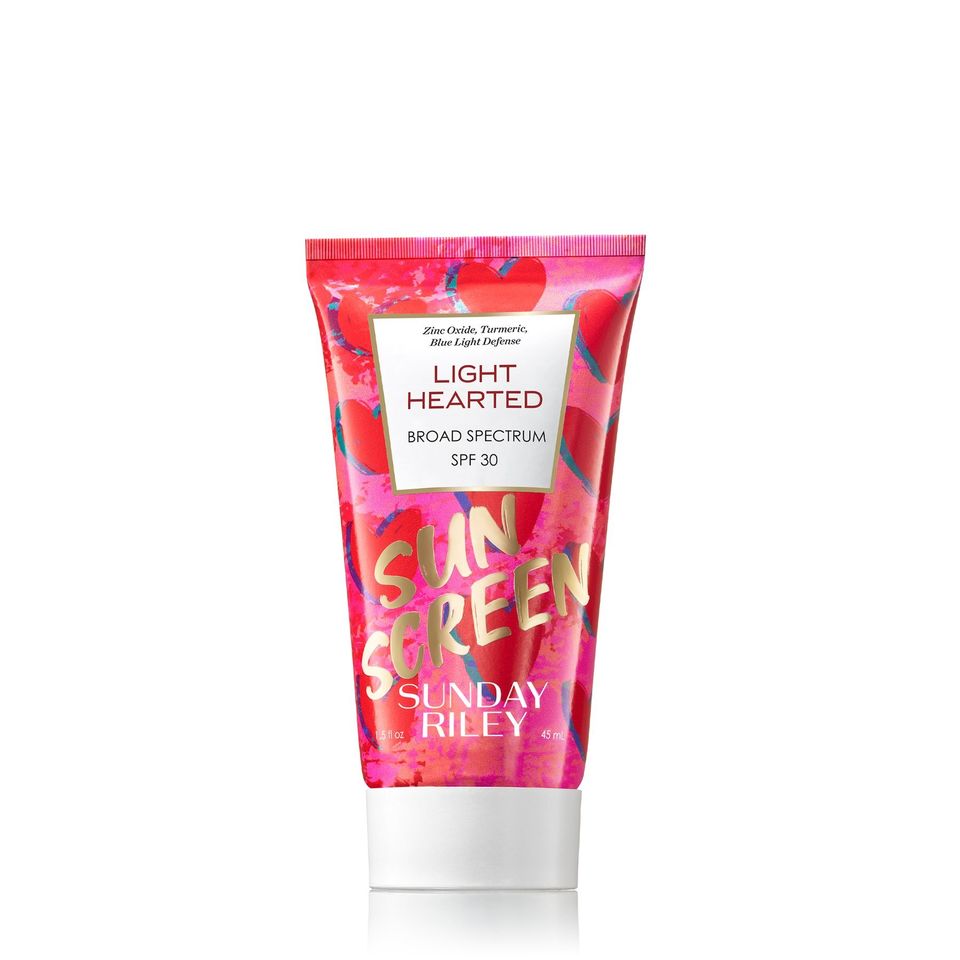
Sunscreens That Won’t Make You Break Out
If you’re experiencing a lot of skin issues during perimenopause, you may also want to take a look at the products you’re using.
“There are a lot of hormonal shifts that are taking place in your body and it’s not linear. Your levels can go up and down unexpectedly,” said Dr. Rajani Katta, a dermatologist at the Baylor College of Medicine and McGovern Medical School at University of Texas Houston. “You may need to change the kinds of skin care products you’re using.”
Katta recommended switching to heavier creams or ointments for moisturizing in lieu of lotions, which have a high water content. “As soon as you get out of the shower, while your skin is still damp, apply a cream on top to lock that moisture into the skin,” she said.
Advertisement
According to Katta, the most common places for hormonal acne are the chin and jawline. While teenagers tend to get blackheads and white lumps, women who are dealing with hormonal acne usually get those red pimples that come from under the surface.
“Most importantly, you want to make sure all your skin care products are non-comedogenic,” Katta said. Non-comedogenic means the product is formulated specially to not block the skin’s pores. Katta explained that over-the-counter acne spot treatments with ingredients such as benzoyl peroxide or salicylic acid formulated in a cream base do dry up pimples and are likely more suited for hormonal acne, because they are not quite as intense and drying (to the skin) as prescription treatments. The reason for this is that most prescribed acne medicine has a gel base — and may even contain alcohol — which is more drying.
“For people who are experiencing fine lines and wrinkles in some areas on their face, we do recommend medicated products with a vitamin A derivative and retinoids, because those can help build up collagen,” Katta said. Just remember, though, that balance is always key.
“I’ve seen people start to go with anti-aging skin care products that just irritate the heck out of their skin. So it’s really important to find that right balance between something that will help you without irritating you,” she cautioned.
“It’s a phase and it will get better. It gets better. I find many of my patients in menopause really feel good once they’re there. Maybe because it’s a different stage of life, but many feel a sense of freedom and I think it can be a really great stage of life. I think you should look forward to it,” Carinci said.
I, for one, am definitely looking forward to it.

Using nuanced language, acknowledging uncertainty and being empathetic are vital, a study suggests.
