The strike comes at the end of the bank holiday weekend and NHS managers fear demand could be “challenging”.


The strike comes at the end of the bank holiday weekend and NHS managers fear demand could be “challenging”.

Artificial intelligence is consuming enormous amounts of electricity in the United States. According to the International Energy Agency, AI systems and data centers used about 415 terawatt hours of power in 2024. That accounts for more than 10% of the country’s total electricity production, and demand is projected to double by 2030.
This rapid growth has raised concerns about sustainability. In response, researchers at a School of Engineering have created a proof-of-concept AI system designed to be far more efficient. Their approach could reduce energy use by up to 100 times while also improving performance on tasks.
A Hybrid Approach Called Neuro-Symbolic AI
The research comes from the laboratory of Matthias Scheutz, Karol Family Applied Technology Professor. His team is developing neuro-symbolic AI, which combines traditional neural networks with symbolic reasoning. This method mirrors how people approach problems by breaking them into steps and categories.
The work will be presented at the International Conference of Robotics and Automation in Vienna in May and will appear in the conference proceedings.
Teaching Robots to See, Understand, and Act
Unlike familiar large language models (LLMs) such as ChatGPT and Gemini, the team focuses on AI systems used in robotics. These systems are known as visual-language-action (VLA) models. They extend LLM capabilities by incorporating vision and physical movement.
VLA models take in visual data from cameras and instructions from language, then translate that information into real-world actions. For example, they can control a robot’s wheels, arms, or fingers to complete a task.
Why Traditional AI Struggles With Simple Tasks
Conventional VLA systems rely heavily on data and trial-and-error learning. If a robot is asked to stack blocks into a tower, it must first analyze the scene, identify each block, and determine how to place them correctly.
This process often leads to mistakes. Shadows may confuse the system about a block’s shape, or the robot may place pieces incorrectly, causing the structure to collapse.
These errors are similar to the problems seen in LLMs. Just as robots can misplace blocks, chatbots can generate false or misleading outputs. Examples include fabricating legal cases or producing images with unrealistic details such as extra fingers.
How Symbolic Reasoning Improves Accuracy and Efficiency
Symbolic reasoning offers a different strategy. Instead of relying only on patterns from data, it uses rules and abstract concepts such as shape and balance. This allows the system to plan more effectively and avoid unnecessary trial and error.
“Like an LLM, VLA models act on statistical results from large training sets of similar scenarios, but that can lead to errors,” said Scheutz. “A neuro-symbolic VLA can apply rules that limit the amount of trial and error during learning and get to a solution much faster. Not only does it complete the task much faster, but the time spent on training the system is significantly reduced.”
Strong Results in Puzzle Tests
The researchers tested their system using the Tower of Hanoi puzzle, a classic problem that requires careful planning.
The neuro-symbolic VLA achieved a 95% success rate, compared with just 34% for standard systems. When given a more complex version of the puzzle that it had not encountered before, the hybrid system still succeeded 78% of the time. Traditional models failed every attempt.
Training time also dropped sharply. The new system learned the task in only 34 minutes, while conventional models required more than a day and a half.
Massive Energy Savings in Training and Use
Energy consumption was reduced dramatically as well. Training the neuro-symbolic model required only 1% of the energy used by a standard VLA system. During operation, it used just 5% of the energy needed by conventional approaches.
Scheutz compared this inefficiency to everyday AI tools. “These systems are just trying to predict the next word or action in a sequence, but that can be imperfect, and they can come up with inaccurate results or hallucinations. Their energy expense is often disproportionate to the task. For example, when you search on Google, the AI summary at the top of the page consumes up to 100 times more energy than the generation of the website listings.”
The Growing Strain of AI on Power Infrastructure
As AI adoption accelerates across industries, demand for computing power continues to climb. Companies are building increasingly large data centers, some of which require hundreds of megawatts of electricity. That level of consumption can exceed the needs of entire small cities.
This trend has sparked a race to expand infrastructure, raising concerns about long-term energy limits.
A More Sustainable Path for AI
The researchers suggest that current approaches based on LLMs and VLAs may not be sustainable in the long run. While these systems are powerful, they consume large amounts of energy and can still produce unreliable results.
In contrast, neuro-symbolic AI offers a different direction. By combining learning with structured reasoning, it may provide a more efficient and dependable foundation for future AI systems.

Aging takes a serious toll on the hippocampus, the part of the brain that plays a central role in learning and memory.
Scientists at UC San Francisco have now pinpointed a protein that appears to drive much of this decline.
FTL1 Emerges as a Key Driver of Brain Aging
To understand what changes with age, the researchers tracked shifts in genes and proteins in the hippocampus of mice over time. Among everything they examined, only one stood out as consistently different between young and old animals. That protein is called FTL1.
Older mice showed higher levels of FTL1. At the same time, they had fewer connections between neurons in the hippocampus and performed worse on cognitive tests.
How FTL1 Alters Brain Function
When the team boosted FTL1 levels in young mice, the effects were striking. Their brains began to look and function more like those of older mice, and their behavior reflected this shift.
Lab experiments revealed more detail. Nerve cells engineered to produce high amounts of FTL1 developed simplified structures, forming short, single extensions instead of the complex, branching networks seen in healthy cells.
Reversing Memory Decline by Lowering FTL1
The most surprising result came when researchers reduced FTL1 in older mice. The animals showed clear signs of recovery. Connections between brain cells increased, and their performance on memory tests improved.
“It is truly a reversal of impairments,” said Saul Villeda, PhD, associate director of the UCSF Bakar Aging Research Institute and senior author of the paper, which was published in Nature Aging. “It’s much more than merely delaying or preventing symptoms.”
Metabolism Link Points to New Treatments
Further experiments showed that FTL1 also affects how brain cells use energy. In older mice, higher levels of the protein slowed cellular metabolism in the hippocampus. However, when researchers treated these cells with a compound that boosts metabolism, the negative effects were prevented.
Hope for Future Brain Aging Therapies
Villeda believes these findings could pave the way for treatments that target FTL1 and counter its effects in the brain.
“We’re seeing more opportunities to alleviate the worst consequences of old age,” he said. “It’s a hopeful time to be working on the biology of aging.”
Authors and Funding
Other UCSF authors are Laura Remesal, PhD, Juliana Sucharov-Costa, Karishma J.B. Pratt, PhD, Gregor Bieri, PhD, Amber Philp, PhD, Mason Phan, Turan Aghayev, MD, PhD, Charles W. White III, PhD, Elizabeth G. Wheatley, PhD, Brandon R. Desousa, Isha H. Jian, Jason C. Maynard, PhD, and Alma L. Burlingame, PhD. For all authors see the paper.
This work was funded in part by the Simons Foundation, Bakar Family Foundation, National Science Foundation, Hillblom Foundation, Bakar Aging Research Institute, Marc and Lynne Benioff, and the National Institutes of Health (AG081038, AG067740, AG062357, P30 DK063720). For all funding see the paper.

Researchers from the Faculty of Physics at the University of Warsaw, working with teams from the Łódź University of Technology, the Warsaw University of Technology, and the Polish Academy of Sciences, have created a structure capable of trapping infrared light in a layer just 40 nanometers thick. Their approach relies on a design known as a subwavelength grating made from a specialized material called molybdenum diselenide (MoSe2). The findings were reported in the journal ACS Nano.
Manipulating light at extremely small scales is key to advancing modern technology. As traditional electronics begin to reach their limits, photonics offers an alternative by using light instead of electrons to carry information. Because photons move faster and do not have mass like electrons, devices based on light could become both quicker and smaller, opening the door to more powerful and compact technologies.
The Challenge of Light’s Wavelength
Light behaves both as a particle and as a wave, and this wave nature introduces a limitation. Each type of light has a wavelength, which determines how small a structure can be while still controlling it effectively. Visible light has wavelengths of several hundred nanometers, while infrared light extends to a micrometer or more. This raises an important question: can light be confined in structures smaller than its own wavelength?
The research team demonstrated that this is indeed possible. By engineering a subwavelength grating, they were able to trap infrared light within a layer only 40 nanometers thick. This structure consists of closely spaced parallel strips that interact with light similarly to a prism. When these strips are positioned closer together than the wavelength of light, the grating can act like a near-perfect mirror while also holding the light inside a very small volume.
Why Molybdenum Diselenide Works So Well
Earlier versions of such gratings, made from materials like silicon or gallium compounds, required thicknesses of several hundred nanometers to function effectively. Reducing their size caused them to lose their ability to confine light. The key difference in this new approach is the use of molybdenum diselenide, which has a much higher refractive index. In simple terms, light slows down more inside this material than in others. While light slows by about 1.5 times in glass and roughly 3.5 times in silicon or gallium arsenide, it slows by about 4.5 times in MoSe2. This strong slowing effect allows the structure to shrink dramatically while still trapping light efficiently, resulting in a layer more than a thousand times thinner than a human hair.
Turning Infrared Light Into Blue Light
MoSe2 also brings additional advantages. Like graphene, it forms layered structures, but unlike graphene, it is a semiconductor. It also exhibits nonlinear optical behavior, including a process known as third harmonic generation. In this process, three infrared photons combine into one photon with a higher frequency, effectively converting infrared light into visible blue light. Because the grating strongly concentrates infrared light, this conversion becomes much more efficient. The researchers found that the effect is more than 1,500 times stronger compared to a flat layer of the same material.
Another major advance lies in how the material was produced. Previously, thin layers of MoSe2 were created using exfoliation — a method similar to peeling layers off a crystal with adhesive tape. While simple, this technique is inconsistent and limited to very small areas, typically around ten square micrometers, which is not suitable for real-world devices.
To overcome this, the team used molecular beam epitaxy (MBE), a well-established method for growing semiconductor layers. This approach allowed them to produce large, uniform MoSe2 films spanning several square inches. Despite this large size, the layer maintained a thickness of just 40 nanometers, giving it an extreme aspect ratio. For comparison, the thickness-to-size ratio of this layer is about one to a million, while a typical A4 sheet of paper has a ratio closer to 1:2000.
Toward Practical Photonic Applications
These results suggest that molybdenum diselenide produced in this way could significantly change how light is controlled in future technologies. Structures no longer need to be thick to manipulate light effectively. Instead, extremely thin layers can perform the same function, and in some cases even better. Because the production method is scalable, the path toward real-world applications, such as photonic integrated circuits, is becoming increasingly realistic.
Funding and Support
The research was funded by the National Science Centre under projects OPUS 2020/39/B/ST7/03502 and 2021/41/B/ST3/04183, with European Union funds under ERC-ADVANCED grant No. 101053716, the Foundation for Polish Science under project ENG.02.01-IP.05-T004/23, and by the University of Warsaw under the Excellence Initiative – Research University (IDUB) New Ideas in Priority Research Areas II No. 501-D111-20-2004310 titled “Ultrathin subwavelength gratings based on dichalcogenides.”

A new study offers one of the clearest pictures yet of what happens as Arctic permafrost thaws. Led by geoscientist Michael Rawlins at the University of Massachusetts Amherst, the research provides detailed insight into how warming temperatures are reshaping water systems and releasing long-frozen carbon.
The team examined a region of Alaska’s North Slope roughly the size of Wisconsin, where hundreds of rivers and streams drain into the Beaufort Sea. Using 44 years of model data at a resolution of one kilometer, they found that runoff is rising sharply, rivers are carrying increasing amounts of carbon, and the thaw season is extending later into the year, now reaching late summer and fall. The findings were published in Global Biogeochemical Cycles.
Arctic Rivers Play an Outsized Role in the Global System
Rivers in the Arctic have a surprisingly large influence on the planet. They deliver about 11% of the world’s river water into an ocean that holds just 1% of global ocean volume. This makes the Arctic Ocean especially sensitive to changes occurring in rivers and streams across the region.
Although melting snow supplies much of this water, thawing permafrost is becoming increasingly important. The ground contains a layer known as the “active layer,” which freezes and thaws each year. As the climate warms, this layer is getting deeper, allowing more groundwater to flow into Arctic rivers.
Thawing Soil Is Releasing Ancient Carbon
The active layer holds large quantities of organic material that have been frozen for thousands of years. As it deepens, more of this material is released into rivers as dissolved organic carbon (DOC), eventually reaching the ocean.
The Arctic Ocean already receives a disproportionate share of this carbon compared to other parts of the world. Each year, more than 275 million tons of it are converted into carbon dioxide, adding to global warming and creating a feedback loop that can intensify climate change.
Limited Observations Make Modeling Essential
Understanding how individual rivers respond to warming is challenging because direct measurements in northern Alaska are limited.
“What makes this question so hard to answer is that direct observations are very sparse in northern Alaska,” says Rawlins, extension associate professor of Earth, Geographic, and Climate Sciences at UMass Amherst. “There are nowhere near enough river sample measurements to quantify inputs to estuaries along the entire Alaskan North Slope.”
To address this gap, Rawlins developed the Permafrost Water Balance Model over the past 25 years. This model estimates key processes such as snow accumulation, melt, and changes in the active layer to better represent real conditions. In 2021, it was expanded to simulate dissolved organic carbon, and in 2024 it was applied across 22.45 million square kilometers of Arctic land.
The model suggests that over the next 80 years, the Arctic could experience up to 25% more runoff, 30% more subsurface flow, and increasing dryness in southern areas.
High-Resolution Modeling Reveals New Patterns
Previous versions of the model used grid cells that were 25 kilometers wide. This study improves on that by capturing changes at a much finer scale.
“We’ve typically run the model on 25-kilometer grid cells,” says Rawlins. “This new study is the first time anyone has captured such a wide area of the Arctic — about the size of Wisconsin — down to the kilometer scale, and over such a long period of time: our model simulates daily river flows and coastal exports over 44 years from 1980 to 2023.”
Running the model required substantial computing power. Each simulation took 10 continuous days on a supercomputer at the Massachusetts Green High Performance Computing Center.
“Our freshwater and DOC inputs to coastal estuaries will be useful to a broad range of stakeholders interested in these unique ecosystems in coastal northern Alaska,” says Rawlins, “including the Beaufort Lagoon Ecosystems project, which is helping to quantify exactly what’s coming through these coastal estuaries.”
Northwest Alaska Shows the Biggest Carbon Increases
The researchers found that while runoff and thawing are increasing across the region, the largest rise in carbon export is occurring in northwest Alaska.
“It’s flatter over there,” says Rawlins, “which means there’s much more carbon from decaying matter in the permafrost that has been accumulating for tens of thousands of years. This is ancient carbon. The further east you go, the more mountainous it becomes. The soil is rockier and sandier, and so far less DOC is mobilized as the permafrost thaws.”
A Longer Thaw Season Is Driving Change
One of the most notable findings is how much of the change is tied directly to permafrost thaw. The thaw season now lasts longer than in the past, extending into September and even October.
These changes are likely affecting salinity, nutrient cycles, and food webs in the Beaufort Sea. Researchers are now studying how ice wedge polygons, a common Arctic landscape feature, influence how water and carbon move toward coastal areas.
A Critical Gap in Understanding the Carbon Cycle
“How much DOC finds its way to the ocean via rivers and streams is a part of the carbon cycle we don’t know much about,” says Rawlins. “We desperately need more of these land-to-ocean connection studies if we’re to fully grapple with the problem of global warming and the effects it will have on coastal ecosystems.”
The research was supported by the U.S. National Science Foundation and NASA.

LOS ANGELES — People may assume that if they drink lightly during the week or month, heavy drinking on the occasional Friday or Saturday may not cause their liver harm.
New research suggests otherwise, according to a Keck Medicine of USC study published today in Clinical Gastroenterology and Hepatology.
Researchers discovered that people with metabolic dysfunction–associated steatotic liver disease (MASLD), the most common liver condition in the country affecting one-in-three adults, face significantly higher risk of liver fibrosis, or harmful scarring of the liver, if they engage in episodic heavy drinking. Episodic heavy drinking is four or more drinks in one day for women and five or more drinks in one day for men, at least once a month.
Those who consume large amounts of alcohol in a single day at least once per month are three times more likely to develop advanced liver fibrosis than individuals who spread out the same total alcohol intake over time, according to the findings.
Younger adults and men were more likely to report episodic heavy drinking, and the more drinks consumed at one time, the more liver fibrosis people tended to have.
“This study is a huge wake-up call because traditionally, physicians have tended to look at the total amount of alcohol consumed, not how it is consumed, when determining the risk to the liver,” said Brian P. Lee, MD, MAS, a hepatologist and liver transplant specialist with Keck Medicine and principal investigator of the study. “Our research suggests that the public needs to be much more aware of the danger of occasional heavy drinking and should avoid it even if they drink moderately the rest of the time.”
How the study was conducted
Lee and his colleagues used data from the nationally representative National Health and Nutrition Examination Survey, a long-running health survey of the United States population. They included data from more than 8,000 adults, collected between 2017 and 2023. In particular, they looked at the link between episodic heavy drinking and advanced liver fibrosis to understand how drinking patterns — not just total drinks — may cause harm even to moderate drinkers, which is considered seven drinks a week for women and 14 or less for men.
The research team focused on MASLD because of its prevalence among Americans. MASLD affects people with excess weight, obesity or other metabolic conditions, such as Type 2 diabetes, high blood pressure or high cholesterol, and is on the rise. Additionally, while MASLD is not defined as alcohol-related, Lee and his colleagues wanted to explore if alcohol did in fact play some role in the condition.
More than one-half of the adults included in the study reported episodic heavy drinking and almost 16% of patients with MASLD were episodic heavy drinkers.
The researchers compared people with MASLD with the same age, sex and average weekly alcohol consumption, segmenting some as episodic heavy drinkers and others as non-episodic heavy drinkers, to reach their conclusion that episodic heavy drinkers with MASLD had nearly three times higher odds of experiencing advanced liver fibrosis.
Lee speculates that episodic heavy drinking can harm the liver both directly and indirectly. Drinking large amounts of alcohol at once can overwhelm the liver and increase inflammation, which leads to scarring and damage. People with MASLD may be particularly at risk, as Lee’s previous research has shown that obesity, high blood pressure and other conditions associated with MASLD can more than double liver disease risk.
Alcohol-related liver disease has more than doubled in the last two decades, according to Lee. He believes this trend is driven by pandemic-era surges in drinking and an increase in people with risk factors for MASLD, like obesity and diabetes.
“Although this study focused on patients with MASLD, these findings may also be pertinent to a broader patient population,” said Lee. “With more than half of adults reporting some episodic heavy drinking, this issue deserves further attention from both physicians and researchers to help better understand, prevent and treat liver disease.”
###
For more information about Keck Medicine of USC, please visit news.KeckMedicine.org.
The study was supported by a grant from the National Institute on Alcohol Abuse and Alcoholism, grant number K23AA029752.
We seem to have reached peak “get off my lawn” culture, with men having temper tantrums all over the damn place. Whether they’re typing shrill all-caps messages, foaming at the mouth with road rage or aggressively punching holes in your drywall, men seem to be angrier than ever. And with a “boys will be boys” cultural mindset that provides a free pass on bad behavior to men well into their final decades, it’s hard to know when, or if, these antics will ever end.
Would it make you feel any better to know that there’s not only a possible medical reason, but even an accepted syndrome designation, for this way many men have of interacting with the world?
Advertisement
Maybe not, but the term “irritable male syndrome” does exist, and in the two decades since it was coined, it’s become accepted in medical and psychological circles. While not a clinical diagnosis, experts say it’s an accurate description of a cluster of symptoms that often appears in aging men.
“Along with the term ‘andropause,’ which refers to male menopause, it’s a useful shorthand for describing what happens to men through gradual testosterone decline and hormonal changes,” said Dr Justin Houman, assistant professor of urology at Cedars-Sinai Medical Center.

Andreas Kindler via Getty Images
Advertisement
According to Houman, the most common symptoms are:
These symptoms don’t happen overnight, he said. “Male hormonal decline is gradual, with testosterone levels peaking in the late teens to early 20s, remaining relatively stable through the 30s, and starting to decline by about 1% per year after age 40. Most men start noticing symptoms like those listed above between 40 and 60, though lifestyle, chronic illness and genetics can accelerate or delay onset.”
The term “irritable male syndrome” (IMS) was coined in 2001 by Dr. Gerald Lincoln, a Scottish scientist known for his work in endocrinology and reproductive biology. He was researching testosterone levels in sheep when he observed a correlation between declining testosterone levels and increased irritability and aggression in rams after the mating season. He observed similar behaviors in other males when their testosterone levels dropped, eventually identifying the syndrome in red deer, reindeer and even Indian elephants.
Advertisement
It’s a state of hypersensitivity, anxiety, frustration and anger that occurs in males that’s associated with biochemical changes, hormonal fluctuations, stress and loss of male identity.
– Dr. Jed Diamond
As years passed, the term was picked up by psychologists and men’s health experts to describe similar emotional and behavioral patterns they were observing in human men, particularly in relation to age-related testosterone decline or stress-induced hormonal shifts.
Psychotherapist and author Dr. Jed Diamond has written the books “Irritable Male Syndrome” and “Mister Mean: Saving Your Relationship From The Irritable Male Syndrome.” He described IMS this way: “It’s a state of hypersensitivity, anxiety, frustration and anger that occurs in males that’s associated with biochemical changes, hormonal fluctuations, stress and loss of male identity. While it does usually occur in men later in life, I’ve seen men in their 20s or 30s, who have poor diets, high stress and other factors, can also experience IMS.”
Advertisement
We react differently to this syndrome because it’s more likely to “sneak up” on those who have it and those who love them, said coaching psychologist James Davis. “The hormonal changes of women’s menopause happen in a relatively narrow window of time, but with age-related testosterone decline, it can be more of a ‘slow drip’ rather than a sudden moment. This means symptoms can often be passed off as being caused by aging, stress or a combination of both.”
While hormonal changes might jump-start IMS, other factors can play a role, Davis said. “Those hormonal changes make men more anxious, which in turn can lead to irritability. There can be a crisis of self-identity that comes from declining physical performance, loss of muscle and lowered libido. When you overlay the stresses of managing a career, finances and relationships, plus the state of the world in general, you can see that many factors could make a man more irritable. Then add in broken sleep, a lack of experience or framework for expressing vulnerability or issues and increasing social isolation, and you can see how multiple factors can pile up to impact an individual.”
Israel Cassol is a podcaster who began trying to raise awareness of “male menopause” after he was diagnosed with the condition shortly after turning 40. He told the New York Post, “I was hesitant to share such intimate details of my life, but I needed to know if this was an issue others were facing. I couldn’t believe the response I received from men describing similar symptoms I had suffered from.”
Advertisement
These days, he still promotes issues of men’s health, offering this advice to HuffPost: “Men shouldn’t see this as a weakness or something shameful. It’s a natural part of life for many, and talking about it helps break the stigma around men’s emotional health. The sooner we recognize what’s going on, the sooner we can take steps to improve things, and that makes a huge difference not just for men, but for their families and relationships, too.”
Diamond said that the first step should be a doctor’s appointment: “I’d say that any man over 45 who is experiencing these symptoms consistently should see their doctor for a blood test to check testosterone levels.”
What happens if those levels are low?
“There are effective lifestyle adjustments men can make to boost levels naturally, and there is also the option of testosterone replacement therapy, which is something that requires careful consideration,” Davis said.
Advertisement
What to do if a loved one seems like a likely candidate for IMS? Besides that medical evaluation, Diamond mentioned, Houman suggested encouraging healthy lifestyle changes like more balanced nutrition, regular exercise, good sleep hygiene and reduced stress. “Keep communication open and non-judgmental, and seek counseling if a relationship strain develops,” he said.
It’s important to demonstrate compassion for this issue, Davis explained. “You need to realize that this isn’t a personality change per se, but is likely a result of hormonal changes that affect behavior, emotion, cognition and even how that person shows up in the world,” he added.
He also said that this is an issue that needs more attention. “We need to bring andropause out into the open so that both men and women can appreciate what’s going on with male hormones and psychology at this time of life. Midlife men are the highest suicide cohort, with a rate almost five times that of women of all ages, so the issue is significant and we shouldn’t marginalize it by questioning its existence or attempting to downplay it,” Davis added.
Advertisement
Finally, Cassoll offered this encouragement: “Patience and understanding are very important, because men going through this phase don’t always realize what’s happening to them. It helps if loved ones encourage healthier habits and also create space for honest conversations without judgment. Suggesting a medical check-up can be really helpful, because it reassures the man that he’s not ‘going crazy,’ and that there are ways to feel better.”
The original version of this story was published on HuffPost at an earlier date.
The images are used in consultations to show what happens to the womb, ovaries and fallopian tubes.

A new medication has been found to significantly reduce blood pressure in people whose levels remain dangerously high even after taking multiple existing drugs. The findings come from a Phase III clinical trial led by a professor at UCL.
High blood pressure (hypertension) affects about 1.3 billion people worldwide. In nearly half of these cases, the condition is either uncontrolled or does not respond well to treatment. This greatly increases the risk of heart attack, stroke, kidney disease, and early death. In the UK alone, around 14 million people are living with hypertension.
Large International Trial of Baxdrostat
The international BaxHTN trial, led by Professor Bryan Williams (UCL Institute of Cardiovascular Science) and funded by AstraZeneca, tested a new drug called baxdrostat, which is taken as a tablet. The study included nearly 800 patients across 214 clinics around the world.
The research was supported by the NIHR Biomedical Research Centre at UCLH.
The results were presented at the European Society of Cardiology (ESC) Congress 2025 in Madrid and were also published in the New England Journal of Medicine.
Significant Blood Pressure Reductions
After 12 weeks, patients taking baxdrostat (1 mg or 2 mg once daily in pill form) experienced an average drop in blood pressure of about 9 to 10 mmHg more than those taking a placebo. This level of reduction is considered large enough to lower the risk of cardiovascular events.
Around 40 percent of patients taking baxdrostat reached healthy blood pressure levels, compared with fewer than 20 percent in the placebo group.
Principal Investigator, Professor Williams, who is presenting the results at ESC, said: “Achieving a nearly 10 mmHg reduction in systolic blood pressure with baxdrostat in the BaxHTN Phase III trial is exciting, as this level of reduction is linked to substantially lower risk of heart attack, stroke, heart failure and kidney disease.”
How Baxdrostat Targets a Key Hormone
Blood pressure is heavily influenced by a hormone called aldosterone, which helps regulate salt and water levels in the body.
In some individuals, the body produces too much aldosterone. This leads to excess salt and water retention, raising blood pressure and making it difficult to control.
Scientists have long tried to address this imbalance, but it has proven challenging.
Baxdrostat works by blocking the production of aldosterone, directly targeting a major cause of high blood pressure (hypertension).
A New Approach to Difficult Cases
Professor Williams, Chair of Medicine at UCL, said: “These findings are an important advance in treatment and in our understanding of the cause of difficult to control blood pressure.
“Around half of people treated for hypertension do not have it controlled, however this is a conservative estimate and the number is likely higher, especially as the target blood pressure we try to reach is now much lower than it was previously.[1]
“In patients with uncontrolled or resistant hypertension, the addition of baxdrostat 1mg or 2mg once daily to background antihypertensive therapy led to clinically meaningful reductions in systolic blood pressure, which persisted up to 32 weeks with no unanticipated safety findings.
“This suggests that aldosterone is playing an important role in causing difficult to control blood pressure in millions of patients and offers hope for more effective treatment in the future.”
Rising Global Burden and Future Potential
In the past, higher rates of hypertension were mainly seen in wealthier Western countries. However, changing diets, including reduced salt intake in some regions, have shifted the global burden. Today, far more cases are found in Eastern and lower income countries. More than half of all people with hypertension live in Asia, including 226 million in China and 199 million in India.[2]
Professor Williams added: “The results suggest that this drug could potentially help up to half a billion people globally — and as many as 10 million people in the UK alone, especially at the new target level for optimal blood pressure control.”
Notes
I hired a sex worker for my 70th birthday because I was terrified of crossing the border into the land of the elderly.
I wasn’t scared of dying; I accept that inevitability. In fact, I feel very fortunate to have done so many laps. No, I was afraid of not living and scared of fading away. I wasn’t willing to saunter into that ghostly world of the aging. I needed a rocket launch — something to reboot me awake.
Advertisement
The options came down to hiring an escort or jumping out of a plane. Although the thought of disrobing this aging, flabby body in front of a man in his 40s was frightening, it seemed the safer choice. Like so many other older folks, I had osteopenia, and hurtling through the air at a rapid speed with a man strapped to my back might be taking too much of a risk for my bones.
Seeking out an escort meant I was not only taking a risk physically and emotionally, but also financially. One of my passions in life was overseas travel, and the $1900 investment in a hotel room and three hours with an escort could have bought me a plane ticket. I knew how to organize a trip abroad, but I had no idea how to find an escort. When in doubt, google.
Swiping through endless photos of semi-naked men draped over beds — and young enough to be my grandson — was disheartening. I nearly changed my mind and googled parachuting. But after adjusting the filter to a higher price range, I found Mitch. Although there was the obligatory bare-chested photo, he had a reassuring video explaining his process and acknowledging how challenging it is for a woman to hire an escort for the first time. And he was in his 40s — closer to the age of a son than a grandson. That felt more palatable.
Advertisement
My request to Mitch was straightforward: an erotic massage and an orgasm, which he promised he could deliver. Unfortunately, there ended up being nothing in our three hours together that was vaguely sensually or sexually arousing. I was afraid I would fall asleep from boredom, with his head resting on my shoulder like a child. In the end, I asked him to leave 20 minutes early. I told him it wasn’t working, and he said he was “devastated.”
I emailed him the next morning and asked for a refund. He responded a few minutes later to tell me that he had transferred the money back to my account. Looking back, I think Mitch got stuck in his own narrative that older women wanted a “boyfriend experience,” which he explained as a kiss, a cuddle and a chat. Although I reiterated what I wanted and he reassured me he was happy to deliver, we both knew the transaction was unsatisfactory.
I bookmarked the funds for another escort. After all, I don’t give up after one bad Tinder date. I slid back into the warm pond of my content single life working as a psychologist in private practice, and I went on an overseas holiday. I packed away the memory of that night with Mitch in a dark corner of my mind — more as something forgettable than regrettable. If I am honest, I think it was also to silence that little voice inside me that goadingly whispered, Who are you kidding — a 70-year-old woman with a man in his 40s?
Advertisement
“By telling me I didn’t have the right to ask for sensual and sexual pleasure at ‘my age,’ they made me more determined to hire another escort.”
A few months later, I was surprised to learn that the Sydney Morning Herald had agreed to publish an essay I wrote about Mitch. I initially considered using a pseudonym, mainly for professional reasons, but also because I had noticed the uncomfortable, embarrassed silence in the room when I told a few friends and family, which made me a little hesitant to disrobe myself emotionally and physically in front of strangers. But I knew this story was more about claiming my voice and asking for what I wanted than about hiring an escort, and that story needed my name.
I was humbled by the number of people who personally reached out to me and was surprised to be called “brave,” a word I reserved for people who rescued children from burning houses. Most of the anonymous online comments were supportive, but there were a few that were scathing, which I assume were from men: “get a dog,” “poor man,” “he was doing his best, look what he had to work with.”
Advertisement
Those comments ignited a fire in my belly. By telling me I didn’t have the right to ask for sensual and sexual pleasure at “my age,” they made me more determined to hire another escort.
I thought of the moth that flew out of my diaphragm years ago, like a rebuke reminding me I had abandoned my sexual self and left her dusty and forgotten under my bathroom sink. This time, I was the moth, back in the light, ready to flap my wings. No one was going to push me back into the dark.
I didn’t need to google my way through pictures of men with bulging body parts this time. I had a referral from a woman in her mid-60s who had read my essay and recommended Chris, someone she had seen six times. I was ready to relaunch.
Advertisement
My session with Chris was satisfying in so many ways — not just physically. Though I usually feel safer being in charge, I was able to let him take the lead, and I found I could ask for what I wanted and accepted that I didn’t need to please anyone but myself. That alone was a blast onto another planet. Of course, the orgasm helped, but it wasn’t just that; it was letting go of pleasing others, finding my voice and being in my body the way I wanted to be in it. The experience was truly radical for me.
I wrote other essays about Mitch and Chris for Oldster Magazine, and there were more opportunities for podcasts and essays in The New York Times, The Times UK, ABC, Irish TV and radio. I had touched a nerve; I was out in the world, and that is where the real story begins.

Courtesy of Gail Rice
Advertisement
However, before I get into that, I want to put the sex worker episode into context. I am single and never married by choice. I have enjoyed a smorgasbord of relationships — some wonderful, some not — but by my mid-40s, it was as if the music had stopped in a game of musical chairs. I had a chair, but everyone else had chosen a partner and gone home.
In my 50s, I started using dating apps on and off, which was mostly enjoyable. But, by the time I was 65, I was bored with the sluggish fish left in the pond, tired of feeling like I was auditioning to fill the gap of the beloved dead wife or to offer my services as a “cuddle buddy,” which was how one man 15 years older described what he was looking for. No thanks. Enough dating.
As my 70th birthday loomed, not only was I looking into a world of being invisible, but I saw a future where I would never be touched sensually or sexually again — one where I never felt desired and never saw myself as desirable. As a psychologist, I know touch is a primary human need — the foundation of our physical and mental health — and it was this vision of a life devoid of touch that blasted me out of my comfort zone and got me googling escorts.
Advertisement
Never in my wildest dreams did I think taking off my clothes and looking for an orgasm with a stranger in a costly hotel room would lead me into a new world that felt intimate and public at the same time, or that I’d be joining a vibrant chorus of voices demanding to be heard, celebrating our minds and bodies as we age, unwilling to run or hide while resisting the stories we have been told about getting older.
These stories tell women that desirability, sexuality, sensuality and relevance have an expiration date, often after menopause, or sadly long before. These stereotypes are so deeply ingrained that we hold on to them as if they are true and inevitable, not imagined and constructed, often passing them on to our daughters and granddaughters.
In my clinical work, I hear mothers despairing that their tweens are being marketed anti-aging creams. A client in her late 20s reported having a facelift after noticing a wrinkle. I’ve also heard a mother gave her daughter Botox for her 21st birthday, and that women leaving long-term relationships were despairing because men on dating sites were seeking partners the age of their daughters. It’s no surprise that 92% of cosmetic surgery clients are women, and they seem to be in a desperate race to save themselves from aging, as if it were a preventable disease.
Advertisement
As we cross the bridge into the land of the elderly, the message is to shrink, step aside, take up less space. As women, not only are we less desirable but also less relevant. The one exception is grandparenting — a continuation of the mothering role.

Courtesy of Gail Rice
It is painful to admit that as I aged, I found it challenging meeting clients older than me, perhaps because I fell prey to those unconscious prejudices that “old” clients would be less interesting, less open to change and less curious. Perhaps the real reason was that I was afraid to confront my own fears reflected in their eyes: loneliness, sadness, regret and urgency that time was running out. Maybe it felt safer not to look.
Advertisement
But I am ready to face that fear now. Yes, there are fewer years in front of me than behind me, but this life is a gift and a privilege. It is urgent, and now I am more motivated than scared. There’s no more time to stand back, to wait, and I am ready to claim my place, my power, my voice, and my wisdom with others in my tribe.
I had imagined I would reboot my body by hiring an escort. While that physical touch did wake something up in me, the real awakening came from being seen and heard through my articles and podcasts — my thoughts, my ideas and my experience mattered. I had opened a door and found the confidence and the spark I needed to restory the rest of my life.
Restorying is a concept I have embraced for decades in my therapeutic work with individuals and groups. It is based on the idea that, as individuals, our lives are constructed by the stories we learn about ourselves from our families and our culture. Some of these stories are helpful; they inspire us and move us forward. Others shame us, hold us back and keep us small.
Advertisement
Restorying is a process of reframing, rewriting, reclaiming our stories, and choosing the ones we wish to live by. The real story lies not in what happened to us, but in how we make sense of it. If we dare to look at the events and stories in our lives with curiosity and without judgment, we can reframe and integrate them to restory a life that is our own, not the version others constructed for us.
By telling, retelling and rewriting and having conversations about my 70th birthday story, I am reframing my past and my future, propelling myself forward into a story that is mine — a story not about the escorts, not about what happened in the tangled sheets, but about daring to find my voice, to ask for what I wanted without trying to please others.
And now, instead of shrinking and disappearing, I am expanding with every conversation. As I peel another layer off, I discover something new about myself and the world, and recognize how my assumptions and old narratives continue to limit me. This experience of “coming out” is turning out to be one of the most exciting trips I have ever been on. I’ve honestly never felt so alive.
Advertisement
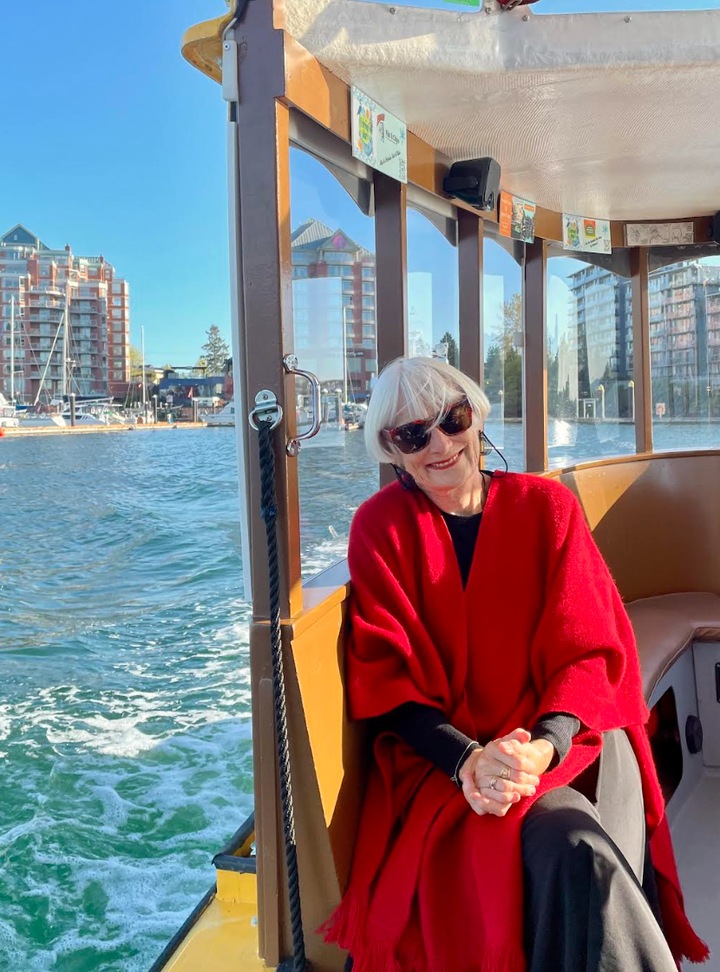
Courtesy of Gail Rice
Anyone can pause and restory their lives at any age. We don’t need to jump out of airplanes or hire escorts. We can learn to trust our voice and ask for what we want in our relationships with a partner, a friend or a work colleague; take a risk and try something new; learn something new; push our bodies; push our minds. We don’t need to do it alone — we can join a tribe and ask for support.
It takes courage to name the stories we are still holding on to about being small, not worthy, not lovable, but once we do, they lose their power over us. By trusting ourselves and taking one risk and then another, we wake ourselves up — one breath at a time.
Advertisement
After decades as a psychologist listening to other people’s stories, I realized how quietly I had disappeared from my own. It is scary to be breaking boundaries I have held for so long about nondisclosure as a therapist, and choosing to show up as a vulnerable, flawed human being. Perhaps that is the gift and the beauty of aging: My time is now because there is no more time to wait. I can take the risk or stay silent. I am loving conversations that debunk the myth of the wise therapist and thrilled to be joining everyone else in this wild, messy ride that is life.
Though these conversations are exciting and hopeful for me, I also have feelings of sadness and regret. As I dare to see myself and be seen, there is pain. I see missed opportunities and stories that held me back. I wish my 30-year-old self had known about this agency and the power I now know I have. I wish I could tell her that she is enough; her body is beautiful, she is lovable, and she doesn’t need to keep pleasing others to earn love. But I know she wasn’t ready to hear that back then. I like to imagine she would be thrilled to see me dancing — not shuffling — into the land of people fortunate enough to experience the adventure and challenges of aging.
In fact, my story is far from over. I continue to seek out adventures that connect me to touch. I have booked three sessions with a female tantric healer in the hope of getting closer to my fantasy of a state of body and mind free from all physical and mental constraints. I want to be suspended for a moment in space — vibrating and humming like hundreds of Tibetan bells — as another layer peels off of me.
Advertisement
Gail Rice is a Canadian-born, Sydney-based psychologist and writer whose work explores aging, desire and reinvention. Her essays have appeared internationally, and she has been featured on many podcasts, including The New York Times’ “Modern Love.” She is a contributor to the forthcoming anthology “More Than a MILF: Sex and the Aging Female Body” and is currently writing a memoir.
Do you have a compelling personal story you’d like to see published on HuffPost? Find out what we’re looking for here and send us a pitch at pitch@huffpost.com.
Advertisement
