Ancient bone dice reveal 12,000-year history of gambling in America

A new study in American Antiquity, a leading journal of North American archaeology published by Cambridge University Press for the Society for American Archaeology, presents compelling evidence that the earliest known dice were created and used by Native American hunter-gatherers more than 12,000 years ago. These discoveries come from the western Great Plains at the end of the last Ice Age and predate the oldest known dice from Bronze Age societies in the Old World by thousands of years.

Research led by Colorado State University Ph.D. student Robert J. Madden shows that dice, gambling, and games of chance have deep roots in Native American culture, stretching back at least 12,000 years. The earliest examples come from Late Pleistocene Folsom-period sites in Wyoming, Colorado, and New Mexico. These artifacts are more than 6,000 years older than comparable dice found in the Old World.

“Historians have traditionally treated dice and probability as Old World innovations,” Madden said. “What the archaeological record shows is that ancient Native American groups were deliberately making objects designed to produce random outcomes, and using those outcomes in structured games, thousands of years earlier than previously recognized.”

What Ice Age Dice Looked Like

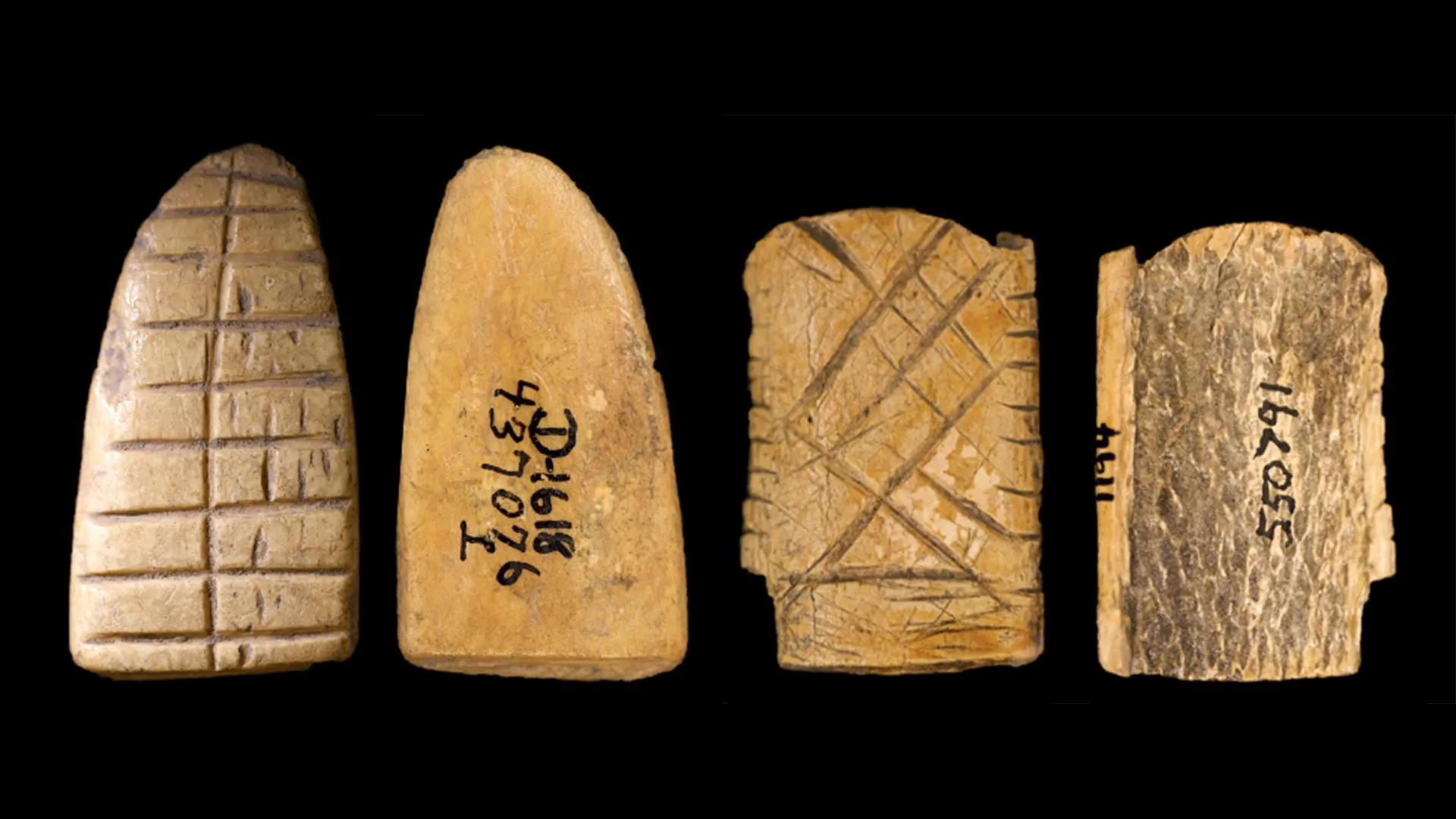
The oldest specimens identified in the study date to roughly 12,800-12,200 years ago. Unlike modern six-sided dice, these objects were two-sided pieces known as “binary lots.” They were carefully shaped from bone into small, handheld forms that were flat or slightly rounded, often oval or rectangular, and designed to be tossed together onto a surface.

Each piece had two distinct faces, marked by differences in color, texture, or added designs, similar to heads and tails on a coin. One side served as the “counting” face. When thrown, each piece would land showing one side or the other, producing a binary (two-outcome) result. Players cast multiple pieces at once, and the outcome depended on how many landed with the counting face up.

“They’re simple, elegant tools,” Madden said. “But they’re also unmistakably purposeful. These are not casual byproducts of bone working. They were made to generate random outcomes.”

A New Method to Identify Ancient Dice

To move beyond guesswork, the study introduces an attribute-based morphological test, a structured checklist of physical characteristics used to identify dice in archaeological collections. This method is based on a comparative analysis of 293 sets of historic Native American dice recorded by ethnographer Stewart Culin in his 1907 Bureau of American Ethnology monograph, Games of the North American Indians.

Using this framework, the study revisits artifacts that had previously been labeled as possible “gaming pieces” or ignored entirely. By applying consistent criteria, Madden was able to determine whether these objects fit the definition of dice.

In many cases, the items had been known for decades but were never evaluated within a broader pattern. With this new approach, the study identifies more than 600 diagnostic and probable dice from sites covering every major period of North American prehistory, from the Late Pleistocene through and after European contact.

“In most cases, these objects had already been excavated and published,” Madden said. “What was missing wasn’t the evidence, it was a clear, continent-wide standard for recognizing what we were looking at.”

The earliest examples were also examined directly in museum collections at the Smithsonian Institution, the University of Wyoming Archaeological Repository, and the Denver Museum of Nature and Science.

Rethinking the Origins of Probability

Dice games are often considered humanity’s earliest structured interaction with randomness, laying the groundwork for probability theory, statistics, and scientific reasoning. Until now, scholars believed these practices originated in complex Old World societies around 5,500 years ago.

The new findings point to a much earlier and more widespread origin.

“These findings don’t claim that Ice Age hunter-gatherers were doing formal probability theory,” Madden said. “But they were intentionally creating, observing, and relying on random outcomes in repeatable, rule-based ways that leveraged probabilistic regularities, such as the law of large numbers. That matters for how we understand the global history of probabilistic thinking.”

A Long-Lasting Cultural Tradition

The research also highlights how widespread and enduring dice games have been in Native American cultures. Evidence of dice appears at 57 archaeological sites across a 12-state region, spanning Paleoindian, Archaic, and Late Prehistoric periods, and reflecting a wide range of cultural traditions and lifestyles.

Madden suggests that this long history points to the important social role of games of chance. “Games of chance and gambling created neutral, rule-governed spaces for ancient Native Americans,” he said. “They allowed people from different groups to interact, exchange goods and information, form alliances, and manage uncertainty. In that sense, they functioned as powerful social technologies.”

About the Study

The article, “Probability in the Pleistocene: Origins and Antiquity of Native American Dice, Games of Chance, and Gambling,” will appear in American Antiquity, published by Cambridge University Press on behalf of the Society for American Archaeology.


Share Button

Sewing group helping women in period poverty

Debi Angell says the kits they make help women and girls who can not afford period products.

Share Button

What’s hiding inside colon cancer could change treatment

Colorectal cancer appears to stand apart from other cancers in a surprising way. New research from the University of East Anglia suggests it carries its own distinct microbial “fingerprint,” a discovery that could reshape how doctors understand and treat the disease.

Colorectal cancer is the fourth most common cancer in the UK and the second leading cause of cancer-related death. The new findings may help clinicians better understand how the disease develops, how aggressive it may become, and how patients might respond to different treatments.

The team analyzed whole genome sequencing (WGS) data from more than 9,000 cancer patients. Their results, published in Science Translational Medicine, also challenge a widely held assumption that every cancer type has its own unique microbial signature.

“This study changes how we think about the role of microbes in cancer,” said lead researcher Dr. Abraham Gihawi, from UEA’s Norwich Medical School.

How scientists analyzed tumor microbes

To carry out the study, researchers examined Genomics England DNA sequence data from 11,735 cancer samples spanning 22 different cancer types.

“When you collect cancer DNA sequences, you also gain information from the DNA of microbes contained within the samples,” said Dr. Gihawi.

“We wanted to determine the precise DNA composition of microbes present in each sample. So, we developed computer programs to remove human DNA and analyse the remaining microbe DNA.

“We then correlated this information with clinical data from the patients about their cancer type and clinical outcome.

“What we found challenges previous claims that each cancer type has a distinct microbiological signature or fingerprint.

“But importantly, as whole genome sequencing becomes more common in hospitals, we show that looking at the microbes in tumor samples could become a powerful tool for improving cancer care at little extra cost.

Colorectal cancer shows a distinct microbial signature

The analysis revealed a clear pattern. Among all cancers studied, only colorectal tumors consistently showed a unique and identifiable microbial community.

“Our results show that only colorectal tumors possess distinctly identifiable microbial communities.

“We found that these microbial signatures were so specific that they could accurately distinguish colorectal tumors from other tumors. We hope that this could help doctors diagnose the disease more precisely and researchers to study the microbes found in colorectal cancer.”

The study also points to broader clinical uses. In oral cancers, researchers found that certain viruses such as HPV (human papillomavirus) could be detected more accurately than with some current diagnostic tests.

They also identified rare but dangerous viruses, including Human T-Lymphotropic Virus-1 (HTLV-1), which can remain dormant in the body and later contribute to cancer development.

Microbes linked to survival and treatment response

The findings suggest that microbes may do more than simply exist alongside cancer. In some cases, they appear to be linked to how patients fare.

“We found that certain types of bacteria were associated with poorer survival rates in some cases of sarcoma. This might lead to additional research and treatment options for these types of cancer,” said Dr. Gihawi.

“One of the most exciting things we found was that in some sarcoma cases, the presence of specific bacteria was linked to better survival rates.

“This suggests that microbes might one day help doctors predict how well a patient will respond to treatment and open up new approaches to treatment,” he added.

Whole genome sequencing as a clinical tool

Experts say the work highlights the growing importance of genome sequencing in modern medicine.

Prof Daniel Brewer, from UEA’s Norwich Medical School, said: “This study highlights the growing clinical value of whole genome sequencing in identifying pathogenic organisms such as HTLV-1 and papillomavirus, which may otherwise go undetected.

“By revealing these hidden infections and providing insight into cancer prognosis — particularly in sarcomas — it demonstrates how genomic analysis is becoming an indispensable tool in precision medicine.

“The findings also suggest that oral cancer, in some cases, may be a close diagnostic consideration, further emphasizing the importance of comprehensive genomic profiling in clinical decision-making.”

Collaboration and funding

The project was led by UEA and involved researchers from multiple institutions, including the University of Leeds, the Quadram Institute, Oxford Nanopore Technologies, the Institute of Cancer Research, London, the University of Manchester, National Institute for Health and Care Research (NIHR) Manchester Biomedical Research Centre, the University of Athens (Greece) the University of Liverpool, Cambridge University Hospitals NHS Foundation Trust, University College London, the University of Southampton, the University of North Carolina (US) and the Earlham Institute.

Funding for the study was provided by the Big C Cancer Charity and Prostate Cancer UK.

Share Button

Scientists discover bizarre termite that looks like a tiny sperm whale

High in the treetops of a South American rainforest, scientists have identified a tiny soldier termite with a surprisingly whale-like appearance. The unusual insect caught the attention of an international team of researchers, who were struck by how different it looked from any known species.

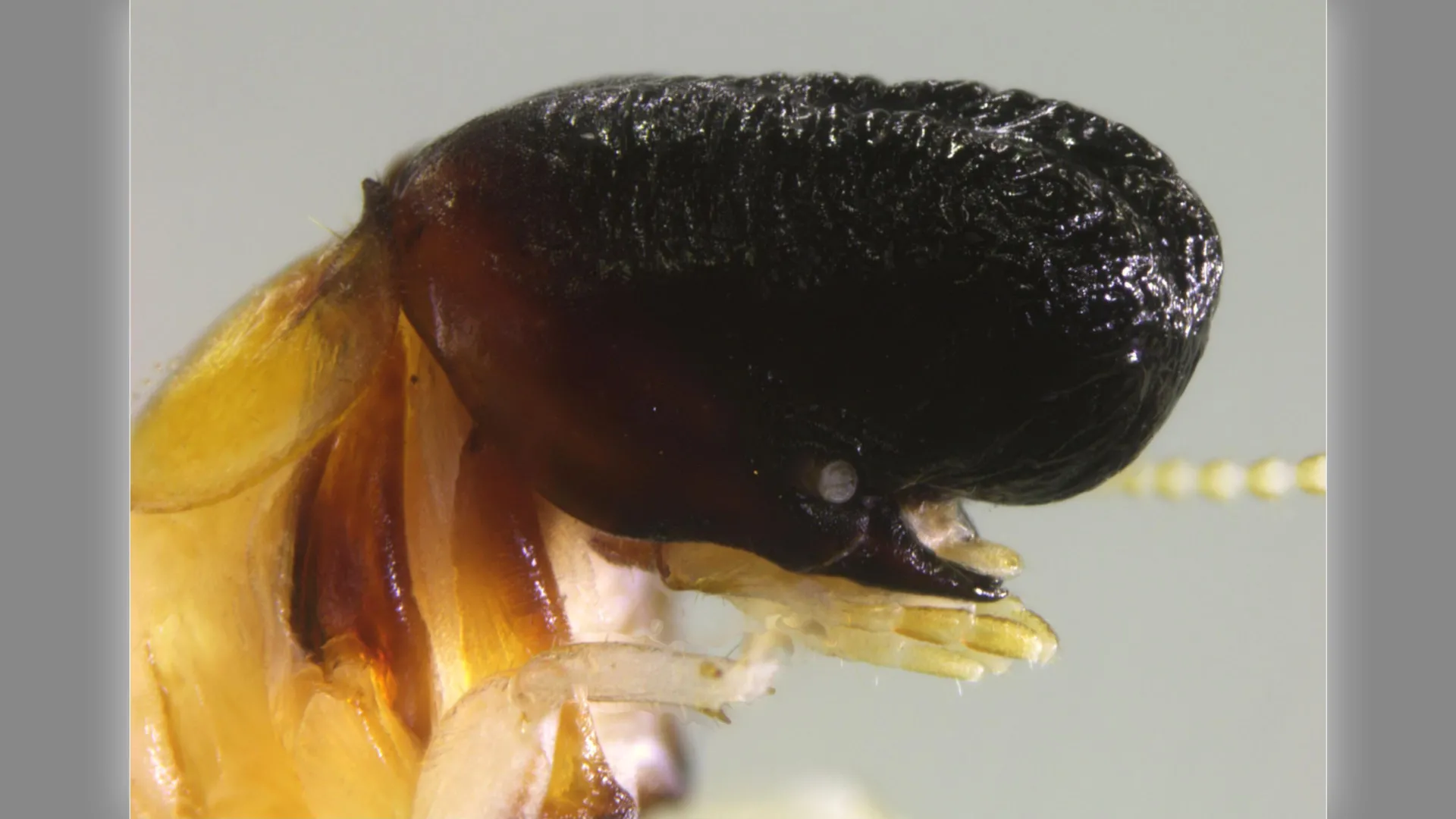
Named Cryptotermes mobydicki, the termite was described by an international research team led by a University of Florida scientist. It features a long, rounded head and mandibles that are mostly hidden from view. Its shape closely resembles a sperm whale, the famous marine animal from Herman Melville’s novel, which inspired its name.

“This termite is unlike anything we’ve ever seen,” said Rudolf Scheffrahn, professor of entomology at the UF Institute of Food and Agricultural Sciences (UF/IFAS).

Whale-Like Head Shape Surprises Scientists

According to Scheffrahn, the insect’s appearance was so unusual that researchers initially believed they might be looking at an entirely new genus. His taxonomic research is based at the UF/IFAS Fort Lauderdale Research and Education Center.

“The lateral view of the soldier’s frontal prominence and elongated head resembles the head of a sperm whale, and in both organisms, the mandibles are eclipsed by the head,” he said. “The whale’s eye and soldier’s antennal socket are comparatively positioned. After I noticed the resemblance to a sperm whale, my coauthors thought the name to be appropriate and whimsical, much like ‘ghost orchid’ or ‘Dumbo octopus.'”

New Species Adds to Termite Evolution Puzzle

This discovery brings the number of known Cryptotermes species in South America to 16. Genetic analysis shows that Cryptotermes mobydicki is closely related to other species found across the Neotropics, including populations in Colombia, Trinidad and the Dominican Republic. These findings provide new insight into how this group of termites has evolved and spread.

The colony was located inside a dead tree standing about eight meters above the forest floor. Its unusual body structure highlights just how diverse termite species can be and points to how many organisms in tropical environments remain undocumented.

Biodiversity Gains and No Threat to Homes

“The discovery of this distinctive new termite species underscores the vast number of unnamed organisms yet to be discovered on our planet,” said Scheffrahn.

Each new species adds to scientists’ understanding of biodiversity, especially in groups like termites, which include only about 3,000 known species worldwide.

There is also reassuring news for Florida property owners. As a drywood termite, Cryptotermes mobydicki does not pose a risk to buildings or trade. Unlike invasive termites that damage structures in parts of the southeastern United States, this species is limited to its native rainforest habitat and does not spread beyond it.

Share Button

Doctors lose new jobs package as strike to go ahead

The offer of 1,000 more training posts has been withdrawn after the union refused to scrap the planned six-day strike.

Share Button

Howie Mandel’s Viral Moment With Kelly Ripa Raises 1 Eternal Question About Giving Compliments

Comedian Howie Mandel’s recent quip about how he received a compliment about his looks had the internet talking ― and a therapist says it sheds light on a vital consideration when commenting on someone else’s appearance.

During an appearance on “Live with Kelly and Mark” last week, host Mark Consuelos congratulated Mandel on his 70th birthday when host Kelly Ripa chimed in, “It doesn’t make any sense.”

“What do you mean it doesn’t make any sense?” Mandel asked, while both Ripa and Consuelos hurriedly told the comedian that he “looks great.”

“I look great? That doesn’t mean anything,” Mandel replied while pointing at the hosts. “No. No. No. No. I don’t like that, because that’s a caveat!”

The hosts were only saying he looked “great” because of his age, Mandel explained, although Ripa insisted otherwise. “It’s like saying you’re smart for a stupid person,” he added.

Mandel and the hosts went back and forth and exchanged a few laughs before Mandel finally conceded that he is “gorgeous.”

Howie Mandel photographed on March 24, 2026, in Pasadena, California.

Robin L Marshall via Getty Images

Howie Mandel photographed on March 24, 2026, in Pasadena, California.

Mandel later posted a video of himself on Instagram clarifying that he was joking with Ripa, despite social media commenters saying the on-air moment felt awkward and tense.

“Philosophically, I don’t believe … somebody who’s a comedian needs to apologize for a joke,” he said in the video. “But this is for Kelly Ripa, who in the past has been incredibly supportive … it is a joke, it is meant as a joke and it’s not meant to offend.”

“Sometimes, as a comedian, things don’t land the way you mean them to land,” he later said. Mandel then said he was “sorry to Kelly,” and teasingly said that after “self-reflection,” he has come to terms with the fact that he looks great for his age.

“I look fantastic, and I just have to embrace the fact that I look this good,” he said.

Many people in the comments section of Mandel’s post responded playfully. Michael Gelman, executive producer of “Live with Kelly and Mark,” teased: “During these divided times, one thing we can all agree upon is that you do look great … for your age.”

While Mandel has since clarified that his banter with the hosts was in good fun, the moment sparked a lot of debate on social media about giving compliments, as well as the enduring question: Should we compliment people for looking good for their age?

While such praise may be well-intentioned, Alexandra Cromer, a licensed professional counselor with Thriveworks, cautioned that it’s understandable that someone might feel offended by that type of compliment.

“This specific compliment is very reductionist in nature; it posits that the person defies some negatively stereotyped norm for what others believe that they ‘should’ look like as they age,” she told HuffPost. “It also can be received as offensive because of the modifier ‘for our age.’ When we compliment someone, we want it to be direct and not seemingly dependent on other factors (age, gender, etc.).”

“Someone can interpret this as negative, reductionist, and a sort of limiting belief system that one holds and then are trying to assign to someone else,” she continued.

It’s best to be cautious when complimenting someone’s looks overall, Cromer said.

“You should be very cautious, sensitive, and consider your reasons for commenting on someone’s looks,” Cromer said, noting that you can’t always control how your compliment about someone’s appearance will be received by the other person.

“In current society, there is a lot of indirect and direct pressure on people of all ages to achieve a ‘beauty standard’; and often, that standard is very difficult to reach and even more difficult to maintain,” she said.

Cromer added that she counsels her clients through a thought process when considering whether to comment on someone’s appearance or their age. She’ll have them ask themselves about their intentions in making the comment in the first place.

For instance, if you want to communicate to someone that they look “very healthy and happy,” it might be best to just say that directly, Cromer explained.

The “tremendous” societal pressure to look youthful can have negative effects on people as they age, Cromer emphasized.

“There is a tremendous societal pressure to look youthful,” Cromer said. “This can and often does have a negative impact on self-esteem and self-image [on someone] as they age.”

Cromer said that society communicates to people that they lose value as they age.

“We are taught that to age means to lose value because you’re losing ‘beauty,’” she said, adding that youth is often associated with the “ideal beauty standard.”

“While aging is a natural, normal process that we all will go through, it’s packaged as something to be afraid of and to avoid,” she continued. “This can cause significant fear, anxiety and even self-criticism of your physical appearance as you age.”

Cromer said that if you’re looking for a way to offer someone else a “positive, non-offensive compliment” about their appearance, it’s best to be direct and avoid qualifications — which might include mentioning a person’s age.

She said it’s a good idea to ask yourself: “What do I hope the recipient of my compliment feels/receives/takes away from this interaction?”

So, if you want to compliment someone for looking healthy, for example, Cromer recommends you focus on just communicating that.

Simply saying “You look great!” or “You look so strong!” will do the trick.

Share Button

Newly qualified paramedics told to apply for jobs abroad due to hire freeze

The Welsh Ambulance Service said newly qualified paramedics would not be offered roles this year due to “financial and operational issues”.

Share Button

Millions start work too early. This drug helps them stay awake

Far more people work very early morning shifts than overnight schedules, yet many struggle with severe fatigue linked to shift work disorder. This condition can interfere with concentration, job performance, and safety. A new clinical trial led by researchers at Mass General Brigham found that the wake-promoting drug solriamfetol (Sunosi) helped early morning shift workers stay more alert. The findings were published in NEJM Evidence.

“Until now, no clinical trial had tested a treatment for shift work disorder in early-morning shift workers, even though this is the most common type of shift schedule,” said senior author Charles A. Czeisler, PhD, MD, chief and senior physician of the Division of Sleep and Circadian Medicine in the Mass General Brigham Department of Medicine. “This study addresses a major gap by focusing on the workers who start their day when most people are still asleep.”

Why Early Shifts Disrupt the Body’s Clock

Roughly one in four workers operates outside the standard 9 to 5 schedule, including those who begin work very early in the morning. Many people with these schedules do not consider themselves shift workers and instead see their routine as simply starting the day earlier than usual. However, they may still face a high risk of shift work disorder, which involves disrupted sleep patterns and persistent daytime sleepiness.

“People who start work between 3 a.m. and 7 a.m. are waking up at a time when the brain is biologically programmed to sleep. That makes staying alert extraordinarily difficult, even when they are highly motivated,” said first author Kirsi-Marja Zitting, PhD, an investigator with the Division of Sleep and Circadian Medicine in the Mass General Brigham Department of Medicine. “They are often dealing with a double burden — excessive sleepiness during work hours and difficulty sleeping enough when they have the chance to rest.”

Health and Safety Risks of Shift Work Disorder

Shift work disorder is linked to a range of serious concerns, including reduced mental sharpness, lower productivity, increased risk of car accidents, and more workplace injuries. Medications such as modafinil are sometimes used to promote wakefulness, but these drugs have mainly been studied in overnight workers and can interfere with sleep later in the day.

Solriamfetol, the drug evaluated in this study, is already approved for treating excessive sleepiness in people with obstructive sleep apnea and narcolepsy. Researchers considered it a promising option because it can promote alertness for extended periods without significantly disrupting later sleep.

Clinical Trial Shows Improved Alertness and Performance

The study included 78 early morning shift workers diagnosed with shift work disorder. Participants were randomly assigned to take either solriamfetol or a placebo on workdays over a four-week period. Researchers assessed their ability to stay awake in a controlled, low-stimulation setting during hours that matched their typical work schedule. Participants also reported on their daily functioning and met regularly with clinicians.

After four weeks, those who received solriamfetol showed clear improvements. They were less sleepy and could remain awake longer during simulated work hours. Both participants and their doctors noted better overall functioning, improved work performance, and greater ability to manage daily tasks.

“The improvement we saw is clinically meaningful. These workers were able to stay awake and alert throughout a full eight-hour shift, which has real implications for performance, safety, and quality of life,” Czeisler said. “Shift workers are essential to how our society functions, yet they often pay a hidden biological cost. This study shows we can do better for them.”

More Research Needed on Long-Term Effects

The researchers emphasized that early morning shift workers have not been widely studied, and the current trial lasted only four weeks and included otherwise healthy adults. More research will be needed to understand the long-term effects of the treatment. The team is now enrolling participants for a follow-up clinical trial to study solriamfetol in overnight shift workers, which could help support broader approval for treating shift work disorder.

In addition to Zitting and Czeisler, Mass General Brigham authors include Katherine R. Gilmore, Brandon J. Lockyer, Wei Wang, Nicolas C. Issa, Stuart F. Quan, Jonathan S. Williams, and Jeanne F. Duffy. Additional authors include Eileen B. Leary.

Funded by Jazz Pharmaceuticals, Axsome Therapeutics, and Brigham and Women’s Hospital Center for Clinical Investigation; NCT04788953(2021-03-09) https://clinicaltrials.gov/study/NCT04788953

Share Button

Warning to patients ahead of next doctors’ strike

The industrial action is due to start on 7 April and there is likely to be disruption to services.

Share Button

My daughter has childhood dementia and may not live past 16

Diagnosed just before her fourth birthday, Sophia, now 15, can no longer speak and cannot walk unaided.

Share Button