Researchers in Worcestershire are using electrodes as a non-invasive diagnosis tool.


Researchers in Worcestershire are using electrodes as a non-invasive diagnosis tool.
The non-hormonal daily pill could benefit 500,000 women for whom HRT is not suitable.
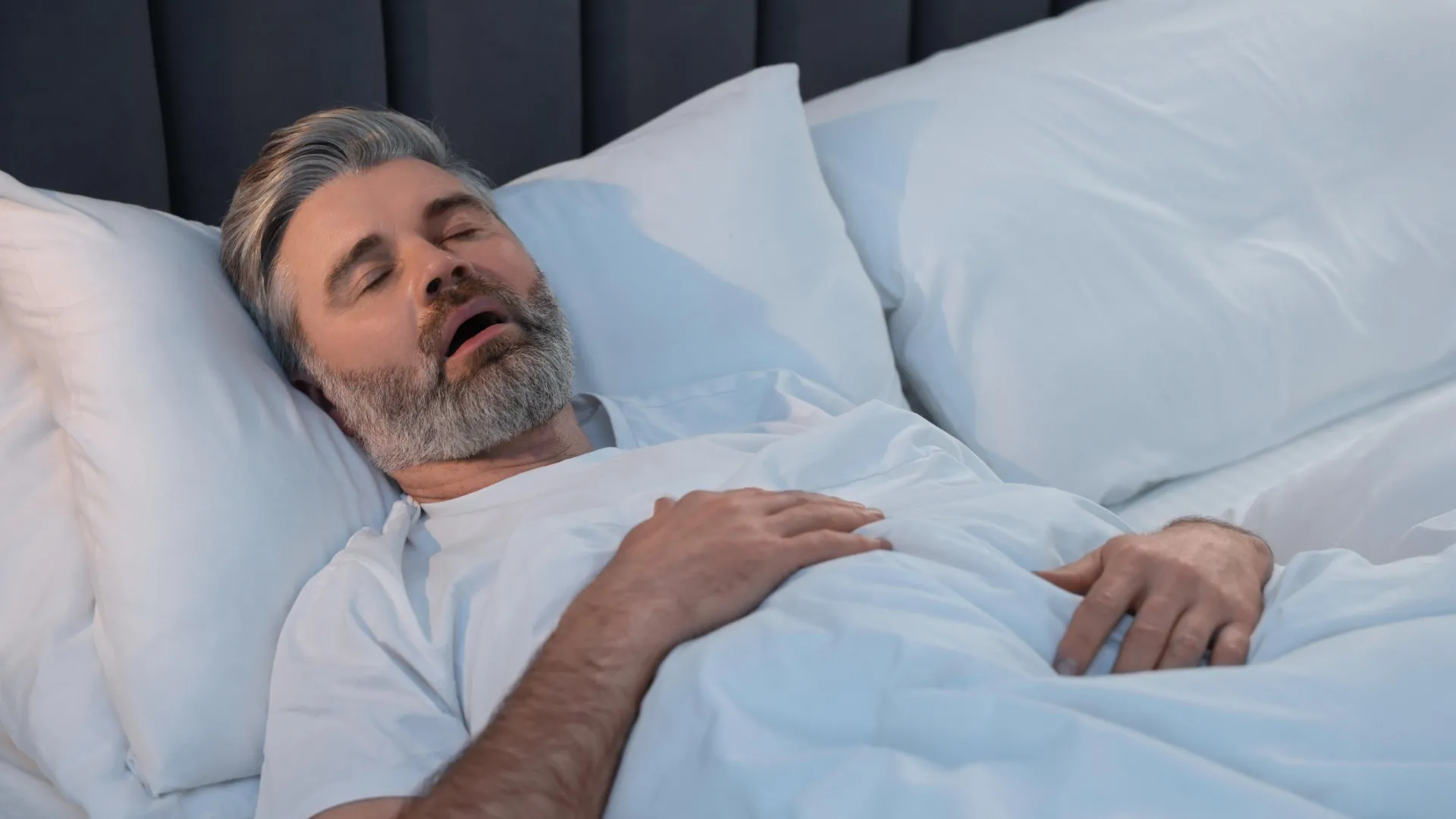
A medication called sulthiame may help people with obstructive sleep apnea breathe more easily during the night and sleep better overall. The findings come from a European clinical trial in which the University of Gothenburg played an important role. Researchers say the results raise the possibility of a drug treatment for patients who struggle to tolerate breathing masks.
The study results were published in The Lancet. A total of 298 people with moderate to severe sleep apnea participated in the trial. One quarter of the participants received a placebo, while the rest were treated with different doses of sulthiame. The study took place across four European countries and followed a double blind design, meaning neither the participants nor the researchers knew who was receiving the active drug.
Study Shows Major Reduction in Breathing Pauses
Patients who received higher doses of sulthiame experienced up to 47 percent fewer breathing interruptions during sleep compared with those given a placebo. They also showed improved oxygen levels overnight.
Sulthiame appears to work by stabilizing the body’s control of breathing and increasing respiratory drive. This helps lower the likelihood that the upper airway will collapse during sleep, which is the main cause of obstructive sleep apnea. Most side effects reported during the trial were mild and temporary.
Jan Hedner, senior professor of pulmonary medicine at the Sahlgrenska Academy, University of Gothenburg, has played a leading role in the study.
“We have been working on this treatment strategy for a long time, and the results show that sleep apnea can indeed be influenced pharmacologically. It feels like a breakthrough, and we now look forward to larger and longer studies to determine whether the effect is sustained over time and whether the treatment is safe for broader patient groups,” says Jan Hedner.
Ludger Grote and Kaj Stenlöf from the University of Gothenburg also made important contributions to the research.
Many Patients Cannot Tolerate CPAP Treatment
Obstructive sleep apnea happens when the upper airway repeatedly collapses during sleep. These episodes cause breathing to stop temporarily, reduce oxygen levels, and repeatedly disrupt sleep. Over time, untreated sleep apnea raises the risk of serious health problems, including high blood pressure, cardiovascular disease, stroke, and type 2 diabetes.
Even though sleep apnea is common, there is currently no medication that directly treats its underlying cause. The most common therapy is continuous positive airway pressure (CPAP), which uses a mask to keep the airway open during sleep. While CPAP is highly effective, many patients find it difficult to use. Up to half stop using the device within a year because the mask can feel uncomfortable or interfere with sleep.
Sulthiame is an existing medication that has previously been approved to treat a form of childhood epilepsy. Researchers are now investigating whether it could also become a drug treatment for sleep apnea.
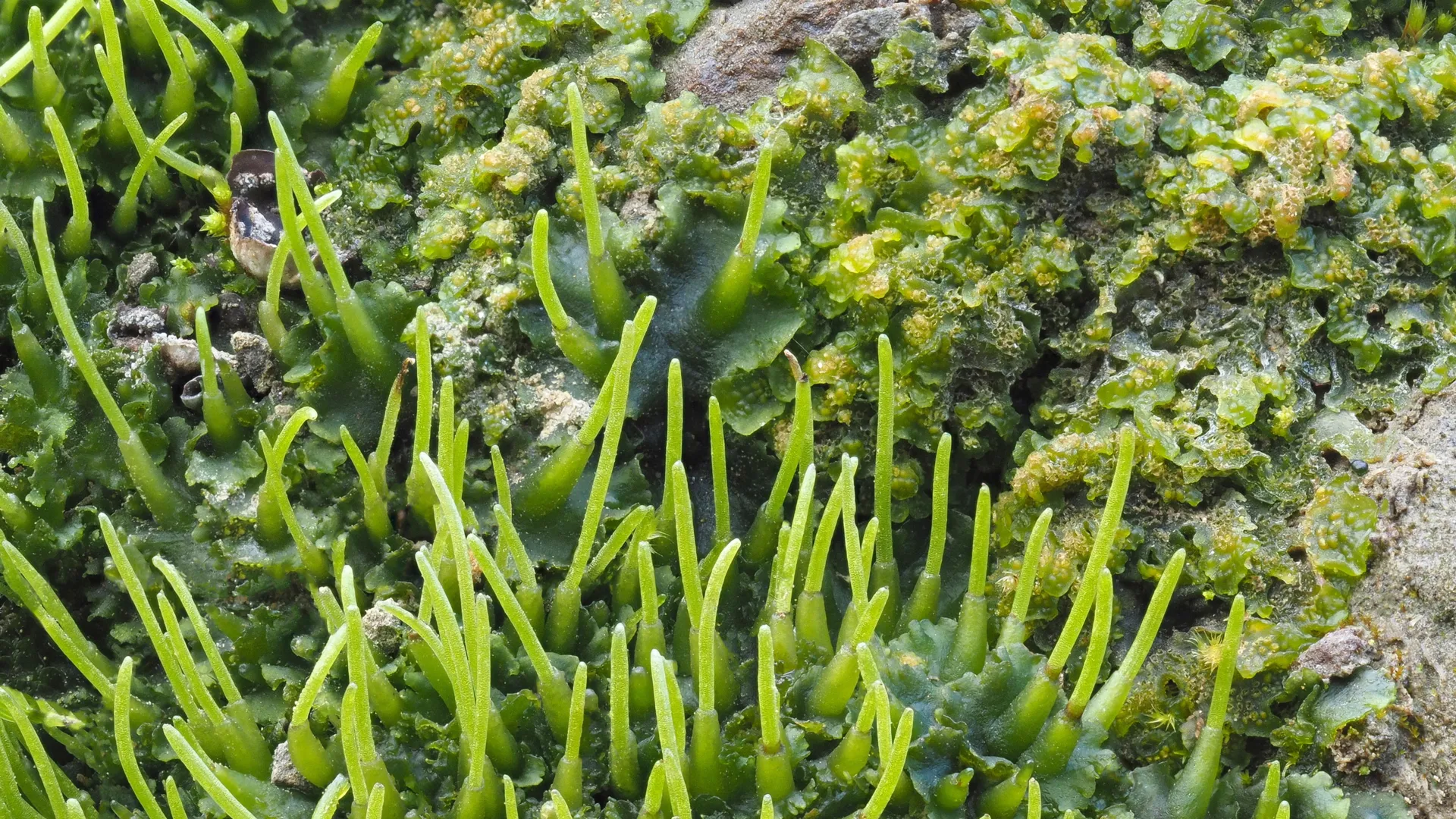
An international team of scientists has uncovered a surprising molecular strategy used by a rare group of land plants. The finding could one day help researchers redesign important crops such as wheat and rice so they convert sunlight into food far more efficiently.
The research was led by scientists at the Boyce Thompson Institute (BTI), Cornell University, and the University of Edinburgh. It addresses a major limitation in agriculture involving Rubisco, the enzyme that captures carbon dioxide from the air during photosynthesis.
Rubisco and the Limits of Photosynthesis
Rubisco plays a central role in life on Earth, but it has a major flaw. The enzyme works slowly and can easily interact with oxygen instead of carbon dioxide, which wastes energy and reduces how effectively plants grow.
“Rubisco is arguably the most important enzyme on the planet because it’s the entry point for nearly all carbon in the food we eat,” said BTI Associate Professor Fay-Wei Li, who co-led the research. “But it’s slow and easily distracted by oxygen, which wastes energy and limits how efficiently plants can grow.”
Over time, some organisms have evolved ways to overcome this inefficiency. Many types of algae, for example, place Rubisco inside small structures in their cells called pyrenoids. These microscopic compartments concentrate carbon dioxide around the enzyme, allowing it to operate more efficiently.
Researchers have long hoped to introduce this type of carbon concentrating system into food crops, which do not naturally have pyrenoids. However, transferring the complex machinery from algae into land plants has proven extremely difficult.
Hornwort Plants Reveal an Unexpected Strategy
A breakthrough came when scientists examined hornworts, the only land plants known to contain carbon concentrating compartments similar to those found in algae. Because hornworts share a closer evolutionary relationship with crop plants than algae do, researchers suspected their molecular tools might be easier to transfer.
What they discovered turned out to be very different from what they expected.
“We assumed hornworts would use something similar to what algae use — a separate protein that gathers Rubisco together,” said Tanner Robison, a graduate student working with Li and a co-first author of the paper. “Instead, we discovered they’ve modified Rubisco itself to do the job.”
The RbcS-STAR Protein and Rubisco Clustering
The key element is an unusual protein component the researchers named RbcS-STAR. Rubisco itself is built from both large and small protein pieces. In hornworts, one version of the small component includes an extra segment called the STAR region.
This additional tail behaves like molecular velcro. It causes Rubisco proteins to stick together and form clustered structures inside the cell.
To determine whether STAR could function in other plants, the researchers ran several experiments. They first introduced the RbcS-STAR component into a closely related hornwort species that does not naturally form pyrenoids. After the change, Rubisco shifted from being spread throughout the cell to forming concentrated structures resembling pyrenoids.
The scientists then tested the same idea in Arabidopsis, a plant widely used in laboratory research. Once again, Rubisco gathered into dense compartments inside the chloroplasts.
“We even tried attaching just the STAR tail to Arabidopsis’s native Rubisco, and it triggered the same clustering effect,” said Alistair McCormick, professor at the University of Edinburgh, who co-led the research. “That tells us STAR is truly the driving force. It’s a modular tool that can work across different plant systems.”
Potential Path Toward More Efficient Crops
The fact that this mechanism works across different plant species makes the discovery especially important for agriculture. It suggests that scientists may be able to trigger Rubisco clustering in crop plants simply by adding this universal velcro component.
However, researchers emphasize that more work is still needed. In addition to clustering Rubisco, plants must also efficiently deliver carbon dioxide to the enzyme.
“We have built a Rubisco house, but it won’t be an efficient house unless we update the HVAC,” said Laura Gunn, assistant professor at Cornell University, who co-led the research. The team is now working to address this challenge.
A Step Toward More Sustainable Food Production
Even so, the discovery represents an important advance in the effort to improve photosynthesis. Increasing photosynthetic efficiency even slightly could raise crop yields while reducing the environmental impact of farming. This goal is increasingly important as scientists seek ways to produce more food sustainably for a growing global population.
“This research shows that nature has already tested solutions we can learn from,” said Li. “Our job is to understand those solutions well enough to apply them where they’re needed most — in the crops that feed the world.”
The study was published in Science, with equal contributions from four early-career scientists: Tanner A. Robison, Yuwei Mao, Zhen Guo Oh, and Warren S.L. Ang. The corresponding authors were Laura H. Gunn, Alistair J. McCormick, and Fay-Wei Li.
Bank cashier Aleisha Rochester died two weeks after undergoing a routine procedure to remove an abscess.

A long running scientific dispute about the origin of the Silverpit Crater beneath the southern North Sea has now been settled.
New research shows that the structure formed when an asteroid or comet struck the region roughly 43 to 46 million years ago.
The investigation was led by Dr. Uisdean Nicholson of Heriot-Watt University in Edinburgh and supported by the Natural Environment Research Council (NERC). The team combined seismic imaging, microscopic analysis of rock fragments, and computer modeling to produce the clearest evidence yet that Silverpit is one of Earth’s rare impact craters.
The study appears in the journal Nature Communications.
A Hidden Crater Beneath the North Sea
Silverpit lies about 700 meters beneath the seabed in the North Sea, roughly 80 miles off the coast of Yorkshire.
Since geologists first identified the formation in 2002, the three kilometer wide crater and its surrounding ring of circular faults spanning about 20 km have sparked intense debate.
Early research proposed that the feature was created by a high speed asteroid impact. Supporters of that idea pointed to its round shape, central peak, and surrounding concentric faults, which are often seen in known impact craters.
Other scientists suggested different explanations. Some proposed that underground salt movement distorted the rock layers and created the structure. Others argued that volcanic activity may have caused the seabed to collapse.
In 2009, geologists even voted on the issue. According to a report in the December 2009 issue of Geoscientist magazine, most participants rejected the asteroid impact explanation at the time.
The latest findings now overturn that conclusion.
New Seismic Data Reveals Evidence of Impact
Nicholson’s team analyzed newly available seismic imaging and geological samples taken from beneath the seabed.
Dr. Uisdean Nicholson, a sedimentologist in Heriot-Watt University’s School of Energy, Geoscience, Infrastructure and Society, said: “New seismic imaging has given us an unprecedented look at the crater.
“Samples from an oil well in the area also revealed rare ‘shocked’ quartz and feldspar crystals at the same depth as the crater floor.
“We were exceptionally lucky to find these — a real ‘needle-in-a-haystack’ effort. These prove the impact crater hypothesis beyond doubt, because they have a fabric that can only be created by extreme shock pressures.”
These microscopic minerals form only under the extreme pressures generated during asteroid impacts, providing strong confirmation of the event.
Asteroid Strike Triggered a Massive Tsunami
The evidence indicates that an asteroid about 160 meters wide slammed into the seabed at a shallow angle from the west.
Dr. Nicholson said: “Our evidence shows that a 160-meter-wide asteroid hit the seabed at a low angle from the west.
“Within minutes, it created a 1.5-kilometer high curtain of rock and water that then collapsed into the sea, creating a tsunami over 100 meters high.”
The impact would have produced a violent explosion at the seafloor and sent enormous waves spreading across the region.
The “Silver Bullet” That Ended the Debate
Professor Gareth Collins of Imperial College London attended the 2009 debate about the crater’s origin and contributed the numerical simulations used in the new research.
Professor Collins said: “I always thought that the impact hypothesis was the simplest explanation and most consistent with the observations.
“It is very rewarding to have finally found the silver bullet. We can now get on with the exciting job of using the amazing new data to learn more about how impacts shape planets below the surface, which is really hard to do on other planets.”
A Rare and Well Preserved Impact Crater
Dr. Nicholson said, “Silverpit is a rare and exceptionally preserved hypervelocity impact crater.
“These are rare because the Earth is such a dynamic planet — plate tectonics and erosion destroy almost all traces of most of these events.
“Around 200 confirmed impact craters exist on land, and only about 33 have been identified beneath the ocean.
“We can use these findings to understand how asteroid impacts shaped our planet throughout history, as well as predict what could happen should we have an asteroid collision in future.”
Confirming Silverpit as an impact crater places it in the same category as well known structures such as the Chicxulub Crater in Mexico, which is linked to the dinosaur mass extinction, and the Nadir Crater off the coast of West Africa that was recently identified as another impact site.
The research was funded by the Natural Environment Research Council (NERC).
Jo-Ann Burns says her daughter Nicola wasn’t told about Sudden Unexpected Death in Epilepsy.
Ever had an exchange with someone in your circle that makes you feel like you sprouted a few more gray hairs?
You might not be totally imagining it.
A recent study published in Proceedings of the National Academy of Sciences this February found that those of us who have more people “who create problems or make life more difficult” in our lives (the researchers brand these types as “hasslers”) can be seen to have a higher age biologically than their true chronological age.
“Negative social ties, or ‘hasslers,’ are pervasive yet understudied components of social networks that may accelerate biological aging and morbidity,” the researchers wrote. “… Negative relationships are not rare within close relationships, as nearly 30% of individuals report having at least one hassler in their network.”
Advertisement

zeljkosantrac via Getty Images
So, while you may be 35 on paper, the number of “hasslers” you encounter and negotiate with each day could have your body feeling mid-40s real quick — with researchers finding that an increased number of these “negative social ties” leads to “accelerated biological aging and a broad range of health outcomes” that can range from increased inflammation to having two or more chronic health conditions.
Not every “hassler” is created equal, however. Researchers noted that hasslers who are both kin and non-kin tend to show “detrimental associations,” while hasslers who are spouses do not. Hasslers who are your kin were associated with more intense age acceleration (1.1 year increase).
Advertisement
Meanwhile, the number of these negative social ties you have will also be a factor in how badly you’re hit: “Having more hasslers is associated with accelerated biological aging in both rate and cumulative burden: Each additional hassler corresponds to approximately 1.5% faster pace of aging and roughly 9 [months] older biological age.”
The researchers note that their findings reinforce what we already know about allostatic load, or the cumulative “wear and tear” people experience from navigating (and trying to adapt to) chronic stress and major life events.
The more “hasslers’ and stressful dynamics you have in your day-to-day life — particularly ones you can’t always walk away from — the more your stress-sensitive systems can get activated. That can lead to “systemic inflammation, epigenetic dysregulation and metabolic strain.”
Advertisement
The researchers note that exposure to these “hasslers” follows patterns that might be familiar if you’re aware of conditions that typically predict health vulnerabilities: “women, daily smokers, people in poorer health, and those with adverse childhood experiences [are] more likely to report having hasslers in their networks.” These are also demographics that are likely already facing their own allostatic load challenges.
The researchers further address how social relationships, while more typically discussed as “sources of support that promote health and well-being” in research like this, can also function as “chronic stressors” — and chronic stress is already considered “a well-established driver of biological aging.”
“A growing body of research suggests that negative ties — relationships characterized by hostility, strain, or excessive burden, making one’s life difficult— may be prevalent and have lasting health consequences,” per the researchers.
Advertisement
So while people like President Donald Trump might chronically stress you out with every headline that darkens your doorstep, he wouldn’t count as a hassler in your life. That distinction is reserved for more interpersonal relationships.
Researchers note that these negative social ties are also more likely to show up in dynamics that are less voluntary, harder to avoid or harder to step away from: “Ties that involve obligation, shared space, or interdependence (e.g., parents, children, coworkers, roommates) appear more likely to produce hasslers, whereas voluntary and self-selected ties (e.g., friends, church members, healthcare providers) tend to generate fewer,” according to the researchers.
“This dual nature of social ties — both protective and harmful — raises important questions about their role in biological aging and the pathogenesis of common morbidities,” per the study. “However, existing research relies on methods that capture only the positive dimensions of social relationships (e.g., social support), often overlooking negative or strained ties. As a result, there is comparatively little empirical insight into how the dark side of networks contributes to biological aging.”
Advertisement
Donna Ockenden is appointed to lead the maternity services inquiry at Leeds hospitals.
From the passeggiata to the art of aperitivo, many aspects of Italian culture capture imaginations around the world. One particularly inspiring figure is the “sciura Milanese.”
The archetype is so recognizable that there’s even an Instagram account dedicated to documenting these iconic women of Milan.
Advertisement
“‘Sciura’ is a word from the Milanese dialect that simply means ‘lady,’” Elisa Torello, founder of Elisa’s Italian School, told HuffPost. “It is pronounced ‘shoo-ra,’ with a rounded ‘u’ sound typical of the Milanese dialect. Traditionally, it was a respectful way to address a married or mature woman, especially someone of a certain social standing.”
People from Milan who speak the local dialect might say “sciura” to mean “lady” or the title of “Mrs.”/“Ms.” before a last name. But it also has another specific meaning.
“Today the regional word ‘sciura,’ often paired with the adjective ‘Milanese,’ is used in informal Italian as well, fueled by social media trends,” said Lucrezia Oddone of Learn Italian with Lucrezia. She explained that a “sciura Milanese” is an older woman, “usually aged 60+ ― but not exclusively, as this trend also embraces women in their 50s who live in the center of Milan ― who belongs to the upper middle class and has a very classic look.”
Advertisement
The team behind the blog Milanesi a Milano ― Ilaria Polo, Caterina Pacianti and Laura Stricchiola ― say these well-to-do Milanese women share a set of recognizable traits.
“The ‘sciura Milanese’ is a very specific cultural figure,” they explained in an email. “She is elegant, well-groomed and unmistakably Milanese in her taste. She often wears timeless luxury pieces ― structured handbags, important jewelry, tailored coats ― and moves through the city with quiet confidence. She is a regular at historic cafés in the city center, attends cultural events and embodies a certain idea of understated but recognizable sophistication.”

Getty Images/305pics/NurPhoto/Valentina Frugiuele
Advertisement
This figure represents a visual identity, taste and lifestyle deeply tied to the city of Milan.
“The sciura Milanese is an institution,” said M. Grazia Montagnari, founder of Italian with Grace. “Picture her like this: perfectly coiffed hair (usually an impeccable ash blonde), a tailored coat, a silk scarf knotted with a nonchalance that actually took hours of practice and the inevitable luxury handbag perched on her forearm.”
She believes the sciura perfectly embodies the concept of “quiet luxury.” Rather than trying to keep up with rapidly changing contemporary trends, she owns her personal style and pays little attention to what others are doing. The sciura knows who she is.
“She is the personification of ‘old money,’” echoed Andrea Novello, the Milan tours manager for Walks of Italy. “Her ‘uniform’ is iconic ― a perfect blonde bob, a Max Mara camel coat, an Hermès foulard and plenty of gold jewelry. She is the undisputed queen of the borghesia ― the bourgeoisie.”
Advertisement
There’s another accessory that sometimes completes the look as well. “She may even be accompanied by a small dog,” said Martina Carucci from the language learning app Preply.
In many ways, the sciura functions as a visual symbol of continuity, a reminder of tradition in a city that is constantly modernizing and evolving.
“The word ‘sciura’ has long circulated in everyday Milanese speech as the local equivalent of ‘signora,‘” Torello said. “In many cases, a ‘sciura’ would have been the wife of a ‘sciur,’ a gentleman, often associated with the city’s professional or industrial class. In older generations, it functioned simply as a neutral or polite form of address.”
Advertisement
Although the word has been around for centuries, the image associated with the sciura has evolved.
“The more recognizable figure of the ‘sciura Milanese’ took shape in the decades following World War II, when Milan experienced rapid economic growth and became a center of finance, publishing and fashion,” Torello said. “The women who lived through that transformation, rooted in tradition but surrounded by rising luxury culture, gradually came to embody a specific type of composed, understated elegance.”
Gianluca Pedrotti, a principal learning content strategist at the language app Babbel, described the post-World War II sciura as a recognizable archetype ― “an elegant, impeccably groomed, often affluent older woman tied to the city’s bourgeois or old-money milieu.”
Many credit Milan-based designer Elvira Leonardi Bouyeure ― known as Biki ― with shaping the polished 1950s aesthetic associated with the sciura, an image that continued to influence Milanese style for decades.
Advertisement

Mondadori Portfolio via Getty Images
“The 1980s were the ‘Golden Era’ for the sciura Milanese,” Novello said. “This was the time of ‘Milano da Bere’ when the city was the jet-setting playground of Europe. The sciura was a fixture in the front row at Armani or Versace, hopping from private gallery openings to weekends in St. Moritz. She represents that specific moment in history when Milanese industrial wealth met global fashion glamor.”
In the 21st century, the sciura experienced a pop-culture explosion thanks to social media. The Instagram account @sciuraglam (formerly @sciuragram) was founded in 2016 and now boasts more than 420,000 followers.
Advertisement
“Since its origin, the term’s popularity has soared,” Carucci said. “Originally, the term served to represent, and slightly mock, a specific stereotype within Milan. Throughout the years, it has evolved from one of mockery to become a phrase which represents a newfound respect and admiration for a sciura Milanese.”
Today, the term “sciura” operates on multiple levels.
“In formal or dialect contexts, especially among older speakers, it can still simply mean ‘lady,’” Torello said. “In informal speech, particularly among younger generations who may not actively use dialect, it refers to a recognizable figure ― the elegant Milanese woman of a certain age.”
“Polished hair, fur coats, designer handbags, and a fiercely local pride all became part of the imagery,” Pedrotti said. “The term evolved from simple address to cultural shorthand.”
Advertisement
Today, the term “sciura” or “sciura Milanese” evokes a range of opinions, but perhaps the most common response is admiration.
“They represent the idea of aging with extreme grace and dignity,” Montagnari noted. “Who wouldn’t want to reach 80 with that kind of poise?”
She emphasized that being called a “sciura” is a compliment to your sophistication and elegance. Novello added that many view these figures as style icons who invest in high-quality, enduring pieces.
Advertisement
“They are the ‘cool nonnas’ who actually lived the ’80s jet-set life,” he said.

Getty Images/Alena Zakirova/WWD
The “sciura” is not purely aspirational, however.
“What makes the term especially interesting linguistically is how its meaning shifts depending on tone and context,” Pedrotti said. “While it can signal respect or admiration, it can also be used ironically or pejoratively. In the expression ‘Ué, sciura!’ ― with Ué functioning as a greeting — it can take on a mocking tone, closer to calling someone an entitled or stereotypical older woman.”
He added that “sciura” may evoke a sense of social rigidity or conservatism as well. Some might use the term to poke fun at snobby upper-class people or those who are overly concerned with proper etiquette.
Advertisement
“There can be a tongue-in-cheek undertone regarding her perceived ‘snob appeal’ or attachment to social rituals,” noted the Milanesi a Milano team.
Thus, the term can carry a slightly negative connotation around materialism in certain contexts.
“The word ‘sciura’ is mainly registered in the north of Italy, but it would not be unusual to hear it in other parts of the country to describe a certain type of outdated clothing or to comment on an outfit in a joking way,” Oddone said. “‘Fa un po’ sciura!’ ― in English, ‘it’s giving old lady vibes’ ― can be interpreted positively or negatively depending on tone and context.”
One’s perception of the “sciura” might also depend on generation.
“Older generations often use the word with a tone of affectionate irony, to describe a woman of a certain age who still cares deeply about her appearance and continues to wear her elegant, often luxurious wardrobe with confidence,” Torello said.
Advertisement
For many younger people, however, the sciura represents the idea of dressing for yourself, not for others’ approval, and prioritizing authenticity over performance.
“When used thoughtfully, ‘sciura’ celebrates individuality, consistency of taste and pride in one’s roots,” said the Milanesi a Milano team. “While there is a risk of caricature, many creatives and fashion observers are reclaiming the term to highlight authenticity and the idea that elegance is built over time. In that sense, the sciura feels surprisingly contemporary.”
The popularity of the term today also allows the broader world to get a taste of something distinctly Milanese.
Advertisement
“I think it’s a fun cultural stereotype that captures a Milanese woman’s personality,” said Italian teacher Margherita Berti. “Like many stereotypes, it exaggerates reality but reflects recognizable habits and style. When used playfully, it celebrates Milan’s character and humor.”
Thus, Milan’s identity and history don’t just live on in museums and monuments but also in this confident, selective, stylish and elegant way of dressing, speaking and living in the city.
“In a time when cities risk becoming interchangeable and desires increasingly shaped by global trends, the figure of the ‘sciura’ can also be read as a quiet form of resistance,” Torello said. “Her taste was not built by algorithms or seasonal drops, but through lived experience. In that sense, she stands against cultural homogenization.”
Advertisement

Getty Images/Melodie Jeng/WWD/Edward Berthelot
If you want to bring a bit of sciura magic into your life, there are many ways to find inspiration ― both online and in Milan itself.
“There are Instagram pages like @sciuraglam where you can see exactly who a sciura is and how they spend their time,” Novello said, adding that they’re ”mostly shopping in ‘Montenapo’ ― Via Monte Napoleone, Milan’s most famous luxury shopping street ― or having long breakfasts in the most glamorous pastry shops, such as Marchesi.”
Advertisement
Milan-based photographer Anastasia Fedoseeva echoed that there are specific places in Milan where you’re more likely to spot sciure (the plural for sciura) in person.
“I personally see them often around Piazza Risorgimento, and also at classic spots like a restaurant Sant Ambroeus or Pasticceria Cova on Via Monte Napoleone,” she said. “However, they are not usually concentrated in the most touristy areas ― they tend to stay within the neighborhoods where they have historically lived.”
For those looking for an authentic taste of the sciura lifestyle, Fedoseeva also recommended stepping off the main tourist routes of Milan and exploring the elegant residential districts like Corso Vercelli.
Advertisement
“One of my favorite areas is between Porta Venezia, Cinque Giornate and Porta Romana,” she said. “There you will not only see beautiful façades and entrance halls, but also the real Milanese lifestyle in motion.”
She also suggested checking out local neighborhood markets, for instance around Piazza San Marco, for another chance to “observe sciure in their natural habitat” (and get some shopping done yourself).
But how can you be sure you’ve got the right image in mind?
“Next time you’re in Milan, sit at a café near Sant’Ambrogio and just watch,” advised Montagnari. “When you see a lady with a perfectly groomed dog and a beige trench coat that looks like it was painted on her, you’ll know exactly who you’re looking at. What was once a local dialect word has become a recognized aesthetic code worldwide: the timeless style of the Milanese bourgeoisie.”
Advertisement

Bloomberg via Getty Images
“You can be a ‘sciura at heart’ even in your twenties if you value quality over quantity and prefer an afternoon tea to a loud club,” Montagnari said. “It has become a philosophy of life ― taking care of oneself and the details.”
Just as you can embrace your inner sciura at any age, you also don’t have to be part of the Milanese bourgeoisie ― or even especially wealthy ― to incorporate this timeless aesthetic into your everyday style.
Advertisement
“To emulate her look, one must search for clothes in second-hand and vintage shops, re-evaluating what to wear in a more sustainable way,” Oddone said.
In today’s fast-paced world, getting in touch with your inner sciura means slowing down to put care into aesthetics. The sciura look is all about finding different ways to style classic pieces that can endure the test of time. Good tailoring and impeccable grooming are also part of the picture.
“Sometimes you just want that moment ― to go to a beautiful café, to do your hair, to dress up,” Fedoseeva said. “In that sense, I find sciure very motivating! And it’s also simply very pleasant visually ― elegant women walking through the city arm-in-arm with equally well-dressed husbands, which we should not forget, as the husbands often have great classic style too. Their outfits are usually very matchy in textures and colors.”
Advertisement
Ultimately, personal expression must prevail in the sciura aesthetic. Polish your look with some thoughtful accessories ― maybe a nice pair of sunglasses and/or a little silk scarf around your neck or the handles of your bag. Don’t be afraid to experiment with pops of color.
“I think it’s fun and view it as a reminder not to get lost in the whirlwind of things in terms of fashion and cultural expression, to remain true to oneself even when change is constant and would like to lead us towards a world in which we should dress the same, like and do the same things,” Oddone said.
This strong sense of identity is part of what makes the sciura so compelling. And there’s an underlying message: You don’t have to conform to expectations or abandon elegance as you age.
Advertisement
“In a world shaped by overconsumption and fast fashion, the renewed interest in the ‘sciura’ feels almost countercultural,” Torello said. “She represents longevity and quality in contrast to disposable trends. Her wardrobe was built over time, with patience, investment, and personal history. Each piece carries memory, and her style tells the story of her life.”
