Manjit Sangha, from Penn, near Wolverhampton, says her life drastically change in one weekend.


Manjit Sangha, from Penn, near Wolverhampton, says her life drastically change in one weekend.
The household cat could hold the key to understanding certain types of cancer, such as breast cancer.
A Stanford University team have tested their nasal spray vaccine in animals but still need to do human clinical trials.
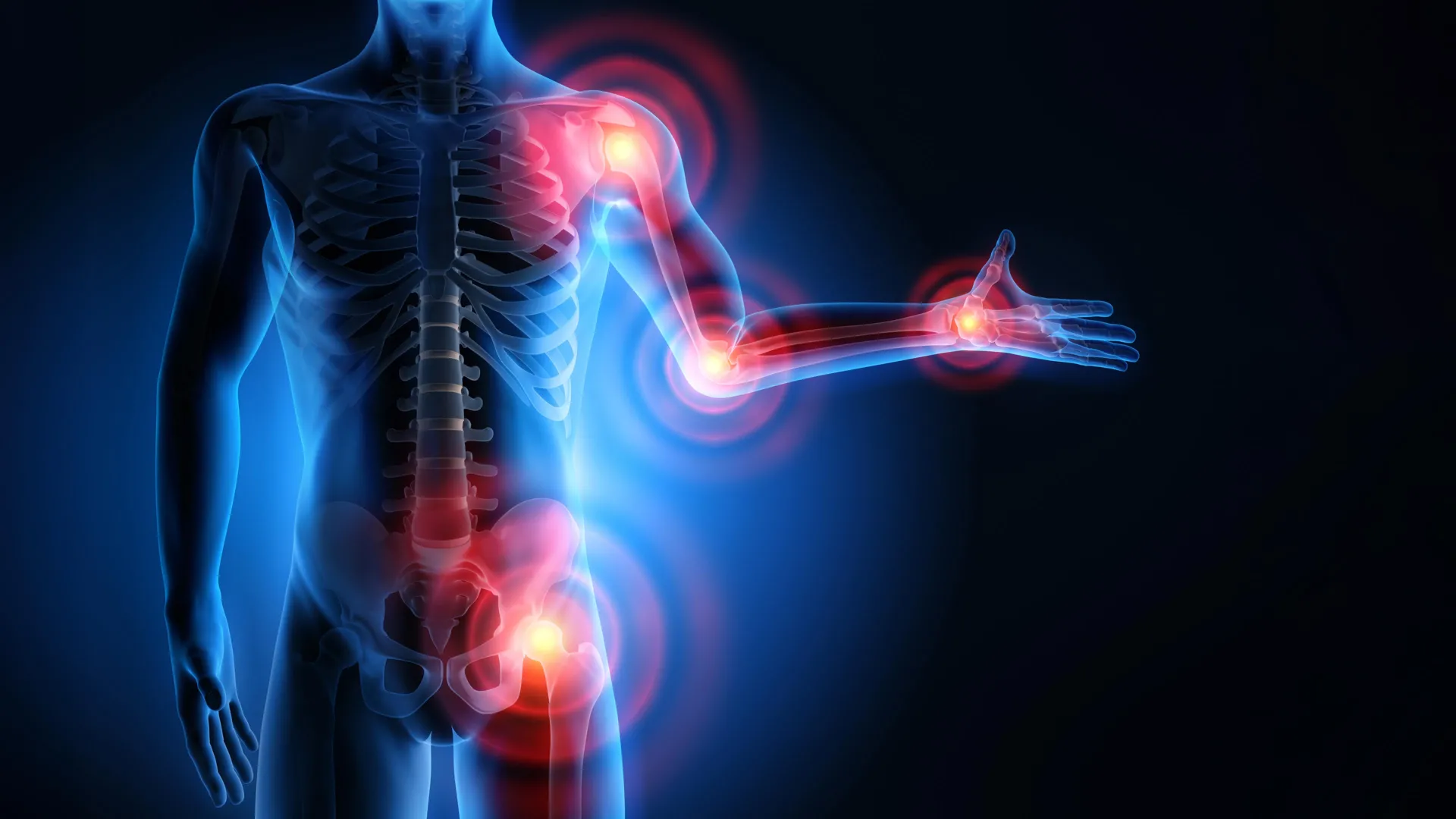
Researchers at University College London have identified a biological process that helps the body shut down inflammation once it is no longer needed. The discovery could pave the way for new treatments for chronic diseases that affect millions of people around the world.
Inflammation is an essential defense mechanism that protects us from infection and injury. However, if it continues unchecked, it can contribute to serious conditions including arthritis, heart disease, and diabetes. Until now, scientists did not clearly understand how the body transitions from an active immune attack to a healing phase.
Fat Derived Molecules That Calm the Immune System
The study, published in Nature Communications, found that small fat-based molecules known as epoxy-oxylipins act as natural regulators of the immune response. These molecules help prevent the buildup of specific immune cells called intermediate monocytes*, which are associated with chronic inflammation — linked to tissue damage, illness and disease progression.
To explore this process, researchers conducted a carefully controlled experiment in healthy volunteers. Participants received a small injection of UV-killed E. coli bacteria in the forearm. This triggered a temporary inflammatory response — pain, redness, heat and swelling — similar to what occurs after infection or injury.
Volunteers were divided into two groups: prophylactic arm and therapeutic arm.
At different stages, participants were given a drug called GSK2256294. This medication blocks an enzyme known as soluble epoxide hydrolase (sEH), which normally breaks down epoxy-oxylipins.
In the prophylactic arm, 24 volunteers participated — 12 received the drug and 12 received placebo (placebo). They were treated two hours before inflammation began to test whether boosting epoxy-oxylipins early could prevent harmful immune changes.
In the therapeutic arm, another 24 volunteers — 12 treated and 12 untreated (placebo) — received the drug four hours after inflammation had started. This approach reflected how treatment would occur in real world settings once symptoms appear.
Boosting Protective Lipids Reduced Harmful Immune Cells
In both groups, blocking sEH increased levels of epoxy-oxylipins. Participants who received the drug experienced faster pain resolution and had significantly lower levels of intermediate monocytes in both blood and tissue — the immune cells linked to chronic inflammation and disease. Notably, the medication did not meaningfully change visible symptoms such as redness or swelling.
Further investigation showed that one specific epoxy-oxylipin, 12,13-EpOME, works by suppressing a protein signaling pathway known as p38 MAPK, which drives monocyte transformation. Laboratory experiments and additional testing in volunteers who received a p38 blocking drug confirmed this mechanism.
First author Dr. Olivia Bracken (UCL Department of Ageing, Rheumatology and Regenerative Medicine) said: “Our findings reveal a natural pathway that limits harmful immune cell expansion and helps calm inflammation more quickly.
“Targeting this mechanism could lead to safer treatments that restore immune balance without suppressing overall immunity.
“With chronic inflammation ranked as a major global health threat, this discovery opens a promising avenue for new therapies.”
Corresponding author Professor Derek Gilroy (UCL Division of Medicine) said: “This is the first study to map epoxy-oxylipin activity in humans during inflammation.
“By boosting these protective fat molecules, we could design safer treatments for diseases driven by chronic inflammation.”
He added: “This was an entirely human-based study with direct relevance to autoimmune diseases, as we used a drug already suitable for human use — one that could be repurposed to treat flares in chronic inflammatory conditions, an area currently bereft of effective therapies.”
Scientists chose to investigate epoxy-oxylipins because previous animal research suggested they can reduce inflammation and pain. However, their role in human biology had not been clearly defined. Unlike well known inflammatory signals such as histamine and cytokines, epoxy-oxylipins belong to a lesser studied pathway that researchers believed might help naturally quiet the immune system.
Next Steps for Arthritis and Heart Disease Research
The findings open the possibility of clinical trials to test sEH inhibitors as treatments for diseases such as rheumatoid arthritis and cardiovascular disease.
Dr. Bracken said: “For instance, rheumatoid arthritis is a condition in which the immune system attacks the cells that line your joints. sEH inhibitors could be trialled alongside existing medications to investigate if they can help prevent or slow down joint damage incurred by the condition.”
Dr. Caroline Aylott, Head of Research Delivery at Arthritis UK, said: “The pain of arthritis can affect how we move, think, sleep and feel, along with our ability to spend time with loved ones. Pain is incredibly complex and is affected by many different factors. We also know that everybody’s pain is different.
“That is why it is important that we invest in research like this, that helps us understand what causes and influences people’s experience of pain.
“We are excited to see the results of this study which has found a natural process that could stop inflammation and pain. We hope in the future that this will lead to new pain management options for people with arthritis.”
The study was funded by Arthritis UK and included researchers from UCL, King’s College London, University of Oxford, Queen Mary University of London, and the National Institute of Environmental Health Sciences, USA.
Notes
*Intermediate monocytes are white blood cells that help fight infection and repair tissue. In short bursts, they help coordinate the immune response and support recovery, but if they persist or grow in excess, they keep the immune system switched on, leading to chronic inflammation.

Scientists have uncovered a powerful source of natural disease resistance in a wild banana, offering new hope for protecting the global banana supply from a dangerous fungal threat.
Researchers at The University of Queensland, led by Dr. Andrew Chen and Professor Elizabeth Aitken, identified the specific genomic region responsible for resistance to Fusarium wilt Sub Tropical Race 4 (STR4), a destructive strain of Panama disease.
Fusarium Wilt and the Threat to Cavendish Bananas
“Fusarium wilt — also known as Panama disease — is a destructive soil-borne disease which impacts farmed Cavendish bananas worldwide through its virulent Race 4 strains,” Dr. Chen said.
This fungus attacks the plant through the soil, causing it to wilt and die. Even worse, it leaves behind long-lasting contamination in the soil, putting future crops at risk.
“Identifying and deploying natural resistance from wild bananas is a long-term and sustainable solution to this pathogen that wilts and kills the host plant leaving residue in the soil to infect future crops,” Dr. Chen explained.
Mapping Genetic Resistance in Wild Bananas
The team traced the source of resistance to a wild diploid banana known as Calcutta 4. To pinpoint the protective trait, researchers crossed Calcutta 4 with susceptible bananas from another diploid subspecies.
“We’ve located the source of STR4 resistance in Calcutta 4 which is a highly fertile wild diploid banana by crossing it with susceptible bananas from a different subspecies of the diploid banana group,” Dr. Chen said.
After growing the new plants, the scientists exposed them to STR4 and compared the DNA of plants that survived with those that became infected.
“After exposing the new progeny plants to STR4, we examined and compared the DNA of the ones which succumbed to the pathogen and those that didn’t.
“We mapped STR4 resistance to chromosome 5 in Calcutta 4.
“This is a very significant finding; it is the first genetic dissection of Race 4 resistance from this wild subspecies.”
A Five-Year Effort Using Advanced Genetics
The project, conducted through the School of Agriculture and Food Sustainability, required five years of work. Each generation of banana plants had to grow for at least 12 months before researchers could test them for disease resistance and continue breeding once they flowered.
To make the discovery, the team combined forward genetics (population development and disease screening), genome sequencing and bulked segregant analysis.
Toward Fusarium-Resistant Commercial Bananas
Dr. Chen said the findings will support the development of commercial banana varieties that can withstand Fusarium wilt.
“While Calcutta 4 provides crucial genetic resistance, it isn’t suitable as a commercial cultivar because it doesn’t produce fruit which are good to eat,” he said.
The next phase of research focuses on turning this genetic insight into practical breeding tools.
“The next step is to develop molecular markers to track the resistance trait efficiently so plant breeders can screen seedlings early and accurately before any disease symptoms appear.
“This will speed up selection, reduce costs and hopefully ultimately lead to a banana that is good to eat, easy to farm and naturally protected from Fusarium wilt through its genetics.”
STR4 affects banana crops in subtropical regions worldwide. It is a genetic variant of Tropical Race 4 (TR4) which is found in Australia.
The study was funded by Hort Innovation through banana industry levy funds and contributions from the Australian Government. The results are expected to guide future investments aimed at turning these genetic discoveries into practical tools for banana breeding and wider industry adoption.
The findings are published in Horticulture Research.
Ion channels are tiny openings that control the movement of charged particles in living organisms. These narrow pathways are essential for many biological functions. In some cases, their tightest sections measure only a few angstroms across, roughly the width of individual atoms. Reproducing structures this small with precision and consistency remains one of the toughest challenges in nanotechnology.
Researchers at The University of Osaka have now taken a major step toward that goal. Writing in Nature Communications, the team describes how they used a miniature electrochemical reactor to produce pores that approach subnanometer dimensions.
Mimicking Nature’s Electrical Gateways
Inside cells, ions travel through specialized protein channels embedded in the cell membrane. This ion movement generates electrical signals, including the nerve impulses responsible for muscle contraction. The channels are built from proteins and contain extremely narrow regions at the angstrom scale. When exposed to external signals, these proteins change shape, which allows the channels to open or close.
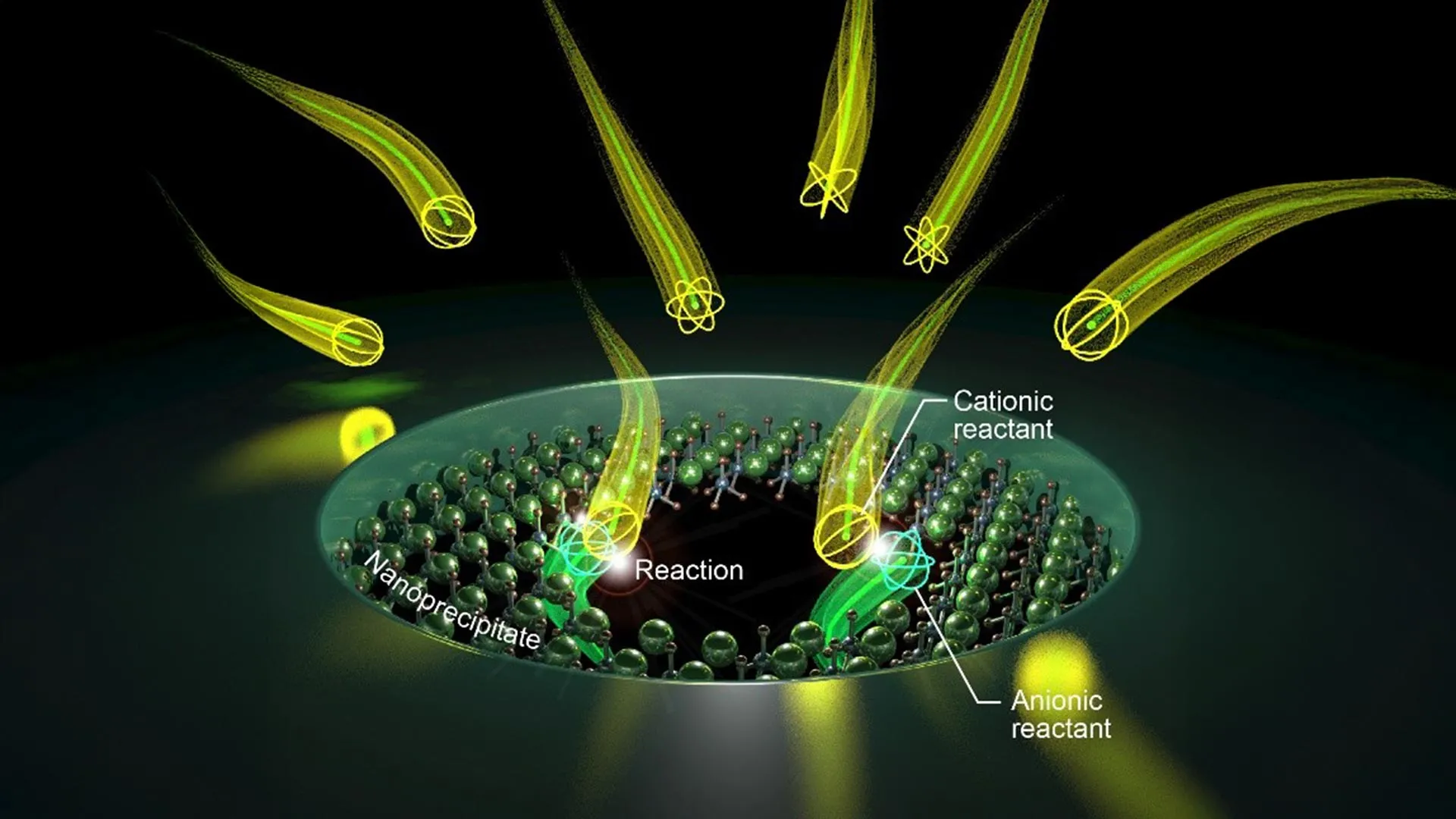
Drawing inspiration from this natural system, the researchers designed a solid-state version capable of forming pores nearly as small as biological ion channels. They began by creating a nanopore in a silicon nitride membrane. That nanopore then acted as a tiny reaction chamber for building even smaller pores within it.
When the team applied a negative voltage across the membrane, it triggered a chemical reaction inside the nanopore. This reaction produced a solid precipitate that gradually expanded until it completely blocked the opening. Reversing the voltage caused the precipitate to dissolve, restoring conductive pathways through the pore.
“We were able to repeat this opening and closing process hundreds of times over several hours,” explains lead author Makusu Tsutsui. “This demonstrates that the reaction scheme is robust and controllable.”
Electrical Spikes Reveal Subnanometer Pores
To better understand what was happening inside the membrane, the researchers monitored the ion current passing through it. They observed sharp spikes in the current, similar to patterns seen in biological ion channels. Further analysis indicated that these signals were most consistent with the formation of numerous subnanometer pores within the original nanopore.
The team also discovered that they could fine-tune how the pores behaved. By adjusting the chemical composition and pH of the reactant solutions, they altered both the size and properties of the ultrasmall openings.
“We were able to vary the behavior and effective size of the ultrasmall pores by changing the composition and pH of the reactant solutions,” reports Tomoji Kawai, senior author. “This enabled selective transport of ions of different effective sizes through the membrane by tuning the ultrasmall pore sizes.”
Applications in DNA Sequencing and Neuromorphic Computing
This chemically driven approach makes it possible to generate multiple ultrasmall pores inside a single nanopore. The technique offers a new way to study how ions and fluids move through extremely confined spaces at scales comparable to living systems.
Beyond fundamental research, the technology could support emerging fields such as single-molecule sensing (e.g., using nanopores to sequence DNA), neuromorphic computing (using electrical spikes to mimic the behavior of biological neurons), and nanoreactors (creating unique reaction conditions through confinement).
Around 1,000 operations a week rely on the product as patients are warned delays are inevitable.
Removing unwanted body hair is a thankless, repetitive chore that seems to just. keep. happening. While laser removal can be a more permanent option, treatments are pricey. It can also be really uncomfortable, with one Reddit user deeming the process “the single most painful thing I’ve ever endured.”
If you’ve been looking for a long-lasting way to deal with unwanted hair, but don’t want to break the bank, writhe in pain or even leave your house — we spotted a highly-rated, cooling hair-removal tool from Ubroo, starting at $63, depending on the color. (Blue gives you the best deal.) According to our price trackers, that’s over 40% off. Reviewers call it “salon quality permanent hair removal at a fraction of the price,” offers results with “no pain” — to you or your wallet.
Advertisement
Advertisement
As WebMD describes, because IPL is less intense than laser treatment, it can require more sessions, but often demands less (or no) recovery period. Reviewers agree with this, noting the sensation from this device is “nothing” compared to ”the hours I’ve wasted from plucking and waxing.”
“Even from using it everyday, there is no skin irritation or lingering redness or adverse effects,” Megan wrote.
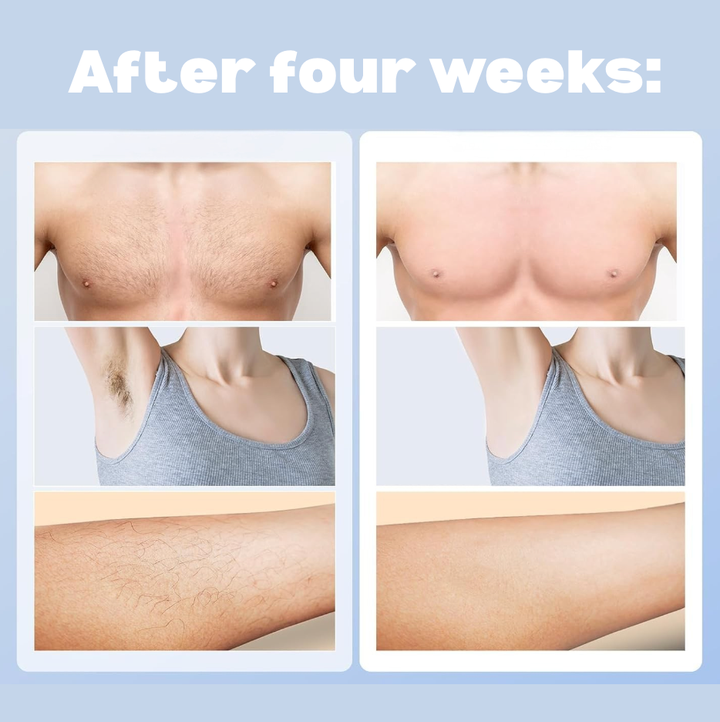
According to the brand, the device works by emitting a range of IPL wavelengths into your hair follicles, disrupting hair growth and hindering regrowth. Reviewers say the result isn’t just removing existing unwanted hair, but slowing, or even stopping new hair from popping up.
Advertisement
One calls the regrowth “so fine and sparse and not itchy at all,” noting that after three months of consistent use, “very very few fine soft hairs grow back.” While others call the treatment “permanent,” with their hair never growing back, leaving them to enjoy “smoother, softer skin without the hassle of constant shaving or painful waxing sessions.”
“I was a bit skeptical at first about how comfortable it would be, but it really does make a difference,” one wrote. “The cooling sensation helps soothe the skin, making the hair removal process nearly painless. I was worried it might sting or be uncomfortable, but it’s surprisingly gentle!”
Advertisement
The device has nine preset levels for different skin and hair types, as well as a “manual” mode for sensitive and high-precision areas. The brand recommends starting at a lower intensity, and gradually working for your way up, suggesting manual mode for areas like your underarms or bikini line and the auto levels for bigger, less sensitive spaces like your legs, arms or back. It also suggests shaving any visible hairs before using the device and rocking the safety googles included with purchase. You’ll likely need to use it two to three times a week for six to eight consecutive weeks to see “significant hair reduction,” the brand says.
The device needs to be plugged in to work, and the brand recommends holding it perpendicular (at a 90-degree angle) to your skin. With an ergonomic grip and rounded curves and two smartly placed buttons, reviewers call it “comfortable and easy to use at home.”
Users love this device for making them feel more confident and in control of their grooming, regarding all sorts of unwanted hair. One user jokes, “my perimenopause grannie hairs are going away,” while another says the device helps them manage their “65 year old chinny-chin-chin hairs.” Eugene Hoeppner shared that the tool helped solve the “constant struggle” of removing unwanted menopausal facial hair, while others use it for taming their bikini line, replacing shaving their legs or just to have control when they want it, instead of going to the salon for “expensive and painful waxes.”
“For the cost of 1 professional [laser hair removal] session, I have all the sessions I could ever need in the palm of my hand,” Eugene Hoeppner said.
[NOTE: As with all skin care products and devices, please consult with your dermatologists to determine whether or not this device is best for your skin and its condition.]
Advertisement
“I’ve had laser hair removal in a professional office, I’ve tweezed, waxed, exfoliatd, and threaded. None of the at home treatments lasted more than a few days. I’m menopausal so, facial hair was a constant struggle. That is until I bought this. The results last longer, and thanks to the cooling feature, it isn’t painful. The best part is I don’t have to leave home. For the cost of 1 professional LHR session, I have all the sessions I could ever need in the palm of my hand! I had to search YouTube for instructions. The ones included weren’t clear. However there’s a plethora of videos available. And once you get started, its straight forward. The kit includes protective Eyewear(very important) power cable, device, and a disposable razor. Its great quality! Ive been using it for a few moths now and haven’t had any issues. This is well worth the cost in my opinion and I would recommend this device to anyone struggling with unwanted hair.” — Eugene Hoeppner
“THIS right here is a game changer!! No more heading to the salon to get expensive and painful waxes. This is such a great find. There are many of these on the market and I’ve actually tried a different product before and it didn’t work… THIS one is actually helping me. My suggestion is to trim your hairs down low and then start using this. It helps with slowing down growth which is the best part! Easy to use and it’s attractive enough to leave out on the counter! Really glad I decided to give this a chance!!” — Aaron Hilgen
“I’ve tried various hair removal methods over the years, but this laser hair removal device is by far the most convenient and effective. Right from the first use, I was impressed by how easy it is to operate—no confusing setup or complicated instructions. Just plug it in, adjust the intensity, and you’re good to go. One of the biggest advantages is the ice-cooling feature, which makes the process virtually painless. I have sensitive skin and was worried about irritation, but this device has been gentle while still being effective. After just a few uses, I’ve already noticed a reduction in hair growth, and my skin feels much smoother. I also love how compact and lightweight it is—perfect for storing or even taking on trips. It’s a fantastic alternative to expensive salon treatments, saving both time and money. If you’re looking for an easy, pain-free, and efficient way to remove unwanted hair, this device is definitely worth considering!” — Krunal Patel
The Real Deal: We use deal trackers and commerce experience to sift through “fake” hike-and-drop deals and other deceptive sales tactics. Products will usually be rated at least 4 stars with a minimum 15% discount. (And when there’s an exception, we’ll tell you why.)
Advertisement
The decision from the Supreme Court, on the case of a child who sustained a brain injury at birth in 2015, could have significant cost implications for the NHS.

A new study reports a clear association between high sugar drink intake and anxiety symptoms in teenagers.
Researchers from Bournemouth University collaborated on a large review that examined findings from multiple earlier studies exploring the relationship between diet and mental health. By analyzing the combined data, the team looked for patterns that appeared consistently across different groups of young people. The results were published in the Journal of Human Nutrition and Dietetics.
Mental Health Often Overlooked in Diet Research
“With increasing concern about adolescent nutrition, most public health initiatives have emphasized the physical consequences of poor dietary habits, such as obesity and type-2 diabetes,” said Dr. Chloe Casey, Lecturer in Nutrition and co-author of the study. “However, the mental health implications of diet have been underexplored by comparison, particularly for drinks that are energy dense but low in nutrients,” she added.
Anxiety disorders remain one of the most common mental health challenges among young people. In 2023, an estimated one in five children and adolescents were living with a mental health disorder, and anxiety was among the most frequently reported conditions.
Survey Data Links Sugary Beverages to Anxiety Symptoms
The studies included in the review relied on survey data to measure both sugary drink consumption and mental health symptoms. Drinks high in sugar can include fizzy sodas, energy drinks, sweetened juices, squashes, sweetened tea and coffee, and flavored milks.
Across the research analyzed, the findings pointed in the same direction. Higher consumption of sugary beverages was consistently associated with greater reports of anxiety symptoms in adolescents.
Association Does Not Prove Cause
The researchers stress that the evidence does not show sugary drinks directly cause anxiety. Because the review was based on previously conducted studies, it cannot determine cause and effect.
It is possible that teens who already experience anxiety may consume more sugary drinks. Other shared influences, such as family circumstances or sleep disorders, could also contribute to both increased sugar intake and anxiety symptoms.
“Whilst we may not be able to confirm at this stage what the direct cause is, this study has identified an unhealthy connection between consumption of sugary drinks and anxiety disorders in young people,” Dr. Casey said.
“Anxiety disorders in adolescence have risen sharply in recent years so it is important to identify lifestyle habits which can be changed to reduce the risk of this trend continuing,” she concluded.
The study was led by former Bournemouth University PhD student Dr. Karim Khaled, who now works at Lebanese American University, Beirut.
