Health24.com | WATCH | Can being ‘too clean’ cause allergies?

Get the dirt on the “hygiene hypothesis” and whether strict cleanliness can lead to allergies, as explained by Professor Jonny Peter, head of the UCT Lung Institute’s Allergy and Immunology Unit.

As the pollen problem worsens, precise and expanded monitoring becomes even more important. Here’s how you can help.

As we’re experiencing the highest recorded pollen counts in history, Health24 brings you exclusive pollen count updates, courtesy of the UCT Lung Institute’s Allergy and Immunology Unit.

Image: Getty (Video)

Share Button

Health24.com | Coronavirus: How behaviour can help control the spread of COVID-19

Amid the carnage of the First World War, a flu epidemic took hold in the front-line trenches and subsequently spread around the world, infecting one-quarter of the world’s total population and ultimately killing more people than the war itself.

Before it was over, somewhere between 50 million and 100 million people died from what became known as “the Spanish flu.” The currently accepted mortality rate for the Spanish flu is between one and three per cent, and its total mortality numbers are shocking in part because of its widespread reach, proliferating throughout country after country around the globe.

A familiar name

The Spanish flu pandemic was triggered by a virus that is now a household name: H1N1. H1N1 resurfaced in 2009, again spreading to the far reaches of the planet, but with only a small fraction of the death toll of its first emergence.

Although it was not an identical virus, it could have been equally deadly in theory, in part because of its potential to kill people who were younger in age and not otherwise considered vulnerable to flu-related mortality. The absolute mortality rate of the 2009 H1N1 pandemic was 0.001-0.007 per cent. The total number of dead in this case was in the hundreds of thousands around the globe, with a disproportionate number believed to be affected in southeast Asia and Africa.

Why the vast differences in mortality? These two versions of H1N1 did not have the same origin, and there is also an evolutionary push for subsequent versions of the same virus to be less deadly. So the two versions of H1N1 would have been different in these respects.

But, importantly, the world was different too. The conditions under which the Spanish flu overtook the world were abhorrent. The First World War had been raging for several years, and the front lines where the illness emerged were places where young soldiers lived among corpses, rats and contaminated water, and had limited opportunities for personal hygiene.

In 2009, even the most poor nations of the world had better living conditions than those experienced by the average soldier in the trenches of First World War. Despite this, the nations that had the least ability to provide clean environments for their populations were hit the hardest by the H1N1 infections, with large numbers infected and many fatalities.

The spread of COVID-19 in China – and recent cases appearing closer to home – has people worried about another Spanish flu scenario. This will not be another Spanish flu, but we have an important opportunity to control the proliferation of the virus within our own populations.

Behaviour and herd immunity

Herd immunity is a concept that comes from the field of zoology. It refers to the ability of a population of animals to resist infection by a pathogen – such as a virus – because a sufficiently large number of individuals within the population have humoural immunity on an individual level. Humoural immunity is the ability of the immune system to form antibodies against a specific infectious agent.

With herd immunity, transmissibility in a population is dramatically reduced via immunological mechanisms. This is the theory behind vaccines, which boost specific immunity within (ideally) a very large proportion of the population, such that a transmissible disease never gains a foothold.

Notice the term “immunological mechanism,” and consider whether the same principle could apply on a behavioural level.

As the body’s humoural immune responses deflect infection, so do behaviours that block routes into the body for an infectious agent. With a very large proportion of the population consistently implementing behaviours that reduce transmissibility, epidemics can be prevented or vastly limited, without the reactionary measure of quarantine.

Just as humoural immunity does not convey perfect protection to the individual, the same is true for behavioural immunity; it is simply important that a very high proportion of the population is performing precautionary behaviours consistently. Protection is on the level of the herd, more so than on the level of the individual.

Are we talking about the wrong things?

In the context of this concept of “behavioural herd immunity,” current discussions about COVID-19 in conventional and social media may be focused on the wrong things. Rather than talking about fear-inducing counterfactual scenarios (what ifs), we need to focus on crowdsourcing strategies that limit the ability of the infection to get a foothold in our population.

A vaccine would be nice and will eventually arrive. But in the meantime, epidemics like COVID-19 can be prevented by increasing the prevalence of precautionary behaviours in the general population that impede its spread.

These measures include a few familiar maxims, none of which are implemented consistently enough, and a few unfamiliar ones, which very much need to be taken up individually en masse. And soon.

The familiar ones:

  • wash your hands frequently and properly;
  • cover your mouth (with your arm) when coughing or sneezing;
  • avoid close contact with those who are already infected.

Before brushing off the above as obvious, we should ask ourselves: do we do these with complete consistency? Can we do better? Consider also the following less obvious but equally important behaviours:

1. Disinfect your mobile device screen twice per day – it is a portable petri dish, accumulating bacteria and, yes, viruses. Antibacterial wipes are necessary here, as they generally kill viruses as well. Clean your device at least twice daily, once at lunch and once at dinner time (or linked to another daily routine). A recently published study estimates that viruses like COVID-19 may be able to persist for up to nine days on smooth glass and plastic surfaces, like a mobile phone screen.

2. Avoid touching your face. Your mouth, nose, eyes and ears are all routes into your body for viruses, and your fingers are constantly in touch with surfaces that may contain viruses. This simple measure is very hard to maintain consistently, but is essential for infection control.

3. Use masks only if you are yourself ill and give social kudos to people who are responsible enough to use them when sick.

4. Self-quarantine if you are ill and have a fever.

5. Engage your social network to brainstorm other simple behavioural changes.

Preventing spread

Strengthening herd immunity through behaviour is critical to preventing COVID-19 spread. We need to be talking about it more, and doing it more. In the sea of fear-provoking uncertainties, this is something that we are in control of individually and en masse.

Let’s do better about implementing the above precautionary behaviours with high consistency, and over the long-term.

And here’s a side benefit: we will be preventing many other infectious illnesses from spreading, including seasonal influenza, which kills more people in an average month than COVID-19 did last month.The Conversation

Peter Hall, Professor, School of Public Health and Health Systems, University of Waterloo

This article is republished from The Conversation under a Creative Commons license. Read the original article.

Image credit: iStock

Share Button

Health24.com | A US city’s short-lived ‘soda tax’ cut consumption and raised nearly R1 billion

Chicago’s brief and now-defunct soda tax did cut the consumption of sugar-sweetened drinks, a new study finds, along with raising funds for public health initiatives.

From August to November 2017, when the tax was in effect, the volume of soda sold in Cook County dropped 21% and the tax raised nearly $62 million, nearly $17 million of which went to a county health fund.

“The evidence suggests that taxes on sweetened beverages may be an effective policy tool for reducing sweetened beverage consumption,” said lead researcher Lisa Powell. She’s director of health policy and administration at the University of Illinois at Chicago’s School of Public Health.

“The evidence also shows that households will undertake tax avoidance strategies, such as cross-border shopping, which will dampen the impact of the tax,” Powell said.

No nutritional value

The Cook County levy was one cent per ounce on sodas and other sugar-sweetened drinks. After two months, pressure from the public and extensive lobbying by the American Beverage Association forced the Cook County Board of Commissioners to rescind the tax, the Washington Post reported.

Samantha Heller, a senior clinical nutritionist at New York University Medical Center in New York City, said research has found a strong association between the consumption of sugar-sweetened beverages and type 2 diabetes, obesity, heart disease, kidney disease, tooth decay and gout.

“These beverages taste good but are loaded with calories and have virtually no nutritional value,” she said. “Do we really want our kids, family members or ourselves suffering from preventable chronic illnesses when we can easily drink other beverages?”

The jury, however, is still out on whether cutting back on these drinks will have an impact on the obesity epidemic and its consequences.

“We do not have enough data yet to say for sure that soda tax reduces the risk of chronic diseases,” Heller said.

One can hope that fewer purchases result in less consumption, which could ultimately help reduce the rates of obesity and chronic diseases like type 2 diabetes, she said. “But these conditions take years to develop, and thus it may take years to assess the effects of a soda tax,” Heller said.

More responsive to price increases

For the study, Powell’s team used data from supermarkets, grocery, convenience stores and other outlets in Cook County, Illinois, comparing that data with St. Louis City and County, Missouri, where there was no tax.

The researchers also found no significant increase in purchases of untaxed drinks.

Objections to taxing sugar-sweetened drinks include that the tax is regressive and affects poorer consumers most, and also that it’s an example of the “nanny state” trying to limit choices.

Powell said, “Lower-income individuals are more frequent consumers of sugary beverages and therefore disproportionately bear more of the harms associated with consuming sugary beverages.”

Lower-income consumers also tend to be more responsive to price increases and will reduce their consumption of sugary drinks to a greater extent than higher-income people and, in turn, will benefit more from the associated health benefits of reduced consumption. “Thus, while the tax may be economically regressive – from a health perspective it is progressive,” she said.

Negative health consequences

It is not the government’s business to determine what people drink, Powell said. “But governments do play a role in helping to correct what economists call ‘market failures’ that may lead consumers to over-consume certain products, such as sugary drinks or tobacco,” she noted.

The goal of the tax is to help offset the negative health consequences that are associated with these drinks, which end up being paid for in part by other tax revenue, Powell said. “We have seen this same policy used as a means to help reduce smoking,” she added.

No states have a tax on sugar-sweetened drinks. But the cities of Boulder, Colorado; Philadelphia; Seattle; and four California cities: Albany, Berkeley, Oakland, and San Francisco, do tax these drinks.

If you like bubbly drinks choose seltzer, Heller said. “Choose plain or flavoured seltzers or add a few tablespoons of 100% juice or an herbal tea for flavour. Water, tea and unsweetened plant-based milks are also good options,” she advised.

The report was published online in the Annals of Internal Medicine.

Image credit: iStock

NEXT ON HEALTH24X

Share Button

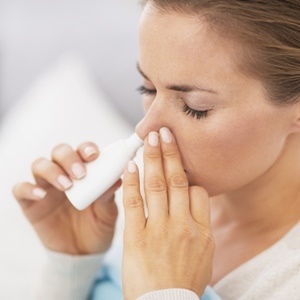
Health24.com | WATCH | Some tips on using a nasal spray correctly, making it more comfortable

The information provided does not constitute a diagnosis of your condition. You should consult a medical practitioner or other appropriate health care professional for a physical exmanication, diagnosis and formal advice. Health24 and the expert accept no responsibility or liability for any damage or personal harm you may suffer resulting from making use of this content.

Share Button

Health24.com | Kids raised by grandparents more likely to pile on the kilos

Grandparents can be a bad influence on kids’ weight, researchers say.

That’s the upshot of an analysis of 23 studies conducted in the United States and eight other countries by a team from the Brown School at Washington University in St. Louis.

The study found that kids who were cared for by grandparents had nearly 30% higher odds for being overweight or obese.

While grandma and grandpa may mean well, they can affect their grandchildren’s weight in various ways, including eating habits, physical activity and perceptions of what represents a healthy lifestyle, according to the researchers.

Negative influences

“Through offering wisdom, teaching traditions, providing guidance and making memories, grandparents are often able to leave behind a legacy that their grandchildren will cherish and benefit lifelong,” said lead author Ruopeng An, an assistant professor.

“However, some negative influences from grandparental care may also be present and cannot be overlooked,” he added in a university news release.

One of those negative influences affects a child’s diet and exercise habits.

“The notion of ‘the bigger the healthier’ is still relevant,” An said.

Some grandparents may urge their grandkids to eat bigger and more frequent meals, and will offer sweets and fried foods as a way to show love, he pointed out.

Similar trends across cultures

“In fact, in some cultures, grandparents may also be more likely to excuse children from doing household chores, a key form of physical activity,” An added.

He said he was surprised that the studies – from the United States, the United Kingdom, China, Japan and five other nations – showed similar trends across cultures.

“Affluence and being well fed is valued and desirable to many grandparents as they had experienced hunger and poverty in their youth, which they may pass on to their grandchildren, who, to the opposite, are fighting against a world of food swamps and ever-expanding portion sizes,” An said.

The findings were recently published online in the journal Childhood Obesity.

Image credit: iStock

NEXT ON HEALTH24X

Share Button

Health24.com | THE REAL POLLEN COUNT: No relief for allergy sufferers in the northern part of SA as high pollen levels hit Bloemfontein and Kimberley

The levels for this week were modelled on 10 years of archived data and current weather patterns. Grasses were low, tree pollen was low and included the types; eucalyptus, white stinkwood and olive. Weeds included goosefoot, the daisy family and dandelion. Mould levels were low.

Count: 5 (low) [Last week: 2 (very low)]

Johannesburg (Gauteng)

Grass concentrations were moderate throughout this sampling week occurring >10g/m3 on each  day. Trees were very low and included the types: cypress, pinus and eucalyptus. Weeds were similarly very low and only Chenopodiaceace (Goosefoot) was detected.

Moulds were the highest occurring aeropora and included Aspergillus/Penicillium, Cladosporium and Ascospores having the highest counts

Count: 20 (high) [Last week: 18 (moderate)]

Pretoria (Gauteng)

Grass concentrations were moderate to high throughout the week again occurring >10g/m3 on each  day.  Trees were low and included the types: eucalyptus and Cypress Low weed concentrations included: Chenopodiaceace (Goosefoot).

Moulds were the highest occurring palynomorphs and included Aspergillus/Penicillium, Cladosporium and Ascospores having the highest counts.

Count: 32 (high) [Last week: 35 (high)]

Kimberley (Northern Cape)

Grasses were moderate to high at this site. Tree pollen levels were low and consisted of olive, cypress and rhus. Weeds included low levels for goosefoot and ragweed. Mould levels were generally low, but high levels of the allergenic mould: Alternaria were detected throughout the week.

Count: 57 (very high) [Last week: 12 (moderate)]

Durban (KZN)

Grass levels were high at this sampling site, and have increased since last week. Tree loads also increased relative to the previous week, and were dominated by birch, with eucalyptus, white stinkwood and pine also recorded. Weed levels were low, including ragweed. Moulds were low.

Count: 40 (high) [Last week: 45 (high)]

Port Elizabeth

Grasses were low at this site and no tree or weed pollen was detected. Mould levels were low but ascospores increased following rain.

Count: 1 (very low) [Last week: 5 (low)]

Bloemfontein

High to very high grass levels were seen throughout the sampling week at this site. Low tree levels included olive, buddleja and cypress. Weed levels were low and included the daisy family and goosefoot. Mould levels were low overall but high levels were detected throughout the week for Alternaria.

Count: 129 (very high) [Last week: 97 (very high)]

See the full report HERE.

Reference ranges:

Overall, Trees, Grasses and Weeds all use the same values (grains per cubic metres of air).

Overall count is the daily average of pollen grains per cubic metres of air (trees plus grasses plus weeds)

Share Button

Health24.com | WATCH | Could artificial intelligence have predicted the new coronavirus?

How coronavirus raced through quarantined cruise ship

Typical conditions on board cruise ships – how air conditioning systems mix outside air with the inside air to save energy – probably contributed to passengers aboard the Diamond Princess contracting the new coronavirus, an expert says.

Share Button

Learning difficulties ‘link to brain connections’

After scanning 479 children’s brains, researchers found they were organised in multiple “hubs”.

Share Button

Skin and non-adhesive cells found to play pivotal role in formation of fingers

Human fingers are sculpted from a primitive pad-like structure during embryonic development. Sometimes, this process goes awry and babies are born with fused fingers or toes. A new study from the University of California, Irvine reveals new factors involved in the congenital malformation called syndactyly.

One of the most common limb malformation in humans, syndactyly was thought to be caused by insufficient removal of the connective tissue between the developing digits. In a study, published today in Developmental Cell, researchers reveal that the overlying skin also plays an active role and is required for sculpting of the digits, and that a layer of non-adhesive cells on the skin’s surface is required to prevent the fusion of adjacent digits.

“Our study identifies epidermal developmental processes required for digit separation that expand beyond the insufficient removal of connective tissue. These additional factors play an integral role in syndactyly and may be implicated in other complex syndromes, including Van der Woude syndrome,” said Ghaidaa Kashgari, PhD, a post-doctoral researcher in the UCI School of Medicine Department of Biological Chemistry, and first author on the paper titled, “Epithelial migration and non-adhesive periderm are required for digit separation during mammalian development.”

Van der Woude syndrome is characterized by cleft lip and/or cleft palate. In addition, seven to eight percent of Van der Woude patients have limb defects, most commonly soft tissue syndactyly which suggests there is a shared developmental mechanism in oral-clefting and digit separation.

“Our research shows that the GRHL3 gene is required for normal digit separation. When this gene is mutated, it can affect the function of the non-adhesive cells on the skin’s surface causing conditions such as Van der Woude syndrome associated with syndactyly as well as cleft lip and palate,” said Bogi Andersen, MD, a professor of medicine and biological chemistry in the UCI School of Medicine, and director of the UCI Skin Biology Resource-based Center.

Story Source:

Materials provided by University of California – Irvine. Note: Content may be edited for style and length.

Share Button

Polymers get caught up in love-hate chemistry of oil and water

Researchers at Oak Ridge National Laboratory and the University of Tennessee achieved a rare look at the inner workings of polymer self-assembly at an oil-water interface to advance materials for neuromorphic computing and bio-inspired technologies.

Results published in the Journal of the American Chemical Society provide new insights on the way molecules pack and order themselves into “tunable” interfaces, monolayer thick surfaces with structures that can be modified for specific functionalities.

“Understanding the design rules of the chemistry happening at the liquid-liquid interface ultimately informs how we can make new materials with custom properties,” said Benjamin Doughty of ORNL’s Chemical Sciences Division.

The study expands interest in using soft materials to mimic lipid bilayers — selective membranes with important biological functions, such as processing signals across the brain’s neural network and transporting ions, proteins, and other molecules across cells.

Co-authors previously designed biomimetic membranes using lipid-coated water droplets in oil and demonstrated their potential as sensory components for neuromorphic, or brain-like, computers with natural information processing, learning and memory.

“Because lipids are inherently fragile and decay, we are interested in developing polymer-based counterparts that offer stability and can also give us a range of natural functionalities,” said Pat Collier of ORNL’s Center for Nanophase Materials Sciences, a DOE Office of Science User Facility.

Without the knowledge of interfacial chemistry, however, creating functional bilayers from natural or synthetic molecules involves a certain degree of mystery. Chemical species interacting in a beaker of solution may or may not form analogous membranes with selective properties, such as the capability to store or filter sensory impulses that make up the nondigital language of neuromorphic computing.

“To be able to train molecules for specific purposes and unlock new functionalities, we need to understand what is happening on a molecular level during self-assembly,” Collier said.

For the experiment, researchers chose an oligomer, a small polymer variant with a similar structure to natural lipids, and used surface spectroscopy methods to probe the molecular monolayer — one side of a bilayer — formed between water and oil.

The ORNL team is one of only a few groups that has probed the liquid-liquid interface, an important area of research, but understudied because of technical challenges.

“Our goal was to investigate how the asymmetry at the oil-water interface causes species to adsorb differently, to pack and order into a functional design,” Doughty said.

The studied oligomer is an amphiphilic molecule, meaning parts of its structure are hydrophobic while others are hydrophilic. When samples stabilized in oil are introduced into a water-based solution, the molecules self-assemble in response to their mixed attraction and repulsion to water.

Like goes to like — the oligomers’ slightly charged polar heads want to be in the water phase, which is also polar, and the nonpolar tails want to be in the oil phase, which is not.

“Being able to observe in real time how these molecules arrange at a varied interface is a broadly applicable fundamental scientific accomplishment,” Doughty said.

As shown in the animation, the charged oligomer heads home in on the water phase; but the flexible tails coil up in the oil when they have room to spare, or tighten to accommodate neighbors as the interface becomes crowded.

“We discovered that adjusting the ions, or charged particles, in the water phase aided in the formation of well-defined interfaces, with oligomers taking on more tightly coiled structures,” Doughty said.

Too few ions and the tails spread out loosely, leaving gaps; too many, and they squeeze in, ballooning from the surface.

“The findings point to approaches for modifying the size and shape of monolayers, and — at the next stage — enabling bilayers with asymmetrical designs, just like natural lipids,” Collier said. “The work brings us a step closer to unlocking new potentials in biomaterials.”

Tailoring surfaces on a molecular level to design new materials opens possibilities not only for biocomputing but also broadly for chemical separations, sensing and detection.

“Observing the liquid-liquid interface helps us understand the chemistry that drives all of these technologies,” said Doughty.

Share Button