The government sets aside £10 million a year to help families and young people under 24 access cancer treatment.


The government sets aside £10 million a year to help families and young people under 24 access cancer treatment.
They say the eyes are the window to the soul. So, a nice eye cream? That’s like a fresh coat of paint on the shutters. If you’re in the market for a new one, reviewers are loving this creamy, brightening option from Portland, Maine’s Eight Saints for its intense hydration and smoothing — all without irritation. Even better? You can currently snag a bottle at Amazon for $36, which is about 20% less than its price on the Eight Saints website.
Made with soothing cucumber and refreshing green tea extract, users say the “All In” cream is “like coffee for my eyes,” making their face look younger and more radiant. “After two weeks of using All In eye cream, it has actually made my crow’s feet almost disappear completely,” Alison S Morris wrote. “I will turn 50 in three weeks, and my eyes are looking more like I’m mid 30s.”
Advertisement

Advertisement
Eight Saints designed its brand around eight key ingredients: shea butter coconut oil, aloe cocoa butter jojoba, hyaluronic acid vitamin-e, marula oil glycolic acid, msm peptides antioxidants, vitamin-c squalane retinol and niacinamide green tea. While all of the products are made with at least one of these key ingredients, the aptly named “All In” eye cream contains all eight. (That’s even more than the brand’s firming neck cream, which is loved by HuffPost readers and is also currently on sale.)
Fans who spent hundreds on other brands say nothing compares to All In. In addition to having “everything you want in an eye cream,” it “doesn’t clog up my pores like other white face goos do,” and feels surprisingly gentle for how potent it is — even for super sensitive skin. You can use it morning and night, and many do.
(Note: reviews seem to vary if it’s completely unscented or very lightly scented, though many with fragrance-sensitivity seem to agree, All In doesn’t bother them.)
Advertisement
″…Best of all it keeps my sleep deprived, aging eyes looking fresh and youthful,” one wrote. “I have noticed a significant change in the ‘crepey’ appearance of my under-eye area and crows feet as they are definitely less prominent and my dark circles are almost gone in just a couple of weeks,” said another. “This is a miracle eye cream.”
Silky and lightweight, the cream is celebrated for rubbing in smoothly without feeling greasy, staying through the day without pilling or melting and playing nice with other products, including skincare and makeup.
Advertisement
One user, who says All In has made the skin around their eyes feel healthy, plump, brighter and with less “crinkling,” even notes the cream “makes aging gracefully a little less scary.”
“A must buy for aging skin! Just WOW!! This eye cream is no joke!! It’s so hydrating yet helps to really de-puff my under eyes. Not greasy at all. Works great under makeup, even for aging skin. I have also noticed my dark circles are a bit lighter too. A neat bit for sure!!” — Lori Ann DeJesus
“This stuff is amazing. I’ve tried several other eye creams over the years and none can compare to this one. It’s lightweight and rubs in super smooth. It leaves my eye area feeling soft and moisturized without any irritation or pulling. It’s long lasting and a great value for the cost. And best of all it keeps my sleep deprived, aging eyes looking fresh and youthful. An all-around amazing eye cream!” — Laura L.
“Great for sensitive, aging eyes. I have very sensitive skin and fine lines. Many products will either dry out or irritate my skin, but this is gentle. No fragrance or greasy feel. It’s smooth and is great for day or night time use.” — KPate
Advertisement

Amazon
If you’re an eye cream skeptic, then this affordable gel might change your mind. It’s made with caffeine, peptides and hyaluronic acid to help reduce the look of tired, puffy eyes and dark circles. The formula is surprisingly effective and can help perk up your peepers for just $6 a tube.
Promising review: “I really love this stuff. It is extremely moisturizing and feels great under your eyes. I am in my late 50’s and have had multiple coworkers ask me what I was doing differently the first week I started using it. It does seem to offer some lasting smoothing, hydrating and brightening effects, for me at least. I will definitely continue to use. For the price, it’s great and better than other more expensive brands I have tried. It also takes a very small amount to apply.” — LD16
Amazon
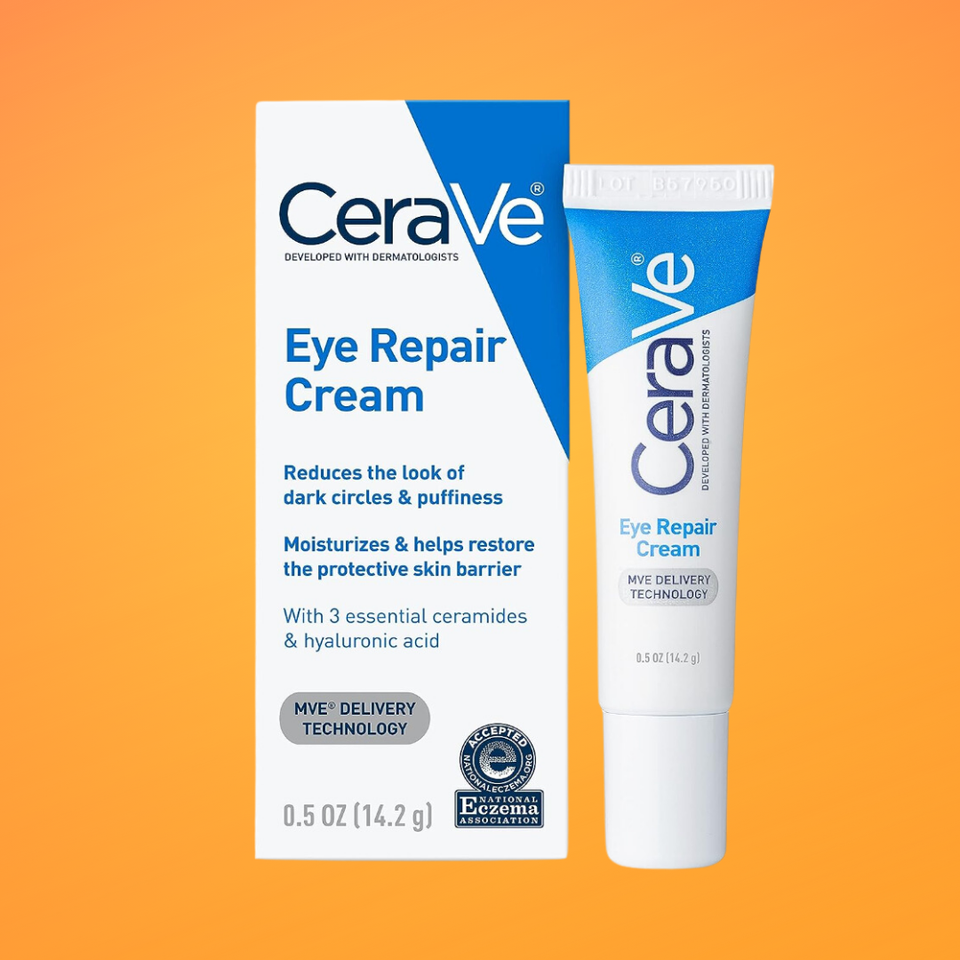
This dermatologist-recommended eye cream from CeraVe is a HuffPost reader favorite. Yummy, nourishing and potent anti-aging ingredients like hyaluronic acid, niacinamide and ceramides can help to increase hydration while smoothing and brightening the under-eye area. It’s a great affordable option for someone who wants to add a bit of oomph to their routine without breaking the bank. This cream is also fragrance-free so it’s ideal for people with extra sensitivities.

Amazon
This cult-fave and HuffPost reader-pick eye cream is wildly popular at Amazon, boasting over 19,000 5-star ratings from happy customers. It can help address common eye concerns like puffiness, dark circles and wrinkles thanks to its hydrating formula that’s been infused with dermatologist Dr. Bradley Glodny-approved ingredients like retinol and antioxidants. Reviewers note that the cream works wonders on dark circles, in particular.
Promising Amazon review: “I have probably tried a hundred different eye creams, and this is the only one that has given me noticeable results. My under-eyes were visibly firmer with the first use, and the dark circles are fading after only a few days. Definitely recommend!” — stefany9579
Advertisement

Sephora
You can’t beat the price of The Ordinary’s skin care products, including this multi-peptide eye serum that’s formulated to help diminish the look of dark circles and puffiness. It has a lightweight serum formulation that is a great option for those prone to breakouts or with excessively oily skin and, best of all, it is available for under $30. And while the price is right, beauty aficionados, HuffPost readers and editors alike also consistently turn to The Ordinary because of its products’ efficacy.
Amazon
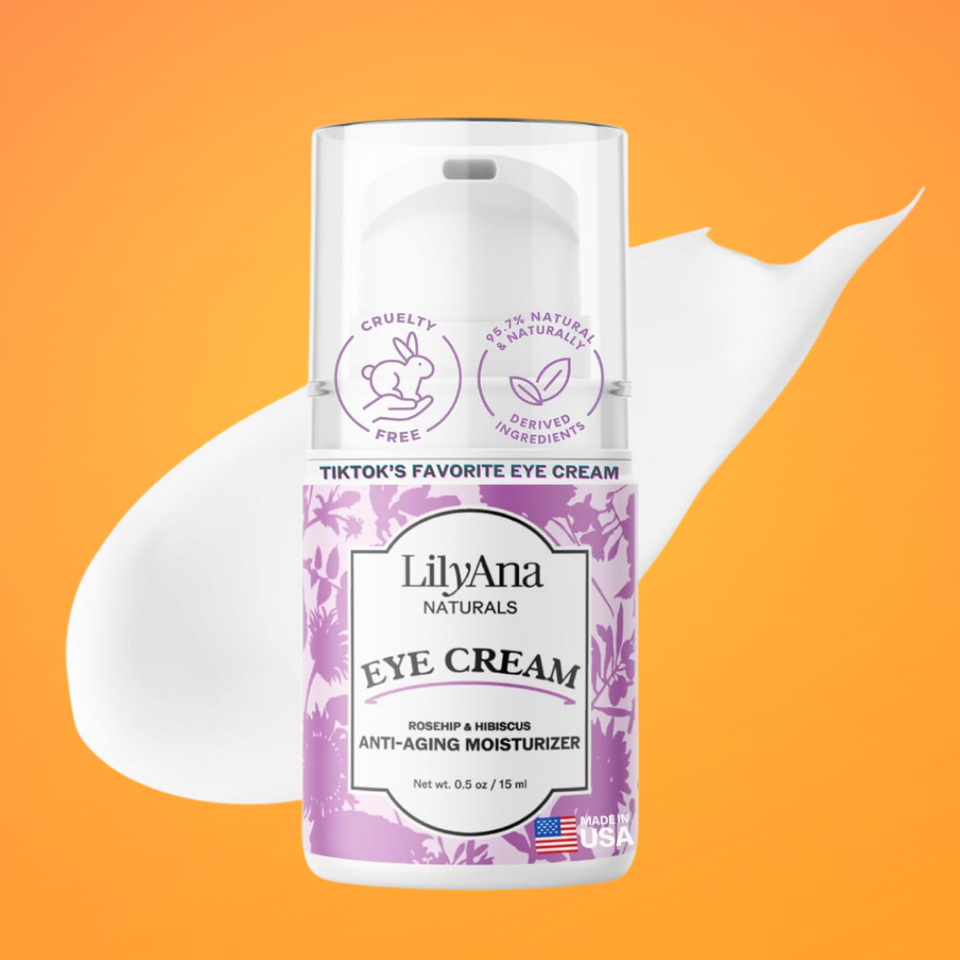
This oft-viral LilyAna eye cream has been wildly popular with HuffPost readers for a couple years now, thanks to a super effective formula and reasonable price point. It’s made with botanical ingredients like rosemary leaf extract and vitamins A, C, E and B5, which can help to reduce puffiness, dryness and dark circles. The cream is gentle enough to use both morning and night while being powerful enough to deeply nourish and rejuvenate the skin.
Promising Amazon review: “in my mid 40s I noticed the skin around my eyes were looking aged, crinkled like crate paper. I have been using a facial moisturizer for years and always added some to my lids but it always burned and my eyes would tear up. Out of the blue I started looking for eye creams on line and learned they can be extremely costly and without knowing if it really works, I hesitated. When I found this eye cream on amazon at a fraction of the cost of many other eye creams I thought what the heck I will give it a try. I have been very pleased with the outcome up to this point. It does not burn my eyes, no odor, not sticky or greasy and I have noticed my eyes looking more youthful and refreshed. I use it each morning and each night. I must admit I put it on a little thicker at night because I am not applying make up afterwards. Although I was hoping for my dark circles to lighten up a bit, they have not but overall I am very pleased and satisfied with this product. I would recommend it to friends and say if your looking for an inexpensive way to refresh your aging eyes, TRY THIS!!!!” — Lea m.
The Real Deal: We use deal trackers and commerce experience to sift through “fake” hike-and-drop deals and other deceptive sales tactics. Products will usually be rated at least 4 stars with a minimum 15% discount. (And when there’s an exception, we’ll tell you why.)
Advertisement
Members of the British Medical Association have backed more walkouts in the dispute over pay and jobs in England.

Miracle Mineral Solution, commonly called MMS, has been promoted for years as a supposed cure for serious conditions such as cancer, autism, and COVID-19. Despite these claims, MMS is simply a marketing name for sodium chlorite (NaClO2), a strong disinfectant used in applications like water treatment. When sodium chlorite is mixed with acid, it produces chlorine dioxide (ClO2), a chemical that can be dangerous when ingested.
Researchers from Wroclaw Medical University set out to examine what happens when this substance is tested under controlled scientific conditions. Their findings were published in the journal Scientific Reports. The team studied acidified sodium chlorite (ASC), which generates ClO2, using two different formulations. One version, ASC1, was acidified with hydrochloric acid, while ASC2 used gluconic acid. Both were tested on multiple types of bacteria, including harmful strains like Staphylococcus aureus and E. coli, as well as beneficial probiotic bacteria such as Lactobacillus rhamnosus.
Antibacterial Effects Come at a Cost
The researchers confirmed that chlorine dioxide can kill bacteria. However, they found that it only works at concentrations that are also harmful to human cells. At a concentration of 30 ppm (0.003%), bacteria were destroyed, but the tests also showed clear damage to skin cells and high death rates in an in vivo model. The team also examined bacterial biofilms, which are protective layers that make infections harder to treat. While ASC was able to break down these biofilms, it did so while causing damage to surrounding tissue.
“The results of the study indicate that effective concentrations of ASC against biofilms are also toxic to eukaryotic cells, but it cannot be ruled out that a formulation for external use will be developed that ensures the safety of use with high anti-biofilm efficacy,” explains Dr. Ruth Dudek-Wicher from the Department of Pharmaceutical Microbiology and Parasitology, Faculty of Pharmacy, Wroclaw Medical University.
Risks to Beneficial Bacteria and the Gut
Dr. Dudek-Wicher also highlighted an important distinction between professionally produced, purified ClO₂ solutions, which are sometimes used in dentistry, and the mixtures prepared at home by MMS supporters. The study examined how ASC affects probiotic bacteria as well. The biofilm formed by Lactobacillus bacteria proved to be extremely sensitive to the substance, raising concerns about potential harm to the intestinal microflora.
“At the moment, we are not planning such studies, but we do not rule them out in the future. If a safe oral form of ASC is developed, an analysis of its impact on the microbiome will be necessary,” says Dr. Ruth Dudek-Wicher.
Misinformation and Dangerous Beliefs
The researchers made it clear that their work was not limited to laboratory science. They also aimed to address the spread of misinformation surrounding MMS.
“The most harmful mistake is to believe in the effectiveness of MMS without hard scientific evidence,” emphasizes Dr. Dudek-Wicher. “In pharmacy and medicine, the benefit-risk ratio is considered. In the case of MMS, the benefit is zero, and the risk is high, especially since the dosage is often administered using non-standardized droppers, which can achieve 1 ml by applying 15 or 30 drops. Such fluctuations in the oral dosage of a corrosive substance are extremely irresponsible,” she adds.
MMS is sometimes even promoted for use in children and pregnant women. Dr. Dudek-Wicher expressed particular concern about recommendations linking MMS to weight loss. “I was particularly shocked by the recommendations for combating obesity, which did not mention the effect of MMS on adipose tissue but only affirmed self-acceptance combined with stigmatization of obesity,” she says. She argues that the danger lies not only in the substance itself, but also in how it is marketed, using emotional appeals instead of evidence.
Combating Health Myths With Science and Empathy
Can misinformation about MMS be addressed effectively? According to Dr. Dudek-Wicher, the answer is yes, but it requires cooperation across disciplines and a more empathetic approach. “Yes, but it requires an integrated, interdisciplinary approach and empathy. Currently, the fight against myths is too often marked by a lack of respect and compassion. People turn to MMS because they are concerned about their health — and education must take this into account, with communication based on respect.”
She also stresses the importance of funding research that challenges false health claims. Science, she says, has a responsibility to protect the public from misinformation. That is why she welcomed the recognition of her university grant on MMS and the publication of the results in Scientific Reports.
Public Attention and Future Research
The research conducted at the Faculty of Pharmacy has attracted media coverage, including an article and video published on the homepage of the Polish Press Agency. According to the researchers, this interest reflects a broader demand for clear, evidence-based information.
“At the Faculty of Pharmacy, we are not afraid of difficult topics. The safety of patients who have lost their way in search of treatment is of utmost importance to us. And the interest in the results encourages us to continue our work. We are planning a series of analyses and publications on other miracle preparations — DMSO, adaptogens, ‘detoxification’ protocols — all in the spirit of scientific myth-busting,” conclude the authors, Dr. Dudek-Wicher and Prof Adam Junka from the Department of Pharmaceutical Microbiology and Parasitology at Wroclaw Medical University.

New research suggests that the Vatican’s recently opened eco-friendly farm reflects a long forgotten chapter in Catholic history. The farm was inaugurated by the first ever Augustinian pope and, according to historian Dr. Krisztina Ilko, mirrors the early values and practices of his religious order. Her work challenges long held assumptions about the medieval Catholic Church and the early Renaissance, especially the belief that religious power was centered almost entirely in cities.
Dr. Ilko, a medieval historian at Queens’ College, Cambridge, argues that the countryside played a much larger role in shaping Christian life than is commonly acknowledged. Her research highlights a tradition of practical, land-focused miracles that helped rural communities survive during difficult times.
Forgotten Medieval Miracles of the Land
Among the miracles Dr. Ilko has uncovered are stories of a burned cherry twig bursting back into life, a diseased swamp restored to “peak fertility,” a broken ox leg healed, and cabbages multiplied to feed communities. These accounts come from medieval sources that have largely been overlooked or dismissed.
“Bleeding hosts and stigmatizations are the best-known medieval miracles,” says Dr. Ilko, author of The Sons of St Augustine, a major new study published by OUP today.
“The Augustinians get very little credit for miraculously making land fertile, healing livestock and bringing fruit trees back to life,” says Ilko.
“With Leo XIV becoming the first Augustinian Pope, it’s the perfect time to make the order’s astonishing history better known. There has been so much focus on Italian cities, we’ve lost sight of how important the countryside was to the Church and to the Renaissance.”
Dragons, Disease, and Fertility
Saint George is widely known as Christianity’s most famous dragon slayer and is commonly depicted as a warrior holding a lance. Much less familiar is Guglielmo of Malavalle, a twelfth century hermit venerated by the Augustinians for defeating a dragon using a simple wooden staff shaped like a pitchfork.
In medieval Europe, illness affecting people, animals, and crops was often blamed on dragons. Their breath was believed to poison the air and suffocate the land, especially in swampy regions where disease was common.
After hearing a voice from the sky, Guglielmo settled in Malavalle, meaning “the bad valley,” in the marshy Maremma region of Tuscany. The area was thought to be so polluted by toxic air and violent storms that it had become barren and frightening, described as “dark, and terrible,” and avoided even by hunters.
Dr. Ilko argues that Guglielmo’s reputation as a dragon slayer came from his role in cleansing the environment and restoring the valley’s productivity.
“These achievements weren’t symbolic, Guglielmo provided a crucial public service, he helped country people survive in a really harsh natural environment,” Dr. Ilko says.
“Guglielmo was a pitchfork-wielding dragon slayer and divine gardener all at once. Commanding the weather, securing a good harvest, and restoring the health of livestock must have seemed the most desirable divine interventions in the late medieval countryside. They were matters of life and death.”
Unearthing Lost Augustinian Texts
Dr. Ilko’s conclusions are based on ten years of research that took her to more than twenty archives and over sixty Augustinian sites, including remote and difficult to access ruins. She examined frescoes, illuminated manuscripts, hagiographies, and letters, uncovering materials that had been misdated or wrongly attributed. These errors, she argues, contributed to the Augustinians being overlooked in studies of medieval miracles.
One of the earliest collections of Augustinian biographies she studied was written by a Florentine friar in the 1320s. The manuscript has received little scholarly attention, which Dr. Ilko believes is because its miracles were considered too rural in focus. The text is held at Florence’s Biblioteca Medicea Laurenziana.
The manuscript opens with the life of Giovanni of Florence, who built the Augustinian hermitage of Santa Lucia in Larniano with help from local farmers. One of Giovanni’s most notable miracles involved healing an ox with a broken leg. Another account describes Jacopo of Rosia ordering an unreliable apple tree to bear fruit every year and multiplying cabbages.
“When people think about religious orders and their massive role in the Renaissance, they usually turn their attention to cities like Rome, Florence and Siena,” Dr. Ilko says.
“The Franciscans and Dominicans, in particular, are credited for Italy’s rapid urban renewal from the 1200s onwards. Not many people realize that the Augustinians drew most of their power from the countryside. Their miracles were very green-fingered, agricultural.”
“St Francis of Assisi remains the most famous ‘nature saint’, best known for preaching to birds. In a more eco-conscious world, the Augustinians deserve much more attention.”
How the Augustinians Secured Their Survival
According to Dr. Ilko, the Augustinians’ close relationship with forests, mountains, and coastal areas was key to their survival as a religious order.
The Order of the Hermits of St Augustine was established in 1256 when the papacy объединed several hermit groups from central Italy into a single mendicant order. In 1274, the Roman Catholic Church questioned the order’s legitimacy because it had been founded after 1215 and lacked a continuous presence dating back to late antiquity. The papacy did not formally confirm the order’s existence until 1298. During this twenty five year period of uncertainty, Augustinian friars worked intensely to justify their place within the Church.
Without a single charismatic founder, the friars developed an origin story that claimed direct ties to St Augustine himself. Dr. Ilko argues that they also relied on their strong presence in natural landscapes to reinforce their authority and ancient roots.
“Direct contact with nature gave the friars legitimacy, special spiritual powers and access to valuable natural resources including timber, crops and wild animals,” Dr. Ilko says.
As the order expanded into cities, the Augustinians carefully chose locations near the edge of urban life. In Rome, they founded the convent of Santa Maria del Popolo at one of the city’s main entrances, with trees and gardens nearby. The Franciscans had previously rejected the site because it was considered too remote and difficult “to sustain the body.” The area was once viewed as ominous, dominated by an ancient walnut tree believed to be infested with demons and marking the supposed burial place of Emperor Nero. Pope Paschall II ordered the tree removed in 1099.
Beyond reshaping how the Augustinians are understood, Dr. Ilko argues that the ruins of their hermitages deserve better preservation and improved public access so more people can experience this overlooked chapter of religious and environmental history.
Reference
Krisztina Ilko, The Sons of St Augustine: Art and Memory in the Augustinian Churches of Central Italy, 1256-1370 (OUP, 2025). ISBN: 9780198948827
After having to halt their first attempt due to an injury, the couple are ready to set off again.
Kimberley Wilson talks to psychologist and therapist Dr Sula Windgassen on how to build “quiet” or “flexible” resilience.

Lava tunnels on nearby planetary bodies are increasingly seen as strong candidates for future base camps. These underground structures can naturally shield astronauts from harmful radiation and frequent meteorite impacts. Despite their promise, reaching and studying these environments is extremely challenging due to rough terrain, limited entry points, and dangerous conditions.
To tackle these challenges, a European research consortium that includes the Space Robotics Laboratory at the University of Malaga has developed a new mission concept focused on exploring lava tunnels. The work was recently published in the journal Science Robotics. The concept centers on three different types of robots that can work together autonomously to explore and map these harsh underground spaces. The system is currently being tested in volcanic caves in Lanzarote (Spain), with future missions aimed at the Moon.
Four Phases of Autonomous Exploration
The proposed mission unfolds in four carefully planned stages. First, the robots cooperatively map the area around the lava tunnel entrance (phase 1). Next, a sensorized payload cube is dropped into the cave to gather initial measurements (phase 2). A scout rover then rappels down through the entrance to reach the interior (phase 3). In the final stage, the robotic team explores the tunnel in depth and produces detailed 3D maps of its interior (phase 4).
A real world field test conducted on Lanzarote in February 2023 showed that the approach works as planned. The trial highlighted the technical capabilities of the consortium led by the German Research Center for Artificial Intelligence (DFKI), with contributions from the University of Malaga and the Spanish company GMV.
Preparing for the Moon and Mars
The results confirmed that the mission concept is technically feasible and demonstrated the broader potential of collaborative robotic systems. These findings suggest that teams of autonomous robots could play a key role in future exploration missions to the Moon or Mars. The study also supports continued development of advanced robotic technologies for planetary exploration.
The Role of the Space Robotics Laboratory at the UMA
The Space Robotics Laboratory at the UMA focuses on creating new methods and technologies that increase autonomy in space robotics, covering both planetary and orbital missions. In recent years, the laboratory has worked closely with the European Space Agency, developing algorithms that help planetary exploration vehicles (rovers) plan routes and operate more independently.
Beyond research, the laboratory is dedicated to training the next generation of space robotics engineers. Students from the School of Industrial Engineering at UMA participate in internships and thesis projects related to this work. Most projects are carried out in partnership with national and international research institutions through joint research efforts or technology transfer agreements with companies and research organizations.
Southampton General Hospital limits A&E admissions and cancels operations following blaze.

New research suggests that memory problems in Alzheimer’s disease may be linked to a failure in how the brain replays recent experiences while at rest. The study, conducted in mice by scientists at University College London (UCL), points to a disrupted brain process that normally helps strengthen and preserve memories.
The researchers say their findings, published in Current Biology, could support the development of future drug treatments that target this malfunctioning process. The work may also help guide the creation of new tools for detecting Alzheimer’s earlier than is currently possible.
Understanding How Alzheimer’s Disrupts Brain Cells
Co-lead author Dr Sarah Shipley (UCL Cell & Developmental Biology) explained that Alzheimer’s disease is driven by the accumulation of damaging proteins and plaques in the brain. These changes lead to symptoms such as memory loss and difficulty navigating familiar environments, but the precise ways these plaques interfere with normal brain activity are still unclear.
“Alzheimer’s disease is caused by the build-up of harmful proteins and plaques in the brain, leading to symptoms such as memory loss and impaired navigation — but it’s not well understood exactly how these plaques disrupt normal brain processes.
“We wanted to understand how the function of brain cells changes as the disease develops, to identify what’s driving these symptoms.
“When we rest, our brains normally replay recent experiences — this is thought to be key to how memories are formed and maintained. We found this replay process is disrupted in mice engineered to develop the amyloid plaques characteristic of Alzheimer’s, and this disruption is associated with how badly animals perform on memory tasks.”
How the Brain Replays Memories
This replay activity takes place in the hippocampus, a brain region essential for learning and memory. During rest, specific neurons known as place cells activate in rapid sequences that mirror recent experiences.
Place cells, discovered by Nobel prize-winning UCL neuroscientist Professor John O’Keefe, are neurons (brain cells) that correspond to particular locations. As a person or animal moves through a space, different place cells fire in a specific order. Later, during rest, those same cells typically reactivate in the same sequence, helping the brain store the experience as a memory.
Tracking Brain Activity During Memory Tasks
To study this process, researchers tested how mice performed in a simple maze while recording brain activity at the same time. Using specialized electrodes, they were able to monitor roughly 100 individual place cells simultaneously as the animals explored and then rested.
This approach allowed the team to compare normal brain replay patterns with those seen in mice that had developed amyloid pathology associated with Alzheimer’s disease.
Disorganized Replay and Fading Memory Signals
In mice with amyloid plaques, memory replay looked very different. Replay events occurred just as often as they did in healthy mice, but the underlying patterns were no longer organized. Instead of reinforcing memories, the coordinated activity of place cells became scrambled.
The researchers also observed that place cells in affected mice grew less stable over time. Individual neurons stopped reliably representing the same locations, especially after rest periods, which are normally when replay should strengthen memory signals.
Memory Performance Declines in Affected Mice
These changes had clear behavioral effects. Mice with disrupted replay performed worse in the maze, frequently revisiting paths they had already explored and appearing unable to remember where they had been.
Co-lead author Professor Caswell Barry (UCL Cell & Developmental Biology) said the study reveals a failure in memory consolidation that can be seen at the level of single neurons.
“We’ve uncovered a breakdown in how the brain consolidates memories, visible at the level of individual neurons. What’s striking is that replay events still occur — but they’ve lost their normal structure. It’s not that the brain stops trying to consolidate memories; the process itself has gone wrong.”
Implications for Early Detection and Treatment
Professor Barry added that these findings may help researchers identify Alzheimer’s earlier or develop treatments that focus on restoring normal replay activity.
“We hope our findings could help develop tests to detect Alzheimer’s early, before extensive damage has occurred, or lead to new treatments targeting this replay process. We’re now investigating whether we can manipulate replay through the neurotransmitter acetylcholine, which is already targeted by drugs used to treat Alzheimer’s symptoms. By understanding the mechanism better, we hope to make such treatments more effective.”
The research was carried out by scientists in the UCL Faculties of Life Sciences and Brain Sciences, with support from the Cambridge Trust, Wellcome, and the Masonic Charitable Foundation.
