The stories of parents whose babies died or were seriously harmed at a Shropshire hospital trust.


The stories of parents whose babies died or were seriously harmed at a Shropshire hospital trust.
The coldest chemical reaction in the known universe took place in what appears to be a chaotic mess of lasers. The appearance deceives: Deep within that painstakingly organized chaos, in temperatures millions of times colder than interstellar space, Kang-Kuen Ni achieved a feat of precision. Forcing two ultracold molecules to meet and react, she broke and formed the coldest bonds in the history of molecular couplings.
“Probably in the next couple of years, we are the only lab that can do this,” said Ming-Guang Hu, a postdoctoral scholar in the Ni lab and first author on their paper published today in Science. Five years ago, Ni, the Morris Kahn Associate Professor of Chemistry and Chemical Biology and a pioneer of ultracold chemistry, set out to build a new apparatus that could achieve the lowest temperature chemical reactions of any currently available technology. But they couldn’t be sure their intricate engineering would work.
Now, they not only performed the coldest reaction yet, they discovered their new apparatus can do something even they did not predict. In such intense cold — 500 nanokelvin or just a few millionths of a degree above absolute zero — their molecules slowed to such glacial speeds, Ni and her team could see something no one has been able to see before: the moment when two molecules meet to form two new molecules. In essence, they captured a chemical reaction in its most critical and elusive act.
Chemical reactions are responsible for literally everything: breathing, cooking, digesting, creating energy, pharmaceuticals, and household products like soap. So, understanding how they work at a fundamental level could help researchers design combinations the world has never seen. With an almost infinite number of new combinations possible, these new molecules could have endless applications from more efficient energy production to new materials like mold-proof walls and even better building blocks for quantum computers.
In her previous work, Ni used colder and colder temperatures to work this chemical magic: forging molecules from atoms that would otherwise never react. Cooled to such extremes, atoms and molecules slow to a quantum crawl, their lowest possible energy state. There, Ni can manipulate molecular interactions with utmost precision. But even she could only see the start of her reactions: two molecules go in, but then what? What happened in the middle and the end was a black hole only theories could try to explain.
Chemical reactions occur in just millionths of a billionth of a second, better known in the scientific world as femtoseconds. Even today’s most sophisticated technology can’t capture something so short-lived, though some come close. In the last twenty years, scientists have used ultra-fast lasers like fast-action cameras, snapping rapid images of reactions as they occur. But they can’t capture the whole picture. “Most of the time,” Ni said, “you just see that the reactants disappear and the products appear in a time that you can measure. There was no direct measurement of what actually happened in these chemical reactions.” Until now.
Ni’s ultracold temperatures force reactions to a comparatively numbed speed. “Because [the molecules] are so cold,” Ni said, “now we kind of have a bottleneck effect.” When she and her team reacted two potassium rubidium molecules — chosen for their pliability — the ultracold temperatures forced the molecules to linger in the intermediate stage for microseconds. Microseconds — mere millionths of a second — may seem short, but that’s millions of times longer than usual and long enough for Ni and her team to investigate the phase when bonds break and form, in essence, how one molecule turns into another.
With this intimate vision, Ni said she and her team can test theories that predict what happens in a reaction’s black hole to confirm if they got it right. Then, her team can craft new theories, using actual data to more precisely predict what happens during other chemical reactions, even those that take place in the mysterious quantum realm.
Already, the team is exploring what else they can learn in their ultracold test bed. Next, for example, they could manipulate the reactants, exciting them before they react to see how their heightened energy impacts the outcome. Or, they could even influence the reaction as it occurs, nudging one molecule or the other. “With our controllability, this time window is long enough, we can probe,” Hu said. “Now, with this apparatus, we can think about this. Without this technique, without this paper, we cannot even think about this.”
Story Source:
Materials provided by Harvard University. Original written by Caitlin McDermott-Murphy. Note: Content may be edited for style and length.
From sitting over a pot of boiling water to steam the vagina, to sticking jade eggs you-know-where, “wellness” trends involving the genitals don’t seem to want to die. Now, there’s another one to add to that list: “perineum sunning.”
Yes, you heard that right. In recent months, the new “self-care” method—aka “butthole sunning”—has started to gain momentum, mostly thanks to a few social media influencers whose photos and videos have gone viral.
Apparently, an Instagram video by user @ra_of_earth came first in October, showing three completely nude men lying down on their backs, butts to the sky, to soak up some rays.
“In a mere 30 seconds of sunlight on your butthole, you will receive more energy from this electric node than you would in an entire day being outside with your clothes on,” he said in the video.
RELATED: 5 Things You Definitely Should Not Be Doing to Your Vagina
Then came another backside sun worshipper, @metaphysicalmeagen, who shared a photo of herself perineum sunning later in October.
“Perineum sunning is an ancient Taoist practice that originated in the Far East,” she wrote in the Instagram post, explaining that in the religion, the perineum (or Hui Yin) is called the “Gate of Life and Death” and “is a gateway where energy enters & exits the body.”
According to Meagan, the benefits of perineum sunning are extensive. She says it “strengthens the organs,” “sustains health & longevity,” “aids in a healthy libido & balanced sexual energy,” and can promote “better sleep,” among other things.
“My experience with perineum sunning has been profound,” she claims. “I have been practicing this for a few months now. I start my day with 5 minutes of perineum sunning & feel energized for hours. I no longer rely on coffee for energy to start my day because I am getting my energy from the sun. I also am experiencing better sleep and require less sleep due to boost of overall energy.”
So, just a super-quick clarification: Your perineum is the super-thin area of skin and tissue between your vagina (or, in men, the penis) and the anus—and no, you definitely shouldn’t be exposing it to sun light, according to those with actual medical degrees.
“As a dermatologist, I cannot recommend any sun exposure without sun protection,” Nazanin Saedi, MD, Director, Jefferson Laser Surgery and Cosmetic Dermatology Center, tells Health.com. “These areas just like other areas of the body do need sun protection and clothing tends to provide that.”
RELATED: 5 Signs of Skin Cancer Other Than an Abnormal Mole
David E. Bank, MD, founder of Mount Kisco's The Center for Dermatology, Cosmetic & Laser Surgery, takes it a step further: “It’s actually dangerous,” he explains. “This skin is particularly sensitive.” Over time, it could result in an increased risk of skin cancer, he adds.
Both physicians point out that there is no scientific evidence to support this behavior promotes and sort of wellbeing—which can be attained through other safer options like “relaxing, meditation, and mindfulness,” says Dr. Saedi.
And if you’re truly worried about your vitamin D intake, you may want to consider taking a vitamin—not totally exposing yourself to the sun. "The recommended amount of vitamin D is easy to get from a healthy diet or supplements," Anna Karp, DO, a dermatologist at NYU Langone Health, tells Health.
Overall though, definitely keep your bottoms on when you’re out in the sun—for your sake, and honestly, the sake of others.
Do you get stressed-out around the holidays? These 25 expert tips will help you relax and actually enjoy the holidays.
Health's series This Is Me is about owning who you are and defying ridiculous societal expectations of beauty. We're not here to meet your standards, we're here to break them. Show us how beautiful you are! Tag us on Instagram: @healthmagazine #ThisIsMe
Janira Obregon has spent her entire life proving that just because she uses a wheelchair, her drive to reach her goals and dreams shouldn't be underestimated.
The 23-year-old from New York has spastic quadriplegia cerebral palsy, which means she has difficulty using all four of her limbs. The condition might sound like a setback. But Obregon has succeeded at pretty much everything she's set her sights on, including modeling—she's now a model at the We Speak Model Management. Here, she talks to Health about her journey so far.
At six months old, Obregon was diagnosed with spastic quadriplegia cerebral palsy, after her mother noticed she wasn't developing the way other babies her age were supposed to. Relying on a wheelchair for mobility, she attended a school for children with special needs until high school, when she decided to switch to a public high school.
RELATED: How This Woman Quit Being Self-Conscious of Her Cerebral Palsy: ‘I Used to Hide Away’
"When I got to high school, I went to a local high school because I wanted to get my diploma like any regular student," says Obregon. "So I kind of had to work harder and go the extra mile to get my high school diploma. And despite everything, I graduated in the top four of my class."
After getting the accommodations she needed in college, she excelled in all her classes and even made the National Honor Society. But one of her proudest moments came when she realized the difference she could make by changing the perception of disabled people.
"I had a teacher in one of my classes who apologized at the end of one of the semesters because he said he underestimated me and didn’t know how much a person with disabilities could succeed the way I did," she says. "With his apology, it really made me realize that I could change someone’s thoughts and views on people with disabilities."
With that, Obregon began looking for ways represent others with disabilities—and the perfect opportunity found her. In 2017, an agency called Runway of Dreams reached out ot her about doing a photo shoot. The organization advocates for people with disabilities in the fashion industry, and Obregon was excited about the opportunity to get involved.
After her shoot, the organization reached out again and asked her about participating in their New York Fashion Week show in September 2018. Obregon landed a spot on Nike's runway, modeling their adaptive clothing line. This was her first time on the runway, and it set her on the model track she's on today.
"Growing up, I never saw other kids like me in such events, or movies, magazines, etc," she says. "I'm glad I get to be a model, to show that people with disabilities can do anything we set our minds to."
RELATED: This Underwear Model Posing in a Wheelchair Is Breaking Stereotypes and We Couldn't Be Happier
Obregon currently works with We Speak Model Management, an agency that represents models of all sizes, shapes, and backgrounds. Her current goal is to continue to grow in the modeling industry and encourage people to accept different types of beauty.
"When someone sees a model who looks like them, they’re not just seeing a model, they’re seeing a part of themselves," says Obregon. "They see possibilities for their future in a world that’s saying yes, we want you here. You are wanted. Representation is important. And it’s why modeling is so essential to me."
To get more stories like this delivered to your inbox, sign up for the Real Wellness WomenIRL newsletter
As figures show one in eight posts is vacant, one A&E nurse explains the impact of staff shortages.

What’s one way to take your abs workouts to the next level? By adding weights! That’s why I created this four-move workout, designed to sculpt your core. By adding a bit of dumbbell, you’ll challenge your abs like never before — and have the muscle tone to show for it. In fact, this workout helped one of my client transform her body, and build a visible, sculpted stomach. What’s more, it takes less than 10 minutes. Ready to give this abs workout a go?
Time: 8 minutes
Equipment: Light weights (start with 5 pounds), mat
Good for: Abs
Instructions: Complete 30 seconds of each exercise, then immediately move to the next one. Once you’ve completed all four moves, repeat the full circuit from the top a second time through.
READ MORE: Tone Your Arms And Abs At The Same Time With This 15-Minute Workout
How to: Lie flat on your back with one dumbbell in your hands, lifted overhead. Bring your arms up and forward, while simultaneously lifting your legs and scissor-kicking them. Continuing this motion, bring your arms and legs toward each until they nearly touch, then slowly reverse the movement. That’s one rep. Complete as many reps as you can in 30 seconds, then continue to the next move.
How to: Lie on the ground with a single dumbbell in both hands. Lift your legs up to a tabletop position. Slowly drop your knees to the left side until they’re a couple inches off the ground. Pause, then engage your core to bring them back up to centre. Repeat on the other side. That’s one rep. Complete as many reps as you can in 30 seconds, then continue to the next move.
How to: Start in a seated position with your knees bent and heels pressed into the ground. Your feet should be flexed toward your face and upper body straight. Keep your abdominals engaged, with your belly button drawn in. Hold a single with both hands and extend it out in front of your body. Transfer the weight into your left hand, lean back slightly, contract your abs, twist to the left, and tap the back corner of your mat with the weight. Return to start. Pass the dumbbell to the other hand, then repeat on the other side. That’s one rep. Complete as many reps as you can in 30 seconds, then continue to the next move.
How to: Lie on the left side of your body. Place your elbow on the ground, directly under your shoulder with your forearm flat. Hold the dumbbell in your right hand, and place it gently on your right hip. With your legs extended and stacked on top of the other, lift your hips up high. Slowly drop your hips down, then engage your obliques to rise back up to start. That’s one rep. Complete as many reps as you can in 30 seconds, then repeat on the other side. Repeat the entire circuit a total of two times.
This article was originally published on www.womenshealthsa.co.za
Image credit: iStock
NEXT ON HEALTH24X


Health Minister Dr Zweli Mkhize has launched a new fixed-dose combination antiretroviral (ARV) treatment called tenofovir/lamivudine/dolutegravir, simply known as TLD.
“This is a new regimen that is going to reduce chances of people getting resistance and depression,” Aurum institute’s Dr Regina Osih from tells Health-e.
This is an improvement in the options available for people on ARV treatment, she says, people can stay on it for a long time with this regimen.
However, according to Osih, not everyone is going to be moved to the new treatment because the change will happen in phases – with new people starting HIV treatment will be put on the three-in-one pill and then a gradual move for the rest.
Dolutegravir, also referred to as DTG, was approved as a first-line and second-line treatment for women of childbearing age by the World Health Organization (WHO).
This is after initial data from Botswana’s Tsepamo study linked the drug with neural tube defects (NTDs) in infants born to women using dolutegravir at the time of conception. But new data, again from the Tsepamo study, and from Brazil, now shows that the risk for birth defects is much lower than intentionally signalled.
Studies show that DTG is far more tolerable than the older more common drug efavirenz, which patients have reported causes depression and hallucinations in the first few months. These side effects could lead to people not staying on treatment.
“DTG is a drug that is more effective, easier to take and has fewer side effects than alternative drugs that are currently used. DTG also has a high genetic barrier to developing drug resistance, which is important given the rising trend of resistance to efavirenz and nevirapine-based regimens,” states the WHO.
According to the national department of health, the bulk of the HIV treatment programme is funded through a conditional grant by the national fiscus.
Osih says the new treatment is expected to be available in some health facilities across the country from January 2020.
Yvette Raphael, programme manager at Advocacy for Prevention of HIV and AIDS, says this treatment is a step in the right direction because the new combination has little side effects and resistance is most minimal.
“This is a small pill, so it will take people from the pill burden because they will be able to take it very easily. I am excited about this, because people will live longer and that the pill burden is almost non-existence,” she explains.
But, she says, the government must also focus on counselling and encouraging adherence because people take treatment for many different reasons. “Although there are issues around weight gain, we’re actually better off than [with previous ARV drugs] where people had to choose whether they are going to stay alive or going have deformed bodies.
We’re excited but we also to have to bring in social and behavioural communications because people need to understand the importance of being active, eating healthy and taking less sugary drinks,” Raphael adds.
Over the past few months, South African public health facilities have been facing HIV drug stockouts in, but Raphael says that the South African government has no excuse for stockouts because of the new HIV drug is affordable. “This generic is much cheaper, they have no excuse not to scale-up viral load testing.”
– Health-e News
Image credit: Analuisa Gamboa, Unsplash

Sharks, penguins, turtles and other seagoing species could help humans monitor the oceans by transmitting oceanographic information from electronic tags.
Thousands of marine animals are tagged for a variety of research and conservation purposes, but at present the information gathered isn’t widely used to track climate change and other shifts in the oceans.
Instead, monitoring is mostly done by research vessels, underwater drones and thousands of floating sensors that drift with the currents. However, large areas of the ocean still remain under-sampled — leaving gaps in our knowledge.
A team led by the University of Exeter says animals carrying sensors can fill many of these gaps through natural behaviour such as diving under ice, swimming in shallow water or moving against currents.
“We want to highlight the massive potential of animal-borne sensors to teach us about the oceans,” said lead author Dr David March, of Centre for Ecology and Conservation on Exeter’s Penryn Campus in Cornwall.
“This is already happening on a limited scale, but there’s scope for much more.
“We looked at 183 species — including tuna, sharks, rays, whales and flying seabirds — and the areas they are known to inhabit.
“We have processed more than 1.5 million measurements from floating sensors to identify poorly sampled areas (18.6% of the global ocean surface).”
“By comparing this with gaps in current observations by drifting profiling sensors (known as Argo floats) we identified poorly sampled areas where data from animal sensors would help fill gaps,” said Professor Brendan Godley, who leads Exeter Marine.
“These include seas near the poles (above 60º latitude) and shallow and coastal areas where Argo profilers are at risk of hitting the land.
“The Caribbean and seas around Indonesia, as well as other semi-enclosed seas, are good examples of places where Argo profilers struggle because of these problems.”
Tagged seals in the poles have already complemented ocean observing systems because they can reach areas under ice that are inaccessible to other instruments.
The study suggests data collected by turtles or sharks could also enhance ocean monitoring in other remote and critical areas such as tropical regions, with large influence on global climate variability and weather.
The researchers say their work is a call for further collaboration between ecologists and oceanographers.
Professor Godley added: “It is important to note that animal welfare is paramount and we are only suggesting that animals that are already being tracked for ethically defensible and conservation-relevant ecological research be recruited as oceanographers. We do not advocate for animals being tracked solely for oceanography.”
The research team included the Balearic Islands Coastal Observing and Forecasting System (SOCIB), the University of St Andrews, the Mediterranean Institute of Advanced Studies and the Spanish Institute of Oceanography.
Story Source:
Materials provided by University of Exeter. Note: Content may be edited for style and length.
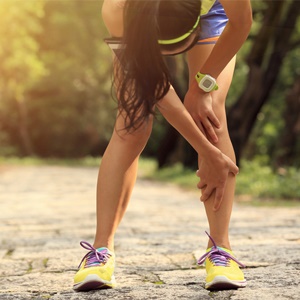
Margeaux De Lacy is a physiotherapist and the owner of Hands on Health Care, a chiropractic clinic. De Lacy says most of her patients are runners. Knowing how to perform an exercise is key, but knowing when to increase the weight, reps, distance or speed is also a critical factor for injury prevention.”Most people come in for either a calf strain or anterior knee pain, which is often Patellofemoral Pain Syndrome (also known as runners knee),” she says. Both of these injuries are commonly seen at the beginning of the season, due to patients doing (in short) too much too soon.
“Doing workouts incorrectly can definitely lead to injuries. Technique is really important, especially if you start adding weights into your workout as they increase the load on the joints and the work required from the muscles,” says De Lacy. When patients present her with gym-related injuries, De Lacy first finds out when and how they occurred. “Timing of the injury is important for me to know, whether it is an acute or chronic injury as the management thereof is different,” she says.
The injury occurred is necessary to note as well, so that she can help to prevent her patients from injuring themselves again in the future. “There isn’t one recipe to follow when trying to continue training whilst injured, there are many factors to consider, namely: the nature and degree of the injury, the caused of the injury, what you’re training for (if it’s an event), the time between injury and event date will determine your management,” says De Lacy.
Margeaux says, she advocates “active rest”, which means resting from the aggravating activity. “If you’ve got runners knee from running, one way of doing an active rest exercise is by swimming to keep fit. Every case is different and you should contact your healthcare provider before continuing to exercise through injury,” she says.
This article was originally published on www.womenshealthsa.co.za
Image credit: iStock

