Nearly a quarter of hospital trusts in England have seen waiting times deteriorate in the past year.


Nearly a quarter of hospital trusts in England have seen waiting times deteriorate in the past year.

Researchers at Johns Hopkins Medicine report that they have uncovered a promising drug target that could allow scientists to increase or decrease the activity of specific brain proteins. The discovery may lead to new treatments for psychiatric conditions such as anxiety and schizophrenia, as well as a neurological disorder that affects movement and balance. The work was supported by funding from the National Institutes of Health.
The proteins at the center of the research are known as delta-type ionotropic glutamate receptors, or GluDs. These proteins are known to play an important role in how neurons communicate with each other. According to the researchers, mutations in GluDs have been linked to psychiatric disorders, including anxiety and schizophrenia. Despite this connection, scientists have struggled for years to understand exactly how these proteins work, making it difficult to design treatments that could regulate their activity.
“This class of protein has long been thought to be sitting dormant in the brain,” says Edward Twomey, Ph.D., assistant professor of biophysics and biophysical chemistry at the Johns Hopkins University School of Medicine. “Our findings indicate they are very much active and offer a potential channel to develop new therapies.”
The study describing these findings was published in Nature.
Imaging Reveals How GluDs Function
To better understand GluDs, Twomey and his team used cryo-electron microscopy, an advanced imaging technique that allows scientists to visualize proteins in fine detail. Their analysis showed that GluDs contain an ion channel at their center. This channel holds charged particles that help the proteins interact with neurotransmitters (electrical signals that allow brain cells to communicate with one another).
“This process is fundamental for the formation of synapses, the connection point where cells communicate,” says Twomey.
Implications for Movement Disorders and Mental Illness
The discovery could help accelerate the development of drugs for cerebellar ataxia, a disorder that affects movement and balance. Cerebellar ataxia can result from stroke, head injury, brain tumors, or certain neurodegenerative diseases, and it may also cause memory problems. In this condition, GluDs become “super-active” even when there is no electrical signaling in the brain. Twomey explains that a potential treatment approach would involve developing drugs that block this excessive activity.
In schizophrenia, the situation appears to be reversed. GluDs are less active than normal, and Twomey says future drugs could aim to boost their activity instead.
Potential Links to Aging and Memory Loss
The findings may also be relevant to aging and memory decline. Because GluDs help regulate synapses, drugs that target these proteins could help maintain synapse function over time. Synapses are essential for learning, memory, and the formation of thoughts.
“Because GluDs directly regulate synapses, we could potentially develop a targeted drug for any condition where synapses malfunction,” Twomey says.
Next Steps and Ongoing Research
Looking ahead, Twomey says he plans to collaborate with pharmaceutical companies to further develop this therapeutic target. His team is also studying specific GluD mutations that have been directly linked to schizophrenia, anxiety, and other psychiatric disorders. The goal is to better understand how these conditions progress and to design more precise treatments.
Other Johns Hopkins scientists who contributed to the study include Haobo Wang, Fairine Ahmed, Jeffrey Khau, and Anish Kumar Mondal.
The Johns Hopkins University has filed a patent covering the techniques used to measure electrical currents from GluDs.
Funding for the research came from the National Institutes of Health (R35GM154904), the Searle Scholars Program, and the Diana Helis Henry Medical Research Foundation.

For nearly 100 years, dark matter has remained one of the biggest unanswered questions in cosmology. Although it cannot be seen directly, its gravitational influence shapes galaxies and the large-scale structure of the universe. At the Perimeter Institute, two physicists are investigating how a particular form of dark matter, known as self-interacting dark matter (SIDM), may influence the way cosmic structures grow and change over time.
In research published in Physical Review Letters, James Gurian and Simon May introduce a new computational tool designed to study how SIDM affects galaxy formation. Their approach makes it possible to explore types of particle interactions that were previously difficult or impractical to model accurately.
When Dark Matter Interacts With Itself
SIDM is a theoretical form of dark matter whose particles can collide with one another but do not interact with baryonic matter, the familiar matter made of protons, neutrons, and electrons. These collisions conserve energy through what physicists call elastic self-interactions. This behavior can strongly influence dark matter halos, the massive concentrations of dark matter that surround galaxies and help guide their evolution.
“Dark matter forms relatively diffuse clumps which are still much denser than the average density of the universe,” says Gurian, a Perimeter postdoctoral fellow and co-author of the study. “The Milky Way and other galaxies live in these dark matter halos.”
Heat, Energy Flow, and Core Collapse
The self-interacting nature of SIDM can trigger a process known as gravothermal collapse within dark matter halos. This phenomenon arises from a counterintuitive property of gravity, where systems bound by gravity become hotter as they lose energy rather than cooling down.
“You have this self-interacting dark matter which transports energy, and it tends to transport energy outwards in these halos,” says Gurian. “This leads to the inner core getting really hot and dense as energy is transported outwards.” Over time, this process can drive the core of the halo toward a dramatic collapse.
A Missing Link in Dark Matter Modeling
Simulating the structures formed by SIDM has long been a challenge. Existing methods work well only under certain conditions. Some simulations perform best when dark matter is sparse and collisions are rare, while others are effective only when dark matter is extremely dense and interactions are frequent.
“One approach is an N-body simulation approach that works really well when dark matter is not very dense and collisions are infrequent. The other approach is a fluid approach — and this works when dark matter is very dense and collisions are frequent.”
“But for the in-between, there wasn’t a good method,” Gurian says. “You need an intermediate range approach to correctly go between the low-density and high-density parts. That was the origin of this project.”
A Faster and More Accessible Simulation Tool
To solve this problem, Gurian and his co-author Simon May, a former Perimeter postdoctoral researcher now serving as an ERC Preparative Fellow at Bielefeld University, developed a new code called KISS-SIDM. The software bridges the gap between existing simulation methods, delivering higher accuracy while requiring far less computing power. It is also publicly available for other researchers.
“Before, if you wanted to check different parameters for self-interacting dark matter, you needed to either use this really simplified fluid model, or go to a cluster, which is computationally expensive. This code is faster, and you can run it on your laptop,” says Gurian.
Opening the Door to New Dark Matter Physics
Interest in interacting dark matter has grown in recent years, partly due to puzzling features seen in galaxies that may not fit standard models.
“There has been considerable interest recently in interacting dark matter models, due to possible anomalies detected in observations of galaxies that may require new physics in the dark sector,” says Neal Dalal, a member of the Perimeter Institute research faculty.
“Previously, it was not possible to perform accurate calculations of cosmic structure formation in these sorts of models, but the method developed by James and Simon provides a solution that finally allows us to simulate the evolution of dark matter in models with significant interactions,” Dalal says. “Their paper should enable a broad spectrum of studies that previously were intractable.”
Implications for Black Holes and Beyond
The collapse of dark matter cores is especially intriguing because it may leave observable signatures, including possible connections to black hole formation. However, how this process ultimately ends remains an open question.
“The fundamental question is, what’s the final endpoint of this collapse? That’s what we’d really like to do — study the phase after you form a black hole.”
By making it possible to explore these extreme conditions in detail, the new code represents an important step toward answering some of the deepest questions about dark matter and the structure of the universe.
Global demand for electricity is rising fast. Energy-hungry data centers that support artificial intelligence, along with expanding manufacturing, are putting unprecedented pressure on power systems worldwide. Meeting that demand will require more than simply generating additional electricity.
One promising solution is to use existing energy supplies far more efficiently and at lower cost.
A New Approach to Power Efficiency
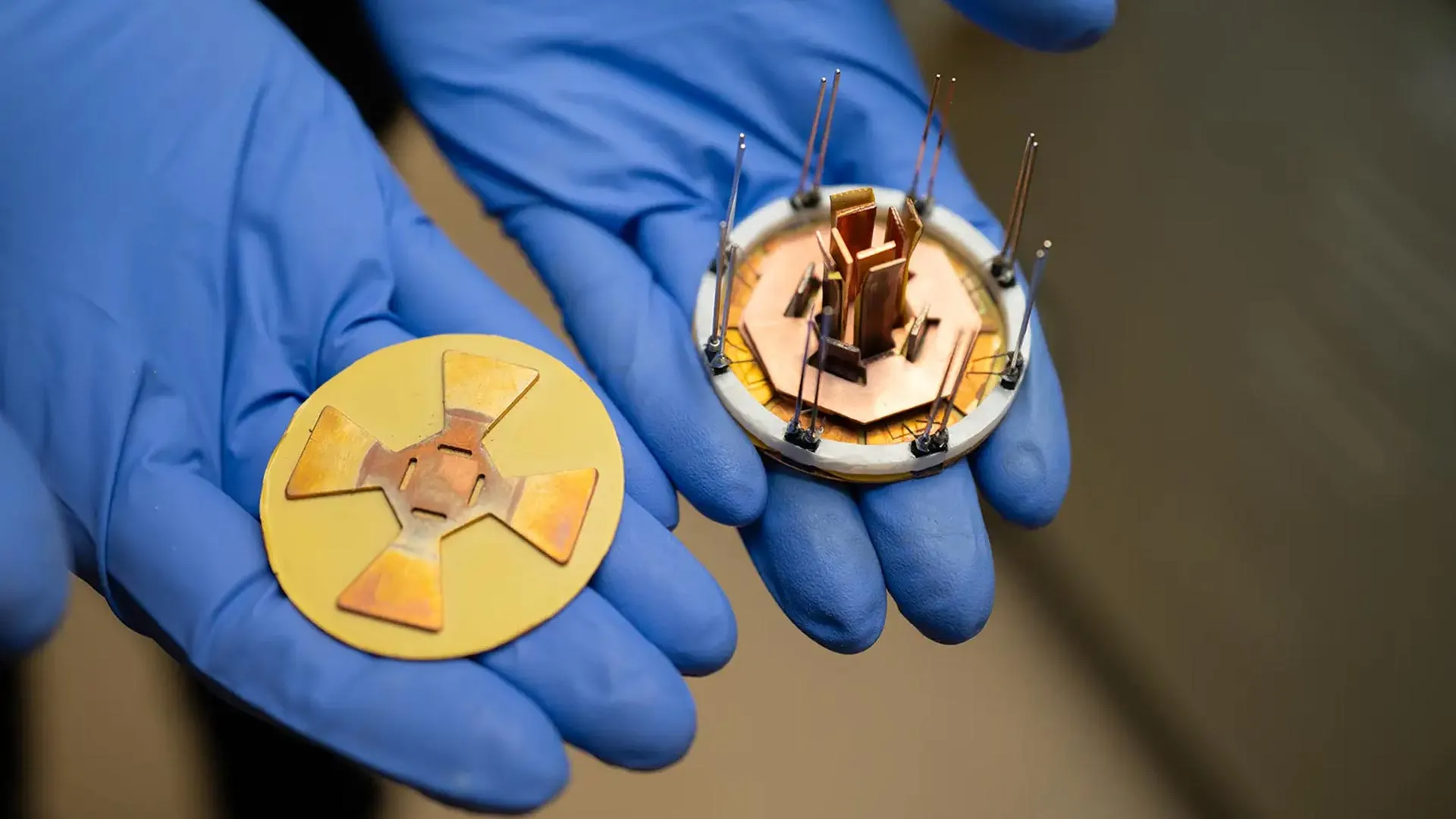
Researchers at the National Renewable Energy Laboratory (NREL) have developed a new silicon carbide based power module designed to dramatically improve how electricity is converted and delivered. A power module is the housing that contains power electronics, which regulate the flow of electricity between systems. This new design delivers record-breaking efficiency, higher power density, and a manufacturing process that keeps costs low.
The technology is known as NREL’s Ultra-Low Inductance Smart power module, or ULIS. By using silicon carbide semiconductors, ULIS can achieve five times the energy density of earlier designs while taking up less space. That combination allows manufacturers to build equipment that is smaller, lighter, and more energy efficient. The 1200-volt, 400-amp module is well suited for data centers, electrical grids, microreactors, and heavy-duty platforms such as next-generation aircraft and military vehicles.
Why Ultra-Low Inductance Matters
A key advantage of ULIS is its exceptionally low parasitic inductance, which refers to resistance that slows changes in electrical current and limits efficient power conversion. ULIS reduces this resistance by seven to nine times compared with today’s most advanced silicon carbide power modules.
Because the system can switch electrical current extremely quickly and efficiently, it converts more of the available electricity into usable power. That capability allows ULIS to extract significantly more value from the same energy supply, making it a strong candidate for addressing growing global energy needs.
“We consider ULIS to be a true breakthrough,” said Faisal Khan, NREL’s chief power electronics researcher and the principal investigator for the project. “It’s a future-proofed, ultrafast power module that will make the next generation of power converters more affordable, efficient, and compact.”
Built for Reliability in Extreme Conditions
ULIS is designed not only for efficiency, but also for reliability in demanding environments. According to Khan, the lightweight yet powerful module can monitor its own condition and anticipate component failures before they happen.
This feature is especially critical for high-risk applications such as aviation and military operations. For aircraft operating at 30,000 feet or vehicles navigating combat zones, early failure detection can be the difference between mission success and catastrophic loss.
“ULIS was a truly organic effort, built entirely in-house here at NREL,” Khan said. “We are very excited to demonstrate its strengths in real-world settings.”
A Radical Redesign for Lower Cost Manufacturing
Many of ULIS’ performance gains come from a completely new physical design.
Traditional power modules stack semiconductor devices inside box-like packages. ULIS instead arranges its circuitry in a flat, octagonal layout. This disk-shaped structure fits more components into a smaller footprint, reducing both size and weight. At the same time, its innovative current routing minimizes magnetic interference, which helps deliver cleaner electrical output and higher overall efficiency.
“Our biggest concern was that the device switches off and on very quickly, and we needed a layout that wouldn’t create a chokepoint within the design,” said Shuofeng Zhao, an NREL power electronics researcher who designed ULIS’ flux cancellation architecture.
Early concepts explored complex three-dimensional shapes, including designs resembling flowers or hollow cylinders. However, these ideas proved too expensive or difficult to manufacture. The breakthrough came when the team simplified the concept into a nearly two-dimensional structure. Sarwar Islam, another NREL power electronics researcher, proposed the flattened design that balanced performance, cost, and manufacturability.
“We squished it flat, like a pancake,” Zhao said, “and suddenly we had a low-cost, high-performing design that was much easier to fabricate.”
Joshua Major, also part of the NREL power electronics team, developed new fabrication methods that allowed the intricate structure to be produced using only in-house tools and facilities. The result was a design that combined the electrical advantages of three-dimensional systems with the practicality of flat manufacturing.
Flexible Materials and Wireless Control
ULIS also departs from conventional materials. Traditional power modules bond copper directly to rigid ceramic bases to conduct electricity and manage heat. While effective, this approach limits flexibility.
Instead, ULIS bonds copper to a flexible polymer called Temprion. This change produces a thinner, lighter, and more adaptable structure. The material bonds to copper using only heat and pressure, and its components can be machined with widely available equipment. As a result, manufacturing costs fall into the hundreds of dollars rather than the thousands.
Another major advance allows ULIS to operate wirelessly. The module can be controlled and monitored without physical cables, functioning as a self-contained unit. This modular, Lego-like design allows it to be integrated into a wide range of systems, from data center servers to advanced aircraft and military vehicles. A patent for the low-latency wireless communication protocol, led by Sarwar Islam, is currently pending.
Designed for Future Technologies
While ULIS currently relies on advanced silicon carbide semiconductors, the design was intentionally built to evolve. The module can be adapted for future semiconductor materials, including gallium nitride and gallium oxide, which has not yet reached commercial use.
Together, these innovations support a central goal. As societies become increasingly dependent on reliable electricity, ULIS is designed to deliver efficiency without sacrificing dependability.
Where ULIS Could Make the Biggest Difference
ULIS is expected to have broad impact across multiple sectors.
In the U.S. power grid, electricity must be converted into usable forms before it reaches consumers. This process often depends on large, low-frequency equipment that wastes energy. ULIS’ fast switching improves efficiency while its ability to tolerate high temperatures may reduce long-term maintenance costs.
In aviation, the module’s ability to move electricity quickly and conserve energy enables lighter and more powerful converters. This could help make electric vertical takeoff and landing (eVTOL) aircraft more practical and commercially viable.
ULIS could also play a role in future fusion energy systems. Although commercial fusion remains under development, these systems will require compact and reliable pulsed power components. ULIS’ ultralow inductance and durable design make it well suited for that challenge.
As industries pursue more reliable electricity, advanced artificial intelligence, and next-generation vehicles, ULIS is now available for licensing.
Bosses, in a post to staff, say in hindsight, it was not a good use of charitable funds.
John Cuddihy told BBC Scotland News his late daughter’s experiences “must continue to echo beyond her lifetime”.
A pilot scheme is rolled out in the north of the Isle of Man by the public health directorate.
Amber breaks out in hives if the temperature goes below 12C (53F) and wishes for a “normal life”.
An international trial involving 1,000 volunteers will aim to detect biomarkers associated with the condition.
Social media and news feeds are filled with unverified claims about a possible connection between acetaminophen and autism in children. But medical experts say the far more serious and well-documented concern is something else entirely: overdose from the widely used pain and fever medication.
Acetaminophen poisoning is one of the leading causes of hospitalization and death related to non-prescription drugs in the United States, according to Kennon Heard, MD, PhD, a professor in the CU Anschutz Department of Emergency Medicine and the department’s section chief of medical toxicology.
Each year, an estimated 56,000 people visit emergency departments because of acetaminophen poisoning, and about 2,600 are hospitalized. The drug is responsible for nearly half of all acute liver failure cases in the U.S. and roughly 20% of liver transplants nationwide.
Heard has studied acetaminophen poisoning for more than 25 years. He is now helping to lead a long-term clinical trial that is testing a potential new way to reduce liver damage in severe overdose cases. The experimental approach uses a medication typically given to patients poisoned by antifreeze.
Heard says CU and Denver Health, which is home to the Rocky Mountain Poison & Drug Safety center, have played a central role in this research for decades. “have been the center of the acetaminophen research universe for the past 40 years. There’s been a long history of this type of work being done here, and it’s great to be a part of it.”
Why Acetaminophen Overdoses Happen
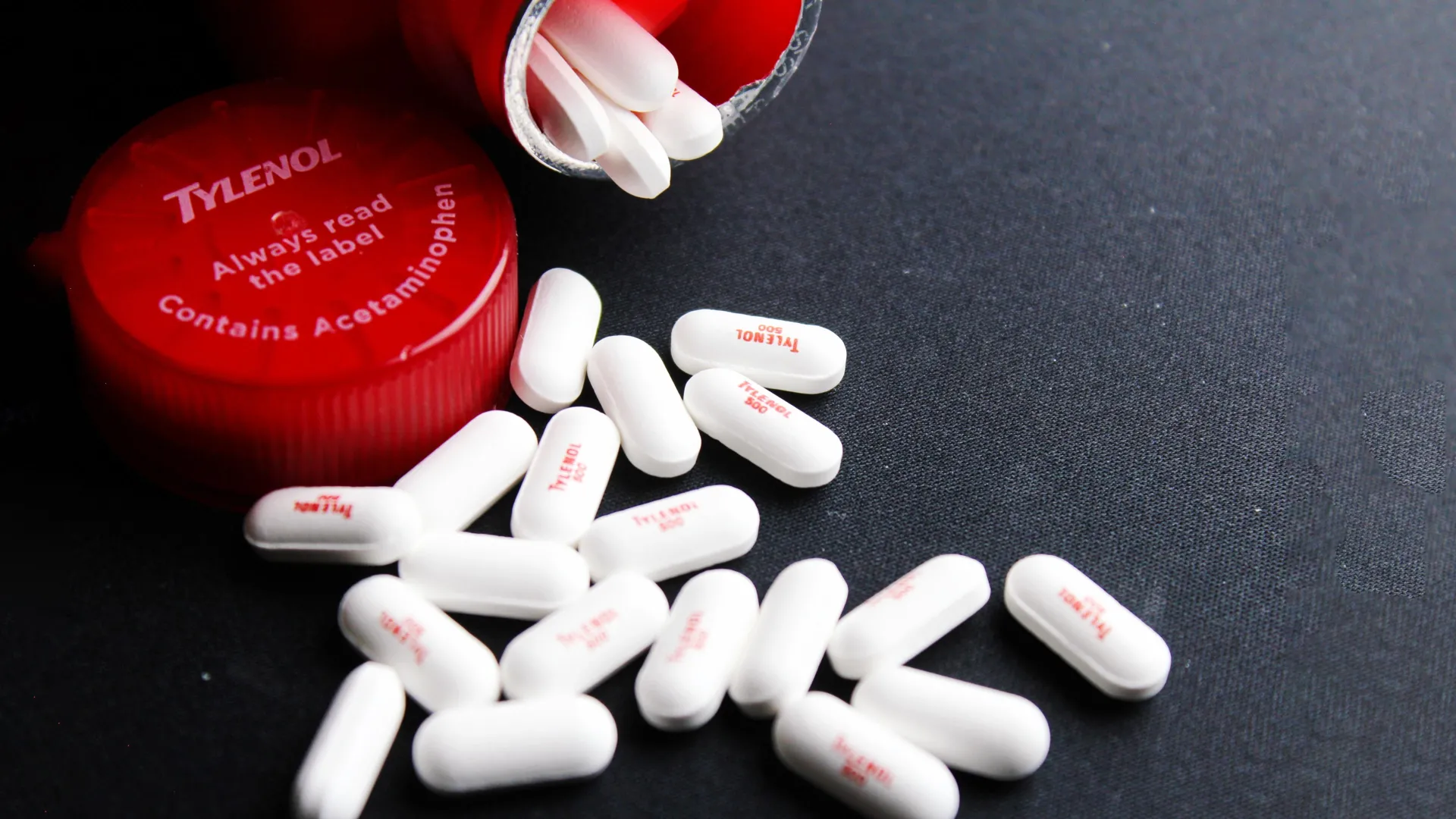
Acetaminophen is the main ingredient in Tylenol and many store-brand pain relievers used for mild to moderate pain and low-grade fever. It is also included in a wide range of over-the-counter products for colds, flu, sinus symptoms, and menstrual discomfort.
The medication has been used safely for decades when taken according to instructions. Problems arise when people exceed recommended doses, either by taking too much at once or by repeatedly taking more than advised over time.
“There are cases where people accidentally take too much acetaminophen,” Heard says. “Or maybe they have a really bad toothache, and they think if two is good, four is better, eight is even better, and so on. Or it’s someone who’s taking multiple repeated overdoses. Those are the people who get into trouble.”
Overdoses are also frequently linked to suicide and self-harm, Heard notes. “The No. 1 rule at the Poison Center is that if it’s available, people will take it, and a lot of people have Tylenol in their medicine chest.”
Limits of the Standard Antidote
For decades, doctors have relied on a drug called acetylcysteine as an effective antidote for acetaminophen overdose. When given early, it can prevent serious liver damage.
Its effectiveness drops sharply, however, if treatment begins more than eight hours after the overdose.
“The problem is that many patients don’t present with acetaminophen poisoning until after they have liver injury, at which point the acetylcysteine is less effective, and in some cases doesn’t really work at all,” Heard says.
Testing an Antifreeze Antidote
The current clinical trial led by Heard and his colleagues is focused on fomepizole, a drug approved to treat poisoning from ethylene glycol and methanol, substances commonly found in antifreeze. Exposure can occur accidentally, and in some cases people with alcohol use disorder have consumed antifreeze as a substitute for alcohol.
Fomepizole works by blocking enzymes known as alcohol dehydrogenase, stopping the body from converting ethylene glycol and methanol into toxic byproducts.
Heard says interest in using fomepizole for acetaminophen overdose dates back to the 1990s, when he was training in medical toxicology. Evidence came from individual patient case reports and animal studies, particularly in severe overdose cases.
More recently, research has shown that doctors are increasingly using fomepizole off-label to treat serious acetaminophen poisoning.
Richard Dart, MD, PhD, a professor of emergency medicine and Heard’s longtime mentor, ultimately suggested formally testing the drug in a clinical trial. Dart has served as director of Rocky Mountain Poison & Drug Safety since 1992.
A Proof of Concept Clinical Trial
The ongoing phase II trial is designed to determine whether adding fomepizole to standard acetylcysteine treatment can reduce liver damage in patients at high risk after acetaminophen overdose. It is considered a “proof of concept” study to see whether the combination shows enough promise to justify larger trials.
Participants are randomly assigned to receive either both medications or acetylcysteine alone. The study is double-blind, meaning neither the patients nor the researchers know which treatment each participant receives until the trial ends.
“We’ll compare the amount of liver damage, as measured by their liver enzymes, to see whether the fomepizole provides an added protective benefit beyond the standard treatment,” Heard says.
Patients are currently being enrolled at Denver Health, UCHealth University of Colorado Hospital, Children’s Hospital Colorado, and several additional sites. Enrollment has been slow due to the challenge of finding patients who meet the study criteria, but researchers hope to enroll about 40 participants within 12 to 18 months.
If the findings are positive, Heard expects the research to move into a larger trial that would examine longer-term outcomes, including survival and the need for liver transplants.
A Caution for Medicine Cabinets Everywhere
“The message that I would want to get out,” Heard says, is that people should carefully read medication labels, avoid exceeding recommended doses, and recognize that acetaminophen may be present in multiple products at home.
“We’ve started to recognize that the number of people who die from an accidental overdose is pretty close to the number of people who deliberately take an overdose,” he says.
Heard’s collaborators on the study include Dart and Andrew Monte, MD, PhD, also a professor of emergency medicine.
