The NHS is to open its first gambling addiction clinic for young people.


The NHS is to open its first gambling addiction clinic for young people.
Inspectors warn care homes and the NHS to do more to look after the teeth of vulnerable residents.
Researchers have now shown that patients who are heavily colonized with Candida auris on their skin can shed the fungus and contaminate their surroundings. This finding provides an explanation for the extensive contamination that often occurs in healthcare facilities with C. auris outbreaks. These results can help inform infection control efforts. The research is presented at ASM Microbe, the annual meeting of the American Society for Microbiology.
C. auris is an emerging fungal pathogen that can cause large outbreaks in healthcare facilities. Understanding how C. auris spreads in healthcare facilities is essential for infection control. Because C. auris can be present on the skin without causing symptoms, it has been hypothesized that the spread of C. auris occurs as patients naturally shed their skin cells. This process could lead to substantial contamination of the surrounding environment and therefore increase chances of transmitting C. auris.
To test this hypothesis, the researchers developed methods to count C. auris in samples collected from patients’ skin and their rooms. We found that patients can have very high concentrations of C. auris on their skin, and higher levels of C. auris on their skin were correlated with higher levels of C. auris on the patient’s bed.
“This finding supported our hypothesis that patients are actively shedding C. auris cells into their environment,” said Joe Sexton, ORISE post-doctoral fellow in the Mycotic Diseases Branch at the Centers for Disease Control and Prevention, who designed and led the study. The researchers were able to culture live C. auris from the beds of all patients who tested positive, and even beds that were previously, but no longer, occupied by patients with C. auris.
“These results should be considered in developing more effective strategies for infection control efforts during a C. auris outbreak,” said Dr. Sexton.
Patient and environmental samples were processed in the Mycotic Diseases Branch laboratory in Atlanta by Joe Sexton, Meghan Bentz, and Rory Welsh and Anastasia Litvintseva, who served as a principal investigator (PI). These samples were collected by the City of Chicago’s Public Health Department led by Massimo Pacilli.
Additional groups within CDC also supported this work including the Department of Scientific Resources and the Division of Healthcare Quality and Promotion, and the Oak Ridge Institute for Science and Education. This work will be presented at American Society of Microbiology (ASM) Microbe 2019 conference in San Francisco, California (June 20-24, 2019).
Story Source:
Materials provided by American Society for Microbiology. Note: Content may be edited for style and length.
Researchers have used whole genome sequencing (WGS) to demonstrate transmission of a single bacterial strain that possessed a carbapenem-resistance gene in a northern California hospital. The gene armed the bacteria with resistance to carbapenems, a type of antimicrobial drug reserved as a last-line treatment for serious infections. The research is presented on Sunday, June 23rd at ASM Microbe, the annual meeting of the American Society for Microbiology.
Epidemiologists from the local public health department and the California Department of Public Health (CDPH) collaborated with laboratory scientists from the CDPH Microbial Diseases Laboratory (MDL) to characterize the strain and identify potential transmission pathways in combination with epidemiologic information.
The bacterial strain persisted in the hospital for over 3 years, potentially due to transmission from patient to patient combined with lengthy stays in the hospital intensive care unit (ICU). “Our investigation highlights the importance of regular epidemiological and microbiological monitoring of resistant strains in hospitals and the use of the advanced molecular technologies to track their spread,” said Varvara Kozyreva, Ph.D. Genotyping Unit Chief, Microbial Diseases Laboratory Program, California Department of Public Health.
Between 2013 and 2015, the hospital identified eight patients who were positive for a strain of Klebsiella pneumoniae bacteria that produced an enzyme conferring resistance to carbapenems. The initial four patients identified with the resistant strain had overlapping stays in the ICU over a one-month period. One of these initial patients remained in the ICU for two years, during which time an additional four patients with the resistant bacterial strain were found in the facility. WGS analyses of the bacteria from the eight different patients demonstrated they were all highly related genetically.
“WGS allowed us to understand and demonstrate connections among the patients over a multiple year time period, which would not have been possible using epidemiologic information alone,” said Dr. Kozyreva. WGS also showed that this particular bacterial strain’s carbapenem-resistance gene appeared to be located on the chromosome. Normally, such resistance genes are located on additional “mobile” DNA pieces called plasmids, that can be transferred between different strains (and even different species) of bacteria.
“Since this particular strain had less means to efficiently share its carbapenem-resistance genes with other bacteria in the hospital environment, it is all the more likely that this one antibiotic-resistant clone of bacteria persisted in the hospital over multiple years,” said Dr. Kozyreva. Using WGS to track resistant bacterial strains can help hospitals and public health officials target infection control interventions to halt transmission sooner.
Story Source:
Materials provided by American Society for Microbiology. Note: Content may be edited for style and length.
Researchers from the New York Institute of Technology (NYIT) have discovered bacteriophages, viruses that infect bacteria, living in their kitchen sponges. As the threat of antibiotic resistance increases, bacteriophages, or phages for short, may prove useful in fighting bacteria that cannot be killed by antibiotics alone. The research is presented at ASM Microbe, the annual meeting of the American Society for Microbiology.
A kitchen sponge is exposed to all kinds of different microbes, which form a vast microbiome of bacteria. Phages are the most abundant biological particles on the planet and are typically found wherever bacteria reside. With this understanding, kitchen sponges seemed a likely place to find them.
Students in a research class isolated bacteria from their own used kitchen sponges and then used the bacteria as bait to find phages that could attack it. Two students successfully discovered phages that infect bacteria living in their kitchen sponges. “Our study illustrates the value in searching any microbial environment that could harbor potentially useful phages,” said Brianna Weiss, a Life Sciences student at New York Institute of Technology.
The researchers decided to “swap” these two phages and see if they could cross-infect the other person’s isolated bacteria. Consequently, the phages did kill the other’s bacteria. “This led us to wonder if the bacteria strains were coincidentally the same, even though they came from two different sponges,” said Weiss.
The researchers compared the DNA of both isolated strains of bacteria and discovered that they were both members of the Enterobacteriaceae family. These bacteria belong to a rod-shaped group of microbes commonly found in feces, where some cause infections in hospital settings. Although the strains are closely related, when performing biochemical testing they found chemical variations between them.
“These differences are important in understanding the range of bacteria that a phage can infect, which is also key to determining its ability to treat specific antibiotic-resistant infections,” said Weiss. “Continuing our work, we hope to isolate and characterize more phages that can infect bacteria from a variety of microbial ecosystems, where some of these phages might be used to treat antibiotic-resistant bacterial infections.”
This project began as part of an undergraduate research class with seven students at the New York Institute of Technology (NYIT) in Old Westbury, New York. The course was funded through internal grants provided by (NYIT), which also supported our later work to further characterize the isolated bacteria and bacteriophages. This second phase of our work will be presented on a poster at ASM Microbe on Sunday, June 23rd.
Story Source:
Materials provided by American Society for Microbiology. Note: Content may be edited for style and length.

Vaccinating against the common infant infection rotavirus not only cuts a child’s odds of getting sick, it might also prevent them from developing type 1 diabetes later in life, new research suggests.
Infants who got all of the recommended doses of the “stomach flu” virus vaccine had a 33% lower risk of developing type 1 diabetes compared with unvaccinated babies, according to a study led by Mary Rogers. She’s an epidemiologist at the University of Michigan, in Ann Arbor.
Takes large amounts of data
Type 1 diabetes involves the death of insulin-producing cells in the pancreas. People with the illness require daily insulin shots, and long-term effects on their health can be severe.
The new study relied on national insurance data on over 1.5 million kids born before or after the rotavirus vaccine was made available to babies in 2006.
Type 1 diabetes “is an uncommon condition, so it takes large amounts of data to see any trends across a population,” Rogers explained in a university news release.
While children who had all three doses of the vaccine seemed to be protected against type 1 diabetes, those who didn’t complete the regimen were not, the researchers noted. Rogers stressed that the study cannot prove that the vaccine prevents type 1 diabetes, only that there’s an association.
“It will take more time and analyses to confirm these findings,” she said. “But we do see a decline in type 1 diabetes in young children after the rotavirus vaccine was introduced.”
Importance of full vaccination
Getting the full, recommended dose of rotavirus vaccine was crucial, however. The US Centers for Disease Control and Prevention recommends that babies begin receiving the multidose vaccine by 15 weeks of age at the latest, and finish receiving it before eight months of age. The rotavirus vaccine is delivered via oral drops, not a needle.
An Australian study published earlier in 2019 found similar results, Rogers noted. And she estimated that if all US children were fully immunised against rotavirus, there might be eight fewer cases of type 1 diabetes per 100 000 children each year.
Right now, one in four infants don’t get all three of the recommended doses of the rotavirus vaccine, the Michigan team noted. That’s important, because being fully vaccinated reduces the chance of being hospitalised for rotavirus infection by 94%, the study authors said.
Rogers stressed that the research is still in its early stages.
“Five years from now, we will know much more,” she said. “The first groups of children to receive the rotavirus vaccine in the United States are now in grade school, when type 1 diabetes is most often detected. Hopefully, in years to come, we’ll have fewer new cases – but based on our study findings, that depends upon parents bringing in their children to get vaccinated.”
The report was published online in the journal Scientific Reports.
Image credit: iStock

Influencer Ali Bonar says she’s putting the “Insta” back in Instagram. She makes an effort to talk to her followers about the things she’s going through in real time, rather than waiting until she’s come to terms with them.
For the past two years, that’s meant talking about the stages of recovering from an eating disorder.
Bonar, who’s 26, tells Health that “it started as a really innocent love of eating healthy food” and a “passion for being creative in the kitchen.” But then she left for college at University of California, Berkeley to study nutrition, and that innocent love turned into an obsession.
RELATED: This Influencer's "Before-and-After" Reveals the Problem With Butt Transformation Photos
“I think it was a combination of studying nutrition, starting college and being away from home, and just being a woman in today’s society,” she says. “It’s really freaking hard to love your body. It’s such an uphill battle.”
Bonar recalls one night, after she got home from dinner with friends, she realized that she couldn’t remember a single thing they talked about because she was obsessing the entire time over whether her order was healthy enough. She drove herself crazy making sure everything she ate was perfectly clean.
Another common topic of Bonar’s Instagram posts: “not feeling sick enough.” For awhile, she knew she had disordered eating habits, but she also knew she wasn’t anorexic or bulimic, which made her feel isolated. She didn’t know how to open up about what was going on because she didn’t fit the standard definition of an eating disorder patient.
Then Bonar found Molly Alliman, or @balancebymolly on Instagram. Alliman's message of helping women heal their relationship with food resonated with Bonar, who decided to reach out.
“She really changed everything for me,” Bonar says. The two did therapy sessions for about six months, and Bonar eventually learned to see food as a source of enjoyment, not stress. Yet Bonar emphasizes that “recovery is up and down; it’s not a linear road.” She shares the good days and the bad, and in doing so she’s formed a community of followers.
For those who reach out to her saying they’re going through something similar, Bonar says she always urges them to tell someone. “It’s the hardest thing, and I know people don’t want to hear it, but it can help so much.”
To get more real-talk on health and wellness, sign up for our weekly WomenIRL newsletter
Blend of strength and endurance training makes team sport players the fittest of all, a study finds.

Face-lifts and hair transplants. Chin implants and forehead lifts and lip augmentation…
Baby boomers hoping to retain their youth – and maybe get back into the dating scene – are seeking plastic surgery in ever-increasing numbers, according to the American Society of Plastic Surgeons.
Nearly 50 000 more cosmetic procedures were performed on Americans 55 and older in 2018 than the year before, new statistics showed.
“Older Americans are vibrant and living their lives to the fullest, and they want the way they look to reflect that,” said Dr Alan Matarasso, president of the society.
More than 4.2 million cosmetic procedures took place in 2018, including nearly 381 000 surgical procedures and 3.8 million minimally invasive ones.
Among the specific procedures and techniques:
Two-thirds of all face-lifts are performed on people 55 and older, along with roughly half of eyelid surgeries, forehead lifts and lip augmentations, the stats showed.
These numbers reflect what is happening in the practice of Dr Lyle Leipziger, a plastic surgeon in Great Neck, New York.
No longer taboo
“People are taking better care of themselves. They’re dieting. They’re exercising. They’re seeing their doctor for any medical indications,” said Leipziger, chief of plastic and reconstructive surgery at North Shore University Hospital in Manhasset, New York. “These same people are looking in the mirror and they really want to look as good on the outside as they feel on the inside. They want to look as young as they feel.”
On top of that, plastic surgery isn’t considered as taboo or vain among boomers as it was for previous generations, Matarasso said.
Societal changes are also at play. For example, the rise of social media and dating apps has caused boomers to take renewed interest in their appearance, Leipziger said.
“I have many patients that come to me that have either been divorced or have lost a spouse. They want to slowly get back into the dating scene, and they look in the mirror and feel that they haven’t done things to make themselves look better,” Leipziger said. “They’d like to enhance themselves just to feel better about going out into the dating scene once again.”
Changes in the economy and the US job market also are spurring interest among older Americans, Matarasso said.
“We are no longer staying in jobs for the rest of our lives. Whether we like it or not, first impressions are a big part of life,” he said. “If somebody is moving around, whether socially or economically, they may be more concerned with their appearance.”
Beware of risks
Finally, people might be considering plastic surgery because more choices are available, with advances that have improved both safety and results, Matarasso said.
“The world needs to realise that plastic surgery in the last decade or so has changed,” he said. “If we were having this conversation in the year 2000, we would only be talking about surgery. Now we have minimally invasive and even nonsurgical techniques available to us.”
However, traditional plastic surgery is still surgery, and patients should be aware of the risks if their health isn’t great.
“They key thing is that you don’t want confounding medical problems. You don’t want people who are unhealthy,” Matarasso said.
Complications of any plastic surgery can include infection, bruising, excess bleeding, difficulty with wound healing and anaesthesia problems, according to Stanford University Health.
Realistic expectations
Boomers considering plastic surgery should check first with their doctor to make sure they don’t have a health issue that could complicate either the procedure or their recovery, Leipziger said.
They also need to make sure that they follow all pre- and post-operative care recommendations, he added.
“The best patient for plastic surgery is a healthy patient with realistic expectations, for whom we’re able to perform a meticulous surgical procedure that includes conscientious pre- and post-op care,” Leipziger said.
Image credit: iStock


Ever wanted to give up your phone? There’s much anxiety that comes with it. Here’s how it changed the life of this writer.
As a freelance writer, I’m on my phone a lot. I communicate with editors almost exclusively via email, accept last-minute assignments on-the-go, and chronicle my adventures on Instagram. Every morning, I wake up, roll over, and immediately scroll through my email before doing anything else. Being connected is a large part of what keeps my business afloat.
One day, as I was grabbing a coffee across the street from my apartment, I was standing in line when I started to feel panicked. My chest was tight, I was short of breath, and I had this unmistakable feeling of terror, even though I couldn’t really identify what I was scared of.
I was having a panic attack. And it was in part because I didn’t have my phone with me. It was a wakeup call. I knew I needed to stop letting my phone run my life.
It should come as no surprise that our phones stress us out. Multiple studies have shown that excessive smartphone use can lead people to experience brain changes that are linked to depression and anxiety. Although smartphone addiction is not classified as an official disorder in the latest edition of the DSM, internet addiction in general is listed as a disorder in need of further research, as well as an issue of “significant public health importance.”
But even though our phones make us miserable, we literally can’t handle being away from them. One study found that when people could hear their phones ringing but couldn’t answer them, their levels of the stress hormone cortisol spiked; another found that up to 90% of people feel “phantom vibrations,” and that we can go into “panic mode” when our phones are on low battery . There’s even a term for this: nomophobia, or the irrational fear of being without your smartphone.
What’s more, most people realise just how dependent they are on their phones. They just don’t want to do anything about it. In a 2017 study, 65% of Americans said they would benefit from a “digital detox,” or temporarily purging technology from their lives — but only 28% admitted to actually trying it themselves.
It’s a double-edged sword: constantly being on your phone is torture, but not being on your phone is worse.
Sick of waking up stressed out, anxiously awaiting an updated inbox, and going to bed with my device in hand scrolling through social media feeds, I decided to spend a month in relationship rehab with my phone.
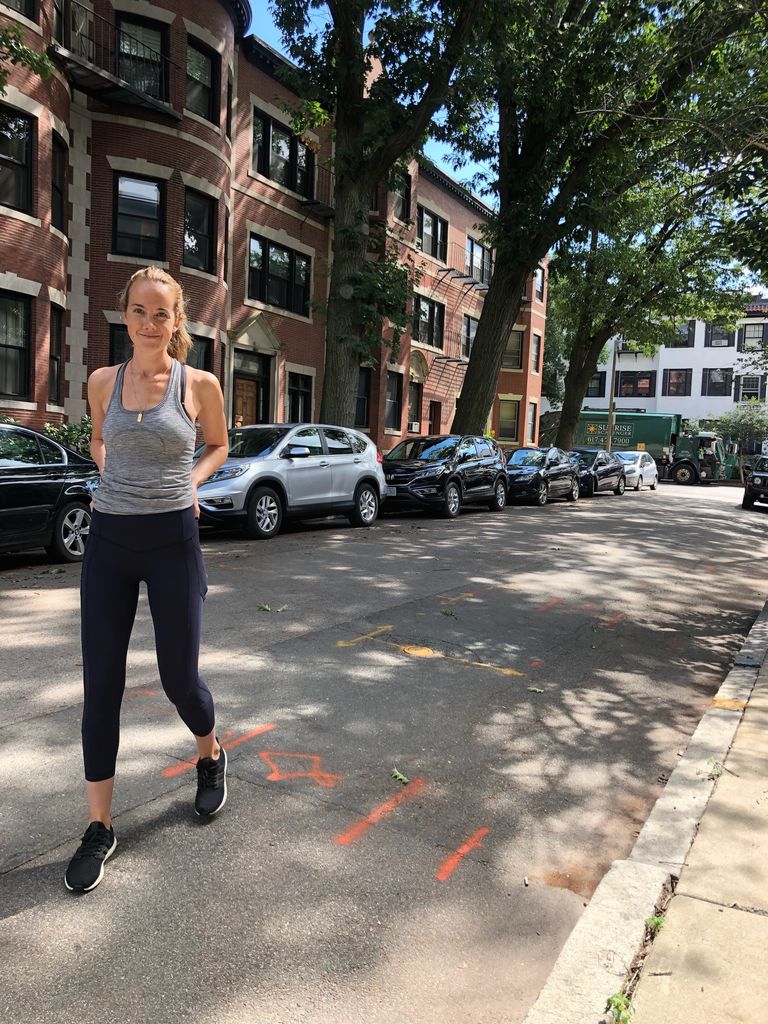
Your goal shouldn’t be to give up your phone entirely, (after all, I do really need it for my job). But I wanted to give myself some much-needed distance from my device.
Related: Here’s Something You Need To Know About Your Phone. And It’s Not Pretty
I knew I needed to start small. So for the first few days of the experiment, instead of waking up and immediately strolling through my emails, I didn’t look at my phone at all. Instead, I went for a walk outside — something I knew from my research as a health reporter helps you clear your mind and start your day off on the right foot. Then I’d go for a run or do an early a.m. workout class — no phone whatsoever (and trust me, as someone who used to Instagram a lot at the gym, this was no small feat).
Almost immediately, I noticed a difference. During that first week, as I walked down the streets, I realised I was looking around instead of down, and I saw some of what I’d been missing: morning sunshine, quiet city streets. I also realised how ridiculous other people looked when they were constantly on their phones, and how plugged in everyone else was. (The next time you find yourself on a subway car or walking down a city street, look around: almost everyone is looking down.)
After a while, everything felt a bit slower. I realised I could breathe. I could think.
 The second week, I took things a bit further. I began leaving my phone behind during the day when I wasn’t working, during short walks around the block, trips to the grocery store, and coffee or lunch meetings. I even left it behind on runs.
Related: From An Unhealthy Addiction To Getting High On Running
This wasn’t easy. One day, I went to meet a friend for a run, and she was late. Unable to text her, I felt a little panicked standing there, just waiting by myself. I debated starting the run without her, or even asking a stranger for their phone to text her. But 15 minutes later, she showed up, and the anxiety went away immediately.
Over the course of a few weeks, I wasn’t as overwhelmed with the anxiety of not having my phone on me (it’s a process, people). I started to feel a little calmer and more relaxed. I realised that not constantly checking my email wasn’t going to make or break my career. If I missed a call, I could always just call the person back when I got home.
I also realised I didn’t have to document absolutely everything in my life on social media. Now, when I went somewhere, I was able to actually take in sights instead of trying to take the perfect Instagram photo.

I wouldn’t say that I officially broke up with my phone — it was more like we went to couples’ therapy. I obviously still use my phone to check my email, track my runs on Strava, and Instagram story occasionally. But I’m more aware of how my digital habits affect my mood and overall well-being.
Last week, I took my first real vacation in a year. I swam in the ocean, spent time with family, and worked out — totally unplugged. In the past, I would have been freaking out about how many emails I had in my inbox, or whether I had missed something important. But I knew the emails could wait. Everything else could wait. And for the first time in years, I truly was able to enjoy myself — phone-free.
So try to give up your phone, it could change your life.
Originally published on www.mh.co.za
Image credit: iStock

