Health24.com | WATCH: ‘Is this a dream?’: People with diabetes meet their alert dogs

Type one diabetics can often not detect swings in their blood sugar levels. This is where diabetic alert dogs step in.

The dogs are trained to detect dangerous changes in a person’s blood sugar – studies show that they are particular adept at detecting low blood sugar levels.

Watch as these diabetics meet their alert dogs.

Share Button

Novel hypothesis goes underground to predict future of Greenland ice sheet

The Greenland ice sheet melted a little more easily in the past than it does today because of geological changes, and most of Greenland’s ice can be saved from melting if warming is controlled, says a team of Penn State researchers.

“There is geologic data that suggests the ice sheet was more sensitive to warming and temperature variations in the past million years, and not so much in the more recent past,” said David Pollard, research professor in the Earth and Environmental Systems Institute at Penn State.

Too much warming will cause Greenland to lose most or all of its ice over the coming centuries, but most research indicates that the threshold warmth for complete ice loss has not been reached yet.

Paleoclimatic records indicate that most of Greenland was ice-free within the last 1.1 million years even though temperatures then were not much warmer than conditions today. To explain this, the researchers point to there being more heat beneath the ice sheet in the past than today.

Data show that when the Iceland hot spot — the heat source that feeds volcanoes on Iceland — passed under north-central Greenland 80 to 35 million years ago, it left molten rock deep underground but did not break through the upper mantle and crust to form volcanoes as it had in the west and east. The Earth’s climate then was too warm for Greenland to have an ice sheet, but once it cooled the ice sheet formed, growing and shrinking successive with ice ages.

“The idea is that the loading and unloading, flexing and unflexing from ice ages tapped into slightly melted rock that was left deep under Greenland by the Iceland hot spot and brought that melt up,” said Richard Alley, Evan Pugh University Professor of Geosciences at Penn State.

Changes to the ice sheet allowed the molten rock to move closer to the Earth’s surface, even to the base of the ice. The hotter bed melted more ice from below, lubricating the ice sheet so it was thinner and easier to melt from above.

The melted rock wants to come up, according to Alley. As the ice sheet grows and shrinks, it essentially shakes the melt, drawing it up in pulses.

“The first shakes usually do the most moving,” Alley said.

The effect would have been largest when the first big ice sheet grew and then shrank, he added. More recent changes to the ice sheet also affect geothermal fluxes, but not as much as they had in the past.

“The hypothesis does not change the reality that if we make it hot, Greenland’s ice melts, and no one will like that,” Alley said. “It does not even really tell us whether geology just at this moment is making it harder or easier for the ice to melt. The ability of the ice to melt got easier in the past and is sort of bumpily getting harder, and we do not know where on the bumps we are.”

Pollard tested the team’s hypothesis using a numerical, three-dimensional ice-sheet model. The researchers report their results in the Journal of Geophysical Research in January.

“The Greenland ice sheet is very likely to melt a lot and retreat, and contribute to sea level in the next few centuries,” Pollard said. “This study is part of the puzzle of figuring out how much it will melt and retreat. We are using past geologic data to validate the models that are being used for the future.”

If Greenland’s ice sheet were to completely melt today, global sea levels would rise nearly 23 feet and flood coastal areas. Parts of cities like New York would be underwater. The team says future studies should integrate geologic and geophysical data as well as glaciological, atmospheric, oceanic and paleoclimatic information to better project how much and how fast the ice sheet will melt and its effect on sea-level rise.

“If you had a better idea of how much and how fast sea level rises from warming, you could make wiser decisions,” Alley said. “This research is a piece of the effort to provide policymakers and planners with the background information that will allow them to make good decisions.”

Story Source:

Materials provided by Penn State. Original written by Francisco Tutella. Note: Content may be edited for style and length.

Share Button

Strategies for growing biomass for fuel can have economic, ecological and environmental benefits

In efforts to curb our use of greenhouse gas-generating fossil fuels, plant-based biofuels are among the top contenders as alternative liquid energy sources for transportation. However, strategies to produce high yields of biomass for fuels are not a one-size-fits-all proposition, according to a study led by UC Santa Barbara professor of ecology David Tilman.

“It is difficult to make a biofuel that actually has environmental benefits,” said Tilman, a faculty member in the Bren School of Environmental Science & Management, and co-author of a paper published in the journal Nature Sustainability. “When a food crop is used to make a biofuel, this, in essence, takes food away from poor people around the world, and, it turns out, offers little, if any, greenhouse gas reductions.”

Whereas conventional production of biofuels has largely used food crops such as corn, soybeans, oil palm and sugarcane, these practices have their pitfalls, such as intensive use of nitrogen fertilizers, and competition for fertile croplands that had been growing food. In Tilman’s 10-year experiment, the researchers explored alternative ways to generate biomass, but with fewer environmental and economic side effects.

“We wanted to see if prairie grasses might prove to be a better crop,” he said. In contrast to relatively shallower-rooted annual crops, the deep roots of the perennial grasses of the Midwest are better able to store carbon in the earth — an additional environmental benefit. Moreover, according to the study, growing a diversity of perennial grasses on lands so infertile that they had been abandoned from agriculture “could minimize competition with food and the greenhouse gas emissions associated with potential direct or indirect land clearing, enhance recovery of ecosystem services and provide wildlife habitat.”

However, because the land was depleted of nutrients, some agricultural treatment might have value. And so the researchers, working with 36 plots and 32 native grassland species, set out to find the optimal amount of fertilizer and irrigation that would yield the greatest — and most diverse — amounts of biomass, while also resulting in underground carbon storage and minimal nitrate leaching.

The result, after a decade of observation and analysis? More is not necessarily better.

“Our results indicate that different intensification levels have different environmental benefits and costs,” said lead author Yi Yang, who is now a postdoctoral researcher at the University of Minnesota.

In fact, moderate treatments with a low rate of nitrogen fertilizer and irrigation water resulted in the best biomass yields and carbon storage — twice the yield and storage of untreated plots. Meanwhile, the more intensively treated plots resulted in 30 percent lower greenhouse gas savings, 10 times greater nitrate leaching and 120 percent greater loss in plant diversity than their moderately-treated counterparts.

While the results indicated that the energy yield from optimal management of prairie grasses was still somewhat lower per hectare than for traditional corn ethanol, the prairie grasses were grown on land too infertile for corn. Moreover, because much less nitrogen fertilizer was used than for corn and especially because of the high rate of carbon storage in soils, the bioenergy from the optimally grown prairie grasses gave much greater greenhouse savings. All this, with the benefits of ecological restoration.

The promising results of this study lead to the notion that a more tailored, ecologically friendly approach to biofuel production could be beneficial in other regions as well, as we continue to explore ways to generate biomass for alternatives to fossil fuels.

“Our study suggests that optimizing multiple environmental benefits requires sustainable intensification practices appropriate for the soils, climate and plant species of a region,” Yang said.

Research on this project was conducted also by Clarence Lehman and Jared L. Trost of University of Minnesota (UMN).

Share Button

Celebrity ads for diet aids should be banned, says top doctor

England’s top doctor calls on celebrities to be more ‘responsible’ on social media.

Share Button

Health24.com | Doctors turn to ‘social prescriptions’ to combat depression and loneliness

Visiting museums, doing yoga, attending a dance class or even taking a stroll in the park may seem like simple pastimes, but these activities can be highly beneficial for your mental health and general well-being.

This is why doctors in countries like Canada and the UK have started providing patients who suffer from depression, loneliness or anxiety with social prescriptions instead of medical ones.

In an interview with Halifax Today, clinical psychologist Dr Simon Sherry explains the models of social prescriptions. “In the first model, your primary care doctor would issue you a prescription to complete a social activity within your community. This might be befriending someone else, it might be something like gardening or getting involved in the arts. The second model refers patients to a nurse or social worker who helps customise a ‘social prescription plan’.”

These social interactions through activities like dancing, arts and crafts and knitting have helped people form social bonds with their fellow participants.

Social interactions

Some organisations allow patients to offer what skills they have. Thereby, not only are they benefiting from the social interactions and the feeling of being needed, they are also helping those around them.

According to social worker and clinical psychologist Megan Rafuse, in an interview with Huffington Post, “What we know is that when we prioritise connection with others, we actually thrive in all aspects of our lives and offer ourselves a buffer against mental illness, including depression and anxiety.”

These kinds of prescriptions have received significant backing from the UK. British Health secretary Matt Hancock said in a speech last year, “We’ve been fostering a culture that’s popping pills and Prozac, when what we should be doing is more prevention and perspiration. Social prescribing can help us combat over-medicalising people.”

Speaking to Health 24’s Cybershrink Dr Michael Simpson, he noted that “The environment during (mental health) treatment is important. In the old days, an asylum (literally, a safe place) was often sited in the countryside, with fields, trees, and views considered to be therapeutic…For loneliness I often recommend that people get involved in helping other people : this brings them company, they meet nicer people than they’d meet at a club or bar, they help people who need help, and they get their own problems into better perspective.”

Not for everyone 

Researchers have found that these social prescriptions have led to patients opting for a reduction in medication.

However, we need to take into consideration that mental health exists on a spectrum. Some patients may benefit from these social prescriptions whereas medication is beneficial to the health of others. Researchers are aware that these prescriptions won’t work for everyone.

Image credit: iStock

Share Button

Health24.com | Here’s why your period is making you constipated (and what you can do about it)

Periods have a number of side-effects, which differ from person to person. Apart from cramping and bloating, constipation may also pop up during that time of the month.

According to the Cleveland Clinic, it is common for women to experience a manageable level of digestive distress when they are menstruating. These issues may include cramps, bloating, indigestion, nausea, diarrhoea or constipation.

Hormones are to blame 

Did you know that the tummy turmoil you might experience during your period has nothing to do with your digestive system? During your menstrual cycle, hormones are released that may have an inflammatory effect on your body.

According to Dr Donald Ford, a family physician at the Cleveland Clinic, the build-up of the hormone progesterone is the most likely cause of constipation right before, during or shortly after menstrual bleeding. Progesterone causes the thickening of the uterine walls just before you ovulate, which may lead to constipation several days before you start menstruating.

Progesterone also causes food to move more slowly through your intestines, causing you to feel backed up.

According to the International Foundation for Gastrointestinal Disorders (IFGD), constipation as a side-effect of menstruation might be even worse for those who suffer from irritable bowel syndrome (IBS). 

What can you do?

Rest assured that bowel changes during your period are normal, but when things become unbearable, you need to see your doctor. If the meantime, here’s what you can do:

  • Start drinking more water and increase your fibre intake in the middle of your cycle, as progesterone levels start peaking when you ovulate.
  • Try to eliminate heavily processed foods and alcohol, and reduce caffeine intake during your period.
  • If your constipation is paired with pain and discomfort, some experts suggest that non-steroidal anti-inflammatory drugs may help your body to produce fewer prostaglandins in the uterus lining. Prostaglandins are also likely to cause menstrual cramps, which may make you feel even worse.
  • Keep on exercising during your period, as this will stimulate the digestive system. If you don’t feel up to a heavy workout, try light aerobic exercise such as walking or swimming, or enjoy a relaxing yoga session.
  • Try a laxative if all else fails. If the laxative is too harsh, consult your pharmacist about a milder brand.   
  • See your doctor if your constipation is unmanageable. According to Dr Ford, it’s always a good idea to talk to your doctor if any side-effects of your period become unbearable, as there might be an underlying cause that needs to be addressed. If you experience bloody stool or severe abdominal cramps, you should see your doctor as soon as possible.

Image credit: iStock 

Share Button

Provide sanitary products free in all hospitals, says doctors’ union

The BMA says pads and tampons are a basic need and should be freely available to in-patients.

Share Button

Creative Ambition

In the past several months, I’ve been stretching my creative muscles, taking on more ambitious projects including the 30-day Deep Abundance Integration video course and the 60-day Submersion audio course. The former was recorded in Aug 2018, and the latter was recorded in Dec 2018 and Jan 2019.

I just published lesson 60 for Submersion yesterday. I still have more bonus material to create for Submersion in February, but all of the core lessons are now complete. Currently there are 550 people enrolled in Submersion, and more are joining every week since we launched in early December.

For their core lessons, Deep Abundance Integration has more than 36 hours of material, and Submersion has about 26 hours. In terms of word count, I’d estimate at least 500,000 words for both combined, not counting the bonus content. By comparison my book Personal Development for Smart People was 83,000 words, and many books published in this field now are around 55,000 words. My entire blog is around 2 million words. So each deep dive is a major work equivalent to multiple books.

If this volume of material seems like it would scare away the timid, indeed it will, and that’s intentional. I’m a depth guy, and I love engaging with people who appreciate serious depth. Real life is varied and complex, and simplistic answers that might have seduced me a couple of decades ago don’t appeal to me these days. I want to dance inside the chaos and do my best to explore and express the hidden order within in. This is really difficult work, and that’s the space in which I thrive.

For years I’ve been wanting to create larger works on rich and complex topics, so these projects have been lighting me up inside. I like that they challenge me to delve into my best thinking, connecting more dots than ever before. I love ending the day with the feeling that I pushed my mind to operate at full capacity and squeezed as much deep work out of it as possible.

I especially like the edginess of tackling a creative project that I don’t actually know how to complete when I begin it. It feels good to commit first. I know I won’t be bored because there will be so much to figure out along the way. I can be fully engaged with this kind of work because it demands that I do my best.

Co-Creation

A key to unlocking this creative flow was to frame these projects as co-creative experiences. I launched them first, sharing the ideas and intentions as honestly as I could. Those who signed up had the ability to share feedback, suggestions, and questions as we went along. Lessons were published shortly after they were recorded. Each batch of lessons generated new feedback which informed the design of future lessons. Those who shared feedback during the development process truly influenced the creative process. If different people had signed up, these courses would have turned out totally differently.

There was a substantial volume of feedback shared along the way. For Deep Abundance Integration, the daily commentary during the live calls added up to about 900 pages, and more was shared via email as well. I spent dozens of hours reading this feedback, taking notes, and considering suggestions. I found this process incredibly valuable; it helped me understand the mindsets and frames that people used. I especially came to see how certain frames cause people to get stuck. Both courses involve adjusting our mental models to unlock more flow. Our frames often impose limits that reality needn’t obey, and better frames that remove these blocks.

Creative Obsession

Over the years I’ve experimented with different ways of working on larger creative projects. What seems most effective for me is to approach them as obsessive deep dives, much like tackling a personal growth challenge like the 40-day water fast I did in 2017. I put almost everything else on hold to clear the space, so I can focus on the creative work as my #1 project for a while. Even when I’m not actively working on it, my mind obsesses in the background. Everything links to the project. Little else exists except that one core project.

Some people can write a page a day and go on with their lives, and after a year they have a book. That doesn’t work for me. I find it way too slow. I work much better in creative bursts, and I mean that in a fractal sort of way. I like having 1-3 month creative bursts spread throughout the year, separated by breaks to resurface and attend to other parts of life. And within those larger bursts are shorter bursts of a few days to delve into specific subtopics. And within those are bursts of some hours to delve into a particular lesson or two.

The space between these bursts is critical to the creative process. It takes time for my mind to chew on ideas, ponder possibilities, and make new connections. Much of this happens subconsciously. A highly effective way to stimulate creative insights is to take in seemingly unrelated input. In these spaces I travel. I see movies. I read books. I play games. I attend events. I talk to people.

I didn’t create a 200,000-word course in 2 months by working for 8 hours a day x 5 days a week. I worked with the flow of inspiration. Sometimes that meant working 12 hours a day, occasionally for a few days in a row. Sometimes that meant working 2 hours, taking a break, and then working a couple more hours in a day. Other times it included traveling (San Diego in December and Mexico in January) or doing something unrelated for a day or two.

Even during the apparent breaks, the obsession still gripped me. While working on Submersion, I couldn’t help but interpret every experience through the lens of Subjective Reality. My mind would dwelling on the project while brushing my teeth, while driving, while watching a movie, or while on an airplane. Everything links to the project’s ideas, partly because the ideas are expansive enough that everything in life can link to them.

Aligning Intentions

I find that creative work is very sensitive to my intentions. If my intention is to create something for the money, I’ve killed the flow before I’ve even begun. That’s a needy and pathetic intention that reality doesn’t respect. The result will be some form of punishment.

Here are some intentions that work:

  • Add something unique to the universe
  • Help people undertake some major personal transformations
  • Pursue a path that hasn’t been fully explored yet
  • Dive into the unknown
  • Create something that I’d appreciate if someone else were to create it
  • Commit to traversing the whole tunnel before the end of the tunnel is visible
  • Co-create the experience with very aligned people
  • Attempt a creative project that requires me to do my best to even have a chance of success
  • Create something that might be useful to future AI, not just for humans
  • Seek answers to the hardest questions I could ask

Reality seems immensely supportive of these types of intentions.

There’s a real sense of satisfaction that comes from adding something unique and different to the world, and the feedback shared by people going through these courses has been tremendously positive. I don’t see how anyone could go through all 30 Deep Abundance Integration lessons or all 60 Submersion lessons and not be significantly changed by these experiences. Each one represents an intense tunnel of transformation. For those who complete both, I doubt their friends and family will recognize them afterwards.

Submersion in particular is one of the most ambitious creative projects I’ve ever attempted, representing some of the best work of my life. The universe seemed to support its creation in the most beautiful and synchronous ways, leading me to the right insights, resources, and connections at just the right times.

Reframing Creativity

I’ve noticed that many creative types tend to frame creativity as a private pursuit whereby one cocoons oneself in a sanctuary of solitude and nudges one’s brain to output something interesting. That framing proved problematic for me and not nearly as productive as alternative frames.

My current framing is that creativity is inherently co-creative. Instead of withdrawing from the world to create in silence, I prefer to lean into more engagement with life, with people, and with experiences throughout the creative process. Creativity flows beautifully from a high level of engagement with people, places, and events. This engagement is best when it happens in waves, and between these waves are stretches of time to record and structure the insights that arise.

I have more ideas for upcoming deep dives, and of course people continue to suggest new ones as well. We’ll get to those in good time. For now I want to allow some space for people to continue going through our last two deep dives, and during this time we’ll also finish filling out the bonus content.


Share Button

Invisible tags: Physicists write, read and erase using light

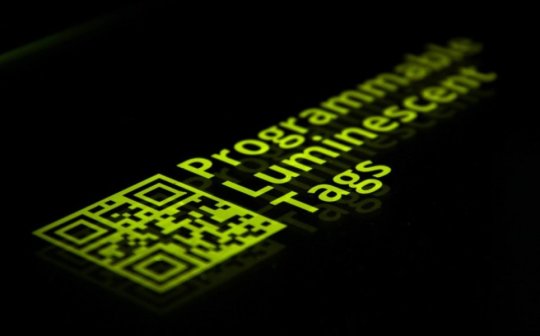
A luminescent tag, contactless printed onto a plastic foil. The light emitting layer is thinner than a human hair. The imprint can be erased and replaced by another pattern.

Credit: M. Gmelch and H. Thomas, TU Dresden

Prof. Reineke and his LEXOS team work with simple plastic foils with a thickness of less than 50 ?m, which is thinner than a human hair. In these transparent plastic foils, they introduce organic luminescent molecules. In the beginning, these molecules are in an inactive, dark state. By locally using ultraviolet irradiation, it is possible to turn this dark state into an active, luminescent one. By mask illumination or laser writing, activated patterns can be printed onto the foil with a resolution that is comparable to common laser printers. Similar to glow-in-the-dark stickers, the patterns can be brought to shine and the imprinted information can be read. By illuminating with infrared light, the tag is erased completely and new data can be written into it.

The working principle of these programmable transparent tags is based on the well-known oxygen molecule. Oxygen is present in the plastic foil and steals the light energy from the glowing molecules. Ultraviolet radiation induces a chemical reaction which efficiently removes the oxygen from the layer. In consequence, the luminescent molecules are activated and are able to emit light. The deactivation process using infrared light is based on a temperature rise of the foil, leading to an increased oxygen permeability and therefore a refilling of the layer with oxygen.

These novel tags can be manufactured in any size. The low material costs of less than two euro per square meter promise a wide range of possible applications: Information such as barcodes, serial numbers or addresses can be hidden for on-demand readout only. Also, these invisible tags could propel document security and anti-counterfeiting to a whole new level.

Prof. Reineke is already thinking further ahead: ‘Those invisible and re-writable tags can be used in a multitude of ways. We can manufacture such tags thinner than conventional barcode stickers. These tags can become a versatile alternative to many frequently technology-laden solutions for information exchange in our daily life. These luminescent tags make electronics obsolete at the location, where the information is stored. The development and optimisation of such systems open a broad research field bringing together material development, process engineering, and fundamental research in an interdisciplinary fashion.

Story Source:

Materials provided by Technische Universität Dresden. Note: Content may be edited for style and length.


Journal Reference:

  1. M. Gmelch, H. Thomas, F. Fries, S. Reineke. Programmable transparent organic luminescent tags. Science Advances, 2019 DOI: 10.1126/sciadv.aau7310

Cite This Page:

Technische Universität Dresden. “Invisible tags: Physicists write, read and erase using light.” ScienceDaily. ScienceDaily, 1 February 2019. <www.sciencedaily.com/releases/2019/02/190201142432.htm>.

Technische Universität Dresden. (2019, February 1). Invisible tags: Physicists write, read and erase using light. ScienceDaily. Retrieved February 2, 2019 from www.sciencedaily.com/releases/2019/02/190201142432.htm

Technische Universität Dresden. “Invisible tags: Physicists write, read and erase using light.” ScienceDaily. www.sciencedaily.com/releases/2019/02/190201142432.htm (accessed February 2, 2019).

Share Button

First carbon fibers with uniform porous structure

A professor in Virginia Tech’s College of Science wants to power planes and cars using energy stored in their exterior shells. He may have discovered a path toward that vision using porous carbon fibers made from what’s known as block copolymers.

Carbon fibers, already known as a high-performing engineering material, are widely used in the aerospace and automotive industries. One application is the shells of luxury cars like Mercedes-Benz, BMW, or Lamborghini.

Carbon fibers, thin hair-like strands of carbon, possess multiple prime material properties: they are mechanically strong, chemically resistant, electrically conductive, fire retardant, and perhaps most importantly, lightweight. The weight of carbon fibers improves fuel and energy efficiency, producing faster jets and vehicles.

Designing materials for structure and function

Guoliang “Greg” Liu, an assistant professor in the Department of Chemistry, conceived the idea of creating carbon fibers that wouldn’t only be structurally useful; they would also be functionally useful.

“What if we can design them to have functionality, such as energy storage?” said Liu, also a member of the Macromolecules Innovation Institute. “If you want them to store energy, you need to have sites to put ions in.”

Liu said ideally the carbon fibers could be designed to have micro-holes uniformly scattered throughout, similar to a sponge, that would store ions of energy.

After tweaking a longtime conventional method of chemically producing carbon fibers, Liu now has developed a process to synthesize porous carbon fibers for the first time with uniform size and spacing. He details this work in a recently published article in the high impact journal Science Advances.

“Making porous carbon fibers is not easy,” Liu said. “People have tried this for decades. But the quality and the uniformity of the pores in the carbon fibers were not satisfactory.

“We designed, synthesized, and then processed these polymers in the lab, and then we made them into porous carbon fibers.”

Using block copolymers to create porous carbon fibers

Liu used a multistep chemical process using two polymers — long, repeating chains of molecules — called polyacrylonitrile (PAN) and poly(acrylonitrile-block-methyl methacrylate) (PMMA).

PAN is well-known in the polymer chemistry field as a precursor compound to carbon fibers, and PMMA acts as a place-holding material that is later removed to create the pores.

But in the past, other chemists had typically mixed PAN and PMMA separately into a solution. This created porous carbon fibers but with differently sized and spaced pores. Energy storage can be maximized with greater surface area, which occurs with smaller, uniform pores.

Liu came up with the new idea of bonding PAN and PMMA, creating what is known as a block copolymer. One half of the compound polymer is PAN, and the other half is PMMA, and they’re covalently bonded in the middle.

“This is the first time we utilize block copolymers to make carbon fibers and the first time to use block copolymer-based porous carbon fibers in energy storage,” Liu said. “Often, we’re only thinking from the process point-of-view, but here we’re thinking from the materials design point-of-view.”

After synthesizing the block copolymer in the lab, the viscous solution then underwent three chemical processes to achieve porous carbon fibers.

The first step is electrospinning, a method that uses electric force to create fibrous strands and harden the solution into a paper-like material. Next, Liu put the polymer through an oxidation heating process. In this step, the PAN and PMMA naturally separated and self-assembled into the strands of PAN and uniformly scattered domains of PMMA.

In the final step, known as pyrolysis, Liu heated the polymer to an even higher temperature. This process solidified PAN into carbon and removed PMMA, leaving behind interconnected mesopores and micropores throughout the fiber.

New possibilities in energy storage

Although this breakthrough improves an already high-performing engineering material, perhaps the greater breakthrough is the ability to use block copolymers to create uniform porous structures for energy storage possibilities.

“It opens the way we think about designing materials for energy storage,” Liu said. “Now we can also start to think about functionality. We not only use (carbon fibers) as a structural material but also a functional material.”

Liu had been toying with this idea since he joined Virginia Tech in 2014, but he started formal research on this idea after submitting a winning proposal through the Air Force Young Investigator Program (YIP) in 2016.

The first author of the paper is Zhengping Zhou, Liu’s former postdoctoral associate who now works as an assistant professor at North Dakota State University. Also involved in the research were Tianyu Liu, another postdoctoral associate in the Liu Lab, and Assad Khan, a fifth-year doctoral student in the Department of Chemistry.

Share Button