Jesse Karmazin, the 34-year-old founder of the startup Ambrosia, had a pitch journalists couldn’t resist: For a fee, he could help his clients combat aging and its related ills with infusions of blood plasma from the young. Teen donors, vampiric undertones, a serious-sounding study, an $8,000-per-person price tag and rumors that venture capitalist Peter Thiel might be interested earned Ambrosia more than 100 press mentions in just two years.
The effects of young plasma, Karmazin told reporters, were astounding. Just one infusion “dramatically improves people’s appearance, their memory and their strength,” he told one reporter. “I want to be clear, at this point, it works. It reverses aging,” he told another. “I’m not really in the camp of saying this will provide immortality but I think it comes pretty close,” he told a third, adding, “It’s like plastic surgery from the inside out.”
The free publicity helped Ambrosia attract clients: One hundred and four people paid to receive plasma from 16- to 25-year-old donors as part of Ambrosia’s participant-funded study, Karmazin told HuffPost.
But despite declaring the study a success and announcing plans this week to accept new clients, Karmazin never showed any proof that the transfusions actually helped people. In the media, he touted impressive results, but almost a year after his study officially concluded in January 2018, he hasn’t released them. Scientists have criticized the study as flawed and the procedure as medically unnecessary and not without risk; in rare cases, transfusion complications can be fatal. One of the doctors Karmazin hired had previously been disciplined by a state medical board for unprofessional conduct. Karmazin himself cannot legally practice medicine in any state; he is explicitly prohibited from practicing in Massachusetts by authorities. Ambrosia’s president and chief operating officer quietly left the company in late December, leaving Karmazin as the sole employee. And the only patient who spoke publicly about Ambrosia’s transfusions — treatments he hoped would help him live healthier into old age — died at 65 after going into cardiac arrest.
Karmazin couldn’t comment on individual patients but said there were no deaths during or after the trial related to the treatment.
[People] could literally spend their life savings on an unproven treatment. Phuoc Le, physician and global health specialist
HuffPost found that at least some of Karmazin’s young plasma came from a nonprofit blood bank in Texas that recruited teenage donors for “saving lives,” but noted on a consent form that their blood components could also be used for “any other medical purpose.”
The bank abruptly decided to stop selling young plasma after HuffPost reached out, according to an employee email.
Ambrosia, which declined to comment on whether the company has any investors, is only one of many firms investigating how to help people feel younger for longer. But Ambrosia’s ability to attract paying clients and years of positive press coverage — without providing scientific data to back up its claims — shows just how easy it can be for promises to outpace the research when Silicon Valley gold-chasing mixes with Americans’ fear of death.
“You can easily imagine a situation where somebody who’s vulnerable, and not wealthy, and not healthy, and may be desperate … would potentially feel like they have no option but to spend this money,” said Phuoc Le, a physician and global health specialist who teaches at the University of California, San Francisco.
“They could literally spend their life savings on an unproven treatment,” he said.
Doctor Karmazin
Karmazin was born in Palm Beach Gardens, Florida, and attended Princeton University, where he became a highly accomplished rower, going on to win a silver medal in the Paralympic Games in Beijing in 2008. He attended Stanford Medical School and participated in labs that focused on longevity and stem cell biology. His experience as an athlete — and feeling slower athletically after turning 30 — influenced his desire to work on aging as a treatable condition. After graduating in 2014, Karmazin started a residency at Brigham and Women’s Hospital in Boston with a plan to eventually specialize in psychiatry. But as Karmazin tells it, he didn’t like working the long hours and felt he didn’t have time to pursue his other interests, transfusions and aging, in addition to general practice, so he left his residency in 2016 to start Ambrosia.
There is an asterisk to that story: On Feb. 29, 2016, Karmazin and his attorney signed a voluntary agreement with Massachusetts officials in which he promised to immediately stop practicing medicine in the state. Karmazin told HuffPost he signed the paperwork because he left his residency early, that doing so was “pretty routine,” there were no additional circumstances that he was aware of and that’s all he knew. That account seems unlikely. Karmazin was practicing under a limited license; such a license terminates automatically if a physician leaves a residency program early for any reason, according to George Zachos, the executive director of the Massachusetts Board of Registration in Medicine. The board wouldn’t typically pursue such an agreement with a limited licensee for leaving a residency early, Zachos said. Such a public agreement is used to protect patient safety. Last year, only 12 physicians in Massachusetts reached similar deals.
The board’s review is confidential, but a representative noted the circumstances that led to the agreement were unrelated to Karmazin’s work with Ambrosia or xVitality Sciences, a separate “rejuvenation” project he also worked on.
Karmazin, who introduces himself as “Dr. Karmazin,” moved forward with Ambrosia after signing that agreement. He said he got the idea for young plasma transfusions from several studies in which young and old mice were surgically conjoined in order to examine the effects of mixing their blood. In some cases, the older mice became temporarily stronger and showed slight improvements to their health. Karmazin believed those results could be replicated in humans.
Maybe there are secret sources [for human rejuvenation] in young blood, but there is no scientific evidence for that. Irina Conboy, aging and rejuvenation researcher
Scientists have questioned Karmazin’s interpretation of the data. Researchers at the University of California, Berkeley, who led conjoined-mice tests noticed small positive changes in older animals’ muscles, livers and brains. But the more important finding was the significant decline in the health of the younger animals. For the older animals, the young blood was largely diluted by the old blood.
“There was much more negative effect from the stuff in the old blood than there was positive effect from the stuff in the young blood,” said Irina Conboy, an aging and rejuvenation researcher at Berkeley, who compared young blood transfusions to taking “a pile of rotten bananas” and throwing “one good one” on top. “Maybe there are secret sources [for human rejuvenation] in young blood,” she said. “But there is no scientific evidence for that.”
Karmazin went ahead anyway: In the summer of 2016, he announced that he would charge people ages 35 and older $8,000 each for about 2 liters of young plasma as part of what he called a “clinical trial.” Karmazin didn’t feel the need to go through the Food and Drug Administration’s drug approval process, as plasma transfusions are already a well-established procedure. Most of the time, however, they are used to treat patients who have specific health issues, not carried out to potentially make people feel younger.
Ambrosia’s trial whipped up the flurry of press coverage that doubled as free advertising, and in some cases, suggested inaccurately that people were drinking young blood. But what really got people talking about Ambrosia was a report that Peter Thiel, the tech entrepreneur billionaire, was interested in young blood. Karmazin himself appears to have made the explicit connection to Ambrosia. In 2016, he told an Inc. magazine reporter that Jason Camm, chief medical officer at Thiel Capital, had contacted him to express interest in Ambrosia. It’s not clear whether Camm was reaching out on Thiel’s behalf, or how extensive the alleged contact was. But the story prompted a wave of Thiel-vampire insinuations in the media. Later, in an interview with TechCrunch, Karmazin completely denied having contact with anyone from Thiel Capital, raising questions about who wanted to quash the story.
Camm and Thiel Capital did not respond to requests for comment. In November, Thiel said at the New York Times DealBook conference: “On the record. I’m not a vampire.” He also said he’s never injected himself with young blood. Karmazin reiterated to HuffPost that he’s not in any contact with Thiel. When asked why his story appears to have changed, Karmazin repeatedly declined to comment.
Sweet Little 16-Year-Old Plasma
To launch his study, Karmazin needed plasma, the liquid part of blood, from young people. He needed a lot of it — Ambrosia performed more than 150 roughly 2-liter transfusions (some clients reportedly returned for multiple treatments), according to Karmazin, which would have required at least 80 gallons of young plasma, hundreds of donations’ worth. But he faced a hitch: Blood banks don’t typically separate out blood plasma by age and sell it for rejuvenation purposes; their primary mission is to provide donated blood for hospital patients and save lives.
When blood centers have unused plasma, they commonly provide it to different companies in order to make products to treat serious medical conditions such as hemophilia, according to a spokesperson for AABB, a nonprofit that accredits blood centers.
But it wasn’t easy to find a blood bank willing to supply a startup for Karmazin’s purposes. In the beginning, Karmazin called some 20 blood banks, he said. It “took a while to find the right partner,” he added. There was interest, he claimed, but banks didn’t have a process in place to get him the plasma he needed. HuffPost contacted more than a dozen U.S. blood banks, many of which cited ethical concerns and raised questions about Ambrosia’s study. The chief medical and scientific officer of Vitalant, a nonprofit that distributes blood to more than 1,000 U.S. hospitals, told HuffPost that Vitalant leadership contacted all its donation centers after hearing about Ambrosia to confirm none worked with the company. Ambrosia’s study didn’t seem to be a legitimate clinical trial, Dr. Ralph Vassallo said, so Vitalant shouldn’t be selling to the startup.
Eventually, Karmazin said, he found two blood banks to provide the company with “excess” young plasma that he could use for his study. Karmazin refused to say which ones they were.
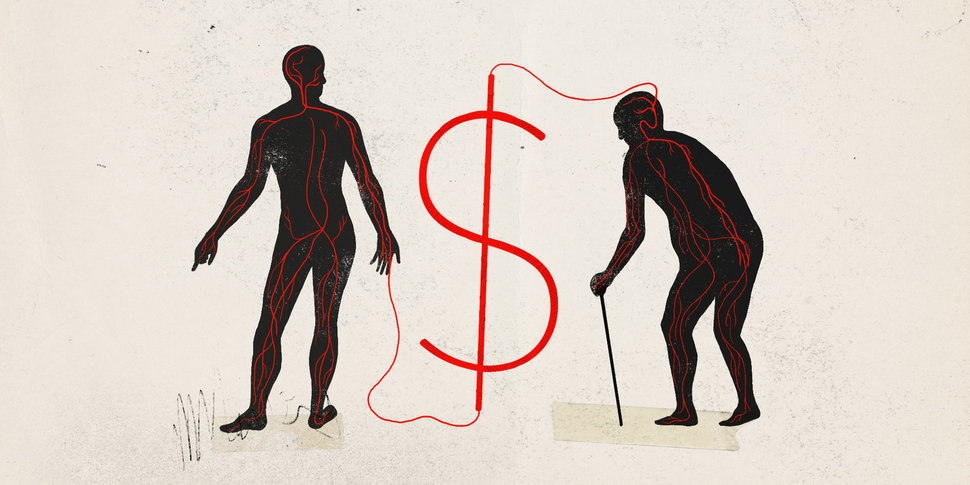
Emmanuel Polanco for HuffPost
Deep In The Heart Of Texas
One of his partners for Ambrosia’s trial was the South Texas Blood & Tissue Center, a subsidiary of BioBridge Global, a nonprofit headquartered in San Antonio.
STBTC has lamented “critical” blood supply shortages and called on millennials to “step up and donate.” It has sent blood collection buses to schools and asks students on its website: “Are you up for saving lives?” It holds a donation competition for local high schools called “Generation Give” with $750 top prizes, and has offered incentives to donors such as free movie tickets and amusement park passes. Students who have donated six blood products or more “have made the difference in the lives of over 18 hospital patients,” STBTC states on its website. Honored students receive a special red cord to wear at their high school graduation ceremony.
The South Texas blood bank’s main mission is to provide blood to approximately 100 hospitals and clinics, Elizabeth Waltman, STBTC’s chief operating officer, said in a statement. But “after community needs are met, and to ensure no donated blood is wasted, we provide blood where it is needed, including to support research that will advance medical care,” she added. Ambrosia’s study met STBTC’s requirements for research-related use of their blood components, she said.
STBTC did not comment on whether it sold donations that came through Generation Give as young plasma. But its consent forms for blood donors “clearly state” that donations will be used to serve “both clinical and research purposes,” Waltman said. HuffPost reviewed a copy of STBTC’s 1,200-word student consent form, which requires kids and parents to acknowledge that donated blood may be used to help patients “or for any other medical purpose.” The form praises students for “giving the gift of life.”
The Trial
By the fall of 2016, Karmazin was ready to launch his study.
Ambrosia told trial participants that “abundant data” from mice studies suggested young plasma infusions could help with “rejuvenation,” but the company said it couldn’t guarantee participants any specific results, such as the treatment of a disease. Rather, it noted in its informed consent form that there are “no known improvements” directly related to young plasma infusions. In fact, the form contained “an appalling lack of detailed explanation of what the actual effects of this intervention are supposed to be,” said Alta Charo, a professor of law and bioethics at the University of Wisconsin-Madison who reviewed Ambrosia’s form at HuffPost’s request.
Karmazin contracted physicians to carry out the young plasma transfusions at clinics in San Francisco; Monterey, California; and Tampa, Florida. The Monterey-based doctor, David Wright, had been publicly reprimanded by the Medical Board of California in 2015 for charges that included gross negligence related to diagnosing a patient with a chronic tick-borne infection without an adequate basis, and then using a medically unsupported treatment ― daily antibiotic infusion therapy ― that led to significant side effects. Wright did not admit to wrongdoing in the agreement; the reprimand did not preclude him from practicing medicine.
Plasma transfusions are regularly administered to people with certain health issues, such as patients with liver disease and trauma patients requiring massive transfusion. But there is still a risk of complications, some very serious: Transfusion-associated circulatory overload ― which can occur after transfusing too quickly or at excessive volume ― can lead to death, for example.
“For patients with true indications, plasma transfusion can be lifesaving,” said one director of transfusion medicine. But doing this procedure for anti-aging purposes is “not scientifically or medically justified and exposes patients to risk of harm.”
Then-New Scientist writer Sally Adee traveled to Monterey to cover Ambrosia’s trial in 2017 and reported that a patient who came from Russia had an anaphylactic reaction after a transfusion. Wright was “visibly shaken” after the incident, Adee wrote.
Ambrosia ultimately reported four adverse incidents during the trial, according to Barbara Krutchkoff, the executive director of the Institute of Regenerative and Cellular Medicine, a small nonprofit that houses an institutional review board that oversaw the study. They included a rash in March 2017, a runny nose and cold symptoms in April, hives and edema in June, and itchiness in December. All were considered mild allergic reactions and resolved, she said.
Ambrosia was fortunate there weren’t more adverse reactions, said Le, the physician and global health specialist.
“In general, somebody who does not need a blood transfusion would be at great risk for all sorts of things, short term and long term,” said Le, who was alarmed that Ambrosia claimed to give patients about 2 liters of plasma over just one to two days.
“For patients with true indications, plasma transfusion can be lifesaving,” said Robertson Davenport, director of transfusion medicine at the University of Michigan. But doing this procedure for anti-aging purposes is “not scientifically or medically justified and exposes patients to risk of harm,” he added.
During the study, Karmazin and Wright had a falling-out. They disagreed over Karmazin’s plans to transfuse smaller amounts of young plasma over a shorter period of time — a change Wright deemed risky, according to the New Scientist article. “We just had different ideas for what this treatment could become,” Karmazin told HuffPost. Wright stopped working for Ambrosia before the study was complete.
Wright did not respond to several calls and emailed requests for comment. When HuffPost sent a reporter to his new office in Pacific Grove, his receptionist threatened to call the police.
‘There’s Still No Data’
Ambrosia’s trial formally ended in January 2018. It was a great success, according to Karmazin, with about one-third of the participants returning to purchase additional treatments and around 150 treatments delivered in all. Some people continued to receive transfusions as late as this past summer, he said.
By the end of the trial, Ambrosia had been touting findings for months. Karmazin claimed to Canada’s National Post, for example, that an early-onset Alzheimer’s patient showed improvements with one treatment and a person in their 60s saw their graying hair turn darker. He told New Scientist that he saw a 10 percent decrease in patients’ blood cholesterol levels, and told Boss Magazine there were “really dramatic improvements” to biomarkers for inflammation.
[Ambrosia] seemed to be starting off as someone capitalizing on the hype and trying to make some money. Michael Conboy, aging and rejuvenation researcher
The company said it tested patients’ blood for more than 100 biomarkers before and after the transfusions, looking for improvements in markers for aging and disease. Ambrosia’s study did not have a control group that received a placebo. And a change in a biomarker isn’t necessarily proof of a change in actual health status, noted Charo, the University of Wisconsin-Madison professor. Such changes must be matched to “real health outcomes,” which requires long-term follow-up. Karmazin said patients wrote diaries, and that some later volunteered additional health data.
“I’m not sure how Ambrosia’s was set up as a clinical trial,” said Michael Conboy, husband and research partner of Irina Conboy, the aging and rejuvenation researcher at Berkeley. “It seemed to me that it was set up as more of a ‘fee for service’ type thing and the ‘trial’ part was slapped on to legitimize it. It seemed to be starting off as someone capitalizing on the hype and trying to make some money.”
And there’s still no public data. Karmazin shared some “preliminary results that he was excited about” with his hired institutional review board, Krutchkoff said, but she hadn’t seen the final results. Speaking to HuffPost with Karmazin’s permission, Krutchkoff praised Karmazin’s professionalism and brushed off criticisms of the study. “As controversial as this study was, there’s a lot worse being done,” she said.
Howard Chipman, the doctor Ambrosia hired in Tampa, also said he hadn’t seen the results. HuffPost could not find a participant who had.
Tom Casey, the CEO of NuPlasma, a company that sells young plasma to physicians in Texas ― and is supplying another young plasma study in Houston — urged Karmazin to release the data. “The people who are criticizing you are criticizing you because you called this a trial and said you were collecting data,” he said. “But there’s still no data.”
Results Not Guaranteed
Karmazin and David Cavalier, Ambrosia’s then-president and chief operating officer, said earlier this past fall that they had to be careful not to make any guarantees about the effects of Ambrosia’s treatment. Companies generally need to get approval from the FDA before they can claim that a drug or medical product treats, cures or prevents a disease. Cavalier noted that Ambrosia transfused a Parkinson’s patient who reported an improvement in a tremor, a patient with depleted testosterone levels who was soon “enjoying morning erections again,” and people who reported improvements with arthritis symptoms, sleep, memory and energy levels.
Some of Ambrosia’s claims to the media have been “maybe a little bit exuberant” but still “100 percent accurate,” Karmazin said.
Karmazin told HuffPost in the fall he temporarily paused transfusions to focus on opening a clinic in New York City by early 2019. Ambrosia is required to obtain a permit to transfuse a blood component in New York, but as of mid-December, the company had not applied for one, according to a New York State Department of Health spokesperson.
He initially claimed he planned to publish the findings of Ambrosia’s study in a peer-reviewed journal after its clinic was open. He announced this week on his website that Ambrosia is scheduling clients again in San Francisco and Tampa. He brought back two doctors he worked with during the study, he told HuffPost. He said this week that he still hadn’t submitted any data for peer review — a process that can take months. He was “eager to do so,” but didn’t know precisely when he would.
Cavalier quietly left the company this week, right before Ambrosia announced it was offering treatments again. He would not comment on the circumstances of his exit, but noted in an email that he was only with the company for “a very brief period.” Karmazin declined to comment further on Cavalier’s departure.
And at least one of Ambrosia’s blood bank partners no longer sells young plasma. Shortly after HuffPost reached out to the South Texas blood bank in October, it abruptly halted all sales of young plasma products, according to an employee email chain HuffPost obtained.
“We have had a few developments internally due to some negative press,” an employee wrote on Oct. 22. Waltman, the STBTC executive, told HuffPost the bank would not supply Ambrosia with plasma for a clinic rollout because doing so would interfere with their ability to fulfill local needs. The HuffPost inquiry had no bearing on that issue, she added.
For all its press coverage, Ambrosia did not have any investors as of April 2017, Karmazin said; in September 2018, Karmazin told HuffPost that Ambrosia hadn’t yet raised any money. That same month, he advertised on his LinkedIn page that the company was looking for $3 million to open its first clinic. By November, Karmazin said the LinkedIn posts had been removed because the company had garnered a “large amount of interest,” but Ambrosia would not comment on whether it had any investors.
Despite Karmazin’s insistence that many people are excited about the treatment, over the course of reporting this story, Ambrosia declined to put HuffPost in touch with a single patient. Initially, Karmazin said the patients are protective of their privacy and “after the hundredth reporter asked to talk, people were just getting a little tired of answering the same questions.” After HuffPost noted that it could find only one trial participant who had spoken to the press, Karmazin said that in the beginning, he had asked about 10 to 15 patients if they wanted to speak to reporters, but they all declined.
It appears the only participant in Ambrosia’s trial who spoke to the press was a man from Georgia. He told a German newspaper that he was one of Ambrosia’s first patients and had perhaps received “more blood plasma than anyone else in the world.”
The Georgia man was “the most excited person about this treatment,” Karmazin told HuffPost. He died after going into cardiac arrest in February 2018 at the age of 65.
Young plasma “isn’t a silver bullet,” the man told New Scientist last year. But he had hoped he could “just get 10 more healthy years of living.”
The man’s family did not respond to multiple requests for comment about the circumstances of his death, and a doctor familiar with his case declined to comment without a family member’s permission. Karmazin said there were no deaths during or after the trial related to the treatment. It is unclear when the man received his final treatment with Ambrosia.
These days, Karmazin won’t even publicly admit whether he has tried the treatment Ambrosia is hawking. He told one news outlet in June 2017 he hadn’t, claiming he was waiting until he’d be “old enough” at 35. In a separate interview in December 2017, when he was still not yet 35, he said he’d tried it “a few times” and it felt “pretty phenomenal.” Speaking to HuffPost, he refused to comment, citing privacy concerns.
“I wouldn’t want to confirm that I’ve done it for the purposes of this interview,” he said.
Regardless, spending $8,000 on a young plasma transfusion is a “really good use of people’s health care dollars,” Karmazin said. Those with certain diseases “should be getting treatment right away,” he added. “We want to be treating as many people as possible.”
This week, Karmazin announced Ambrosia has lowered its age limit and raised its prices. People as young as 30 are now eligible for treatment. And two liters of young plasma costs $12,000.
Gabrielle Canon contributed reporting.