Health24.com | 5 tips on travelling with urinary incontinence

The thought of standing in a long queue to board a flight or being on the road to a distant location without the comfort of a restroom close by can be truly daunting. A change in routine can also affect your bladder. But urinary incontinence doesn’t have to hamper your holiday plans.

Urinary incontinence can severely affect your quality of life if left untreated and unacknowledged. Research has shown that many people with urinary incontinence tend to shy away from activities they previously enjoyed and become socially isolated because of their problem.

1. Plan the route ahead

Whether you are travelling by car or airplane, plan your route or pre-book your seat to ensure easy access a restroom. Trying to restrict urinary flow can trigger your bladder and sometimes lead to a urinary tract infection – it’s therefore crucial to make planned restroom stops an important part of your trip if you are travelling by car. If you are travelling by plane, try to organise priority boarding if you are nervous about having to stand in a queue and not being able to go to the toilet for a while.

Planning a trip

 2. See your doctor

If you are planning a trip for next year, now is the time to take action and seek out medical advice. It can take a couple of months to find a treatment regime that works for you, or for pelvic exercises to show improvement. You could also start taking medication to help curb an overactive bladder or urge incontinence.

Carer with older patient

3. Dress (and pack) accordingly

Wear absorbent, dark-coloured clothing that won’t show leakage and won’t cause a smell, should something happen. The same applies to the entire trip – also stick to clothes that are easy to wash and wear.

Airport luggage can go AWOL, but that doesn’t mean you have to be caught unawares. Pack a complete carry-on with a spare set of clothing and urinary incontinence supplies such as absorbent pads.
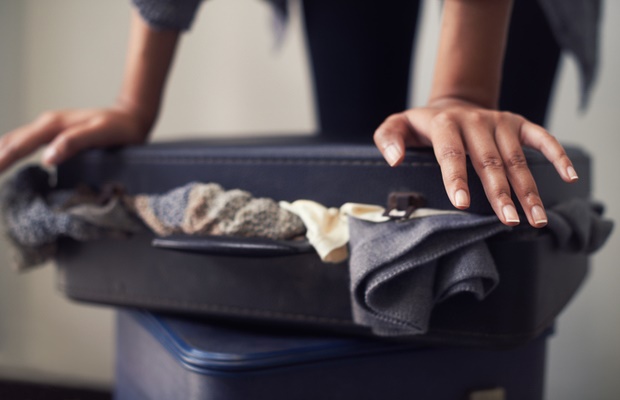
packing for a trip

4.  Plan your liquid intake

You don’t want to guzzle down litres of water before hitting the road or boarding your flight, but you also don’t want to become completely dehydrated as this can irritate your bladder and actually cause leakage, not to mention other symptoms of dehydration. Stick to water as this will hydrate you better than any other beverage and won’t irritate your bladder. 
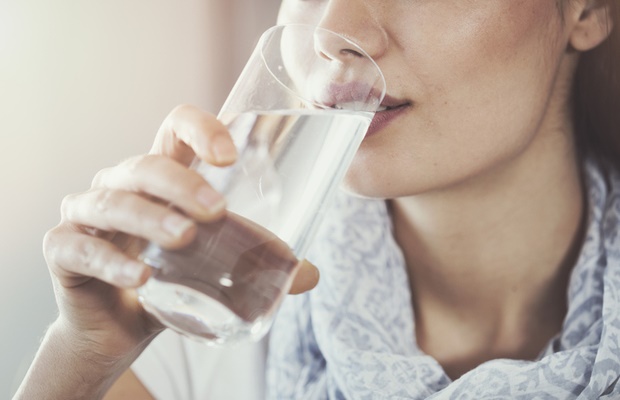
drinking enough water

5. Know and avoid the triggers

Some foods and alcoholic beverages may cause leakage by irritating your bladder. These include spicy, heavily processed or sugary foods, and citrus juice. Snack wisely throughout your trip. Also start cutting down on your caffeine consumption well ahead of time.

alcohol and coffee

Image credit: iStock

Share Button

Health24.com | When heart attack strikes, women often hesitate to call for help

Women often delay calling for emergency help when heart attack symptoms start, a new study finds.

Researchers in Switzerland found that women suffering a heart attack typically waited 37 minutes longer than men before calling an ambulance. And those delays showed no signs of improving over the 16-year study period.

Lesser-known heart symptoms

One reason may be the persistent myth that heart attacks are a “man’s disease”, said lead researcher Dr Matthias Meyer, a cardiologist at Triemli Hospital, in Zurich.

In addition, he said, women are more likely than men to suffer lesser-known heart symptoms, like pain in the back, shoulder or stomach. That means many women – and the people who witness their symptoms – may not immediately realise they should call for help, Meyer said.

Yet, the study found, even when women had the “classic” heart attack symptom of chest pain, they often hesitated to call for help.

And while the findings come from Switzerland, a similar pattern has been seen in other countries, too, according to Dr Suzanne Steinbaum, a spokesperson for the American Heart Association (AHA).

Steinbaum pointed to a recent research review finding that, overall, women waited 30% longer than men to call for help.

‘Let’s see what happens’

“That tells us this is a worldwide problem,” said Steinbaum, who directs the women’s cardiovascular prevention, health and wellness programme at Mount Sinai Hospital in New York City.

She agreed with Meyer on the potential reasons, and also noted that many women are simply used to putting their families first, and their own health second. So even when they have symptoms like chest pain, she said, women may often take a “Let’s see what happens” attitude.

For the study, Meyer’s team analysed records from nearly 4 400 heart attack patients treated at their hospital between 2000 and 2016.

The good news: Over the years, ambulance crews and hospital staff got patients into treatment faster, and the improvement was equal for women and men.

The bad news: By 2016, women were still spending 41 minutes longer in “ischaemia” – a reduction in the flow of blood and oxygen to the heart. And that was largely due to delays in calling emergency services, the researchers found.

Public campaigns

Heart attacks occur when a clot obstructs blood flow to the heart. The quicker doctors can restore that blood flow, the less damage there will be to the heart muscle.

“There’s a saying, ‘Time is muscle’,” Steinbaum said.

Over the years, the AHA and its counterparts in other countries have launched public campaigns to raise women’s awareness of heart disease. Yet the new study found that women were waiting just as long to call for help in 2016 as they were in 2000.

In contrast, men were slightly quicker to seek help by the end of the study – about 6 minutes, typically.

Meyer said it’s not surprising that the delays among women failed to change, but it is disappointing.

Steinbaum added, “We’ve clearly got more work to do. We’ve got to keep this conversation going.”

‘Call 911’

According to the AHA, cardiovascular disease is the top killer of US women, causing about one out of every three deaths.

As with men, chest pain is the most common heart attack symptom among women, the AHA says. But other symptoms include shortness of breath; pain in the back, jaw or stomach; and nausea or lightheadedness. And women are more likely than men to have those subtler problems.

“If you have those symptoms, act on them,” Steinbaum said. “Call 911.”

If it turns out you really have bad heartburn, she added, that’s good – you’ll get to go home.

Sometimes, Steinbaum noted, people worry about “bothering” ER doctors and nurses with non-serious problems.

“You’re not bothering us,” she said. “That’s our job.”

The study was published online in the European Heart Journal: Acute Cardiovascular Care.

Image credit: iStock

Share Button

Mars InSight lander seen in first images from space

On Nov. 26, NASA’s InSight mission knew the spacecraft touched down within an 81-mile-long (130-kilometer-long) landing ellipse on Mars. Now, the team has pinpointed InSight’s exact location using images from HiRISE, a powerful camera onboard another NASA spacecraft, Mars Reconnaissance Orbiter (MRO).

The InSight lander, its heat shield and parachute were spotted by HiRISE (which stands for High Resolution Imaging Science Experiment) in one set of images last week on Dec. 6, and again on Tuesday, Dec. 11. The lander, heat shield and parachute are within 1,000 feet (several hundred meters) of one another on Elysium Planitia, the flat lava plain selected as InSight’s landing location.

This isn’t the first time HiRISE has photographed a Mars lander. InSight is based largely on 2008’s Phoenix spacecraft, which the camera aboard MRO captured on the surface of Mars as well as descending on its parachute. While the HiRISE team at the University of Arizona also tried to take an image of InSight during landing, MRO was at a much less opportune angle and wasn’t able to take a good picture.

About InSight

JPL manages InSight for NASA’s Science Mission Directorate. InSight is part of NASA’s Discovery Program, managed by the agency’s Marshall Space Flight Center in Huntsville, Alabama. Lockheed Martin Space in Denver built the InSight spacecraft, including its cruise stage and lander, and supports spacecraft operations for the mission.

A number of European partners, including France’s Centre National d’Études Spatiales (CNES) and the German Aerospace Center (DLR), are supporting the InSight mission. CNES and the Institut de Physique du Globe de Paris (IPGP) provided the Seismic Experiment for Interior Structure (SEIS) instrument, with significant contributions from the Max Planck Institute for Solar System Research (MPS) in Germany, the Swiss Institute of Technology (ETH) in Switzerland, Imperial College and Oxford University in the United Kingdom, and JPL. DLR provided the Heat Flow and Physical Properties Package (HP3) instrument, with significant contributions from the Space Research Center (CBK) of the Polish Academy of Sciences and Astronika in Poland. Spain’s Centro de Astrobiología (CAB) supplied the wind sensors.

The University of Arizona, Tucson, operates HiRISE, which was built by Ball Aerospace & Technologies Corp., Boulder, Colorado. NASA’s Jet Propulsion Laboratory, a division of Caltech in Pasadena, California, manages the Mars Reconnaissance Orbiter Project for NASA’s Science Mission Directorate, Washington.

Story Source:

Materials provided by NASA/Jet Propulsion Laboratory. Note: Content may be edited for style and length.

Share Button

Protein involved in nematode stress response identified

When humans experience stress, their inner turmoil may not be apparent to an outside observer. But many animals deal with stressful circumstances — overcrowded conditions, not enough food — by completely remodeling their bodies. These stress-induced forms, whether they offer a protective covering or more camouflaged coloration, can better withstand the challenge and help the animal survive until conditions improve.

Until now, it wasn’t clear what molecular trigger was pulled to allow this structural remodeling in times of stress. But researchers at the University of Illinois and the University of Pennsylvania have discovered the protein responsible in the roundworm C. elegans.

“We’re using a really simple animal system to understand basic biological questions that have implications not only for nematodes, including important crop parasites, but also for higher animals, including humans,” says Nathan Schroeder, assistant professor in the Department of Crop Sciences at U of I, and author of the new study published in Genetics.

When C. elegans larvae are stressed, they stop eating, their development halts, and they enter a stress-resistant stage known as dauer. In this form, their bodies become distinctly thinner and longer and develop an outer cuticle with ridges from tip to tail.

Schroeder and his team were investigating a protein called DEX-1 for an unrelated project when they noticed worms without the protein were “dumpy” in the dauer phase: they remained relatively short and round. Intrigued, the researchers decided to characterize the protein and its function in seam cells, the cells responsible for dauer remodeling.

“When we disrupted the DEX-1 protein, the seam cells did not remodel during dauer,” Schroeder says. “Seam cells have stem cell-like properties. We usually think about stem cells as controlling cell division, but we found that these cells are actually regulating their own shape through this protein, and that has an impact on overall body shape in response to stress.”

DEX-1 is an example of an extracellular matrix protein, a type that is extruded to form the mortar between cells. These proteins exist in every multicellular organism, not only keeping cells together but also facilitating interaction between cells. Not always in a good way; it turns out many extracellular matrix proteins, including a DEX-1 analogue, are associated with human diseases, such as metastatic breast cancer.

Schroeder says his group is interested in looking more closely at metastasis in cancers due to these proteins, but as a nematologist, he gets more excited about the prospect of understanding the basic biology and genetics of nematodes themselves, particularly parasitic species that affect crops.

“For many parasitic nematodes, when they’re ready to enter the infective stage, they have a similar process. Many of the genes regulating the decision to go into or come out of that infective stage also regulate the decision to enter dauer,” he says. “This research gives us insight into their biology and how they make these developmental decisions.”

The article, “Epidermal remodeling in Caenorhabditis elegans dauers requires the nidogen domain protein DEX-1,” is published in Genetics. Authors include Kristen Flatt, Caroline Beshers, Cagla Unal, Jennifer Cohen, Meera Sundaram, and Nathan Schroeder. The research was supported by the National Institutes of Health.

Share Button

Why did Rachel Johnston die after having all her teeth removed?

The families of three people with learning difficulties tell the BBC all their teeth were taken out.

Share Button

Sewage bacteria lurking in Hudson river sediments, study finds

A new study shows that fecal bacteria from sewage are living in far greater quantities in near-shore sediments of the Hudson River than in the water itself. The river’s pollution levels are generally monitored based on samples of clear water, not sediments, so the findings suggest that people stirring up the bottom while wading, swimming or kayaking may face previously unrecognized health risks. Germs may persist for long periods or even reproduce in the sediments, say the authors. The study appears in the early online edition of the journal Science of the Total Environment.

The researchers sampled 11 sites along the river banks in suburban Rockland and Westchester counties, and in eastern Queens. In some, they found as much as 10 times more fecal bacteria in sediments as in overlying water. Water near the most polluted sediments tended to have elevated levels of bacteria and vice versa, suggesting an interchange between the two. Sites with sandier bottoms tended to have fewer germs, while levels were higher in fine, mucky organic-rich areas.

“These organisms originate in the human gut, where it’s organic rich and dark,” said Andrew Juhl, a biologist at Columbia University’s Lamont-Doherty Earth Observatory and coauthor of the study. “The water in the river is neither organic rich nor dark, but the sediments on the bottom typically are, and that makes them a better environment for potentially harmful microorganisms.” While the findings make common sense, it is one the first studies to test the idea in a river estuary, and is the first one in this region.

“This shows we have to think beyond just the [pollution] indicators we see in water,” said lead author Gregory O’Mullan, a microbiologist at Queens College and an adjunct at Lamont-Doherty.

A 2017 review of previous research coauthored by O’Mullan and Juhl says that, globally, human contact with polluted coastal waters causes more than 50 million severe respiratory infections and 120 million cases of gastrointestinal diseases, along with eye, ear and skin infections. In the United States, water at thousands of beaches is tested weekly during warm weather, and each year, high bacteria readings result in tens of thousands of beach-closure days. Some scientists have sampled beach sands and found high bacteria levels there as well, but such studies are still infrequent. “You have to think about this. I used to take my young daughter to the beach, and she didn’t get that much water in her mouth — but she was always covered with sand,” said O’Mullan.

O’Mullan and Juhl looked at two standard indicators of sewage contamination: the bacteria Enterococcus and Escherichia coli, which occur abundantly in the human gut. The bacteria can cause infections, but rarely serious ones; they are used instead as a proxy signal that less abundant but much more potent pathogens also excreted by humans also probably are present.

In the lower Hudson, most such germs probably get into the river from human sewage released through outfalls, leaks and overflows. Wildlife may play a smaller role, and in other systems farm runoff can also be an important source of bacteria. Many of these bacteria are not floating freely, but rather clinging to tiny particles of organic matter, said Juhl. In open, flowing water, pathogens are constantly washed downstream and diluted, and sunlight kills many within hours or days. However, depending on water flow, tides and topography, many particles may settle down and pile up in the cozier, more stable environment of the bottom. Here, bacteria or viruses could potentially persist for weeks or even months. Feeding off organic-rich muck, they may even reproduce, say Juhl and O’Mullan.

As part of the study, Juhl and an assistant waded into 8 to 10 inches of water in a few spots near Piermont, N.Y. in order to stir up near-shore sediments (They wore calf-high boots.) Then they took samples of the muddied water. As expected, lab analyses demonstrated that stirring up the sediments heightened bacterial levels in the water. “If bacteria are going from the water to the sediment, does it work the other way around?” said Juhl. “I think it does.” Piermont, with its fine, muddy bottom, showed some of the highest bacteria readings in both water and sediment, along with three sites around Queens’ Flushing Bay.

“Our data would suggest that there’s a health risk with people splashing around in the water and resuspending stuff from the bottom. But we’d have to say that at this point it’s hard to quantify,” said Juhl.

O’Mullan pointed out that some municipalities along the river stop chlorinating their sewage during cold weather, on the theory that no one is swimming nearby, and that pathogens will be long gone by the time the recreational season returns. “This suggests that might not be such a good idea,” he said. “Putting sewage into the sediments is like putting it into the refrigerator — it lasts a lot longer.”

The study was supported by the Hudson River Foundation, Riverkeeper and the U.S National Science Foundation.

Share Button

Health24.com | Here’s what could be causing that pain you feel during sex

Do you feel pain during sex? Dr Natalia Novikova, aesthetic gynaecologist, gets to the bottom of what could be causing the problem.

Pain at the entrance of the vagina during penetrative sex is commonly caused by vaginismus, although there could be other reasons which your doctor can diagnose.

Vaginismus is a condition triggered by a variety of factors, such as an unpleasant sexual experience, a strict upbringing putting a shameful emphasis on sex or a medical condition, like vaginal infection, thrush or a bladder infection that might cause pain or discomfort during sex.

Painful sex or the thought and anticipation of pain creates pathological signals in the brain that cause the vaginal muscles to contract.

Read more: 8 reasons why you’re having painful sex

This makes penetration very painful and sometimes impossible. Treatment usually involves psychological counselling and using vaginal dilators. It does bring results, but in my practice, I often meet patients who have tried the traditional methods for years with little success.

Interestingly, the injection of botox into the vaginal muscle is very effective and a quick cure for vaginismus. It’s performed with local anaesthesia or, in severe cases, under general anaesthetic.

Read more: 7 times your vagina hurts during sex – and what the pain means

Following this, I advise a patient to use dilators or a vibrator by herself to teach herself that vaginal penetration is not painful. Once she is comfortable doing this, she progresses to doing it with her partner and only once she is comfortable with him inserting the vibrator will they proceed to having penetration with the penis, preferably starting with positions where the woman is in control.

The aim is to recreate a positive sexual experience and eliminate fear. This treatment has wonderful results in my practice.

This article was originally published on www.womenshealthsa.co.za

Image credit: iStock 

NEXT ON HEALTH24X

Share Button

Meat or two veg? Find out your food’s climate footprint

Check the environmental impact of what you eat and drink.

Share Button

Lack of evidence for teething gels, medicines regulator says

Parents are advised to massage their child’s gums or use a teething ring before trying the gels.

Share Button

Hospitals ‘overcrowding risk’ ahead of Christmas

Winter pressures are beginning to bite as hospitals report too many patients are on wards and ambulances face delays at A&E.

Share Button