Fairy-wrens learn alarm calls of other species just by listening

Birds often eavesdrop on the alarm calls of other species, making it possible for them to take advantage of many eyes looking out for danger. Now, researchers reporting in Current Biology on August 2 have found that fairy-wrens can learn those unfamiliar calls — which they liken to a foreign language — even without ever seeing the bird that made the call or the predator that provoked it. Instead, the birds in their study learned to recognize new alarm calls by listening for unfamiliar sounds within a chorus of familiar alarm calls.

“Alarm calls warn of predators, but here the birds learnt the meaning of the call from the alarm calls of others without needing to see the predator,” says Robert Magrath of the Australian National University in Canberra. “This means it is a type of ‘social learning,’ where individuals learn from others rather than through direct experience. In this case, it’s even more indirect, because they only need to hear and not see the birds giving the familiar alarm calls. So theoretically they could learn with their eyes closed!”

Magrath’s group had long been interested in bird alarm calls and eavesdropping among species. Their previous work showed that birds can learn to recognize other species’ calls; it isn’t always an innate ability. Their studies showed that fairy-wrens could learn to associate a novel alarm call with danger if they repeatedly saw a model predator at the time they heard the call.

Those studies showed the birds were learning by direct experience. But the research team — also including Dominique Potvin and Chaminda Ratnayake from the Australian National University, and Andrew Radford from the University of Bristol, UK — suspected that birds could also learn from other birds, by listening closely to their calls.

“It makes sense to learn from others when it is dangerous to learn through direct experience,” Radford says. “The current experiment shows that they can,” and through the novel process of making associations between different sounds.

The team trained birds in the absence of any predator by broadcasting unfamiliar sounds in combination with the alarm calls of other fairy-wrens and other bird species. At first, the birds didn’t flee from the unfamiliar sounds. But after training, they often did flee to cover upon hearing the sounds. Their experiment showed the fairy-wrens also continued responding equally strongly in repeated tests over the course of a week.

It wasn’t that the fairy-wrens had become warier in general. Rather, they had learned to associate new calls with known alarm calls, without ever seeing the caller or the reason for their call.

“The results were striking,” Potvin says. “They show just how quickly social learning can occur in the wild through listening to alarm choruses, a tactic that’s likely to come in handy given how hard it is to see predators and callers in many environments.”

Social learning by whatever means can help to explain the widespread eavesdropping seen in nature, the researchers say. The new findings may also be relevant to conservation efforts.

Often, endangered species breed well in captivity only to be taken by predators soon after release. As such, there are now efforts to prepare birds for life in the wild by training them to recognize their predators prior to release. “We think it would also be helpful to train birds to recognize the alarm calls of other species,” Magrath says. Their new study shows just how to go about it.

This research was supported by an Australian Research Council Discovery Grant.

Story Source:

Materials provided by Cell Press. Note: Content may be edited for style and length.

Share Button

Health24.com | SEE: 84-year-old former Olympic gymnast still performing gravity-defying routines

The information on Health24 is for educational purposes only, and is not intended as medical advice, diagnosis or treatment. If you are experiencing symptoms or need health advice, please consult a healthcare professional. See additional information.

Share Button

I Finally Figured Out When To Retire. It Was Yesterday.

Ann Brenoff’s “On The Fly” is a column about navigating growing older ― and a few other things.

One of my closest friends at college in New Jersey was a woman from a large and loving Italian family. Her ancient Sicilian grandma had lived with my friend and her family for my friend’s entire life ― all 20 years or so of it. Grandma, who moved in after Grandpa died decades earlier, wasn’t exactly a happy camper as she crept into her 90s. Many of her body parts had already betrayed her, and she was living with fairly constant pain. Grandma was never shy about letting anyone within earshot know that if she had her druthers, she’d have dropped dead long ago.

“I want to die,” was her oft-repeated refrain, to which she would add the uncomfortable finish, “but I don’t know how.” Her words stuck with me for decades. There are certain natural progressions in life that we are just never taught how to do.

With no disrespect toward the gravity of Grandma’s situation, that’s how I’ve been seeing my retirement. I’ll be 69 in a couple of months, and until just a few weeks ago, I couldn’t figure out how to pull the plug on my work life.

How do you know when it’s time to retire, especially from a great job you love? I tested out various theories, including the one that says retirement doesn’t need to be such an abrupt life transition. Make it gradual, work part-time, ease off the fast track and test out the waters of redefining who you are. Hell, even parents get a nine-month gestation period to get used to the idea of a child before the big day arrives.

I worried about how I would stay current without my posse of millennial co-workers to turn to. Who would teach me the secret handshake that allowed me to connect to people younger than me, which at this point is probably most of the planet? 

And then, of course, there was my ego and identity. “I-am-what-I-do syndrome,” prevalent among baby boomers, has kept many a therapist in business and I stand guilty as charged. Truth is, I love telling the stranger in the plane seat next to me that I’m a staff writer for HuffPost (and before that, the Los Angeles Times). Would the eyes of these strangers, whom I will never see again, still widen slightly? And will it bother Shallow Ann if they don’t? Or the more serious version of this: Will all my accomplishments get sent to the garage in a box marked “memorabilia” when I retire, waiting for my kids to hopefully discover later?

Anyway, I suspect that not unlike Grandma had done, I’ve been quietly waiting and hoping for a cataclysmic sign from the universe, a trigger event outside my control that would set in motion my retirement. In both our cases ― mine and Grandma’s ― that event just didn’t happen fast enough, and no matter how or where we looked for guidance, we mostly found platitudes. I remember how Grandma once threw a plate of food to the ground when a dinner guest dismissed her for saying that she wished her life would end already. 

“Oh, you don’t really mean that!” the naive guest said, learning very quickly that indeed, Grandma did. 

Me? I’m a journalist who loves being one. While pretty much everything else in my life has been fluid and ever-changing ― single woman to married lady, East Coaster to West Coaster, childless to parent, wife to widow ― the one constant has been that I’m a journalist. A proud and happy one at that. It’s been the rare day in more than 45 years of writing and reporting that I wasn’t eager to go to work.

So why stop now? Why stop at all?

The short answer is this: Because I can. And that doesn’t come from winning the lottery, but from changing my perspective. While I may not have enough money saved to last me for the rest of my years, there is something much more important that I’m afraid of running out of.

It’s time ― at least, healthy time. 

Truth is, I can’t think of a greater kick in the ass than to have been my husband’s caregiver for a painful and relentlessly miserable 18 months, only to lose him to death in January of 2017. My take-away from the experience ― besides that caregiving sucks big-time and family caregivers are getting royally screwed ― is that life is short and a healthy life even shorter. 

I don’t want to miss out on what’s left of mine. I’ve learned much in my journey to get to this point of being ready to retire, including the fact that I pretty much hate it when people refer to their lives as journeys. Lives are more important than journeys because everyone gets better-served when we stop focusing on ourselves. Take that advice and apply it liberally.

Which is what I plan to do as well. I will write a funny/sad/irreverent book and hope you will read it. I will travel to all those places I want to see before my body becomes disinterested in joining me. I will play loud music every day, dance around the kitchen while I cook and only drink good wine because, as the T-shirt preaches, “Life is too short for bad wine.” I have fallen in love again with both life and a terrific guy I plan to share mine with. My kids are (almost) solidly on their paths to improve the world, and my dark tunnel is now filled with light. I’m happy.

So yes, I am retiring. I’ve been pushed over the edge as a caregiver, buried alive in the grief of loss, and found my bearings again through forces of nature I may never fully understand. And I’ve had the therapeutic gift of being able to share it all with others through HuffPost. Readers have thanked me for putting into words what they felt, but I always thought that the gratitude should flow in the other direction. Thank you for reading. Thank you for making me feel relevant. Thank you for letting me share my life with you. Thank you, thank you, thank you.

And to the friend who asked me recently if I had any regrets or things I would do over, I can only say I wish Grandma had better aim when she sent that dinner plate my way. Maybe I would have woken up sooner.

Share Button

Health24.com | Horror stories of mental illness in SA prisons

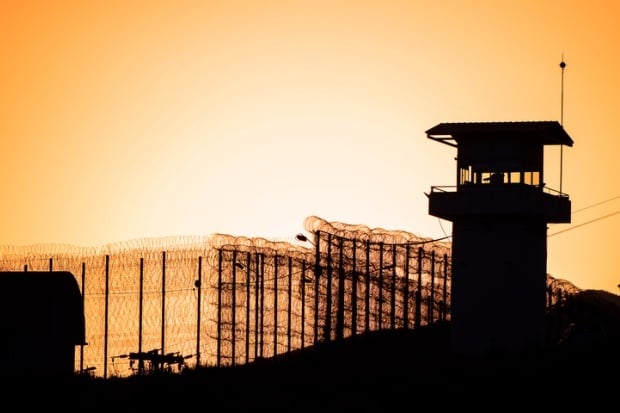
The Life Esidimeni tragedy continues to haunt the families of the victims with the news of the re-election of former Gauteng Health and Social Development MEC Qedani Mahlangu into the ANC’s Provincial Executive Committee (PEC) serving the most recent blow. These Life Esidimeni hearings revealed the silent suffering of one of the nation’s most vulnerable groups: psychiatric patients. They also demonstrated the inadequacies of an overburdened and maladministered public mental health care system.

Meanwhile, South Africa’s 161 984 prison population relies on 79 psychologists nationwide to cater to the needs of 984 mentally ill prisoners, according to the Judicial Inspectorate for Correctional Services (JICS) 2015/16 report. This leaves mentally ill prisoners with limited possibilities for adequate care.

The Wits Justice Project (WJP) spoke to a number of inmates about their experience of mental health care behind bars. These are the stories of two such prisoners.

Inescapable stigma

In a modest room packed with women dressed in variations of navy blue prison uniforms, Puleng* sits among fellow inmates and their visitors at Johannesburg Prison’s Women’s Correctional Centre. A lifetime struggle with bipolar disorder is one factor that contributed to her landing in prison.

Puleng was diagnosed with Bipolar 1 Disorder in 2002 after years of erratic mood swings and her first suicide attempt at the age of 12. She says there is a history of mental illness in her family. An uncle committed suicide when he was 25 years old and a female cousin was diagnosed with Bipolar 2 Disorder earlier this year, says Puleng.

Her family struggled to accept her diagnosis despite some of her aunts working as nurses and often exposed to mental illnesses and disorders.

“I’m from a family of medical professionals but the stigma is still there,” she says.

At the age of 31, Puleng found herself in a psychologically abusive marriage which was followed by a physically abusive relationship with a man named Morris*. Three months into their relationship, Morris threatened to drive into an oncoming train after Puleng threatened to leave him.

When she tried to escape, he allegedly grabbed her by her hair slamming her head against the dashboard. She fainted and when she came to, awoke to find him holding a knife to her throat. They struggled and he dropped the knife, instead trying to strangle her. In a final attempt to defend herself, Puleng says she picked up the knife and stabbed him once in the chest. He died as a result of the wound and Puleng was sentenced to 10 years imprisonment. 

Understaffed and under-resourced

According to the Judicial Inspectorate for Correctional Services (JICS) 2015/16 report, 984 inmates were diagnosed with mental illness. The most common illnesses were psychosis, depression, bipolar disorder and schizophrenia. The report records 79 psychologists, who service 243 prisons nationwide. The DCS, much like national healthcare – which includes mental health care – is understaffed and under-resourced.

JICS Spokesperson, Emerantia Cupido says, “[Of] the 984 inmates reported, numerous were still awaiting trial and others had already been sentenced. Some are state patients and are housed at correctional centres within the hospital unit, due to the unavailability of beds at designated mental health care centres.”

DCS spokesperson, Singabakho Nxumalo says the department’s Offender Rehabilitation Path (ORP), outlines the different processes that should take place from when an inmate is admitted to correctional facilities.

“Inmates are screened within six hours of arrival, the emphasis being on any observable physical or mental abnormality – including suicidality (sic) and other signs of vulnerability. Admission officers and a nurse carry out this process.”

Ceaselessly ridiculed

This is followed by a comprehensive assessment within 24 hours of the inmate’s arrival. The assessment is used to design a nursing health plan to fit the needs identified.

“Thereafter, within 21 days, the inmate must be further assessed by a multidisciplinary team (or individual professionals) and informed of the various programmes and services that are available,” adds Nxumalo.

Puleng says although she receives psychiatric care at the prison, she faces numerous challenges as a result of her mental disorder.

She claims she is ceaselessly ridiculed for being a recipient of psychiatric care. The taunting comes from both inmates and prison officials, Puleng alleges.

Mentally ill but accountable

Moeketsi Nyareli sits in front of the one-room RDP house he shares with his mom in Evaton, South of Gauteng. It has been six months since the former policeman was released on parole after killing his wife in what he describes as dream-like, temporary insanity in 2009. For Nyareli, his six years in prison served as a time of healing and meditation. It provided a perspective on his mental illness.

Nyareli was diagnosed with major depression shortly after he got married in 2007. He says his wife’s behaviour changed, which made him suspect her of infidelity. In December 2009, his psychologist advised him to take two weeks off from work. He says the doctor feared that he was at risk of causing harm to those he served as a policeman. He took the time off from work but this did not improve his situation as his marital problems persisted.

On 16 December 2009, he attended a family gathering, which he claims his wife refused to attend with him. When he returned that evening, she was not at home and arrived after midnight in an unrecognisable vehicle.

“I told her that we would have to consider getting a divorce because I [had] had enough… I remember I was preparing to sleep. All of a sudden, I collapsed emotionally.”

Nyareli says he saw himself physically assaulting his wife but was convinced it was a bad dream.

Fit to stand trial

“At approximately 10am the next day, I woke up in a holding cell at Houtkop (the name of police holding cells in Vereeniging). A social worker and a pastor from the South African Police Services (SAPS) came to me and told me that I had killed my wife,” he recalls. “So I asked them, ‘Was it not a dream?’ And they said, no.”

Although Nyareli had a psychological disorder, he was deemed fit to stand trial and as a result, was held accountable for his actions. However, he says the court took his pre-existing diagnosis and the psychologist’s intervention into consideration and reduced his sentence to 12 years in prison – down from the initial 15 years he faced. 

JICS spokesperson, Cupido explains that “it is the court who determines whether an inmate is fit to stand trial or not, as the inmate is referred for psychiatric evaluation at a psychiatric hospital. The court may then declare an inmate as a state patient. Only then will he/she be considered to be unfit to stand trial.

“The court will look at each individual case. The Justice Department, the Judiciary and the Health Department work in accordance with the (Mental Health Care) Act to make a determination,” adds Cupido.

Rehabilitation success story

While in prison, Nyareli enrolled in the Department of Correctional Services’ (DCS) numerous rehabilitation programmes, which he found therapeutic.

“They (DCS) have good programmes… I did anger management with an official, a social worker and a pastor. I discovered a lot about anger from each of them. The social worker would also have one-on-one (sessions) and they were helpful.”

He says that fateful night still haunts him, but he looks forward to rebuilding his life using the coping skills he discovered in prison. Now, however, he can no longer afford to see a psychologist.

Nyareli’s case is a prison rehabilitation success story. This, however, is not the case for some inmates.

A toiling mental healthcare system

Linda Thahane spent five years working at Johannesburg Medium B Prison as a Senior Litigation Paralegal for the DCS. She says her time working for the department gave her a front seat to observe the challenges inmates face within the correctional centre.

Thahane says many inmates who require psychological intervention fall through the cracks of the overburdened system. Prison officials fail to identify cases that required further inquiry, often dismissing them as insignificant.

“When you deal with inmates, you are dealing with people who do not trust the system. Secondly, you’re dealing with people who abuse drugs,” she says. “So even if you find the inmate is exhibiting such symptoms – members (warders) would just say, ‘Hayi, he’s [high] on ganja or whatever.’ Only to find that there are genuine points to consider that warrant some intervention,” she adds.

Psychologist Dr Sandra Hoffman has done extensive work at some of the country’s prisons including counselling at Cape Town’s notorious Pollsmoor prison for three years. She published three books, detailing her experiences as a prison psychologist. During her time working at the prison, she observed that laws governing mental health and incarceration were not always adhered to.

‘We are stuck in the past’

“From my own perspective, what the law said and what actually happened, were two different things. There were often people who were obviously in great distress and when I collaborated with the medical doctor, and had the person sent to Valkenberg (a mental health facility in Cape Town), these inmates were often sent back the next day. As overcrowded as the prison is, so is Valkenberg.

“In my view, not a lot has been done regarding mental health. We are stuck in the past. The best services are still given to the wealthy. Even among inmates of prisons, the wealthy and those with more status and power have greater access to better legal and health care,” says Hoffman.

DCS Spokesperson, Nxumalo, acknowledges that the correctional services mental healthcare could use a boost.

“A closer working relationship with the Department of Health would alleviate some of the challenges which are due to shortage of mental health professionals in DCS, as well as ensure that those inmates who require in-hospital treatment of their psychiatric conditions are processed and placed timeously.” Nxumalo says

*Not their real names

Sumeya Gasa works as an investigative journalist for the Wits Justice Project. The WJP investigates human rights abuses and miscarriages of justice related to the criminal justice system. See: www.witsjusticeproject.co.za

Image credit: iStock

NEXT ON HEALTH24X

Share Button

Give new mums baby boxes to reduce co-sleeping risks, midwives say

Rolling the scheme out across the UK would provide all babies with a safe space to sleep, midwives say.

Share Button

Health24.com | From Hillbrow to Amsterdam – local Aids activist shares her experience

Ananelang Tumi Motumi (26), who has just returned from Amsterdam following a reward trip to the World AIDS Conference 2018, describes the experience as the best time of her life.

Motumi was sent on the trip after two years of hard work as an Aids activist in Hillbrow, where she has succeeded in convincing many young people who have defaulted on their treatment to go back to taking their medication properly.

A lot of stigma

In Amsterdam Motumi met 30 other young people from 21 countries who are youth champions and ambassadors at the International AIDS Society (IAS). The group spent a week sharing their experiences in working with young people and advised influential leaders in global health how to cater for the needs of young people at health care centres.

“It was a wonderful experience that I will never forget for the rest of my life,” Motumi gushed when she returned home this week.

She said she can’t wait to share what she experienced with her peers.

“The key message there was about stigma – there is still a lot of stigma around HIV. That’s why a lot of young people are afraid to come out.”

Ananelang Tumi Motumi (26) with other youth ambassadors at the Worlds AIDS Conference in Amsterdam.

Motumi is a health connector at the Wits Reproductive Health Institute (WRHI) – a leading African HIV and vaccine research centre based in Hillbrow in the Joburg inner city.

Non-judgemental approach

For the past two years, her work at the institute has been mainly to trace young people who have missed their appointments and defaulted on their HIV treatment. She managed to do this through the dedicated Youth Friendly Services at the five clinics in the City of Johannesburg and has so far managed to trace over 200 young people.

She has linked each of them to a Youth Care Club at WRHI where they are encouraged to stay in the treatment.

“I tell them HIV is highly controlled and won’t kill you when you take your treatment consistently without fail,” she said, explaining that this non-judgemental approach, being sensitive to their feelings and not subjecting them to stigma has made it easy for them to open up to her.

The 26-year-old, who hails from Matatiele in the Eastern Cape, says growing up in a single parent household is what has made her passionate about young people.

“I’m the third born child and from grade 1, I was under the care of my elder brother as my mom was working in Johannesburg. And when my brother finished his matric and went to look for work, it became my turn to raise our younger siblings,” she said.

“After matric in 2011 I came to join my mom in Hillbrow. I became part of Love Life where I was a GroundBreaker, which is an initiative aimed at encouraging young people to lead a positive lifestyle. I was there until 2016 before I joined WRHI.”

Haunting images

She said although she doesn’t have direct personal experience with HIV, she has witnessed many people die in her community due to the virus and “it’s sad seeing young people falling prey too”. She believes young people need positive role models.

She loves her job but sometimes finds it difficult, such as a recent experience when she encountered a 10-year-old girl who was diagnosed HIV positive – causing her to worry about what happened to the child at such a young age for her to contract the virus.

Motumi goes for debriefing, but often the images of what she sees still haunt her. However, her hard work was rewarded when she was selected by the WRHI as a youth ambassador and sent to the global conference in Amsterdam – her first trip overseas.

Her colleagues at WRHI were happy for her.

“She is an inspiration to young people,” said Rue Rushwaya, Acting Communications Project Manager at WRHI. 

Motumi’s trip came at the time when the country is concern about HIV incidence rate among young people aged 15 to 24. This was revealed during the launch of the South African National HIV Prevalence, Incidence, Behaviour and Communication Survey of 2017. – Health-e News.

Image credit: Health-e News

NEXT ON HEALTH24X

Share Button

Alcohol and dementia – is moderate drinking safe?

Alcohol abuse is bad for the brain – but could there be health benefits for moderate drinkers?

Share Button

Wales GP out-of-hours crisis figures revealed

Thousands of hours of GP shifts are unfilled at weekends and in the evenings, figures reveal.

Share Button

Health24.com | Is playing ‘virtual sports’ good exercise?

With the rise of video, television and computer games, research has shown that people have become more inactive. Where we previously played tennis and soccer, or went for a hike in the mountains, we now sit in front of a screen.

But the advent of so-called “virtual sports” is changing the way we play games, allowing us to exercise at the same time. These are electronic games that generate visual feedback on a display device. They’re inspired by real sports events and instead of simply pressing button, you actively mimic the action required by the sport. 

Some studies have shown that these games are not as effective as the real deal (your burn about half the amount of calories), but you still get considerable benefit. Other studies have shown little benefit from virtual sports, and that especially children don’t get their daily exercise requirements from virtual sport alone. 

The verdict might still be out on virtual sports, but there’s little argument that they can be immense fun and do have some health benefits. 

NEXT ON HEALTH24X

Share Button

What makes diamonds blue? Boron from oceanic crustal remnants in Earth’s lower mantle

Blue diamonds — like the world-famous Hope Diamond at the National Museum of Natural History — formed up to four times deeper in the Earth’s mantle than most other diamonds, according to new work published on the cover of Nature.

“These so-called type IIb diamonds are tremendously valuable, making them hard to get access to for scientific research purposes,” explained lead author Evan Smith of the Gemological Institute of America, adding, “and it is very rare to find one that contains inclusions, which are tiny mineral crystals trapped inside the diamond.”

Inclusions are remnants of the minerals from the rock in which the diamond crystallized and can tell scientists about the conditions under which it formed.

Type IIb diamonds owe their blue color to the element boron, an element that is mostly found on the Earth’s surface. But analysis of the trapped mineral grains in 46 blue diamonds examined over two years indicate that they crystallized in rocks that only exist under the extreme pressure and temperature conditions of the Earth’s lower mantle.

The research group — which included Carnegie’s Steven Shirey, Emma Bullock, and Jianhua Wang — determined that blue diamonds form at least as deep as the transition zone between the upper and lower mantle — or between 410 and 660 kilometers below the surface. Several of the samples even showed clear evidence that they came from deeper than 660 kilometers, meaning they originated in the lower mantle. By contrast, most other gem diamonds come up from between 150 and 200 kilometers.

So how did the boron get down there if it is an element known for residing predominately in the shallow crust?

According to the hypothesis put forth by the research group, it came from seafloor that was conveyed down into the Earth’s mantle when one tectonic plate slid beneath another — a process known as subduction.

The new study proposes that boron from the Earth’s surface was incorporated into water-rich minerals like serpentine, which crystallized during geochemical reactions between seawater and the rocks of the oceanic plate. This reaction between rock and water is a process called serpentinization and can extend deep into the seafloor, even into the oceanic plate’s mantle portion.

The group’s discovery reveals that the water-bearing minerals travel far deeper into the mantle than previously thought, which indicates the possibility of a super-deep hydrological cycle.

“Most previous studies of super-deep diamonds had been carried out on diamonds of low quality,” Shirey said. “But between our 2016 finding that the world’s biggest and most-valuable colorless diamonds formed from metallic liquid deep inside Earth’s mantle and this new discovery that blue diamonds also have super-deep origins, we now know that the finest gem-quality diamonds come from the farthest down in our planet.”

Story Source:

Materials provided by Carnegie Institution for Science. Note: Content may be edited for style and length.

Share Button