Health24.com | 8 prebiotic foods you should probably add to your diet

Okay, okay I get it. Jamie Lee Curtis was right – probiotics (you know, those live bacteria in foods like yogurt and sauerkraut that can boost your gut health) are good for me.

But those Activia adverts were missing one key fact about probiotics: Their ability to boost your good gut bacteria is only temporary. Basically, they pass out of your system as soon as you, ahem, digest your food.

“People think probiotics change their gut bacteria, but they don’t,” says registered dietician Karen Ansel. “They just modify it for a short period of time.”

That’s where prebiotics come in. Unlike probiotics, which give your gut a quick hit of good bacteria (kind of like a sugar rush), prebiotics act as long-term nourishment for your gut.

Luckily prebiotics, which come in many different varieties, are present in plenty of delish foods. “Each [prebiotic type] fosters a different type of bacteria, so the more types you eat, the more you cultivate well-rounded, healthy gut bacteria,” explains Ansel. Pair your prebiotics with probiotic foods or supplements to help both of them work better in your body.

If you’re stumped, add this prebiotic food list to your cart the next time you go shopping.

1. Walnuts

Walnuts contain fibre and other prebiotic compounds that support the growth of healthy gut bacteria. “Eating walnuts helps you to grow more lactobacillus, which helps crowd out bad gut bacteria and helps good ones grow,” says Ansel. And a small 2018 study found that people who ate about a half a cup of walnuts every day for three weeks increased the number of butyrate-producing gut bacteria (a fatty acid that reduces inflammation for a healthier colon).

Per 28g serving (14 walnut halves): 774kJ, 19g fat (2g sat), 4g carbs, 1g sugar, 1mg sodium, 2g fibre, 4g protein

Read more: Can you really use probiotics to fight acne?

2. Dark chocolate

“This one is always a big surprise,” says Ansel. Turns out, dark chocolate is an excellent source of polyphenols, prebiotic antioxidant compounds that help increase two types of gut bacteria (lactobacillus and bifidobacteria) that keep you regular.

Ansel suggests adding a scoop of pure cocoa powder and a splash of low-fat milk to your morning coffee for a DIY mocha. If you go for solid chocolate, most experts suggest choosing a plain dark bar with at least 70% cacao (to avoid excess sugar).

Per 28g serving of dark chocolate: 711kJ, 12g fat (7g sat), 13g carbs, 7g sugar, 6mg sodium, 3g fibre, 2g protein

Woman eating dark chocolate


3. Onions

Onions are a great natural source of the prebiotic inulin, which helps your body produce colon-protecting butyrate and may also enhance heart health by lowering bad LDL cholesterol and triglycerides (fats in your blood). They also contain the phytonutrient quercetin, which Ansel says may help prevent cancer.

Per cup of chopped onions: 267kJ, 0.2g fat (0.07g sat), 15g carbs, 7g sugar, 2mg sodium, 3g fibre, 2g protein

Read more: 3 delicious snacks that are great for your gut

4. Oats

Oats are a huge source of resistant starch – a prebiotic type of starch your body can’t break down. It travels intact to your large intestine, where bacteria feast on it and ferment it, producing compounds that have a laxative effect to keep your colon healthy and protected from cancer, explains Ansel. What’s more, resistant starch may even help lower your blood sugar and cholesterol.

Per half-cup of dry oats: 640kJ, 3g fat (0.5g sat), 27g carbs, 0.4g sugar, 2mg sodium, 4g fibre, 5g protein

bowl of oats

5. Red lentils

Red lentils serve up a double-whammy of resistant starch and soluble fibre to help sweep cholesterol from your body. Bonus: They cook faster than any other type of lentils, taking just 15 minutes. For a quick meal, mix cooked lentils with curry powder and top with a generous serving of nonfat plain Greek yoghurt.

Per half-cup of cooked lentils: 481kJ, 0.4g fat (0g sat), 20g carbs, 2g sugar, 2mg sodium, 8g fibre, 9g protein

Read more: the 4 best supplements for your gut issues – and those to totally avoid

6. Corn

In addition to having resistant starch, corn also contains zeaxanthin and lutein – phytonutrients that keep eyes healthy and protect against macular degeneration. Ansel likes cooking corn whole on the cob and slicing off to add to risotto for a light but filling dish. To get an extra resistant starch bump, cool corn and add to black bean salad with tomatoes and a lime vinaigrette.

Per large ear of corn: 514kJ, 2g fat (0.5g sat), 27g carbs, 9g sugar, 18mg sodium, 3g fibre, 5g protein
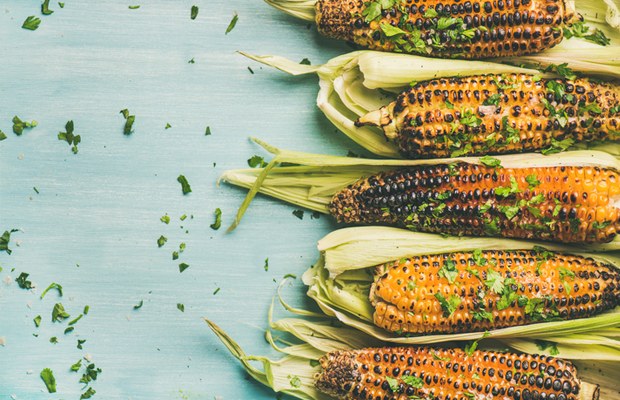
Grilled corn on the cob

7. Leeks

Another great source of the colon-protecting prebiotic inulin, leeks have also been shown to potentially help prevent breast, stomach, and gastric cancer, says Ansel – plus one cup cooked has just 133kJ. Don’t have a clue how to cook them? Keep it simple: Poach leeks with thyme and serve with balsamic vinaigrette as an alternative to a leafy green salad.

Per leek (raw): 225kJ, 0.3g fat (0g sat), 13g carbs, 3g sugar, 18mg sodium, 2g fibre, 1g protein

8. Apples

Apples are rich in the prebiotic pectin, which Ansel says improves an overall healthy gut by supporting a diversity of healthy bacteria. Apples can also help keep you slim by filling you up thanks to their high fibre and water counts; one often-cited study found that women who ate three apples a day lost 1.1 kilos in 12 weeks without changing anything else about their diets.

Per large apple: 485kJ, 0.4 g fat (0g sat), 31g carbs, 23g sugar, 2mg sodium, 5g fibre, 0.6g protein
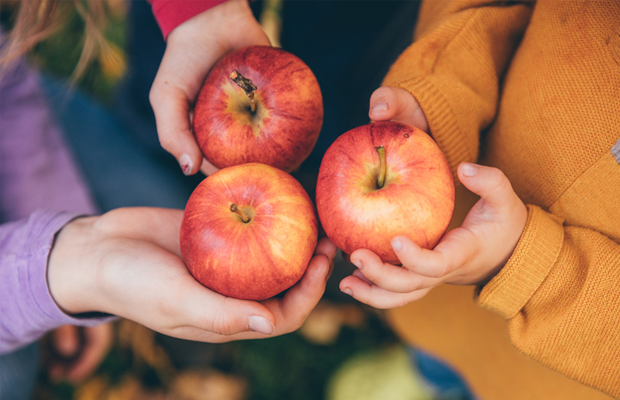
Children holding apples

This article was originally published on www.womenshealthmag.com

Image credit: iStock

NEXT ON HEALTH24X

Share Button

Health24.com | Can you really get an STD from kissing?

Kissing can be awkward but, aside from beard burn or the common cold, it’s pretty safe, right?

Not exactly. A peck on the mouth (or a full-blown, let-me-shove-my-tongue-down-your-throat make out session) can actually transmit a couple different types of STDs [insert cringing emoji here]: Herpes simplex virus (HSV) 1 and 2 and syphilis, says Dr Teena Chopra, corporate medical director of infection prevention and hospital epidemiology at Detroit Medical Center and Wayne State University.

Talk about a mood killer. Luckily, you don’t have to swear off kissing forever – but, it’s a good idea to just be aware of what can be spread through spit-swapping. Here’s what you need to know about the two STDs you can get through kissing.

What to know about herpes and kissing:

Herpes simplex virus (HSV 1 and 2) infections are one of the most common STDs and, once contracted, they last a lifetime, according to the American National Institute of Allergy and Infectious Diseases (NIAID).

“Once a person has been infected, the virus can remain dormant (latent) for years before periodically reactivating to cause recurrent disease,” the website notes. Which is why it’s also important to note: People who don’t know they have herpes can still spread herpes, per the Centers for Disease Control and Prevention (CDC).

Whereas HSV-1 is responsible for oral herpes, HSV-2 is what causes genital herpes. However, oral herpes can be spread from the mouth to the genitals as a result of oral sex, which is how some cases of genital herpes are caused by HSV-1, according to the CDC. And, yes, the reverse is also true: Genital herpes can be passed from one person’s genitals to another person’s mouth, causing oral herpes.

If you’re concerned about herpes (and you know your partner has it), ask them to be diligent about symptoms that signal an outbreak is coming (you’re more likely to contract the virus during a herpes flare). Burning, itching, and/or tingling feelings are all signs that sores are about to appear.

You might also want to encourage your partner to be upfront by assuring them that herpes is nothing to be embarrassed about. In fact, it’s ridiculously common.

Another prevention method: If your partner has herpes, then they can chat with their doctor about taking medication that can lower their chances of spreading the virus.

Read more: 8 vagina changes that mean you’ve just caught an STD

So, what about syphilis?

Syphilis occurs in four stages, according to the CDC, with different signs and symptoms associated with each stage.

Primary syphilis will be evident because a person will generally have sores, typically around the genitals and/or mouth, called chancres, per the CDC. Secondary syphilis includes a skin rash, swollen lymph nodes and fever, but there are no signs or symptoms during the third or latent stage of the STD.

The fourth stage of syphilis, however, known as tertiary syphilis, can be linked to severe medical problems. Left untreated, syphilis can affect the heart, brain and other organs of the body, according to the CDC.

The infection can be passed by direct contact with a sore during the first three stages, through vaginal, anal or oral sex – and, yes, even through kissing.

Dr Chopra says the only way to fully avoid syphilis is to avoid sex or kissing completely, but uh, since that’s not totally practical, there are ways to reduce your risk.

Straight-up asking new partners whether or not they have an STD (or asking them to get tested if they don’t know) is a good practice, as is nixing the kissing when you see visible sores, says Dr Amesh A Adalja, a senior scholar at the Johns Hopkins University Center for Health Security.

And while you’re at it, make sure to get yourself tested too – doctors won’t typically test you for herpes unless you’re showing symptoms like sores, but you can still get tested for syphilis whether you’re showing signs or not.

The bottom line: Ask questions before getting hot and heavy. If you know your partner has herpes or syphilis, cool it on the kissing until active oral sores have been treated or healed.

This article was originally published on www.womenshealthmag.com

Image credit: iStock

NEXT ON HEALTH24X

Share Button

Health24.com | 4 amazing body benefits of weightlifting that’ll persuade you to give it a try

Weightlifting isn’t just about picking up heavy things. It’s a dynamic sport that measures, not only strength, but explosiveness and agility (ever seen how fast they lift those things?) with a big focus on form.

It’s also one of the best ways to achieve your fitness goals in pretty much any sport. That last bit is what got Mona Pretorius into lifting – now she’s a Commonwealth Games medallist in the sport. She shares some of the many other reasons you should pick up a barbell.

1. You’ll age better

“Weightlifting is a great way for women – even older adults – to stay healthy and in shape over the years,” says Pretorius. Science backs it up: Studies show that resistance training has a positive impact on bone density, which in turn lowers the risk of osteoporosis.

Read more: This is the one move you need for leaner, stronger legs

2. You’ll build resilience

“You have to be mentally strong and believe in yourself in this sport,” says Pretorius. She sees this with the people she coaches. “When they start off, a lot of them don’t have a lot of confidence and they don’t believe in themselves,” she says.

“But as time goes by, they start lifting a bit more weight, they get the exercises right and it actually shows them that with hard work and a bit of patience, things will be achieved.” And that feeling of lifting a weight you couldn’t a month ago? Move over, Wonder Woman.

Read more: The 12 best foods to burn fat and build lean muscle

3. You’ll stand taller

Because the weights are heavy, form is enormously important. Everything, from your butt and core to your neck, has to be in perfect alignment or you risk injury. For this reason, your first few lessons will involve light weights with most of the emphasis on proper form. “Posture always gets emphasised when we train,” says Pretorius.

Now, good posture comes naturally to her – even when she’s not training.

Read more: “I’ve only been doing pilates for a month – and discovered this incredible sex benefit”

4. You’ll get toned

Women are constantly asking Pretorius if lifting heavy weights will make them bulky. “Weightlifting won’t make you look like a man because a female doesn’t have the testosterone that a man has, so you will never build as much muscle,” she says. What she can guarantee? A toned physique. “Your body will tone, you’ll be healthy and you’ll look great!”

This article was originally published on www.womenshealthsa.co.za

Image credit: iStock

NEXT ON HEALTH24X

Share Button

Sahara dust may make you cough, but it’s a storm killer

The bad news: Dust from the Sahara Desert in Africa — totaling a staggering 2 to 9 trillion pounds worldwide — has been almost a biblical plague on Texas and much of the Southern United States in recent weeks. The good news: the same dust appears to be a severe storm killer.

Research from a team of scientists led by Texas A&M University has studied Saharan dust and their work is published in the current issue of the Journal of Climate of AMS (American Meteorological Society).

Texas A&M’s Bowen Pan, Tim Logan, and Renyi Zhang in the Department of Atmospheric Sciences analyzed recent NASA satellite images and computer models and said the Saharan dust is composed of sand and other mineral particles that are swept up in air currents and pushed over the Atlantic Ocean to the Gulf of Mexico and other nearby regions.

As the dust-laden air moves, it creates a temperature inversion which in turn tends to prevent cloud — and eventually — storm formation.

It means fewer storms and even hurricanes are less likely to strike when the dust is present.

“The Saharan dust will reflect and absorb sunlight, therefore reduce the sunlight at the Earth’s surface,” said Pan.

“If we have more frequent and severe dust storms, it’s likely that we have a cooler sea surface temperature and land surface temperature. The storms have less energy supply from the colder surface therefore will be less severe.”

The study goes on to show that dust and storm formation don’t mix.

“Our results show significant impacts of dust on the radiative budget, hydrological cycle, and large-scale environments relevant to tropical cyclone activity over the Atlantic,” said Zhang.

“Dust may decrease the sea surface temperature, leading to suppression of hurricanes. For the dust intrusion over the past few days, it was obvious that dust suppressed cloud formation in our area. Basically, we saw few cumulus clouds over the last few days. Dust particles reduce the radiation at the ground, but heats up in the atmosphere, both leading to more stable atmosphere. Such conditions are unfavorable for cloud formation.”

Zhang said that the chances of a hurricane forming tended to be much less and “our results show that dust may reduce the occurrence of hurricanes over the Gulf of Mexico region.”

Logan said that recent satellite images clearly show the Saharan dust moving into much of the Gulf of Mexico and southern Texas.

“The movement of the dust is there,” Zhang said, “but predictions of dust storms can be very challenging.”

Story Source:

Materials provided by Texas A&M University. Original written by Keith Randall. Note: Content may be edited for style and length.

Share Button

Parakeet pecking orders, basketball match-ups, and the tenure-track

Sometimes, knowing who wins and who loses is more important than how the game is played.

In a paper published this week in Science Advances, researchers from the Santa Fe Institute describe a new algorithm called SpringRank that uses wins and losses to quickly find rankings lurking in large networks. When tested on a wide range of synthetic and real-world datasets, ranging from teams in an NCAA college basketball tournament to the social behavior of animals, SpringRank outperformed other ranking algorithms in predicting outcomes and in efficiency.

Physicist Caterina De Bacco, a former postdoctoral fellow at Santa Fe Institute, now at Columbia University, says SpringRank uses information that’s already built into the network. It analyzes the outcomes of one-on-one, or pairwise, interactions between individuals. To rank NCAA basketball teams, for example, the algorithm would treat each team as an individual node, and represent each game as an edge that leads from the winner to the loser. SpringRank analyzes those edges, and which direction they travel, to determine a hierarchy. But it’s more complicated than simply assigning the highest ranking to the team that won the most games; after all, a team that exclusively plays low-ranked teams may not deserve to be at the top.

“It’s not just a matter of wins and losses, but which teams you beat and which you lost to,” says mathematician Dan Larremore, a former postdoctoral fellow at the Santa Fe Institute, now at the University of Colorado Boulder. Larremore and De Bacco collaborated with computer scientist Cris Moore, also at the Santa Fe Institute, on the paper.

As its name suggests, SpringRank treats the connections between nodes like physical springs that can contract and expand. Because physicists have long known the equations that describe the motions of springs, says De Bacco, the algorithm is easy to implement. And unlike other ranking algorithms which assign ordinal numbers to nodes — first, second, third, etc., — SpringRank assigns each node a real-valued number. As a result, nodes may be close together, spread apart, or arranged in more complicated and revealing patterns, like clusters of similarly ranked nodes.

“Ideas from physics often give us elegant and effective algorithms,” says Moore. “This is another win for that approach.”

In the paper, the researchers tested the predictive power of SpringRank on a variety of datasets and situations, including sports tournaments, animal dominance behaviors among captive parakeets and free-ranging Asian elephants, and faculty hiring practices among universities.

The researchers uploaded the code for SpringRank to GitHub, an online code repository, and say they hope other researchers, especially in the social sciences, will use it. “It can be applied to any dataset,” says De Bacco.

The next dataset she and her coauthors plan to analyze with SpringRank is unlike any of those featured in the Science Advances paper. They’ll be working with Elizabeth Bruch, an external professor at the Santa Fe Institute, to analyze patterns of messaging in online dating markets.

Story Source:

Materials provided by Santa Fe Institute. Note: Content may be edited for style and length.

Share Button

The need for speed: Why malaria parasites are faster than human immune cells

Malaria parasites of the genus Plasmodium move ten times faster through the skin than immune cells, whose job it is to capture such pathogens. Heidelberg scientists have now found a reason why the parasite is faster than its counterpart. They did this by studying actin, a protein that is important to the structure and movement of cells and that is built differently in parasites and mammals. The findings of Ross Douglas and his colleagues at the Centre for Infectious Diseases (Department of Parasitology) at Heidelberg University Hospital, the Centre for Molecular Biology at the University of Heidelberg (ZMBH), and the Heidelberg Institute for Theoretical Studies (HITS) are not only changing our understanding of a key component of all living cells, but they also provide information that could help in the discovery of new drugs.

How does the malaria parasite move so fast?

Like Lego blocks, which can be put together into long chains, actin is assembled into long rope-like structures called filaments. These filaments are important for the proper functioning of cells — such as muscle cells — and enable each of our movements. However, they also serve to enable immune system cells to move and capture invading pathogens. Likewise, they are of great importance for the movement of the malaria parasite. “Strangely enough, malaria parasites are ten times nimbler than the fastest of our immune cells and literally outrun our immune defences. If we understand this important difference in movement, we can target and stop the parasite,” says Dr. Ross Douglas from the Heidelberg Centre for Infectious Diseases. A key issue in the paper published in the journal PLOS Biology is how the rate at which actin filaments are formed and broken down differs between parasites and mammals.

Mammal-parasite protein hybrids lead to new insights

It was known that certain sections of the actin protein differ between the parasite and mammals. To investigate the reasons behind the difference in speed, scientists replaced parts of the parasite protein with corresponding sections of protein from mammalian actin in the laboratory. “When we made these changes in the parasite, we noticed that some parasites could not survive at all and others suddenly hesitated when they moved,” says Dr. Ross Douglas. To investigate the underlying mechanism, the participating scientists performed experiments and computer simulations ranging from modeling at the molecular level to observing the parasites in live animals. “High-performance computers were required for simulations to observe how the structure and dynamics of actin filaments change when individual sections are swapped,” says Prof. Rebecca Wade, who heads research groups at the Heidelberg Institute for Theoretical Studies (HITS) and at the Centre for Molecular Biology (ZMBH) at Heidelberg University that investigate protein interactions via computer simulations and mathematical modelling.

These findings could now be used to discover chemical compounds that selectively target parasite actin and affect either the building or breakdown of the filament. “In this way, it could be possible to effectively stop the entire parasite,” Dr. Ross Douglas summarizes. An example for this approach is tubulin, another type of protein which is involved in the building of the cytoskeleton via so-called microtubules. Medicines that target parasite microtubules — such as mebendazole — have been successfully used for decades to treat humans and animals for parasitic worms. This joint research project was partially funded by the innovation fund FRONTIER at Heidelberg University.

Story Source:

Materials provided by Heidelberg Institute for Theoretical Studies (HITS). Note: Content may be edited for style and length.

Share Button

Eagle-eyed machine learning algorithm outdoes human experts

Artificial intelligence is now so smart that silicon brains frequently outthink people.

Computers operate self-driving cars, pick friends’ faces out of photos on Facebook, and are learning to take on jobs typically entrusted only to human experts.

Researchers from the University of Wisconsin-Madison and Oak Ridge National Laboratory have trained computers to quickly and consistently detect and analyze microscopic radiation damage to materials under consideration for nuclear reactors. And the computers bested humans in this arduous task.

“Machine learning has great potential to transform the current, human-involved approach of image analysis in microscopy,” says Wei Li, who earned his master’s degree in materials science and engineering this year from UW-Madison.

Many problems in materials science are image-based, yet few researchers have expertise in machine vision — making image recognition and analysis a major research bottleneck. As a student, Li realized that he could leverage training in the latest computational techniques to help bridge the gap between artificial intelligence and materials science research.

Li, with Oak Ridge staff scientist Kevin Field and UW-Madison materials science and engineering professor Dane Morgan, used machine learning to make artificial intelligence better than experienced humans at analyzing damage to potential nuclear reactor materials. The collaborators described their approach in a paper published July 18 in the journal npj Computational Materials.

Machine learning uses statistical methods to guide computers toward improving their performance on a task without receiving any explicit guidance from a human. Essentially, machine learning teaches computers to teach themselves.

“In the future, I believe images from many instruments will pass through a machine learning algorithm for initial analysis before being considered by humans,” says Morgan, who was Li’s graduate school advisor.

The researchers targeted machine learning as a means to rapidly sift through electron microscopy images of materials that had been exposed to radiation, and identify a specific type of damage — a challenging task because the photographs can resemble a cratered lunar surface or a splatter-painted canvas.

That job, absolutely critical to developing safe nuclear materials, could make a time-consuming process much more efficient and effective.

“Human detection and identification is error-prone, inconsistent and inefficient. Perhaps most importantly, it’s not scalable,” says Morgan. “Newer imaging technologies are outstripping human capabilities to analyze the data we can produce.”

Previously, image-processing algorithms depended on human programmers to provide explicit descriptions of an object’s identifying features. Teaching a computer to recognize something simple like a stop sign might involve lines of code describing a red octagonal object.

More complex, however, is articulating all of the visual cues that signal something is, for example, a cat. Fuzzy ears? Sharp teeth? Whiskers? A variety of critters have those same characteristics.

Machine learning now takes a completely different approach.

“It’s a real change of thinking. You don’t make rules. You let the computer figure out what the rules should be,” says Morgan.

Today’s machine learning approaches to image analysis often use programs called neural networks that seem to mimic the remarkable layered pattern-recognition powers of the human brain. To teach a neural network to recognize a cat, scientists simply “train” the program by providing a collection of accurately labeled pictures of various cat breeds. The neural network takes over from there, building and refining its own set of guidelines for the most important features.

Similarly, Morgan and colleagues taught a neural network to recognize a very specific type of radiation damage, called dislocation loops, which are some of the most common, yet challenging, defects to identify and quantify even for a human with decades of experience.

After training with 270 images, the neural network, combined with another machine learning algorithm called a cascade object detector, correctly identified and classified roughly 86 percent of the dislocation loops in a set of test pictures. For comparison, human experts found 80 percent of the defects.

“When we got the final result, everyone was surprised,” says Field, “not only by the accuracy of the approach, but the speed. We can now detect these loops like humans while doing it in a fraction of the time on a standard home computer.”

After he graduated, Li took a job with Google, but the research is ongoing. Morgan and Field are working to expand their training data set and teach a new neural network to recognize different kinds of radiation defects. Eventually, they envision creating a massive cloud-based resource for materials scientists around the world to upload images for near-instantaneous analysis.

“This is just the beginning,” says Morgan. “Machine learning tools will help create a cyber infrastructure that scientists can utilize in ways we are just beginning to understand.”

Share Button

Low NHS morale is ‘heartbreaking’ says Matt Hancock

The new health secretary says technology, the workforce and prevention will be his top priorities.

Share Button

Wave energy converters are not geared towards the increase in energy over the last century

Wave energy converters are specifically designed to produce the maximum output at the location where they are going to be placed, in other words, to ensure that they generate as much electricity as possible from the movement of the waves around them. The design and adaptation is made on the basis of historical data, past wave height and period. “However, the timescale taken into consideration tends to be quite short and, what is more, the year is regarded as typical in this period. So the converters are adjusted on the basis of how they are expected to behave during that typical year,” explained Alain Ulazia, lecturer at the UPV/EHU’s Faculty of Engineering — Gipuzkoa in Eibar.

Bearing in mind the changes taking place as a result of climate change with respect to temperature and other metrological parameters, Ulazia and another two UPV/EHU researchers in the departments of NE and Fluid Mechanics and Applied Physics II, and from the Plentzia Marine Station, in collaboration with the Irish Centre for Ocean Energy Research tackled a longer-term study. “In Ireland we conducted a study that we had previously done in the Bay of Biscay, given that Ireland is particularly active in terms of wave energy and we wanted to explore that energy as a resource. Using a simulation we calculated what response or behaviour a converter would have displayed when faced with the level of energy recorded during the last century, divided into periods of 20 years, given that the converters have a useful service life of 20 years on average,” he said.

In this task their source of information comprised two datasets of the European Centre for Medium-Range Weather Forecasts (ECMWF): ERA-Interim and ERA20. Both of them are reanalyses, in other words, datasets fed by a whole host of observations and measurements. They are spatial networks that provide long time series in each of the eyes of the network, in other words, for each location. The better-known one is ERA-Interim as it brings together a multitude of data coming from satellites, but its limitation is that “it only has data on the last 40 years,” explained Ulazia. “ERA20 is fed by far fewer data, is much more irregular from the time and spatial perspective but provides data on the whole of the 20th century.”

In the research they calibrated one dataset against the other by making use of the overlapping period they have. And then they validated them against the measurements made in the buoys in the Atlantic. As Ulazia said, “we concluded that the data are acceptable, that they can be regarded as good, so we were able to simulate the levels of energy in which the converters were expected to have worked.”

A 40% increase in wave energy

Taking the average 20 years’ useful service life of wave energy converters as a reference, they divided the last century into five periods and adapted the converters for the level of energy corresponding to each of these periods. “We found that between the first time period and the last the level of marine energy saw an increase of more than 40%, and the biggest increase took place in the last 20 years (18 %),” highlighted the researcher. “We did not get involved in analysing what was responsible for this increase, but the main hypothesis would be climate change.”

The fact that there are great variations in wave energy has direct consequences on the output of the converters; in the research they were able to see, for example, that “the converters did not take full advantage of all the energy they had available and, what is more, extreme events, such as periods of waves over seven metres high or phenomena like El Niño, became more frequent as the century progressed. As a result, the converters had to go more frequently into survival mode, or stop producing energy during these marine events,” he said.

Ulazia says the information obtained should be useful in optimising the design of the converters. “As these devices are optimised on the basis of wave height and period, their design would need to be adapted to ensure they achieve maximum output in conditions that are increasingly more active.”

Story Source:

Materials provided by University of the Basque Country. Note: Content may be edited for style and length.

Share Button

Houseplants could one day monitor home health

In a perspective published in the July 20 issue of Science, Neal Stewart and his University of Tennessee coauthors explore the future of houseplants as aesthetically pleasing and functional sirens of home health.

The idea is to genetically engineer house plants to serve as subtle alarms that something is amiss in our home and office environments. Stewart, a professor of plant sciences in the UT Herbert College of Agriculture — who also holds the endowed Racheff Chair of Excellence in Plant Molecular Genetics — came up with the idea during conversations with his wife, Susan, and Rana Abudayyeh, an assistant professor in the UT College of Architecture and Design’s School of Interior Architecture. Both Susan Stewart and Abudayyeh are coauthors of the article. Susan Stewart recently graduated from the school as a non-traditional, re-entry student, and Abudayyeh was among her professors.

This is not the first time that plants have been proposed as biosensors. The authors point out that to date several environmentally relevant phytosensors have been designed by using biotechnology. In fact, what was once known as genetic engineering has grown into a whole field of study called synthetic biology, which is the design and construction of new biological entities or systems.

Synthetic biology is a valuable tool for agricultural production, allowing farmers to grow plants designed to resist drought or certain pests, and Neal Stewart has authored or coauthored several studies involving the engineering of plants to react to certain conditions, like the presence of too much or too little nitrogen. Such plants “glow” when viewed with specifically designed filters. Once this technology is commercialized, it may allow farmers of the future to adjust their management plans accordingly.

What is new, and which the authors discuss in the Science article, is the concept of applying synthetic biology to houseplants beyond aesthetic reasons, like larger blooms or variegated foliage. “Houseplants are ubiquitous in our home environments,” says Neal Stewart. “Through the tools of synthetic biology it’s possible for us to engineer houseplants that can serve as architectural design elements that are both pleasing to our senses and that function as early sensors of environmental agents that could harm our health, like mold, radon gas or high concentrations of volatile organic compounds.” Stewart explains that plant biosensors could be designed to react to harmful agents in any number of ways, such as gradually changing the color of their foliage or through the use of fluorescence. “They can do a lot more than just sit there and look pretty,” he says. “They could alert us to the presence of hazards in our environment.”

The authors postulate that dense populations of biosensors would be needed, so architectural design elements like “plant walls” might best serve as environmental monitors while also serving our innate need to connect with nature even while indoors.

“Biophlic design builds on our innate affiliation with nature, so integrating biophlic elements within the interior volume carries rich implications spatially and experientially,” says Abudayyeh. “Building responsive capabilities into interior plants is revolutionary. It allows biophlic elements within space to assume a more integral role in the space, actively contributing to the well-being of the occupant holistically.”

While the Science article presents the concept, Neal Stewart and Abudayyeh have plans to bring their ideas from the lab to future blueprints and ultimately to our homes, schools, hospitals and offices. Neal Stewart and Abudayyeh have already collaborated on a grant proposal, and they plan to pursue additional projects in the future.

“Our work should result in an interior environment that is more responsive to overall health and well-being of its occupants while continuing to provide the benefits plants bring to people every day,” says Abudayyeh. “I’m thrilled that my students will be part of this breakthrough research as they integrate this kind of innovation into designing interior spaces. “This long-term project is a unique and intriguing partnership between two seemingly unrelated disciplines, interior architecture and plant sciences,” Abudayyeh continues.

As the authors indicate in the Science article, the potential benefits to society of such collaborative research are enormous.

Story Source:

Materials provided by University of Tennessee Institute of Agriculture. Original written by Patricia McDaniels. Note: Content may be edited for style and length.

Share Button