It increased the chances of survival but patients were more likely to have brain damage, a study finds.


It increased the chances of survival but patients were more likely to have brain damage, a study finds.
The health regulator found huge variations in the time taken to report on radiology examinations.
Hospitals, ambulances and mental health services are spending £1bn a year on care from outside the NHS.
The Great Barrier Reef is losing its ability to recover from disturbances, but effective local management could revive its capacity to bounce back.
Scientists at The University of Queensland, ARC Centre of Excellence for Coral Reefs Studies (Coral CoE) and the Australian Institute of Marine Science (AIMS) have found a decline in the ability of Great Barrier Reef Marine Park reefs to recover after bleaching events, outbreaks of crown of thorns starfish or cyclones over an 18-year period, from 1992 to 2010, even before the recent back-to-back bleaching in 2016 and 2017.
Dr Juan Ortiz, lead author from The Australian Institute of Marine Sciences and UQ’s School of Biological Sciences, said that during this time, average coral recovery rates showed a six-fold decline across the Great Barrier Reef.
“This is the first time a decline in recovery rate of this magnitude has been identified in coral reefs,” he said.
The decline is driven by a combination of the legacy effect of acute disturbances like coral bleaching and cyclones and the ongoing effect of chronic pressures like poor water quality and climate change.
Professor Peter Mumby of the ARC Centre of Excellence for Coral Reef Studies at The University of Queensland, said that this was serious cause for concern, particularly given the accelerating impacts of climate change on reefs, but it is important to stress that not all reefs are failing.
“I believe there is scope for management to help remedy the situation,” he said.
“Our results indicate that coral recovery is sensitive to water quality, and is suppressed for several years following powerful cyclones.
“Some reefs could improve their recovery ability if the quality of the water entering the reef is actively improved.”
Study co-author Dr Nicholas Wolff, from The Nature Conservancy, said that some areas of the reef are faring better than others, but their overall finding was that action needs to be taken.
“While there was variability among regions, the decline in recovery rate was consistent in all coral types included in the study,” he said.
Dr Ortiz said that the frequency of acute disturbances was predicted to increase, making careful management key.
“The future of the Great Barrier Reef is threatened without further local management to reduce chronic disturbances and support recovery, and strong global action to limit the effect of climate change.”
Story Source:
Materials provided by University of Queensland. Note: Content may be edited for style and length.

For over a century, scientists have studied E. coli, one of the bacteria that cause food poisoning, as a model for fighting infections. Such research has led to a variety of antibiotics that penetrate the protective cell walls of bacteria to kill them.
Now, a multi-university study led by Stanford bioengineer KC Huang reveals that E. coli has managed to keep a big secret about its defenses. He and his collaborators report in Nature that scientists had overlooked the astonishing physical strength of the thin outer membrane that clings to E. coli‘s stout cell wall.
Scientists had long known that many bacteria have outer membranes. But until now researchers thought of it like a layer of shrink wrap that simply made it tougher to get antibiotics into cells. But as the new study shows, the outer membrane physically protects the cell and could be a good target for a new class of antibacterial drugs.
“We’ve discovered that the outer membrane can act as a suit of armor that is actually stronger than the cell wall,” said Huang, an associate professor of bioengineering and of microbiology and immunology. “It’s humbling to think that this function had been hiding in plain sight for all these years.”
Huang said the findings suggest new infection-fighting strategies for the roughly half of all bacterial species that, like E. coli, have outer membranes. “If we can attack the outer membrane, infectious bacteria will be pre-weakened for targeting with antibiotic treatments that disrupt cells in other ways,” he said.
Chemical shields
All bacteria have a cell wall that surrounds and protects the cell’s inner workings. Many decades ago, scientists discovered that E. coli and many other bacteria have an additional layer, called an outer membrane, that surrounds their cell walls.
Since its discovery, this outer membrane has been used as a way to classify bacteria into those that do and do not react to a common staining technique, called a Gram stain. Bacteria with outer membranes do not react to the chemical stain are called Gram-negative. Bacteria with naked cell walls react to the stain and are classified as Gram-positive.
Both kinds of bacteria can become infectious and, when this occurs, the presence or absence of an outer membrane can also help determine how responsive they will be to antibiotics. Gram-negative bacteria — which have outer membranes — tend to be more resistant to antibiotics.
“Scientists knew that outer membranes were chemical shields,” Huang said. “Thus, it was easy to relegate this third layer to an annoyance when dosing the cell with antibiotics.”
Surprising strength
In recent years, however, researchers have had clues that the outer membrane is more important than they’d thought. In one study, Huang’s lab removed E. coli‘s cell wall but left its outer membrane intact. Unsurprisingly, the bacteria lost their cucumber shape and became blobs. But a large fraction of these blobs survived, multiplied and ultimately regenerated new cucumber-shaped E. coli.
Enrique Rojas, a former postdoctoral scholar in Huang’s lab and first author on the new paper, said that study was a clue that the outer membrane must play important structural and protective roles.
“We just listened to the data. Science is about data, not dogma,” said Rojas, now an assistant professor of biology at New York University.
Over the last four years, working with collaborators from the University of California, San Francisco, and the University of Wisconsin-Madison, the group members tested the outer membrane’s structural powers.
They suddenly collapsed the pressure inside the bacteria, but instead of causing the cell wall to massively shrink, as prevailing assumptions would have predicted, they found that the outer membrane was strong enough to almost entirely maintain E. coli‘s cucumber shape.
In other experiments, they put E. coli cells through two hours of rapid increases and decreases in pressure. E. coli cells normally shrug off these repeated insults and grow as if no changes at all had occurred. However, when the researchers weakened the outer membrane, cells died quickly.
“The presence or absence of a strong outer membrane is the difference between life and death,” Huang said.
The experiments identified a handful of components that give the outer membrane its surprising strength. Drugs that destabilize the deceptively thin outer layer could help destroy infectious bacteria, Huang said.
Huang added that the findings are part of an emerging field of study called mechanobiology. Whereas scientists once viewed cells as sacks of chemicals to be studied by chemical means, today a confluence of tools reveal the infinitely complex structural properties that make cells and organs tick.
“It’s a very exciting time to be studying biology,” Huang said. “We are approaching the point at which our tools and techniques are becoming precise enough to discern, sometimes at almost the atomic level, the physical rules that give rise to life.”

MIT researchers have designed a polymer material that can change its structure in response to light, converting from a rigid substance to a softer one that can heal itself when damaged.
“You can switch the material states back and forth, and in each of those states, the material acts as though it were a completely different material, even though it’s made of all the same components,” says Jeremiah Johnson, an associate professor of chemistry at MIT, a member of MIT’s Koch Institute for Integrative Cancer Research and the Program in Polymers and Soft Matter, and the leader of the research team.
The material consists of polymers attached to a light-sensitive molecule that can be used to alter the bonds formed within the material. Such materials could be used to coat objects such as cars or satellites, giving them the ability to heal after being damaged, though such applications are still far in the future, Johnson says.
The lead author of the paper, which appears in the July 18 issue of Nature, is MIT graduate student Yuwei Gu. Other authors are MIT graduate student Eric Alt, MIT assistant professor of chemistry Adam Willard, and Heng Wang and Xiaopeng Li of the University of South Florida.
Controlled structure
Many of the properties of polymers, such as their stiffness and their ability to expand, are controlled by their topology — how the components of the material are arranged. Usually, once a material is formed, its topology cannot be changed reversibly. For example, a rubber ball remains elastic and cannot be made brittle without changing its chemical composition.
In this paper, the researchers wanted to create a material that could reversibly switch between two different topological states, which has not been done before.
Johnson and his colleagues realized that a type of material they designed a few years ago, known as polymer metal-organic cages, or polyMOCs, was a promising candidate for this approach. PolyMOCs consist of metal-containing, cage-like structures joined together by flexible polymer linkers. The researchers created these materials by mixing polymers attached to groups called ligands, which can bind to a metal atom.
Each metal atom — in this case, palladium — can form bonds with four ligand molecules, creating rigid cage-like clusters with varying ratios of palladium to ligand molecules. Those ratios determine the size of the cages.
In the new study, the researchers set out to design a material that could reversibly switch between two different-sized cages: one with 24 atoms of palladium and 48 ligands, and one with three palladium atoms and six ligand molecules.
To achieve that, they incorporated a light-sensitive molecule called DTE into the ligand. The size of the cages is determined by the angle of bonds that a nitrogen molecule on the ligand forms with palladium. When DTE is exposed to ultraviolet light, it forms a ring in the ligand, which increases the size of the angle at which nitrogen can bond to palladium. This makes the clusters break apart and form larger clusters.
When the researchers shine green light on the material, the ring is broken, the bond angle becomes smaller, and the smaller clusters re-form. The process takes about five hours to complete, and the researchers found they could perform the reversal up to seven times; with each reversal, a small percentage of the polymers fails to switch back, which eventually causes the material to fall apart.
When the material is in the small-cluster state, it becomes up to 10 times softer and more dynamic. “They can flow when heated up, which means you could cut them and upon mild heating that damage will heal,” Johnson says.
This approach overcomes the tradeoff that usually occurs with self-healing materials, which is that structurally they tend to be relatively weak. In this case, the material can switch between the softer, self-healing state and a more rigid state.
Self-healing materials
In this paper, the researchers used the polymer polyethylene glycol (PEG) to make their material, but they say this approach could be used with any kind of polymer. Potential applications include self-healing materials, although for this approach to be widely used, palladium, a rare and expensive metal, would likely have to be replaced by a cheaper alternative.
“Anything made from plastic or rubber, if it could be healed when it was damaged, then it wouldn’t have to be thrown away. Maybe this approach would provide materials with longer life cycles,” Johnson says.
Another possible application for these materials is drug delivery. Johnson believes it could be possible to encapsulate drugs inside the larger cages, then expose them to green light to make them open up and release their contents. Applying green light could enable recapture of the drugs, providing a novel approach to reversible drug delivery.
The researchers are also working on creating materials that can reversibly switch from a solid state to a liquid state, and on using light to create patterns of soft and rigid sections within the same material.
The research was funded by the National Science Foundation.

Children and adults in England can face a wait of more than two years for an autism assessment, data reveals.
Adolescent boys as well as girls should get the vaccine, an advisory committee says.
Health Minister Dr Aaron Motsoaledi said on Tuesday he was not surprised by the results of a national HIV survey, lamenting the lack of sexual and reproductive education at schools.
The South African National HIV Prevalence, Incidence, Behaviour and Communication Survey of 2017 showed that while there has been a significant decline in South Africa’s HIV infection rate, young people are still at risk.
The survey found that there were an estimated 231 100 new infections in 2017, with infections among young people having risen to a total of 7.9% – with females at three-times higher risk than their male counterparts.
Rejected by parents
Motsoaledi recalled how he tried to introduce sexual and reproductive education at schools several years ago, only to have the idea vehemently rejected by parents and unions.
He said they were only allowed to do immunisation, eye testing and alcohol and drug campaigns.
“They said no sexual and reproductive rights education, saying that children are too young for that. I want to tell parents that kids these days know way too much. Facts are out there pointing to this,” he said, adding that social media was a contributing factor leading children to experiment.
The results of the survey were revealed in Pretoria – this is the fifth survey 2002. It is a population-based cross sectional survey of households in South Africa conducted between January and December 2017. Over 33 000 people were interviewed and almost 24 000 agreed to be tested for HIV.
Progress made with ART
The study further revealed that in 2017 there were 7.9 million people living with HIV in South Africa and over 60% or an estimated 4.4 million people were on antiretroviral treatment (ART).
It was also found that the viral suppression was 87.3% among people living with HIV, with females generally being more likely to be virally suppressed than males among those aged between 15 and 64 years.
“This suggests that the progress is being made in increasing ART coverage. But more still needs to be done,” said Dr Sizulu Moyo of the Human Sciences Research Council (HSRC) which conducted the survey.
Furthermore, although viral suppression is high among those on ART, not everyone who is living with HIV is on treatment, and subsequently only 62.3% of all people living with HIV, irrespective of treatment, were found to be virally suppressed.
The study also found that HIV prevalence peaked at 35 to 39 years of age for females and 45 to 49 years of age for males. Kwa-Zulu Natal was found to be the leading province in HIV prevalence, followed by the Free State and the Eastern Cape. The three least affected provinces were Limpopo, Northern Cape and Western Cape.
We need to do more
It was found that the country had made some progress in addressing the HIV epidemic. In terms of the UNAIDS 90-90-90 targets, the study found that 85% of people living with HIV have tested for the virus and know their positive status, with 71% of this sub-group on ART, and 86% of those on ART being virally suppressed.
“This shows that the country has made a significant progress towards reaching the 90-90-90 targets,” said Dr Edmore Marinda of the Research Use and Impact Assessment (RIA) Unit in the HSRC.
Medical male circumcision was lauded as one of the best interventions to reduce HIV among males. The increase in the number of men who are medically circumcised rose from 18.6% in 2012 to 30.8% in 2017.
“Although encouraging, this finding highlights a need to continue promoting and creating a demand for voluntary medical male circumcision with an immediate target among males in the 15-to-34 year old age group,” said Professor Leickness Simbayi, the overall principal investigator. – Health-e News.
Image credit: iStock

NEXT ON HEALTH24X

In South Africa, many people become ill and die from non-communicable diseases, such as diabetes, heart disease and certain cancers. An unhealthy diet has been identified as one of the four preventable risk factors for these diseases.
In a study published earlier this year, just over one third of South Africans indicated that they frequently or always read nutrition information on food labels.
Why don’t we pay more attention to labels?
The main reasons given for not reading nutrition information included buying the same product all the time and not being interested in nutrition information. The average food and nutrition label knowledge score was 44.4% (fair or below average), with those who often read the nutrition information on labels having a significantly higher score.
The study also indicated that labels could be improved to be more user-friendly – people would prefer less complex wording, more pictures and colours, a single health endorsement logo and bigger font sizes to help make label reading easier.
Here are some tips to help you use food labels to make better choices:
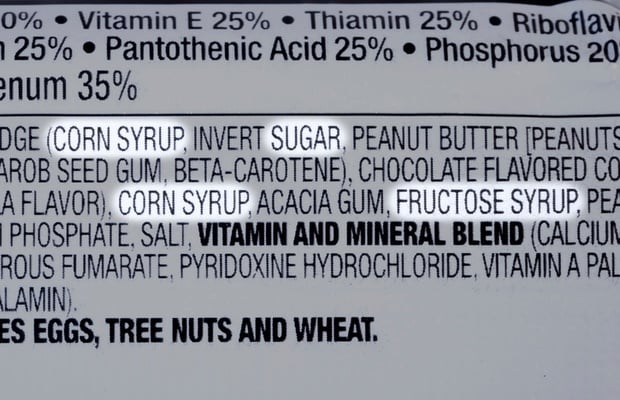
1. First look at the ingredient list
The ingredients in a food product are listed in order of weight, with the largest quantity first. If a product has an ingredient that you are trying to cut down on on top of the list, you will know that it contains more of this ingredient than the ones at the bottom. In this case you may want to find a more suitable alternative.
2. Then look at the nutritional information table
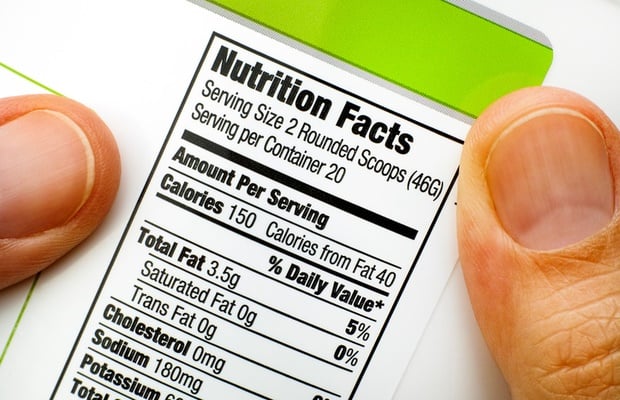
The nutritional information table provides information about the energy and nutrients a product contains. The key things to look for in this table are the energy, protein, carbohydrates, sugar, fats, fibre and sodium content. The information is usually presented per 100g or 100ml, and per the recommended serving size.
The best way to decide if a product is suitable for you is to evaluate the nutrients per 100g or 100ml, as products have different recommended serving sizes and the serving indicated on the label may be either less or more than you normally consume. When comparing products, the same rule applies; look at the 100g or 100ml information as you will be comparing equal quantities.
3. Know what the numbers should be
Total fat: According to South African law, a manufacturer can only make a claim of “low fat” if the total fat content of the product is ≤3g per 100g solid food and ≤1.5g for liquids. Very few protein-rich foods meet this recommendation (for example, a 100g portion of cooked skinless chicken breast contains 4g fat and one large boiled egg 5g).
The following guidelines are more useful when choosing foods for a lower fat content:
Total sugar: Food labels indicate how much sugar (added and naturally occurring sugars) are contained in a product. Dairy and fruit contain naturally occurring sugars and plain versions of dairy and whole fruit don’t contain any added sugars. When it comes to added sugar, it is recommended that you choose products that contain 10g sugar or less per 100g of product.
Dietary fibre: Adults need at least 25g of dietary fibre per day for digestive health, which assists with weight management, heart health and blood glucose control. It will be easier to incorporate the recommended amount of fibre in your diet by choosing products that contain at least 6g dietary fibre per 100g whenever possible.
Salt or sodium: It is recommended that you limit your sodium intake to a maximum of 2 000mg per day (5g or one teaspoon of salt). A product labelled “low salt” should contain ≤120mg sodium/100g product or ≤300 mg salt/100g product (1g salt = 400mg sodium).
To save time in the aisles, look at the nutrition information of the products on company websites before you go shopping and make a short list of the key values to assess your product.
Please note: This article focuses on nutrition-related information on food labels and does not address additives, food processing methods or endorsements.
Image credit: iStock

NEXT ON HEALTH24X

