The evidence around omega-3 supplements is flimsy at best, say experts.


The evidence around omega-3 supplements is flimsy at best, say experts.
Government advisers publish new guidance – the first in more than 20 years – on healthy feeding for babies.
Fatty cuts of meat. Thick slabs of cheese. Stacks of bacon.
These are a few of the keystones of the trendy “keto” diet, a high-fat, low-carbohydrate eating plan that’s sweeping the nation.
The diet is intended to alter your body’s metabolism, putting it into a state called ketosis, explained Melanie Boehmer, a registered dietitian at Lenox Hill Hospital in New York City.
The human body normally relies on carbohydrates for most of its quick energy, but in ketosis the body shifts its primary focus to burning fat.
“When you put your body intentionally in ketosis, your body becomes incredibly efficient at burning fat for energy,” Boehmer said. And that translates into lost kilograms.
But nutritionists caution that the diet is challenging to follow and doesn’t include many nutrient-rich vegetables and fruits.
Also, it may pose possible heart risks, especially for people who have heart disease.
Origins in epilepsy care
The keto diet is newly popular, but it was originally developed as a treatment for epilepsy, said Cat Taylor, a registered dietitian with Nutrition on Demand consulting firm.
“We’ve used very low carbohydrate diets to treat epileptics in a clinical setting for a very, very long time,” Boehmer said. “Now is the first time we’re seeing it used by a more general population for weight management and diabetes.”
The standard ketogenic diet involves eating a lot of fat with moderate amounts of protein and very little carbohydrate, Taylor said. The traditional breakdown is 70% of calories from fats, 25% of calories from proteins and 5% of calories from carbohydrates.
“I see a lot of people assuming that the keto diet includes all the fat and protein you want, but in actuality even proteins have to be monitored because the body can break down protein and turn it into carbohydrates,” Taylor said. “Fats are the only nutrient that the body cannot turn into carbohydrates for fuel.”
Tough to follow
People following the diet require intricate eating plans to get the correct amount of fats, proteins and carbs to put them into ketosis.
Because of this, people really need to approach keto eating as a full-fledged lifestyle rather than a quickie diet if they want long-term weight loss, Boehmer said.
“Any time we talk about diets, where there’s a beginning and an end, then automatically we’re kind of setting ourselves up to fail,” Boehmer said. “I would say if people want to try a keto lifestyle, that would be a better way to approach it.”

People adopting the diet develop what’s called the “keto flu” as their metabolism shifts from carbs to fats, Boehmer said. Symptoms can include fatigue, foggy mental function, increased hunger, difficulty sleeping, nausea, constipation or diarrhoea.
The keto flu usually sets in three days to a week after starting the diet, and lasts a week to two weeks, Boehmer said.
“If it lasts longer than three or four weeks, you’re probably not in ketosis and you’re teetering back and forth” between the two metabolic states, she noted.
The mistake people make that extends keto flu is reintroducing carbs back into their diet too soon, Boehmer said.
“The recommendation is to be in ketosis for two or three months before you even start to try and do that,” Boehmer said.
‘Cardiologist’s nightmare’
“While there are some small studies supporting the benefits of the keto diet, no substantiated evidence-based research has been published and, most concerning, the long-term impact of the keto diet is unclear,” Taylor said.
Some nutritionists are worried that by shunning carbs, people will miss out on crucial nutrients found mainly in carb-laden fruits and vegetables, Taylor said.
“Several nutrients vital to health are contained in carbohydrate-dense foods, including fruits, vegetables, legumes and grains,” Taylor said. “Just one medium apple contains about 17 grams of net carbs. This is concerning because these vitamins, minerals and phytonutrients contained in the above foods are vital to heath, immunity and disease prevention.”
“The keto diet’s focus on fat-dense foods is concerning especially if individuals choose a high amount of saturated or trans fats, which are linked to a rise in LDL ‘bad’ cholesterol that has been connected to higher rates of heart disease,” Taylor said.
Foods that can contribute to a healthy keto diet include seafood, grass-fed beef and poultry, nonstarchy vegetables, avocados and berries, Boehmer said.
“You should focus on whole foods that are naturally low in carbs,” Boehmer said.
One last warning – people taking up the keto diet should not be fooled by quick weight loss early on, Boehmer said. If they start adding in carbs too soon, they will regain the weight and potentially extend their keto flu.
“When you transition to a ketogenic diet, people lose a lot of weight very quickly,” Boehmer said. “That’s not actually because they are losing physical weight. It’s usually because carbs hold more water, so they’re losing water weight. That’s another thing to recognise. You need consistency to see actual weight loss and change.”
Image credit: iStock

NEXT ON HEALTH24X

This may explain the sharp fall in teen pregnancies, the British Pregnancy Advisory Service says.
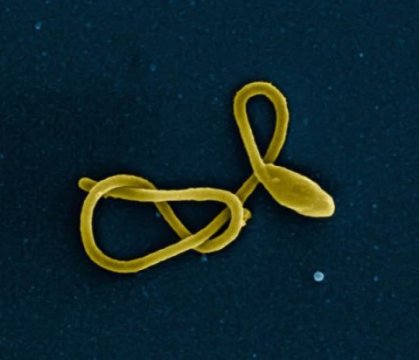
Colorized scanning electron micrograph of a single filamentous Ebola virus particle.
Credit: NIAID

Colorized scanning electron micrograph of a single filamentous Ebola virus particle.
Credit: NIAID
Recent Ebola virus disease (EVD) outbreaks, including the 2013-2016 epidemic that ravaged West Africa and the 2018 outbreak in the Democratic Republic of the Congo, highlight the need for licensed treatments for this often-deadly disease. ZMapp, an experimental therapy comprising three monoclonal antibodies, has shown promise in a clinical trial, but it targets only one of the five known species of Ebola virus. Now, scientists supported by the National Institute of Allergy and Infectious Diseases (NIAID), part of the National Institutes of Health, have discovered a set of powerful, broadly neutralizing antibodies (bNAbs) in the blood of EVD survivors. In animal studies, two of these antibodies provided substantial protection against disease caused by Zaire ebolavirus, Bundibugyo ebolavirus and Sudan ebolavirus, the three species known to cause fatal human illness.
James E. Crowe, Jr., M.D., of Vanderbilt University Medical Center, Nashville, and Alexander Bukreyev, Ph.D., of University of Texas Medical Branch, Galveston, headed the research team. The investigators analyzed blood plasma from 17 people who had recovered from EVD. Antibodies isolated from two survivors bound to an essential virus protein, called glycoprotein or GP, from Zaire, Bundibugyo and Sudan Ebola virus species, and prevented the viruses from entering host cells.
Ebola virus uses GP to attach to cell membranes and initiate infection. In a series of experiments, the team delineated interactions between various forms of viral GP and three of the newly isolated bNAbs. The results provided evidence of multiple mechanisms by which the antibodies inhibit actions of all forms of GP, thus preventing infection by halting viral entry into the host cell. The team also determined that one of the bNAbs, EBOV-520, recognizes and binds to a portion of virus GP in such a way that prevents it from interacting with a cell surface protein called NPC1 and initiating the infection cycle.
The researchers conclude that these broadly neutralizing antibodies are promising candidates for further development as therapeutic molecules against several ebolavirus species.
Story Source:
Materials provided by NIH/National Institute of Allergy and Infectious Diseases. Note: Content may be edited for style and length.
Journal Reference:
Cite This Page:
NIH/National Institute of Allergy and Infectious Diseases. “Broadly acting antibodies found in plasma of Ebola survivors: Discovery could lead to therapy for deadly illness.” ScienceDaily. ScienceDaily, 17 July 2018. <www.sciencedaily.com/releases/2018/07/180717142540.htm>.
NIH/National Institute of Allergy and Infectious Diseases. (2018, July 17). Broadly acting antibodies found in plasma of Ebola survivors: Discovery could lead to therapy for deadly illness. ScienceDaily. Retrieved July 17, 2018 from www.sciencedaily.com/releases/2018/07/180717142540.htm
NIH/National Institute of Allergy and Infectious Diseases. “Broadly acting antibodies found in plasma of Ebola survivors: Discovery could lead to therapy for deadly illness.” ScienceDaily. www.sciencedaily.com/releases/2018/07/180717142540.htm (accessed July 17, 2018).

New research published in PLOS ONE this week demonstrates dramatic positive benefits for native trees following rat removal at Palmyra Atoll, a magnificent National Wildlife Refuge and natural research laboratory located about 1000 miles south of Hawaii.
In one of only a few studies of its kind, scientists measured the effects of rat removal on the tropical Pisonia grandis forest at Palmyra Atoll, which provides critical seabird nesting habitat. Before removal, no seedlings of native Pisonia grandis trees were found in research plots. Immediately following removal of invasive rats, seedlings proliferated and plots had an average of 8 seedlings per square meter. For five native tree species, including Pisonia grandis, fewer than 150 seedlings were counted in the presence of rats, and more than 7700 seedlings were counted five years after rats were removed.
Lead scientist Coral Wolf from Island Conservation said: “Once rats were gone, changes became immediately apparent. We were so excited to walk into a forest stand of towering Pisonia trees and find a mat of tiny seedlings carpeting the forest floor — something that hadn’t been observed at Palmyra in recent decades as far as we know.”
Palmyra’s tropical rainforest also provides important habitat for a native gecko, insects, crabs and other rare species. Pisonia grandis forests are reported to be in decline globally.
Prior to removal, invasive rats devoured native seeds and seedlings, as well as seabird eggs and chicks, at Palmyra Atoll. Removing the rats allowed seabirds to flourish, and the rebounding native forest provides the birds with important nesting and roosting habitat. When seabirds perch in the trees, they provide nutrients to the soil below through guano droppings. These nutrients are then taken up by native plants and also wash into the ocean where they dramatically benefit surrounding reefs. Restoring the native forest at Palmyra Atoll thus helps keep coral reefs and thriving fish populations healthy and improves their chances of overcoming changing temperatures and other climate change impacts.
“Sea level rise and changing ocean temperature and chemistry will continue to stress Palmyra’s ecosystems,” said Alex Wegmann, Palmyra Program Director for The Nature Conservancy of Hawaii. “Restoring Palmyra’s native tropical rainforest allows greater whole-ecosystem resilience to climate change impacts.”
Measuring the positive effects on native plant communities like the Pisonia forest at Palmyra Atoll will help bolster the case for island management and invasive species eradication in other places around the globe.
“It is extremely rewarding to walk through the forested islands of the atoll and see the physical evidence of our management actions literally taking root,” said Stefan Kropidlowski, Palmyra Atoll Refuge Manager for the U.S. Fish and Wildlife Service. “Partnerships made the rat eradication successful and will be essential in the future as we use the best available science and research to inform the next challenges we face together.”
An unplanned benefit of the rat removal was the eradication of the Asian tiger mosquito, or Aedes albopictus. This outcome could open new avenues for controlling mosquitoes and mosquito-borne diseases elsewhere.
Two land crab species were observed for the first time on the atoll’s islets after rat removal, bringing the number of land crab species at Palmyra to nine. Land crabs are the indigenous engineers of low-lying tropical oceanic island ecosystems, and now Palmyra has one of the world’s most diverse and best protected land crab communities.
“In an age of well-founded concern about the environment, Palmyra Atoll’s response to the eradication of introduced rats reminds us of the resilience of intact ecosystems and gives us hope for a better tomorrow,” Wegmann said.
The team of researchers conducted pre-eradication monitoring of trees at Palmyra Atoll in 2004 and 2007, and repeated the monitoring post-eradication in 2011, 2012, 2014, and 2016. Monitoring included teams of two conducting counts of seedling abundance within 55 strip transects and approximately 50 locally rare tree plots distributed across the atoll. The team counted 140 native, locally rare tree seedlings pre-eradication and 7,756 seedlings post-eradication (2016).
The 2016 monitoring team of five was led by biologist Coral Wolf, who was five months pregnant at the time. Field work consisted of trudging through waist-high water and high-kicking through dense tropical rainforest. The team stayed well-hydrated by harvesting coconut water as needed.
Forty-one percent of the world’s most highly threatened vertebrates are found on islands, with invasive species introduced to islands being a leading cause of extinction. Removing invasive species from islands is an effective and proven way to save our world’s most vulnerable species. To date, there have been more than 500 successful projects to remove invasive rodents from islands. The pace, scale, and complexity of these efforts are increasing in recognition of the threat invasive species pose to biodiversity.

Researchers at the Max Planck Institute for Chemical Ecology, Germany, show for the first time that free-living, sap-sucking bugs can manipulate the metabolism of their host plants to create stable, nutritious feeding sites.
The discovery, published in eLife, shows that the bugs achieve this by copying plant hormones and injecting them into the leaves. They use a similar feeding strategy to endophytic insect species, which live inside plants. These findings could aid in the development of effective pest management strategies.
Free-living insects are able to move between and feed from different plants in the wild, unlike their less mobile endophytic counterparts, which spend a large part of their lives in a restricted area of the plant, often inside the tissues. When plants are targeted by bugs that depend on them for food and shelter, they often rely on defence responses that deter their attackers. However, some insects manipulate these mechanisms to counter the plants’ defence and even create a better nutritional environment around feeding sites. Until now, it was believed that only endophytic insects employed this strategy.
“It is widely thought that endophytic insects modify their hosts’ physiology using a plant hormone called cytokinin (CK),” explains lead author Christoph Bruetting, a postdoctoral researcher at the Max Planck Institute for Chemical Ecology. “These hormones can transform a plant organ that normally produces sugars — such as a mature leaf — into a kind of ‘sink’ where sugars are stored or consumed. This suggests manipulating CK could be an endophytic insect’s way of creating local metabolic sinks in the tissues they infest. However, there was previously nothing to demonstrate that any insect can transfer CKs to a plant.”
To investigate this further, Bruetting and his team looked at how the coyote tobacco plant (Nicotiana attenuata) responded to infestation with the free-living insect Tupiocoris notatus (T. notatus), one of its most common enemies in nature. The scientists developed an isotopic labelling technique which allowed them to see clearly that T. notatus flies inject CK into attacked leaves to manipulate the plant’s metabolism.
During a small infestation, where only 20 insects were able to feed on a leaf at one time, the team found that the overall nutritional quality of the leaf was not altered, although the feeding damage was severe. When the plants experienced a more extreme infestation, the protein levels in the attacked leaves decreased, but their sugar and starch contents remained the same.
“This marginal influence on nutrient levels could be due to nutrients from unattacked tissues being allocated to the injured tissue,” says senior author Ian Baldwin, Director of the Max Planck Institute for Chemical Ecology and Head of its Department of Molecular Ecology. “If this is correct, then T. notatus feeding likely causes the kind of sugar ‘sinks’ that only endophytic species were thought to create during feeding.”
Baldwin adds that further studies on T. notatus and CK transfer will provide new insight on the complex interactions that occur during plant-herbivore interactions, which could help with developing new strategies to increase crop tolerance to insect attacks.

Get up and get moving: Sitting too much may kill you even if you exercise regularly.
If you sit for six hours a day or more, your risk of dying early jumps 19%, compared with people who sit fewer than three hours, an American Cancer Society study suggests.
Sitting dangerously
And, the study authors added, sitting may kill you in 14 ways, including: cancer; heart disease; stroke; diabetes; kidney disease; suicide; chronic obstructive pulmonary disease (COPD); lung disease; liver disease; peptic ulcer and other digestive disease; Parkinson’s disease; Alzheimer’s disease; nervous disorders; and musculoskeletal disorders.
“The simple message is that we should be moving more,” said lead researcher Alpa Patel, strategic director of the cancer society’s prevention study-3.
The report was published in the American Journal of Epidemiology.
“The less sitting you do, the better it is for you,” she said. “Breaking up an hour of sitting with 2 minutes of standing or light activity can improve cholesterol, blood sugar and blood pressure.”
The study couldn’t prove cause and effect, but it’s clear that Americans are spending more time in their seats – watching TV, working and playing on computers and smartphones. With age people sit more, and people with chronic disease have even more sedentary time, the researchers noted.
An Australian study estimated that 90% of non-working time was sedentary, and that more than half of it was spent watching TV or sitting at computers.
It’s not clear why prolonged sitting is unhealthy, Patel said. It’s possible that people who spend a lot of time on the couch also have other unhealthy behaviours, such as excess snacking, she suggested.
In addition, prolonged sitting has been linked to higher levels of triglycerides, blood sugar, blood pressure and insulin. Sitting has also been tied to inflammation caused by obesity.
These consequences might explain why sitting was linked with death from heart, liver and kidney disease, as well as cancer, diabetes and COPD, Patel said.
Mental health risk
It’s less clear why death from suicide, Parkinson’s and Alzheimer’s, as well as nervous and musculoskeletal disorders, seems associated with sitting. For these, she said, it’s possible that the conditions themselves result in more sedentary time.
The increased mortality risk differed by disease, ranging from 10% for cancer to 60% for musculoskeletal disease, Patel said.
For the study, Patel’s team collected data on nearly 128 000 men and women who were part of an American Cancer Society prevention study. At the start of the study, all were free of major chronic diseases. During 21 years of follow-up, nearly 49 000 people died.
Dr David Katz, director of the Yale-Griffin Prevention Research Center in Derby, Connecticut, said, “We have known for some time now that sitting for extended periods daily is injurious to health.”
He noted that this study links excessive sitting to an increased risk of dying early from an array of causes – everything from heart disease to suicide.
“Does this mean that sitting excessively increases suicide risk? That seems implausible,” Katz said. “Perhaps depressed people lack the motivation to get up and go out. But then again, we know that routine activity is important to mental health, so some contribution of sedentariness to the severity of depression is not out of the question.”
Easy solutions
Even though more study is needed to figure out why sitting appears to boost the risk of early death, what to do about it is no mystery, he said.
“The remedy is at hand – stand up, stretch, walk around; repeat often,” said Katz.

Image credit: iStock

NEXT ON HEALTH24X

A new report, released by the Human Science Research Council, into HIV prevalence and incidence in South Africa, has shown a significant decline in new infections in 2017, compared to a similar survey five years ago.
But more concerning for researchers was the occurrence of risky behaviour among respondents.
It found that consistent condom use was low, early sexual debuts before the age of 15 had increased among males, and more than a third of young women had sexual relationships with older men.
“It is concerning to find very little behaviour change seems to have occurred since 2012,” said Dr Mpumi Zungu, from the HSRC’s HIV/Aids, STIs and TB (HAST) Research Programme, and a co-principal investigator (PI) of the survey.
“This suggests that most of the reduction in new infections was likely due to the impact of the expanded ARV treatment programme,” she said.
Decline in incidence rates
The survey was based on interviews with 33 000 people between January and December 2017, with 24 000 of them agreeing to be tested for HIV.
The survey found there had been a significant decline in incidence rates, but that there had been an estimated 231 100 new HIV infections in SA in 2017.
The researchers said, although still high, it was a significant decline compared to 2012.
The survey found that the HIV incidence rate was higher among females aged 15-24 years old, where it was three times that of their male counterparts.
Dr Sizulu Moyo of the HAST Research Programme, and one of the co-PIs of the study, said the survey had found that more than 60% or an estimated 4.4 million people living with HIV (PLHIV) were on antiretroviral treatment (ART).
She said the study had also found that viral suppression was 87.3% among PLHIV who were on ART, with females generally being more likely to be virally suppressed than males among those aged 15 to 64 years old.
Campaigns are helping
“This suggests that progress is being made in increasing ART coverage, however, more needs to be done to link those who test HIV positive to care as soon as they are tested, in line with the current policy of test and treat,” Moyo said.
The survey did, however, find that social and behaviour change communication campaigns – such as those implemented by Soul City, Centre for Communication Impact (CCI), LoveLife and Community Media Trust campaigns – were reaching South Africans.
The study found that people who were highly exposed to these campaigns reported higher HIV testing, condom use, and correct knowledge of HIV compared to those who had lower or no exposure.
Image credit: iStock

NEXT ON HEALTH24X

Study of retired players hopes to provide a definitive answer on the risks of repeatedly heading the ball.
