Health24.com | This is what scientists say makes something truly addictive

Now that the world’s leading public health group says too much Minecraft can be an addiction, could overindulging in chocolate, exercise, even sex, be next?

The short answer is probably not.

The new “gaming disorder” classification from the World Health Organization revives a debate in the medical community about whether behaviours can cause the same kind of addictive illness as drugs.

Addiction defined 

The strictest definition of addiction refers to a disease resulting from changes in brain chemistry caused by compulsive use of drugs or alcohol.

The definition includes excessive use that damages health, relationships, jobs and other parts of normal life. Brain research supports that definition, and some imaging studies have suggested that excessive gaming might affect the brain in similar ways.

Under a looser definition, addiction is considered “a disease of extreme behaviour. Any behaviour carried to extreme that consumes you and keeps you from doing what you should be doing becomes an addiction as far as life is concerned,” said Dr Walter Ling, a UCLA psychiatrist.

In its widely used manual for diagnosing mental illness, the American Psychiatric Association calls excessive video gaming a “condition” but not a formal diagnosis or disease, and says more research is needed to determine if it qualifies as an addiction.

Drugs and the brain 

Certain drugs including opioids and alcohol can over-activate the brain’s reward circuit. That’s the system that under normal circumstances is activated when people engage in “behaviours conducive to survival” including eating and drinking water when thirsty, explained Dr Andrew Saxon, chairman of the association’s addiction psychiatry council.

The brain chemical dopamine regulates these behaviours, but narcotic drugs can flood the brain with dopamine, encouraging repeated use and making drug use more rewarding than healthy behaviours, Saxon said. Eventually increasing amounts are needed to get the same effect, and brain changes lead to an inability to control use.

What about other substances?

Caffeine is a stimulant and also activates the brain’s reward system, but to a much lesser degree than addictive drugs. The “reward” can make people feel more alert, and frequent users can develop mild withdrawal symptoms when they stop, including headaches and tiredness. Caffeine-containing chocolate may produce similar effects. Neither substance causes the kinds of life problems found in drug addiction, although some coffee drinkers develop a tolerance to caffeine and need to drink more to get the same “buzz” or sense of alertness.

The World Health Organization recognises caffeine “dependence” as a disorder; the American Psychiatric Association does not and says more research is needed.

“The term ‘addiction’ is tossed around pretty commonly, like ‘chocoholic’ or saying you’re addicted to reality TV,” said Dr Ellen Selkie, a University of Michigan physician who studies teens’ use of digital technology. But addiction means an inability to control use “to the point where you’re failing at life,” she said.

Compulsive gambling

The only behaviour classified as an addiction in the American Psychiatric Association’s diagnostic manual is compulsive gambling. To be diagnosed, gamblers must have several symptoms including repeatedly gambling increasing amounts of money, lying to hide gambling activity, feeling irritable or restless when trying to stop, and losing jobs or relationships because of gambling.

Research suggests excessive gambling can affect the brain in ways similar to addictive drugs. Since the diagnostic manual was last updated, in 2013, studies have bolstered evidence that excessive video gaming may do the same thing, and some experts speculate that it may be added to the next update.

The manual doesn’t include sex addiction because there’s little evidence that compulsive sexual behaviour has similar effects on the brain.

Many excessive gamblers, gamers and sex “addicts” have other psychiatric conditions, including anxiety, attention deficit disorder and depression, and some mental health specialists believe their compulsive behaviours are merely symptoms of those diseases rather than separate addictions.

Does the term matter? 

The World Health Organization’s decision to classify excessive video gaming as an addiction means “gaming disorder” will be added to this year’s update to the organisation’s International Classification of Diseases.

Doctors worldwide use that document to diagnose physical and mental illnesses. Insurers, including Medicaid and Medicare, use billing codes listed there to make coverage decisions. The American Psychiatric Association’s manual is widely used for defining and diagnosing mental disorders. If conditions aren’t listed in these documents, insurance coverage for treatment is unlikely.

Image credit: iStock

NEXT ON HEALTH24X

Share Button

Parents warned over ‘toxic’ slime

Consumer group Which? is concerned the popular children’s products are not being properly vetted.

Share Button

Editing human embryos ‘morally permissible’

An independent inquiry gives go-ahead to genetically altering human embryos, but advises caution.

Share Button

Buried internet infrastructure at risk as sea levels rise

Thousands of miles of buried fiber optic cable in densely populated coastal regions of the United States may soon be inundated by rising seas, according to a new study by researchers at the University of Wisconsin-Madison and the University of Oregon.

The study, presented July 16, 2018 at a meeting of internet network researchers, portrays critical communications infrastructure that could be submerged by rising seas in as soon as 15 years, according to the study’s senior author, Paul Barford, a UW-Madison professor of computer science.

“Most of the damage that’s going to be done in the next 100 years will be done sooner than later,” says Barford, an authority on the “physical internet” — the buried fiber optic cables, data centers, traffic exchanges and termination points that are the nerve centers, arteries and hubs of the vast global information network. “That surprised us. The expectation was that we’d have 50 years to plan for it. We don’t have 50 years.”

The study, conducted with Barford’s former student Ramakrishnan Durairajan, now of the University of Oregon, and Carol Barford, who directs UW-Madison’s Center for Sustainability and the Global Environment, is the first assessment of risk of climate change to the internet. It suggests that by the year 2033 more than 4,000 miles of buried fiber optic conduit will be underwater and more than 1,100 traffic hubs will be surrounded by water. The most susceptible U.S. cities, according to the report, are New York, Miami and Seattle, but the effects would not be confined to those areas and would ripple across the internet, says Barford, potentially disrupting global communications.

The peer-reviewed study combined data from the Internet Atlas, a comprehensive global map of the internet’s physical structure, and projections of sea level incursion from the National Oceanic and Atmospheric Administration (NOAA). The study, which only evaluated risk to infrastructure in the United States, was shared today with academic and industry researchers at the Applied Networking Research Workshop, a meeting of the Association for Computing Machinery, the Internet Society and the Institute of Electrical and Electronics Engineers.

Much of this infrastructure is buried and follows long-established rights of way, typically paralleling highways and coastlines, says Barford. “When it was built 20-25 years ago, no thought was given to climate change.”

Many of the conduits at risk are already close to sea level and only a slight rise in ocean levels due to melting polar ice and thermal expansion as climate warms will be needed to expose buried fiber optic cables to sea water. Hints of the problems to come, says Barford, can be seen in the catastrophic storm surges and flooding that accompanied hurricanes Sandy and Katrina.

Buried fiber optic cables are designed to be water-resistant, but unlike the marine cables that ferry data from continent to continent under the ocean, they are not waterproof.

Risk to the physical internet, says Barford, is coupled to the large population centers that exist on the coasts, which also tend to be the same places where the transoceanic marine cables that underpin global communication networks come ashore. “The landing points are all going to be underwater in a short period of time,” he notes.

Moreover, much of the data that transits the internet tends to converge on a small number of fiber optic strands that lead to large population centers like New York, one of the more vulnerable cities identified in the study.

The impact of mitigation such as sea walls, according to the study, are difficult to predict. “The first instinct will be to harden the infrastructure,” Barford says. “But keeping the sea at bay is hard. We can probably buy a little time, but in the long run it’s just not going to be effective.”

In addition to looking at the risk to local and long-haul infrastructure in the nation’s coastal areas, the study examined the risk to the buried assets of individual internet service providers. It found the networks of CenturyLink, Inteliquent and AT&T to be at highest risk.

The findings of the study, argues the Wisconsin computer scientist, serve notice to industry and government. “This is a wake-up call. We need to be thinking about how to address this issue.”

Share Button

Reward and unease are closely linked in the brain

The brains of both humans and other animals have circuits that connect powerful impressions from the senses to positive or negative feelings — a function that is necessary for survival. These circuits drive the organism to seek things that increases the probability of survival and reproduction, such as food and sex, since these produce pleasure. Along the same line, the evaluation helps animals to avoid harmful things and situations, linked to feelings of unease and depression. The signal circuits in the brain that regulate our experience of positive and negative are also activated by disease. During long-term disease, such as chronic inflammatory diseases, cancer and depression, the system can cause huge suffering by negatively affecting motivation and mood.

The research group led by David Engblom at Linköping University has previously discovered a mechanism that explains why inflammatory diseases lead to unease and depressive symptoms. In the new study, the researchers were interested in a specific type of receptor, the melanocortin 4 receptor, found on certain nerve cells. They studied mice that lacked melanocortin 4 receptors and examined how the animals reacted to inflammation.

“Normal mice avoid an environment that they associate with becoming sick, if they can choose between it and another place. Mice that lack the melanocortin 4 receptor behave in the opposite manner, and are attracted to such environments, as if they liked the inflammation,” says David Engblom, associate professor at the Department of Clinical and Experimental Medicine and head of the study.

Other things that normal mice and people experience as uncomfortable, such as nausea, also caused the mice to seek out an environment that they associated with such experiences. The behaviour of the animals surprised the researchers.

“We have previously seen that removal of specific receptors in the brain can make animals indifferent to inflammation. But I’ve never before seen a switch from being associated with punishment to reward,” says David Engblom.

One of the key components of the reward system is the signal substance dopamine, which acts as a chemical messenger between nerve cells. Dopamine stimulates motivation and causes animals and humans to exert themselves to achieve anything that is experienced as rewarding. When the researchers examined the dopamine-based signalling in the brain, they saw that the dopamine level in normal mice fell in the reward centre of the brain when the animals experienced something unpleasant. In contrast, it increased slightly in the mice that lacked melanocortin 4 receptors.

“It seems that this receptor in some way prevents danger signals from activating the reward system. If the receptor is missing, the danger signals will gain access to the reward system and activate it. This means that mice that lack the receptor will seek out things that are associated with danger or discomfort,” says David Engblom.

It is too early to say whether the mechanism acts in the same way in humans. During long-term disease, patients often feel bad due to a combination of pain, nausea and inflammation. This means that it may be interesting to study the melanocortin 4 receptor in more depth, since it seems to be involved in many types of unease and discomfort.

Story Source:

Materials provided by Linköping University. Note: Content may be edited for style and length.

Share Button

Plastic chemical linked to smaller prefrontal cortex, reduced cognitive ability in rats

Society for Neuroscience. “Plastic chemical linked to smaller prefrontal cortex, reduced cognitive ability in rats: Findings demonstrate long-term influence of endocrine-disrupting compounds on brain development.” ScienceDaily. ScienceDaily, 16 July 2018. <www.sciencedaily.com/releases/2018/07/180716130738.htm>.

Society for Neuroscience. (2018, July 16). Plastic chemical linked to smaller prefrontal cortex, reduced cognitive ability in rats: Findings demonstrate long-term influence of endocrine-disrupting compounds on brain development. ScienceDaily. Retrieved July 16, 2018 from www.sciencedaily.com/releases/2018/07/180716130738.htm

Society for Neuroscience. “Plastic chemical linked to smaller prefrontal cortex, reduced cognitive ability in rats: Findings demonstrate long-term influence of endocrine-disrupting compounds on brain development.” ScienceDaily. www.sciencedaily.com/releases/2018/07/180716130738.htm (accessed July 16, 2018).

Share Button

Health24.com | The pros and cons of 4 sleeping positions

Everyone has their preferred sleeping position.

But while the position in which you sleep may be the coziest, it might not be the best one for your health.

We take a look at a few sleeping positions and their effects on your health:

1. Lying on your stomach

In an interview with Tonic, physical therapist Hidde Hulshof states that sleeping on your stomach is probably the worst position.

Pros

Sleeping on your stomach has been proven to benefit those suffering from sleep apnoea.

Cons

Sleeping on your stomach adds strain to your back and neck areas.

Hulshof states, “Physically, it’s an unnatural position that’s unfavourable to your neck and back. Your neck is turned in a way that locks your upper cervical vertebrae, which can cause headaches and neck problems.”

2. Foetal position

The foetal position is the most common sleeping position of all.

Pros

This position is recognised as being great for menstruating and pregnant women. 

Cons

Studies show that sleeping on the right side increases the risk of stillbirth in pregnant women. 

It is therefore suggested that pregnant women sleep on their left side.

In an interview with Glamour magazine, gynaecologist Lisa Lindley notes, “Sleeping in the foetal position takes pressure off the abdominal muscles.” Sleeping on one’s side alleviates pressure on the lower back and promotes healthy blood circulation to the heart.

3. Straight side sleeping

Commonly described as “sleeping like a log”.

Pros

This position, much like the foetal position, alleviates pressure on the back, therefore minimising back pain. It is regarded as being great for digestion.

Cons

Those who sleep with their arms under their pillows, however, often complain of intense pins-and-needles.


4. Back sleepers

Sleeping on your back is considered to be the best position.

Pros

One receives optimal neck and back support sleeping this way.

Cons

However, director of the Sleep Assessment and Advisory Service in London, Chris Idzikowski believes “sleeping on your back may lead to snoring and difficultly sleeping”. It is also not recommended for people suffering from sleep apnoea.

Image credit: iStock

Share Button

Health24.com | This man was constipated for 22 years

Imagine being constipated for two decades. For a 22-year-old Chinese man this was a reality until Shanghai doctors removed about 76cm of his colon. It weighed nearly 13kg and was filled with faeces that had accumulated since birth.

The man, who wishes to remain anonymous, said he’d suffered from constipation for his entire life and laxatives offered only mild relief. Dr Yin Lu from 10th People’s Hospital of Shanghai told The Paper, a Chinese news site, that his stomach looked as though he was more than nine months pregnant. 

During the three-hour surgery, Dr Lu discovered that the man had years of faeces built up in his colon. He said it “looked like it could explode at any time”.

So how does this happen? Unfortunately the man’s family did not pay any attention to his chronic constipation, so he thought it “was not a big deal“. But the man is also believed to have Hirschsprung’s disease, a condition that affects one in every 5 000 live births.

(Don’t ignore constipation –  read more about when it becomes an emergency here.)

About Hirschsprung disease

According to the National Institute of Diabetes and Digestive and Kidney Diseases (NIDDK) “Hirschsprung disease is a birth defect in which nerve cells are missing at the end of a child’s bowel.”

In a healthy digestive tract nerve cells control how the bowel works by letting it know when to move stool. But, when these nerve cells are missing, in the case of Hirschsprung’s disease, the bowel does not work as it should. 

Instead, the stool moves through the bowel until it reaches the area without nerve cells, where it either slows down or stops entirely, which can result in a blockage or constipation.  

The NIDDK says the rectum and sigmoid colon are areas that are most often missing nerve cells. Some people, however, might have missing nerve cells in whole colon or part of the small intestine.Hirschsprung disease, constipation, illness, healt

Causes of Hirschsprung’s disease

According to Stanford Children’s Health, a foetus develops nerve cells in the digestive tract between the fourth and 12th week of pregnancy. But, for unknown reasons, “nerve cells do not grow past a certain point in the intestine in babies with Hirschsprung’s disease.” 

Males are five times more likely than females to develop Hirschsprung’s disease. The NIDDK adds that children with Down’s syndrome and other medical conditions, for example congenital heart defects, are at a greater risk of developing Hirschsprung’s disease.  

The condition is congenital (i.e, present at birth), but symptoms are not always obvious when a child is born.

Signs and symptoms

Although symptoms may vary, how they vary will not depend on how much of the digestive tract is missing nerve cells. The NIKKD says that no matter where the nerve cells are missing, once faeces reach this section, a blockage forms and symptoms develop.

These symptoms include:

  • constipation or intestinal obstruction
  • stunted growth
  • swollen abdomen
  • unexplained fever
  • vomiting

An early symptom in newborns is no bowel movement within 48 hours following birth. Other symptoms in newborns include:

  • green or brown vomit
  • explosive stools following a rectal examination
  • swollen abdomen
  • diarrhoea, often bloody

Treatment

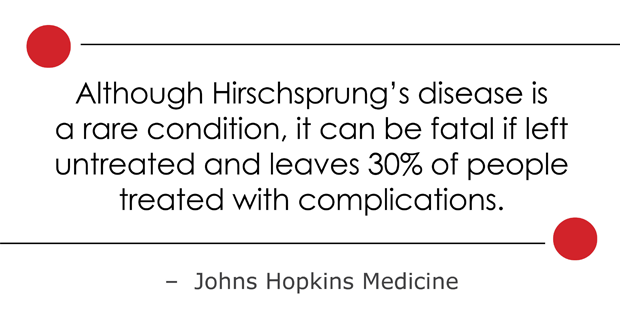
Once Hirschsprung’s disease is diagnosed it needs to be corrected with surgery. It can be fatal if left untreated.

A common procedure is the “pull-through” operation. The NHS explains that the affected area of the bowel is removed and the healthy sections are joined together. This operation is usually performed when babies are about three months old. 

Image credit: iStock

Share Button

Health24.com | 7 facts you probably didn’t know about hearing aids

Despite the fact that many people use hearing aids, many of us may not fully understand what they actually do or how they work. We’ve uncovered seven facts you should know about these useful devices.       

1. Hearing aids are not just for the elderly

According to the World Health Organization (WHO), about 466 million people across the world suffer from disabling hearing loss – 34 million of these are children. It’s estimated that by 2050 more than 900 million people will be affected by disabling hearing loss. The WHO says that 1.1 billion young people – between the age of 12 and 35 – are at risk of hearing loss due to exposure to loud noise in recreational settings. 

2. Hearing aids can adjust automatically to surrounding noise

Our ears do an amazing job of picking up important sounds – such as your dinner date’s conversation in a busy restaurant or a bored colleague muttering under his breath at a meeting. Hearing aids can do exactly the same, and technological advancements have made them versatile in all sound environments.

3. Hearing aids will not cure your hearing loss

A hearing aid will not return your hearing to normal. And while a hearing aid won’t cure your hearing loss, it will help you to hear conversations, the TV or the radio. A hearing aid will definitely improve your quality of life.

4. You should not buy hearing aids online

Sure, if you search online you might find a hearing aid that is more affordable than the quote you received. However, it’s impossible to know whether the device will work for you – in the same way that prescription glasses are tailored to your eyesight, hearing aids are tailored to your hearing needs. An audiologist needs to test your hearing and find the right hearing aid for you.

Doctor fitting hearing aid

5. You may need a hearing aid even if you have mild hearing loss

We all have different needs when it comes to hearing, and while some people with mild hearing loss don’t require a hearing aid, others find that it makes a huge difference to them. If you are concerned or confused, book an appointment with an audiologist who will be able to help you figure out what you need.

6. You may need to wear two hearing aids even if you only experience hearing loss in one ear

You use both ears to hear, which means wearing two hearing aids may improve your hearing even more. According to the American Speech, Language, Hearing Association, wearing two hearings aids “lets you figure out where sounds come from. This is called localisation. It helps in noisy places and makes sounds more natural. Wearing two aids may make it easier to understand what others say.”

7. Hearing aids can be used in any lifestyle

As technology continues to improve, it means that no matter what type of lifestyle you currently enjoy, you’ll be able to find a suitable hearing aid. Nowadays you can find hearing aids that are water resistant or waterproof. Just because you need to wear a hearing aid doesn’t mean you have to change your lifestyle.  

Woman with hearing aid at beach

Image credit: iStock

Share Button

Hot summer leading to ‘toxic’ algae

Blooms have flourished during the warm spell but they pose a health risk to humans and animals.

Share Button