The charity argued it would be forced out of business by a £400m bill for the past six years.


The charity argued it would be forced out of business by a £400m bill for the past six years.
It is the largest payout over allegations that Johnson & Johnson’s talc-based products cause cancer.
Beth Baldwin campaigned for change after her son Peter died from Type 1 diabetes complications aged 13.
Stephanie and Matt Austin went to a Philadelphia Phillies game one Saturday night, then headed to their new beach house, wanting to sleep late the next morning.
Those plans were ruined by a 6 a.m. phone call for Matt, an orthopaedic surgeon. Worse yet, it wasn’t even much of an emergency, just a routine question from a younger doctor.
Yet as he dealt with that, he noticed Stephanie making strange sounds. He called her name and she didn’t answer.
‘Mom’s sick’
He rolled her over and her face was blue. Her pupils were fixed and dilated. She was in cardiac arrest.
Matt dialled 911 and started CPR, which he learned in high school as a lifeguard, as did Stephanie. Paramedics arrived on a fire truck and Matt had to temporarily stop his CPR efforts to run down two flights of stairs and let them in the house. As they started to take Stephanie out of the house, Matt shouted, “Pulse?” “No pulse,” came the reply.
The commotion woke their sons, four year old James and seven year old Alec. James saw the fire truck and feared that his mom was on fire. Alec had a slightly better grasp on what was happening and was understandably frightened.
“Mom’s sick,” Matt told the boys. “She’s in the hospital and we’re going to take good care of her.”
Stephanie was 35 and extremely active; between soccer, Frisbee, tennis and weight lifting, she was exercising nearly every day. Yet four months earlier, she was diagnosed with cardiomyopathy, a disease marked by the heart being enlarged. This can weaken the heart, making it less able to pump blood throughout the body, which in turn makes it difficult to maintain a normal electrical rhythm.
Considering her age and overall fitness, doctors were only monitoring her condition. On this night in July 2008, it flared in a big way.
A misfiring of that electrical rhythm triggered the cardiac arrest, which is essentially an outage of the heart’s power. Each year, more than 350 000 Americans suffer cardiac arrest outside a hospital; about 90% die. Stephanie was fortunate that Matt noticed right away and knew how to respond.

Once she was revived, doctors determined she was in heart failure, meaning her heart wasn’t strong enough to efficiently pump blood to the rest of her body. Stephanie’s “ejection fraction”, basically the measurement of the heart’s pumping power, was in the single digits, far below the 50% to 70% where it should have been.
Doctors were concerned enough about her prognosis that they asked Matt to bring her living will to the hospital.
The worst was over, though. Stephanie received a pacemaker and defibrillator to constantly monitor and stabilise her heart’s rhythm. Two weeks later, she was back home.
“Out of the whole 12 or 13 days, I only remember about 30 seconds,” Stephanie said. “My memory is a definite problem. It’s much harder for me to multitask and not drop a ball.” Or kick one. Stephanie had to stop playing soccer as well as singles tennis because they put too much stress on her heart; doubles is less strenuous, so that’s allowed.
Helping others
Stephanie admits she’s uber-competitive and she’s redirected that energy into helping save lives.
In addition to joining the American Heart Association’s Southeastern Pennsylvania Board of Directors and being involved in Go Red For Women, she has urged her city and state to support CPR training.
Stephanie is among those urging state legislators to make Hands-Only CPR training a requirement for high school graduation. Bills are working their way through the Pennsylvania Senate and House of Representatives. Meanwhile, after Stephanie spoke to the nurse at her children’s school, CPR is now part of the curriculum for ninth-graders; Alec further spread the word by teaching CPR as a community service project as part of preparations for his bar mitzvah.
Stephanie is also part of CPR Ready, a Hands-Only CPR training initiative in Philadelphia.
“I have a very supportive group of friends and husband and children,” she said. “They’ve all given me the time to figure things out. But I’m only 45 and not old by any means. It’s been quite a ride… but I certainly gained perspective that I wouldn’t have been able to convey to people before this.”
Image credit: iStock


Learning how to do a skin self-exam could save your life.
“Skin cancer is one of the few cancers you can see with the naked eye,” said Dr Ali Hendi, an assistant clinical professor of dermatology at Georgetown University Medical Center.
Save your own life
“Yet sadly, many people don’t know how to be their own hero when it comes to skin cancer, including what to look for on their skin or when to see a board-certified dermatologist,” he added in an American Academy of Dermatology news release.
Skin cancer is the most common cancer in the United States. One in five Americans develops skin cancer, and one person dies every hour from melanoma, the deadliest form of the disease. According to the Cancer Association of South Africa (CANSA), “SA has one of the highest monitored ultra violet (UV) levels in the world, resulting in one of the highest skin cancer rates globally.”
What to do
To check your skin, use a full-length mirror to examine your entire body, front and back. Then, raise your arms and look at your right and left sides, Hendi said.
Bend your elbows and carefully check your forearms, underarms and palms. Look at the backs of your legs and feet, between your toes, and the soles of your feet. With nail polish removed, check your fingernails and toenails, as well.
Use a hand mirror to check the back of your neck and scalp, and part your hair for a closer look. Finally, check your back and buttocks with a hand mirror. Ask a partner to help check your back and other hard-to-see areas.
“While performing a skin self-exam, keep in mind that skin cancer can develop anywhere on the skin, not just in areas that are exposed to the sun,” Hendi said.
“If you notice any new spots on your skin, scalp or nails, spots that look different from other spots on your body, or spots that are changing, itching or bleeding, make an appointment to see a board-certified dermatologist,” he advised.
Know you ABCDEs
Hendi also explained the ABCDEs of checking for melanoma.
See a medical professional if you have any of these signs or notice an existing mole starting to change in any way.
“When detected early, skin cancer, including melanoma, is highly treatable, making it imperative to check your skin regularly,” Hendi said. “It only takes a few minutes to check your skin, and it could save your life.”
Image credit: iStock


Naomi Lea was 15 when she needed help to cope with panic attacks and self harm but there was a long wait.
The VERITAS array has confirmed the detection of gamma rays from the vicinity of a supermassive black hole. While these detections are relatively common for VERITAS, this black hole is potentially the first known astrophysical source of high-energy cosmic neutrinos, a type of ghostly subatomic particle.
On September 22, 2017 the IceCube Neutrino Observatory, a cubic-kilometer neutrino telescope located at the South Pole, detected a high-energy neutrino of potential astrophysical origin. However, the observation of a single neutrino by itself is not enough for IceCube to claim the detection of a source. For that, scientists needed more information.
Very quickly after the detection by IceCube was announced, telescopes around the world including VERITAS (which stands for the “Very Energetic Radiation Imaging Telescope Array System”) swung into action to identify the source. The VERITAS, MAGIC and H.E.S.S. gamma-ray observatories all looked at the neutrino position. In addition, two gamma-ray observatories that monitor much of the sky at lower and higher energies also provided coverage.
These follow-up observations of the rough IceCube neutrino position suggest that the source of the neutrino is a blazar, which is a supermassive black hole with powerful outflowing jets that can change dramatically in brightness over time. This blazar, known as TXS 0506+056, is located at the center of a galaxy about 4 billion light years from Earth.
Initially, NASA’s Fermi Gamma-ray Space Telescope observed that TXS 0506+056 was several times brighter than usually seen in its all-sky monitoring. Eventually, the MAGIC observatory made a detection of much higher-energy gamma rays about two weeks after the neutrino detection, while VERITAS, H.E.S.S. and HAWC did not see the blazar in any of their observations during the two weeks following the alert.
Given the importance of higher-energy gamma-ray detections in identifying the possible source of the neutrino, VERITAS continued to observe TXS 0506+056 over the following months, through February 2018, and revealed the source but at a dimmer state than what was detected by MAGIC.
“The VERITAS detection shows us that the gamma-ray brightness of the source changes, which is a signature of a blazar,” said Wystan Benbow of the Smithsonian Astrophysical Observatory (SAO) that operates and manages VERITAS, and the Principal Investigator of VERITAS operations. “Finding a link between an astrophysical source and a neutrino event could open yet another window of exploration to the extreme Universe.”
The detection of gamma rays coincident with neutrinos is tantalizing, since both particles must be produced in the generation of cosmic rays. Since they were first detected over one hundred years ago, cosmic rays — highly energetic particles that continuously rain down on Earth from space — have posed an enduring mystery. What creates and launches these particles across such vast distances? Where do they come from?
“The potential connection between the neutrino event and TXS 0506+056 would shed new light on the acceleration mechanisms that take place at the core of these galaxies, and provide clues on the century-old question of the origin of cosmic rays,” said co-author and spokesperson of VERITAS Reshmi Mukherjee of Barnard College, Columbia University in New York, New York.
“Astrophysics is entering an exciting new era of multi-messenger observations, in which celestial sources are being studied through the detection of the electromagnetic radiation they emit across the spectrum, from radio waves to high-energy gamma rays, in combination with non-electromagnetic means, such as gravitational waves and high-energy neutrinos,” said co-author Marcos Santander of the University of Alabama in Tuscaloosa.

Using an internationally organised astronomical dragnet, scientist have for the first time located a source of high-energy cosmic neutrinos, ghostly elementary particles that travel billions of light years through the universe, flying unaffected through stars, planets and entire galaxies. The joint observation campaign was triggered by a single neutrino that had been recorded by the IceCube neutrino telescope at the South Pole, on 22 September 2017. Telescopes on earth and in space were able to determine that the exotic particle had originated in a galaxy over three billion light years away, in the constellation of Orion, where a gigantic black hole serves as a natural particle accelerator. Scientists from the 18 different observatories involved are presenting their findings in the journal Science. Furthermore, a second analysis, also published in Science, shows that other neutrinos previously recorded by IceCube came from the same source.
The observation campaign, in which research scientists from Germany played a key role, is a decisive step towards solving a riddle that has been puzzling scientists for over 100 years, namely that of the precise origins of so-called cosmic rays, high-energy subatomic particles that are constantly bombarding Earth’s atmosphere. “This is a milestone for the budding field of neutrino astronomy. We are opening a new window into the high-energy universe,” says Marek Kowalski, the head of Neutrino Astronomy at DESY, a research centre of the Helmholtz Association, and a researcher at the Humboldt University in Berlin. “The concerted observational campaign using instruments located all over the globe is also a significant achievement for the field of multi-messenger astronomy, that is the investigation of cosmic objects using different messengers, such as electromagnetic radiation, gravitational waves and neutrinos.”
Messengers from the high-energy universe
One way in which scientists expect energetic neutrinos to be created is as a sort of by-product of cosmic rays, that are expected to be produced in cosmic particle accelerators, such as the vortex of matter created by supermassive black holes or exploding stars. However, unlike the electrically charged particles of cosmic rays, neutrinos are electrically neutral and therefore not deflected by cosmic magnetic fields as they travel through space, meaning that the direction from which they arrive points straight back at their actual source. Also, neutrinos are scarcely absorbed. “Observing cosmic neutrinos gives us a glimpse of processes that are opaque to electromagnetic radiation,” says Klaus Helbing from the Bergische University of Wuppertal, spokesperson for the German IceCube network.””Cosmic neutrinos are messengers from the high-energy universe.”
Demonstrating the presence of neutrinos is extremely complicated, however, because most of the ghostly particles travel right through the entire Earth without leaving a trace. Only on very rare occasions does a neutrino interact with its surroundings. It therefore takes huge detectors in order to capture at least a few of these rare reactions. For the IceCube detector, an international consortium of scientists headed by the University of Wisconsin in Madison (USA) drilled 86 holes into the Antarctic ice, each 2500 metres deep. Into these holes they lowered 5160 light sensors, spread out over a total volume of one cubic kilometre. The sensors register the tiny flashes of light that are produced during the rare neutrino interactions in the transparent ice.
Five years ago, IceCube furnished the first evidence of high-energy neutrinos from the depths of outer space. However, these neutrinos appeared to be arriving from random directions across the sky. “Up to this day, we didn’t know where they originated,” says Elisa Resconi from the Technical University of Munich, whose group contributed crucially to the findings. “Through the neutrino recorded on 22 September, we have now managed to identify a first source.”
From radio waves to gamma radiation
The energy of the neutrino in question was around 300 tera-electronvolts, more than 40 times that of the protons produced in the world’s largest particle accelerator, the Large Hadron Collider at the European accelerator facility CERN outside Geneva. Within minutes of recording the neutrino, the IceCube detector automatically alerted numerous other astronomical observatories. A large number of these then scrutinised the region in which the high-energy neutrino had originated, scanning the entire electromagnetic spectrum: from high-energy gamma- and X-rays, through visible light, to radio waves. Sure enough, they were able for the first time to assign a celestial object to the direction from which a high-energy cosmic neutrino had arrived.
“In our case, we saw an active galaxy, which is a large galaxy containing a gigantic black hole at its centre,” explains Kowalski. Huge “jets” shoot out into space at right angles to the massive vortex that sucks matter into the black hole. Astrophysicists have long suspected that these jets generate a substantial proportion of cosmic particle radiation. “Now we have found key evidence supporting this assumption,” Resconi emphasises.
The active galaxy that has now been identified is a so-called blazar, an active galaxy whose jet points precisely in our direction. Using software developed by DESY researchers, the gamma-ray satellite Fermi, operated by the US space agency NASA, had already registered a dramatic increase in the activity of this blazar, whose catalogue number is TXS 0506+056, around 22 September. Now, an earthbound gamma-ray telescope also recorded a signal from it. “In the follow-up observation of the neutrino, we were able to observe the blazar in the range of very high-energy gamma radiation too, using the MAGIC telescope system on the Canary Island La Palma,” says DESY’s Elisa Bernardini, who coordinates the MAGIC observations. “The gamma-rays are closest in energy to neutrinos and therefore play a crucial role in determining the mechanism by which the neutrinos are created.” The programme for the efficient follow-up observation of neutrinos using gamma-ray telescopes was developed by Bernardini’s group.
The NASA X-ray satellites Swift and NuSTAR also registered the eruption of the blazar, and the gamma-ray telescopes H.E.S.S., HAWC and VERITAS as well as the gamma-ray and X-ray satellites AGILE, belonging to the Italian Space Agency ASI, and Integral, belonging to the European Space Agency ESA, all took part in the follow-up observations. All in all, seven optical observatories (the ASAS-SN, Liverpool, Kanata, Kiso Schmidt, SALT and Subaru telescopes, as well as the Very Large Telescope VLT of the European Southern Observatory, ESO) observed the active galaxy, and the Karl G. Jansky Very Large Array (VLA) studied its activity in the radio spectrum. This led to a comprehensive picture of the radiation emitted by this blazar, all the way from radio waves to gamma-rays carrying up to 100 billion times as much energy.
Search in archives reveals further neutrinos
A worldwide team of scientists from all the groups involved worked flat out, conducting a complicated statistical analysis to determine whether the correlation between the neutrino and the gamma-ray observations was perhaps just a coincidence. “We calculated that the probability of it being a mere coincidence was around 1 in 1000,” explains DESY’s Anna Franckowiak, who was in charge of the statistical analysis of the various different data sets. This may not sound very large, but it is not small enough to quell the professional scepticism of physicists.
A second line of investigation rectified this. The IceCube researchers searched through their data from the past years for possible previous measurements of neutrinos coming from the direction of the blazar that had now been identified. And they did indeed find a distinct surplus of more than a dozen of the ghost particles arriving from the direction of TXS 0506+056 during the time between September 2014 and March 2015, as they are reporting in a second paper published in the same edition of Science. The likelihood of this excess being a mere statistical outlier is estimated at 1 in 5000, “a number that makes you prick up your ears,” says Christopher Wiebusch from RWTH Aachen, whose group had already noted the hint of excess neutrinos from the direction of TXS 0506+056 in an earlier analysis. “The data also allows us to make a first estimate of the neutrino flux from this source.” Together with the single event of September 2017, the IceCube data now provides the best experimental evidence to date that active galaxies are in fact sources of high-energy cosmic neutrinos.
“We now have a better understanding of what we should be looking for. This means that we can in future track down such sources more specifically,” says Elisa Resconi. And Marek Kowalski adds, “Since neutrinos are a sort of by-product of the charged particles in cosmic rays, our observation implies that active galaxies are also accelerators of cosmic ray particles. More than a century after the discovery of cosmic rays by Victor Hess in 1912, the IceCube findings have therefore for the first time located a concrete extragalactic source of these high-energy particles.”

Researchers have demonstrated nanomaterial-based white-light-emitting diodes (LEDs) that exhibit a record luminous efficiency of 105 lumens per watt. Luminous efficiency is a measure of how well a light source uses power to generate light. With further development, the new LEDs could reach efficiencies over 200 lumens per watt, making them a promising energy-efficient lighting source for homes, offices and televisions.
“Efficient LEDs have strong potential for saving energy and protecting the environment,” said research leader Sedat Nizamoglu, Koç University, Turkey. “Replacing conventional lighting sources with LEDs with an efficiency of 200 lumens per watt would decrease the global electricity consumed for lighting by more than half. That reduction is equal to the electricity created by 230 typical 500-megawatt coal plants and would reduce greenhouse gas emissions by 200 million tons.”
The researchers describe how they created the high-efficiency white LEDs in Optica, The Optical Society’s journal for high impact research. The new LEDs use commercially available blue LEDs combined with flexible lenses filled with a solution of nano-sized semiconductor particles called quantum dots. Light from the blue LED causes the quantum dots to emit green and red, which combines with the blue emission to create white light.
“Our new LEDs reached a higher efficiency level than other quantum dot-based white LEDs,” said Nizamoglu. “The synthesis and fabrication methods for making the quantum dots and the new LEDs are easy, inexpensive and applicable for mass production.”
Advantages of quantum dots
To create white light with today’s LEDs, blue and yellow light are combined by adding a yellowish phosphor-based coating to blue LEDs. Because phosphors have a broad emission range, from blue to red, it is difficult to sensitively tune the properties of the generated white light.
Unlike phosphors, quantum dots generate pure colors because they emit only in a narrow portion of the spectrum. This narrow emission makes it possible to create high-quality white light with precise color temperatures and optical properties by combining quantum dots that generate different colors with a blue LED. Quantum dots also bring the advantage of being easy to make and the color of their emission can be easily changed by increasing the size of the semiconductor particle. Moreover, quantum dots can be advantageously used to generate warm white light sources like incandescent light bulbs or cool white sources like typical fluorescent lamps by changing the concentration of incorporated quantum dots.
Although quantum dots embedded in a film are currently used in LED televisions, this lighting approach is not suitable for widespread use in general lighting applications. Transferring the quantum dots in a liquid allowed the researchers to overcome the problematic drop in efficiency that occurs when nanomaterials are embedded into solid polymers.
Making efficient white LEDs requires quantum dots that efficiently convert blue light to red or green. The researchers carried out more than 300 synthesis reactions to identify the best conditions, such as temperature and time of the reaction, for making quantum dots that emit at different colors while exhibiting optimal efficiency.
“Creating white light requires integrating the appropriate amount of quantum dots, and even if that is accomplished, there are an infinite number of blue, green and red combinations that can lead to white,” said Nizamoglu. “We developed a simulation based on a theoretical approach we recently reported and used it to determine the appropriate amounts and best combinations of quantum dot colors for efficient white light generation.”
To make the new LEDs, the researchers filled the space between a polymer lens and LED chip with a solution of quantum dots that were synthesized by mixing cadmium, selenium, zinc and sulfur at high temperatures. The researchers used a type of silicone to make the lens because its elasticity allowed them to inject solutions into the lens without any solution leaking out, and the material’s transparency enabled the necessary light transmission.
The researchers showed that their liquid-based white LEDs could achieve an efficiency double that of LEDs that incorporate quantum dots in solid films. They also demonstrated their white LEDs by using them to illuminate a 7-inch display.
“Quantum dots hold great promise for efficient lighting applications,” said Nizamoglu. “There is still significant room for technology development that would generate more efficient approaches to lighting.”
As a next step, the researchers are working to increase the efficiency of the LEDs and want to reach high efficiency levels using environmentally friendly materials that are cadmium- and lead-free. They also plan to study the liquid LEDs under different conditions to ensure they are stable for long-term application.
Story Source:
Materials provided by The Optical Society. Note: Content may be edited for style and length.

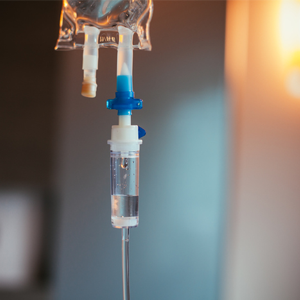
I’m pretty into exploring new ways to boost my energy levels, which is why intravenous (IV) vitamin boosts piqued my interest. Unfortunately, needles are not my friend. I am the girl who faints when she gives blood and subconsciously shuts down veins, which means it’s never as simple as “one little prick” for me. Naturally, this put me off.
I’ve had a vitamin B12 shot a few times and it was painful, so volunteering for a whole IV just didn’t seem worth it to me. Until I chatted to a friend, who had recently found a “cool new IV Bar in Joburg” and swore it did wonders for her skin. I’m guilty of chasing the glow as much as the next girl, so I decided to brave up and go for it…
Here’s exactly what happened…
Walking into the IV Bar I didn’t quite know what to expect, but much to my delight there were no hospital beds or scary IV trolleys. Instead, I was greeted by friendly faces and delightfully comfy armchairs. We discussed my needs and decided that the “Energy Boost” IV was best for me – with a high dose of vitamins and electrolytes and an added bonus of magnesium to help me sleep better.
Read more: “I tried meditating for three days – and this is what I learnt”
The very gentle and caring Nurse Paulina administered my IV and after examining my arms decided it was best to pop the drip into my hand. It was slightly painful, but not what I’d built it up to be (very often the case). And then I sat back, relaxed and sucked on a few Sparkle sweets (these counter the metallic taste you get from the drip), while the 15-minute vitamin boost entered my veins.
Energised… But calm
A very quiet woman (slumped) in the chair next to me, I later learnt, was having the “Hangover Recovery” drip. She works in nightclubs and I guess hangovers and late nights are an occupational hazard. It turns out she was a regular in the IV Bar, evidently trying to find a way to balance her lifestyle. I watched her transform in front of me. As she finished her hydration cocktail, she almost bounced out of her chair and spoke about the upcoming evening she had to prep for.
Read more: Three times women self-diagnosed via Google – and got it scarily wrong
As for me, well my energy levels immediately perked up. I met a friend for a slice of birthday cake afterwards and felt alert and excited to see her. I wasn’t all buzzed the way you get from a caffeine overdose though; instead, I felt a sense of calmness.
We celebrated the same friend’s birthday the following evening and, needless to say, I woke up feeling a little worse for wear. I couldn’t help but think of the woman from the IV Bar in the chair next to me, and her hangover solution. A week down the line, I really have been sleeping better. Although, typical to the season I’ve picked up a little head cold. I know an “Immune Boost” IV with 25 000mg of vitamin C is just what’s needed to sort me out… I think it’s safe to say I might be hooked.
Everything you need to know about vitamin IV drips
While these IVs are a mix of vitamins and minerals that are already found in your body, it’s important to do your research and make sure whoever is administering your drip really is clued up. I sat down with Keri Krug, the owner of IV Bar, and asked everything we all want to know about this latest health trend…
Before you visit and IV Bar, what credentials etc. should you check the establishment for?
Safety is critical! You want to make sure the intravenous vitamin centre is associated with a doctor and a registered nurse is administering the drips. Even though it’s vitamins and minerals and is considered very safe, you want to make sure the vitamins you are receiving are compounded in a sterile facility, and that the nurse has extensive experience in dripping clients. Also, from a logistical point of view, you want to go somewhere that’s inviting, comfortable and has a good energy. This is not a grudge purchase – it’s by choice, and you want to enjoy your time there.
Do the IV drips come with any side effects – during, immediately after or the next day?
There are no negative side effects at all – only the upside! Very few people have reported a slight headache after the detox drip, but this is normal as the body is getting rid of toxins… but I’ve literally had one client report this. Some people get minor bruising at the needle site, which again is normal and usually not painful. Most people, however, don’t bruise and feel the positive effects of the energy boost and immune boost immediately.
Read more: “I tried this mix of essential oils on my sore muscles – and it actually works”
What are the costs of the IV?
Our vitamin drips range between R650 and R850, depending on the drip. We have chosen to keep our prices as low as possible because we want our drips to be available to everyone – not just the stars and singers and actors and athletes who can afford a lot more. Our vitamin drips have the most effective and safest compounds at an affordable price.
How does the ‘energy boost’ drip differ from a general vitamin B shot?
The vitamin B shot typically only contains vitamin B12, while our energy boost contains vitamin B complex (thiamine, riboflavin, nicotinamide, pyridoxine, d-Panthenol), vitamin B12 and magnesium sulphate. The vitamin B12 complex gives you the boost and helps reduce anxiety and stress, while the magnesium assists with insomnia, cramps, inflammation and migraines.
We can give a much higher dose intravenously than would be tolerated orally or via injectable, so you would need four to six injections, one on a weekly basis, to have the same effect as a 15-minute drip. Also, injectables have a 60% absorption rate as some of the liquid goes into the muscle, while an intravenous drip has a 100% absorption rate, with the entire solution being administered directly into the blood stream. This also ensures results are immediately felt.
Is there anyone who shouldn’t have an IV?
Just about everyone can benefit from vitamin IVs as they are vitamins and minerals and considered safe. However, it is suggested that pregnant women do not have drips because we don’t know how much of the vitamins cross the placental barrier. Also, people with severe liver and kidney dysfunction may not be able to tolerate the drips either, but we will always check with their specialist and get their consent if they would like them to have a drip.
But those who do benefit are plentiful! Besides the aesthetic benefits of improved skin, and the natural performance enhancement for sports enthusiasts, as well as the detox benefits, and the hangover cure, those who benefit mostly from vitamin IVs are the medical cases:
Read more: 8 signs you need to be getting more vitamin V into your daily diet
What qualifications do those administering the IVs have?
Only a registered nurse, advanced paramedic or medical doctor can administer drips. Our nurse has 35 years’ experience putting up drips.
Is there a medical doctor present?
Yes there is. Even though vitamin drips are considered safe, and our nurse is extremely experienced and well qualified, we prefer to have a doctor on site. Most people have no negative side effects, but a client may not disclose medication they are on, or a condition they have, or they may not know of an underlying problem or allergy, and they might have a reaction. This would be the absolute minority, but rather safe than sorry.
As a result of adding compounds to an IV drip, there is a small risk of allergic reactions. While these risks are low, how are you geared up to deal with it in the event that one does occur?
The risk of an allergic reaction is very low. Medical drips, such as iron drips, pose a much larger risk that vitamin drips, but yes it can happen, specifically if the client has not disclosed certain medication they are taking or an underlying condition they may have. In the unlikely event of a reaction, a doctor is on site and our nurse is well trained. We have an anaphylactic kit on hand, and we have Hadley Shapiro and his team from MediResponse on speed dial.
The take home message – a client should always fill in the client consent form as honestly as possible and disclose all information that could be relevant to the dripping process. This way we can make sure they will be safe and reap all the positive rewards of vitamin dripping.
This article was originally published on www.womenshealthsa.co.za
Image credit: iStock

