Health24.com | Is sushi really that healthy?

You’ve seen the Instagram quotes: You had me at sushi. Soy happy together. Keep calm and eat sushi. Corny, sure, but it’s all good because sushi = fish = totally healthy.

That’s true – for the most part. But certain rolls (ahem: the fried and mayo-laden Kamikaze roll) are closer to French fries in nutrition, says registered dietician Jessica Perez.

Not a big deal once in a while – but if you didn’t intend for your seaweed salad to come with a side of saturated fat, disturbing nonetheless.

Read more: 4 things you should never order from the sushi menu

So is sushi healthy?

Yes, Perez says… but again, it really depends on what you order.

Aim for a serving of fatty fish like salmon at least once a week, she says. Fatty fish contains memory-boosting omega-3 fatty acids, so it gets a big thumbs up from most registered dietitians.

But there’s a catch: You should be mindful of your intake of fatty fish like tuna and mackerel, which tend to be higher in mercury. Mercury, of course, is linked to birth defects and can be toxic if consumed at high levels –although some of these fears have been overblown.

Perez recommends only having one or two tuna rolls, and getting the rest of your protein from shrimp, eel or scallops.

The other downside of sushi: One roll can contain up to one cup of rice, according to Perez. Yeah, that’s a lot.

White rice doesn’t have much fibre, and it can really spike your blood sugar (leading to a crash and probably cravings). So you really don’t want to eat more than a cup and a half of rice total all day – and no more than two-thirds a cup at a time, she says.

Ask for fibre-rich brown rice when eating out or swap the white stuff for cauliflower rice or quinoa when you’re making sushi at home.

Of course, if you’re immunosuppressed (undergoing chemo, coping with an autoimmune disease or pregnant) you should steer clear of raw fish altogether. Raw foods carry a slightly higher risk of passing along a bacterial infection, according to Perez. Cooked fish is still on the table, though.

Read more: What 9 nutritionists eat when they’re really damn stressed

Healthy sushi options

The fewer crunchy and creamy add-ons, the better. Swap the spicy mayo for a side of pickled ginger for a similar zing. It’s lower in fat, plus the health benefits of ginger are real.

Here are some great options to order:

The California Roll, which includes clean ingredients like avocado, crab and cucumber.

The Vegetarian Roll, which can include tofu, avocado and a variety of fresh vegetables like carrot and bell pepper.

Sashimi, which is a plain slice of raw fish, or nigiri, which comes with a base of rice (brown is better).

Perez says rolls like these should be avoided (or treated as an occasional indulgence):

  • Anything which is fried on the outside.
  • The Kamikaze Roll, which is loaded with mayo and tempura.
  • The Philadelphia Roll, which contains cream cheese (you’re better off getting your calcium from less processed sources).
  • Tempura or panko rolls, which are just fried filler.

“Get a salmon roll, a veggie roll and California roll, and that’ll be plenty,” Perez says.

The bottom line: There’s room for sushi in your diet – in moderation. Consider limiting rolls that are fried or filled with other high-kilojoule ingredients.

This article was originally published on www.womenshealthmag.com

Image credit: iStock

NEXT ON HEALTH24X

Share Button

MP Carol Monaghan leads campaign for new ME treatment

Patients, carers and MPs say exercise therapy prescribed for chronic fatigue syndrome can be harmful to patients.

Share Button

Health24.com | Why does your armpit itch?

Rubbing your arms like you’re doing the chicken dance but nothing gives? Heads up: It could be a sign of an allergy, or something else. Here, some of the reasons your armpits itch.

The usual suspects

Fragrances from soap, laundry detergent or dryer sheets are especially irritating on the delicate underarm skin, which often has invisible microtears from shaving. Switch to fragrance-free products and apply a 1% hydrocortisone cream to soothe the discomfort and rawness. If that doesn’t do the trick, you’ll need to look into other potential causes.

Read more: 3 women share what finally worked to clear up their eczema

Hidden culprits

Oh joy, your pits might have a yeast infection! And it can be just as itchy in your underarms as in your nether region. For relief, apply the same kind of OTC antifungal cream you’d buy for a vaginal yeast infection, and if it doesn’t clear up in five days, see a dermatologist – you may need a prescription oral medication.

Read more: Your itchy vagina might be caused by one of these hidden culprits

Sweat

Pissed-off armpits sometimes have a counterintuitive cause, though: sweat. Your pits can quickly get drenched when you walk into a warm room bundled up in loads of layers. And all that wetness actually zaps moisture from skin, resulting in dry prickles. The fix: Choose antiperspirant – which actively suppresses sweating – over deodorant, and go for a clinical strength formula.

This article was originally published on www.womenshealthsa.co.za

Image credit: iStock

Share Button

Health24.com | Tired of wearing underwear? Here are 6 things you should know before you go commando

Taking off your underwear is liberating. Your balls can finally breathe! So it’s easy to see why some guys want to feel that freedom all the time. In fact, there isn’t any medical reason that states you need underwear for support, says Dr Jamin Brahmbhatt, co-director of the PUR urology clinic in Clermont, Florida.

Go ahead and strip off those boxers or briefs – just make sure you follow these rules first.

1. Protect your privates, or prepare to chafe.

Without underwear, you don’t have any protection between the outer layer of your skin and the “harsh reality of the fabric and seams of your pants”, says Dr Mona Gohara, an associate clinical professor of dermatology at Yale University. This can cause painful skin irritation. Before you go commando, apply a thin layer of baby powder or petroleum jelly to your groin. It’ll help form a barrier to minimise the friction, Dr Gohara says.

2. Don’t count out jock itch.

Jock itch – a skin condition that presents as an itchy, red, ring-shaped rash – occurs when you’re exposed to fungus, says Dr Gohara. And fungi love to hang in warm, humid environments – just like the inside of your pants when your balls are sweating all over them. To fight off fungi, keep your boys dry with just a sprinkle of baby powder in the morning and regularly wash your pants. Which brings us to our next rule: 

3. Double your laundry duty.

If you normally wear a pair of pants four times before washing them, dial that down to just two. Going commando will cut your wear-to-cleaning cycle in half, says David Burrows, cofounder of the app-based dry-cleaning service Laundri. When fabric sits directly next to your skin, it makes your pants dirtier – and smellier – faster. If you wear dry clean-only fabrics like wool, this can get pricey, says Burrows. Pants made from heavier, thicker fabrics can usually last longer between washes than lighter, thinner pants, he says.

Read more: Eco-friendly gear that’s good for your wardrobe and the environment

4. Anticipate sweat stains.

If you do see a stain, rub a teaspoon of dish detergent mixed with two teaspoons of hydrogen peroxide into the stained area and let it sit for 30 minutes. “Then wash the garment as you normally do in cool water with your regular detergent,” Burrows says.

5. Steer clear of skinny jeans.

Skinny-cut pants, especially those made from heavier fabrics like denim, may cut into your crotch when you sit down, says Singleton. To make matters worse, if your fabric isn’t thick enough (or if you’re wearing too light a colour), you could give everyone an eyeful. To mask weird lines or bulges, wear wool or heavier cotton pants, says Ray Li, CEO and founder of the men’s clothing line Suitable.

6. Avoid fitting rooms.

Your crotch area is teeming with loads of bacteria, including the kind that can trigger diarrhoea. So this is obvious, but don’t try on new pants while going commando. Some of those faecal bacteria can transfer onto the fabric, says Sarah Council, PhD, a microbiologist at the North Carolina Museum of Natural Sciences Genomics & Microbiology Research Lab.

Read more: 11 essential rules to dressing like an adult

This article was originally published on www.mh.co.za

Image credit: iStock

Share Button

NHS use of ‘unsafe’ syringes to be examined

It follows claims the devices, used to give powerful painkillers, could have caused widespread deaths.

Share Button

Health24.com | Are sex robots healthy for humans?

World, meet Harmony.

Completely artificial and programmed by computer chips, the reasonably lifelike sex robot is marketed by sex doll maker Realbotix for $15,000 (R191 370). According to manufacturer, Realbotix, “She’s equipped for intimate relations but is also ‘the perfect companion‘.”

What your purchase includes

Harmony is at the leading edge of sex robot technology spawned by the $30 billion sex tech industry. “Sexbots” are designed for those who yearn for an opportunity to simulate a sex act in the company of an exceedingly realistic-looking mannequin.

Sexbots often come packed with many lifelike features. Some sexbots offer customisable orifices – vaginal, anal – while others can respond to speech, exhibit eye-tracking capabilities or perform limited mobile functions. 

What the research shows

Are sex robots simply high-end sex toys? Or might they serve a grander therapeutic purpose, helping to channel or curb bad behaviours – rape or paedophilia, for example – that might otherwise be inflicted upon real people?

A pair of British researchers decided to try and answer these questions.

“We found a number of health claims were being made, which we analysed,” explained study co-author Chantal Cox-George. She’s an academic foundation doctor at St. George’s University Hospitals, in London. “That sexbots might help safe sex, be therapeutic for people with sex or companionship problems, and might reduce sexual abuse of children.”

But in the end, “we were unable to find any empirical evidence in the medical literature to support or refute any of these,” she said.

Along with her co-author Susan Bewley, of the Women’s Health Academic Centre, Cox-George figured there must be some scientific literature exploring the clinical pros and cons of sexbots.

After all, as of 2018, four companies are already marketing adult “sexbots”, with one company even offering consumers a child-like iteration, known as a “pedobot”.

‘Health’ benefits

Four main claims to “health” have been put forward to support sexbot use:

  • The devices might promote safer sex by helping to cut back on sex trafficking, sex tourism or the solicitation of prostitutes.
  • Sexbots might help users gain sexual knowledge and expertise – without the crippling pressure of real-life intimacy. Or they might bring relief to those suffering from a range of sexually-related struggles, including erectile dysfunction, libido irregularity, loneliness or disability.
  • Sexbots might somehow be used as a therapeutic intervention for paedophiles and other sex offenders.
  • Sexbots might help dissuade users from acting on the urge to rape or engage in any form of non-consensual sex.

But a systemic search through appropriate research databases turned up no proof for these claims, the British duo reported in BMJ Sexual & Reproductive Health.

Arguments against the use of sexbots

Kathleen Richardson is an ethics professor at De Montfort University in Leicester, England. She told the Washington Post that sex robots represent an intrusion of machines in human relationships. She also believes the devices’ perfection and compliance might numb men to relationships with real women. “It offends me that they think a human woman is like a machine,” Richardson said.

So Bewley and Cox-George tried to investigate the evidence for these “anti-sexbot” theories that:

  • They would cause men to expect real women to be constantly available for sex.
  • The airbrushed and largely hairless features of sexbots might promote unrealistic expectations of beauty.
  • Sexbots might actually increase the urge to inflict sexual violence on real people.

But there was simply too little evidence available to support or deny these claims, the researchers found.

Their take-home message: “Based on the lack of evidence, which is at the heart of medical professionalism, we advise that sexbots shouldn’t be used in medical practice, at least not unless that forms part of robust and ethical research.”

Noel Sharkey is professor emeritus of artificial intelligence and robotics at the University of Sheffield, and co-founder of the Foundation for Responsible Robotics. He told the Post that Bewley and Cox-George’s research was extremely rigorous and “and actually delved into hundreds and hundreds of journals”.

Douglas Hines, chief executive of sex robot maker TrueCompanion, said that “Roxxxy, our sex robot, provides what every adult needs – unconditional love and support. The ability to feel the loving embrace of a lover is a right every adult should be granted. We provide a solution to help adults meet their social as well as sexual needs.”

Image credit: iStock

NEXT ON HEALTH24X

Share Button

Child obesity plan targets sweets at checkouts

New measures also aim to limit junk food ads and end the sale of energy drinks to children.

Share Button

Health24.com | This breathing exercise will get you to hold your breath for over two minutes

Hanli Prinsloo can hold her breath for six minutes! It’s not a superpower she was born with, but rather a skill she’s developed during her long career as a freediver – that’s someone who spends time below the ocean’s surface without scuba gear or any other breathing apparatus. And it’s how Hanli’s Insta feed came to be filled with beautiful shots of up-close playdates with dolphins, seals, turtles and even whales.

On the other end of the spectrum, I’ve lived my whole life with asthma. I know what it feels like to almost die because you can’t breathe so my associations with not breathing aren’t exactly positive. But, it turns out, practising breath hold exercises actually comes with a world of benefits.

It makes you better at everything

There’s a lot of training that goes into learning to hold your breath. For starters, you need to practise slow, deep breathing. This activates your parasympathetic nervous system, which prompts your body to conserve energy so you need less oxygen. It also causes you to relax deeply, slowing your heart rate and sending you into a state of calm (stress for what?).

All those deep breaths make your blood more oxygenated, which helps every cell in your body function more effectively – including those in your brain. So you can expect to be sharper, more alert and have more energy. Plus, more oxygen reaching your muscles means you’ll be better at exercise.

“It’s like putting a really big engine in a really small car,” says Hanli. “The more oxygen we have in our system, the better we become at the sports we do, it increases our VO2 max, it increases everything in the body, including thinking and working.”

Breathe better in just one session

I caught up with Hanli in Los Angeles ahead of World Oceans Day and the adidas global Run For The Oceans event. We were sitting on a beach on Catalina Island, an idyllic getaway about an hour by boat from the mainland. It was a sunny day, warm but not too hot, and ocean ripples lapped gently at the shore, where we sat, cross-legged on the sand. As locations go, it doesn’t get much lovelier.

But when Hanli told us to hold our breath, I panicked before I’d reached a minute. Then she took us through a breathing exercise and, an hour later, I held my breath for over two minutes! Want to give it a try? Follow Hanli’s step-by-step plan.

1. Make sure you’re not in the water.

Seriously. If you’re not used to breathing deeply, you could feel dizzy or faint the first few times. And fainting mixed with water usually doesn’t end well. Instead, find a comfy spot on the floor with enough space to lie down.

2. Learn to breathe deeply.

Most of us spend much of the day walking around with our tummies sucked in because, you know, muffin top. But in order to breathe effectively, you need your belly to expand to make room for your diaphragm, says Hanli. So if you’re keeping your tummy sucked in, you’re only breathing with your upper chest, creating tension in your neck and shoulders and feelings of anxiety.

Try this: Sit up straight, chest open, shoulders relaxed. Relax your tummy completely. Breathe out, then take a deep breath in. Don’t lift your shoulders; instead, let your belly expand to make way for the air. Put your hand on your belly to feel it expanding and shrinking with each in and out breath. Do 10 breaths like this.

3. Warm up your muscles.

Those would be the muscles you use for breathing – your diaphragm and intercostal muscles (when last did you think about them?). Take a deep belly breath. Holding your breath, raise your hands above your head, place the back of one hand against the palm of the other, shoulders away from ears, elbows straight. Press your chest forward and pull your elbows back. Hold for a few counts, then breathe out and relax.

Take another deep breath and hold it and this time, gently lean over to the left, then the right. Return to centre and breathe out. These exercises make your intercostal muscles more supple, creating more space for your lungs to expand and ultimately increasing your lung capacity, explains Hanli.

4. Practise three-step breathing.

Imagine your chest consists of three spaces: Your belly, your chest and your shoulders. First, fill your belly with air. Breathe in so that just your belly expands. When it can’t expand any further, breathe into your chest cavity and feel your ribs expanding outwards. When they can’t expand anymore, breathe the last little bit into your shoulders – imagine air flooding in behind your collar bones.

Once you’re full of air, consciously relax your shoulders – they’ve probably tensed up. Exhale and breathe normally.

5. Slow your breath down.

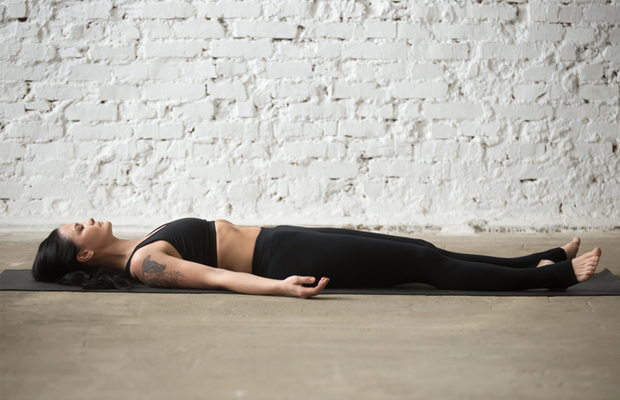
You’re going to need to lie down for this next part. Lie on your back as though you’re in Savasana in yoga class: Body relaxed, legs straight with feet flopped out to the sides, hands by your sides, palms up, eyes closed. Breathe in for a count of eight seconds and out for a count of 10 seconds. It doesn’t matter whether you breathe through your nose or mouth, but make sure you’re breathing into your belly so only your belly rises and your chest stays still. Repeat this pattern for two to three minutes.

It’s called a breathe up. It slows your heart rate and oxygenates your blood, prepping you for the breath hold to come. Too hard? Breathe in for six seconds and out for eight seconds.

Woman doing savasana

6. Hold it.

Close your eyes. Do a three-step breath and hold it. As soon as you feel like you need to breathe, exhale and breathe normally. Repeat step five again (your breathe up). Then, take another three-step breath and hold. This time, when you feel like you need to breathe, be aware of the trigger, but hold your breath for a few seconds longer.

Repeat step five again, take a final three-step breath and hold it again. This time, when you feel the trigger to breathe, make a conscious decision to hold your breath for longer. Tell your body that you’re safe, calm and relaxed. Relax your muscles. Relax your forehead. If you hold it long enough, you’ll feel your diaphragm start to constrict. This is an early warning system that your body needs oxygen, but you still have time to, for example, come up from a dive, says Hanli.

“We use that as a mental exercise,” she says. Don’t try and go beyond this point unless you’re under the supervision of a trained professional and, we’ll say it again, never try this exercise in the water.

You can use a timer to see how long you held each breath. Over time, you should notice your times increasing as your body gets better at breathing.

This article was originally published on www.womenshealthsa.co.za

Image credit: iStock

Share Button

Health24.com | Meet Gareth Scott, the gamer breaking stereotypes by helping others get fit

Video gaming couldn’t get less physical. Sure, it takes a lot of skill and practice but sprinting across the field as Cristiano Ronaldo on FIFA doesn’t help your own fitness as much as you’d want it to. Clearly, fitness and gaming don’t go together.

But let Gareth Scott tell you otherwise. Gareth is a coach for an eSports organisation called xTc, who’s a big believer in regular exercise and sticking to a healthy diet. His passion for fitness led him to start a motivation brand called Level Up. By being involved in both of these worlds, he makes sure that it’s more than just his thumbs that get a good workout.

“Level Up was started in 2016 with the aim of helping anyone and everyone grow within themselves,” he says.

“The goal is to involve gamers and help players live a healthier lifestyle by offering tips on nutrition and staying in shape. I am trying to build a community where people can help and motivate each other. Eventually we’d like to open a fitness centre that focuses on the mind, body and soul.”

Competitive gaming in South Africa has gained an impressive following and continues to grow. There are many gaming events and conventions such as Vs Gaming, Mettlestate, EGE and rAge Expo where top gamers  come to compete against each other. The events are also filled with supporters who just enjoy watching or would like to learn more.

“The scene is growing at such a rate that we are starting to see teams hosting gaming houses for their players, some teams are paying salaries and we even have teams going to compete overseas.

“Spectators also come to see new games, gadgets or dress up for Cosplay as their favourite, game, movie or anime characters.”

Read more: Here’s how Michael B Jordan got jacked for Black Panther

The 30-year-old’s love for gaming can only be rivalled by his love for fitness. He proudly breaks the stereotype of a gamer – lazy and on the couch with a range of profanities at his disposal. Just look at his Instagram account, for starters.

“Having a healthy routine is one of the most important things a gamer can do. A competitive gamer plays for about six hours a day on average – if not more. That’s excluding what they do for a living (work, study). That’s a large amount of time sitting in the same spot. This could cause problems for your back, your posture and would be bad for your spine in later years.

“Healthy eating, training and proper sleep reduces fatigue while improving concentration levels. This helps the body run at optimum level, which could therefore make your gaming performance that much more.”

Read more: This guy channelled his inner iron man to better his body in 8 weeks, here’s how

The 20-minute workout for gamers

“It’s not that gamers are too busy. It’s that they are too comfortable, which makes them lazy. An exercise at home that only takes about half an hour should help them escape that comfort zone.”

The following routine works the whole body without using any added weights, and it can be done at home. So gamers don’t have to move too far away from their controllers. Players, get ready.

20 star jumps 

This is only the first level, don’t go reaching for cheat codes just yet.

20 high knees

Are you sure your sprint button works?

10 push-ups

Time to power up your avatar!

10 leg raises

Leg days are for legends.

10 reverse crunches

Getting closer to unlocking your character’s abs. Keep pushing.

10 dips

Good news. Your couch can help you out on this one…

20 second reverse plank

But not this one.

10 superman stretch (x3)

Learn to fly! Be sure to do this three times.

Do the routine once a day and your overall stats should improve!

Follow Gareth and Level Up for more:

Insta: @levelup_ct

Twitter: @xTcUndacuva

Facebook: Level Up CT

Read more: Kick-start your morning with this 10-minute bodyweight workout

This article was originally published on www.mh.co.za

Image credit: Supplied

NEXT ON HEALTH24X

Share Button

Health24.com | Gonorrhoea 101: Everything you need to know about the STI

Sex may be super fun – and, you know, essential to maintaining the human population – but it can also come with some uncomfortable consequences… like the more than 20 different types of STIs.

Gonorrhoea’s just one of those super-scary infections – but it’s one that definitely needs to be on your radar. With an estimated 820 000 new cases each year, gonorrhoea is the second most commonly reported notifiable disease (i.e., you’re legally obligated to tell someone if you have it) in the US, according to the Centers for Disease Control (CDC). It’s just as big of a problem around the globe too.

Scary, huh? But before you go swearing off sex forever, it’s important to know exactly what you’re dealing with when it comes to gonorrhoea. Because knowledge is your best form of protection – well, after abstinence and condoms.

What is gonorrhoea?

Gonorrhoea, a.k.a. “the clap” is an STI caused by the Neisseria gonorrhoeae bacterium, and is spread though the sexual contact with the penis, vagina, mouth or anus of an infected partner.

The bacteria infects the mucous membranes (basically, any opening to the body), and is commonly found in the cervix, uterus and fallopian tubes in women, and the urethra in both women and men. But the STI can also affect the mouth, throat, eyes and rectum.

It’s seen most often in men and women ages 15 to 24 – of the estimated 820 000 new cases each year, 570 000 are among young people – but anyone who’s having unprotected vaginal, oral or anal sexual contact can get or spread the infection. Also, fun fact: Ejaculation doesn’t have to occur for transmission.

Read more: 8 syphilis symptoms in women that are straight-up terrifying

What are the symptoms of gonorrhoea?

Much like chlamydia, gonorrhoea is hard to recognise. In fact, most women and men are asymptomatic, according to the CDC. That means they don’t experience any changes once they’re infected, says Dr Suzanne Fenske, assistant professor of obstetrics, gynaecology and reproductive sciences at Icahn School of Medicine at Mount Sinai in New York City.

If symptoms do show up, they usually occur within 10 days of exposure to the bacteria. They can be mild and mistaken for a UTI or yeast infection – like vaginal itching and discharge – but if you’re having any of the following symptoms, it’s a good idea to get them checked by a doctor.

Read more: 8 vagina changes that mean you’ve just caught an STD

Vaginal itching

Gonorrhoea can cause uncomfortable itching in and around the vagina, says Dr Fenske. If this feeling persists, tell your doctor and ask for an STI exam.

Abnormal vaginal discharge

Depending on where you are in your menstrual cycle, discharge is pretty common, but gonorrhoea can cause women to produce more discharge than normal, says Dr Fenske.

If you notice any differences in discharge – like an unusual colour, consistency or smell – either on your toilet paper or in your underwear, make sure to tell your doctor. It should be noted that a change in discharge doesn’t always mean you have gonorrhoea, but it’s still a safe bet to get checked out.

Vaginal bleeding between periods

There are tons of reasons why you could experience spotting between periods, like stress or having a condition like PCOS. But gonorrhoea could also be the cause, says Dr Fenske. If this isn’t typical for you, make an appointment with your gynae.

Painful and frequent urination

When gonorrhoea infects the urethra, it can cause symptoms similar to a urinary tract infection (you know, that familiar burning sensation when you pee and the feeling that you need to go constantly). If you’ve recently had unprotected sex and are experiencing these symptoms, check in with your doctor.

Pelvic or lower abdominal pain

Left untreated, cervical gonorrhoea can spread to the uterus and fallopian tubes, causing pelvic inflammatory disease. PID can lead to fertility issues in one in eight women, reports the CDC.

As it progresses, PID can cause fevers, pain, and sepsis, as well as chronic pelvic pain, says Dr Fenske. PID pelvic pain can be similar to what you might feel during your period, but it will occur outside of your typical cycle.

Again, this is only if gonorrhoea is left untreated, so make sure to get tested regularly to help protect against STIs spreading and causing PID.

Anal itching, soreness or bleeding; or a sore throat

In some cases, rectal gonorrhoea infections may show up as anal itching, soreness, bleeding or painful bowel movements, according to the CDC. An infection of the throat may cause a sore throat – but in many rectal and pharyngeal infections, gonorrhoea is asymptomatic.

Read more: 6 herpes symptoms in women that shouldn’t be ignored

How is gonorrhoea diagnosed?

“If symptoms are present, then most people will be diagnosed with gonorrhoea within two weeks of exposure,” says Dr Fenske. Women who suspect they have gonorrhoea can be diagnosed with a vaginal swab test or a urine test, which you can get at a walk-in clinic or from your primary-care doctor or gynae.

Only about 90% of cervical gonorrhoea cases are found via urine tests, says Dr Fenske, so a vaginal swab for suspected cervical gonorrhoea is your best option.

Men, however, are most often diagnosed through urine tests. And, for suspected gonorrhoea from oral or anal sex, swabs of the mouth and throat or rectum can also lead to a diagnosis.

But, if you’re not showing any signs or symptoms of the STI, it’s possible you won’t be properly diagnosed until you have a routine STI test (during your annual exam with your gynae, for example), or if the infection spreads and begins causing pain from PID, says Dr Fenske.

Read more: The 7 scary conditions that pap smears don’t test for

How is gonorrhoea treated?

Some good news: Gonorrhoea is totally treatable and a relatively easy STI to deal with, says Dr Fenske. Your doctor will likely give you a one-time shot of an antibiotic called Ceftriaxone along with one large pill dose of Azithromycin.

“There have been rising levels of resistance of gonorrhoea infections to antibiotics,” says Dr Fenske, “and the two antibiotics together provide the best coverage for treatment.”

According to the CDC, if your symptoms continue for more than a few days after receiving treatment, head back to your doctor, as you may have a strain that’s resistant to certain antibiotics. “When uncomplicated gonorrhoea infections are treated with antibiotics, it clears up within one day.”

Make sure you and your partner(s) wait at least a week after finishing treatment, assuming you’re no longer symptomatic, to have sex again. After that, you’re in the clear.

How can you prevent getting gonorrhoea?

Like most STIs, the best way to protect yourself against gonorrhoea is through abstinence or a long-term monogamous relationship with a partner in which you’ve both been tested, according to the CDC.

But, because that’s not always entire possible, latex or polyurethane condoms and dental dams are your second best bet if you’re having sex with multiple partners, says Dr Fenske.

Of course, gonorrhoea can still be spread by sexual contact before a condom goes on. To truly be safe, get tested with each new partner before having sex, so you know for sure where you stand, and get tested regularly on your own too.

Man opening a condom

Read more: 7 nasty skin problems you can get from having sex

What real women want you to know about gonorrhoea:

Jenelle Marie Pierce, founder of TheSTDProject.com and Spokesperson for PositiveSingles.com, asked several women with gonorrhoea to share their experiences with Women’s Health.

“I wouldn’t have known that I had it if it weren’t for my best friend getting it… Her ex told her that she might have an STI, and so I went with her for moral support – there’s a Planned Parenthood right around the corner, and I agreed to do testing too. I didn’t expect anything to come back positive – I didn’t have symptoms and nothing was unusual or felt weird to me – to when it did, I flipped out. I cried and everything. To find out that I had an STI, one that people have been saying is sometimes incurable, and that I had no idea how long I’d had it, just made me feel really gross.

“But treatment was easy, just a prescription. I didn’t have to wait a very long time to have sex again, just until my treatment was done. I want people to understand that everyone can get STIs. I used to think that it was just people who slept around or that I wasn’t sleeping with those kinds of people, like you could tell or something, but the truth is you can’t tell and most people get an STI at some point. It’s scary but it’s not the end of the world, and I just wish people knew that it’s not as big of a deal as everyone makes it out to be.” –Ashley, 25, Colorado Springs, CO

Woman having blood test

“I’m not sure if my symptoms were from the gonorrhoea or because I was also sick at the time. I had the flu for a few weeks, and I just wasn’t getting any better, so I finally went to the health centre on campus, and they asked me about STI tests. I didn’t want to get one done, but the lady convinced me that it wasn’t a big deal, so I just said yes. I definitely didn’t think that how I was feeling was because I had an STI though.

“I still wonder how long it would have taken before I found out if I hadn’t gotten sick like that. Untreated gonorrhoea can be really bad for women if you want to have kids one day, and I definitely do, I want a big family. When they told me that my results were positive I got really worried, because I didn’t know I was exposed. I mean, I’m not a person who hooks up a lot, so I really didn’t think I had anything to worry about, and I was really worried that I wouldn’t be able to have kids.

“They gave me a shot and a prescription and I took that until it was done. My flu went away a week or so later, I think – it wasn’t long. I wasn’t in a relationship though, so I didn’t have sex with anyone right away, and I didn’t really want to, because I was really worried for a while about getting something again.

“It just made me feel really trashy even though I know it shouldn’t have and it happens all the time to people. I didn’t have a partner then, but if I had to tell someone that they should get tested I’d use one of the anonymous apps that are out there. I didn’t even know they existed until I read about it online, but I can see why people would use them because there’s a lot of stigma around getting an STI – people can be mean and say some pretty nasty things about people with STIs.

“Lately I’ve been talking about getting tested and told my partner that I get tested and asked him if he had been, which I never used to do, so I feel like I’ve gotten a lot smarter and am more responsible now. I didn’t know that you can’t always tell whether or not you or someone you know has an infection, and that’s changed my whole perspective about getting tested and judging people who have an STI, because it can happen to anyone.” – Tora, 22, Brooklyn, NY

This article was originally published on www.womenshealthmag.com

Image credit: iStock  

NEXT ON HEALTH24X

Share Button