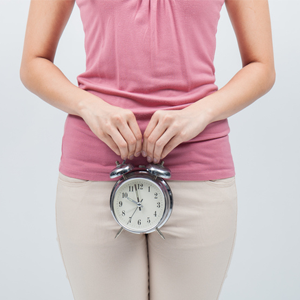
Health24.com | Do you know as much about your period as you think you do?

In a perfect world, your period would be but a blip on your radar – you’d get it at the same time each month, be just slightly uncomfortable for a week, tops, and then go about the rest of your 21 days unbothered and period-free.

But a perfect world, this is not (as if you needed that reminder); periods can be unpredictable and messy at best, and totally mind-boggling and life-altering at worst. Even more: They’re different for all women, so the concept of “normal” goes out the window.

That’s why it’s so important to know what’s normal for you – and the first part of that is knowing what is going on down there to begin with. So, it’s time to test your knowledge and maybe (definitely) learn a few things

Let’s start with something that seems to stump everyone: Can you get pregnant on your period?

Answer: It’s unlikely that you’ll get pregnant after having sex on your period, but it’s not totally impossible. Theoretically, if you ovulate within days of having unprotected sex, there’s a chance that sperm (which can survive in the vagina for up to five days) will hook up with an egg and, well, you know the rest.

Read more: 6 times your period blood looks different – and what it means about your health

How long can (or should you) leave a tampon in?

Answer: Unless you want to up your chances of getting toxic shock syndrome (TSS), you need to change that thing at least every eight hours, says Dr Diana Hoppe, a gynae based in Encinitas, California. True, TSS is super rare, but if you have your period, can’t remember the last time you changed your tampon and start feeling any flu-like symptoms (fever, vomiting, diarrhoea, rash), get to the ER as soon as possible.

Is it safe to use birth control to skip your period?

Answer: That’s actually a trick question. That blood you see during your week of sugar (or placebo) pills isn’t actually a period at all – it’s actually a hormone withdrawal bleed, says Dr Lauren Streicher, associate clinical professor of obstetrics and gynaecology at Northwestern University’s Feinberg School of Medicine and author of SexRx. So you’re already skipping your period by taking birth control. But yes, you can skip that placebo week if you want to forego the faux flow, Dr Streicher says.

Here’s a tricky one: Does your period mark the beginning or the end of your menstrual cycle?

Answer: The first day of your period is also day one of your 28-day menstrual cycle. That lasts for about four to eight days; about a week later, on day 14-ish, a woman begins ovulating (that’s when you’re most likely to get pregnant). On days 15 to 24, the newly released egg starts travelling down the fallopian tubes to the uterus, where, if it’s not fertilised by day 28, it breaks apart and leaves the body (along with your built-up uterine lining). Then you’re back at day one.

Read more: How to tell the difference between period blood and spotting

Is it normal to see blood clots in your period blood?

Answer: Not every woman gets blood clots during her period, but it’s not unusual to see a few, says Susan Wysocki, a nurse practitioner and board member of the American Sexual Health Association. “Our bodies are engineered in a way that blood, with the help of internal chemicals, clots so that we don’t bleed to death,” she says. Some of those “clots” could also be uterine tissue that wasn’t properly broken down, she adds. But, if you regularly see clots the size of a 20c piece or bigger, it’s time to see a doctor – those could signal a more serious problem like uterine fibroids, hormone-related issues, or other illnesses.

Are awful period cramps (like, ones that keep you home from work or school) a normal part of having a period?

Answer: Some cramping is, unfortunately, to be expected during your period (thanks to prostaglandins – hormone-like substances that trigger uterine muscle contractions to help you shed your lining, per the Mayo Clinic). But super painful cramps that disrupt your life each month may be a sign of something more serious like endometriosis, uterine fibroids, adenomyosis or pelvic inflammatory disease.

Can hanging out with your BFF all the time make your periods sync up?

Answer: There’s no hard-and-fast, yes-or-no answer here, but some research (specifically a 1971 study published in the journal Nature suggests it is possible for women to sync up, thanks to odourless chemicals called pheromones. Another possible reason you can sync up with your BFF: People living in close proximity may have similar diets, exercise routines, sleep/wake cycles and shared stressors that can impact menstruation, says Dr Alyssa Dweck, a gynae at the Mount Kisco Medical Group and author of V Is for Vagina.

Read more: This is the reason why you fart more on your period

Is it true that a missed period always means you’re pregnant?

Answer: Yep, there are tons of reasons you have a late (or missed) period that have nothing to do with something growing inside of you, says Dr Dweck. Those include major weight loss or excessive exercise, stress, a thyroid irregularity, polycystic ovary syndrome (PCOS), your birth control, premature menopause and other chronic illnesses like celiac disease.

This article was originally published on www.womenshealthmag.com

Image credit: iStock 

Share Button

Health24.com | Does your dad need a health intervention?

“My dad is overweight, and I can’t get him to work out or eat healthy no matter how hard I try.”

If I’ve heard this once, I’ve heard it … well, a few times. More than once, is my point. It’s usually someone who trains other people for a living, or is otherwise invested in fitness as a career.

The real question is this, “Why do my powers of persuasion end at the front door of my home? Why do complete strangers seek me out, and hang on everything I say, while the people I care about most couldn’t care less?”

“I get this question from students all the time,” says Kathleen Martin Ginis, PhD, a professor of exercise psychology at McMaster University in Hamilton, Ontario. “They want to know how to motivate their parents to be active.”

The answer is complicated.

The first and most important thing to know: “Nagging never seems to work,” Martin Ginis says. The result is often “behavioural reactance” – doing the opposite of what you want. “Nobody likes to be controlled, and that’s one way of regaining control from a person who just won’t let it go.”

Here’s how to persuade without nagging.

The first step is the hardest

A few words about what you’re up against:

According to The Psychology of Exercise, a textbook Martin Ginis wrote with two coauthors, about half of adults get little to no exercise. It starts in their mid-20s and stays about the same until the retirement years, when close to 60% of those 65 and older are inactive.

There are also big differences based on education, income and even race. An affluent, well-educated white guy is going to have more peers who’re fit and active than a black or Latino guy who went straight to work after high school. That could give him more motivation.

On the flip side, the blue-collar guy may not have many friends who work out, so within his own circle, not exercising could be perfectly normal.

That’s why your approach requires both finesse and patience. “I think everybody has a ‘hook’, or a reason to be active, but it can take some time to figure out what it is,” Martin Ginis says. “People won’t do something unless they can see the value in it.”

Read more: Five of the best sneakers to give dad this Father’s Day

For one guy it might be golf; even with a cart, there’s some walking involved, and he doesn’t want to be the only guy who gets winded walking from the cart path to the green. For another it might be travel, and being able to hike or climb stairs or paddle a kayak.

men, elderly, exercise, walking, fitness, health,

For someone else the hook might be appearance-related. “Maybe he hates his beer gut,” she says.

Once you find the hook, the next step is to understand why he isn’t already doing something about it. A process that seems simple and straightforward to you may look hopelessly complicated to your dad. No middle-aged man wants to walk into a gym and feel like the only newbie.

Even if he was an athlete or a weight-room monster in his youth, a gym can be a bewildering environment if you haven’t been in one for the past decade or two. The equipment, the exercises and even the clientele will look very different.

To take some of the fear away, Martin Ginis suggests investing your own time in the venture. “Doing it together is often the best type of support,” she says. Take a walk or a bike ride, or take him through a couple of workouts at his local gym.

The second step is no picnic either

You may know, as someone who’s been training hard and consistently, that your dad’s goals won’t be easy to achieve. That’s especially true if he’s looking to lose a lot of weight, or to build a noticeable amount of muscle.

But if you frame it that way, you’re going to lose him long before he gets much benefit. The problem, Martin Ginis says, is that you frame the concept with an emphasis on the “work” part of working out. “It creates images of pain, sweat and heavy breathing,” she says.

Those sensations may give you the feedback you want from your training programme. But it’ll probably do the opposite for someone who didn’t want to work out in the first place.

Read more: How to lose the dad bod in 4 weeks!

You need to reframe the idea of a workout so it gives your dad immediate positive reinforcement. A walk outside with someone whose company he enjoys will probably elevate his mood. A light gym workout may give him just enough of a pump to feel better about himself, even if the effect on his gut is negligible.

“It might not fit the Men’s Health idea of ‘working out,’ but it can be a good starting point,” she says. A modest result is still a result and might lead him to pursue something more ambitious on his own.

Conversely, if he refuses to do anything, Martin Ginis suggests an informational approach. Focus on the benefits of exercise without nagging him to get off his butt and do some of it. Small nudges may eventually convince him to try something. And if he tries it, he may like it enough to continue.

Don’t underestimate the old man

Here’s an example.

My own father was both obese and sedentary, and suffered sometimes excruciating back pain. His life seemed so unpleasant that I wanted to be the opposite of him, which helped reinforce my own interest in health and fitness.

But when he got divorced from my mom, he did something I didn’t expect: He started working out. He even paid for my first-ever gym membership, back when I was a recent college grad who could barely afford petrol for my car.

Which means, ironically enough, he helped support my commitment to be nothing like him.

Over the next few years he swam regularly, and even took up racquetball (hey, it was the ’80s). He never looked like a guy who belonged to a health club, much less used it regularly. But working out helped him feel better about himself, and that was enough to keep him going, against all odds.

“I tell my students that exercise has to be the toughest health behaviour to change,” Martin Ginis says. That’s especially true when it’s someone else’s behaviour you’re trying to fix.

You never know what might work for your dad. Just hope it’s not a divorce from your mom.

Lou Schuler is an award-winning journalist and contributing editor to Men’s Health. Check out his book Strong: Nine Workout Programs for Women to Burn Fat, Boost Metabolism, and Build Strength for Life, with coauthor Alwyn Cosgrove.

Read more: 10 subscription boxes your dad will enjoy months after Father’s Day

This article was originally published on www.mh.co.za

Image credit: iStock

Share Button

Cannabis oil row: Epileptic boy has supply returned

Twelve-year-old receives oil for “medical emergency” after it was confiscated, home secretary says.

Share Button

Health24.com | 7 times your vagina hurts during sex – and what the pain means

Sex and pleasure are part of a package deal – it feels good, and that’s one of the reasons we keep doing it! But recent research shows 30% of women are experiencing pain during the act. Though the hurt could be a symptom of a serious issue such as endometriosis, more often the cause is less grave.

“Most conditions that cause painful intercourse are very treatable,” says Dr Debby Herbenick, author of Sex Made Easy. Read on to find sex-wrecking culprits and their cures.

1. It feels like his penis is made of sandpaper

Vaginal dryness. “A lack of lubrication is hands down the most common cause of painful sex,” says Dr Herbenick. Certain medication – including the Pill, antidepressants, some allergy and cold meds – can stop your juices from flowing. So ditch the pre-sex soak in a warm bath, which dries out vaginal tissue.

Read more: 4 common reasons why you’re suffering from vaginal dryness

Apply a dollop of water-based lubricant to your girl parts during foreplay. A US study found that women who used lube while doing the deed reported significantly less pain and – bonus! – much higher levels of satisfaction.

Opt for positions that allow you to control the pacing (like woman on top) and stop to reapply if needed. Still in pain? If only certain positions are hurting you, common causes are constipation, muscle spasms, endometriosis, cysts or other organic causes, says WH sex expert Dr Elna Rudolph.

2. Your genitals itch and penetration makes it feel worse

Though various conditions can lead to itchiness, the most common cause is a yeast infection, which may result from taking antibiotics. Research also suggests a link between lots of oral sex and recurrent yeast infections; women who suffer from the condition are three times as likely to be on the receiving end of frequent oral loving. However, this is rare, according to Dr Rudolph. “Likely offenders are scented bubble baths, lubes and harmful activities like douching,” she says.

Read more: How much vaginal discharge is normal?

If you think you have a yeast infection, use an over-the-counter treatment, says Dr Rudolph. “If it’s not better within five days, see your gynae and have her take a vaginal swab,” she says. Keep getting that itch? It’s okay to use an OTC treatment up to five times a year – if you need it more often, have another swab taken.

“You may have a resistant infection, or it may not be a yeast infection at all,” says Dr Rudolph. “Conditions like lichen sclerosus also cause itching, and it’s harmful to treat it as a yeast infection.”

3. It seems as if he’s going to burst through your cervix

No, he’s not too big for you. You’re probably just rushing things. “If you’re sufficiently aroused, ‘ballooning’ of the vagina takes place,” says Dr Rudolph. “The uterus is pulled up into the abdomen and the muscles around the vagina relax, creating space for him.”

Read more: 7 cervical cancer symptoms you should absolutely never ignore

Don’t skimp on the pre-game warm-up. Most women need 20 minutes of foreplay to make sure their parts are ready for action. Simply adding lube isn’t a good short cut. “It might make entry easier, but it won’t change the length or shape of your vagina,” says Dr Herbenick.

Still uncomfortable? “It shouldn’t be painful if a penis hits a healthy cervix,” adds Dr Rudolph. If you still feel there isn’t enough space, see your gynae.

4. Post-baby nooky leaves you achy and raw

New moms, especially those who are breastfeeding, can experience plummeting oestrogen levels that leave the vagina drier than the Sahara and the vaginal walls prone to tearing. Scar tissue on a poorly healed episiotomy can also cause penetration woes.

Read more: The 5 best sex positions for after you have a baby

Take a break from intercourse. Many women aren’t physically ready for three months or longer, says obstetrics gynaecologist Dr Elizabeth Stewart. But don’t cut down on intimacy altogether, says Dr Rudolph. Start by using a finger and then try penetration – with plenty of lube.

5. It feels as if shards of glass are cutting up your outer vagina

Provoked vestibulodynia – a problem thought to involve the pelvic muscles, fascia and nerves.

If it’s mild, your doctor can prescribe Remicaine jelly or Emla cream containing a local anaesthetic, says Dr Rudolph. Once your gynae has ruled out obvious causes like infections, see somebody who specialises in genital pain. “Management will be a combo of medical treatment, physiotherapy and, in some cases, psychological interventions.”

6. Your vagina clamps shut when he tries to enter

Vaginismus. This painful but treatable condition causes the muscles at the entrance to the vagina to spasm at penetration, making intercourse all but impossible.

Read more: Two gynae-approved ways to tell if your vagina is too weak or too tight

Vaginismus is the fear of penetration associated with involuntary muscle spasm, and treatment involves overcoming the fear, learning to control the pelvic floor muscles and stretching them sufficiently to allow penetration, says Dr Rudolph. Stretching exercises begin with tiny objects like ear buds, moving on to a pencil, small tampon and vaginal dilators.

Your doctor might also prescribe sex therapy, psychotherapy and pelvic-floor physiotherapy to break down muscle knots through massage. Botox also works to relax overactive vaginal muscles, but it’s still experimental.

7. You get an itchy, hive-like rash around your vulva after sex

An allergic reaction, probably due to latex condoms or your lube. Choose plain condoms with no flavourants, and water or silicone-based lube. If it’s still a problem, see a doctor.

This article was originally published on www.womenshealthsa.co.za

Image credit: iStock 

NEXT ON HEALTH24X

Share Button

Health24.com | The 4 best ways to stretch in order to avoid injuries

Stretching is an important part of defending your body against injuries. It shouldn’t be an option – include a stretch session in every workout to make sure your body stays nimble and injury-free.

1. Head-to-knee stretch

This move stretches the hamstrings and back. Stand about 30cm from the wall with your back to it. Rest your behind against it and fold over at the hips, knees slightly bent. When your spine is extended, straighten your legs and lower your chest towards your thighs. Hold for a minute, then slowly stand up.

Read more: Thrust your way to a stronger, faster and more injury-resistant body

2. Down dog on wall stretch

This stretch stretches the shoulders and hamstrings. Plant your hands shoulder-width apart on a wall and step back until your body is bent 90 degrees at the hips. Spread your fingers evenly, pressing your hands and wrists against the wall. Relax your neck without hanging your head. Keep the back of your neck level with your spine. Hold for two minutes. That’s a long two minutes, isn’t it?

Read more: The upper-body stretches that build bulletproof muscle

3. Lunging pose stretch

The lunging pose stretches the quadriceps. Grab a bench about a metre from a wall with both hands. Stretch your right leg back to the wall. Hold, then bend your right knee towards the floor and shift your right foot so your toe is on the wall. Bend your left leg into a lunge until your right knee touches the floor, then draw your hips forwards. Hold, then switch legs. Do not attempt in poly shorts. Ever.

Read more: Think stretching sucks? Here’s how to warm up better

4. Twisting chair stretch

The twisting chair stretches the hips, core and glutes. Stand beside the seat of a chair or bench. Place your right foot on the seat. Grab your right ankle with your left hand and extend your right arm straight up in the air, rotating your chest to the right. Extend your spine and open your chest. Breathe a moment in this position, then release and repeat on the other side.

This article was originally published on www.mh.co.za

Image credit: iStock

NEXT ON HEALTH24X

Share Button

Over 40s health check to include dementia advice

Public Health England wants to give advice to patients to help reduce the risk of the condition.

Share Button

Teenager’s cowpox diagnosis surprises doctors

A 15-year-old boy is diagnosed with the historical disease now usually only found in animals.

Share Button

Meat sensitivity spread by ticks linked to heart disease

University of Virginia School of Medicine researchers have linked sensitivity to an allergen in red meat — a sensitivity spread by tick bites — with a buildup of fatty plaque in the arteries of the heart. This buildup may increase the risk of heart attacks and stroke.

The bite of the lone star tick can cause people to develop an allergic reaction to red meat. However, many people who do not exhibit symptoms of the allergy are still sensitive to the allergen found in meat. UVA’s new study linked sensitivity to the allergen with the increased plaque buildup, as measured by a blood test.

The researchers emphasize that their findings are preliminary but say further research is warranted. “This novel finding from a small group of subjects examined at the University of Virginia raises the intriguing possibility that asymptomatic allergy to red meat may be an under-recognized factor in heart disease,” said study leader Coleen McNamara, MD, of UVA’s Robert M. Berne Cardiovascular Research Center and UVA’s Division of Cardiovascular Medicine. “These preliminary findings underscore the need for further clinical studies in larger populations from diverse geographic regions.”

Allergens and Clogged Arteries

Looking at 118 patients, the researchers determined that those sensitive to the meat allergen had 30 percent more plaque accumulation inside their arteries than those without the sensitivity. Further, the plaques had a higher percentage with features characteristic of unstable plaques that are more likely to cause heart attacks.

With the meat allergy, people become sensitized to alpha-gal, a type of sugar found in red meat. People with the symptomatic form of the allergy can develop hives, stomach upset, have trouble breathing or exhibit other symptoms three to eight hours after consuming meat from mammals. (Poultry and fish do not trigger a reaction.) Other people can be sensitive to alpha-gal and not develop symptoms. In fact, far more people are thought to be in this latter group. For example, up to 20 percent of people in central Virginia and other parts of the Southeast may be sensitized to alpha-gal but not show symptoms.

The allergy to alpha-gal was first reported in 2009 by Thomas Platts-Mills, MD, the head of UVA’s Division of Allergy and Clinical Immunology, and his colleague Scott Commins, MD, PhD. Since then, there have been increasing numbers of cases of the meat allergy reported across the U.S., especially as the tick’s territory grows. Previously found predominantly in the Southeast, the tick has now spread west and north, all the way into Canada.

UVA’s new study suggests that doctors could develop a blood test to benefit people sensitive to the allergen. “This work raises the possibility that in the future a blood test could help predict individuals, even those without symptoms of red meat allergy, who might benefit from avoiding red meat. However, at the moment, red meat avoidance is only indicated for those with allergic symptoms,” said researcher Jeff Wilson, MD, PhD, of UVA’s allergy division.

Story Source:

Materials provided by University of Virginia Health System. Note: Content may be edited for style and length.

Share Button

New ID pictures of conducting polymers discover a surprise ABBA fan

The first ever detailed pictures of the structure of conjugated polymers have been produced by a research team led by Professor Giovanni Costantini at the University of Warwick.

The ability of these polymers to conduct electricity makes them highly sought after, but until now they could also be described as extremely camera shy as there has been no easy means to determine their structure. The new technique allows researchers not only to determine it but to actually clearly see it with their own eyes.

Conjugated polymers are able to conduct electricity because they are a chain of conjugated molecules where electrons can move freely due to their overlapping electron p-orbitals. Effectively, they are excellent molecular wires. Moreover, they are akin to semiconductor materials (they have energy gaps), so they can be used for electronic (plastic electronics) and photovoltaic (organic solar cells) applications.

Modern functional polymers are often co-polymers, that is, they are made by an (ideally regular) sequence of different monomers. The order of these monomers is essential to their opto-electronic properties which can be severally damaged by errors in how the monomers actually link up in a chain to form the polymer (so called polymerisation errors occurring during the synthesis of these materials). However, detecting the nature and exact position of these errors has proved problematic with current analytical methods. Mass spectrometry does not provide a solution, as shorter polymer chains are typically more likely to be ionised and thus tend to be overrepresented in the spectra.

Costantini and co-workers have proposed and implemented a completely novel approach to overcome this fundamental analytical problem. The underlying idea is extremely simple, yet at the same time transformative: deposit the polymers onto a surface and image them by high-resolution scanning tunnelling microscopy (STM). This approach effectively realises one of the visionary predictions by Richard Feynman’s in his famous 1959 speech There’s Plenty of Room at the Bottom, where he said that in the future “it would be very easy to make an analysis of any complicated chemical substance; all one would have to do would be to look at it and see where the atoms are.”

The atomic-scale resolution of STM is ideal for this aim but the problem remains that the chains of polymer molecules have first to be deposited intact in vacuum onto atomically clean and flat surfaces. The usual method of doing this involves heating the molecular material until it sublimes but, for molecules as large as polymers, this effectively melts the structure that should be studied. The authors have thus opted for a new method which sprays a cloud of the polymer through a series of tiny openings into a vacuum chamber, allowing a single unjumbled layer to be deposited onto a surface that is fully representative of the original polymer sample. STM of these layers produced stunningly resolved pictures, clearly revealing sub-monomer details of the conjugated polymers.

The researchers led by Professor Giovanni Costantini at the University of Warwick with colleagues from Imperial, Cambridge and Liverpool have published these results in a paper entitled “Sequencing conjugated polymers by eye” that appears in Science Advances today Friday 15th June 2018. Their high-resolution STM images of the structure of conjugated polymers are so detailed that they cannot only help with quality control and fine-tuning of polymer design, but they can even be used as something akin to an intellectual property (IP) passport photo for polymers. It is speculated that such precise and clear images could help synthetic researchers to demonstrate exactly the design they wish to legally protect by dramatically improving the information available to support an application for IP protection.

In their paper, the researchers demonstrate the power of the new technique by examining the conjugated polymer: “Poly Tetradecyl-diketopyrrolopyrrole-furan-co-furan.” This is a conjugated polymer of the DPP-based family that is currently showing some of the best performances in optoelectronic devices.

This material is most effective when its polymer chains form in an alternating sequence of one large “A” monomer and a smaller “B” monomer. However, flaws can happen during the synthesis that break that ideal sequence, thereby also damaging its appealing conducting and light-harvesting properties. The speculations so far were that this mainly occurs when two of the larger “A” monomers join directly together in an BAAB sequence.

When these flaws happen, gaps or voids form in the conjugated polymer’s assembly in correspondence to those errors in the chain. The University of Warwick led research team was able to use their new visualisation technique to very clearly show all of these gaps and then to zoom in further onto the polymer chains, precisely spotting each of the defective monomer sequences. On doing so, to their great surprise, they found not the expected BAAB flaws but ABBA defects.

Professor Giovanni Costantini, a physicist in the University of Warwick’s Department of Chemistry said:

This new capability to image conjugated polymers with sub-monomeric spatial resolution, allow us, for the first time, to sequence a polymeric material by simply looking at it. Some of the first images we produced using this technique were so detailed that when the researchers who synthesised the polymers first saw them, their overjoyed impression reminded me of how new parents react to the first ultrasound scans of their babies.

Besides representing a significant technical breakthrough, this new technique of combining vacuum electrospray deposition with high-resolution scanning tunnelling microscopy also has the potential to revolutionise the analytical capabilities in the application-relevant field of conjugated polymers where other currently available techniques are extremely limited.

I am particularly grateful to the University of Warwick which directly funded that the purchase of the electrospray deposition equipment that was crucial to making this significant technical breakthrough.

Story Source:

Materials provided by University of Warwick. Note: Content may be edited for style and length.

Share Button

Squeezing light at the nanoscale

Researchers at the Harvard John A. Paulson School of Engineering and Applied Sciences (SEAS) have developed a new technique to squeeze infrared light into ultra-confined spaces, generating an intense, nanoscale antenna that could be used to detect single biomolecules.

The researchers harnessed the power of polaritons, particles that blur the distinction between light and matter. This ultra-confined light can be used to detect very small amounts of matter close to the polaritons. For example, many hazardous substances, such as formaldehyde, have an infrared signature that can be magnified by these antennas. The shape and size of the polaritons can also be tuned, paving the way to smart infrared detectors and biosensors.

The research is published in Science Advances.

“This work opens up a new frontier in nanophotonics,” said Federico Capasso, the Robert L. Wallace Professor of Applied Physics and Vinton Hayes Senior Research Fellow in Electrical Engineering, and senior author of the study. “By coupling light to atomic vibrations, we have concentrated light into nanodevices much smaller than its wavelength, giving us a new tool to detect and manipulate molecules.”

Polaritons are hybrid quantum mechanical particles, made up of a photon strongly coupled to vibrating atoms in a two-dimensional crystal.

“Our goal was to harness this strong interaction between light and matter and engineer polaritons to focus light in very small spaces,” said Michele Tamagnone, postdoctoral fellow in Applied Physics at SEAS and co-first author of the paper.

The researchers built nano-discs — the smallest about 50 nanometers high and 200 nanometers wide — made of two-dimensional boron nitride crystals. These materials act as micro-resonators, trapping infrared photons and generating polaritons. When illuminated with infrared light, the discs were able to concentrate light in a volume thousands of times smaller than is possible with standard optical materials, such as glass.

At such high concentrations, the researchers noticed something curious about the behavior of the polaritons: they oscillated like water sloshing in a glass, changing their oscillation depending on the frequency of the incident light.

“If you tip a cup back-and-forth, the water in the glass oscillates in one direction. If you swirl your cup, the water inside the glass oscillates in another direction. The polaritons oscillate in a similar way, as if the nano-discs are to light what a cup is to water,” said Tamagnone.

Unlike traditional optical materials, these boron nitride crystals are not limited in size by the wavelength of light, meaning there is no limit to how small the cup can be. These materials also have tiny optical losses, meaning that light confined to the disc can oscillate for a long time before it settles, making the light inside even more intense.

The researchers further concentrated light by placing two discs with matching oscillations next to each other, trapping light in the 50-nanometer gap between them and creating an infrared antenna. As light concentrates in smaller and smaller volumes, its intensity increases, creating optical fields so strong they can exert measurable force on nearby particles.

“These light-induced forces serve also as one our detection mechanisms,” said Antonio Ambrosio, a principal scientist at Harvard’s Center for Nanoscale Systems. “We observed this ultra-confined light by the motion it induces on an atomically sharp tip connected to a cantilever.”

A future challenge for the Harvard team is to optimize these light nano-concentrators to achieve intensities high enough to enhance the interaction with a single molecule to detectable values.

This research was co-authored by Kundan Chaudhary, Luis A. Jauregui, Philip Kim and William L. Wilson. It was supported by the National Science Foundation and the Swiss National Science Foundation.

Share Button