How Your Smartphone Is Ruining Your Relationship


Nothing kills romance faster than pulling out a smartphone, and now, research confirms it. Being attached to your phone seems to sabotage your attachment with your loved one.

Plenty of research has been done on how cell phones affect relationships. Some suggests that they’re a positive influence—that being in easy, intimate touch with a partner through calling and texting makes people happier and more secure in their relationships. Other research reveals the dark side of cell phones. Real-life interactions are dulled when a person feels the urge to check their phone, and the distraction a phone affords one partner doesn’t make the other person feel good.

But smartphones are far more invasive and demanding of our time, connecting us to the world in vastly more ways than the flip phones of yore. A team of researchers thought that smartphones might be making relationships worse, so they wrangled 170 college kids who were in committed relationships to see what role their phones were playing.

In the study, published in the journal Psychology of Popular Media Culture, the college lovebirds were asked to report on their own smartphone use: how dependent they felt on their device, and how much it would bother them to go without it for a day. They then answered similar questions about their own partner’s smartphone dependency.

It didn’t matter much how much a person used their device, but how much a person needed their device did. People who were more dependent on their smartphones reported being less certain about their partnerships. People who felt that their partners were overly dependent on their devices said they were less satisfied in their relationship.

In other words, people get jealous of their partner’s smartphone. “I’m more likely to think my relationship is doomed the more I believe my partner needs that thing,” explains Matthew Lapierre, assistant professor in the department of communication at the University of Arizona, who authored the study with his former undergraduate student Meleah Lewis. “It’s not use; it’s the psychological relationship to that device.”

The researchers are now doing a followup experiment to try to understand the causal mechanisms behind their findings and to see whether or not smartphone dependency affects other areas of life, like academic performance, and whether factors like self-esteem predict a person’s smartphone obsession.

“Smartphones are fundamentally different from previous technologies, so their effect is much more powerful,” Lapierre says. “I don’t want to say it’s uniformly negative, but it definitely hints in that direction.”

This article originally appeared on Time.com.


Share Button

Ocean waves following sea ice loss trigger Antarctic ice shelf collapse

Storm-driven ocean swells have triggered the catastrophic disintegration of Antarctic ice shelves in recent decades, according to new research published in Nature today.

Lead author Dr Rob Massom, of the Australian Antarctic Division and the Antarctic Climate and Ecosystems Cooperative Research Centre, said that reduced sea ice coverage since the late 1980s led to increased exposure of ice shelves on the Antarctic Peninsula to ocean swells, causing them to flex and break.

“Sea ice acts as a protective buffer to ice shelves, by dampening destructive ocean swells before they reach the ice shelf edge,” Dr Massom said.

“But where there is loss of sea ice, storm-generated ocean swells can easily reach the exposed ice shelf, causing the first few kilometres of its outer margin to flex.”

“Over time, this flexing enlarges pre-existing fractures until long thin ‘sliver’ icebergs break away or ‘calve’ from the shelf front.”

“This is like the ‘straw that broke the camel’s back’, triggering the runaway collapse of large areas of ice shelves weakened by pre-existing fracturing and decades of surface flooding.”

Study co-author Dr Luke Bennetts, from the University of Adelaide’s School of Mathematical Sciences, said the finding highlights the need for sea ice and ocean waves to be included in ice sheet modelling.

This will allow scientists to more accurately forecast the fate of the remaining ice shelves and better predict the contribution of Antarctica’s ice sheet to sea level rise, as climate changes.

“The contribution of the Antarctic Ice Sheet is currently the greatest source of uncertainty in projections of global mean sea level rise,” Dr Bennetts said.

“Ice shelves fringe about three quarters of the Antarctic coast and they play a crucially important role in moderating sea level rise by buttressing and slowing the movement of glacial ice from the interior of the continent to the ocean.”

“While ice shelf disintegration doesn’t directly raise sea level because they are already floating, the resulting acceleration of the tributary glaciers behind the ice shelf, into the Southern Ocean, does.”

Study co-author, Dr Phil Reid, from the Australian Bureau of Meteorology, said the research identifies a previously under-appreciated link between sea ice loss and ice shelf stability.

“Our study underlines the importance of understanding the mechanisms driving these sea ice trends, particularly in regions where sea ice acts as a protective buffer against ocean processes,” he said.

The discovery comes after the international research team, from Australia, the United States and New Zealand, combined satellite images and surface and ocean wave data with modelling, to analyse five major ice shelf disintegrations, between 1995 and 2009.

These included the abrupt and rapid losses of 1600 square kilometres of ice from the Larsen A Ice Shelf in 1995, 3320 square kilometres from the Larsen B Ice Shelf in 2002, and 1450 square kilometres from the Wilkins Ice Shelf in 2009.

Each disintegration event occurred during periods when sea ice was significantly reduced or absent, and when ocean waves were large.

In only a matter of days, the collapse of the Larsen B Ice Shelf in 2002 removed an area of ice shelf that had been in place for the previous 11,500 years. Removal of the ice shelf buttressing effect also caused a 3- to 8-fold increase in the discharge of glacial ice, behind the shelf, into the ocean, in the year following disintegration.

DEFINITIONS OF TERMS USED

An ice sheet forms through the accumulation of snowfall, in this case on the Antarctic continent, when annual snowfall exceeds annual snowmelt. Over thousands of years the layers of snow build up and compact, forming a sheet of ice up to thousands of metres thick and thousands of kilometres across. As the ice thickens, the increasing height of snow and ice causes the ice sheet to flow.

The Antarctic Ice Sheet covers an area of about 14 million square kilometres; by comparison, the area of Australia is about 7.7 million square kilometres, and that of the USA is about 9.8 million square kilometres. It contains more than 90% of the world’s ice — enough to potentially raise global mean sea level by about 57 metres.

Grounded ice is that part of the ice sheet that is land-based and not floating on the ocean. Melting of grounded ice above sea level contributes to sea level rise.

Ice shelves are thick plates of ice, up to several hundred metres thick and fed by tributary glaciers. They are floating seaward extensions of the grounded ice sheet.

Sea ice is ice that originates from the freezing of seawater (unlike ice sheets, glaciers, icebergs and ice shelves). Sea ice typically forms a thin and highly-dynamic veneer up to a few metres thick that covers between about 3 million square kilometres (in winter) to 19-20 million square kilometres (in summer) of the Southern Ocean surrounding Antarctica. By comparison, the areas of the Antarctic continent, Australia and the USA are about 14, 7.7 and 9.8 million square kilometres, respectively.

Ocean swell is defined as regular long-period waves that are generated by distant storms and are no longer growing or being sustained by the wind (as opposed to locally-generated wind waves).

The Antarctic Peninsula forms a mountainous 1300 km northward extension of Antarctica towards the southern tip of South America. It forms the northernmost part of mainland Antarctica.

Share Button

Amber fossils provide oldest evidence of frogs in wet, tropical forests

About 99 million years ago, a tiny juvenile frog in present-day Myanmar was suddenly trapped in sap with a beetle, perhaps its intended next meal.

Unlucky for the frog, but lucky for science.

An extinct species now named Electrorana limoae, it’s one of four fossils that provide the earliest direct evidence of frogs living in wet, tropical forests and are the oldest-known examples of frogs preserved in amber.

“It’s almost unheard of to get a fossil frog from this time period that is small, has preservation of small bones and is mostly three-dimensional. This is pretty special,” said David Blackburn, study co-author and the associate curator of herpetology at the Florida Museum of Natural History. “But what’s most exciting about this animal is its context. These frogs were part of a tropical ecosystem that, in some ways, might not have been that different to what we find today — minus the dinosaurs.”

The findings and species description were published today in Nature’s Scientific Reports.

Frogs have been around for at least 200 million years, but glimpsing their early heyday is tough. Often small and lightly built, frogs don’t tend to preserve well. The frog fossil record skews toward more robust species from arid, seasonal environments, although the bulk of frog diversity today lives in tropical forests.

“Ask any kid what lives in a rainforest, and frogs are on the list,” Blackburn said. “But surprisingly, we have almost nothing from the fossil record to say that’s a longstanding association.”

The amber deposits of northern Myanmar in Southeast Asia provide a unique record of ancient forest ecosystems, with fossil evidence of mosses, bamboo-like plants, aquatic spiders and velvet worms. The discovery of Electrorana and the other fossils, the first frogs to be recovered from these deposits, help add to our understanding of frogs in the Cretaceous period, showing they have inhabited wet, tropical forests for at least 99 million years.

Frogs in amber are quite rare, with previous examples found in the Dominican Republic and Mexico and dating back only about 40 million and 25 million years, respectively.

Less than an inch long, Electrorana is the most well-preserved of the group. Clearly visible in the amber are the frog’s skull, its forelimbs, part of its backbone, a partial hind limb and the unidentified beetle. The other amber fossils contain two hands and an imprint of a frog that likely decayed inside the resin.

But Electrorana raises more questions than it answers, Blackburn said.

Many characteristics herpetologists use to discern details of a frog’s life history and determine how it’s related to other frogs — wrist bones, the pelvis, hip bones, the inner ear, the top of the backbone — are either missing or were not yet fully developed in the juvenile frog.

The existing bones provide clues about Electrorana’s possible living relatives, Blackburn said, but the results are puzzling: Species that have similar features include fire-bellied toads and midwife toads — Eurasian species that live in temperate, not tropical, ecosystems.

Gathering CT skeletal data for both living and extinct frogs, one of Blackburn’s long-term projects, could help illuminate ancient evolutionary relationships, possibly clarifying how Electrorana fits into the frog tree of life.

In the meantime, Blackburn nurtures the hope that other frogs in amber will be discovered, making Electrorana more than a one-hit wonder.

“We don’t have a lot of single-species frog communities in forests. It seems extremely unlikely that there’s only one. There could be a lot more fossils coming.”

Share Button

Allergen in red meat linked to heart disease

A team of researchers says it has linked sensitivity to an allergen in red meat to the buildup of plaque in the arteries of the heart. While high saturated fat levels in red meat have long been known to contribute to heart disease for people in general, the new finding suggests that a subgroup of the population may be at heightened risk for a different reason — a food allergen. The study, which is supported by the National Heart, Lung, and Blood Institute, part of the National Institutes of Health, appears in Arteriosclerosis, Thrombosis, and Vascular Biology (ATVB), a peer-reviewed journal of the American Heart Association.

“This novel finding from a small group of subjects from Virginia raises the intriguing possibility that allergy to red meat may be an underrecognized factor in heart disease,” said study leader Coleen McNamara, M.D., a professor of medicine in the Cardiovascular Research Center of the University of Virginia Health System, Charlottesville. “These preliminary findings underscore the need for further clinical studies in larger populations from diverse geographic regions and additional laboratory work.”

The number of people with red meat allergies in the United States is unclear, but researchers estimate that it may be 1 percent of the population in some areas. The number of people who develop blood antibodies to the red meat allergen without having full-blown symptoms is much higher — as much as 20 percent of the population in some areas, the researchers say.

Only in recent years did scientists identify the main allergen in red meat, called galactose-α-1,3-galactose, or alpha-Gal, a type of complex sugar. They also found that a tick — the Lone Star tick — sensitizes people to this allergen when it bites them. That is why red meat allergies tend to be more common where these ticks are more prevalent, such as the Southeastern United States, but also extending to other areas, including Long Island, New York.

Researchers have suspected for some time that allergens can trigger certain immunological changes that might be associated with plaque buildup and artery blockages, but no one had identified a specific substance that is responsible for this effect. In the current study, researchers showed for the first time that a specific blood marker for red meat allergy was associated with higher levels of arterial plaque, or fatty deposits on the inner lining of the arteries. The blood marker they identified is a type of antibody (immunoglobulin or IgE) that is specific to the alpha-Gal allergen.

To identify this blood marker, the researchers analyzed blood samples from 118 adults and detected antibodies to alpha-Gal, indicating sensitivity to red meat, in 26 percent of them. Using an imaging procedure, the researchers found that the quantity of plaque was 30 percent higher in the alpha-Gal sensitized patients than in the non-sensitized patients. These plaques, a hallmark of atherosclerosis (hardening of the arteries), also tended to be more structurally unstable, which means that they have an increased likelihood of causing heart attack and stroke.

The evidence for a link between red meat allergens and coronary artery disease is still preliminary, the researchers noted, so they plan to conduct detailed animal and human studies to confirm their initial findings. Currently, the only treatment for red meat allergy once it is diagnosed is strict avoidance of red meat.

“While more studies are needed, the current work provides a potential new approach or target for preventing or treating heart disease in a subgroup of people who are sensitized to red meat,” said Ahmed Hasan, M.D., Ph.D., a medical officer and program director in NHLBI’s Atherothrombosis & Coronary Artery Disease Branch.

For now, consumers are encouraged to follow current recommendations for a heart-healthy lifestyle. This includes adapting a healthy diet, such as eating plenty of vegetables, fruits, whole grains, and other heart-healthy foods. Lean red meats can be part of a heart-healthy diet for those who are not allergic. Other heart-healthy lifestyle changes also include aiming for a healthy weight, managing stress, getting more exercise, and quitting smoking.

In addition to funding from NHLBI, this study was also funded by the National Institute of Allergy and Infectious Diseases (NIAID). NIH funding support includes the following grants: (KO8-AI085190, K23-HL093118, RO1-AI 20565, PO1-HL55798, RO1-HL136098-01, RO1-HL107490)

Share Button

Immigration rules to be relaxed for non-EU doctors and nurses

There is currently a cap on the number of non-EU doctors and nurses that can come to the UK.

Share Button

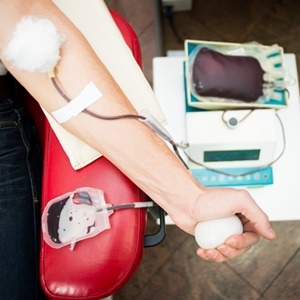
Health24.com | This is how easy it is to donate blood

Donating blood is one of the few ways you can help save the lives of others, especially with stocks regularly running low.

According to the South African National Blood Service, blood stocks are running critically low, especially O Positive, and O Negative, which have 2.5 and 2.6 days worth of stock left, respectively.

Many people shy away at the thought of needles, but if you look at the broader picture, the benefits far outweigh the discomfort of a tiny needle prick.

Sister Kim Strutt, clinic co-ordinator of the Western Province Blood Transfusion Services (WPBTS), details the process of an ordinary blood donation.

Step 1:

The first step is filling out a confidential questionnaire.

The questionnaire helps give the nurses at hand a general idea about your health. Your answers determine whether the coordinators should proceed with the blood donation or not. This questionnaire protects you and the recipient from any possible harm.

Step 2:

Once the questionnaire is completed and accepted, a finger-prick test is done, and your haemoglobin levels (iron) are checked. According to Sister Strutt, “This needs to be 12.5 for women and 13.5 for men.”

If your iron levels are too low, you may be suffering from an iron deficiency or anaemia. If your iron levels are too low, you will not be able to donate. (Donating blood is a great way to gain insight into your health.)

Step 3:

If your haemoglobin levels are fine, your blood pressure is then measured. “If all is good to go, blood donation process goes ahead, taking about 10 minutes to complete,” says Sister Strutt.

Step 4:

According to a study by the American Psychological Association, the act of donating blood is one of benevolence, formerly described as an act of altruism. Once your donation is complete, you will be rewarded with a cookie and some juice. You may experience some lightheadedness or fatigue after the donation, caused by a loss of haemoglobin. The refreshments help to counter this. 

What happens next? 

One unit may seem very little, but when a unit is processed and divided into compartments, it can go a long way. Blood compartments can be divided into platelet concentrates, red blood concentrates, cryoprecipitate and plasma.

According to Dr Phillip DeChristopher from Loyola University, “If blood has a high viscosity, or resistance to flow, it will flow like molasses.” By donating, your blood will be able to flow better, apply less pressure on your arteries and thus reduce arterial damage. It also helps to regulate the iron levels within your blood and protect your arteries from damage.

When you donate blood, you only donate 475ml, which equals one unit. You’re only allowed to donate one unit every 56 days. 

Image credit: iStock

Share Button

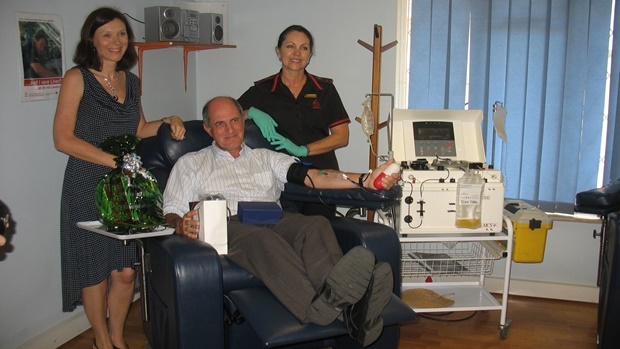
Health24.com | Lifesavers: Meet two of SA’s most prolific blood donors

Meet Mike O’Neill and David Schreuder, two of South Africa’s true heroes, men who have saved countless lives with their blood donations. 

According to the South African National Blood Service (SANBS), O’Neill and Schreuder are two of the country’s most prolific blood donors.  

When it all began

For O’Neill (64), it started out as a one-time blood donation as a teenager, but developed into a lifelong commitment to helping others. He has donated an amazing 725 times, and donating blood was a way for him to make a difference.

“I donated my first unit of blood on my 18th birthday, which was the minimum age at the time. My older brother had donated a few times and I just thought that it would be a good way to make a difference to someone,” he told Health24.

David Schreuder (66) is a regular blood donor who will be making his 674th donation this Friday in Loop Street, Pietermaritzburg. When asked about his experience the first time he donated blood, Schreuder said, “I was 18-years-old when I started giving blood, and it’s a bit of a funny story.

“When I started work, I lived in a hostel in Durban. The night the blood bank came around, they said to me, ‘Look, wouldn’t you mind giving a donation of blood?’ and they said that I could have a pint of beer if I gave blood. I said, ‘My dear, listen, I don’t drink beer, but I will give you a pint of blood.'”

Laughing at the recollection, Schreuder went on to explain that, in those days, it was “a pint for a pint”.

Continuing to donate 

For Schreuder and O’Neill, donating blood has become a part of who they are. According to Schreuder, “It’s part of me; when you’re sick and told you can’t give blood, you actually feel wrong that you don’t get to do it. I was off for six months from September last year until about February or March this year, and I felt lost when I didn’t donate. It’s just so much a part of me.” He added, “Donating blood is so important; you’re saving lives.”

The same enthusiasm is felt by O’Neill. “Donating blood just became a good habit. When I joined the plasma donation panel, we used to make an appointment regularly after work every two weeks and meet with the same group of donors at the donor centre. Every time someone hit a milestone, they would bring in a plate of snacks, which would be consumed with enthusiasm while we sat in the chairs.

“Donating was not a negative thing at all, even though we were ‘plugged in’ for around an hour and a half every time. Even now, as a whole blood donor, I feel very comfortable going to the donor centre and am always made to feel welcome.”

Routines before and after donating blood 

When asked about their routines before donating blood, O’Neill said, “I need to watch what medication I take, but my day is pretty normal. As long as I eat something before I donate and also ensure that I have had plenty of liquids, there are no problems. It is really important to be properly hydrated to ensure that your body can cope with the loss of fluid.

“I normally have breakfast as I go early in the morning, and that is a cup of coffee and a couple of slices of toast. I don’t eat heavy,” added Schreuder.

The WP Blood Transfusion Service (WPBTS) stresses that it is “important to eat a substantial meal three to four hours before heading off to the donation clinic, as well as increasing your fluid intake on the day, both before and after donating blood. Increasing your liquid intake helps to replace the blood volume that has been lost.”

How you can donate today

O’Neill revealed that while some of his family members are unable to donate for health reasons, he still challenges others to do so. “Ironically, my wife and daughter have medical reasons why they can’t donate, but my son was quite reliable while living in South Africa.

“When I was teaching, I started up a donor clinic at the Marist school where I taught. I always challenged the learners to collectively chase my personal donations. Needless to say, they caught up within a few years. I occasionally bump in to past pupils at the regional donor clinic.”

When asked why he thinks people don’t donate blood as often as they should, O’Neill had this to say, “The most common reason given by people for not donating is fear of the needle. While some of these fears are valid, I find that it is most often fear of the unknown that is the problem.

“I sometimes ask if they would take a needle if they needed blood, but ultimately it is their choice and I can only hope that my example may influence them to try it. It also seems to make a difference when people are made aware of what a blood donation can be used for and how many lives can be changed by just one donation.”

With a single donation of blood, 475ml to be exact, you could save up to three lives and it won’t cost you a cent. However, before donating blood, make sure you meet the basic donor criteria. 

Image credits: iStock; Mike O’Neill  

Share Button

‘Women spend more time planning holiday than pregnancy’

A healthy pregnancy requires planning in advance – but some women leave it all a bit late, a charity says.

Share Button

Unfit in middle age: Are you doomed?

How bad is a lack of fitness in middle age and is it condemning you to bad health in the future?

Share Button

Scientists discover a new way to find mass extinctions

During the history of the Earth, there were many mass extinctions, when huge numbers of species died out. They are usually easy to identify because of the sudden extinctions, followed by a gap, and then the recovery of life.

A new mass extinction has been identified during the Triassic period, some 232 million years ago — called the Carnian event. It was less easy to identify because the different sites around the world were hard to date and cross-match. But it was important because it marked the likely trigger for the explosive takeover of the Earth by dinosaurs.

Using a new statistical method, a team from the University of Bristol, has pinpointed the event.

The statistical method is called breakpoint analysis. Counts of species from many samples through the Triassic were compared, and a straight line was fitted to best explain changes in the proportions of dinosaurs to other beasts. To improve the fit of the line, a model was used that allowed for one break, but the position of the break was not specified.

Professor Mike Benton from the University of Bristol’s School of Earth Sciences led the project. He said: “This method is great. We know where we think the change occurred, but we don’t tell the computer.

“We let it crunch the numbers and identify the break point, or the time when one kind of ecosystem ended, and the new one began. In this case, it landed precisely on the point in the Carnian when major environmental changes triggered the extinctions.”

Massimo Bernardi, a co-author of the report, and now curator at MUSE — Science Museum, Trento, Italy, added: “This event had been identified before. This was a time of huge volcanic eruptions off modern Canada, and profound climate changes. The gases from the volcanoes caused long-term shuttling between dry and wet conditions.”

The climate changes had been noted back in 1990, and the dry-wet-dry cycle caused a major change in plants, from succulent wet-loving seed ferns to conifers, which are better adapted to dry conditions.

Cormac Kinsella, another collaborator, and now at the University of Amsterdam, said: “We built a database of 47 faunas from different parts of the world, including 7,773 specimens of reptiles.

“Half way through the Carnian there was a sudden shift in the composition of ecosystems, from comprising a mixed assemblage, to being absolutely dominated by dinosaurs and their relatives.”

This new discovery adds to growing evidence for a previously undetected mass extinction, during a time of general upheaval in evolution. There had been a huge mass extinction 252 million years ago, and life was recovering fitfully from that crisis, when it was hit again at 232 million years ago, and then at the end of the Triassic, 201 million years ago.

The Carnian event was important in heralding the explosion of dinosaurs onto the scene, but it also marked the beginning of many modern groups, such as turtles, crocodiles, lizards, and mammals.

Story Source:

Materials provided by University of Bristol. Note: Content may be edited for style and length.

Share Button