The true power of the solar wind

The planets and moons of our solar system are continuously being bombarded by particles hurled away from the sun. On Earth this has hardly any effect, apart from the fascinating northern lights, because the dense atmosphere and the magnetic field of the Earth protect us from these solar wind particles. But on the Moon or on Mercury things are different: There, the uppermost layer of rock is gradually eroded by the impact of sun particles.

New results of the TU Wien now show that previous models of this process are incomplete. The effects of solar wind bombardment are in some cases much more drastic than previously thought. These findings are important for the ESA mission BepiColombo, Europe’s first Mercury mission. The results have now been published in the planetology journal Icarus.

An Exosphere of Shattered Rock

“The solar wind consists of charged particles — mainly hydrogen and helium ions, but heavier atoms up to iron also play a role,” explains Prof. Friedrich Aumayr from the Institute of Applied Physics at TU Wien. These particles hit the surface rocks at a speed of 400 to 800 km per second and the impact can eject numerous other atoms. These particles can rise high before they fall back to the surface, creating an “exosphere” around the Moon or Mercury — an extremely thin atmosphere of atoms sputtered from the surface rocks by solar wind bombardment.

This exosphere is of great interest for space research because its composition allows scientists to deduce the chemical composition of the rock surface — and it is much easier to analyse the exosphere than to land a spacecraft on the surface. In October 2018, ESA will send the BepiColombo probe to Mercury, which is to obtain information about the geological and chemical properties of Mercury from the composition of the exosphere.

Charge matters

However, this requires a precise understanding of the effects of the solar wind on the rock surfaces, and this is precisely where decisive gaps in knowledge still exist. Therefore, the TU Wien investigated the effect of ion bombardment on wollastonite, a typical moon rock. “Up to now it was assumed that the kinetic energy of the fast particles is primarily responsible for atomization of the rock surface,” says Paul Szabo, PhD student in Friedrich Aumayr’s team and first author of the current publication. “But this is only half the truth: we were able to show that the high electrical charge of the particles plays a decisive role. It is the reason that the particles on the surface can do much more damage than previously thought.”

When the particles of the solar wind are multiply charged, i.e. when they lack several electrons, they carry a large amount of energy which is released in a flash on impact. “If this is not taken into account, the effects of the solar wind on various rocks are misjudged,” says Paul Szabo. Therefore, it is not possible to draw exact conclusions about the surface rocks with an incorrect model from the composition of the exosphere.

Protons make up by far the largest part of the solar wind, and so it was previously thought that they had the strongest influence on the rock. But as it turns out, helium actually plays the main role because, unlike protons, it can be charged twice as positively. And the contribution of heavier ions with an even greater electrical charge must not be neglected either. A cooperation of different research groups was necessary for these findings: High-precision measurements were carried out with a specifically developed microbalance at the Institute of Applied Physics. At the Vienna Scientific Cluster VSC-3 complex computer simulations with codes developed for nuclear fusion research were carried out in order to be able to interpret the results correctly. The Analytical Instrumentation Center and the Institute for Chemical Technologies and Analytics of the TU Vienna also made important contributions.

Story Source:

Materials provided by Vienna University of Technology. Note: Content may be edited for style and length.

Share Button

Citizen science: A powerful tool to combat invasive giant slugs

With the help of citizen science, researchers have unraveled the close correlation between weather conditions and the appearances of a giant slug species, enabling them to predict the slug’s activity on the following day.

The giant slug Limax maximus, an invasive species which made its way from northern Europe to Japan and other regions worldwide, is notorious for the harm it can cause to horticultural and agricultural crops. A research team led by Yuta Morii of Hokkaido University previously reported the spread of the species and its potential native predator in Japan.

In the current study published in Science of the Total Environment, Morii and his collaborators found that a certain set of weather conditions could be a reliable short-term indicator of how often giant slugs would appear on a set mountain path. The findings showed that the slugs were more likely to appear on days with higher humidity and lower windspeed and precipitation than the 20-year average. Furthermore, following days which recorded higher than average humidity and precipitation and lower than average windspeed and atmospheric pressure, the number of slug appearances tended to increase. They used the findings to make predications regarding future slug sightings.

This study was made possible by citizen science. In order to survey the number of slugs present on the path, volunteer naturalist Sanae Watanabe hiked the Mt. Maruyama route, in Sapporo, Japan, at 5:00 AM nearly every day for two years. At the same time, researchers were feeding weather data obtained from a Sapporo City meteorological station located 2 kilometers from Mt. Maruyama into a computer. They then conducted statistical analyses using a recently developed method known as Bayesian regularization, which elucidated the correlation between slug appearances and complex weather conditions.

“Citizen science is a powerful tool to combat the challenges created by invasive species. Our study emphasizes the importance of collaborations between researchers, government administration, and citizen volunteers. We hope that our prediction method can be used in the future to develop targeted eradication policies against slugs.” said Yuta Morii.

Story Source:

Materials provided by Hokkaido University. Note: Content may be edited for style and length.

Share Button

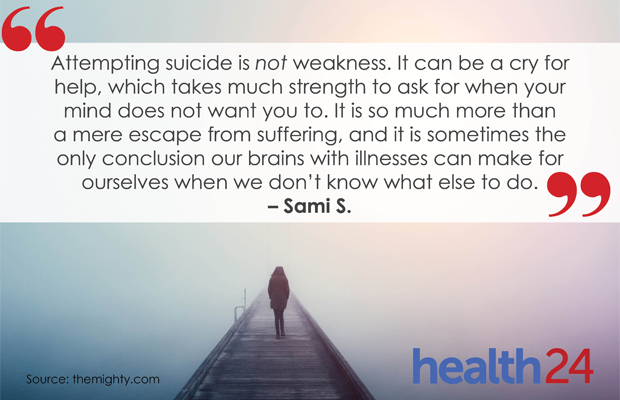
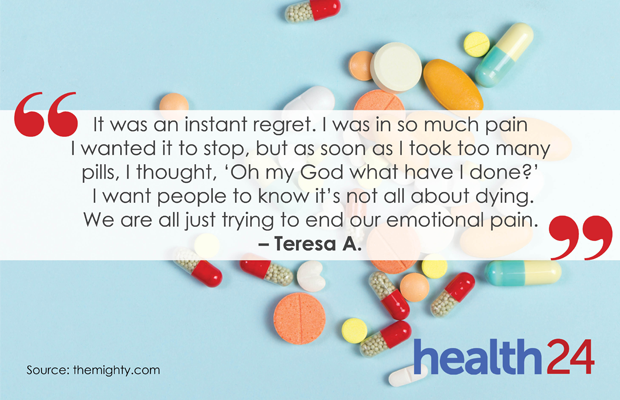
Health24.com | What to do and say when someone wants to commit suicide

A few days ago, 61-year-old celebrity chef and television host Anthony Bourdain took his own life. He hanged himself in his hotel bathroom in Kaysersberg, France, using the belt from his hotel bathrobe.

According to prosecutor Christian de Rocquigny, toxicology tests will be performed to see whether Bourdain took any medications, which may help his family understand what led him to kill himself.

He said, “There is no element that makes us suspect that someone came into the room at any moment.” 

The cold hard truth about suicide

The World Health Organization estimates that globally close to 800 000 people die from suicide every year – that’s one person every 40 seconds.

Suicide is a terrifying idea to explore – but before we go into how you can help, here are some of the worst things you can do: 

  • Don’t say anything and ignore their cry for help.
  • Mock them by saying they are just looking for attention.
  • Ask them why they want to kill themselves.
  • Turn it into a joke or encourage them to just do it.
  • Tell them they are a coward; that suicide is a cowardly act.

What to look out for

According to Dr Christine Moutier, chief medical officer at the American Foundation for Suicide Prevention, you must look for changes in pattern. “People can only keep things hidden to a certain extent. If you think about it, our behaviour patterns are in a pretty tight and narrow range. Your radar will go off if someone you know is acting differently, because you know their patterns.” 

She continues, “Even if your instincts are to avoid the person because you’re afraid you don’t know enough or that you might offend the person, you may be the only one who is noticing and who will reach out. Everyone has a role to play in preventing suicide.”

Remember, too, that someone who is contemplating suicide will not necessarily call a helpline – you may need to step in and help.

Take any suicide threat seriously 

Dr Moutier says the best thing you can do if you’re unsure whether someone is suicidal is to start an honest, caring conversation where you listen more than you talk. If you notice any signs indicating that they feel hopeless, depressed or trapped, be direct and ask them if they are having suicidal thoughts.

“That’s not going to make them worse; it’s not going to plant a seed. If you’ve created a safe environment to have this conversation, they will feel a sense of relief that they’ve been able to share this experience with someone who’s not judging them,” says Dr Moutier. 

suicide, attempt, pills, death, pain, depression,

If someone says they want to die, don’t ignore them. The National Institute of Mental Health says “suicidal thoughts or actions are a sign of extreme distress and alert that someone needs help. Any warning sign or symptom of suicide should not be ignored. All talk of suicide should be taken seriously and requires attention. Threatening to die by suicide is not a normal response to stress and shout not be taken lightly.”

It’s also important to know that almost every single person who has attempted suicide has given some kind of warning. Take note of statements such as “You’ll be sorry when I’m gone” or “I can’t see any way out” – they may indicate suicidal feelings. 

suicide, depression, mental health, pull quote, qu

How to talk about suicide

Stacey Freedenthal, a Denver psychotherapist, consultant, and associate professor at the University of Denver Graduate School of Social Work, has had extensive experience in dealing with suicide prevention. She has also compiled a useful list of things to say should you find yourself in a difficult position with a loved one who is suicidal.

1. ‘I’m glad you told me you’re thinking of suicide’

It’s natural to react with anger or disbelief when someone tells you they are thinking of suicide but that will only cause the person to regret having told you, which may push them away. When you tell them you are glad they told you what they are thinking, you are letting them know you can handle the situation, and that you encourage honesty and disclosure.

2. ‘I’m sad to hear you’re hurting’

Empathy can go a long way, particularly towards validating the person’s pain and helping soothe their loneliness. You cannot say, “It could be much worse” or “You don’t really mean that” or “But you have so much to live for.” Do not diminish the pain that they are feeling right now. 

3. ‘What’s happening to you that makes you want to die?’

Asking them to tell their story of why they want to die shows them that you really care and want to understand. Make sure you really listen to their story. Follow up with more invitations to share, such as “Tell me more.” You can show empathy or understanding by saying, “That sounds terrible” or “I can see why you’re in pain.”

4. ‘When do you think you’ll act on your suicidal thoughts?’

Freedenthal says that even if you’re not a mental health professional, “you still can ask some basic questions to help understand the person’s risk for suicide. Asking about timing will make the difference between whether you need to call someone immediately for help, for example, if the person says, ‘I have a gun in my backpack and I’m going to shoot myself during lunch’, or whether you can continue to have leisurely conversation with the person.”

5. ‘What can I do to help?’

Sharing resources that may help them is good, but you also need to make them understand that you are available to help too. “That said, there’s only so much you can do, so if you are feeling solely responsible for keeping the person alive, it’s best to involve others, too,” writes Freedenthal.

Never ignore the warning signs

Suicide warning signs can be subtle or obvious, and include:

  • Talking about suicide, dying or self-harm
  • Being preoccupied with death, for example, writing poems or stories about death
  • Having no hope for the future, feeling trapped and hopeless
  • Feelings of worthlessness, self-hatred, guilt, shame or saying they feel like a burden
  • Getting their affairs in order by drawing up a will or giving away valued possessions
  • Withdrawing from friends and family; no longer socialising because they prefer to be alone
  • Making unexpected visits or calls to friends and family, and saying goodbye

If a person has a sudden sense of calm and happiness after going through an extremely bad depressive episode, it could mean they have decided to attempt suicide.

Do you need help?

For a suicidal emergency call the South African Depression and Anxiety Group on 0800 567 567. Their 24-hour helpline is 0800 12 13 14.

Image credit: iStock

Share Button

Putting animals in their best light: Some shades of LED lamps threaten wildlife

A new generation of outdoor lights spreading across landscapes require greater scrutiny to reduce harm to wildlife, says a USC-led research group that developed a new tool to help fix the problem.

The team of biologists surveyed select species around the world to determine how the hues of modern light-emitting diode (LED) lamps affect wildlife. They found that blues and whites are worst while yellow, amber and green are more benign. Some creatures, including sea turtles and insects, are especially vulnerable.

The findings, which include the first publicly available database to help developers, designers, and policymakers choose wildlife-friendly lighting colors, appear today in the Journal of Experimental Zoology Part A: Ecological and Integrative Physiology.

“Outdoor environments are changing rapidly and in ways that can impact wildlife species,” said Travis Longcore, lead author of the study and assistant professor of architecture, spatial sciences and biological sciences with the Spatial Sciences Institute at the USC Dornsife College of Letters, Arts and Sciences. “We provide a method to assess the probable consequences of new light sources to keep up with the changing technology.”

Big cities and industrial sites so illuminate night sky now that much of Earth resembles a big, glowing ball. Scientists have spent years studying how light brightness and direction affects wildlife, including migration and attraction, predator-prey relationships and circadian rhythms. The USC team availed that existing ecological data and broke new ground by examining how a range of commercially available LED lights impact species.

LED lights are expected to comprise 69 percent of the global market by 2020, compared to just 9 percent in 2011. They are popular because they have many uses, conserve energy and last longer than other lamps.

To understand the impacts, and find compromise solutions between human and animal needs, the researchers focused on insects, sea turtles, salmon and Newell’s shearwater, a seabird, for which existing data were readily available. They found that the worst nighttime lights are intense blue and white colors — some affect species as much as the brightness of midday sun — and three times more than yellow or green lights designed with wavelengths less disruptive to wildlife.

The research is important for wildlife conservation. For example, loggerhead sea turtle hatchlings, an endangered species, leave beach nests at night and follow artificial light inland to danger instead of skittering to the ocean. Similarly, lights attract migrating juvenile salmon, exposing them to predators. Also, global declines in insects have been linked in part to light pollution, Longcore said. The new research will help people choose lighting to reduce wildlife impacts.

The researchers focused on only four groups of creatures, which have been studied for light responses previously. Future studies will incorporate more species worldwide.

A central component of the USC research includes the first publicly available database showing how about two dozen different types of artificial lighting affect wildlife. The matrix is called “Rapid Assessment of Lamp Spectrum to Quantify Ecological Effects of Light at Night.” Developers, land-use planners and policy makers can use it to choose lighting that balances the needs of nature and people. Today, regulations to limit light direction or intensity typically don’t account for the different hues of LED lights, Longcore said.

“If we don’t provide advice and information to decisionmakers, they will go with the cheapest lighting or lighting that serves only one interest and does not balance other interests,” Longcore said. “We provide a method to assess the probable consequences of new light sources to keep up with the changing technology and wildlife concerns.”

The study authors include Longcore; Airam Rodríguez of the Estación Biológica de Doñana CSIC in Spain; Blair Witherington of the Walt Disney Company’s Animals, Science and Environment program; Jay Penniman of the University of Hawaii at Manoa, Pacific Cooperative Studies Unit; and Lorna and Michael Herf of f.lux Software, LLC.

Story Source:

Materials provided by University of Southern California. Original written by Gary Polakovic. Note: Content may be edited for style and length.
Share Button

Public Health Agency recalls 150 women for cancer test

150 patients are being contacted to have their cervical smear test redone.

Share Button

Bottle feeding is a woman’s right, midwives told

Breast is best for a baby’s health, says the Royal College, but both choices must be respected.

Share Button

Health24.com | ‘I had acne and then stopped drinking milk – this is what happened’

A couple of months ago, on a whim, I decided to stop drinking milk in my coffee. I think I was interested to see if it would help move the scale downwards because I had been stuck on a plateau for ages. So, one morning, I ordered my usual Americano – but this time without milk.

Every morning my order remained the same. I quite enjoy drinking black coffee so I didn’t miss the splash of milk. A few weeks later, I suddenly noticed something interesting happening (hint: nothing to do with the scale). I noticed that my acne was starting to clear up.

I have battled with cystic acne for many years – it improved while I was on the Pill but I stopped using that a couple of years ago and just accepted that my bad skin was part of the Pill-free package. I even tried a three-month course of antibiotics. Because I wasn’t on the Pill, my doctor did not recommend Roaccutane as the risks to an unborn child are dangerous, and I couldn’t take the chance in case of an unplanned pregnancy.

Antibiotics for three months

The good news is my skin did clear up for a bit while on antibiotics. But the bad news is that the antibiotics stained my teeth terribly. When I came off them, my skin remained unblemished for a few weeks until one day I woke up with a huge, painful cyst on my chin. It was downhill from there – I was once again plagued with cystic acne, and it seemed even worse than before. It was painful and unsightly.

Vanity aside, the pain caused by cystic acne is horrific. You see, cystic acne forms deep in your skin, which causes pain and pressure. It never really forms a pimple, so you must wait for it to clear up. At least with a pimple you can pop it to get rid of the pain from the pressure (although, that is never advised because of the risk of spreading infection, which can cause scarring).

A new, milk-free life

I was dumbstruck when I realised that milk may be the cause of years of suffering. I had tried so many things (the Pill, antibiotics and tons different face products) and nothing worked. I never for a second thought that it could be something I was consuming that was aggravating my acne (because we’ve dispelled the myth about chocolate).

Since I’ve stopped drinking milk – I’m not a huge fan of cream and don’t eat much ice cream, so the only milk I had in my diet was in my morning cup of coffee – my skin is a lot clearer. I do still have breakouts but those are usually a sign my period is on the way. And I can handle one or two hormonal spots once a month. Previously, my skin was constantly breaking out.

What science says

Even though I no longer drink milk, I still eat yoghurt and that seems to have zero effect on my acne. I did some digging and was quite surprised at what I found.

Growing research shows that there is definitely a link between acne and milk. According to dermatologist Dr Joshua Zeichner, who is also director of cosmetic and clinical research at Mount Sinai Hospital, that’s because acne is an inflammatory condition. Oil gets trapped and clogs up your pores, allowing bacteria to grow in the follicles. The trapped bacteria cause the inflammation and then acne.

How does milk affect this? Dr Zeichner says the hormones in milk can react with your testosterone to increase the production of sebum (the oily substance that blocks the pores) in your skin, which leads to a breakout. 

Dr Jeremy Fenton of Schweiger Dermatology Group, agrees and told Bustle, “Milk contains hormones, such as oestrogen, which can affect the person who’s drinking it. Dairy has also been shown to stimulate testosterone in those who consume it. Additionally, it may also stimulate the production of other hormones and cell signalling, particularly inflammatory signals, in the body.” 

There is a bit of good news

While milk and ice cream might be the obvious dairy products to put your “do not consume” list, it appears that yoghurt doesn’t seem to have the same effect. This is good news because we do need to include dairy in our diet for calcium. 

According to Dr Whitney Bowe, a board-certified dermatologist in New York City, probiotics found in yoghurt may actually help control your breakouts. She says researchers aren’t sure why but they believe that probiotics may help to calm inflammation. 

(By the way, they still don’t know whether cheese is a trigger for acne, but it doesn’t appear to affect me.)

So, what should you do?

Dr Bowe said in a media release that more clinical research is needed to determine dairy’s impact on the severity of acne but she advises that you speak to a dermatologist if you think one or more dairy products, is aggravating your acne. 

“Given the benefits of calcium and vitamin D – especially in a growing adolescent population – patients who choose to limit or avoid dairy products should supplement their diet with appropriate levels of calcium and vitamin D,” said Dr Bowe.

“Patients can be their own best detectives in determining possible food triggers for acne, and I encourage them to make an appointment with a dermatologist if they have any acne concerns.”

Does something you eat or drink affect your skin? Email mandy.freeman@24.com and share your story.

Image credit: iStock

Share Button

Health24.com | 7 common sinusitis myths you shouldn’t believe

If you are familiar with the sometimes debilitating symptoms of sinusitis, you might know a thing or two about the condition.

Or do you? There are a couple of myths that even die-hard sufferers who’ve seen it all still tend to believe.

Let’s get to the bottom of things:

1. Sinusitis is contagious.

Sinusitis itself is not contagious, but if you catch a viral infection such as a cold or flu, it may lead to sinusitis, according to the Houston Advanced Nose & Sinus Institute. If the source of your sinusitis is a viral infection, you are probably contagious – but this doesn’t mean that the next person will also develop sinusitis.

2. You can easily relieve congestion with nasal spray.

Nasal spray may provide short-term relief for congestion, but it’s not viable as a long-term treatment. 

Some nasal sprays are not meant to be used longer than a couple of days and it’s possible to develop a dependence on the product with prolonged use.

Nasal spray dependence is such a well-known problem that there’s even a name for the term: rhinitis medicamentosa. This describes the adverse nasal congestion that develops after using nasal decongestants for longer than the recommended period.

It is also important to keep in mind that not all nasal sprays serve the same purpose and can contain different ingredients such as steroids, saline or antihistamine.

Before you take the over-the-counter route, consult your doctor to determine what type of nasal spray you should be using, following the directions exactly as prescribed.

nasal spray

3. You always need antibiotics for a sinus infection.

This is not true. A patient’s need for antibiotics depends on the cause of the sinusitis. Sinusitis can be acute (lasting less than a week) or chronic (lasting for a couple of months) and can be either caused by a viral or bacterial infection or persisting allergies. 

According to the Massachussets Eye and Ear institution, many patients who are diagnosed with sinusitis often take antibiotics unnecessarily because there is no bacterial infection to treat. The patient doesn’t get better and, ultimately, bacteria may be created that are resistant to treatment with antibiotics.

Whether your doctor decides to prescribe an antibiotic will be determined by the duration and cause of the sinusitis.

Other ways of treating sinusitis can include decongestants, mucolytics, nasal steroids and antihistamines. In some cases, surgery may be suggested.

doctor prescribing antibiotics

4. You are more likely to suffer from sinusitis during spring.

You might think that sinusitis as a result of allergies is more likely to occur in spring, but there are a couple of factors that can make you more susceptible to sinusitis during winter. This includes change in air pressure, as well as indoor factors, such as dust in rugs and carpets.

girl blowing her nose

5. Surgery is only an option for those with physical constraints and often doesn’t work.

It is a common misconception that sinus surgery is only considered to correct a physical cause such as a deviated septum.

Dr Azgher Karjieker, a Cape Town ear, nose and throat (ENT) specialist, mentioned in a previous Health24 article that surgery to alleviate sinus problems should be considered when all other options have been exhausted. While surgery sounds invasive, it’s generally not a dangerous procedure and recovery time is about two weeks.

There is also a misconception that sinus surgery often ends up not working. According to Dr Joshua Zimm, a facial plastic and reconstructive surgeon from New York, the vast majority of patients who have sinus surgery have significant improvements in their quality of life. According to Dr Zimm, studies show that 77% to 97% of patients showed improvement and that sinus surgery is highly effective.

He does note that revision surgery might be needed in those with nasal polyps. 

nose surgery

6. Your constant headache has to be sinusitis, right?

You are suffering from chronic headaches which you bluntly dismiss because it’s “only sinusitis”. But could your persistent headache actually be a migraine? According to Hossein Ansari, the medical director of the Headache Centre at Neurology & Neuroscience Associates in the USA, one reason for the high rate of misdiagnosed “sinus” headaches is that most patients don’t seek care from a headache specialist.

It is therefore important to reevaluate your diagnosis if no sinusitis treatment has worked for you in the past. Beware of the subtle differences between a sinus headache and a migraine – migraines often include symptoms like flashing sensations, blurred vision and nausea.

If you suspect that your headache could be more than congestion, it might be time to seek specialist advice. 

girl with severe headache

7. If your mucus is green or yellow, it’s a sinus infection.

Nasal drainage with a green or yellow tinge is a classic sign of a sinus infection. The colour is caused by the death of white blood cells fighting off infection, but it still can’t indicate whether the infection is viral or bacterial. It’s important to consult your doctor or ENT specialist who will help determine the cause of infection and determine the correct treatment.

man blowing his nose

 Image credit: iStock

Share Button

More cuts to care on way – council chiefs

Vulnerable elderly and disabled people will lose out, campaigners warn, as councils feel the squeeze.

Share Button

Billy Caldwell cannabis oil plea rejected by Home Office

His mother brought the banned substance back from Canada but it was confiscated at Heathrow Airport.

Share Button