A little water could make a big difference for endangered salmon

Even small amounts of running water — less than a gallon per second — could mean the difference between life or death for juvenile coho salmon in coastal California streams, according to a new study published in the journal Transactions of the American Fisheries Society.

The study, led by California Sea Grant Extension Specialist Mariska Obedzinski, shows that during dry periods, that amount of water was enough to keep pools interconnected, allowing young salmon to survive through the hot, dry summer months.

“The good news is that if we can get just a little bit of water back in these streams, we can make a really big difference,” says Obedzinski, who leads a monitoring program for endangered coho salmon and steelhead in the small streams of Sonoma County that flow into the Russian River.

Saving the Russian River coho

Russian River coho salmon were listed as threatened in 1996, but despite efforts to improve habitat, the species had hit crisis levels by the early 2000’s, and they became endangered in 2005 when scientists noted fewer than 10 fish returning to the Russian River each year to spawn. In response, local, state, and federal agencies teamed up to start a conservation hatchery program to breed and release the fish. California Sea Grant’s monitoring program was set up to track the success of the hatchery releases as well as better understand the factors that were preventing recovery of the species.

Through their monitoring, Obedzinski and her research team found that low streamflow in summer is one of the biggest bottlenecks to coho recovery. She says, “After the hatchery fish are released, we see them migrating out to the ocean and coming back as adults to spawn. We even see their offspring in creeks in the early summer, but by late summer the creeks dry out, the young salmon die, and the next generation is not surviving.”

How much is enough?

Water is a limited resource in the Mediterranean climate of central California. Population growth and development, combined with the impacts of climate change in the drought-prone region have made flow-impaired streams even less reliable.

While previous modeling studies have established water flow thresholds to support salmon in larger, snowmelt-fed streams such as those in California’s central valley, the small coastal streams where Russian River coho prefer to spawn are a different beast.

These intermittent streams may swell over their banks during wet winter months but dwindle to a trickle or even dry up in sections during the hot, dry summer. While it was clear that young salmon needed more water to survive the summer months, the question was, how much?

“We didn’t have a sense of how much water was needed,” says Obedzinski. “The existing models are based on flows in much larger streams. When you try to apply them to our tiny coastal streams, they fall apart.”

The new study provides a clearer link between salmon survival and water flow rates in Russian River tributaries, which could be useful for resource agencies and organizations working on salmon recovery, and land owners who want to help restore endangered salmon populations. The findings may also lend support for efforts that might seem small-scale in comparison to larger streamflow improvement projects in other watersheds.

John Green is a project manager for the Gold Ridge Resource Conservation District, who has already begun applying the new research to their work restoring flow in salmon streams. He says, “The big value in this research is that it has given us an idea of how much water is needed to improve fish survival. From that, we start to understand the kinds of projects we need to build and what their impacts will be.”

The researchers stress that flows allowing for minimum persistence are not high enough to support full recovery. Obedzinski says, “Keeping a pool connected is the first step in preventing local extinction by keeping at least some of the fish alive, but we want fish to be able to grow and thrive as well. In terms of meeting recovery targets, more water means more habitat for fish, and more chance of bringing back a healthy population.”

Share Button

Thousands of turtles netted off South America

Tens of thousands of sea turtles are caught each year by small-scale fishers off South America’s Pacific coast, new research shows.

Surveys at 43 harbours in Ecuador, Peru and Chile reveal that gillnet fisheries catch more than 46,000 sea turtles per year, with more than 16,000 killed in the process.

And the true numbers are likely to be higher, as not all ports in each country were surveyed.

Such accidental catching — known as bycatch — is a major threat to species including sea turtles, and the researchers say their findings highlight Ecuador and Peru as key places to tackle this.

“People worry about industrial fisheries but a real concern that people are waking up to is small-scale fisheries,” said Professor Brendan Godley, of the Centre for Ecology and Conservation on the University of Exeter’s Penryn Campus in Cornwall.

“These are small vessels but they exist in such huge numbers that they can have a massive impact on ecosystems.”

Turtles living in the study area include leatherbacks (critically endangered in the east Pacific) and hawksbills (critically endangered worldwide).

Dr Joanna Alfaro, who obtained her PhD at Exeter and is now director of ProDelphinus, a conservation organisation in Peru, said: “This work highlights the importance and the benefits of our approach of engaging with fishers.

“We are actively working with fishers in this region to develop and implement solutions to bycatch — not just to improve the situation for turtles but for the health of fisheries and fish stocks.

“Our goal is to develop fisheries that are sustainable for small-scale fishing communities and the species with which they interact.”

Dr Jeffrey Mangel, also of the University of Exeter and ProDelphinus, added: “Gathering this survey data was a massive effort across three countries, and the results give us fascinating and important insights.

“We are careful not to overstate threats to wildlife, but in this case it’s clear that tens of thousands of turtles are being caught each year.”

The southeastern Pacific sustains extensive fisheries that are important sources of food and employment for millions of people.

The study, supported by the UK government’s Darwin Initiative, was designed to fill data gaps and identify priority areas for future conservation work.

Story Source:

Materials provided by University of Exeter. Note: Content may be edited for style and length.

Share Button

Syphilis and gonorrhoea up by one-fifth

Both sexually transmitted infections have gone up by about 20% in England in 2017, figures reveal.

Share Button

Health24.com | Should you be drinking 5 cups of coffee per day?

Coffee. Cup of joe. Java. No matter what you call it, millions of people worldwide wake up and fuel their day with it. And though consumers might be jittery about the recent court battle in California over cancer warnings, experts say most of the science actually indicates coffee could have health benefits.

“The overall picture is quite clear,” said Dr Frank Hu, chair of nutrition at Harvard University’s T.H. Chan School of Public Health. “There is no long-term increased risk of major chronic disease, including diabetes, cardiovascular disease or even cancer.”

Inconclusive evidence

The java confusion stems over an eight-year court case. A Los Angeles-based judge’s preliminary decision last month requires cancer warning labels because of concerns about acrylamide, a chemical produced during the roasting process. Acrylamide also is present in some fried or roasted starchy foods, including French fries, potato chips, breakfast cereals and toast. It’s also found in cigarette smoke. The judge gave the coffee industry a few weeks to file appeals and could issue a final ruling late this month.

But there’s little evidence acrylamide levels in food cause cancer in humans. Studies have found no consistent evidence acrylamide exposure in food is associated with cancer risk, according to the US National Cancer Institute. The World Health Organization’s International Agency for Research on Cancer reviewed more than 1 000 human and animal studies and issued a statement in 2016 that “found no conclusive evidence for a carcinogenic effect of drinking coffee”.

“The California judge’s decision to label coffee as a cancer risk is really inconsistent with the scientific literature,” Hu said. “It’s very misleading and has already caused a huge amount of confusion in the general public. The health outcomes have been remarkably consistent.”

Hu was senior author of a 2015 study in the journal Circulation that concluded people who regularly drink moderate amounts of coffee daily – fewer than five cups – experienced a lower risk of death from heart and neurological diseases.

About four years ago, the US government gave coffee its OK, too. The Department of Agriculture’s dietary guidelines for all Americans, published every five years as a go-to source for nutrition advice, said three to five cups a day, which can be up to 400 milligrams a day of caffeine, can be part of a healthy diet. The American Heart Association suggests that people who have arrhythmia, an abnormal heart rhythm, talk to their health care provider about caffeine intake.

More benefit than harm

“This guidance on coffee is informed by strong and consistent evidence showing that, in healthy adults, moderate coffee consumption is not associated with an increased risk of major chronic diseases (e.g. cancer) or premature death, especially from cardiovascular disease,” the federal guidelines say. “However, individuals who do not consume caffeinated coffee or other caffeinated beverages are not encouraged to incorporate them into their eating pattern.”

More recently, a review of more than 200 studies published last autumn in the BMJ concluded three to four cups a day may be “more likely to benefit health than harm”. It found a lower risk of liver disease and some cancers in coffee drinkers, and a lower risk of dying from stroke.

All of that should be good news to the people around the world who drink more than 1.1 billion cups of coffee each day.

But it’s still easy to be confused. A quick search for coffee and health online yields hundreds, even thousands, of results.

Studies abound – some funded by the coffee industry. For example, a European Journal of Nutrition study investigated the effects of coffee and its antioxidant properties and found no effect. Researchers took blood samples of 160 volunteers who drank up to three to five cups of coffee or water each day for eight weeks.

Not a ‘magic bullet’

“Up to five cups of coffee per day had no detectable effect, either beneficial or harmful, on human health,” that study concluded. It was funded by Kraft Foods, which makes Maxwell House coffees.

Of course, “no one is talking about coffee as a magic bullet,” Hu said. He and other experts say it’s important to keep track of the bigger picture, with the focus on moderation and dietary patterns.

“You can’t pin anything on any one specific lifestyle behaviour, particularly with diet,” said Alice Lichtenstein, a senior scientist and director of the Cardiovascular Nutrition Laboratory at Tufts University in Boston.

“When we talk about diet, it should really be about the whole package, not single items. Right now, the majority of the evidence suggests there may be a health benefit from drinking coffee and there doesn’t seem to be any disadvantage. Of course, with a caveat that you don’t want to add a lot of cream and sugar, or to use it as an excuse to have a few cookies or a pastry. Then, there is a downside,” said Lichtenstein, a professor of nutrition science and policy who also was an advisor on the federal dietary guidelines.

“We have a tendency to focus on one or two specific foods or beverages, and that’s when the whole floor falls out from under us.”

Image credit: iStock

NEXT ON HEALTH24X

Share Button

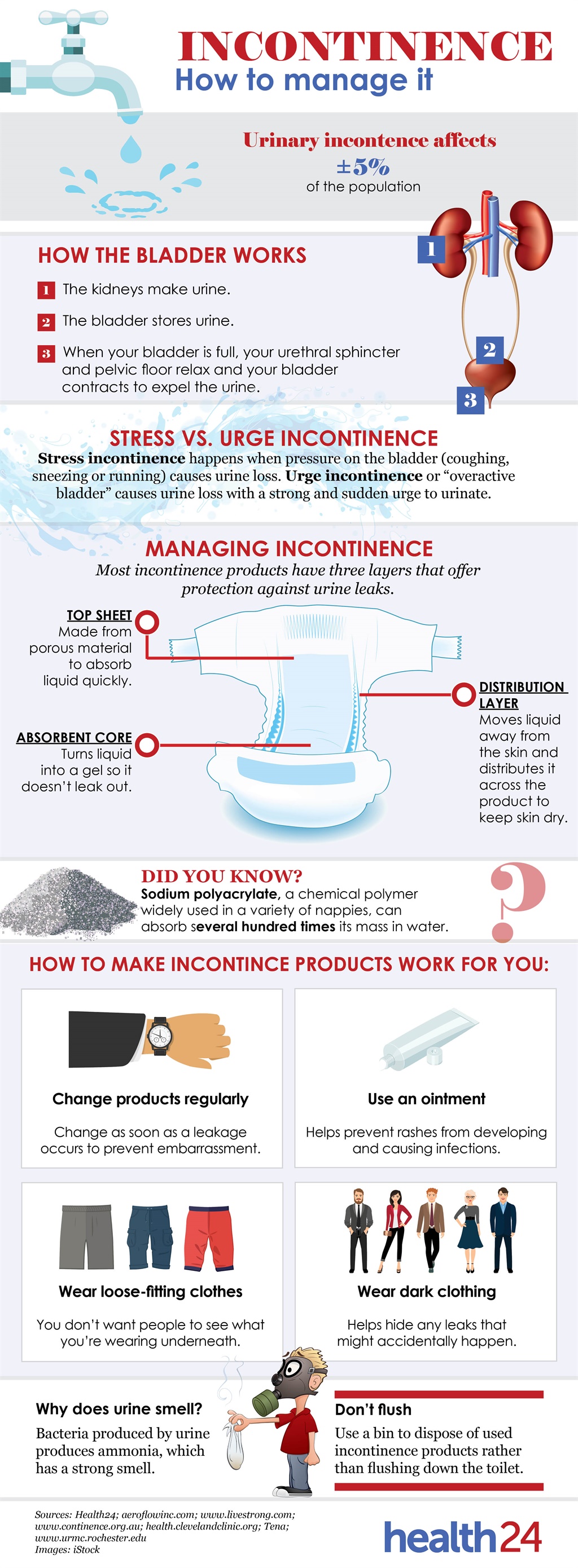
Health24.com | SEE: How an incontinence nappy works

The information provided does not constitute a diagnosis of your condition. You should consult a medical practitioner or other appropriate health care professional for a physical exmanication, diagnosis and formal advice. Health24 and the expert accept no responsibility or liability for any damage or personal harm you may suffer resulting from making use of this content.

Share Button

Health24.com | Are you suffering with ‘digital eye strain’? Here’s how you can tell

Quick question: Between your smart phone, laptop and the TV, how many hours a day do you spend glued to a screen? Just take a moment to work it out and I guarantee you it’s more than you thought.

I did a little calculation and was shocked when I figured out that I spend a good 10 hours of my day fixated on a screen (yikes!). I’ve been struggling with my eyes a lot lately. After a few hours of staring at my laptop things get a little blurry, I struggle to concentrate and it feels like there isn’t enough coffee in the world to keep my eyes from wanting to close shut. So, what gives?

Well, I decided to contact some experts and here’s the bad news in a nutshell: If you’re spending as little as two hours at a time staring at a screen, you’re actually setting yourself up for digital eye strain.

Read more: 6 most common signs you’ve damaged your eyes – and how to fix it

What is digital eye strain?

“When looking at different digital devices, we are constantly changing the reading distance, which is very stressful for our eyes,” says Andre Horn, a senior optometrist and Mellins i-Style’s managing director. It also doesn’t help that the small print and pixilated images on tablets and phones can be ridiculously tiny, leaving you squinting. Oh, and that blue light that your devices’ screen emits isn’t exactly doing your eyes any favours either.

If you’re scratching your head wondering what “blue light” is, let me break it down for you: High energy visible (HEV) or “blue light” has a very short wavelength and produces a higher amount of energy. Our eyes’ natural filters simply can’t provide sufficient protection against this type of light, which reaches all the way to the light-sensitive cells of the retina (the inner lining of the back of the eye). This is why your eyes feel tired and achy after staring at a screen for too long.

Recent studies have also found that blue light reduces the body’s melatonin levels that are needed to fall asleep naturally. All that late-night scrolling on your feeds is causing you to stay awake for longer (hello Facebook-induced insomnia, is that you?).

Read more: Could you be at risk for one of these five serious eye diseases?

Changes you should make ASAP

So how can you save your sight – you know, without giving up your devices?

Get some hi-tech lenses. If like me, you spend most of your day staring at a screen, you can get special anti-fatigue lenses (these help relax the eye muscles), or lenses with a blue light protective coating to help block HEV from entering your eye.

Apply the 20:20 rule. It’s also a good idea to take regular screen breaks. Every 20 minutes, get in the habit of looking up from the screen and finding a distant object to focus on for 20 seconds, which gets you back to a normal blinking pattern and restores moisture.

Adjust that screen. It’s such an easy tweak but can make the world of difference – adjust your computer so the screen is an arm’s length away from your eyes.

Ditch the glare. Decrease the brightness across all of your device (or download a handy app like f.lux which helps adjust your desktop settings).

And don’t forget – old-school is cool! Our eyes find it easier to focus on paper, so put that phone down and get out a good book (especially before bed).

*Note: If you have an unresolved eye condition (like astigmatism or farsightedness), it might aggravate the feeling of glare from a computer screen. Regular eye examinations are therefore important to identify potential problems.

This article was originally published on www.womenshealthsa.co.za

Image credit: iStock 

Share Button

Millions could have incorrect statin, aspirin and blood pressure prescriptions

More than 11 million Americans may have incorrect prescriptions for aspirin, statins and blood pressure medications, according to a study led by researchers at the Stanford University School of Medicine.

Their findings are based on an updated set of calculations — known as pooled cohort equations, or PCEs — that are used to determine the risk of a heart attack or stroke.

The PCEs are the foundation for cardiovascular-disease-prevention guidelines in the United States. They help physicians decide whether to prescribe aspirin, blood pressure or statin medications, or some combination of these, by estimating the risk a patient may have for a heart attack or stroke. Most physicians calculate a patient’s risk using a PCE web calculator or a smartphone app; the equations are also built into many electronic health records so that a patient’s risk is automatically calculated during an office visit.

But there has been debate over whether the PCEs are based on outdated data and therefore putting some patients at risk for over- or under-medication.

“We found that there are probably at least two major ways to improve the 2013 equations,” said Sanjay Basu, MD, PhD, assistant professor of primary care outcomes research at the School of Medicine and a core faculty member at Stanford Health Policy. “The first was well-known: that the data used to derive the equations could be updated.”

Old equations

For example, he said, one of the main data sets used to derive the original equations had information from people who were 30-62 years old in 1948, and who would therefore be 100 to 132 years old in 2018 — that is, likely dead. The older equations were often estimating people’s risk as too high, possibly by an average of 20 percent across risk groups.

“A lot has changed in terms of diets, environments and medical treatment since the 1940s,” Basu said. “So, relying on our grandparents’ data to make our treatment choices is probably not the best idea.”

Basu is the senior author of the study, which will be published June 5 in the Annals of Internal Medicine. The lead author is Steve Yadlowsky, a graduate student in electrical engineering at Stanford.

Furthermore, the researchers found that the old data may not have had a sufficient sample of African-Americans. For many African-Americans, physicians may have been estimating the risks of heart attacks or strokes as too low.

“So while many Americans were being recommended aggressive treatments that they may not have needed according to current guidelines, some Americans — particularly African-Americans — may have been given false reassurance and probably need to start treatment given our findings,” Basu said.

The researchers have updated the PCEs with newer data in an effort to substantially improve the accuracy of the cardiovascular risk estimates. The National Institutes of Health, which maintains and updates the cohort data, approved the updated equations.

Updating statistical methods

A second improvement to the equations, the authors found, was to update the statistical methods used to derive the equations.

“We found that by revising the PCEs with new data and statistical methods, we could substantially improve the accuracy of cardiovascular disease risk estimates,” the authors wrote.

The work is an example of Stanford Medicine’s focus on precision health, the goal of which is to anticipate and prevent disease in the healthy and precisely diagnose and treat disease in the ill.

Story Source:

Materials provided by Stanford Medicine. Original written by Beth Duff-Brown. Note: Content may be edited for style and length.

Share Button

World Cup fans advised to get MMR jab

A surge in measles cases in Russia means football fans should protect themselves before travelling.

Share Button

‘Remarkable’ therapy beats terminal breast cancer

Judy Perkins had been given three months to live, but two years later there is no sign of cancer in her body.

Share Button

Health24.com | Could a blood test spot lung cancer early?

Genetic blood testing is showing potential as a means of catching some early stage cancers, researchers are reporting.

For example, a panel of three different genetic tests was able to detect early stage lung cancer about half of the time in people who’d already been diagnosed with the disease.

The tests also detected late-stage lung cancers about 9 out of 10 times, the researchers said.

The findings were reported Saturday at the American Society of Clinical Oncology’s annual meeting, in Chicago.

What does the research indicate? 

“This is proof of principle that broad genome-wide sequencing has the ability to find cancer, and sometimes early stage curable cancer,” said lead study author Dr. Geoffrey Oxnard. He’s an associate professor of medicine at the Dana-Farber Cancer Institute and Harvard Medical School, both in Boston.

“That creates an opportunity for further development as a cancer detection or screening assay,” he said.

Cancer survival rates soar when tumors are detected in their earliest stages, the researchers said in background notes. Having a blood test that can detect early cancers would save countless lives.

Tumors regularly shed DNA fragments that circulate in the bloodstream. These fragments, called cell-free DNA, are already analyzed to help cancer doctors choose targeted gene-based therapies for people with advanced lung cancer, the researchers said.

Oxnard and his colleagues want to take that a step further, by developing a test that uses cell-free DNA to catch cancers as early as possible.

Their overall effort, the Circulating Cell-Free Genome Atlas (CCGA) study, has enrolled more than 12,000 of a planned 15,000 participants across the United States and Canada.

The ASCO meeting report represents some of the first results from the larger study. In it, the researchers used genetic tests to analyze the blood of 127 people who had been diagnosed with lung cancer.

The three tests looked for both cancer mutations and changes in genetic function that can indicate cancer, the researchers said.

The tests detected early stage lung cancer between 38 and 51 percent of the time, and late-stage cancers between 87 and 89 percent of the time.

The tests also had a very low rate of false positives — when a test says cancer is present when it isn’t. The researchers tested 580 blood samples from people without cancer, and found only five with genetic changes indicating cancer.

Of those five supposedly cancer-free people, two were subsequently diagnosed with stage 3 ovarian cancer and stage 2 endometrial cancer, further highlighting the potential of the tests to find early stage cancers, the researchers said.

Filtering the research process 

In addition, the researchers further refined the screening process by filtering out people with harmless white blood cell mutations, Oxnard added.

“The fact is we acquire mutations as we age. Our white cells have mutations, and these mutations pollute the DNA that’s in the blood,” Oxnard said. “You have to screen out the white cell signal to end up with the leftover signal that’s in the free DNA. In that signal is where you can find the cancer signal.”

About 54 percent of mutations detected in the blood samples were from white blood cells rather than cancers, the researchers said. These will need to be filtered out of any blood tests ultimately developed for early detection of cancer.

While this study is promising, more work needs to be done to hone the blood test’s ability to detect specific cancers, said ASCO President Dr. Bruce Johnson.

For example, one of the most common mutations related to cancer is in a gene called KRAS, Johnson said.

“If you picked up KRAS in the bloodstream, you’re not sure if it came from the lung or the pancreas or the colon,” said Johnson, chief clinical research officer at the Dana-Farber Cancer Institute.

“This is another step forward, but it’s not getting really close yet to being specific for being able to pick up an early cancer,” Johnson cautioned. “It’s another step forward, but it’s got a ways to go.”

Oxnard agreed that further research is needed before these genetic tests could be used by doctors, but he couldn’t say how long it might take to produce a clinically useful screening tool.

“I would have told you this study we’re talking about was years off a year ago. This is striking evidence of progress,” Oxnard said

Share Button