Health24.com | Exactly how to use caffeine for better workout results

I cannot do an early morning workout without a cup of caffeine goodness. I get up and head straight to the kettle before I do anything else. Coffee first, then I can function. But is this good human behaviour? Surely this addiction is actually harmful to my body? The news is good, fellow addicts: Coffee can actually improve your workout results.

But how?

This is the first question I asked Tayla Faulmann, a muscle physiologist. “Caffeine predominantly stimulates the central nervous system [CNS],” she begins. “[And] stimulation of the CNS improves alertness and coordination.” A bonus for any athlete.

“Caffeine also causes a decreased perception of pain. As a result, the perception of exertion is blunted and athletes may feel like they can continue for longer at a higher intensity,” Faulmann says. So for those days when you know you’re in for a killer workout – coffee.

“Caffeine creates a favourable ionic environment within muscle cells,” Faulmann adds. This means that more force can be produced. Heading out for a run with some tough terrain? Again, coffee.

Read more: 4 things you should never order at a coffee shop

Science applied

I wanted to know whether this endurance boost would only really be effective for ultra distances or long workouts, but it seems that caffeine is a friend to all.

“Recent studies indicate that it also has positive effects on intermittent anaerobic exercise, such as soccer, rugby and hockey,” says Faulmann. “It also appears that favourable effects can be seen in speed endurance exercise.”

Read more: 4 healthy ways to pimp your cup of coffee this morning

How to get the best results using caffeine

Most humans start the day with a cup of coffee. This human: Around three or four. But what ritual should be followed to get the best results?

“Caffeine is usually absorbed in around 30 to 90 minutes, so if you are consuming caffeine before you begin to exercise, it’s recommended that you have it about one hour before you begin,” Faulmann explains. She adds that if you do wake up a bit late, a coffee during your workout is just as good, if not better. Cyclists, isn’t this the best excuse for a coffee ride?

“Another misconception is that you need to ingest large amounts to see any benefit,” Faulmann adds. This is what I thought, but small doses (one regular cup of coffee) are more than enough to boost performance.

Coffee Addicts Anonymous, you’ll like this one. “It’s recommended that regular coffee drinkers don’t disrupt their usual consumption of caffeine, as the withdrawal effects may decrease performance,” Faulmann explains. And, interestingly, the results of performance improvement between a regular and a non-habitual coffee drinker were equal.

Read more: How to turn your coffee table into a gym

A cup a day keeps the stiffness away

If I haven’t convinced you already, here’s one more caffeine-kick bonus: It can help your muscles recover faster. “In a 2008 study, two groups of athletes were compared. One group consumed only carbohydrates and the other carbs and caffeine following exercise,” says Faulmann. “The caffeine group displayed much better muscle glycogen stores, which is a vital part of enhanced recovery.” I rest my case.

Read more: Is almond milk good for you?

A side note…

Caffeine does slightly increase blood pressure, which is something those with hypertension issues should be aware of. “If you suffer from any heart problems, it’s highly recommended that you consult a doctor beforehand,” warns Faulmann.

And, lastly, for the non-coffee drinkers, these seven foods will help you get your buzz on.

This article was originally published on www.womenshealthsa.co.za

Image credit: iStock

NEXT ON HEALTH24X

Share Button

Health24.com | #Health24 ICYMI: Sex in space; planking at the office; depression and disability; and more

This week we got caught up with World No Tobacco Day on 31 May but we had a number of other interesting stories that you may have missed.

Our top pick for the week:

Have astronauts ever had sex in space?

Whether or not this thought has crossed your mind, you’re probably wondering about it now… Science says that the total lack of gravity would make it difficult for two bodies to meet. Plus, in space you run the risk of suffering from muscle degeneration and weakening bones, to the point where they may actually break.

Vanna Bonta, an Italian-American actress, writer, space enthusiast, inventor and want-to-be space sexologist, explored the idea of making intercourse in space a little easier. She developed a suit to keep two people stuck together, using Velcro. Find out what happened…

Workplace health:

If you are depressed, does it meant you have a disability?

In some circumstances a mental illness can be considered a disability in the workplace – the Employment Equity Act that states a person with a disability is defined as someone with “a long-term or recurring physical or mental impairment which substantially limits their prospects of entry into, or advancement in, employment”. But it is up to you to decide whether you want to declare it as such.

Dr Lori Eddy, depression, workplace, quote, pull q

Jeannine Scheltens, divisional HR manager at 24.com, offers more insight into how mental illnesses should be handled in the workplace and what your rights are.  

Health and fitness:

‘I stopped to plank at work every day for a month – here’s what happened’

According to Virgin Active master trainer Aneeka Buys, a plank may seem like a simple core exercise, but it’s actually a really complex isometric full-body move (static contraction). It not only works your core, but also your shoulders, chest, glutes and quads.  

Susan Barret over at Women’s Health decided to try planking every single day. Here’s what she had to say, “We started out with a gentle 30 seconds and worked our way up, adding an extra 10 seconds daily. Besides the ab eina (it really, really works!), I found the simple act of planking, stopping everything else and doing a really focused move like that, really pulled me towards myself again – and it worked way better than, say, having another damn coffee when you’re already long past the buzz benefits, or worse: Scrolling through social media.”

This diet is ranked #1 in the world – but is it right for you?

The US News & World Report recently released the rankings of 40 diets – the DASH diet took top spot for the eighth year in a row in the “best diet” category. The DASH (Dietary Approaches to Stop Hypertension) diet plan was first developed by the National Heart, Lung, and Blood Institute (NHLBI) in the 1990s as a way to fight high blood pressure. 

According to Mike Roussell, PhD, Men’s Health nutrition advisor, “The DASH diet is so popular because it’s probably the most robustly researched diet out there, specifically when it comes to heart health.”

World No Tobacco Day:

SEE: Smoking ads – from glamour to gross

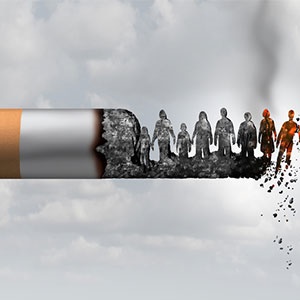
Many, many years ago, before it was banned, tobacco companies advertised on television and even sponsored major sporting tournaments. In the 1940s, the message was simple: Doctors recommended smoking. Fortunately, we know better and today we’re witnessing more anti-smoking ad campaigns warning smokers and non-smokers of the implications tobacco products have on their health. 

Here’s one of the more outrageous adverts:

[embedded content]


Image credit: iStock

NEXT ON HEALTH24X

Share Button

Health24.com | SEE: Smoking ads – from glamour to gross

Since the ’60s, smoking has been glamourised by marketers – from portraying men who smoked as strong to showing doctors who recommended a specific cigarette brand. 

Many large sporting events, such as Wimbledon, were sponsored by tobacco companies, and billboards and magazines were flooded with smoking campaigns. But, in the early ’90s the tobacco advertising industry came under siege.

In 1993, the South African government passed the Tobacco Products control Act in 1993 that banned:

  • Advertising and sponsorship
  • Smoking in public spaces and work places except under specific conditions

In 2018, we are set to see even stricter legislation against smoking, according to Health Minister Dr Aaron Motsoaledi. 

These include: 

  • Repackaging of cigarettes – legislation may enforce plain packaging and graphic images where boxes only display the brand name, warning labels and gory pictures displaying the possibly harmful effects of using tobacco products.
  • Cigarette vending machines to be abolished. 
  • Dr Motsoaledi wants to ban the 25% space in public spaces.  

We’re witnessing more anti-smoking ad campaigns warning smokers and non-smokers of the implications tobacco products have on their health. 

Have a look at what advertising was allowed before the clampdown in more recent years: 

Image credit: iStock

Videos: YouTube

Share Button

Health24.com | Looking for medical aid gap cover? These are the top options

GTC, a leading wealth and advisory firm, recently conducted a survey to identify the top gap cover plans currently available in South Africa. They identified 20 gap cover providers, offering 84 different plans. Upon analysis of these plans, they discovered there were 18 categories centred around four core categories.

Jill Larkan, head of Healthcare Consulting and Thought Leadership at GTC, says that the 2018 GTC Gap cover survey is by no means an exhaustive list of providers, but includes the gap cover providers known to GTC, its clients and competitors.

The reason for this survey is simple. “People need to have the information available so that they are able to make informed decisions when it comes to their healthcare.”

The purpose of gap cover

Larkan says gap cover is available to anyone and the maximum waiting period is limited to 12 months for pre-existing conditions.

So how does gap work? Let’s look at a scenario. You are booked into hospital with appendicitis. Your medical aid covers your hospital stay, doctor’s fees, anaesthetist’s costs, medicine and supplies. However, your medical aid will only cover a certain percentage depending on your plan – in this scenario it covers 100%.

This means if your doctor and anaesthetist charge a rate at 300%, you will be liable for the shortfall of 200%. That’s where gap cover comes in – it covers the shortfall so that you are not affected financially. 

Top providers

Sanlam and Absa emerged as the top-ranked gap cover providers in South Africa.

Sanlam offers the best value for money to people under the age of 60 – their Comprehensive Gap Cover costs approximately R250* per month per individual or family.

While for individuals (or families) older than 60 years of age, Absa came in top – their Gold Plan costs approximately R435* per month.

Both plans offer comprehensive cover – gap, co-payment, oncology and sub-limit in the 500% sector.  

They used these four core benefits to rate the various plans:

  • Gap cover: in-hospital gap cover and percentage cover the scheme provides (weighted 60%)
  • Co-payment benefit: the provision of a co-payment benefit (weighted 13.3%)
  • Oncology cover: the provision of additional cover for cancer (weighted 13.3%)
  • Sub-limit benefit extender: provided to enhance sub-limits imposed by medical aids (weighted 13.3%)

In addition, plans were grouped into sectors based on the level of cover offered: 200%, 300%, 350% or 500%+.

“The most popular type of plan, according to the survey, is one which offers in-hospital gap cover, co-payment, oncology and sub-limit, to the level of 500% +,” says Jill Larkan, head of Healthcare Consulting and Thought Leadership at GTC.

“These plans offer cover to approximately 550 000 families, representing a small portion of the potential medical aid market which has in excess of eight million members.” 

Here are other companies that did well, based on the highest core ratings and premiums:

Top 5 best core performers’ premiums, under 65s, individuals and families

1. Sanlam Comprehensive Gap Cover – R250 (only applicable to those under 60)
2. Absa Gold – R315
3. KaeloXeulus Fusion – R350
4. Ambedown Gap Select – R390
5. Ambedown Gap Supreme – R420

Top 5 best core performers’ premiums, over 65s, individuals and families

1. Absa Gold – R435
2. Ambedown Gap Select – R585
3. KaeloXeulus Fusion – R600
4. Sanlam Comprehensive Gap Cover – R600
5. Ambledown Gap Supreme – not available to over 65s

Limited at R150 000 – is that a concern?

The National Treasury recently introduced a maximum gap cover limit of R150 000 per member per year. Fortunately this has not affected the industry just yet, says Larkan. But it could, as costs continue to rise.

“One of the survey participants noted that its highest single claim pay-out in 2016 was R122 584, which means that while R150 000 still appears to be sufficient, this level will be breached in the foreseeable future,” she says.

Justin Savage, director at KaeloXelus, told GTC that a recent claim was received in excess of R500 000 for an oncology shortfall.

Check your cover

Many schemes have started to implement age-related premiums from 1 January 2018, so Larkan says it’s important you check the fine print in your policy.

Gap cover also covers more than you realise. Larkan says it will offer cover in addition to many things that your medical aid would normally pay for. Take an emergency visit to the ER, for example. If you have a medical aid with a Medical Savings Account, you would be able to claim this visit from your savings. On many of the top-up plans, you will then be able to claim a reimbursement for this trauma/emergency room visit.

The same would apply for out-patient procedures such as MRIs, CT scans, chemo, radiotherapy and kidney dialysis. Check your policy wording to make sure you are covered.

But take note: If your savings account is depleted, some gap covers may reject your claim and would not cover the short fall giving the reason that “top-up/gap covers may not perform the function of a medical aid, merely top it up”. 

Larkan warns that if something is excluded from being covered by your medical aid, gap cover won’t cover it either – for example cosmetic surgery or fertility treatments.

“If you have a hospital plan, however, many out-of-hospital benefits won’t be covered as these plans only cover you for procedures when you are admitted to hospital,” Larkan adds.

Larkan’s take-home message is simple: Understand what you are covered for and, if you are unsure, speak to a consultant who can advise what cover you and your family need.

*Pricing was correct at the time the 2018 GTC GAP Cover Survey was conducted.

Image credit: iStock

NEXT ON HEALTH24X

Share Button

Health24.com | 5 common hypertension myths debunked

High blood pressure or hypertension is often dubbed “the silent killer”. It’s a chronic disease where the pressure or tension in your arteries is too high.

This pressure is generated by the pumping action of the heart and counteracted by the resistance of the small arteries. We debunk five common myths about hypertension: 

1. ‘I don’t add extra salt to any of my foods – therefore I’m not at risk.’

Well done for not adding extra salt to your food, but unfortunately this doesn’t mean that you don’t consume hidden sodium. Eating salt raises your sodium level, which disturbs the delicate balance of water in your body, causing it to hold on to more water, which raises your blood pressure. Unfortunately table salt isn’t the only culprit – because sodium can be found in so many processed products, you may be blissfully unaware that you are consuming more sodium than you actually need.

According to a previous a Health24 article, bread, cereals and meat products (polony, Vienna sausages, salami, ham, sausages/boerewors, meat pies) are major contributors to salt intake from processed food. In South Africa, bread provides the greatest contribution to total dietary sodium intake.

This article also mentions that South African bread contains more salt than breads in many other countries. Unsure about your salt intake? Check the labels on processed products to see the amount of sodium they contain – you may be surprised.

woman cooking with salt

2. ‘High blood pressure runs in my family – so there is nothing I can do about it.’

High blood pressure is hereditary, but that doesn’t mean you are doomed to suffer the effects of hypertension. According to the Heart and Stroke Foundation South Africa, hypertension can be controlled by making healthy lifestyle choices. It’s important to understand your family’s health history and to know whether hypertension runs in your family. If it does, you can take extra measures to control your blood pressure.  

3. ‘I am not overweight and I don’t smoke – there is no way I can have high blood pressure.’

Some lifestyle factors, such as smoking and being overweight, can increase your risk for hypertension. It is therefore easy to believe that you are not susceptible to high blood pressure if you follow a fairly healthy lifestyle. 

High blood pressure can be slightly elevated when you are stressed or anxious, but if the reading is still high after several measurements, you will need to get to the bottom of the problem. Hypertension can also be genetic, but you can keep your blood pressure in check by controlling your sodium intake and destressing.

woman on scale

4. ‘I have no symptoms – I shouldn’t be worried.’

Have we mentioned that hypertension is called “the silent killer”? According to the American Heart Association, high blood pressure is mostly without symptoms and if you ignore your blood pressure because you think a certain symptom or sign will alert you to the problem, you are taking a dangerous risk. You may not be aware of the silent toll it might be taking on your arteries and organs.

Have your blood pressure measured by a medical professional during each checkup.

5. High blood pressure is the same as a high heart rate.

High blood pressure is not the same as a high heart rate and the latter isn’t an indication of hypertension as such.

If you have a high heart rate, an irregular heartbeat or a rapid pulse, this doesn’t mean that you suffer from hypertension.

A high heart rate does not cause your blood pressure to rise. If you are healthy, your blood vessels will enlarge sufficiently to allow a larger amount of blood through, especially during exercise.

If you suffer from hypertension, speak to your doctor before starting a serious exercise regime – an elevated heart rate can cause problems if your blood vessels can’t let larger volumes of blood through.

Image credit: iStock

Share Button

Rise in ‘preventable’ emergency readmissions to hospital

Undiagnosed pneumonia and pressure sores are behind the rise in hospitals in England.

Share Button

Bereaved parents ‘let down at work by lack of support’

Two out of five parents said no-one talked to them about the loss of their baby when they went back to work.

Share Button

Educate children to tackle ethnic minority donor crisis, MPs say

MPs say teaching children about organ donation could boost donor numbers and bust some common myths.

Share Button

Bigger human brain prioritizes thinking hub — at a cost

Some human brains are nearly twice the size of others — but how might that matter? Researchers at the National Institute of Mental Health (NIMH) and their NIH grant-funded colleagues have discovered that these differences in size are related to the brain’s shape and the way it is organized. The bigger the brain, the more its additional area is accounted for by growth in thinking areas of the cortex, or outer mantle — at the expense of relatively slower growth in lower order emotional, sensory, and motor areas.

This mirrors the pattern of brain changes seen in evolution and individual development — with higher-order areas showing greatest expansion. The researchers also found evidence linking the high-expanding regions to higher connectivity between neurons and higher energy consumption.

“Just as different parts are required to scale-up a garden shed to the size of a mansion, it seems that big primate brains have to be built to different proportions,” explained Armin Raznahan, M.D., Ph.D., of the NIMH Intramural Research Program (IRP). “An extra investment has to be made in the part that integrates information — but that’s not to say that it’s better to have a bigger brain. Our findings speak more to the different organizational needs of larger vs. smaller brains.”

Raznahan, Paul Reardon, Jakob Seidlitz, and colleagues at more than six collaborating research centers report on their study incorporating brain scan data from more than 3,000 people in Science. Reardon and Seidlitz are students in the NIH Oxford-Cambridge Scholars Program.

To pinpoint how the human brain’s organization varies in relation to how big it is, the researchers — including teams from the University of Pennsylvania, Philadelphia, and Yale University, New Haven, Connecticut, as well as the Douglas Mental Health University Institute, Verdun, Quebec — analyzed magnetic resonance imaging brain scans of youth from the Philadelphia Neurodevelopmental Cohort, a NIMH IRP sample, and the Human Connectome Project.

Cortex areas showing relatively more expansion in larger brains sit at the top of a network hierarchy and are specialized functionally, microstructurally and molecularly at integrating information from lower order systems. Since this theme holds up across evolution, development and inter-individual variation, it appears to be a deeply ingrained biological signature, Raznahan suggested.

“Not all cortex regions are created equal. The high-expanding regions seem to exact a higher biological cost,” explained Raznahan. “There’s biological ‘money’ being spent to grow that extra tissue. These regions seem to be greedier in consuming energy; they use relatively more oxygenated blood than low-expanding regions. Gene expression related to energy metabolism is also higher in these regions. It’s expensive, and nature is unlikely to spend unless it’s getting a return on its investment.”

Since people with certain mental disorders show alterations in brain size related to genetic influences, the new cortex maps may improve understanding of altered brain organization in disorders. The higher expanding regions are also implicated across diverse neurodevelopmental disorders, so the new insights may hold clues to understanding how genetic and environmental changes can impact higher mental functions.

“Our study shows there are consistent organizational changes between large brains and small brains,” said Raznahan. “Observing that the brain needs to consistently configure itself differently as a function of its size is important for understanding how the brain functions in health and disease states.”

“Notably, we saw the same patterns for scaled-up brains across three large independent datasets,” noted Seidlitz.

Share Button

Hydropower in Cambodia could threaten food security of region

Farmers and anglers in Cambodia depend on the Mekong River’s predictable seasonal patterns, but new dams for hydroelectricity are altering the hydrology of the river. These changes have the potential to threaten fish migration, livelihoods, and regional food security.

A new paper from the University of Illinois and Iowa State University urges a participatory approach for managing the Mekong River basin that engages local residents who have deep knowledge of the river. This local knowledge, combined with technical and scientific findings, is important for developing effective strategies to adapt to the changing flows and uses of the river.

“Due to years of civil wars that destroyed infrastructure and hindered modernization, only a little more than half of the Cambodian population has access to electricity. Hydropower is a critical building block for needed modernization. However, using the water resources for power presents difficult trade-offs for fishers and farmers,” explains Kenneth Olson, professor emeritus in the Department of Natural Resources and Environmental Sciences at U of I and co-author of the article.

In the article, Olson and co-author Lois Wright Morton detail the geology and soils of the Mekong River and Tonle Sap Lake and River area, which dominate the Cambodian landscape.

The Tonle Sap River is a tributary of the Mekong River, connecting it with Tonle Sap Lake northwest of Phnom Penh, the capital of Cambodia.

“This unique, complex hydrological system is strongly influenced by the Asian monsoon. During the monsoon season, the Tonle Sap Lake surface area enlarges to become four times greater than in the dry season and hold nine times more water by volume. The surface water level can change by more than 30 feet, so homes are either in floating villages or on stilts,” Olson explains.

This phenomenon occurs because the Mekong River begins to flood in May and June and backs up into the Tonle Sap River and Lake. The rains stop in November, and as the Mekong River water levels begin to drop, the Tonle Sap River flow reverses and again becomes a tributary of the Mekong River. Thus, the Tonle Sap River flows northwest into the lake for six months a year and then reverses and flows into the Mekong River for the other six months.

“The flooding brings needed sediments and nutrients for crops and fishing, but an increase in sedimentation has the potential to shut down dry-season navigation between the capital and regional centers by making the already shallow lake even more shallow over time,” Olson says.

There are currently plans to build 11 more dams on the main stem of the lower Mekong River.

River ecology scientists and environmentalists, including Olson and Wright, are concerned about how these dams will affect the historically predictable downstream flows and seasonal flood patterns to which birds, fish, and plant communities have adapted over time.

Specifically, fish migration is a huge concern.

“Cambodia is dependent on fish for high-quality protein and food security,” Olson says.

One dam being built, named the Lower Se San 2, will block fish migration between the Se San and the Mekong and will flood homes behind the dam, according the authors.

“The tradeoffs among hydroelectricity production, food security, and fisheries’ livelihoods are difficult and complex, and developing an integrated resource management plan is not an easy task. Broad participatory approaches that include local residents in the scientific and technical information exchanges can improve decision-making and better meet government, industry, and rural communities’ goals. Fishers and farmers can continue to successfully adapt if given opportunity, resources, and tools. These issues don’t just affect Cambodia; they impact the food security of urban people throughout Southeast Asia,” Olson warns.

Share Button