Cellular recycling process is key to longer, healthier life

Building on two decades of research, investigators at UT Southwestern have determined that “cellular housekeeping” can extend the lifespan and healthspan of mammals.

A study jointly led by Drs. Salwa Sebti and Álvaro Fernández, postdoctoral researchers in the Center for Autophagy Research, found that mice with persistently increased levels of autophagy — the process a cell uses to dispose of unwanted or toxic substances that can harm cellular health — live longer and are healthier. The study, published online today, is found in Nature.

“Specifically, they have about a 10 percent extension in lifespan and are less likely to develop age-related spontaneous cancers and age-related pathological changes in the heart and the kidney,” said Dr. Beth Levine, Director of the Center for Autophagy Research at UT Southwestern.

Twenty years ago, Dr. Levine and her colleagues discovered beclin 1 — a key gene in the biological process of autophagy. The group’s research has since shown that autophagy is important in many aspects of human health, such as preventing neurodegenerative diseases, combating cancer, and fighting infection.

In 2003, Dr. Levine’s team found that the genetic machinery required for autophagy was essential for the lifespan extension observed in long-lived mutant roundworms.

“Since then, it has become overwhelmingly clear that autophagy is an important mechanism necessary for the extended lifespan that is observed when model organisms are treated with certain drugs or when they have mutations in certain signaling pathways,” said Dr. Levine, also a Professor of Internal Medicine and Microbiology who holds the Charles Cameron Sprague Distinguished Chair in Biomedical Science. “The body’s natural ability to perform autophagy declines with aging, which likely contributes to the aging process itself.”

Yet a crucial question remained unanswered: Is increased autophagy throughout mammalian life safe and beneficial? In other words, can autophagy extend lifespan and improve healthspan?

To answer this question, Dr. Levine and her UTSW colleagues created a genetically engineered mouse that had persistently increased levels of autophagy. The researchers made a mutation in the autophagy protein Beclin 1 that decreases its binding to another protein, Bcl-2, which normally inhibits Beclin 1’s function in autophagy. As the researchers expected, these mice had higher levels of autophagy from birth in all of their organs.

Last summer, Dr. Congcong He, a former trainee in Dr. Levine’s laboratory at UT Southwestern who originally made the mice, reported in PLOS Genetics that these mice are partially protected against mouse models of Alzheimer’s-like disease. The most recent findings now show that mice with increased cellular housekeeping live longer, healthier lives.

Additionally, in collaboration with Dr. Ming Chang Hu, Associate Professor of Internal Medicine and Pediatrics who holds the Makoto Kuro-o Professorship in Bone and Kidney Research, and Dr. Orson Moe, Professor of Internal Medicine and Physiology who holds The Charles Pak Distinguished Chair in Mineral Metabolism and the Donald W. Seldin Professorship in Clinical Investigation, the Nature study also shows that the mice with increased autophagy are protected from the early death that occurs when the anti-aging hormone klotho is lacking.

“These studies have important implications for human health and for the development of drugs to improve it,” said Dr. Levine, who is also a Howard Hughes Medical Institute Investigator. “They show that strategies to increase the cellular housekeeping pathway of autophagy may retard aging and aging-related diseases. The results suggest that it should be safe to increase autophagy on a chronic basis to treat diseases such as neurodegeneration. Furthermore, they reveal a specific target for developing drugs that increase autophagy — namely the disruption of Beclin 1 binding to Bcl-2.”

Dr. Levine’s group is collaborating with Dr. Jef De Brabander, Professor of Biochemistry and a member of the Harold C. Simmons Comprehensive Cancer Center who holds the Julie and Louis Beecherl, Jr. Chair in Medical Science, and his team to synthesize such drugs. Based on the results reported in the Nature study, drugs acting through this mechanism might be expected to improve the health and prolong the lifespan of human beings.

Share Button

In ancient boulders, new clues about the story of human migration to the Americas

The conventional story says that the earliest settlers came via Siberia, crossing the now-defunct Bering land bridge on foot and trekking through Canada when an ice-free corridor opened up between massive ice sheets toward the end of the last ice age.

But with recent archaeological evidence casting doubt on this thinking, scientists are seeking new explanations. One dominant, new theory: The first Americans took a coastal route along Alaska’s Pacific border to enter the continent.

A new geological study provides compelling evidence to support this hypothesis.

By analyzing boulders and bedrock, a research team led by the University at Buffalo shows that part of a coastal migration route became accessible to humans 17,000 years ago. During this period, ancient glaciers receded, exposing islands of southern Alaska’s Alexander Archipelago to air and sun — and, possibly, to human migration.

The timing of these events is key: Recent genetic and archaeological estimates suggest that settlers may have begun traveling deeper into the Americas some 16,000 years ago, soon after the coastal gateway opened up.

The research will be published online on May 30 in the journal Science Advances.

“People are fascinated by these questions of where they come from and how they got there,” says lead scientist Jason Briner, PhD, professor of geology in UB’s College of Arts and Sciences. “Our research contributes to the debate about how humans came to the Americas. It’s potentially adding to what we know about our ancestry and how we colonized our planet.”

“Our study provides some of the first geologic evidence that a coastal migration route was available for early humans as they colonized the New World,” says UB geology PhD candidate Alia Lesnek, the study’s first author. “There was a coastal route available, and the appearance of this newly ice-free terrain may have spurred early humans to migrate southward.”

The findings do not mean that early settlers definitely traversed Alaska’s southern coast to spread into the Americas: The project examined just one section of the coast, and scientists would need to study multiple locations up and down the coastline to draw firmer conclusions.

Still, the work is exciting because it hints that the seafaring theory of migration is viable.

The bones of an ancient ringed seal — previously discovered in a nearby cave by other researchers — provide further, tantalizing clues. They hint that the area was capable of supporting human life at the time that early settlers may have been passing through, Briner says. The new study calculates that the seal bones are about 17,000 years old. This indicates that the region was ecologically vibrant soon after the ice retreated, with resources including food becoming available.

Co-authors on the research included Briner; Lesnek; Charlotte Lindqvist, PhD, an associate professor of biological sciences at UB and a visiting associate professor at Nanyang Technological University; James Baichtal of Tongass National Forest; and Timothy Heaton, PhD, of the University of South Dakota.

A landscape, touched by ice, that tells a story

To conduct their study, the scientists journeyed to four islands within the Alexander Archipelago that lie about 200 miles south/southeast of Juneau.

The team traveled by helicopter to reach these remote destinations. As soon as the researchers arrived, Briner knew that the islands had once been covered by ice.

“The landscape is glacial,” he says. “The rock surfaces are smooth and scratched from when the ice moved over it, and there are erratic boulders everywhere. When you are a geologist, it hits you in the face. You know it immediately: The glacier was here.”

To pinpoint when the ice receded from the region, the team collected bits of rock from the surfaces of boulders and bedrock. Later, the scientists ran tests to figure out how long the samples — and thus the islands as a whole — had been free of ice.

The researchers used a method called surface exposure dating. As Lesnek explains, “When land is covered by a glacier, the bedrock in the area is hidden under ice. As soon as the ice disappears, however, the bedrock is exposed to cosmic radiation from space, which causes it to accumulate certain chemicals on their surface. The longer the surface has been exposed, the more of these chemicals you get. By testing for these chemicals, we were able to determine when our rock surfaces were exposed, which tells us when the ice retreated.

“We use the same dating method for huge boulders called erratics. These are big rocks that are plucked from the Earth and carried to new locations by glaciers, which actually consist of moving ice. When glaciers melt and disappear from a specific region, they leave these erratics behind, and surface exposure dating can tell us when the ice retreated.”

For the region that was studied, this happened roughly 17,000 years ago.

The case for a coastal migration route

In recent years, evidence has mounted against the conventional thinking that humans populated North America by taking an inland route through Canada. To do so, they would have needed to walk through a narrow, ice-free ribbon of terrain that appeared when two major ice sheets started to separate. But recent research suggests that while this path may have opened up more than 14,000 years ago, it did not develop enough biological diversity to support human life until about 13,000 years ago, Briner says.

That clashes with archaeological findings that suggest humans were already living in Chile about 15,000 years ago or more and in Florida 14,500 years ago.

The coastal migration theory provides an alternative narrative, and the new study may mark a step toward solving the mystery of how humans came to the Americas.

“Where we looked at it, the coastal route was not only open — it opened at just the right time,” Lindqvist says. “The timing coincides almost exactly with the time in human history that the migration into the Americas is thought to have occurred.”

The research was funded by a UB IMPACT award, and Lesnek’s work on the project, which will contribute to her dissertation, was supported by the National Science Foundation.

Share Button

Health24.com | Should you really be using coconut oil for everything?

It’s in our bliss balls and raw vegan slices. It’s taken up permanent residence in our pantry. It splashes out of the jar during summer and magically goes rock-solid in winter. But is coconut oil really the wonder ingredient it’s cracked up to be?

What is coconut oil?

“Coconut oil is the fat component of coconut flesh (copra),” explains nutritionist Teresa Boyce. “[It] can be obtained from crushing and pressing the copra to extract the oil.”

Yep, the unrefined oil is free from nasty chemicals, which is a big bonus. But, while it doesn’t have scary ingredients, it does have a whole lot of saturated fat. In fact, sat fats make up a startling 92% of coconut oil. Bottom line: That coco-rich bliss ball might not be so blissful for your heart.

“While coconut oil has been claimed as a superfood, the new report from the American Heart Association backs what the science has been saying for some time,” says Nicole Dynan, an accredited practicing dietitian and spokesperson for the Dietitians Association of Australia. “We know coconut oil can raise our unhealthy LDL cholesterol, which raises the risk of heart disease.”

Read more: Is coconut water actually good for you?

Break it down

Before you abandon your stash, coconut oil does have its good points. It may raise unhealthy LDL cholesterol, but it also slightly increases the healthy HDL kind, too. This means it’s less worrying than your regular saturated fats.

However, that doesn’t give us a free pass to slosh it around in our food, says Dynan. “There are much healthier oil choices around.” (She suggests extra-virgin olive, avocado, canola and macadamia oils, which are low in sat fat and high in the healthy, unsaturated kind.)

So how much is too much?  Guidelines state that saturated fat should be less than 10% of your total energy intake. So for an average adult, that’s less than 24g a day. One 20ml tablespoon of coconut oil? More than 18g of sat fat. By comparison, extra-virgin olive oil has just 2.8g per tablespoon.

Coconut oil is also very energy-dense – we’re talking 720kJ per tablespoon. (A heads-up: Many other common cooking oils, such as canola and extra-virgin olive, clock up similar kilojoule counts.)

Read more: Can you really use coconut oil to treat acne?

Weighing it up

Of course, how much you eat depends on your lifestyle – you’ll have different needs to the woman next to you at the wholefood cafe. “[It] really is dependent on the individual: their health goals, health complaints and current nutrition status,” says Boyce. “I have patients who consume coconut oil several times a week, then I have fat-adapted athletes who consume it daily as a major fuel source.”

Here’s the thing: We definitely shouldn’t be afraid of healthy fats – it’s just that experts are still debating whether this fat is actually all that healthy.

Read more: Can coconut oil really help you lose weight?

MCT me

Another reason coconut oil has reached cult status? The benefits of the medium-chain triglycerides (MCTs) in it – essentially, the particular combination of fatty acids within coconut oil, which behave in a specific way in the body.

MCTs can certainly be a great workout buddy, says Boyce. “They exhibit health benefits including appetite reduction and weight loss, improved cognition, immune support, increased energy and improved athletic performance.”

However, Dynan argues that “much of the evidence used to support the health benefits of coconut comes from historical research on MCT oils. Advocates have relied on these findings, applying them to coconut oil, when in fact, coconut oil wasn’t used in the research.” This isn’t to say it doesn’t have the claimed wellbeing benefits, it’s just the evidence is currently a bit thin on the ground.

Something the experts do agree on, though: coconut oil can be a delicious addition to a meal; plus it’s a great vegan ingredient for sweet treats. Beyond food, it’s an all-natural skin saviour, removing make-up and rehydrating like some sort of double-wonder wipe.

So should we just move the jar into our beauty cabinets instead? Not necessarily. “It’s like everything in nutrition; it’s about having a balanced approach,” says Boyce.

“My tip is to consume saturated fats in moderation, as close to nature as possible and as a part of a balanced diet.” And that’s where coconut oil’s benefit really lies – it isn’t from a test tube, it’s from a tree. So there’s no need to trash it. Just save the bigger portions for your skin, not your stir-fry.

This article was originally published on www.womenshealthsa.co.za

Image credit: iStock

NEXT ON HEALTH24X

Share Button

Health24.com | This is why diabetics have a higher risk of going blind

It has been proven that diabetics have a higher risk of blindness and other eye problems. 

However, with the correct care and intervention you can protect your eyes and detect any complications before they affect your vision.

The link between diabetes and the eyes

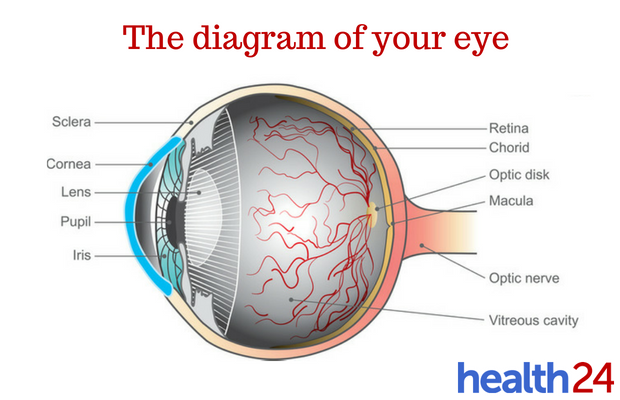
To understand the link between diabetes and eye problems, it’s important to understand how your eye works.

Your eye is protected by a tough outer clear membrane, called the cornea. It protects the eye while letting light pass through.

After light passes through the cornea, it goes through the pupil to a space called the anterior chamber and onward to another lens that enables you to focus on objects. The light then passes through another chamber in the centre of the eye and finally travels to the retina at the back of the eye.

The image is now captured and sent to the brain to be decoded. The macula, an important part of the retina, enables you to see clearly. This part is nourished by the nervous system and tiny blood vessels.

Having chronic high blood sugar levels caused by diabetes can cause damage to the nervous system and tiny blood vessels throughout the body, including those in the eyes. This can lead to several eye complications. The blood vessels can also start leaking fluid, which can cause swelling in the eye. 

diagram of eye

What are the different eye problems you may encounter?

Diabetic eye disease includes a variety of eye conditions that can occur in people with diabetes and includes the following:

  • Diabetic retinopathy: A condition that affects the blood vessels in the retina that line the back of the eye.
  • Diabetic macular oedema: Swelling of an area in the retina, called the macula, caused by the build-up of fluid.
  • Cataracts: The clouding of the normally transparent crystalline lens in the eye, causing blurry vision.
  • Glaucoma: The occurrence of abnormally high pressure in the eye because of too much liquid. This can cause damage to the optic nerve.

According to the journal Eye and Vision, globally diabetic retinopathy is one of the biggest causes of blindness.

Who is at risk for diabetic eye complications?

The Global Diabetes Community says that anyone with diabetes (type 1, 2 or gestational) is at risk for eye complications, and the risk increases the longer you have diabetes.

Any diabetes-related eye complication can lead to partial or complete loss of vision if left untreated.

When should you immediately consult a medical professional?

Most eye complications usually have no symptoms in the beginning, but as they progress, they will start affecting vision. Bleeding from abnormal blood vessels in the retina can cause the appearance of dark spots in your vision (often called “floaters”).

Although these dark spots can disappear on their own, they can also signal the risk of retinal bleeding, which can cause permanent loss of vision.

Other signs and symptoms that should be immediately checked out include:

  • Sudden blurry vision – this could be caused by your insulin dosage, which may need to be adjusted  
  • Sudden sharp pain in your eye, which can signal pressure
  • Sudden loss of vision in one or both eyes
  • Any flashes of light
  • Any nausea, vomiting or headaches accompanying eye complications

What are the treatment options?

There are a couple of options to correct vision loss and retina damage. These include:

  • Laser treatment in the case of severe retina damage.
  • A surgical procedure called vitrectomy to treat bleeding in the eye, scar tissue around the eye and retinal detachments.
  • Injection or oral medication to repair blood vessels and help bring down swelling.

Keep your eyes in tip-top shape

Early detection and treatment can reduce a diabetic’s risk of blindness by 95%. Here are a few things you can do to monitor your eye health:

  • Have a comprehensive eye test once a year, or more frequently if you already have eye complications.
  • Control your blood sugar and insulin, as this slows the onset of diabetic retinopathy and other eye conditions.
  • Include plenty of fruits and vegetables in your diet and include exercise in your daily routine to keep your nervous system healthy.
  • Check your cholesterol levels, as too much “bad cholesterol” (LDL) can cause damage to blood vessels.
  • Keep your blood pressure under control, as high blood pressure increases your risk for glaucoma.

Image credit: iStock

Share Button

Misconduct doctor’s ‘force made pregnant woman scream’

Dr Abdelkarim Mohamed was suspended for nine months for misconduct.

Share Button

Aberdeen sanitary product pilot to start across Scotland

The Scottish government pilot for free sanitary products for women on low incomes began in Aberdeen.

Share Button

‘Ban cartoon characters’ on unhealthy food, MPs say

Tony the Tiger and the Milky Bar Kid should no longer be used to promote items to children, MPs say.

Share Button

Ex-football stars with dementia ‘forgotten’ by authorities

A psychiatrist says he is in “no doubt there is a big problem” and more needs to be done.

Share Button

Health24.com | 5 weird things your body does

You’ve probably got out the bath after a long soak (well, not Capetonians…) and looked at your hands and feet, wondering why they look like prunes. Or wondered why, after you brushed your teeth and then drank orange juice, your mouth tastes disgusting.

Here are five weird things your body does and why.

1. Weird thing: Wrinkly fingers and toes

You’ve been soaking in the bath for some time or cooling off in the pool for hours. When you get out, your hands and feet resemble prunes.

It happens because…

Mark Changizi, an evolutionary neurobiologist at 2AI Labs in Boise, Idaho, and his colleagues, suggested in 2011 that wrinkling of wet fingers may have an evolutionary function that offered a drainage network to improve grip.

According to a recent study, published in Biology Letters, people were asked to pick up wet and dry objects (including marbles of varying sizes) with dry hands and wrinkled hands that had soaked in warm water for 30 minutes. They were able to pick up the marbles with wrinkled fingers quicker than they could with dry hands. The wrinkles, however, made no difference when it came to picking up dry objects.

“We have shown that wrinkled fingers give a better grip in wet conditions – it could be working like treads on your car tyres, which allow more of the tyre to be in contact with the road and gives you a better grip,” said Tom Smulders, an evolutionary biologist at Newcastle University, UK, and a co-author of the paper.

Smulders says it’s possible that wrinkly fingers helped our ancestors collect food from wet areas, while prune-like toes may have helped them find better footing in rainy conditions.

Although it’s clear that wrinkles offer an advantage to handling wet objects but apparently no disadvantage with dry ones, Smulders says it’s not clear why our fingers are not permanently wrinkled. But he has some suggestions, “Our initial thoughts are that this could diminish the sensitivity in our fingertips or could increase the risk of damage through catching on objects.”

Child with wrinkly hands

2. Weird thing: Orange juice tastes weird after brushing your teeth.

You’ve brushed your teeth and take a sip of orange juice. Instead of tasting delicious, fresh and sweet, it tastes so bad it makes your eyes water.

It happens because…

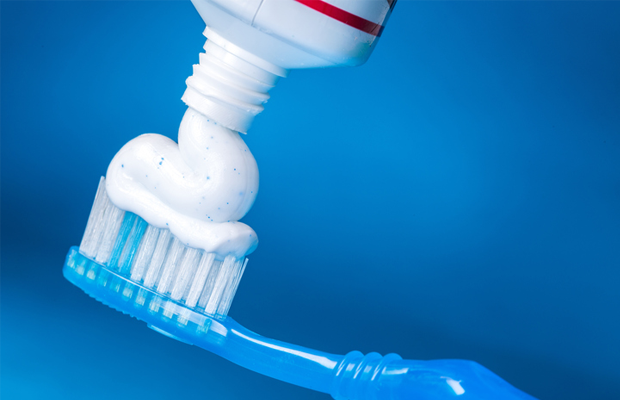
Scientists aren’t too sure why this happens but they do have a few theories. One has to do with sodium laureth sulphate (SLS), an ingredient in toothpaste that helps it foam and give our mouths a good clean.

The American Chemical Society explains that we have 10 000 taste buds and each one has 100 taste receptor cells. Our taste buds can taste five different taste types – sweet, sour, bitter, salty and umami.

Toothpaste has four main ingredients: water, abrasives, fluoride and detergents (that’s what creates the foam when you brush your teeth). Most toothpastes contain a detergent called sodium lauryl sulphate (SLS), which can suppress our sweetness receptors and destroy compounds called phospholipids (or bitterness inhibitors).

Your brain has a difficulty recognising that you’ve consumed something sweet. This process opens up a pathway for bitter molecules to reach sweetness receptors, which explains why drinking something like sweet orange juice soon after brushing your teeth produces a bitter and often soapy taste. 

Toothbrush and toothpaste

3. Weird thing: ‘Dead’ arm or leg

You’ve been lying on the couch watching TV with your dog curled up on your feet. You get to get something drink and fall over – your foot has gone completely numb.

It happens because…

You experience a loss of feeling in your foot due to “temporary compression of nerves”, Rebecca Traub, an assistant professor of neurology at Columbia University, told Business Insider. What happens is this: A nerve is pinched and does not communicate with the spine and brain.

Steven Vernino, a professor of neurology at the University of Texas Southwestern Medical Center and a fellow at the American Academy of Neurology, compares nerves carrying electrical signals in our body to water moving through a hosepipe.

Signals are transmitted to the brain from one part of the body; the brain recognises the signal and sends a message back. For example, when you touch a hot stove, the nerves in your hand send a signal to your brain that it’s hot; your brain interprets this as pain and makes you pull your hand away from the hot stove.

But if there is a kink in the nerve, much like water that gets stuck in a twisted hose, the signal can’t reach your brain. “One common nerve in the leg that is compressed is the fibular nerve, which travels around the side of the knee and often gets pinched when people sit with their legs crossed for a prolonged period,” said Traub.

You can rest assured, though, a dead leg is not caused by a lack of blood supply says Traub. Although it is possible to cut off the blood flow to your limb, Prof Vernino says that is rare.

man rubbing foot

4. Weird thing: A shiver down your spine

People usually say a shiver down your spine means a ghost is walking over your grave. You know the feeling; you suddenly get a shiver that involuntarily moves right down your spine and it sometimes happens when you hear a beautiful piece of music.

It happens because…

It’s normal to get goose bumps or a cold shiver down your spine when you are scared. It’s usually an indication that adrenaline is moving through your body, preparing you for fight or flight.

According to Naked Scientist, Ginny Smith, scientists aren’t entirely sure why we get shivers when we hear something beautiful. However, she says one theory exists that something unexpected can cause the same response because unexpected things can be dangerous. “So, it’s a good idea to prepare yourself in case that unexpected thing is danger. But when we know we’re not in a dangerous situation, we can actually re-interpret those bodily feelings as a kind of pleasure,” she explains.

“So, when it’s studied, these kind of tingles often come in music when there’s a sudden change in the tempo or the volume that maybe you weren’t expecting. And you get that kind of fear response but you know you shouldn’t be scared.”

Woman listening to music

5. Weird thing: Falling feeling in your sleep

You’re drifting off to sleep when your entire body jerks you awake because you feel as though you are falling or tripping.

It happens because…

This involuntary movement called a hypnagogic jerk and usually happens as you fall asleep. When you’re dreaming, your body is paralysed (which explains why you don’t move around too much) but sometimes you start to dream before your body has “switched off” completely.

Dr W Christopher Winter, Men’s Health sleep advisor and medical director of the sleep centre at Martha Jefferson Hospital in Virginia, says with hypnagogic jerks you might be acting out a dream that involves falling off a cliff, falling out of the sky or even just tripping over something.

Researchers don’t really know why you experience the feeling of falling.“It’s more likely to happen when you’re overtired, sleep-deprived or stressed,” Dr Winter says. “And your brain enters into sleep cycles more aggressively, but your body hasn’t caught up.”

woman sleeping

Do you have any weird things that happen to you that don’t make sense? Email mandy.freeman@24.com and let us know – we’ll see if we can find the answers. 

Image credit: iStock


NEXT ON HEALTH24X

Share Button

First 3D-printed human corneas

The first human corneas have been 3D printed by scientists at Newcastle University, UK.

It means the technique could be used in the future to ensure an unlimited supply of corneas.

As the outermost layer of the human eye, the cornea has an important role in focusing vision.

Yet there is a significant shortage of corneas available to transplant, with 10 million people worldwide requiring surgery to prevent corneal blindness as a result of diseases such as trachoma, an infectious eye disorder.

In addition, almost 5 million people suffer total blindness due to corneal scarring caused by burns, lacerations, abrasion or disease.

The proof-of-concept research, published today in Experimental Eye Research, reports how stem cells (human corneal stromal cells) from a healthy donor cornea were mixed together with alginate and collagen to create a solution that could be printed, a ‘bio-ink’.

Using a simple low-cost 3D bio-printer, the bio-ink was successfully extruded in concentric circles to form the shape of a human cornea. It took less than 10 minutes to print.

The stem cells were then shown to culture — or grow.

Che Connon, Professor of Tissue Engineering at Newcastle University, who led the work, said: “Many teams across the world have been chasing the ideal bio-ink to make this process feasible.

“Our unique gel — a combination of alginate and collagen — keeps the stem cells alive whilst producing a material which is stiff enough to hold its shape but soft enough to be squeezed out the nozzle of a 3D printer.

“This builds upon our previous work in which we kept cells alive for weeks at room temperature within a similar hydrogel. Now we have a ready to use bio-ink containing stem cells allowing users to start printing tissues without having to worry about growing the cells separately.”

The scientists, including first author and PhD student Ms Abigail Isaacson from the Institute of Genetic Medicine, Newcastle University, also demonstrated that they could build a cornea to match a patient’s unique specifications.

The dimensions of the printed tissue were originally taken from an actual cornea. By scanning a patient’s eye, they could use the data to rapidly print a cornea which matched the size and shape.

Professor Connon added: “Our 3D printed corneas will now have to undergo further testing and it will be several years before we could be in the position where we are using them for transplants.

“However, what we have shown is that it is feasible to print corneas using coordinates taken from a patient eye and that this approach has potential to combat the world-wide shortage.”

Reference:

3D Bioprinting of a Corneal Stroma Equivalent. Abigail Isaacson, Stephen Swioklo, Che J. Connon. Experimental Eye Research.

Story Source:

Materials provided by Newcastle University. Note: Content may be edited for style and length.

Share Button