A Times newspaper investigation found the NHS was charged £3,220 for a mouthwash used by cancer patients.


A Times newspaper investigation found the NHS was charged £3,220 for a mouthwash used by cancer patients.
My journey to skipping started on my 36th birthday when my husband gave me a skipping rope. I know. Who does that, right? Well, against all odds, it turned out to be one of the best gifts I’ve ever received.
A diary of shame
I’ve never been able to skip. I have vivid memories of sitting on the sidelines at school – and we’re talking all the way back to pre-school – while other girls did criss-cross. For all my hours of practising, the best I could manage was an ungainly gallop.
As an adult, I learnt that skipping has all kinds of amazing fitness benefits. I desperately wanted to reap them. But I couldn’t go 10 skips without tripping over the rope. (Not ideal when you work for a health and fitness magazine and regularly have to try group workout classes where skipping ropes are standard.)
It took me about four months to learn to skip. These are the tips that helped me.
Get the right rope
Turns out, skipping ropes are not all the same. When you’re a skipping queen like Mapule Ndhlovu, you’ll probably be able to pick up any rope and do great things. But, I discovered, when you’re just getting started, finding the type of rope that’s easiest for you to skip with can make all the difference.
The rope my husband gave me was a speed rope – one of those very thin skipping ropes that people who are much better at skipping than I am use to do fancy things like double-unders. I always thought a heavier rope would be easier to control, but actually the lighter rope worked much better for me.
Adjustable handles let me figure out what length worked best for me. Even though I’m fairly short, I found a longer length easier to skip with because of the hand position (more on that later).
This is how it started. Not pretty.
Practise at home
After so many years of sucking royally, I associated skipping with failure and humiliation. So there was no way that I was going to be seen flailing around the gym floor for the entertainment of everyone on the treadmills. Instead, my husband had me practise in the garden (yes, the rope came with free lessons) and he turned out to be a surprisingly good coach.
After just one session, I was up to 20 unbroken skips and ready to be seen in public. I was also exhausted, gasping for breath and my calves threatened to cramp.
When skipping was death.
Uncoordinated? Go slo-mo
One of my biggest issues was coordination. I was constantly tripping over the rope and getting tangled because I couldn’t match the timing of my hands with my feet. My hands were much slower than my feet so, for a long time, I would do two jumps for every arm swing.
Fixing this was surprisingly easy. I simply slowed the whole movement down. Swing the rope, wait for it to land, jump over it. Repeat over and over again. Amazingly, after just a few minutes, I was managing 10 skips without any double-hopping.
Read more: This strength workout totally counts as cardio too
Adjust your hand position
Ideally you want your hands fairly close to your body for a tight, controlled movement. But I found this position had me tripping over the rope again. As I got tired, my hands would stray even closer together and the rope would hit my feet. Or I’d swing it skew with the same result. By using a slightly longer rope, I could keep my hands further apart and these were no longer issues.
A couple of months in…
If you have no rhythm, use music
A key factor in skipping success is getting a good rhythm going. That repetitive action is what allows you to sync your hands and feet. In the beginning I just couldn’t get this part right, so I was jumping high over the rope to avoid falling on my face. It not only looked ridiculous, it’s also inefficient – you end up using much more energy than you would doing small, rhythmic hops.
Someone on Instagram suggested I try skipping to music. It made all the difference – even when I was just skipping along to a song in my head, my hops became much quicker, smaller and more rhythmical. It also stopped me from panic speed increase – where I would skip faster and faster and not know how to slow down.
Read more: This 15-minute skipping rope workout will transform your arms and abs
Do a little bit every day
I incorporated skipping into my existing workout, throwing it in between strength moves as active rest. That meant I was doing a little bit at least five days a week. And I do mean a little. In the beginning, I would just skip to failure – that meant 20, maybe 30 skips at a time. So not much at all. But it made a difference.
Within a month, I was routinely managing 60 unbroken skips, which became a comfortable plateau for a while until I decided it was time to go big and upped it to 100 skips. These days some of my workouts include three minutes of unbroken skipping. And that’s the warm-up! I can’t believe how far I’ve come!
Finally able to skip!
The results
The best part of learning to skip is that I finally got to reap all those health and fitness benefits that I used to covet. But, ironically, I was so busy focusing on the act of learning to skip that I didn’t even notice them until later. My legs are much more toned – I actually have definition in my calves for the first time in my life.
And my cardio fitness has improved tremendously – I can do a cardio workout without ending up in a gasping heap on the floor. But best of all is that I no longer fear skipping. In fact (and this is going to sound crazy) after more than 30 years, I’ve finally learnt to enjoy it!
This article was originally published on www.womenshealthsa.co.za
Image credit: iStock

NEXT ON HEALTH24X

Social media stars Zoella and Alfie Deyes feature in a study into the protection of children online.
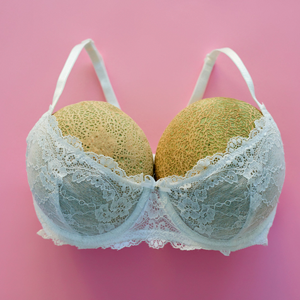
“My doctor told me that I have dense breasts. What does that mean exactly? And should I be concerned?”
Answer: It’s not an immediate cause for concern, but here’s what you need to know:
What are dense breasts?
Our breasts are composed of three kinds of tissue: glandular (the milk glands and ducts), connective (the fibrous tissue that surrounds the ducts and glands) and fatty tissue.
Read more: 6 weird facts we bet you didn’t know about your breasts
They’re considered “dense” when they have a lot of glandular and connective tissue and not much of the fatty kind. Only a mammogram can determine whether you have dense breasts. Neither your doctor nor you (during a self-exam) can tell from their size, shape, firmness or other factors, such as your BMI or weight.
What causes dense breast tissue?
The younger we are, the denser our breasts are, and as we age, our breasts tend to become less dense and fattier. This gradual change is due to a decline in our oestrogen levels as part of the natural ageing process, particularly during menopause.
Read more: 8 nipple symptoms that are totally normal
However, having dense breasts well into adulthood is common and affects about half of all women. And some people have a genetic predisposition to them – so if your mom had dense breasts, it’s likely you do too.
What you should know
Having very dense breasts raises two concerns. First, higher density has been linked to an increased risk for breast cancer, although the exact reason for that is unknown. Second, if you do have breast cancer, it can be harder to diagnose it in dense breasts because both non-fatty tissues and cancer appear white on a mammogram.
Read more: The real reason men are obsessed with your breasts
Be sure to tell your doctor if you have a family history of breast cancer – she might suggest alternative or additional tests like an ultrasound or MRI. In general, no matter your breast density, you can reduce your cancer risk by exercising regularly, limiting your alcohol consumption and maintaining a healthy weight.
Source: Dr Keri Peterson
This article was originally published on www.womenshealthmag.com
Image credit: iStock

Imagine being able to power your car partly from the heat that its engine gives off. Or what if you could get a portion of your home’s electricity from the heat that a power plant emits? Such energy-efficient scenarios may one day be possible with improvements in thermoelectric materials — which spontaneously produce electricity when one side of the material is heated.
Over the last 60 years or so, scientists have studied a number of materials to characterize their thermoelectric potential, or the efficiency with which they convert heat to power. But to date, most of these materials have yielded efficiencies that are too low for any widespread practical use.
MIT physicists have now found a way to significantly boost thermoelectricity’s potential, with a theoretical method that they report today in Science Advances. The material they model with this method is five times more efficient, and could potentially generate twice the amount of energy, as the best thermoelectric materials that exist today.
“If everything works out to our wildest dreams, then suddenly, a lot of things that right now are too inefficient to do will become more efficient,” says lead author Brian Skinner, a postdoc in MIT’s Research Laboratory of Electronics. “You might see in people’s cars little thermoelectric recoverers that take that waste heat your car engine is putting off, and use it to recharge the battery. Or these devices may be put around power plants so that heat that was formerly wasted by your nuclear reactor or coal power plant now gets recovered and put into the electric grid.”
Skinner’s co-author on the paper is Liang Fu, the Sarah W. Biedenharn Career Development Associate Professor of Physics at MIT.
Finding holes in a theory
A material’s ability to produce energy from heat is based on the behavior of its electrons in the presence of a temperature difference. When one side of a thermoelectric material is heated, it can energize electrons to leap away from the hot side and accumulate on the cold side. The resulting buildup of electrons can create a measurable voltage.
Materials that have so far been explored have generated very little thermoelectric power, in part because electrons are relatively difficult to thermally energize. In most materials, electrons exist in specific bands, or energy ranges. Each band is separated by a gap — a small range of energies in which electrons cannot exist. Energizing electrons enough to cross a band gap and physically migrate across a material has been extremely challenging.
Skinner and Fu decided to look at the thermoelectric potential of a family of materials known as topological semimetals. In contrast to most other solid materials such as semiconductors and insulators, topological semimetals are unique in that they have zero band gaps — an energy configuration that enables electrons to easily jump to higher energy bands when heated.
Scientists had assumed that topological semimetals, a relatively new type of material that is largely synthesized in the lab, would not generate much thermoelectric power. When the material is heated on one side, electrons are energized, and do accumulate on the other end. But as these negatively charged electrons jump to higher energy bands, they leave behind what’s known as “holes” — particles of positive charge that also pile up on the material’s cold side, canceling out the electrons’ effect and producing very little energy in the end.
But the team wasn’t quite ready to discount this material. In an unrelated bit of research, Skinner had noticed a curious effect in semiconductors that are exposed to a strong magnetic field. Under such conditions, the magnetic field can affect the motion of electrons, bending their trajectory. Skinner and Fu wondered: What kind of effect might a magnetic field have in topological semimetals?
They consulted the literature and found that a team from Princeton University, in attempting to fully characterize a type of topological material known as lead tin selenide, had also measured its thermoelectric properties under a magnetic field in 2013. Among their many observations of the material, the researchers had reported seeing an increase in thermoelectric generation, under a very high magnetic field of 35 tesla (most MRI machines, for comparison, operate around 2 to 3 tesla).
Skinner and Fu used properties of the material from the Princeton study to theoretically model the material’s thermoelectric performance under a range of temperature and magnetic field conditions.
“We eventually figured out that under a strong magnetic field, a funny thing happens, where you could make electrons and holes move in opposite directions,” Skinner says. “Electrons go toward the cold side, and holes toward the hot side. They work together and, in principle, you could get a bigger and bigger voltage out of the same material just by making the magnetic field stronger.”
Tesla power
In their theoretical modeling, the group calculated lead tin selenide’s ZT, or figure of merit, a quantity that tells you how close your material is to the theoretical limit for generating power from heat. The most efficient materials that have been reported so far have a ZT of about 2. Skinner and Fu found that, under a strong magnetic field of about 30 tesla, lead tin selenide can have a ZT of about 10 — five times more efficient than the best-performing thermoelectrics.
“It’s way off scale,” Skinner says. “When we first stumbled on this idea, it seemed a little too dramatic. It took a few days to convince myself that it all adds up.”
They calculate that a material with a ZT equal to 10, if heated at room temperature to about 500 kelvins, or 440 degrees Fahrenheit, under a 30-tesla magnetic field, should be able to turn 18 percent of that heat to electricity, compared to materials with a ZT equal to 2, which would only be able to convert 8 percent of that heat to energy.
The group acknowledges that, to achieve such high efficiencies, currently available topological semimetals would have to be heated under an extremely high magnetic field that could only be produced by a handful of facilities in the world. For these materials to be practical for use in power plants or automobiles, they should operate in the range of 1 to 2 tesla.
Fu says this should be doable if a topological semimetal were extremely clean, meaning that there are very few impurities in the material that would get in the way of electrons’ flow.
“To make materials very clean is very challenging, but people have dedicated a lot of effort to high-quality growth of these materials,” Fu says.
He adds that lead tin selenide, the material they focused on in their study, is not the cleanest topological semimetal that scientists have synthesized. In other words, there may be other, cleaner materials that may generate the same amount of thermal power with a much smaller magnetic field.
“We can see that this material is a good thermoelectric material, but there should be better ones,” Fu says. “One approach is to take the best [topological semimetal] we have now, and apply a magnetic field of 3 tesla. It may not increase efficiency by a factor of 2, but maybe 20 or 50 percent, which is already a pretty big advance.”
The team has filed a patent for their new thermolelectric approach and is collaborating with Princeton researchers to experimentally test the theory.

Organic light-emitting diodes (OLEDs) truly have matured enough to allow for first commercial products in form of small and large displays. In order to compete in further markets and even open new possibilities (automotive lighting, head-mounted-displays, micro displays, etc.), OLEDs need to see further improvements in device lifetime while operating at their best possible efficiency. Currently, intrinsic performance progress is solely driven by material development.
Now researchers from the Universitat Autònoma de Barcelona and Technische Universität Dresden demonstrate the possibility of using ultrastable film formation to improve the performance of state-of-the-art OLEDs. In their joint paper published in Science Advances with the title ‘High-performance organic light-emitting diodes comprising ultrastable glass layers’, the researchers show in a detailed study significant increases of efficiency and operational stability (> 15% for both parameters and all cases, significantly higher for individual samples) are achieved for four different phosphorescent emitters. To achieve these results, the emission layers of the respective OLEDs were grown as ultrastable glasses — a growth condition that allows for thermodynamically most stable amorphous solids.
This finding is significant, because it is an optimization which does neither involve a change of materials used nor changes to the device architecture. Both are the typical levers for improvements in the field of OLEDs. This concept can universally be explored in every given specific OLED stack, which will be equally appreciated by leading industry. This in particular includes thermally activated delayed fluorescence (TADF) OLEDs, which see a tremendous research and development interest at the moment. Furthermore, the improvements that, as shown by the researchers, can be tracked back to differences on the exciton dynamics on the nanoscale suggest that also other fundamental properties of organic semiconductors (e.g. transport, charge separation, energy transfer) can be equally affected.
Story Source:
Materials provided by Universitat Autonoma de Barcelona. Note: Content may be edited for style and length.

Glacial retreat in cold, high-altitude ecosystems exposes environments that are extremely sensitive to phosphorus input, new University of Colorado Boulder-led research shows. The finding upends previous ecological assumptions, helps scientists understand plant and microbe responses to climate change and could expand scientists’ understanding of the limits to life on Earth.
The study, which was recently published in the journal Science Advances, found that even in mountainous terrain above 17,000 feet above sea level, where soils freeze every night of the year, the addition of phosphorus resulted in rapid growth of plants and photosynthetic microbes, allowing them to overcome the chilly, arid climate.
“Life is more resourceful than we might have previously suspected,” said Steven Schmidt, a professor in CU Boulder’s Department of Ecology and Evolutionary Biology (EBIO) and a co-author of the research. “Phosphorus allows microbes to react quickly and grow in these sites.”
Nitrogen and phosphorus are both essential nutrients for vegetation and microbes, but plants are slower to re-grow in dry, high-elevation sites than in wet, temperate areas. Based on classical experiments, researchers had suspected that this sluggish regeneration was primarily due to the harsh climate and the relative lack of the nitrogen, limiting the potential for organic life.
“The thought has always been that nitrogen is most important to these newly-uncovered soils,” said John Darcy, a post-doctoral researcher at the University of Hawaii who co-authored the study while at CU Boulder. “But previous research has been concentrated in coastal and island landscapes. No one had looked at these cold, dry high-altitude systems before.”
Researchers from CU Boulder, Duke University, the University of Montana and the University of Minnesota drew upon six years’ worth of field data from arid sites in the central Alaska Range and the Andes Mountains of southern Peru. Both areas have experienced significant glacial retreat in recent decades due to climate change.
Post-glacial landscapes have been observed to remain largely un-vegetated for up to 150 years, leaving behind expanses of potentially unstable lakes and land that could result in floods, mudslides and potential water shortages.
The previously unappreciated importance of phosphorus for vegetation and microbes adds new context to long-held ecological theories and could inform future astrobiology studies as well as further research into agricultural runoff pollution.
“We’re expanding the boundaries of what we know about the limits to life on Earth,” Schmidt said.
Additional study co-authors include Joey Knelman of CU Boulder’s Institute for Arctic and Alpine Research (INSTAAR); Cory Cleveland of the University of Montana; Sarah Castle of the University of Minnesota; and Diana Nemergut of Duke University. The National Science Foundation and the National Geographic Society provided funding for the research.
Story Source:
Materials provided by University of Colorado at Boulder. Note: Content may be edited for style and length.

Developing new medicines to treat pulmonary fibrosis, one of the most common and serious forms of lung disease, is not easy.
One reason: it’s difficult to mimic how the disease damages and scars lung tissue over time, often forcing scientists to employ a hodgepodge of time-consuming and costly techniques to assess the effectiveness of potential treatments.
Now, new biotechnology reported in the journal Nature Communications could streamline the drug-testing process.
The innovation relies on the same technology used to print electronic chips, photolithography. Only instead of semiconducting materials, researchers placed upon the chip arrays of thin, pliable lab-grown lung tissues — in other words, its lung-on-a-chip technology.
“Obviously it’s not an entire lung, but the technology can mimic the damaging effects of lung fibrosis. Ultimately, it could change how we test new drugs, making the process quicker and less expensive,” says lead author Ruogang Zhao, PhD, assistant professor in the Department of Biomedical Engineering at the University at Buffalo.
The department is a multidisciplinary unit formed by UB’s School of Engineering and Applied Sciences and the Jacobs School of Medicine and Biomedical Sciences at UB.
With limited tools for fibrosis study, scientists have struggled to develop medicine to treat the disease. To date, there are only two drugs — pirfenidone and nintedanib — approved by the U.S. Food and Drug Administrations that help slow its progress.
However, both drugs treat only one type of lung fibrosis: idiopathic pulmonary fibrosis. There are more than 200 types of lung fibrosis, according to the American Lung Association, and fibrosis also can affect other vital organs, such as the heart, liver and kidney.
Furthermore, the existing tools do not simulate the progression of lung fibrosis over time — a drawback that has made the development of medicine challenging and relatively expensive. Zhao’s research team, which included past and present students, as well as a University of
Toronto collaborator, created the lung-on-a-chip technology to help address these issues.
Using microlithography, the researchers printed tiny, flexible pillars made of a silicon-based organic polymer. They then placed the tissue, which acts like alveoli (the tiny air sacs in the lungs that allow us to consume oxygen), on top of the pillars.
Researchers induced fibrosis by introducing a protein that causes healthy lung cells to become diseased, leading to the contraction and stiffening of the engineered lung tissue. This mimics the scarring of the lung alveolar tissue in people who suffer from the disease.
The tissue contraction causes the flexible pillars to bend, allowing researchers to calculate the tissue contraction force based on simple mechanical principles.
Researchers tested the system’s effectiveness with pirfenidone and nintedanib. While each drug works differently, the system showed the positive results for both, suggesting the lung-on-a-chip technology could be used to test a variety of potential treatments for lung fibrosis.
The research was supported by the National Institutes of Health; the UB School of Engineering and Applied Sciences; the Jacobs School of Medicine and Biomedical Sciences at UB; and the Clinical and Translational Science Institute at UB.
Story Source:
Materials provided by University at Buffalo. Original written by Cory Nealon. Note: Content may be edited for style and length.

Whether it’s twice a week or twice a day, you’ve probably developed a pretty consistent masturbation routine by now. But at one point or another, you may have wondered if you’re masturbating too often.
The good news? There’s no magic number when it comes to a healthy solo sex life, says Dan Drake, MFT, LPCC, a certified sex addiction therapist and clinical counsellor.
In fact, there’s a pretty wide range: While 27% of 30- to 39-year-old men masturbate once a week to a few times a month, that number varies quite a bit by age, according to a 2009 survey of 2 500 American men.
“However often you masturbate, it’s not a problem until it starts affecting your life in negative ways,” Drake explains.
But that doesn’t mean that it can’t pose a problem, particularly if it interferes with your everyday life.
So when does a harmless habit turn into an issue? Here are the physical and psychological signs that you may need to give your boner a bit of a breather.
1. You hurt yourself.
Some guys masturbate so often that they actually hurt themselves, says Dr Tobias Köhler, a urologist at Southern Illinois University.
Read more: 5 masturbation secrets you don’t know about
These injuries could be mild (e.g., skin chafing) or a more serious condition like Peyronie’s disease, or scar tissue build-up in the shaft of your penis that can result from using too much pressure while stroking, Dr Köhler explains.
This may sound obvious, but if you’re masturbating so often that you’re hurting yourself, you need to cut back, he warns.
2. Your job suffers.
Maybe you stay in on Friday nights instead of meeting up with friends, or you’ve been late to meetings because you were giving yourself a hand in the men’s room.
Read more: Can watching too much porn give you erectile dysfunction?
Either way, if you find that your masturbation habits are interfering with your social life, your job or your desire to have sex with your partner, then it’s time to adjust your routine, Drake says.
3. Your sex life suffers.
Some guys who masturbate a lot use one specific type of stimuli – say, certain categories of porn coupled with specific hand movements. When it comes time for them to actually have sex, they find that they can’t recreate the same type of excitement, Dr Köhler explains.
Read more: Porn stars explain why you shouldn’t expect to have sex like a porn star
Basically, if you watch the same porn or use the same hand motions every time you masturbate, it teaches your brain and body to get off that way and that way alone. If you’re having sex with a real-life partner, this could cause serious problems, both in terms of keeping it up and getting erect in the first place. “If that happens, you have a problem that needs to be addressed,” says Dr Köhler.
4. You always think about it.
You wake up wanting to masturbate. At lunch, your mind wanders to your favourite porn scene. Your commute home is almost unbearable, because you just want to sit on the couch with a beer and PornHub.
Read more: Here’s how your sex life affects how much you masturbate
If any of this sounds familiar, and you often find yourself distracted by thoughts of when or how you’re going to yank it next, that’s a strong indication you have a problem, Drake says.
If you realise you have a problem, what should you do about it?
That means doing one of two things: a) cutting yourself off cold turkey, at least for the time being; and b) adopting more of a “harm reduction” approach by setting limits for yourself – for example, making a rule to only masturbate at night.
Read more: 11 shocking facts you never knew about masturbation
Considering you probably don’t want to give up solo orgasms for the rest of your life – masturbation is, after all, an integral part of any healthy sex life – you’ll probably want to opt for the latter approach.
Set rules for yourself and see if you can adhere to them. If you can’t, and you find yourself slipping back into harmful old habits, consider seeing a therapist, as there might be a deeper psychological issue at play.
Bottom line? Indulging in a little self-love every now and then is fine. It’s only when it gets in the way of your actual life – or your actual sex life – that it becomes a problem.
This article was originally published on www.menshealth.com
Image credit: iStock

NEXT ON HEALTH24X

A tot who was given just minutes to live after being born with her brain outside her skull has made an astounding recovery.
Karlie Toland, now 17 months old, is thought to be the only person in the world to be alive with her rare medical condition.
After being born with part of her brain outside of her skull – also known as an encephalocele – doctors predicted Karlie would die within minutes of being born.
But her parents, Gemma Mccusker (24) and Kyle Toland (20), from Belfast, UK, refused to give up on their daughter.
“After giving birth I was told my daughter would die within 20 minutes,” Gemma says.
“I was heartbroken and although she had part of her brain outside of her skull, she looked perfect.”
Doctors sent the tot home to die, but four weeks later Karlie was still clinging to life.
The little girl’s parents claim they were offered no medical help until they visited Belfast’s Royal Hospital for Sick Children.
It was only then that they were reportedly offered a life-changing operation for their daughter to repair the brain tissue poking through her forehead.
“After being discharged from hospital we went home with Karlie and used bottles of sterile water at room temperature and cotton swabs to wipe away the brain fluid leaking from her skull,” Gemma says.
“We had been told Karlie would die in the next few days but she defied everyone and once we got a second opinion four weeks later, she had the operation she desperately needed.”
The surgery took just under five hours and Karlie has come on in leaps and bounds since.
The tot now constantly laughs, smiles, talks and even eats on her own.

The overjoyed parents are confident she’ll go on to take her first steps in the next few months.
“Looking at her now makes me so proud, she’s always smiling, laughing and happy, and she’s such a little miracle.”
“We’ve been told by doctors that Karlie is a miracle to be alive and she really is.
“We couldn’t believe it and although no one expected her to progress as her brain doesn’t have the normal three structures, so far she’s on par with other children her age.”
Gemma and Kyle believe the only reason their daughter is alive today is thanks to the work of Dr Mano Shanmuganathan, a neurosurgeon at Belfast’s Royal Hospital for Sick Children.
“We’re so thankful to Dr Mano and that he never gave up on our daughter,” Gemma says.
“His surgery saved her life and has given us a future with Karlie.
“We don’t know what the future holds for Karlie but we’re sure she will continue to defy the odds.”
Source: Magazine Features

