Second pregnancy changes the brain in surprising new ways

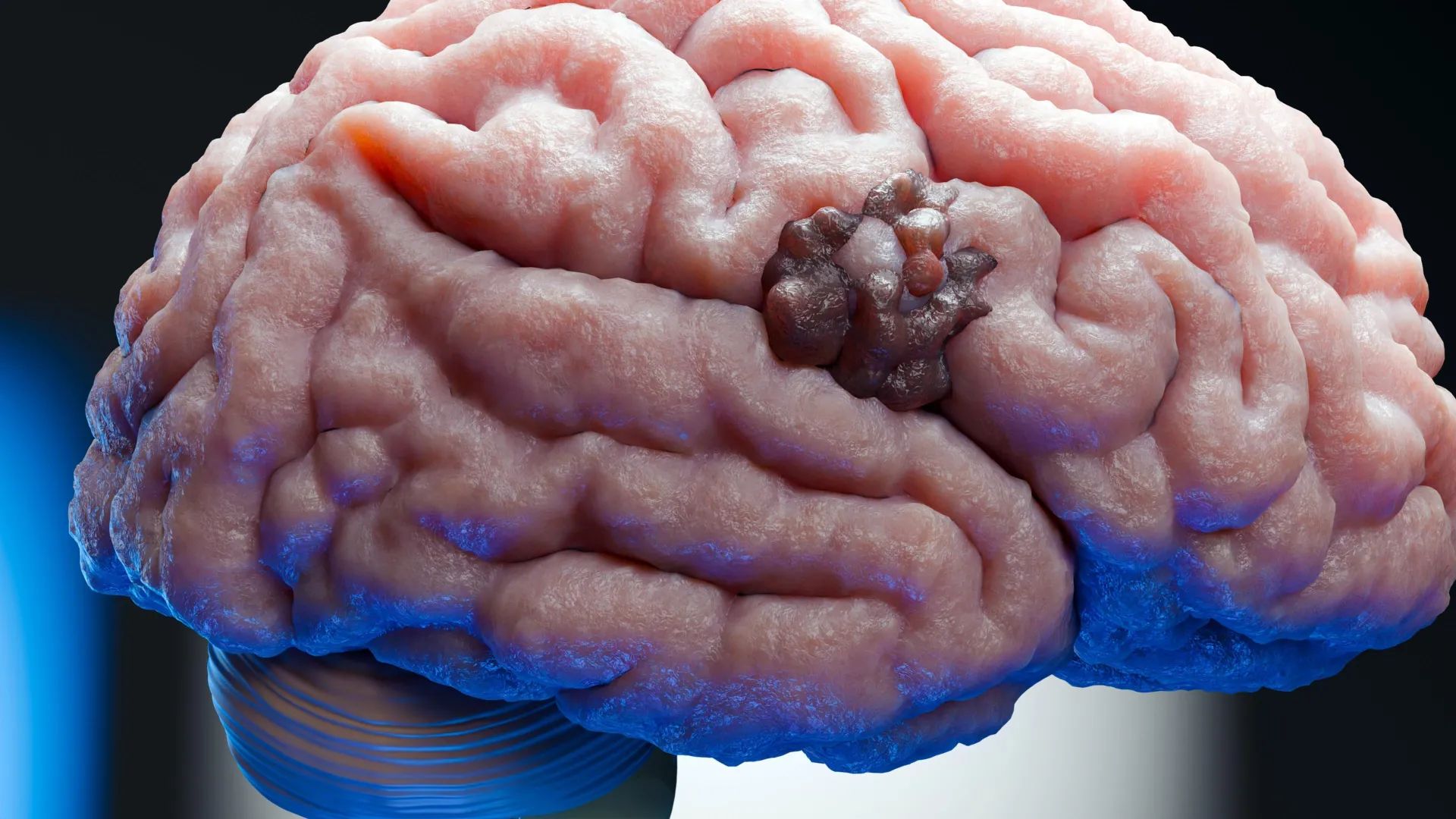
A second pregnancy changes the brain in ways that are both familiar and distinct from a first pregnancy, according to new research from Amsterdam UMC published in Nature Communications. Building on earlier work showing that a first pregnancy reshapes the brain, the researchers found that each pregnancy leaves its own unique imprint on the maternal brain.

In an earlier study, Elseline Hoekzema and colleagues became the first to demonstrate that pregnancy changes the structure of the human brain. They also showed that pregnancy affects how the brain functions. For this latest research, the team followed 110 women over time. Some were expecting their first child, some were pregnant with their second, and others remained childless. By performing repeated brain scans, the researchers tracked how the brain changed throughout the study.

“With this, we have shown for the first time that the brain not only changes during the first pregnancy, but also during a second,” says Hoekzema, head of the Pregnancy Brain Lab at Amsterdam UMC. “During a first and second pregnancy, the brain changes in both similar and unique ways. Each pregnancy leaves a unique mark on the female brain.”

Brain Networks Shift in Different Ways

The researchers found that a first pregnancy produced the largest changes in the structure and activity of the brain’s Default Mode Network, a system involved in self reflection, social thinking, and other important mental functions.

During a second pregnancy, this same network changed again, although to a lesser degree. Instead, the most noticeable changes occurred in brain networks responsible for directing attention and responding to sensory information.

“It appears that during a second pregnancy, the brain is more strongly altered in networks involved in reacting to sensory cues and in controlling your attention,” explains researcher Milou Straathof, who analyzed the data. “These processes may be beneficial when caring for multiple children.”

Brain Changes Linked to Maternal Bonding and Mental Health

The study also uncovered a relationship between pregnancy related brain changes and the emotional bond between mother and child. This connection was stronger after a first pregnancy than after a second.

Researchers also identified links between structural changes in the brain and peripartum depression during both first and second pregnancies. According to the team, this is the first evidence that changes occurring in the brain’s cortex during pregnancy are associated with maternal depression.

The timing of these associations differed depending on pregnancy history. Among first time mothers, they were most apparent after childbirth. For women expecting a second child, they were more noticeable during pregnancy.

“This knowledge can help to better understand and recognize mental health problems in mothers. It is important that we understand how the brain adapts to motherhood.”

Understanding the Maternal Brain

The findings offer new insight into the remarkable adaptability of the maternal brain. Although most women experience one or more pregnancies during their lifetime, scientists are only beginning to understand how pregnancy influences the brain over the long term.

The researchers say these discoveries help fill an important gap in knowledge about women’s biology and could eventually improve care for mothers, including efforts to prevent and treat postpartum depression. The study also highlights the brain’s remarkable ability to continually adapt to major life experiences such as pregnancy and motherhood.

Share Button

I Turned 60 And Felt Flat. But A Simple Little Idea Has Made Me Feel More Joyful And Alive Than Ever.

I thought I wouldn’t mind turning 60 one little bit. After all, my 50s had been my best decade ever. Yes, my face was saggier, my memory iffier and my body didn’t bounce back from late nights or lengthy walks like it used to. However, I felt more confident and content than I’d ever felt in my 20s, 30s or 40s. I was finally happy with who I was and where all the pieces of my life had landed. I had more zest for life than ever! So turning 60 wouldn’t make any difference. It really was just a number.

I was wrong.

My 60th birthday landed with an unexpected thud. Almost overnight, I felt older and uglier, stiffer in my movements and foggier in my mind. It turned out I wasn’t even imagining it. According to an article I stumbled across online, new research showed that there really is a sudden “burst” of aging at age 60 — a fast-forwarding of the disintegration process. But that wasn’t what was bothering me the most.

What really bothered me was that now that I’d tipped over into my 60s, people were starting to respond to me differently. I had to work a lot harder at parties to get people younger than me to engage in conversation — or even notice me in the first place. And teens and 20-somethings often brushed against me in the street now as if I literally wasn’t there. I was becoming invisible.

My confidence started to shrivel. Before I knew it, I was caught in a negative feedback loop. The less readily people noticed or engaged with me, the less readily I did anything to make them notice or engage with me. I could feel myself turning into a meeker, milder, mediocre version of myself.

Was this the beginning of the end? Was I just meant to let myself shrink into my 60s? I wasn’t ready for that.

I needed an antidote.

An idea started to form. Let’s make 60 count, I thought. Let’s take that number and play with it. Turn it into something positive and meaningful, fun and fulfilling, something that would let me reclaim my confidence and connection with people — whoever they were, whatever their age.

So I hatched a plan.

I decided to invite 60 random people to sit down and have a cup of tea with me. Some would be total strangers. Some would be people I’d noticed and was curious about from a distance. Others would be people I knew a tiny bit and wanted to know more. And I’d also include friends and family I knew well — or thought I did!

Because I wasn’t just looking for small talk, there needed to be a bit more to it, though. I decided I’d ask each person the same set of tea-themed questions — yes, tea! — that I hoped would gently springboard us into meaningful conversation and connection. After all, I was an English person living in England, a country steeped in the tradition of “a nice cup of tea.” The drink is intertwined with our rituals, families, relationships and memories.

My own deep enjoyment of tea, I’m sure, has very little to do with the taste of it, and everything to do with the fact that the only consistent act of love my dad showed me as a child was to bring me a cup of it in bed — with milk, two sugars, and two biscuits — every single morning.

Still, my new, shyer, 60-year-old self wavered. Would people even say yes to my invites, or just think I was a batty old lady? Would I really dare to ask strangers? Would the questions actually work?

Before I could change my mind, Cup of Tea No.1 fell into my hands.

“I hear you’ve had a big birthday!” said a guy I bumped into in the street. He was a friend of a friend of a friend, and before I knew it, I was babbling out my 60-Cups-of-Tea idea, testing how it sounded when I said it out loud. He pounced immediately.

“I’ll be your guinea pig!” he said, and just a few days later, I was sitting in his garden in the sunshine, sharing a pot of fresh mint tea with homemade honey and semolina cake. We chatted for almost two whole hours.

“You know,” he confessed as I got up to leave, “Before you arrived, I told myself I’d hold my cards close to my chest… but I’ve told you everything — and really enjoyed it!”

At that moment, I knew I was on to a winning formula. I walked home feeling uplifted already.

From there, it just got better and better. I bounced from cup of tea to cup of tea, getting braver and braver about who I asked.

A Buddhist nun at a Buddhist temple.

The boss who fired me in my 20s.

A truck driver at a truck stop.

My hairdresser. We’ve only shared the tiniest of talk in the salon up until now.

Two street performers I encountered in the city center.

By Cup of Tea No. 6, I was getting invites. Word was out.

“Would you have a cup of tea with me on the beach in front of my house?” messaged a woman I barely knew. She lived on a tiny, isolated peninsula cut off by the tide for hours every day. Absolutely, I would! Part of the fun of this was mixing up where or how I had these cups of tea: I drank it up in a tree, wearing tutus, cruising on a houseboat up the canal, sitting in comfortable velvet armchairs on the edge of a cliff.

The author (left) having a cup of tea on the edge of a cliff.

Courtesy of Claire Potter

And suddenly I’m exploding with the possibilities of who I could ask.

I wonder who the artist of that painting I love on my living room wall is? Let’s track them down!

How about that man I see out my window every day in his thobe on his way to prayer at the local mosque?

Why not ask my 96-year-old father-in-law? I’ve never had a proper one-to-one chat with him — quite bizarre when you consider that he produced 50% of my husband and I produced 50% of his grandchildren.

Didn’t that man I was introduced to the other day say he worked at the mortuary at the hospital? Let’s stare death in the eye with him. After all, that’s almost certainly where I’m going to end up.

Cup of Tea No.15 was with an ex-boyfriend I hadn’t seen for over 30 years — and he told me that he was coming dressed as a woman. He and I were together for three years at university in the ’80s. His cross-dressing, which had been secret back then (I’d only discovered it when I came home unexpectedly early from a lecture and caught him in my clothes and make-up) was, without doubt, a catalyst in our break-up. I’m so pleased that he can now openly present as a woman when he wants to, but I find the thought of meeting him as a female mind-boggling and nerve-wracking nonetheless.

This person who sat down opposite me was unrecognizable. Then I caught that familiar, super-cheeky grin, and we relaxed into sharing memories — memories that belong only to us.

I’ve often thought how sad it is that we often never again get the chance to see someone from our past we loved intensely, someone we chose to share a precious chunk of our life with. I’m so happy we’ve had this opportunity to reminisce and reconnect. I think I’ve made a new girlfriend.

The author (left) having a cup of tea with the ex she hadn’t seen for over 30 years.

Courtesy of Claire Potter

And the cups of tea just kept coming.

An old friend I haven’t seen for years who is now sober.

An anti-female genital mutilation activist.

My cousins.

They were such big characters in my childhood, yet as adults, we’d only really seen each other at funerals. We recaptured the sleepovers we had as kids by having our cup of tea in pajamas on the bed!

When I went on holiday to Thailand to reunite with my 18-year-old daughter, who had just finished three months of voluntary work there, I had a cup of tea with her at a tea plantation. Over the best green tea we’d ever tasted, she started to reflect on the experience she’d just had, but was soon opening up to me about her childhood, her romantic relationships and her dreams. I realized how rarely we’d have such an honest conversation, because so rarely do I listen without a part of me wanting to pounce in with parental advice or opinion. I realized how many times I must have stifled her with that you’ll-understand-when-you’re-older undertone.

“Ask me more questions!” she said at the end. A similar thing happened when I had a cup of tea with my 25-year-old son. The conversation cut through the mother-son dynamic we’d been stuck in since he left home at 18. And I realized how much I’d “fossilized” him — automatically assuming I knew and understood him just because he was my son. I’m so glad I had that chance to tune into how he’s changed and catch up with who he has become.

Without exception, every single cup of tea was wonderful — and the people I invited seemed to enjoy it as much as me.

“Thank you. That really made me have a good think about things,” said one person.

“That felt like therapy!” said someone else.

“Such small prompts to such big conversations!” another told me.

Indeed, the tea-themed questions unlocked more than I could have imagined. The stories poured out — sometimes heart-warming, sometimes heart-breaking.

Climbing into bed with their mum and dad on a Saturday morning and feeling special because they were allowed tiny sips of their tea.

Always dreaming of treating their mum to a posh afternoon tea in London when they grew up but never getting to. She died before they grew up.

Having to keep their Sunday afternoon cups of tea at a department store with their grandad secret because he always brought along his mistress.

Sitting up a tree with their friends drinking tea and watching the sun rise at the end of university, so full of joy and optimism for the future.

Marrying a woman because the morning after the first night they slept together, they discovered she was the only person to ever make them a cup of tea exactly as they liked it.

Feeling soothed and touched by the flask of tea that a hotel receptionist in China brought to their room when they were anxious and exhausted with their newly adopted baby.

Writing the words of their wife’s obituary after she died by suicide:I will forever love you. Rest in peace and we’ll meet again. Have a cup of tea waiting for me.”

Tea, it seems, really is tangled up with our lives.

The author (right) having a cup of tea with a houseboat dweller while cruising up the canal.

Courtesy of Claire Potter

On a weekend trip to Zagreb, I was excited to sit down and share a cup of tea with the creator of the Museum of Broken Relationships, somewhere I’d wanted to go for a very long time. As we parted, she told me she’d been thinking about having a slogan printed on the takeaway cups in the museum cafe, something jokey like HOW ABOUT CAKE? However, after our chat, she wondered if an open invitation like WOULD YOU LIKE TO SHARE A CUP OF TEA WITH ME? might be better — something to nudge people to take the risk of reaching out to someone new.

“An unexpected encounter between two humans, sharing something intimate — that’s when magic happens,” she told me.

I couldn’t agree more.

My 57 cups of tea (only three to go!) have worked their spell on me for sure. I’m full to bursting with the warmth and joy of human-to-human connection, and my confidence has bounced right back. I’ve learned that it’s never too late to make new friends, reignite old ones and strengthen — or adjust — the relationships you already have. And I now know that even if I can’t stop my age from making me less visible, I don’t need to let that stop me from being brave, curious and playful.

I’m going into my 60s full blast after all.

Claire Potter is an author of parenting books and children’s picture books. Her online program, Tiny Bites, leads parents through a three-step process to turn their child from a picky to an unpicky eater. You can see all the cups of tea she’s done at Sixty Cups of Tea.

Do you have a compelling personal story you’d like to see published on HuffPost? Find out what we’re looking for here and send us a pitch at pitch@huffpost.com.

Share Button

Physicists finally build a quantum material predicted more than a decade ago

Physicists from the University of Jyväskylä and Aalto University in Finland have successfully created a two dimensional topological crystalline insulator, marking the first experimental realization of a quantum material that scientists had predicted for more than a decade. Until now, attempts to produce it had been held back by difficulties in developing the right materials.

The breakthrough was led by Associate Professor Kezilbeiek Shawulienu in collaboration with Aalto University researchers, including Professor Peter Liljeroth and Professor Jose Lado. The team fabricated the material by growing an atomically thin film consisting of just two layers of tin telluride (SnTe) on top of a niobium diselenide (NbSe2) substrate.

Atomically Thin Crystal Reveals Unique Quantum States

To examine the material’s properties, the researchers used molecular beam epitaxy together with low temperature scanning tunneling microscopy, allowing them to probe its electronic behavior with atomic level precision.

Their measurements revealed pairs of conducting edge states, a defining feature of topological crystalline insulators. These special pathways allow electrons to travel along the edges of the material and are protected by the symmetry of the crystal lattice.

Strain Controls the Material’s Quantum Properties

The conducting edge states appear within a large electronic band gap of more than 0.2 electron volts (eV). The team found that the tin telluride film is compressed by the underlying substrate, creating strain that is essential for stabilizing the material’s topological state.

Even more importantly, the researchers demonstrated that these edge states can be adjusted by changing the strain, offering a practical way to tune the material’s electronic behavior for future technologies.

Potential for Future Quantum Electronics

First principles quantum mechanical calculations confirmed that the observed edge states have a topological origin. The team also examined how neighboring edge states interact, finding that their energy levels shift because of a combination of electrostatic interactions and quantum tunneling.

Because the material has a relatively large band gap, its topological properties are expected to remain stable even at room temperature. That makes it a promising platform for exploring strain tunable two dimensional topological states and could support future advances in spin based electronics and nanoscale devices.

The findings were published in the journal Nature Communications.

Share Button

People in 50s urged to complete bowel cancer screening

Health officials warn little over half of 54-year-olds completed free at-home test kits.

Share Button

If Your Makeup Settles Into Wrinkles, Reviewers Swear By This 60% Off Primer For A Smoother Base

Stop the presses: Laura Geller’s Spackle hydrating primer is 60% off right now on Amazon. Whether it’s the last step of your skincare or the first step of your makeup, applying a quality primer is not to be skipped — especially at this price. Whether you’re in the market for a new one or if you’re a devout fan of the brand, Spackle Hydrate is a true standout as a two-in-one moisturizer and primer. And while it usually runs close to $40, you can snag a tube for just $15 today. These days, that’s drugstore prices — so we recommend snatching one (or two!) fast.

This primer is “fabulous for mature skin” and loved for helping makeup go on smoothly and look “absolutely flawless.

Made with hydrating hyaluronic acid and plumping glycerin, this fragrance-free primer is designed to transform your skin into a smooth, even base. The brand recommends adding one to two pumps to the back of your hand, applying a thin layer on clean skin, then letting it absorb for a minute before adding new products.

“Perfect to wear under makeup,” one wrote. “Keeps it looking smooth. Dries nice with no sticky feeling. Kind of feels like light weight moisturizer. About a dime size is all you need.”

Fans appreciate the “lightweight, almost serum-like texture” that glides over skin and absorbs fast. “It doesn’t feel greasy or overly matte,” one wrote. “Just that perfect middle ground where your skin feels hydrated but not slick.”

Fans say it helps them achieve the makeup looks they crave…

“As you get older your skin get dryer and more textured. This primer was a game changer for me,” one shopper writes. “It blurs and my makeup doesn’t settle in my skin at all. The days I don’t use it are massively more noticeable.”

“I’m ashamed to admit that I’m 42 and had never heard of primer before,” another wrote. “The results were immediate and impressive — my skin looks so smooth and my makeup looks absolutely flawless over this spackle!”

..and it even gets them excited about makeup again.

“I had stopped wearing makeup because it always just settled into the wrinkles and made things look worse,” an 82-year-old reviewer wrote. “This primer is perfectly named. Spackle Primer did exactly what I had hoped. It smoothed out my skin and the makeup did went on perfectly.”

Another reviewer who reports struggling to find a smoothing primer that didn’t feel heavy calls this a “go-to,” for how well it preps the skin for foundation.

“It really does ‘spackle’ over texture and fine lines, giving a soft-focus effect,” they said. “Makeup applies more evenly and tends to last longer throughout the day. For those with dry or mature skin, this primer is especially friendly — it doesn’t cling to dry patches or settle into creases.”

Reviewers love this hydrating primer for keeping their skin soft and smooth. Read on for more 5-star reviews, and grab a bottle for a massive 60% off while you can.

“I am 82 yrs old and this is the perfect primer for my skin. After reading about it on. line, I wanted to try it. I had stopped wearing makeup because it always just settled into the wrinkles and made things look worse. This primer is perfectly named. Spackle Primer did exactly what I had hoped. It smoothed out my skin and the makeup did went on perfectly.” — QQMKXP938

“Absolutely love this product it’s lovely and smooth and unlike some it doesn’t sit on the surface of your skin or take a lot of rubbing in and you only need a small amount so lasts well too this is my second purchase I was so impressed and great for mature skin.” — jas

“I just started using Laura Gellar cosmetics and Spackle. I am definitely going to keep using these products. Love the Spackle – I do believe it helps firm up the wrinkles a bit and the makeup goes on so beautifully.” — Amazon customer

This has to be the best primer ever for more mature skin. I am 61 and have not used makeup without primer for years. I ordered this along with the LG Baked Balance. Together they are heaven for an older face. I no longer have to worry about crease lines, dryness or fading. I’m quite picky when it comes to my primers, and this one beats them all.” — Jamie

“This primer went on easily and I could feel it ‘set’ and waited a few….…My foundation went on so nicely and when I looked at my face after I was finished with all my products I felt like my face looked great! Big Smile and I was ready to go out...just for reference I am a mature lady. Hope this is helpful.” — Leslie S.

Amazon

A CeraVe night cream with a peptide complex

Dr. Azza Halim, a Florida-based physician with a focus in aesthetic medicine, suggested this night cream by CeraVe because it contains a unique peptide complex to support skin elasticity and niacinamide for soothing. And like all of CeraVe’s dermatologist-beloved formulations, the thick cream contains three essential ceramides, which help ensure a strong skin barrier.

Amazon

A deeply hydrating retinol cream

Board-certified dermatologist Dr. Mina Amin called RoC’s Retinol Correxion max hydration cream an “ultimate miracle worker to nourish and rejuvenate [the] face and neck.” She considers it to be very hydrating for dry skin — thanks to the inclusion of two popular humectants, hyaluronic acid and glycerin — and it includes peptides to support the skin’s natural collagen. The main active is retinol, which accelerates cellular turnover to promote collagen production and reduce the appearance of fine lines and lack of elasticity.

Amazon

A double-repair prebiotic moisturizer

“[This]is made with niacinamide to help with fine lines, appearance of large pores, and dark spots,” board-certified dermatologist Dr. Mina Amin said of this popular heavier-weight moisturizer by French pharmacy staple brand, La Roche-Posay. It features the brand’s signature prebiotic thermal spring water, which is rich in antioxidants, three ceramides that mimic the lipids in the skin’s natural barrier.

The Real Deal: We use deal trackers and commerce experience to sift through “fake” hike-and-drop deals and other deceptive sales tactics. Products will usually be rated at least 4 stars with a minimum 15% discount. (And when there’s an exception, we’ll tell you why.)

Share Button

Pioneering treatment saves twins in early pregnancy

Identical twins Nancy and Margo benefitted from the procedure while in the womb as part of a world-first medical trial.

Share Button

The biggest problem with solid-state batteries may finally be solved

Smartphones, electric vehicles, and countless portable electronics all depend on batteries. As demand for better energy storage grows, improvements in battery capacity, lifespan, and safety will play a major role in the future of electrification. One of the most promising technologies is the solid-state battery, which could allow smartphones to operate for several days on a single charge and give electric vehicles driving ranges up to three times greater than many current models.

Unlike conventional lithium-ion batteries, which use a liquid electrolyte between two solid electrodes, solid-state batteries replace the liquid with a solid electrolyte. This design offers several potential advantages, including higher energy density, improved safety, and longer battery life. But one stubborn problem has slowed commercial adoption. During charging, tiny tree-like structures called dendrites can grow from the lithium anode, pierce the solid electrolyte, and create internal short circuits.

Now, an interdisciplinary team at the Max Planck Institute for Sustainable Materials (MPI-SusMat) has identified exactly how these dendrites trigger fractures that ultimately lead to battery failure. Their findings were published in the journal Nature.

How Dendrites Crack Solid-State Batteries

Exactly how soft lithium dendrites manage to break through a hard ceramic electrolyte has long puzzled researchers.

“Although the electrodes and the forming dendrites consist of lithium metal, which is soft like a gummy bear, the dendrites are able to penetrate the ceramic electrolyte and lead to a short circuit,” says Dr. Yuwei Zhang, first author of the new publication and head of the group “Chemo-Mechanics of Battery Materials” at MPI-SusMat. “How can soft dendrites fracture the stiff solid ceramic? There are two hypotheses: either internal stress is built up inside the dendrites and induces mechanical fracture of the solid electrolyte. Or, electrons leak along the grain boundaries of the solid electrolyte promoting the formation of lithium nuclei that interconnect later.”

To determine which explanation was correct, the researchers used an advanced combination of sample preparation and materials characterization techniques. Every step was performed under vacuum and at cryogenic temperatures to eliminate interference from oxygen, water, or even the microscopes’ electron beams.

The team examined both the internal stress and the plastic deformation of lithium dendrites trapped inside cracks. Their analysis found no buildup of lithium ahead of the dendrite tip, ruling out one proposed mechanism.

“The soft lithium metal is able to penetrate the stiff ceramic electrolyte, like a continuous waterjet that penetrates a rock. We calculated that hydrostatic stress in the dendrite leads to brittle fracture of the solid electrolyte in the end,” says Zhang.

The researchers also confirmed their conclusions using phase field simulations and electron backscatter diffraction measurements.

New Strategies to Prevent Battery Failure

With a better understanding of how dendrites fracture solid electrolytes, the team is now investigating ways to stop or delay the process.

Potential solutions include making the solid electrolyte tougher so it resists cracking for longer, introducing microscopic voids that redirect dendrite growth and steer cracks away from vulnerable areas, or adding protective coatings to lithium electrodes to reduce dendrite formation in the first place.

The researchers say their work demonstrates the importance of understanding how materials behave at the microscopic level. Those insights could help transform solid-state batteries from a promising concept into a practical technology for future smartphones, electric vehicles, and other electronic devices.

Share Button

‘People don’t realise how at risk they are’: A day with an ambulance service in a heatwave

The BBC join a crew based in Exeter as the UK sizzles in one of its longest-running heatwaves.

Share Button

The galaxy’s coldest “stars” may actually be alien megastructures

Since physicist Freeman Dyson first proposed the idea in 1960, the hypothetical “Dyson sphere” has become one of the most intriguing concepts in the search for extraterrestrial intelligence. Rather than a single solid shell, scientists now envision a Dyson “swarm” made up of countless orbiting structures that capture nearly all of a star’s energy.

While the concept has long been discussed in theory, an important question remains: if one actually existed, what would astronomers see? A new study by Amirnezam Amiri of the University of Arkansas, currently available as a pre-print on arXiv and scheduled for publication in Universe, explores exactly how these enormous structures might appear through modern telescopes. The research also identifies the types of stars most likely to host them.

Red Dwarfs and White Dwarfs Are Prime Targets

One of the strongest candidates is the red dwarf. These small, cool stars are the most common type in the Milky Way and consume their nuclear fuel so slowly that they can survive for trillions of years, far longer than the universe has existed so far.

Their relatively small size also makes them attractive from an engineering perspective. According to the study, a Dyson swarm could orbit a red dwarf at a distance of roughly 0.05 to 0.3 AU, requiring far less construction material than one built around a larger star like the Sun.

White dwarfs may be even more appealing. These dense stellar remnants are the leftover cores of Sun like stars that have exhausted their fuel and collapsed to only about 1% of their original size.

Because they are so compact, a Dyson swarm could orbit just a few million kilometers above the star’s surface, dramatically reducing the scale of the structure needed. White dwarfs also release energy at a steady rate for billions of years, making them reliable long term power sources.

How a Dyson Sphere Would Change a Star’s Appearance

Astronomers classify stars using the Hertzsprung-Russell (H-R) diagram, which plots stellar temperature against luminosity. A Dyson sphere would dramatically alter where a star appears on that chart.

Instead of allowing visible light to escape, the structure would absorb virtually all of the star’s radiation. Since energy cannot simply disappear, the same amount of energy would have to be emitted back into space, but as heat in the infrared portion of the spectrum. In effect, the megastructure would absorb starlight, use that energy for whatever purpose its builders intended, and then radiate the excess as infrared heat.

Although the star’s total energy output would remain unchanged, its apparent temperature would be much lower. Because H-R diagrams use bolometric luminosity (i.e. the luminosity over all of the spectra), the object would remain at the same luminosity but shift dramatically toward the cooler side of the diagram.

A Unique Infrared Signature

That temperature shift is one of the study’s most striking predictions. A typical red dwarf has a surface temperature of about 3000K. A surrounding Dyson sphere, however, could have an effective temperature as low as 50K, around two orders of magnitude colder.

No known natural stars occupy that region of the H-R diagram. Any object found there would immediately become an intriguing candidate for further investigation.

Another possible clue would be the absence of dust. Ordinary stars often display silicate emission associated with dusty disks. A Dyson swarm, by contrast, would consist of radiator panels rather than dust, giving it an unusually “clean” spectrum.

Looking for Strange Light Curves

The study also emphasizes that a true solid Dyson sphere is almost certainly impossible to build. Modern calculations indicate that even around relatively small stars, the amount of material required would be unrealistic.

Instead, an advanced civilization would likely construct a swarm of many independent solar collectors, leaving gaps between them or varying their density throughout the structure. As those components orbited the star, they could produce highly unusual, non natural variations in brightness that would stand out from the behavior of ordinary stars.

James Webb and the Hunt for Alien Megastructures

The James Webb Space Telescope is especially well suited to search for these hypothetical structures because it specializes in infrared observations. Older missions such as WISE are also contributing to the effort.

In May 2024, researchers from Project Hephaistos reported seven promising Dyson sphere candidates, all associated with red dwarfs, after examining a catalog of roughly 5 million stars. One candidate was later ruled out because a perfectly aligned supermassive black hole in the background explained the unusual signal.

That still leaves five candidates deserving closer study. While none have been confirmed as alien megastructures, Amiri’s work provides astronomers with another set of observational clues that could help distinguish genuine technosignatures from natural cosmic phenomena. If Dyson swarms do exist somewhere in the Milky Way, future infrared observations may finally reveal where they have been hiding.

Share Button

Vapes to have less enticing names to protect children, under UK plans

People are being consulted about plans to stop vape companies using of enticing flavour descriptions that “attract” children into experimenting.

Share Button