Health24.com | Does masturbation really cause acne?

Things masturbation causes: happiness, satisfaction, amazing orgasms. And now, some people on the Internet are apparently claiming that it causes acne, too.

I called a dermatologist to get all the details on this thought-provoking sex-turned-skincare dilemma.

What actually causes acne?

“Acne is caused by a combination of four things: excess sebum (oil) production, hyperkeratinisation of the pores (aka clogging of pores with keratin/dead skin cells, because they don’t know how to shed), bacteria and inflammation,” says dermatologist and pediatrician Dr Tsippora Shainhouse.

Read more: 7 struggles all adult women with acne understand

Okay… Does masturbation cause acne?

Notice what’s not part of that abovementioned foursome? Solo acts, twosomes, threesomes… Masturbation – and sex in general – is not making you break out.

Dr Shainhouse says that hormones (specifically testosterone and progesterone) can increase oil production, and can also increase the inflammatory response. That’s why your breakouts are often worse in the week leading up to your period – because that’s when your body is producing more progesterone and testosterone.

Read more: Where your acne breaks out on your face could be the key to solving your health woes

Why does the hormonal thing matter? “Hormones are charged up and unbalanced during adolescence and puberty (which is why adolescents develop acne),” says Dr Shainhouse. “Puberty can also be a time of self-exploration and, perhaps, masturbation, so the ‘fear’ likely arose that masturbation might be what is causing acne,” she says.

Dr Shainhouse says that while masturbation (and sex) can temporarily increase your testosterone levels, it’s not nearly enough to have an impact on your long-term skin health – especially since those levels shrink back to normal within minutes. (Sounds like another aspect of sex we know all too well, hmm?)

Read more: 6 things you’re doing that are causing your skin to break out badly

Does masturbation have any effect on your skin?

That’s not to say that your sex life isn’t affecting your skin in other ways. Dr Shainhouse says some research has shown that adrenaline levels rise in the blood during orgasm – which explains both the sweating and the healthy glow immediately after the act. (So yes, Samantha Jones really was onto something).

This article was originally published on www.womenshealthmag.com

Image credit: iStock

Share Button

Jurassic fossil tail tells of missing link in crocodile family tree

A 180-million-year-old fossil has shed light on how some ancient crocodiles evolved into dolphin-like animals.

The specimen — featuring a large portion of backbone — represents a missing link in the family tree of crocodiles, and was one of the largest coastal predators of the Jurassic Period, researchers say.

The newly discovered species was nearly five metres long and had large, pointed teeth for grasping prey. It also shared key body features seen in two distinct families of prehistoric crocodiles, the team says.

Some Jurassic-era crocodiles had bony armour on their backs and bellies, and limbs adapted for walking on land. Another group had tail fins and flippers but did not have armour.

The new species was heavily armoured but also had a tail fin, suggesting it is a missing link between the two groups, researchers say.

It has been named Magyarosuchus fitosi in honour of the amateur collector who discovered it, Attila Fitos.

The fossil — unearthed on a mountain range in north-west Hungary in 1996 and stored in a museum in Budapest — was examined by a team of palaeontologists, including a researcher from the University of Edinburgh.

It was identified as a new species based on the discovery of an odd-looking vertebra that formed part of its tail fin.

The study, published in the journal PeerJ, also involved researchers in Hungary and Germany. It was supported by the Leverhulme Trust and the SYNTHESYS project, part of the European Commission’s Seventh Framework Programme.

Dr Mark Young, of the University of Edinburgh’s School of GeoSciences, who was involved in the study, said: “This fossil provides a unique insight into how crocodiles began evolving into dolphin and killer whale-like forms more than 180 million years ago. The presence of both bony armour and a tail fin highlights the remarkable diversity of Jurassic-era crocodiles.”

Story Source:

Materials provided by University of Edinburgh. Note: Content may be edited for style and length.

Share Button

Conventional view of opioid mechanism of action upended in new study

A new discovery shows that opioids used to treat pain, such as morphine and oxycodone, produce their effects by binding to receptors inside neurons, contrary to conventional wisdom that they acted only on the same surface receptors as endogenous opioids, which are produced naturally in the brain. However, when researchers funded by the National Institute on Drug Abuse (NIDA) used a novel molecular probe to test that common assumption, they discovered that medically used opioids also bind to receptors that are not a target for the naturally occurring opioids. NIDA is part of the National Institutes of Health.

This difference between how medically used and naturally made opioids interact with nerve cells may help guide the design of pain relievers that do not produce addiction or other adverse effects produced by morphine and other opioid medicines.

“This ground-breaking study has uncovered important distinctions between the opioids that our brain makes naturally and therapeutic opioids that can be misused,” said NIDA Director Nora D. Volkow, M.D. “This information can be mined to better understand the potential adverse actions of medically prescribed opioids and how to manipulate the endogenous system to achieve optimal therapeutic results without the unhealthy side effects of tolerance, dependence, or addiction.”

Naturally occurring opioids and medically used opioids alike bind to the mu-opioid receptor, a member of a widespread family of proteins known as G protein-coupled receptors (GPCRs). Recent advances in understanding the three-dimensional structure of GPCRs have enabled researchers to create a new type of antibody biosensor, called a nanobody, that generates a fluorescent signal when a GPCR is activated. This enables scientists to track chemicals as they move through cells and respond to stimuli.

Using this nanobody, the researchers first showed that when a naturally occurring opioid binds to and activates the mu-receptor on the surface of a neuron, receptor molecules enter the cell inside what is known as an endosome. There, the mu-receptor remains activated over a period of several minutes, which itself was a new discovery, since it was believed that the opioid receptor is only activated on the surface of nerve cells. Proteins that interact with receptors on the cell surface control all sorts of biological processes and provide targets for therapeutic intervention.

With opioid medications, however, the researchers made two additional discoveries. First, there are large differences across a range of clinically relevant opioid drugs in how strongly they induce receptor activation in endosomes. Second, the opioid drugs uniquely induce rapid nanobody signaling, within tens of seconds, in an internal cellular structure known as the Golgi apparatus in the main body of the neuron. Further investigation showed that therapeutic opioids also uniquely activate mu-opioid receptors in related structures, known as Golgi outposts, in the long, branched structures of neurons.

Based on these findings, the researchers hypothesize that current medically used opioids distort the normal time and spatial sequence of mu-opioid receptor activation and signaling. This distortion may provide the mechanistic link that explains the undesired side effects of opioid medicines suggests new avenues for designing agents that do not produce addiction or other adverse effects associated with these drugs.

“This new biosensor opens our eyes to a previously unknown level of diversity and specificity in the cellular actions of opioids,” said Dr. Miriam Stoeber, the study’s first author. Dr. Mark von Zastrow, senior author of the study, added, “We were surprised to see that drugs such as morphine activate opioid receptors in a location at which naturally occurring opioids do not.”

Story Source:

Materials provided by NIH/National Institute on Drug Abuse. Note: Content may be edited for style and length.

Share Button

Key protein in sperm tail assembly identified

The group led by ICREA Research Professor Cayetano Gonzalez at the Institute for Research in Biomedicine (IRB Barcelona), in collaboration with Giuliano Callaini’s team at the University of Siena in Italy, has published a study in The Journal of Cell Biology that identifies the critical role played by a protein called CENTROBIN in sperm tail development.

In flies, as in humans, the sperm cell (spermatozoon) is made up of the cell body proper, also referred to as the sperm “head,” and the flagellum. The flagellum, also called the sperm “tail,” is a slender lash-like appendage that protrudes from the cell body. By beating their tails, sperm cells swim to the female reproductive cell (oocyte) and fertilise it. A bundle of microtubules that span the entire length of the tail is critical for flagellar beating. These microtubules are arranged in a characteristic radial symmetry that has been conserved throughout evolution and is templated by a small organelle called the basal body, which sits at the base of the flagellum.

Using the vinegar fly Drosophila melanogaster as a model to study how the sperm tail develops, Gonzalez’s Cell Division Lab has found that CENTROBIN plays a critical role in the assembly of a subset of microtubules within basal bodies. In the absence of CENTROBIN, basal bodies lack these microtubules, as do the non-motile tails that they template. Consequently, CENTROBIN mutant males are sterile.

A human condition: “easily decapitated spermatozoa defect’

In addition to the faulty microtubule array within the tail, the head-to-tail link is often severed in CENTROBIN mutant sperm. This effect is reminiscent of a human male sterility condition known as the “easily decapitated spermatozoa defect’. Semen from individuals affected by this condition appears normal, but minimal micro-manipulation, such as that required for in vitro fertilisation, results in sperm heads that are separated from their tails and thus that cannot swim.

In summary, the recent article demonstrates that CENTROBIN, which is well conserved between humans and flies, is a positive regulator of normal flagellum development. Remarkably, a previous study by the same group showed that CENTROBIN exerts a negative effect in the development of primary cilia. Primary cilia are a shorter version of flagella that are present in certain neurons in the fly and in many cell types in humans, where they function as sensors of external stimuli. Like flagella, primary cilia contain a microtubule array that is templated by the basal body.

Taken together, these results reveal the multifunctional nature of CENTROBIN, a protein that plays opposing roles in distinct cell types in the same organism.

Story Source:

Materials provided by Institute for Research in Biomedicine (IRB Barcelona). Note: Content may be edited for style and length.

Share Button

Health24.com | Only 7% of SA health facilities provide abortions

Each year more than 25 million women around the world have unsafe abortions, according to a report launched on Wednesday by the Guttmacher-Lancet Commission in Johannesburg.

And while the report, intended to put sexual and reproductive health and rights on top of the global public health agenda, praises South Africa’s liberal abortion laws, activists have lambasted the government for failing to turn policy into a reality on the ground.

“We have roughly 8 000 health facilities, how many of them offer termination of pregnancy?” asked Justice Edwin Cameron at the launch. “Only 270, that’s just 7%.”

Extremely limited access to abortion

Referring to a recent Amnesty International report that noted that less than one in 10 of South African public health facilities offers women access to their legally-entrenched right to terminate their pregnancies, Cameron criticised Minister of Health Aaron Motsoaledi for public comments he has made in the past implying that women use abortion as a means of contraception.

“How do we go from this beautifully drafted Mandela-era statute to implementation?” he asked, referring to the Choice on Termination of Pregnancy Act signed into law by former health minister Nkosazana Dlamini-Zumu over two decades ago in 1996 under the presidency of Nelson Mandela.

According to head of Section27 Mark Heywood this “extremely limited” access to abortion in the country “is a violation of women’s human rights that ultimately leads to loss of life” as many women seek out illegal abortion providers as their only accessible option.

Illegal abortions have high complication rates including death. According to the report almost 7-million women “in developing countries sought treatment for complications from an unsafe induced abortion in 2012”.

Another major hurdle

Dr Manala Makua, acting director for women, child and sexual and reproductive health at the National Department of Health told Health-e News that they are aware of the problem but that opposition from certain parties and health workers “are hurdles”.

In December 2017 the African Christian Democratic Party put forward a bill in Parliament aimed at further decreasing access to abortion in the country.

Makua said that the department’s rejection of this bill, which would require women seeking an abortion to undergo an ultrasound and see their foetus, should be heralded as a “success”.

“We can’t afford any more restrictions,” she admitted.

She said that the another major “hurdle” is that many health workers refused to perform abortions on moral, religious and cultural grounds.

“But termination of pregnancy has nothing to do with morality and is an extremely complex issue that can often be related to contraception failure and gender-based violence,” she said.

Women facing stigma

She added that the department was facilitating bi-annual national workshops with health workers on “values clarifications” and “debriefing” because “providers need support”.

“They need debriefing and motivation to keep going and to understand the context of women seeking these services,” she said.

But Heywood said that while these trainings “are important, they are just not enough”.

“We need a public commitment from the Minister of Health that this is a serious problem.”

He compared the stigma that women seeking abortions in South Africa face to the stigma experienced by people “in the old days of HIV”.

He said: “The Department of Health needs to conduct a proper audit of abortion access at health facilities as a matter of urgency because this is a pervasive but unrecognised disaster, a disaster predominantly affecting poor black women.” – Health-e News.

Image credit: iStock

NEXT ON HEALTH24X

Share Button

Minister wants accountability on cervical cancer scandal

It has emerged that at least 208 women diagnosed with cancer should have received earlier intervention.

Share Button

15 Hotels That Make Exercise Easy

It used to be hard to exercise when traveling. Sure, you could squeeze in a jog if the weather was nice, but finding engaging, fun fitness facilities was always much trickier. Happily, more and more hotels have been creating health-friendly solutions to help guests stay on top of their exercise regimens, offering handy in-room amenities and on-site classes.

Take, for example, Refinery Hotel in New York. Turns out the hotel offers more than one of the city’s best rooftop bars (hello, porch swing), having teamed up with a travel and wellness design firm to curate in-room tablet offerings like meditation sessions with Deepak Chopra and classes from trendy local studios.

Looking for a hotel to keep your activities on track? Read on.

RELATED: The World’s Best Beach Hotels

1. Even Hotel in New York City

The concept behind New York’s new Even Hotel, IHG’s fitness-oriented brand, is to make exercise accessible, convenient, and fun, which is why fitness walls—complete with resistance bands, balancing balls, and mats—are stationed in your room. There are also on-demand short-length workout videos assure that you can manage a quick body-strengthening or stretching session in between business meetings and sightseeing outings. If you need motivation, you can join an on-site yoga or spin class free-of-charge or tag along on a group jog led by the wellness concierge (who just so happens to be the general manager).

2. 1 Hotel South Beach in Miami

Barry Sternlicht’s glossy new hotel brand not only has an eco-ethos but a fitness bend as well, and is bringing the pulsing energy of SoulCycle all the way to South Beach. Guests of the minimalist, natural-wood accented rooms are privy to a 54-bike studio with adjoining locker rooms and an apparel boutique. It’s one way to get your blood pumping (and a good excuse to order a second cocktail at the rooftop bar with Biscayne Bay views).

3. Loden Hotel in Vancouver

In a city where there’s a jogger, biker, or roller-blader around every corner, this Coal Harbour property channels Vancouver’s vibrant energy and spirit of well-being. The Garden Terrace rooms, located off a courtyard garden with a reflection pond, soft-falling cascades and Buddha statues, are a perfect place to deepen your yoga practice with the aid of mats, bands, and blocks, and a 24-hour TV channel with live broadcasts of a local yogi.

4. Fairmont Scottsdale Princess in Arizona

In addition to a brand-wide initiative that delivers Reebok gear to President Club guests, this desert retreat hosts out-of-the-ordinary classes that take the drudgery out of working out. Participants of aerial yoga twist into poses suspended from hammocks; and HoopFIT students can cardio and resistance train on LED-lit hula hoops. There’s also a core-strengthening SURFset TRX class, which is an engaging alternative to any hum-drum run.

5. Resort at Pedregal in Mexico

CrossFit fanatics don’t have to leave their addiction behind on vacation. In fact, they can get their abs and pecs beach-ready without ever leaving their hotel. The en-suite training at this Cabo resort was designed by CrossFit Games champ Jason Khalipa whose training segments can be adjusted for lightweights or amped up to suit the hardy and hardcore; you can also duplicate his workouts with kettle bells and rowers at the resort’s state-of-the-art fitness center.

RELATED: 5 Drinks That Will Cure Any Case of Jet Lag

6. Four Seasons Bali at Jimbaran Bay

For some, the island of Bali is already a calming patch of bliss. But at the Four Seasons Bali at Jimbaran Bay— a scattering thatched-roof pavilions in the central highlands— a rotating roster of practitioners-in-residence bolsters the resort’s beach-sports activities (boogie boarding, sea kayaking, swimming). The program exposes guests to various disciplines—athletic and otherwise—from beach boot camps to Muay Thai boxing; and healing arts workshops like singing bowl massage and Yin yoga encourage guests to incorporate wellness principles into the day-to-day instead of as once-in-while occurrences.

7. The Breakers in Palm Beach

The heart of this Flagler-era grand dame’s wellness offerings is its brand-new Ocean Fitness center that occupies 6,000 square feet, complete with an ample terrace for open-air stationary biking and yoga sessions. The Breakers’s expansive schedule of on-site classes includes a whopping 60 choices per week, plus peaceful, mindful walks along the length of a white-sand beach. The best part? Everything is included in your stay price.

8. Sugar Beach, A Viceroy Resort in Saint Lucia

Fitness always feels better when you’re in not in a tight, cramped space sweating alongside a fellow gym mate. At this collection of bungalows and villas, the arenas for exercise include a sprawling lawn, a golden-sand beach, and the warm waters of the Caribbean. Programming centers around one-on-one training and a packed roster of classes—many of them hosted outdoors—offered at a frequency that rivals non-hotel gyms (there are at least eight a day). Some require no more than gentle stretching, others are more hardcore, like body burn and squat blasts.  Our favorite? A pound-shedding peddle on the Schiller aqua bikes—a cross between a catamaran and bicycle.

9. Westin Austin Downtown, Texas

What’s fitness without refueling? The Westin Austin Downtown features energizing power snacks and vitamin-packed juices to sustain you through concierge-guided runs and rooftop yoga classes. The options don’t stop there: you can whisk yourself into the Stella San Jac kitchen for a super foods cooking demonstration or Azul for juicing classes (Note: It’s more than just throwing fruit into a machine.) Don’t fret if you forgot to pack your gear, you can handily borrow sneakers and t-shirts from Westin’s New Balance lending program.

10. Refinery Hotel, New York

Who knew that fitness could be as easy as the touch of a tablet? That pretty much sums up this industrial-chic hotel’s wellness offerings curated in partnership with Wellthily. From an in-room Tablet, you can access mini-meditation sessions with Deepak Chopra; a 10-block map that pinpoints healthy hotspots; and order Under Armour apparel through Zappos.com. You can even sign up for classes and discussions at Refinery’s rooftop space (it’s hosting a particularly robust line-up of experts this month, from local studios such as Nu Fit and Muscle & Flow.) Plus. There are a ton of goodies—herbal teas, dark chocolate, and essential oils—in the welcome kit.

RELATED: How to Hack Your Uber Ride

For 5 more hotels that make exercise easy, visit travelandleisure.com.
This article originally appeared on Travel + Leisure

Share Button

Why Impulsive Couples Tend to Be Happy

There’s a certain type of frequently stereotyped couple that’s, well, a little crazy. They’re the ones who will pack up on a whim and move to a different city, who will adopt a pet on a moment’s notice, and who seem to always be planning a zany vacation.

Such couples tend to have members with high levels of impulsiveness—which, yes, is a psychological construct that can be measured. And as a new paper from University at Buffalo researchers published in the Journal of Research in Personality explains, there are some provocative questions surrounding couples with high levels of impulsivity. Perhaps most important: If both members of the pair are impulsive, is that likely to lead to a good relationship or a bad one?

There’s mixed evidence on this, explains the team led by Dr. Jaye L. Derrick (now a professor at the University of Houston). On the one hand, when both partners are impulsive, one would think that would make things more volatile—more fights, more rash actions, more blowing up over nothing. On the other hand, “previous research has shown that greater compatibility is associated with greater correspondence of goals and preferences, minimizing the risks inherent in relationships”—that is, the benefits of being compatible might wash out the downsides.

To simplify some complicated number-crunching, the researchers took a big data set and crunched the numbers to see what effects impulsivity in one or both partners had on overall relationships status. As they write (emphasis theirs), “We tested three competing hypotheses regarding the effects of being concordant on impulsivity. According to the Volatility Hypothesis, the negative effects seen in couples with only one impulsive partner should be exacerbated, decreasing relationship quality. Conversely, the Compatibility Hypothesis suggests that the more similar partners are in terms of impulsivity [high or low], the better their relationship quality. Similarly, the Incompatibility Hypothesis suggests that the more dissimilar partners are in terms of impulsivity, the worse their relationship quality.”

“[The researchers] found strong evidence in favor of the Compatibility and Incompatibility Hypotheses when considering disinhibition. In other words, whether partners ‘matched’ on low or high disinhibition, they were better off than if they were ‘mismatched.’”

We still need more research to better understand all of this, of course, but it suggests that the vision of two impulsive partners’ worst tendencies leading to something volatile might be a bit off. Rather, it might be the case that even if impulsive couples fight more or are more likely to overreact to minor slights, their shared impulsivity may also lead them to appreciate things in the same way and to adopt shared goals and values—and, perhaps, to blow a couple thousand bucks on a spur-of-the-moment trip to Disneyland.

This article originally appeared on Science of Us.

More from Science of Us:

Inside the Brains of Happily Married Couples

The Reason the Happiest Couples You Know Are Probably Fooling Themselves

Married Couples Have Look-Alike Immune Systems

This Explains Why Men Always Think Women Are Flirting

The Way Couples Tell ‘How We Met’ Stories Speaks Volumes

The Case Against ‘Soul Mates’

This article originally appeared on nymag.com

Share Button

Your Dog Hates Hugs

I never met a dog I didn’t want to hug. The feeling, alas, is likely not mutual. In a giant bummer of an article published recently in Psychology Today, Stanley Coren—who studies canine behavior at the University of British Columbia—makes a sadly strong case against the dog hug, arguing that although humans love embracing their canine pals, the physical contact stresses dogs out.

If you know what to look for, their annoyance becomes obvious. Lesson one: Coren writes that a dog’s most common outward signal of stress or anxiety is when he “turns his head away from whatever is bothering or worrying him, sometimes also closing his eyes, at least partially.” Lesson two: Just like humans, dogs have whites of the eye—it’s just that you never see it unless the animal is stressed. And lesson three: An anxious or stressed-out dog’s ears will be “lowered or slicked against the side of his head,” Coren writes.

In the Psychology Today piece, Coren describes a recent data collection exercise of his, in which he combed through Flickr and did a Google image search for terms like “hug dog” or “love dog,” and found 250 photos of people hugging their dogs. He and some colleagues then analyzed these photos by rating the dog’s body language, looking for those signs of dog-anxiety. Nearly 82 percent of the dogs in the selected photos showed at least one sign of stress. To reiterate: Dogs hate hugs.

An embrace between humans signals communication and warmth and intimacy, but dogs, of course, are not humans. Coren explains why the restriction of an embrace may annoy or frighten a dog:

Dogs are technically cursorial animals, which is a term that indicates that they are designed for swift running. That implies that in times of stress or threat the first line of defense that a dog uses is not his teeth, but rather his ability to run away. Behaviorists believe that depriving a dog of that course of action by immobilizing him with a hug can increase his stress level and, if the dog’s anxiety becomes significantly intense, he may bite.

To let your dog know you love him, a pat on the head or a nice belly rub or a treat will suffice. And if you need a new photo opp idea, maybe take a note from Coren’s UBC bio, and politely stand next to your dog. No hugsnecessary.

This article originally appeared on Science of Us.

More from Science of Us:

Is There Really Such a Thing as a Cat Person?

This New Study Says Pet Dogs Are Quitters

These Linguists Want to Help You Speak Fluent Cat

The Psychological Cost of Boring Buildings

How Neuroscientists Explain the Mind-Clearing Magic of Running

This article originally appeared on nymag.com

Share Button

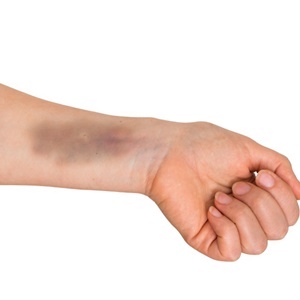
Health24.com | SEE: 5 things that may cause you to bruise easily

The information on Health24 is for educational purposes only, and is not intended as medical advice, diagnosis or treatment. If you are experiencing symptoms or need health advice, please consult a healthcare professional. See additional information.

Share Button