Breakthrough explains why some cancers are far more deadly than others.


Breakthrough explains why some cancers are far more deadly than others.
A BBC analysis has identified the services with the worst waiting times as performance slumps to record low.
Constantly battling with embarrassing, uncomfortable, unsightly athlete’s foot?
The good news is that the fungus that causes nasty skin and toenail infections is headed for extinction.
The bad news is it could take millions of years.
Scientists analysed samples of Trichophyton rubrum fungus and concluded it may have lost its ability to sexually reproduce as it adapted to grow on humans.
This fungus is the most common cause of tinea pedis, known as athlete’s foot. This condition usually occurs between the toes and causes severe itching.
How could the fungus become extinct?
“It is commonly thought that if an organism becomes asexual, it is doomed to extinction,” said study senior author Dr Joseph Heitman. He is chair of molecular genetics and microbiology at Duke University School of Medicine in Durham, North Carolina.
“While that may be true, the time frame we are talking about here is probably hundreds of thousands to millions of years,” he added in a university news release.
But this research may help uncover vulnerabilities in the fungus that could result in better medications to fight it, according to authors of the study recently published online in the journal Genetics.
Avoid foot fungus in the meantime
About 25% of the world’s population have fungal infections, and T. rubrum is often to blame. It is difficult to cure and may be drug-resistant.
People can become infected when walking barefoot around swimming pools, showers or locker rooms, or when sharing personal items such as towels or nail clippers.
Protect your feet by following these safety guidelines:
Image credit: iStock


[unable to retrieve full-text content]
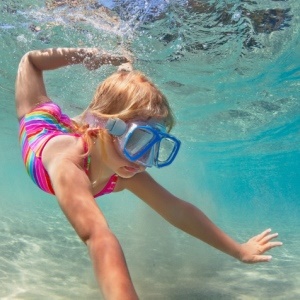
Swimming in the sea may not be as good for your health as you may think, new research suggests.
It found a twofold increased risk for general ear problems, a 77% increased risk for earaches and a 29% increased risk for diarrhoea and other gastrointestinal illnesses among people who swam in the sea.
Probability of illnesses
The findings came from an analysis of 19 studies, involving more than 120 000 people from the United States, the United Kingdom, Australia, New Zealand, Denmark and Norway. The results were published recently in the International Journal of Epidemiology.
“In high-income countries like the UK, there is a perception that there is little risk to your health if you spend time in the sea,” researcher Anne Leonard, from the University of Exeter Medical School in England, said in a news release from the school. “However, our paper shows that spending time in the sea does increase the probability of developing illnesses, such as ear ailments and problems involving the digestive system, such as stomach ache and diarrhoea.
“We think that this indicates that pollution is still an issue affecting swimmers in some of the world’s richest countries,” Leonard added.
Despite major improvements in water quality, seawater is still polluted from sources such as industrial waste, sewage and run-off from farmland, the researchers noted.
By international standards, South Africa’s coastal waters have very low levels of pollution, according to the South African Department of Environmental Affairs. There are however numerous discharge points, through which up to 1.3 million m3 of wastewater is discharged daily into the marine environment.
Serious for vulnerable people
“We don’t want to deter people from going into the sea, which has many health benefits – such as improving physical fitness, well-being and connecting with nature,” fellow researcher Will Gaze, also from the Exeter medical school, said in the news release. “However, it is important that people are aware of the risks so they can make informed decisions.
“Although most people will recover from infections with no medical treatment, they can prove more serious for vulnerable people, such as the very old or very young, or those with pre-existing health conditions,” he noted.
“We have come a long way in terms of cleaning up our waters, but our evidence shows there is still work to be done,” Gaze said. “We hope this research will contribute to further efforts to clean up our coastal waters.”
Image credit: iStock

A surgical-site infection develops when germs from your skin or around you enter the incision made in in your skin to carry out the operation.
Globally, more than one in 10 patients develop a surgical-site infection after a gastrointestinal operation, a new study finds.
Important area for improvement
Rates vary widely, with overuse of antibiotics in poorer countries likely contributing to higher prevalence, the researchers said.
“Worldwide, large amounts of antibiotics were consumed to prevent and treat surgical-site infections,” said Dr Ewen Harrison, one of the researchers.
“Yet, in a fifth of cases, the causative microorganism was resistant to the pre-surgery antibiotics given, and this increased to one of three cases in low-income countries,” said Dr Harrison, of the global surgery unit at the University of Edinburgh in Scotland.
“This high prevalence illustrates a potentially important area for improvement worldwide,” Dr Harrison said.
His team analysed data from just over 12 500 patients in 66 countries who had gastrointestinal surgery. About 12% developed a surgical-site infection within 30 days after their operation. But 22% of those infections didn’t respond to commonly used antibiotics.
Longer hospital stays
Patients in high-income countries had the lowest rate of infection, at 9%, compared with 14% in middle-income countries and 23% in low-income countries, according to the study.
These infections were deadly in many cases. Death rates were almost 5% for patients with a surgical-site infection and less than 2% for those without an infection, the findings showed.
Hospital stays for those with infections averaged three times longer than for those without infections (seven days versus two days). Also, patients with infections were more likely to have another infection and further surgery, the investigators found.
Rates of antibiotic-resistance varied significantly, with rates reaching 36% in low-income countries. That was more than twice the rate seen in wealthy countries, the study authors said.
This difference could reflect overuse of antibiotics in poorer countries, the researchers suggested. They found that patients in low-income countries were more likely to receive antibiotics before and after surgery than those in richer countries.
‘Impressive undertaking’
The findings were published in The Lancet Infectious Diseases journal.
“These findings begin to characterise the relationship between surgical-site infections and global antimicrobial resistance,” Dr Harrison said in a journal news release.
Writing in an accompanying editorial, Dr Robert Sawyer, of Western Michigan University School of Medicine, called the study an “impressive undertaking”.
The study “substantially adds to our understanding of the global problem of post-operative infections and their associated morbidity and mortality,” Dr Sawyer said.
“Although the idea that a surgical-site infection is just a surgical-site infection is prevalent, it is now well known that the cost of a surgical-site infection in terms of mortality, morbidity, health-care costs, and loss of productivity is enormous,” he added.
Common-sense ways to help prevent infections after surgery:
Image credit: iStock

NEXT ON HEALTH24X

Night owls are 10% more likely to have premature deaths than early risers, a study says.
A year after emergency facial surgery, Joel Stransky was challenging for the podium in the Grand Masters category at the 2018 Absa Cape Epic.
One year ago, Joel Stransky, relieved that his sunglasses had probably saved his right eye and eye socket from any real damage other than bad lacerations, was beginning his recovery from facial surgery and was struggling to breathe normally as a result of broken ribs and a punctured lung.
On Sunday 25 March 2018, he smiled broadly and breathed deeply as he savoured the view from the podium of the 2018 Absa Cape Epic.
Read more: The ultimate guide to mastering mountain biking: from buying bikes to finding frails
Stransky and his teammate, Andrew McLean, racing as Team Cycle Lab KTM, had finished third in the Grand Masters category for riders 50 years and older. The Grand Masters is not a small category (75 teams started), nor is it a slow one. McLean and Stransky finished in 61st place overall from a total of 678 teams that started the demanding eight-day mountain bike race.
“It’s an incredible feeling to stand on the podium at the Absa Cape Epic!” said a clearly elated Stransky, shortly after finishing the 658km race through some of the most rugged and toughest conditions in the Western Cape.
“Yes, I was in a bad way a year ago, but I’m not one to reflect much on the past. I like to focus on the present and future and one of the main reasons I made such a great recovery from my injuries is that I was focused on being 100% prepared to race the 2018 Cape Epic,” he added.
It was the eighth Cape Epic that Stransky has completed. He crashed out on day one of the 2017 edition and was “quadbiked” out of the remote location, barely able to hold on, and rushed to hospital with serious injuries, where he spent some time in the ICU after surgery.
For Stransky, a man who helped South Africa win the 1995 Rugby World Cup, this year’s Cape Epic is his most treasured.

“I’m a naturally competitive person. Whether it’s in rugby or business or in my charity work, I’m always striving to be better and progressing. For me, the added pressure of racing for a podium finish at this Cape Epic suited my character. I also got to compete alongside my friend, Andrew, who helped coach me to get to my best cycling condition ever,” added Stransky.
“When I did my first Cape Epic back in 2010, I would never have dreamed of a podium finish at this race. And what a dream journey it’s been.”
When spectating at the Cape Epic, you can spot the former rugby players quite easily. In a sport that favours the slim, they stand out as they grind away at their pedals, unable to pedal smoothly as they face the fact that they were born into a power-to-weight ratio disadvantage on a bicycle.
Sure, Stransky wasn’t a huge rugby player, but at 88kg and 179cm he wasn’t the smallest, especially when you consider he played most of his career in the 1990s before the advent of specific sports supplementation and scientific training that’s now the professional rugby norm.
He finished the Cape Epic weighing 79kg, his face gaunt and his legs sinewy and lean. He certainly doesn’t show up on the naked eye’s “former rugby player radar”.
“Some people I haven’t seen for a while don’t recognise me,” chuckled Stransky. “They ask if I’m okay. But I’m perfectly fine. I’ve never felt better in fact and it’s a great feeling to be super fit. But more exciting for me is that it’s great to be fast on a mountain bike…”
This article was originally published on www.mh.co.za
Image credit: iStock, Zoon Cronje

NEXT ON HEALTH24X

A surrogate mother gave birth as the biological parents had frozen embryos before they died in a car crash.
The ability of babies to differentiate emotional expressions appears to develop during their first six months. But do they really recognise emotion or do they only distinguish the physical characteristics of faces and voices? Researchers from the University of Geneva (UNIGE), Switzerland, have just provided an initial answer to this question, measuring the ability of six-month-old babies to make a connection between a voice (expressing happiness or anger) and the emotional expression on a face (again, of happiness or anger). The findings, published in the journal PLOS ONE, show that babies look at an angry face — especially the mouth — for longer if they have previously heard a happy a voice. This reaction to something new demonstrates for the first time that babies have an early ability to transfer emotional information from the auditory mode to the visual.
Emotions form part of our lives from a young age. Expressing emotions is the first tool available to babies for communicating with those around them. Babies express their emotions through their posture, voice and facial expressions from birth. These attitudes help their carers adapt their behaviour to the baby’s emotional state. A baby’s tears, for example, may be an expression of his or her distress and primary needs (to be fed or changed or to lie down). But is the opposite also true, asked UNIGE researchers, led by Professor Edouard Gentaz, president of the Psychology section of the UNIGE’s Faculty of Psychology and Educational Sciences and a member of CISA? Are babies capable of identifying the emotions expressed by adults? Do they adapt their behaviour to fit in with the emotions they are exposed to?
Early skills for discriminating emotions
The ability of babies to differentiate emotional expressions seems to develop in the first six months of life. During this period, new-borns and babies have a preference for smiling faces and happy voices. Prior to six months, they can distinguish happiness from other expressions such as fear, sadness or anger. From seven months onwards, they develop the ability to discriminate between several other facial expressions. It seems, therefore, that babies possess early skills for differentiating between emotions… but do they really recognise them or only distinguish the physical characteristics of faces or voices?
In an attempt to find an answer, 24 six-month-old babies took part in a study at the Geneva BabyLab. They were exposed to voices and faces expressing the emotions of happiness and anger. During a first phase devoted to auditory familiarisation, the babies faced a black screen and listened to a neutral, happy or angry voice for 20 seconds. In the second stage — based on visual discrimination lasting 10 seconds — the babies were placed in front of two emotional faces, one expressing happiness and the other anger.
The research team used eye-tracking technology to measure the baby’s eye movements with great precision. They were then able to determine whether the time spent looking at one or other of the emotional faces — or specific areas of the face (the mouth or eyes) — varied according to the voice they listened to. If the babies looked equally at both faces, it would not be possible to conclude that there was a difference. “On the other hand, if they clearly looked at one of them much longer, we could state that they are able to spot a difference between the two faces,” explains Amaya Palama, a researcher at the Laboratory of Sensorimotor, Affective and Social Development in UNIGE’s Faculty of Psychology and Educational Sciences.
Babies prefer what is new and surprising
The results of the study revealed that six-month-olds did not have a preference for either of the emotional faces if they had already heard a neutral voice or a voice expressing anger. On the other hand, they spent longer looking at the face expressing anger — especially its mouth — after hearing a voice expressing happiness. This visual preference for novelty on the part of six-month-olds testifies of their early ability to transfer emotional information about happiness from the auditory to the visual mode.
Based on this study, we can conclude that six-month-old babies are able to recognise the emotion of happiness regardless of these auditory or visual physical characteristics. This research forms part of a project designed to examine the development of emotional discrimination abilities in childhood funded by the Swiss National Science Foundation (SNSF).
Story Source:
Materials provided by Université de Genève. Note: Content may be edited for style and length.

