Tens of thousands of black holes may exist in Milky Way’s center

A Columbia University-led team of astrophysicists has discovered a dozen black holes gathered around Sagittarius A* (Sgr A*), the supermassive black hole in the center of the Milky Way Galaxy. The finding is the first to support a decades-old prediction, opening up myriad opportunities to better understand the universe.

“Everything you’d ever want to learn about the way big black holes interact with little black holes, you can learn by studying this distribution,” said Columbia Astrophysicist Chuck Hailey, co-director of the Columbia Astrophysics Lab and lead author on the study. “The Milky Way is really the only galaxy we have where we can study how supermassive black holes interact with little ones because we simply can’t see their interactions in other galaxies. In a sense, this is the only laboratory we have to study this phenomenon.”

The study appears in the April 5 issue of Nature.

For more than two decades, researchers have searched unsuccessfully for evidence to support a theory that thousands of black holes surround supermassive black holes (SMBHs) at the center of large galaxies.

“There are only about five dozen known black holes in the entire galaxy — 100,000 light years wide — and there are supposed to be 10,000 to 20,000 of these things in a region just six light years wide that no one has been able to find,” Hailey said, adding that extensive fruitless searches have been made for black holes around Sgr A*, the closest SMBH to Earth and therefore the easiest to study. “There hasn’t been much credible evidence.”

He explained that Sgr A* is surrounded by a halo of gas and dust that provides the perfect breeding ground for the birth of massive stars, which live, die and could turn into black holes there. Additionally, black holes from outside the halo are believed to fall under the influence of the SMBH as they lose their energy, causing them to be pulled into the vicinity of the SMBH, where they are held captive by its force.

While most of the trapped black holes remain isolated, some capture and bind to a passing star, forming a stellar binary. Researchers believe there is a heavy concentration of these isolated and mated black holes in the Galactic Center, forming a density cusp which gets more crowded as distance to the SMBH decreases.

In the past, failed attempts to find evidence of such a cusp have focused on looking for the bright burst of X-ray glow that sometimes occurs in black hole binaries

“It’s an obvious way to want to look for black holes,” Hailey said, “but the Galactic Center is so far away from Earth that those bursts are only strong and bright enough to see about once every 100 to 1,000 years.” To detect black hole binaries then, Hailey and his colleagues realized they would need to look for the fainter, but steadier X-rays emitted when the binaries are in an inactive state.

“It would be so easy if black hole binaries routinely gave off big bursts like neutron star binaries do, but they don’t, so we had to come up with another way to look for them,” Hailey said. “Isolated, unmated black holes are just black — they don’t do anything. So looking for isolated black holes is not a smart way to find them either. But when black holes mate with a low mass star, the marriage emits X-ray bursts that are weaker, but consistent and detectable. If we could find black holes that are coupled with low mass stars and we know what fraction of black holes will mate with low mass stars, we could scientifically infer the population of isolated black holes out there.”

Hailey and colleagues turned to archival data from the Chandra X-ray Observatory to test their technique. They searched for X-ray signatures of black hole-low mass binaries in their inactive state and were able to find 12 within three light years, of Sgr A*. The researchers then analyzed the properties and spatial distribution of the identified binary systems and extrapolated from their observations that there must be anywhere from 300 to 500 black hole-low mass binaries and about 10,000 isolated black holes in the area surrounding Sgr A*.

“This finding confirms a major theory and the implications are many,” Hailey said. “It is going to significantly advance gravitational wave research because knowing the number of black holes in the center of a typical galaxy can help in better predicting how many gravitational wave events may be associated with them. All the information astrophysicists need is at the center of the galaxy.”

Hailey’s co-authors on the paper include: Kaya Mori, Michael E. Berkowitz, and Benjamin J. Hord, all of Columbia University; Franz E. Bauer, of the Instituto de Astrofísica, Facultad de Física, Pontificia, Universidad Católica de Chile, Millennium Institute of Astrophysics, Vicuña Mackenna, and the Space Science Institute; and Jaesub Hong, of Harvard-Smithsonian Center for Astrophysics.

Share Button

Obesity-related hospital admissions ‘double in four years’

There were 617,000 hospital admissions in England in 2016-17 where obesity was a factor.

Share Button

West Suffolk Hospital ‘closure’ considered over blood bank

A document says an order that would have shut down West Suffolk Hospital was looked at.

Share Button

Unspoken UK Punjabi alcohol problem

Alcohol consumption is glamorised across different aspects of Punjabi culture and shame stops many seeking the help that they need.

Share Button

Health24.com | Do you know how much your brain and other organs weigh?

Have you ever wondered which of your organs is the heaviest? If you guessed your brain or lungs, you are wrong.

The largest organ of the human body is the skin. Yes, the skin is an organ. And it not only consists of the outer layer we can see, but has a total of three layers: the epidermis, the dermis and the subcutaneous tissue (hypodermis). The thickness of the skin differs throughout the body – for example, it’s thin underneath the eyes and thick on the soles of your feet.

So, how much does our largest organ weigh? According to The Journal of Investigative Dermatology the skin of most adults weighs roughly 10kg, depending on factors such as gender, weight and age. If you were to spread the skin out on a flat surface, it would cover about 2m².

But what about your internal organs? Here’s a breakdown of how much they weigh. Note that these figures will differ from person to person.  

1. The liver

A healthy adult liver can weigh up to 1.6kg, which makes it the largest solid, non-porous organ in the body. It’s about the size of a rugby ball. The liver holds 10% of the body’s blood and pumps nearly 1.5l per minute.

human liver

2. The brain

The adult human brain accounts for 2% of our total body weight and weighs roughly 1.5kg, once again depending on one’s size and age. There’s an ongoing debate about the link between brain size and intelligence. A number of studies have reported moderate correlations between brain size and intelligence.

human brain

3. The small and large intestines

Your intestines are not only fairly heavy, but also quite long. The small intestine weighs around 2kg and is 7m long, while the large intestine weighs 1.5kg, but with a length of only 1.5m. Although the large intestine is shorter, it’s called the large intestine because of its diameter of around 7cm. 

human intestines

4. The heart

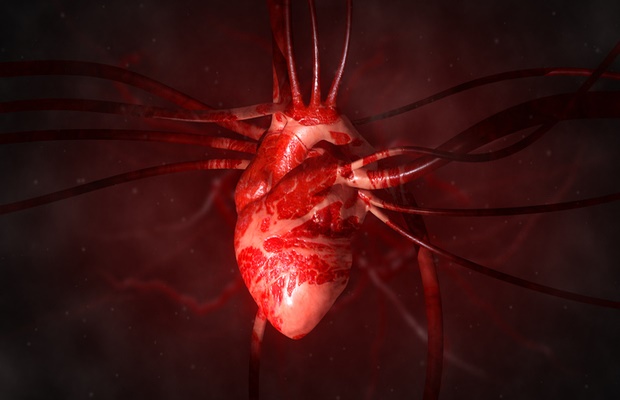
Your heart is a fist-sized, hollow muscle that weighs between 300g and 350g. The size of your heart corresponds with the size of your fist. Your heart pumps between 5l and 7l of blood per minute through your veins – which for such a relatively small organ is impressive.

human heart

5. The kidneys

Each kidney weighs anything between 150g and 300g, once again depending on your age and size. This means that an average kidney weighs roughly the same as a mobile phone. Your kidneys can filter up to 1 500l of blood daily.

human kidneys

6. The lungs

The total weight of your lungs (“pulmo”) is about 1kg. These spongy, cone-shaped organs process more than 10 000l of air per day. The right lung is slightly bigger than the left lung. The right lung has three lobes and the left lung only two.

human lungs

 Image credits: iStock

NEXT ON HEALTH24X

Share Button

Brain back-up firm Nectome loses link to MIT

MIT severs ties with a start-up attempting to copy people’s memories when they die.

Share Button

Health24.com | Stop believing these 9 flu myths

Every year as the weather starts to change, the debate begins as to whether or not to have the flu shot. According to Health24’s CyberDoc, Dr Heidi van Deventer, the best time to schedule your flu vaccine is in April before the flu season starts. 

Now is also the time when people start repeating ridiculous myths about the flu – chicken soup will cure flu, the flu vaccine will make you sick… We bust nine myths you should stop believing right now. 

Myth 1: ‘I’m going to get the flu from the vaccine.’

This is a popular myth that does the rounds every year. However, according to Harvard Medical School, the vaccine is made from an inactivated virus, which means it can’t transmit an infection. If you find that you are feeling under the weather after the shot, it’s probably because you were already infected with flu.

“The virus that you have might not be the exact same version of the vaccine that you received,” adds Dr Van Deventer. “But it should give you some protection against becoming extremely ill.”

The World Health Organization (WHO) recommends that you have an annual vaccination if:

  • You are pregnant (at any stage of pregnancy)
  • You are a child between six months and five years old
  • You are older than 65 years
  • You have a chronic medical condition
  • You are a healthcare worker

Remember, it takes about one to two weeks after getting the vaccine before you’re protected. 

woman receiving flu vaccine

Myth 2: ‘I don’t have flu, it’s a just a really bad cold.’

Symptoms like a sore throat, runny nose, sneezing and cough are similar to cold symptoms. Flu symptoms, however, come on suddenly and can cause severe complications like death. Flu will also see you spending a few days in bed with a fever, chills and aching muscles, whereas a cold will just slow you down.

man sick in bed

Myth 3: ‘I can’t spread the flu when I feel well.’

You may already be carrying the flu virus before you start to feel unwell – according to Harvard Medical School, 20 to 30% of people who have the virus show no symptoms.

Flu is spread easily when you cough or sneeze, so always cover your mouth and nose. The flu virus can also live for up to 48 hours on hard, non-porous surfaces, so make sure you keep your hands clean and regularly disinfect surfaces in your home and office.

woman sneezing into tissue

Myth 4: ‘Chicken soup will speed up my recovery.’

Yes, hot fluids like chicken soup may help soothe a sore throat and keep you hydrated but that’s all it will do. Harvard Medical School says chicken soup has no flu-fighting qualities.

bowl of chicken soup

Myth 5: ‘I need antibiotics to cure the flu.’

Viral infections cause the flu, so although antibiotics work well against bacteria, they won’t be as effective at curing a bout of the flu.

However, people sometimes develop a bacterial infection, such as bacterial pneumonia, as a result of the flu – your doctor will be able to advise on the best course of treatment. If your symptoms worsen or you are just not getting better, don’t delay going back to your doctor.

Doctor holding pills

Myth 6: ‘I can’t die from the flu.’

In some cases, the flu can become dangerous – particularly for elderly people, young children, pregnant women and people with compromised immune systems.

The flu can turn deadly if someone suffers from a complication – for example, if they develop bacterial pneumonia, a sinus infection, dehydration or it worsens an existing chronic condition such as asthma, congestive heart failure or diabetes. According to the WHO, flu causes between 250 000 and 500 000 deaths annually. 

elderly sick lady

Myth 7: ‘I’ve had the flu vaccine so I don’t need it again.’

Unfortunately the flu virus mutates every year. A new flu vaccine is formulated every year, which is “why we need a new vaccine every year,” says Dr Van Deventer.

woman receiving flu vaccine

Myth 8: ‘I take vitamin C so I’m protected from the flu.’

According to the NHS, there is no evidence to prove that taking regular vitamin C will protect you from getting the flu.

vitamin c supplement in water

Myth 9: ‘I’m pregnant, so I can’t have the flu vaccine.’

Pregnant woman have a higher risk for complications from flu. The University of California San Francisco says that getting the flu shot while pregnant can help protect your baby from infection for months after delivery.

Babies younger than six months can’t receive the flu vaccine but are more susceptible to suffering complications from the flu.

Image credit: iStock

Share Button

Health24.com | Cough: Fact or fiction?

Cough Expert

Professor Keertan Dheda has received several prestigious awards including the 2014 Oppenheimer Award, and has published over 160 peer-reviewed papers and holds 3 patents related to new TB diagnostic or infection control technologies. He serves on the editorial board of the journals PLoS One, the International Journal of Tuberculosis and Lung Disease, American Journal of Respiratory and Critical Medicine, Lancet Respiratory Diseases and Nature Scientific Reports, amongst others. Read his full biography at the University of Cape Town Lung Institute.

Share Button

Health24.com | What on earth is ‘ear candling’ and does it work?

Would you stick a candle in your ear to get rid of wax build-up? There are people who swear by ear candling, a form of alternative treatment where an “ear candle”, a hollow tube from fabric which is dipped into paraffin, is placed in your ear and heated at the outside end.

 According to the Journal of Laryngology & Otology, ear candles are hollow tubes coated with wax which are inserted into patients’ ears and then lit at the far end. The procedure is also used as a complementary therapy for a wide range of conditions such as sinus problems, ear infections, head colds, flu and general fatigue.

Many of those who practice ear candling further claim that it drains all “passages” in the head via the tympanic membrane (ear drum), boosting your overall wellbeing.

Why does ear candling supposedly work?

As the candle burns, it reportedly creates a vacuum that pulls debris and wax out of your ear, ridding your ear canal of bacteria and toxins that can cause ear infections.

Dedicated users claim that clearing the pathways in your head helps with fatigue and headaches and also drains the lymphatic system.

Watch the tongue-in-cheek video below if you want to see how it’s done. 

[embedded content]

The science behind the candle

But is this holistic treatment all it’s cracked up to be?

Medical researchers don’t think so. The above claims may sound appealing, but to date there has been no data to prove that ear candling works.

Research shows that ear candling is not effective at removing wax and can actually push ear wax deeper into the ear canal.

One study compared ears before and after ear candling. There was no reduction in the amount of ear wax in the study participants’ ear canals – in fact, in some cases the wax had become impacted.

And as for the claim that clear ears also clear up a slew of other health problems? That also appears to be a myth.

According to the American Academy of Audiology, the notion that the whole ear system can drain through one ear, clearing the ear canals in their entirety is false. Liquids and gases are unable to pass through a healthy ear drum. And as far as “interconnected passages of the head” are concerned, there actually are no interconnected passages besides veins and arteries, the nerve system and the lymphatic system, none of which can be “drained” through the ear canal.

It can be dangerous too

Ear candling isn’t only ineffective, it can actually be dangerous.

According to the Journal of Laryngology & Otology, ear candling is often associated with injuries, since people buy the candles from health shops and do ear candling at home. This can lead to burns and deposits of candle wax in the ear canal, which can ultimately lead to infection and ear drum puncture.

The verdict?

According to Health24, many people choose home remedies for earache or blocked ears to avoid costly trips to the doctor. However, it’s difficult to determine what exactly is causing the wax build-up or earache since you can’t examine your ear canals at home. Pain can be caused by a tiny hole in the eardrum and wax build-up can be generated by a fungal infection of the ear, or it may be an outer ear infection that needs to be treated by a doctor.

If you suffer from a blocked ear, consult your doctor. They will extract the wax build-up or prescribe an antibiotic to clear an ear infection.

If you are prone to wax build-up or ear infections, it is recommended that you visit an ear-, nose- and throat specialist every six months to remove wax build-up and have a regular examination. Any ongoing or chronic problem needs to be addressed by a specialist.

Image credit: iStock 

Share Button

Birth trauma mother ‘wanted to die’

A woman traumatised by being ignored during labour had lengthy physical and mental problems.

Share Button