A man has lived for a record nine months with a transplanted pig kidney while waiting for a human transplant.


A man has lived for a record nine months with a transplanted pig kidney while waiting for a human transplant.
The £21m hub brings together primary care, community wellbeing and leisure services in one location.

At first glance, stromatolites and their close relatives, microbial mats, can look like little more than dark, ancient rocks. In reality, they are densely packed, layered communities built by microbes.
Billions of years ago, before animals and plants existed, stromatolites helped release some of the earliest oxygen into Earth’s atmosphere. Now, a study published in Current Biology suggests these unusual formations may also preserve clues to another major event in Earth’s history: the emergence of complex life.
Associate Professor Brendan Burns, an evolutionary microbiologist at UNSW Sydney, is part of a research team that discovered a previously unknown microbe living in close association with another organism inside these “living fossils.” The project, co-led with researchers from the University of Technology Sydney and The University of Melbourne, could help scientists better understand a fundamental evolutionary mystery: how relatively simple cells began cooperating and eventually gave rise to much more complex forms of life.
“Stromatolites could be more than ‘just’ a cradle of life where early microbial life flourished,” says A/Prof. Burns.
“They could also tell us how complex life first emerged.”
A Microbial Partnership With Ancient Roots
Stromatolites and microbial mats first appeared billions of years ago, but they have not disappeared. They still form today in Shark Bay, a World Heritage-listed site in Western Australia.
Samples collected there eventually led A/Prof. Burns and his colleagues to isolate a member of the Asgard archaea, an unusual group of microbes believed to be closely related to the ancestors of eukaryotes, which are the cells that make up all plants and animals, including humans.
One long-standing idea in biology proposes that the first eukaryotic cell developed through an intimate partnership between an ancient archaeon and a bacterium. According to this theory, one organism eventually engulfed the other, and that relationship ultimately produced mitochondria, the energy-producing structures found inside complex cells.
Scientists, however, have lacked direct evidence showing what such an early partnership might actually have looked like. The new research provides the first visual evidence of an Asgard archaeon physically interacting with a bacterium through extremely thin, tube-like connections called nanotubes.
“This could be a little model for how these kinds of partnerships started and ultimately formed eukaryotes,” says A/Prof. Burns.
Years Spent Trying to Grow an Elusive Microbe
Genetic sequencing showed that the organisms’ DNA was present in the samples, but getting the microbes to grow in the laboratory so researchers could study them directly proved far more difficult.
“It took four or five years in the lab,” A/Prof. Burns says. “A lot of time, optimizing and chasing different shadows.”
Asgard archaea are notoriously challenging to cultivate away from their natural habitats. The researchers could not grow the organisms on their own, and A/Prof. Burns says that difficulty may itself reveal something important about their biology.
“The fact that we could never get these organisms into pure culture is probably because they always depend on other organisms to survive,” he says.
The researchers eventually made progress using electron cryotomography, a high-resolution 3D imaging method capable of revealing structures at the scale of a millionth of a millimeter.
The images showed the archaeon and bacterium physically connected by bacterial nanotubes. Researchers also observed the archaeon producing chains of budded vesicles along with elaborate tube-like structures. The two microbes appeared to complement one another chemically, with each producing compounds the other could use, including vitamins, nutrients and hydrogen.
Coauthor Associate Professor Debnath Ghosal from The University of Melbourne says directly capturing an interaction between an Asgard archaeon and a bacterium is particularly significant.
“This discovery brings us a few steps closer towards understanding how complex cells evolved from relatively simpler microbial life forms,” A/Prof Ghosal says.
Ancient Cellular Machinery Comes Into View
The team also incorporated deep learning, a type of machine learning, into its analysis, according to coauthor Associate Professor Kate Mitchie from UNSW.
“We used this to predict the structures of proteins in these microbes,” A/Prof. Mitchie says.
“And that’s exciting because we can start to see ancient versions of the cellular machinery that later became central to complex life.”
A/Prof. Burns describes archaea as ‘companions’. Life inside microbial mats can be harsh, and close cooperation between organisms may provide a crucial survival advantage even at microscopic scales.
A Living Window Into Early Earth
Coauthor Associate Professor Iain Duggin from the University of Technology Sydney says it is remarkable to consider that microbes may have maintained partnerships like these in such environments for millions of years, eventually contributing to the emergence of complex life, including humans.
“It’s if we have slowly arisen from the bottom of the sea,” A/Prof. Duggin says.
The newly identified archaeon has been named Nerearchaeum marumarumayae. Its name combines a reference to Nereus, the ancient Greek sea god, with the Malgana word marumarumayae, meaning ‘ancient home’.
Malgana is one of the traditional languages spoken by the people of central Shark Bay, whose ties to country are recognized by Native Title. Malgana elders, rangers and community members continue to care for country in Shark Bay by protecting wildlife and restoring the land.
Shark Bay also has a long Indigenous history. Indigenous people first inhabited the region around 30,000 years ago.
Honoring Shark Bay’s Malgana Heritage
The process of naming the microbe included consultation with Kymberly Oakley, the world’s foremost Malgana language expert. Researchers also worked with Malgana elders to identify language that could be used respectfully in the organism’s scientific name. The elders granted permission for the Malgana language to be included so that the culture could be recognized and celebrated.
For researchers, the microbial communities of Shark Bay provide an unusual opportunity to study conditions that may resemble parts of early Earth. For Traditional Owners, the same environments form part of a living cultural heritage that continues to be protected and cared for.
A/Prof. Burns now hopes to identify additional microbial partnerships and expand what he calls a “little primordial Asgard soup,” giving scientists more pieces of the puzzle surrounding the earliest stages in the evolution of complex life.
“But it’s not just about the organisms,” he says. “It’s about people as well. A huge collaborative effort across disciplines with many graduate students being instrumental in building this story.
“Part of what makes this exciting is that it’s not just discovery, but connection. Not just across many years, but at a time when these fragile ecosystems face mounting threats from climate change and human activity.”
The findings also highlight how deeply survival can depend on cooperation between organisms, something A/Prof. Burns says remains just as relevant today.
“These microbes remind us that even the smallest partners can leave the deepest mark on our history.”
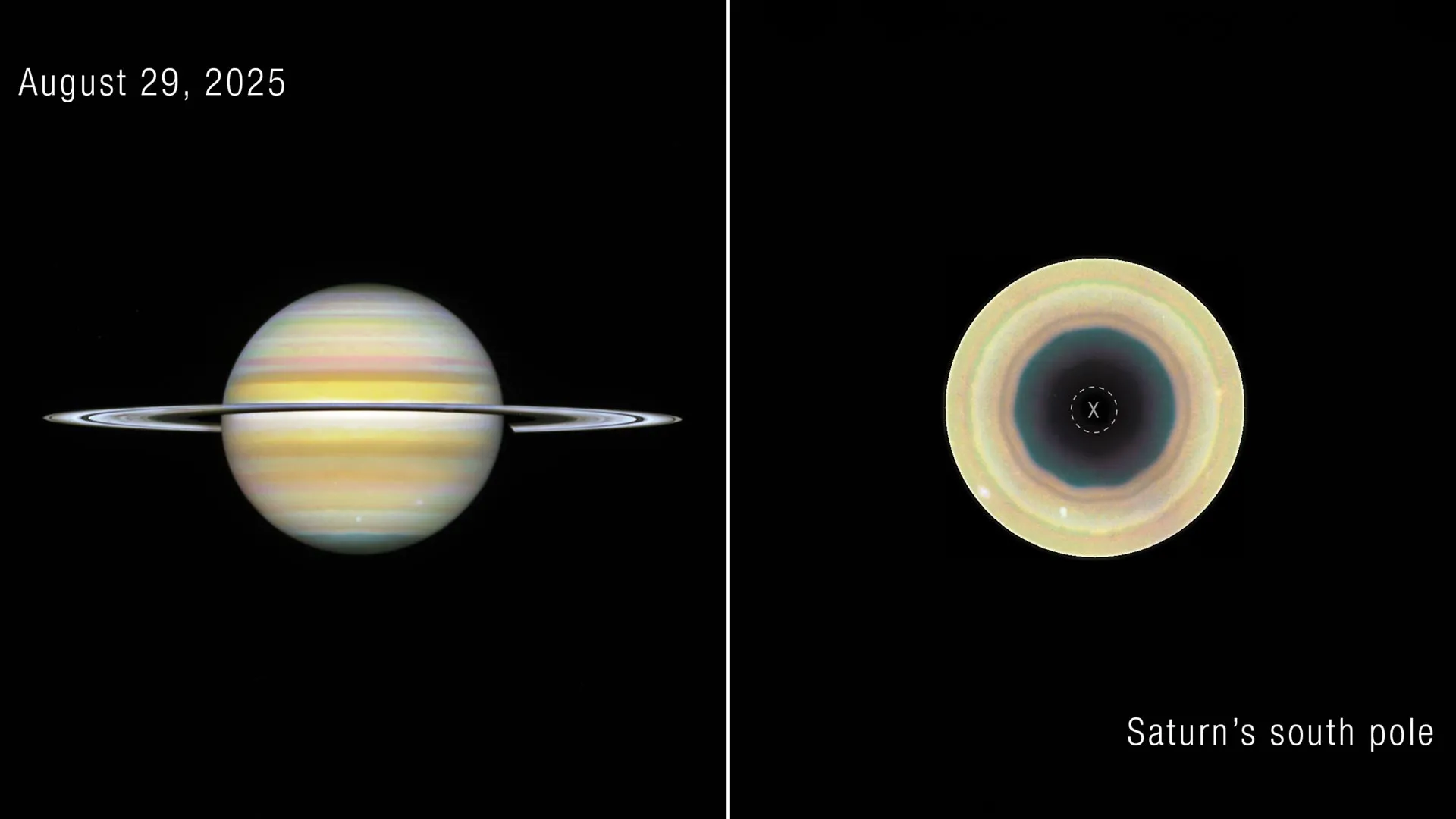
NASA’s Hubble Space Telescope has spotted a striking new feature in Saturn’s atmosphere: a huge, evolving 10-sided wave circling the planet’s south pole.
It is the first time scientists have observed a large, regularly shaped jet pattern in Saturn’s southern hemisphere. The structure has some similarities to Saturn’s famous hexagon at its northern pole, but important differences suggest researchers may be watching a distinct atmospheric phenomenon take shape.
The results were published in the journal Science Advances.
A New Pattern Emerges on Saturn
Researchers reconstructed the development of the feature using several years of Hubble observations going back to 2023. Earlier images contained faint signs of the structure before it developed into the much clearer pattern seen more recently.
The observations came from Hubble’s Outer Planet Atmospheres Legacy (OPAL) program, which has captured annual images of the outer planets for more than a decade.
“We’ve never seen anything quite like this in Saturn’s southern hemisphere,” said Amy Simon, study co-author and OPAL principal investigator at NASA’s Goddard Space Flight Center in Greenbelt, Maryland. “The northern hexagon has been there every time we’ve looked for more than 40 years. This feature is different — it appears to be strengthening, giving us the rare opportunity to watch a giant atmospheric pattern develop.”
Saturn’s changing seasons played an important role in the discovery. As the planet moved through its seasonal cycle, its south pole gradually became visible again from Earth. Astronomers studying images from ground-based observatories were the first to recognize the unusual structure.
Amateur Astronomers Help Spot the Decagon
Study lead author Agustín Sánchez-Lavega is a researcher at the University of the Basque Country in Spain. The university operates the Planetary Virtual Observatory Laboratory, a website that collects ground-based images of solar system planets submitted by observers around the world.
In images from 2024, Sánchez-Lavega and amateur astronomers Trevor Barry and Jean-Paul Oger noticed a faint, wavy band near Saturn’s south pole. Ground-based observations collected in 2025 provided stronger evidence that the feature had developed into a decagon.
Researchers then turned to Hubble for a more detailed view. Because the telescope observes from space, it can capture sharper images across complete rotations of Saturn without the blurring caused by Earth’s atmosphere.
“Given Saturn’s symmetry in its north-south jet stream system, we have been searching for a counterpart to Saturn’s northern hexagon on the south pole in Hubble images since 1990,” Sánchez-Lavega said. “Images from NASA’s Cassini spacecraft, which orbited Saturn between 2004 and 2017, showed no inkling of a long-lived formation, either. The Hubble data confirmed the feature’s presence back to 2023.”
A Deep Atmospheric Structure
The newly identified wave lies within one of Saturn’s powerful jet streams. Observations also show that it extends through several layers of the atmosphere, meaning it is not simply a pattern visible at the cloud tops. Instead, it appears to be a vertically extended atmospheric structure.
Its apparent location changes slightly depending on the wavelength used by Hubble. Different wavelengths allow astronomers to observe different altitudes within Saturn’s atmosphere, producing small shifts in where the decagon seems to appear.
“The most intriguing part to me is that this seems to have just formed recently,” said Simon. “The question is, why did it suddenly form now when we haven’t seen one before?”
Scientists still do not know what triggered the decagon or whether it will remain stable. The researchers say additional observations from Hubble and NASA’s James Webb Space Telescope, along with computer modeling, will be needed to determine how the structure formed, how long it might survive, and how closely it resembles Saturn’s long-lasting northern hexagon.
Decades of Hubble Observations Reveal Change
Hubble’s long operational history has given astronomers an unusual ability to follow changes on planets and other astronomical objects over many years.
The OPAL program is especially valuable because it provides more than isolated snapshots. Its repeated observations allow scientists to monitor seasonal shifts, follow temporary storms, and identify atmospheric patterns that develop gradually.
“When we started the OPAL program, we expected compelling surprises, but we didn’t know what to expect specifically,” said Mike Wong, study co-author at the University of California, Berkeley. “A lot of the discoveries we see coming from OPAL are not just based on one observation, but on years and years of data. Regular observations over time are enabling a lot of new findings.”
Researchers will continue monitoring Saturn to see whether the southern decagon becomes a stable, long-lived feature like the northern hexagon or keeps changing.
Future observations may also help explain what powers the wave and what it can teach scientists about atmospheric behavior on giant planets across the solar system. Those findings could even provide broader insights into atmospheric dynamics that also occur on Earth.

September brings a busy lineup for skywatchers, including a dazzling Venus, a Harvest Moon near Saturn and Neptune, the seasonal equinox, and opportunities to use the Moon as a guide to some recognizable stars and Milky Way features.
September Skywatching Highlights
September offers a little bit of everything in the evening sky. The Moon helps point the way to a celestial teapot, Venus becomes exceptionally bright, the seasons officially turn, and the Harvest Moon appears with two planetary companions.
[See Video Link After Article.]
Follow the Moon to Antares and Sagittarius
Between September 14 and 20, the Moon can serve as a useful guide to several notable sights in the night sky. About an hour after sunset, face south and locate the Moon.
Its position will change from one evening to the next as it moves against the more distant background stars. Along the way, it will pass close to Antares.
Antares is a bright reddish star that represents the heart of the constellation Scorpius.
Nearby in the constellation Sagittarius is another easy-to-recognize pattern of stars known as the Teapot. Its stars form a shape that resembles a teapot, including a handle, lid, and spout.
From a location with especially dark skies, you might also notice a faint, cloudy band that appears to rise like steam from the Teapot’s spout.
Trace that hazy glow toward its densest region, and you will be looking in the direction of the center of the Milky Way galaxy.
Venus Reaches Peak Brilliance
On September 18, turn toward the west to see Venus at peak brilliance during this evening appearance.
The planet should be easy to identify. Not long after sunset, Venus will appear as an intensely bright point of light low above the western horizon, shining more brightly than any star around it. An unobstructed view toward the horizon will make it easier to see before Venus disappears below it.
International Observe the Moon Night
September 19 is International Observe the Moon Night.
People around the globe are encouraged to spend time observing our nearest celestial neighbor while learning about lunar science, exploration, and the Moon’s influence on cultures throughout history. Find an event near you or learn how to participate from wherever you are at go.nasa.gov/ObserveTheMoon.
The September Equinox Changes the Seasons
On September 22, fall officially begins in the Northern Hemisphere, while spring starts in the Southern Hemisphere.
This date marks the September equinox, when the Sun is positioned directly above Earth’s equator and the lengths of day and night are close to equal across much of the planet.
After the equinox, daylight continues to decrease in the Northern Hemisphere while increasing in the Southern Hemisphere.
Harvest Moon Rises Near Saturn and Neptune
On September 26, the Harvest Moon becomes the main attraction, rising in the eastern sky shortly after sunset.
Saturn will appear nearby, while the much fainter Neptune forms a broad triangle with Saturn and the Moon.
Saturn is bright enough to see with the unaided eye. Neptune presents more of a challenge. At around magnitude 8, the distant planet is too dim to spot without optical assistance, so binoculars or a telescope will be needed. Dark skies and favorable observing conditions can improve your chances of finding it.
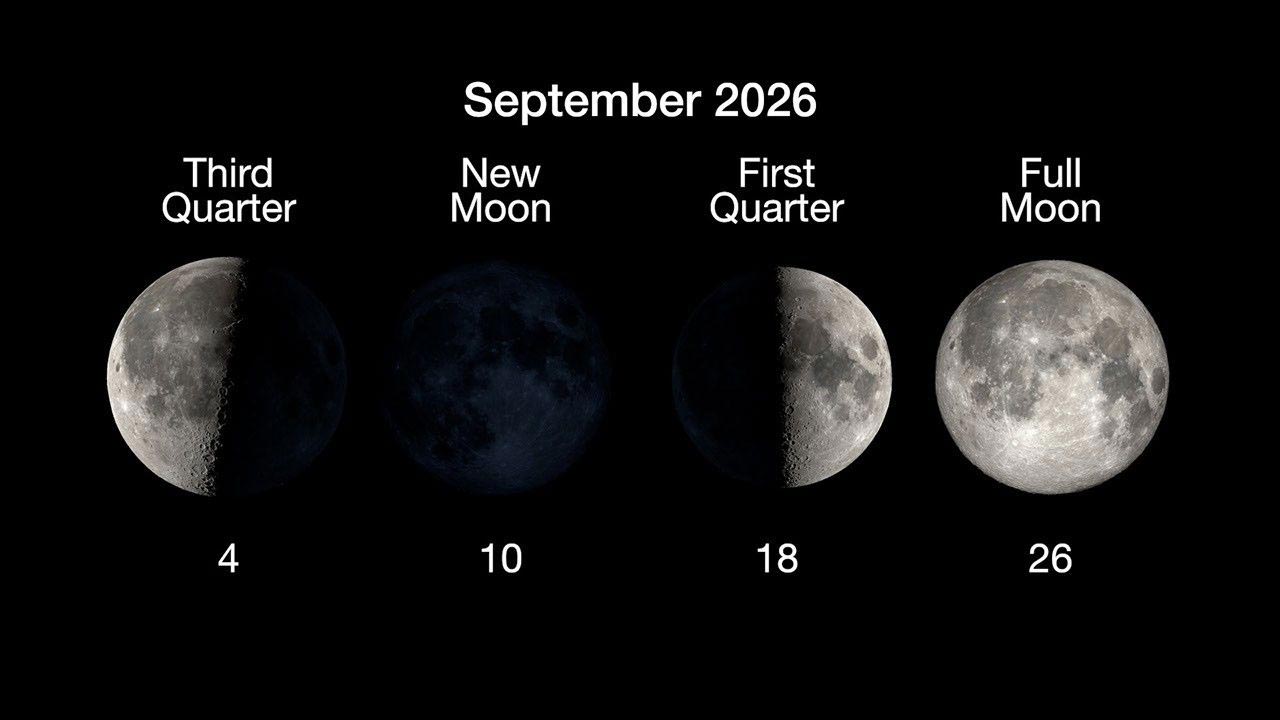
Here are the phases of the Moon for September.
The things you’re doing to make your sleep better could actually be making your sleep worse.
A consultant tells the Scotcast podcast that A&E patients ending in ‘corridors and cupboards’.

Takotsubo syndrome is a sudden heart condition that most often affects postmenopausal women and can be triggered by intense emotional or physical stress. It accounts for about 2 percent of patients initially thought to be having a heart attack – and up to one in ten women with acute coronary syndrome – yet it can be extremely difficult to tell apart from a heart attack during the first stages of evaluation.
People with Takotsubo syndrome can suddenly experience chest pain, abnormal electrocardiogram results, and elevated levels of cardiac enzymes – all signs that can closely resemble a heart attack. The key difference is that Takotsubo syndrome does not involve blocked coronary arteries. Because the two conditions can look nearly identical at first, many patients undergo invasive cardiac catheterization before doctors can determine what is causing their symptoms.
A New Way To Identify Takotsubo Syndrome
An international team of researchers, working closely with scientists at the universities of Zurich and Greifswald, has developed and validated a diagnostic scoring system designed to identify Takotsubo syndrome before cardiac catheterization is performed.
The new tool, known as the BioTAK score, combines biological sex with several blood biomarkers linked to different processes in the cardiovascular system. Researchers used artificial intelligence to determine which combination of biomarkers provided the most useful diagnostic information and then incorporated those markers into a clinical decision tool.
In an independent validation group of nearly 1,800 additional patients, the BioTAK score identified Takotsubo syndrome with high accuracy. Using predefined thresholds, the system correctly classified nearly 90 percent of participants before they underwent cardiac catheterization.
“Our study shows that a simple combination of blood biomarkers and biological sex can identify these patients with remarkable accuracy even before cardiac catheterization,” says Florian A. Wenzl, co-first author of the study at the Center for Molecular Cardiology at the University of Zurich and the Radcliffe Department of Medicine at the University of Oxford. “At the same time, the biomarkers provide insights into the biological processes that distinguish Takotsubo syndrome from a classic heart attack,” adds co-first author Victor Schweiger of University Hospital Zurich.
Clues to the Brain-Heart Connection
Beyond its potential diagnostic value, the BioTAK score also offers new information about the biology of Takotsubo syndrome. Two newly identified biomarkers included in the score point to an important role for the so-called brain-heart axis and suggest that the condition develops through mechanisms that are separate from atherosclerosis.
One of the proteins helps activate a range of neuropeptides involved in stress responses, anxiety, vascular tone, and autonomic nervous system activity. The other protein is associated with the stability of atherosclerotic plaques. Taken together, the two markers reveal a biological pattern that is fundamentally different from the one typically seen in a classic heart attack.
“By capturing signaling pathways related to stress responses, cardiac dysfunction and plaque stability, the BioTAK score translates complex disease mechanisms into a practical diagnostic tool,” explains co-last author Thomas Lüscher of the National Heart and Lung Institute at Imperial College London.
Potential Use in Emergency Care
The researchers say the BioTAK score could become a useful addition to the early emergency assessment of patients with suspected acute coronary syndrome.
“The BioTAK score is not a substitute for cardiac catheterization when it is medically necessary. However, it could help guide diagnostic procedures more effectively and avoid unnecessary invasive tests in selected patients,” says co-last author Christian Templin, director of the Department of Internal Medicine B at the University Medical Center Greifswald and founder of the InterTAK Registry. “Our goal is to identify patients with Takotsubo syndrome earlier and more reliably in the future, while also gaining a better understanding of the underlying disease mechanisms.”
Further research will examine whether adding the BioTAK score to routine clinical care can improve how Takotsubo syndrome is diagnosed and treated.
Data From Major International Registries
The research drew on prospective patient groups from Switzerland, the SPUM-ACS Registry, and the International Takotsubo (InterTAK) Registry, with cohorts that overlapped in both time and location.
Established in 2010, the InterTAK Registry is one of the world’s largest international research infrastructures focused on Takotsubo syndrome. For the study, published in the European Heart Journal, researchers analyzed data from more than 3,600 patients with either acute coronary syndrome or Takotsubo syndrome.
A woman whose 13-year-old sister took her own life says the “spiral that she was going through” was evident from her social media history.
Pearl Roche died with dementia weeks after her family struggled to get supplies of her medication.