Elise Faragher is on placement in Worcester and lecturer Aaron Collins, and his wife, came in.


Elise Faragher is on placement in Worcester and lecturer Aaron Collins, and his wife, came in.

Researchers from MIT and collaborating institutions have uncovered exceptionally rare traces of “proto Earth,” the ancient precursor to our planet that existed about 4.5 billion years ago. This primitive world took shape before a massive collision forever changed its chemistry and gave rise to the Earth we inhabit today. The discovery, described on October 14 in Nature Geosciences, could help scientists reconstruct the earliest ingredients that shaped not only Earth but also the rest of the solar system.
Billions of years in the past, the solar system was a vast rotating cloud of gas and dust. Over time, this material coalesced into solid objects, forming the first meteorites. These meteorites gradually merged through repeated impacts to create the proto Earth and its neighboring planets.
During its infancy, Earth was a molten, lava-covered world. Less than 100 million years later, it experienced a catastrophic event when a Mars-sized body struck the young planet in what scientists call a “giant impact.” The collision melted and mixed the planet’s interior, wiping out much of its original chemical identity. For decades, scientists believed that any trace of the proto Earth had been completely destroyed in that cosmic upheaval.
However, the MIT team’s new results challenge that assumption. The researchers found an unusual chemical signature in ancient, deep rock samples that differs from most materials found on Earth today. This signature appears as a slight imbalance in potassium isotopes — atoms of the same element with different numbers of neutrons. After extensive analysis, the scientists concluded that the anomaly could not have been created by later impacts or by ongoing geological processes within Earth.
The most plausible explanation is that these rocks preserve tiny portions of the proto Earth’s original material, somehow surviving the planet’s violent reshaping.
“This is maybe the first direct evidence that we’ve preserved the proto Earth materials,” says Nicole Nie, the Paul M. Cook Career Development Assistant Professor of Earth and Planetary Sciences at MIT. “We see a piece of the very ancient Earth, even before the giant impact. This is amazing because we would expect this very early signature to be slowly erased through Earth’s evolution.”
Nie’s co-authors include Da Wang of Chengdu University of Technology (China), Steven Shirey and Richard Carlson of the Carnegie Institution for Science (Washington, D.C.), Bradley Peters of ETH Zürich (Switzerland), and James Day of the Scripps Institution of Oceanography (California).
A curious anomaly
In 2023, Nie and her team examined numerous well-documented meteorites collected from around the world. These meteorites formed at different times and locations throughout the solar system, capturing its changing chemistry over billions of years. When the researchers compared their compositions to that of Earth, they noticed a peculiar “potassium isotopic anomaly.”
Potassium occurs naturally in three isotopic forms — potassium-39, potassium-40, and potassium-41 — each differing slightly in atomic mass. On modern Earth, potassium-39 and potassium-41 dominate, while potassium-40 exists only in minute amounts. Yet the meteorites displayed isotope ratios distinct from those typically seen on Earth.
This finding suggested that any substance showing the same kind of potassium imbalance must come from material that existed before the giant impact altered Earth’s chemistry. In essence, the anomaly could serve as a fingerprint of proto-Earth matter.
“In that work, we found that different meteorites have different potassium isotopic signatures, and that means potassium can be used as a tracer of Earth’s building blocks,” Nie explains.
“Built different”
In the current study, the team looked for signs of potassium anomalies not in meteorites, but within the Earth. Their samples include rocks, in powder form, from Greenland and Canada, where some of the oldest preserved rocks are found. They also analyzed lava deposits collected from Hawaii, where volcanoes have brought up some of the Earth’s earliest, deepest materials from the mantle (the planet’s thickest layer of rock that separates the crust from the core).
“If this potassium signature is preserved, we would want to look for it in deep time and deep Earth,” Nie says.
The team first dissolved the various powder samples in acid, then carefully isolated any potassium from the rest of the sample and used a special mass spectrometer to measure the ratio of each of potassium’s three isotopes. Remarkably, they identified in the samples an isotopic signature that was different from what’s been found in most materials on Earth.
Specifically, they identified a deficit in the potassium-40 isotope. In most materials on Earth, this isotope is already an insignificant fraction compared to potassium’s other two isotopes. But the researchers were able to discern that their samples contained an even smaller percentage of potassium-40. Detecting this tiny deficit is like spotting a single grain of brown sand in a bucket rather than a scoop full of of yellow sand.
The team found that, indeed, the samples exhibited the potassium-40 deficit, showing that the materials “were built different,” says Nie, compared to most of what we see on Earth today.
But could the samples be rare remnants of the proto Earth? To answer this, the researchers assumed that this might be the case. They reasoned that if the proto Earth were originally made from such potassium-40-deficient materials, then most of this material would have undergone chemical changes — from the giant impact and subsequent, smaller meteorite impacts — that ultimately resulted in the materials with more potassium-40 that we see today.
The team used compositional data from every known meteorite and carried out simulations of how the samples’ potassium-40 deficit would change following impacts by these meteorites and by the giant impact. They also simulated geological processes that the Earth experienced over time, such as the heating and mixing of the mantle. In the end, their simulations produced a composition with a slightly higher fraction of potassium-40 compared to the samples from Canada, Greenland, and Hawaii. More importantly, the simulated compositions matched those of most modern-day materials.
The work suggests that materials with a potassium-40 deficit are likely leftover original material from the proto Earth.
Curiously, the samples’ signature isn’t a precise match with any other meteorite in geologists’ collections. While the meteorites in the team’s previous work showed potassium anomalies, they aren’t exactly the deficit seen in the proto Earth samples. This means that whatever meteorites and materials originally formed the proto Earth have yet to be discovered.
“Scientists have been trying to understand Earth’s original chemical composition by combining the compositions of different groups of meteorites,” Nie says. “But our study shows that the current meteorite inventory is not complete, and there is much more to learn about where our planet came from.”
This work was supported, in part, by NASA and MIT.
The shot, given six times a year or every other month, is an alternative to taking daily pills to protect against ever catching the virus.

All-solid-state batteries offer a safer and more powerful way to run electric vehicles, power electronics, and store renewable energy from the grid. However, their key ingredient, lithium, is both costly and scarce, and mining it often causes serious environmental harm.
Sodium presents a much cheaper and more abundant alternative, and it is far less damaging to extract. Yet, sodium-based solid-state batteries have long struggled to match lithium’s performance at typical temperatures.
“It’s not a matter of sodium versus lithium. We need both. When we think about tomorrow’s energy storage solutions, we should imagine the same gigafactory can produce products based on both lithium and sodium chemistries,” said Y. Shirley Meng, Liew Family Professor in Molecular Engineering at the UChicago Pritzker School of Molecular Engineering (UChicago PME). “This new research gets us closer to that ultimate goal while advancing basic science along the way.”
A new study from Meng’s group, published in Joule, takes a major step toward solving that issue. The researchers developed a sodium-based solid-state battery that performs reliably from room temperature to below freezing, setting a new benchmark for the field.
According to first author Sam Oh of the A*STAR Institute of Materials Research and Engineering in Singapore, who conducted the work while visiting Meng’s Laboratory for Energy Storage and Conversion, the results bring sodium technology much closer to competing with lithium on electrochemical performance.
The achievement also represents a fundamental advance in materials science.
“The breakthrough that we have is that we are actually stabilizing a metastable structure that has not been reported,” Oh said. “This metastable structure of sodium hydridoborate has a very high ionic conductivity, at least one order of magnitude higher than the one reported in the literature, and three to four orders of magnitude higher than the precursor itself.”
Established technique, new field
To create this structure, the researchers heated a metastable form of sodium hydridoborate until it began to crystallize, then cooled it rapidly to lock the structure in place. The method is well known in other areas of materials science but had not previously been used for solid electrolytes, Oh said.
That practical familiarity could make it easier to transition the discovery from laboratory research to industrial production.
“Since this technique is established, we are better able to scale up in future,” Oh said. “If you are proposing something new or if there’s a need to change or establish processes, then industry will be more reluctant to accept it.”
Pairing that metastable phase with a O3-type cathode that has been coated with a chloride-based solid electrolyte can create thick, high-areal-loading cathodes that puts this new design beyond previous sodium batteries. Unlike design strategies with a thin cathode, this thick cathode would pack less of the inactive materials and more cathode “meat.”
“The thicker the cathode is, the theoretical energy density of the battery — the amount of energy being held within a specific area — improves,” Oh said.
The current research advances sodium as a viable alternative for batteries, a vital step to combat the rarity and environmental damage of lithium. It’s one of many steps ahead.
“It’s still a long journey, but what we have done with this research will help open up this opportunity,” Oh said.
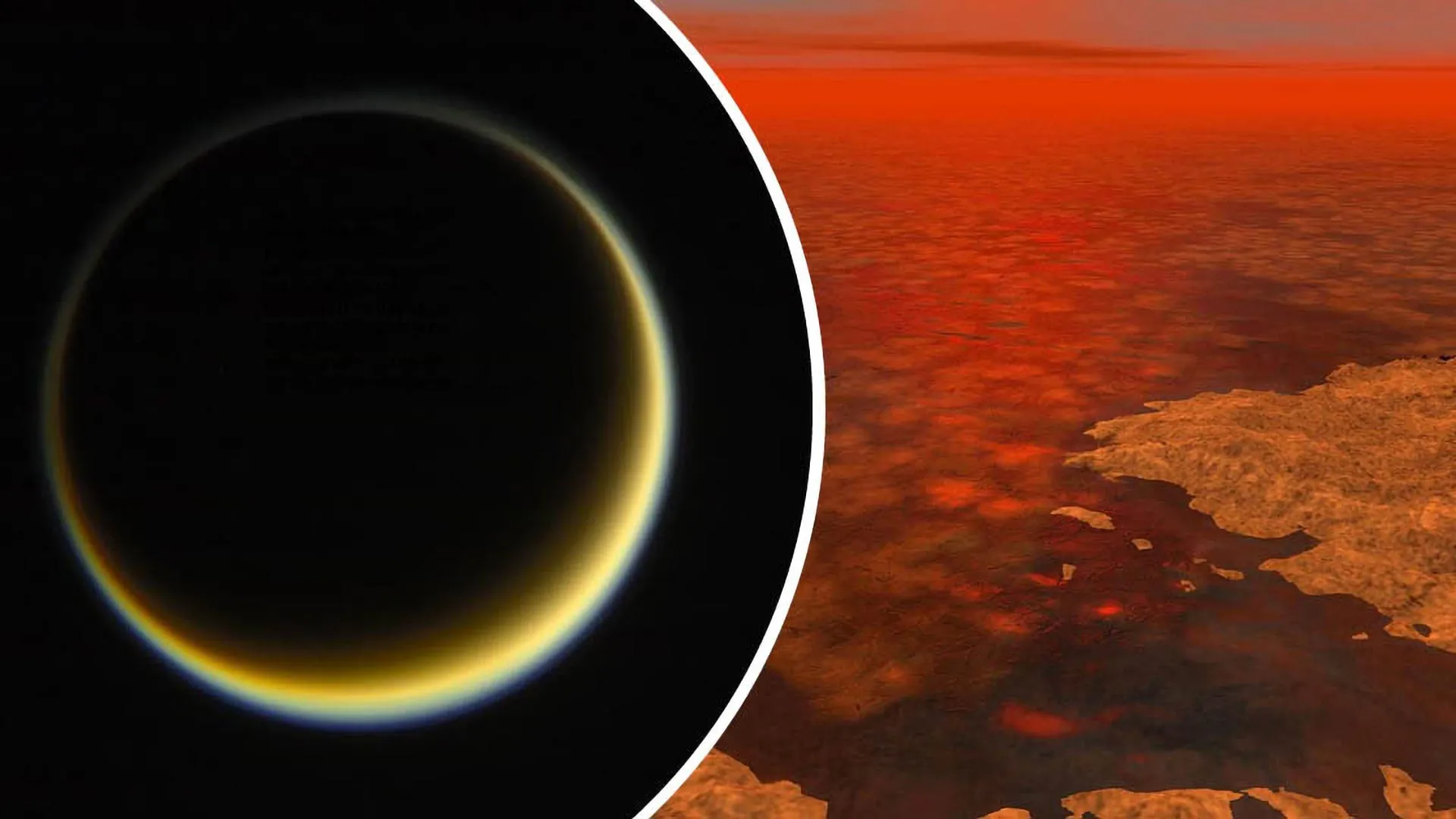
Scientists from Chalmers University of Technology in Sweden and NASA have made a surprising discovery that challenges one of chemistry’s fundamental principles, while also offering new insight into Saturn’s mysterious moon Titan. In Titan’s intensely cold environment, substances that normally cannot mix are able to combine. This finding expands our understanding of how chemistry may have worked before life appeared on Earth.
Saturn’s largest moon has long fascinated researchers because its evolution could shed light on the early chemical processes that once shaped our own planet. Titan’s frigid surface and its dense atmosphere, rich in nitrogen and methane, are thought to resemble the conditions that existed on the young Earth billions of years ago. By exploring Titan, scientists hope to uncover new clues about the origins of life itself.
Martin Rahm, Associate Professor at Chalmers’ Department of Chemistry and Chemical Engineering, has spent years investigating Titan’s chemistry. He and his colleagues now believe their latest finding — that certain polar and nonpolar substances* can combine under extreme cold — could guide future research into the moon’s surface and atmosphere.
“These are very exciting findings that can help us understand something on a very large scale, a moon as big as the planet Mercury,” he says.
New insights into the building blocks of life in extreme environments
The study, published in PNAS, reveals that methane, ethane, and hydrogen cyanide — compounds abundant on Titan’s surface and in its atmosphere — can interact in ways once thought impossible. The fact that hydrogen cyanide, a strongly polar molecule, can form crystals together with nonpolar substances like methane and ethane is remarkable, since these types of molecules usually stay separate, much like oil and water.
“The discovery of the unexpected interaction between these substances could affect how we understand the Titan’s geology and its strange landscapes of lakes, seas and sand dunes. In addition, hydrogen cyanide is likely to play an important role in the abiotic creation of several of life’s building blocks, for example amino acids, which are used for the construction of proteins, and nucleobases, which are needed for the genetic code. So our work also contributes insights into chemistry before the emergence of life, and how it might proceed in extreme, inhospitable environments,” says Martin Rahm, who led the study.
An unanswered question led to NASA collaboration
The Chalmers research began with a simple but unresolved question about Titan: What happens to hydrogen cyanide after it forms in the moon’s atmosphere? Does it accumulate in thick layers on the surface, or does it react with its surroundings in some way? To investigate, scientists at NASA’s Jet Propulsion Laboratory (JPL) in California performed experiments mixing hydrogen cyanide with methane and ethane at extremely low temperatures of about 90 Kelvin (around -180 degrees Celsius). At these temperatures, hydrogen cyanide becomes a crystal, while methane and ethane remain liquid.
When the team analyzed the mixtures using laser spectroscopy, which examines materials and molecules at the atomic level, they found that although the molecules stayed intact, something unusual had occurred. To understand it, they reached out to Rahm’s group at Chalmers, known for its deep expertise in hydrogen cyanide chemistry.
“This led to an exciting theoretical and experimental collaboration between Chalmers and NASA. The question we asked ourselves was a bit crazy: Can the measurements be explained by a crystal structure in which methane or ethane is mixed with hydrogen cyanide? This contradicts a rule in chemistry, ‘like dissolves like’, which basically means that it should not be possible to combine these polar and nonpolar substances,” says Martin Rahm.
Expanding the boundaries of chemistry
The Chalmers researchers used large scale computer simulations to test thousands of different ways of organizing the molecules in the solid state, in search of answers. In their analysis, they found that hydrocarbons had penetrated the crystal lattice of hydrogen cyanide and formed stable new structures known as co-crystals.
“This can happen at very low temperatures, like those on Titan. Our calculations predicted not only that the unexpected mixtures are stable under Titan’s conditions, but also spectra of light that coincide well with NASA’s measurements,” he says.
The discovery challenges one of the best-known rules of chemistry, but Martin Rahm does not think it is time to rewrite the chemistry books.
“I see it as a nice example of when boundaries are moved in chemistry and a universally accepted rule does not always apply,” he says.
In 2034, NASA’s space probe Dragonfly is expected to reach Titan, with the aim of investigating what is on its surface. Until then, Martin Rahm and his colleagues plan to continue exploring hydrogen cyanide chemistry, partly in collaboration with NASA.
“Hydrogen cyanide is found in many places in the Universe, for example in large dust clouds, in planetary atmospheres and in comets. The findings of our study may help us understand what happens in other cold environments in space. And we may be able to find out if other nonpolar molecules can also enter the hydrogen cyanide crystals and, if so, what this might mean for the chemistry preceding the emergence of life,” he says.
More about the research
The scientific article Hydrogen cyanide and hydrocarbons mix on Titan has been published in the journal PNAS. It was written by Fernando Izquierdo Ruiz, Morgan L. Cable, Robert Hodyss, Tuan H. Vu, Hilda Sandström, Alvaro Lobato Fernandez and Martin Rahm. The researchers are based at Chalmers University of Technology, Sweden, NASA’s Jet Propulsion Laboratory (JPL) at the California Institute of Technology (Caltech), USA, and Universidad Complutense de Madrid, Spain.
The research at Chalmers was funded by the Swedish Research Council.
More on Titan and Dragonfly Saturn’s largest moon, Titan, is among the Solar System’s most unusual worlds — and it may share features with Earth’s early evolution. Titan is surrounded by a thick atmosphere composed mostly of nitrogen and methane, a composition that could resemble the atmosphere on Earth billions of years ago, before life emerged. Sunlight and other radiation from space cause these molecules to react with each other, which is why the moon is shrouded in a chemically complex, orange-coloured haze of organic (i.e. carbon-rich) compounds. One of the main substances created in this way is hydrogen cyanide.
Titan’s extremely cold surface is home to lakes and rivers of liquid methane and ethane. It is the only other known place in our solar system, apart from Earth, where liquids form lakes on the surface. Titan has weather and seasons. There is wind, clouds form and it rains, albeit in the form of methane instead of water. Measurements also show that there is likely a large sea of liquid water many kilometres below the cold surface which, in principle, might harbour life.
In 2028, the US space agency NASA plans to launch the Dragonfly space probe, which is expected to reach Titan in 2034. The aim is to study prebiotic chemistry, the chemistry that precedes life, and to look for signs of life.
Notes
* About polar and nonpolar substances: Polar substances consist of molecules with an asymmetrical charge distribution (a positive side and a negative side), while nonpolar materials have a symmetrical charge distribution. Polar and nonpolar molecules rarely mix, because polar molecules preferentially attract one another via electrostatic interactions.
Rape Crisis Scotland argues Dr Andrew McFarlane has distressed his son’s victim and may cause harm to other rape survivors.
Let’s talk about sweat… From contestants on The Celebrity Traitors and scores of celebrities openly discussing it, to the trend of professionals using saunas for business meetings
The Dignified Death bill was passed in the senate, with 20 out of 31 legislators voting in favour.
The Dignified Death bill was passed in the senate, with 20 out of 31 legislators voting in favour.

For billions of years, Earth’s continents have remained remarkably steady, providing the groundwork for mountains, ecosystems, and human civilization. Yet the reason behind their long-term stability has puzzled scientists for more than a century. Now, researchers from Penn State and Columbia University have uncovered strong evidence explaining how the continents formed and maintained their endurance, and the crucial factor behind it is heat.
In a new study published in Nature Geoscience, the team found that creating long-lasting continental crust required extreme temperatures — over 900 degrees Celsius — in the planet’s lower crust. These intense conditions allowed radioactive elements such as uranium and thorium to move upward. As these elements decayed, they produced heat, and by migrating from the deep crust to higher levels, they carried heat away. This process helped the lower crust cool and solidify, ultimately strengthening it.
According to the researchers, the findings extend beyond understanding Earth’s geology. They could also aid modern efforts to locate valuable critical minerals, which are essential for technologies like smartphones, electric vehicles, and renewable energy systems, as well as guide the search for potentially habitable planets elsewhere.
The same processes that stabilized Earth’s crust also redistributed rare earth elements such as lithium, tin, and tungsten, revealing new clues about where these minerals may be found today. Similar heat-driven mechanisms could occur on other rocky planets, offering planetary scientists additional signs to identify worlds capable of supporting life.
“Stable continents are a prerequisite for habitability, but in order for them to gain that stability, they have to cool down,” said Andrew Smye, associate professor of geosciences at Penn State and lead author on the paper. “In order to cool down, they have to move all these elements that produce heat — uranium, thorium and potassium — towards the surface, because if these elements stay deep, they create heat and melt the crust.”
Smye explained that Earth’s continental crust, as it exists today, began forming about 3 billion years ago. Before that, the planet’s crust was very different — lacking the silicon-rich composition of modern continents. Scientists had long suspected that the melting of older crust played an important role in forming stable continental plates, but this study shows that the process required far higher temperatures than previously realized.
“We basically found a new recipe for how to make continents: they need to get much hotter than was previously thought, 200 degrees or so hotter,” Smye said.
He compared the process to forging steel.
“The metal is heated up until it becomes just soft enough so that it can be shaped mechanically by hammer blows,” Smye said. “This process of deforming the metal under extreme temperatures realigns the structure of the metal and removes impurities — both of which strengthen the metal, culminating in the material toughness that defines forged steel. In the same way, tectonic forces applied during the creation of mountain belts forge the continents. We showed that this forging of the crust requires a furnace capable of ultra-high temperatures.”
To reach their conclusions, the researchers analyzed rock samples from the Alps in Europe and the southwestern United States, along with data from previous scientific studies. They examined chemical information from hundreds of samples of metasedimentary and metaigneous rocks, which form much of the lower crust, and organized them based on their peak metamorphic temperatures — the highest temperatures reached while the rocks remained mostly solid but underwent physical and chemical changes.
The team compared rocks formed under high-temperature (HT) and ultrahigh-temperature (UHT) conditions. Smye and his co-author, Peter Kelemen, professor of earth and environmental sciences at Columbia University, discovered that rocks that had melted at temperatures above 900 °C consistently contained much lower amounts of uranium and thorium than those formed at cooler conditions.
“It’s rare to see a consistent signal in rocks from so many different places,” he said. “It’s one of those eureka moments that you think ‘nature is trying to tell us something here.'”
He explained that melting in most rock types occurs when the temperature gets above 650 °C or a little over six times as hot as boiling water. Typically, the further into the crust you go, the temperature increases by about 20 °C for every kilometer of depth. Since the base of most stable continental plates is about 30 to 40 kilometers thick, temperatures of 900 °C are not typical and required them to rethink the temperature structure.
Smye explained that earlier in Earth’s history, the amount of heat produced from the radioactive elements that made up the crust — uranium, thorium and potassium — was about double what it is today.
“There was more heat available in the system,” he said. “Today, we wouldn’t expect as much stable crust to be produced because there’s less heat available to forge it.”
He added that understanding how these ultra-high temperature reactions can mobilize elements in the Earth’s crust has wider implications for understanding the distribution and concentration of critical minerals, a highly sought-after group of metals that have proved challenging to mine and locate. If scientists can understand the reactions that first redistributed the valuable elements, theoretically they could better locate new deposits of the materials today.
“If you destabilize the minerals that host uranium, thorium and potassium, you’re also releasing a lot of rare earth elements,” he said.
The U.S. National Science Foundation funded this research.
