Catriona MacPhee worked in a Highland care home for seven weeks as part of BBC Disclosure investigation.


Catriona MacPhee worked in a Highland care home for seven weeks as part of BBC Disclosure investigation.
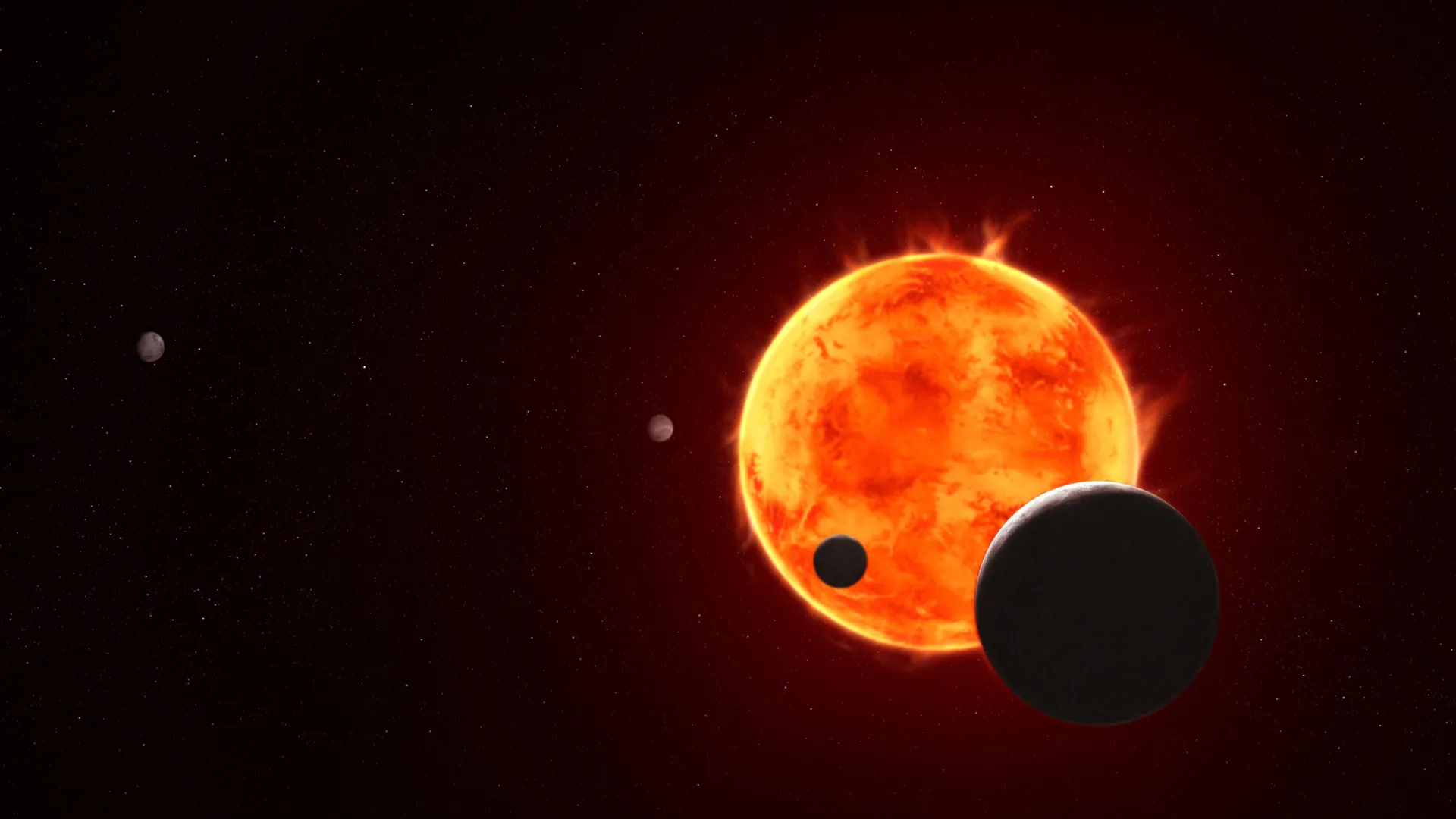
University of Bristol astrophysicists are helping shed new light on an Earth-sized exoplanet 40 light years away where liquid water in the form of a global ocean or icy expanse might exist on its surface.
That would only be possible if an atmosphere is present – a big mystery the scientists are attempting to unravel and now even closer to solving using the largest telescope in Space.
Deploying NASA’s JWST, the researchers have reached these discoveries as part of a major international project which is probing the atmosphere and surface of TRAPPIST-1e, also more simply known as planet e in the system, orbiting within the habitable zone of red dwarf star TRAPPIST-1.
Exoplanets are highly varied planets which orbit stars outside the solar system. Planet e is of particular interest because the presence of liquid water – not too hot or cold – is theoretically viable, but only if the planet has an atmosphere.
Researchers aimed JWST’s powerful NIRSpec (Near-Infrared Spectrograph) instrument at the system as planet e passed in front of its star. Starlight passing through the planet’s atmosphere, if there is one, will be partially absorbed and the corresponding dips in the light spectrum that reaches JWST tell astronomers what chemicals are found there. With each additional transit, the atmospheric contents become clearer.
Initial results, published in two scientific papers in the journal Astrophysical Journal Letters, indicate several potential scenarios, including the possibility of an atmosphere.
Dr Hannah Wakeford, Associate Professor in Astrophysics at the University of Bristol, is a leading member of the JWST Transiting Exoplanet team who helped design the observational set-up for the telescope to ensure scientists obtain vital data.
Dr Wakeford said: “What we have found with JWST in these first four observations helps refine the earlier Hubble measurements and reveals there might now be hints of an atmosphere, but we cannot yet rule out the possibility there is nothing to detect.”
“JWST’s infrared instruments are providing unprecedented detail, helping us understand much more about what determines a planet’s atmosphere and surface environment, and what they’re composed of. It’s incredibly exciting to be peeling back the curtain of these fascinating other worlds, measuring the details of starlight around Earth-sized planets to ascertain what it might be like, and if life could be possible. Through a careful process of elimination and comparison we’re uncovering great new insights.”
Although various possibilities remain open for planet e, the researchers are confident the planet does not have its original atmosphere.
Co-author of both studies, Dr David Grant, a former Senior Research Associate at the University of Bristol, explained: “The findings also further rule out the presence of a primordial hydrogen-based atmosphere. This is the gaseous envelope, mainly comprising hydrogen, that surrounded a planet in its early stages of formation. Such atmospheres are believed to be common for both giant planets and terrestrial planets in the early solar system.”
Dr Wakeford added: “Since TRAPPIST-1 is a very active star, with frequent flares, it’s not surprising that any hydrogen-helium atmosphere the planet may have formed would be stripped off by stellar radiation. Many planets, including Earth, build up a heavier secondary atmosphere after losing their primary atmosphere. It is possible planet e was never able to do this and doesn’t have a secondary atmosphere, but there’s an equal chance one does exist.”
The presence of a secondary atmosphere means liquid water could also exist on the surface and if that’s the case, researchers understand it would be accompanied by a greenhouse effect, akin to that of planet Earth, in which various gases, especially carbon dioxide, keep the atmosphere stable and the planet warm.
The second paper details work on the theoretical interpretation and lead author Dr Ana Glidden, a post-doctoral researcher at Massachusetts Institute of Technology, explained: “It is unlikely the atmosphere of planet e is dominated by carbon dioxide, like the thick atmosphere of Venus and the thin atmosphere of Mars. But it’s also important to note there are no direct parallels with our solar system. TRAPPIST-1 is a very different star from our Sun, and the planetary system around it is also distinct.”
Dr Wakeford added: “A little greenhouse effect can go a long way and the new measurements do not rule out sufficient carbon dioxide to sustain some liquid water on the surface. The liquid water could take the form of a global ocean, or cover a smaller area of the planet where the star is at perpetual noon, surrounded by ice. This would be possible because, owing to TRAPPIST-1’s planets’ sizes and close orbits to their star, they are all tidally locked, with one side always facing the star and the other side in perpetual darkness.”
Next steps in the research will involve further detailed observations, comparing data from another exoplanet – planet b – orbiting closest to TRAPPIST-1 in order to make more revelations.
One of the principal investigators of the research team focused on TRAPPIST-1e Dr Néstor Espinoza, an Associate Astronomer and Mission Scientist for Exoplanet Science at the the Space Telescope Science Institute (STScI) in Baltimore, Maryland, said: “Webb’s infrared instruments are giving us more detail than we’ve ever had access to before, and the initial four observations we’ve been able to make of planet e are showing us what we will have to work with when the rest of the information comes in.”
The JWST is the world’s premier space science observatory, capable of observing distant worlds and stars, and probing the mysterious structures of our universe. It is an international programme led by NASA, the European Space Agency, and the Canadian Space Agency.
The project is part of the JWST-TST DREAMS program, led by Dr Nikole Lewis, Associate Professor of Astronomy at Cornell University in the US city Ithaca, New York. This international project involves more than 30 scientists from the UK, USA, and India, five of whom are members or former members of Dr Wakeford’s team. It includes the breakthrough detection of Quartz clouds in the atmosphere of a hot exoplanet, as shown in a recent study, led by Dr Grant and co-authored by Dr Wakeford.

Contrary to widespread belief, yoga may be less effective than conventional forms of exercise in enhancing vascular health, according to a new study published in Advances in Integrative Medicine.
The study systematically reviews existing literature, including randomized controlled trials, crossover trials, and non-randomized studies, comparing yoga and other exercise interventions in sedentary adults.
The researchers point out that their aim has been to assess the impact of these interventions on vascular function, as measured by ultrasound.
Vascular function refers to the ability of blood vessels to efficiently transport blood to tissues. The elasticity and responsiveness of these vessels are critical indicators of cardiovascular health.
Sedentary behavior and prolonged sitting are known to impair vascular function, increasing the risk of hypertension, cholesterol buildup, and thrombosis.
Co-author Dr. Leena David, a specialist in medical diagnostic imaging and lecturer at the University of Sharjah, says:
“Think of blood vessels like flexible garden hoses. If they stiffen, the risk of heart attacks and strokes increases. Our study shows that structured exercise keeps those hoses flexible, while yoga provides some benefits but not as reliably. Middle-aged and older adults often notice improvements from yoga, but younger adults might not.”
The findings are particularly relevant for the estimated 300 million people worldwide who practice yoga and the more than 620 million individuals affected by cardiovascular disease as of 2023.
The researchers conclude that traditional exercise modalities, such as Tai Chi, Pilates, and high-intensity interval training, consistently outperform yoga in improving vascular function among sedentary individuals.
Dr. David emphasizes that while movement is essential, the type, intensity, and consistency of physical activity are key determinants of vascular health.
“Even simple routines can make arteries more resilient. Blood vessels have a memory — and every workout helps them forget the damage of sitting all day,” she adds.
She also describes prolonged sitting as “the new smoking — silent, sneaky, and stealing years from your arteries,” adding that “movement is the perfect antidote.”
While yoga remains accessible and culturally significant, the study suggests that individuals seeking consistent cardiovascular benefits may need to supplement yoga with more vigorous forms of exercise.
The authors advocate for a nuanced approach to physical activity, especially in public health messaging.
“Yoga has deep cultural roots and shows promise as an inclusive, accessible health intervention,” Dr. David notes.
“At the same time, the fitness and digital health industries can leverage these insights to develop structured exercise programs and technology-driven solutions for sedentary populations.”
The researchers hope their findings will encourage healthcare providers to recommend exercise not only for weight management but also as a proven strategy for improving vascular health.
Although yoga may not consistently enhance vascular function, it remains a valuable option, particularly for older adults and those unable or unwilling to engage in high-intensity workouts.
“On a larger scale, public health campaigns could emphasize that movement is medicine,” Dr. David explains. “This may encourage a mix of exercise and yoga to make heart health more accessible and culturally appropriate.
Forget the fitness goals — this is about protecting your body’s internal GPS system that keeps you alive.”
Only “good fortune” prevented ex-gynaecologist Daniel Hay from causing more harm to women, a report says.
US scientists testing the technique say it could help people overcome infertility and potentially allow same-sex couples to have a genetically related child.
Unwell with a bad throat and temperature? You may have one of the new Covid strains circulating this autumn.
The coroner opens the inquests into the deaths of Pauline Brown and Jennifer Fox.
A mum whose 12-week-old baby underwent emergency surgery for a brain tumour calls for better awareness.
The health secretary says “it’s not happening”, as ministers face questions about the prospect of tax rises.
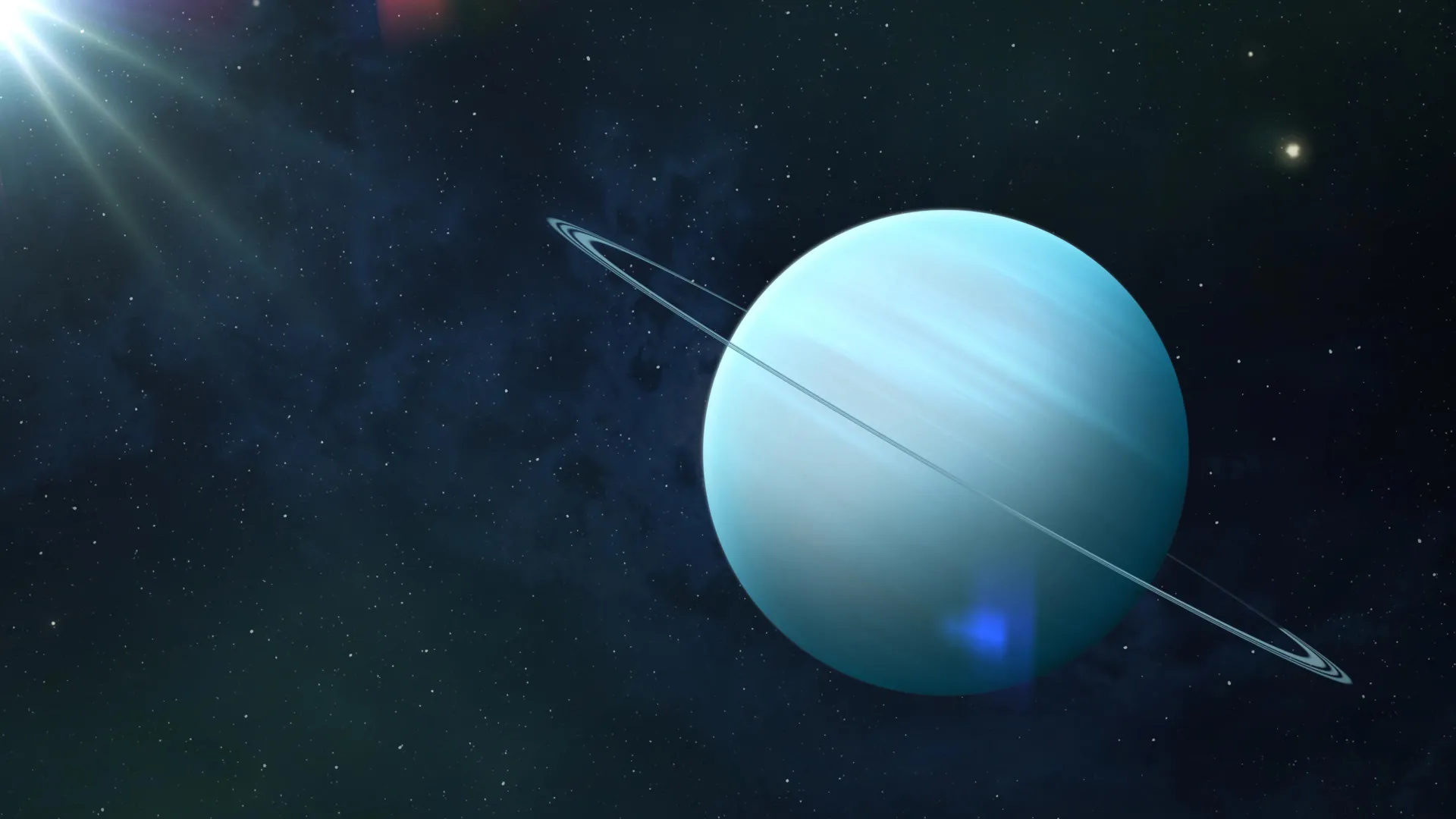
For millennia, astronomers thought Uranus was no more than a distant star. It wasn’t until the late 18th century that Uranus was universally accepted as a planet. To this day, the ringed, blue world subverts scientists’ expectations, but new NASA research helps puzzle out some of the world’s mystique.
For millennia, astronomers thought Uranus was no more than a distant star. It wasn’t until the late 18th century that Uranus was universally accepted as a planet. To this day, the ringed, blue world subverts scientists’ expectations, but new NASA research helps puzzle out some of the world’s mystique.
Uranus is unlike any other planet in our solar system. It spins on its side, which means each pole directly faces the Sun for a continuous 42-year “summer.” Uranus also rotates in the opposite direction of all planets except Venus. Data from NASA’s Voyager 2 Uranus flyby in 1986 also suggested the planet is unusually cold inside, challenging scientists to reconsider fundamental theories of how planets formed and evolved throughout our solar system.
“Since Voyager 2’s flyby, everybody has said Uranus has no internal heat,” said Amy Simon, a planetary scientist at NASA’s Goddard Space Flight Center in Greenbelt, Maryland. “But it’s been really hard to explain why that is, especially when compared with the other giant planets.”
These Uranus projections came from only one up-close measurement of the planet’s emitted heat made by Voyager 2: “Everything hinges on that one data point,” said Simon. “That is part of the problem.”
Now, using an advanced computer modeling technique and revisiting decades of data, Simon and a team of scientists have found that Uranus does in fact generate some heat, as they reported in the Monthly Notices of the Royal Astronomical Society journal.
A planet’s internal heat can be calculated by comparing the amount of energy it receives from the Sun to the amount it of energy it releases into space in the form of reflected light and emitted heat. The solar system’s other giant planets — Saturn, Jupiter, and Neptune — emit more heat than they receive, which means the extra heat is coming from inside, much of it left over from the high-energy processes that formed the planets 4.5 billion years ago. The amount of heat a planet exudes could be an indication of its age: the less heat released relative to the heat absorbed from the Sun, the older the planet is.
Uranus stood out from the other planets because it appeared to give off as much heat as it received, implying it had none of its own. This puzzled scientists. Some hypothesized that perhaps the planet is much older than all the others and has cooled off completely. Others proposed that a giant collision — the same one that may have knocked the planet on its side — blasted out all of Uranus’ heat. But none of these hypotheses satisfied scientists, motivating them to solve Uranus’ cold case.
“We thought, ‘Could it really be that there is no internal heat at Uranus?'” said Patrick Irwin, the paper’s lead author and professor of planetary physics at the University of Oxford in England. “We did many calculations to see how much sunshine is reflected by Uranus and we realized that it is actually more reflective than people had estimated.”
The researchers set out to determine Uranus’ full energy budget: how much energy it receives from the Sun compared to how much it reflects as sunlight and how much it emits as heat. To do this, they needed to estimate the total amount of light reflected from the planet at all angles. “You need to see the light that’s scattered off to the sides, not just coming straight back at you,” Simon said.
To get the most accurate estimate of Uranus’ energy budget yet, Oxford researchers developed a computer model that brought together everything known about Uranus’ atmosphere from decades of observations from ground- and space-based telescopes, including NASA’s Hubble Space Telescope and NASA’s Infrared Telescope Facility in Hawaii. The model included information about the planet’s hazes, clouds, and seasonal changes, all of which affect how sunlight is reflected and how heat escapes.
The researchers found that Uranus releases about 15% more energy than it receives from the Sun, a figure that is similar to another recent estimate from a separate study funded in part by NASA that was published July 14 in Geophysical Research Letters. These studies suggest Uranus it has its own heat, though still far less than its neighbor Neptune, which emits more than twice the energy it receives.
“Now we have to understand what that remnant amount of heat at Uranus means, as well as get better measurements of it,” Simon said.
Unraveling Uranus’ past is useful not only for mapping the timeline of when solar system planets formed and migrated to their current orbits, but it also helps scientists better understand many of the planets discovered outside the solar system, called exoplanets, a majority of which are the same size as Uranus.
