NASA’s Roman telescope will see 100 times more sky than Hubble

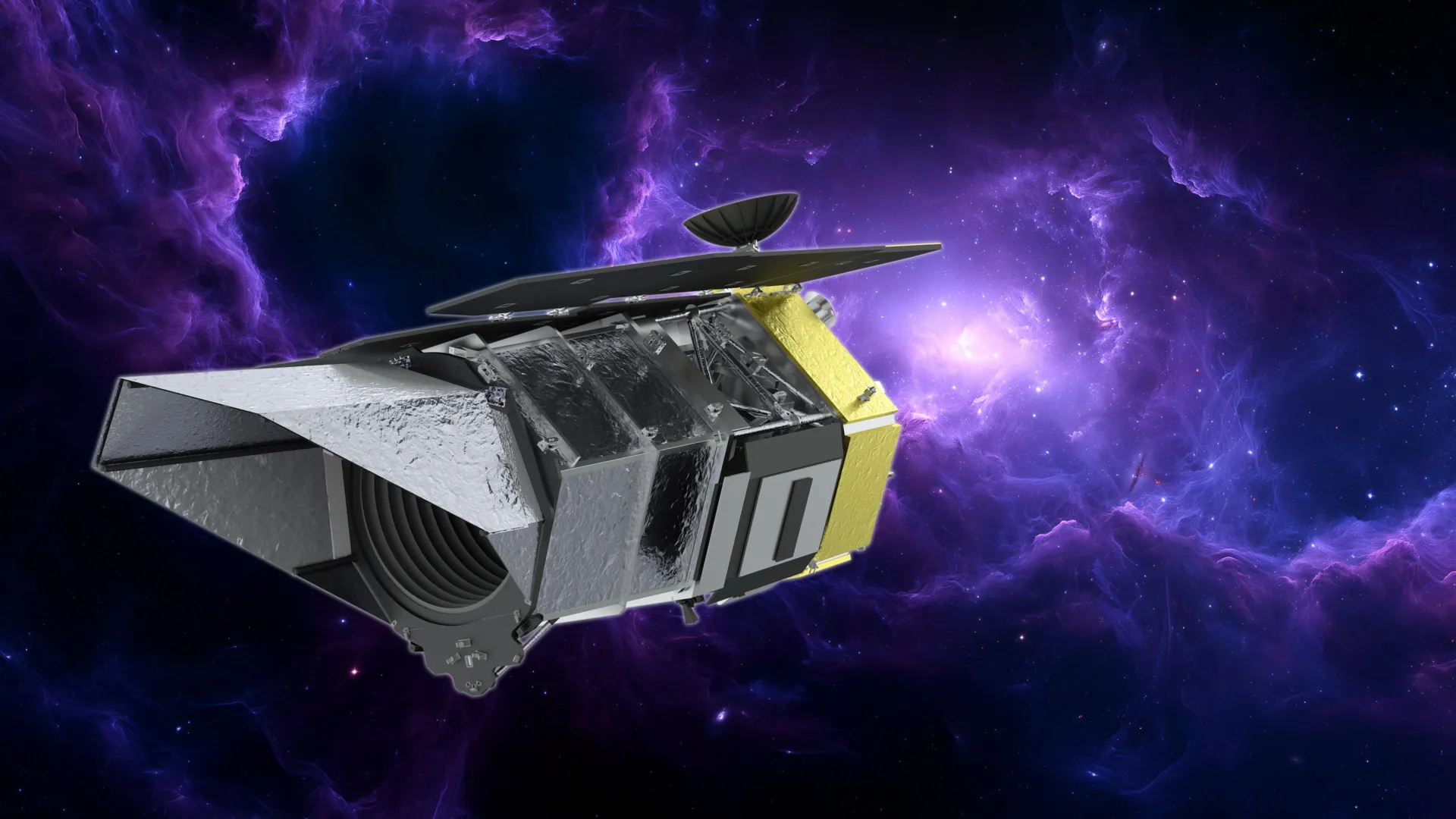
NASA’s Nancy Grace Roman Space Telescope is now just two days from launch, marking the arrival of the agency’s next flagship astrophysics mission after the James Webb Space Telescope. University of Arizona faculty and students will be watching from Cape Canaveral as Roman begins its journey toward science operations, which are expected to start in January 2027.

Unlike Webb, which was built to study relatively small regions of the universe in extraordinary depth, Roman is designed to survey vast areas of the sky quickly. Both observatories can detect infrared light, giving astronomers the ability to compare and combine their observations. Used together, the two missions could reveal far more about the universe than either telescope could on its own.

A Hubble-Sized Mirror With a Much Wider View

Roman has a 7.9-foot primary mirror, the same diameter as the Hubble Space Telescope’s, along with two major scientific instruments. Its Coronagraph Instrument will block and filter the light from stars so astronomers can study exoplanets and disks around them. Its Wide Field Instrument is designed to match the sensitivity of Hubble’s cameras while imaging an area 100 times larger.

Over more than 30 years, Hubble has observed roughly 0.1% of the night sky. Roman, by comparison, has the potential to survey the entire sky at the same resolution.

That wide view will allow Roman to find rare objects both close to Earth and across enormous cosmic distances. Scientists expect it to capture dying stars, newly discovered worlds, galaxy clusters and many other targets. University of Arizona researchers will contribute to several major areas of Roman science.

Probing Dark Matter and Dark Energy

One of Roman’s main scientific goals is to investigate dark matter and dark energy, two mysterious components that account for nearly all of the universe. Dark matter exerts gravity but does not give off light, while dark energy is associated with the accelerating expansion of the universe.

NASA selected the U of A’s Arizona Cosmology Lab to support two efforts aimed at better understanding these phenomena, including one wide-field science team and one project infrastructure team.

Elisabeth Krause, a professor of astronomy and physics, leads the wide-field science team “Kinematic Lensing with the Roman Space Telescope.” The group received $2 million to develop a cosmological measurement technique known as kinematic lensing.

By combining Roman images with spectroscopic measurements, the researchers hope to study dark matter and dark energy with greater precision than has previously been possible.

Another U of A group will play a leading role in the multi-institutional project infrastructure team “Maximizing Cosmological Science with the Roman High Latitude Imaging Survey.” Tim Eifler, a professor of astronomy and physics, leads the working group responsible for interpreting Roman’s cosmological observations.

Turning Galaxy Surveys Into a Map of the Universe

Roman will identify galaxies across a wide range of distances, determine where they are located, and measure their characteristics. Astronomers will use those observations to build large catalogs and then apply physical models to determine what those catalogs reveal about the structure and evolution of the universe.

Those calculations will require substantial computing power. The NASA Roman Project awarded Eifler’s lab $800,000 for computing resources that will become part of a new university-wide high-performance computing system scheduled to arrive this fall. The lab will also receive another $2.4 million over five years to carry out the science.

“This infrastructure will take us from catalogs to cosmological interpretation,” Eifler said. “We’ll be able to do things like determine how much dark energy and dark matter are in the universe.”

Eifler also serves as co-chair of the cosmology group, which includes more than 1,000 scientists around the world.

“It’s fantastic to rally the community and to organize us around this science case,” he said. “This really is a dream job.”

Directly Imaging Distant Planets

Roman’s Coronagraphic Instrument will use masks, prisms, detectors, filters, and self-flexing mirrors to demonstrate technologies capable of suppressing starlight. By reducing the overwhelming glare of a host star, astronomers can directly image nearby planets and disks that would otherwise be extremely difficult to see.

Direct imaging represents an important step forward in exoplanet science. Nearly all known exoplanets have been discovered indirectly, including through methods that detect the slight drop in a star’s brightness when a planet passes in front of it.

Roman’s coronagraph will instead help astronomers search for planets by blocking the glare from their stars. The instrument is expected to detect planets that are 100 million times fainter than their host stars, a performance 100 to 1,000 times better than existing space-based coronagraphs.

“It will be a crucial pathfinder for a future Habitable Worlds Observatory,” a recommended telescope that would be specifically designed to search for signs of life in other solar systems, said Schuyler Wolff, an associate research professor of astronomy leading the observation planning working group for the Coronagraph Instrument.

Preparing Roman’s Exoplanet Observations

Lunar and Planetary Laboratory director Mark Marley, associate professor of astronomy Ewan S. Douglas, Steward Observatory assistant research professor Ramya Anche, and astronomy postdoctoral research associate Justin Hom also helped develop the Coronagraph Instrument. They will participate in future science through the observation planning working group.

Marley, together with LPL associate professor Ty Robinson and LPL postdoctoral research associate Zarah Brown, will use Coronagraph Instrument data to study the atmospheres of planets beyond our solar system.

Brown has been modeling the climates and spectra of self-luminous giant planets. These worlds are often young and hot enough to emit their own thermal infrared light.

The model predicts atmospheric temperature, composition and clouds, along with the infrared spectrum each object should produce. Those predictions are especially important because most of these planets have never been observed at these wavelengths.

“That predicted spectrum is critical for planning,” Brown said. “Roman’s coronagraph is working with extremely faint, high-contrast targets, so the team has to schedule enough observing time to detect a candidate without burning more of the mission’s limited time than necessary.”

Anche’s team is examining the structure of extrasolar systems, while Hom is leading efforts to identify the best stars for calibrating the Coronagraph Instrument. Hom also leads precursor observing programs with ground-based telescopes, work that is essential for confirming which targets should be selected for future Roman science programs.

Roman Science Begins in January 2027

Once Roman begins science operations in January, its data will be made available to researchers across the scientific community.

The U of A will lead nine NASA-approved investigations using Roman data, bringing in more than $2 million in funding. Researchers will use those observations to investigate additional topics including supermassive black holes, gravitational lenses, galaxy formation, reionization and cosmic dust.


Share Button

What are the symptoms of Hypermobility Spectrum Disorder?

The disorder may affect hundreds of thousands of people in the UK, but many face significant delays in getting a diagnosis.

Share Button

Scientists tested 212 plant-based meat alternatives. Every one contained fungal toxins

A large survey of plant-based foods and beverages sold in the UK has found that mycotoxins, toxic compounds naturally produced by fungi, are widespread across vegetarian and vegan products.

Researchers analyzed 212 plant-based meat alternatives (PMBAs) and plant-based beverages (PBBs) purchased from UK stores. Every product tested contained at least one of 19 mycotoxins, and some contained several.

The study was led by the University of Parma in Italy and coauthored by Cranfield University. Researchers examined a wide range of products commonly available to UK shoppers, including burgers, vegetarian chicken pieces, vegan sausages, and oat, almond and soy-based milks.

Why Mycotoxins Appear in Plant-Based Foods

Mycotoxins can be especially common in plant-based products because many of their ingredients, including grains, legumes and seeds, may be exposed to mould while they are being grown or stored.

Despite the widespread detection of mycotoxins, the levels measured in the UK products remained below recommended EU guideline levels. The researchers said this reflects the high quality standards maintained by the UK food industry.

Long-Term Exposure Could Still Matter

The concern is not necessarily the amount present in a single product. Previous research studies have indicated that repeated exposure to small amounts of mycotoxins can add up over time and may eventually create health concerns.

Eating individual plant-based products is therefore unlikely to cause problems on its own. However, the researchers say that a diet based entirely on plant foods could increase cumulative exposure to mycotoxins if that exposure is not properly managed. In severe cases, mycotoxin exposure has been associated with liver and kidney damage, suppression of the immune system, and cancer.

The findings provide new data that can be used to estimate dietary exposure and improve risk assessments for consumers in the UK.

Experts Call for Better Monitoring

Andrea Patriarca, Senior Lecturer in Mycology at Cranfield University, said:

“Mycotoxins occur naturally in foods and cannot be completely avoided. As consumers, we should not be frightened or deterred from enjoying a variety of products.

“However, a significant concern arises when new foods enter the market, as there are currently no established regulations to monitor mycotoxins. We collaborate closely with various sectors in the food industry, from farmers to food companies, to help implement effective mycotoxin management integrated within food safety standards. The data from our research helps food safety organisations in assessing risks, particularly in complex multi-ingredient products.

“We are currently collaborating with the University of Parma to evaluate the risks faced by the population based on different dietary habits. Our aim is to advise policymakers and raise awareness among vulnerable consumers.”

The full research paper, “Mycotoxin contamination in plant-based beverages and meat alternatives: A survey of the UK market,” is published in Food Control.

This work was carried out under the Horizon Europe FunShield4Med project (HORIZON-WIDERA-2021-ACCESS-03) Grant Agreement No 101079173 funded by the European Union.

Share Button

NHS bosses warn of chaos in ADHD and autism care

Costs are spiralling out of control as unregulated private providers capitalise on demand, say managers.

Share Button

Hypermobility – the little-known ‘bendy disease’ that causes pain and fatigue

The disorder may affect hundreds of thousands in the UK, but many face delays in getting a diagnosis.

Share Button

Does salmonella come from salmon?

More people have become ill in an outbreak of salmonella food poising.

Share Button

‘Take care of yourself now’

Grammy award-winning soprano Angel Bluehow discusses how a recent health diagnosis has affected her.

Share Button

“I jumped from my chair” – Astronomers spot Betelgeuse’s hidden companion

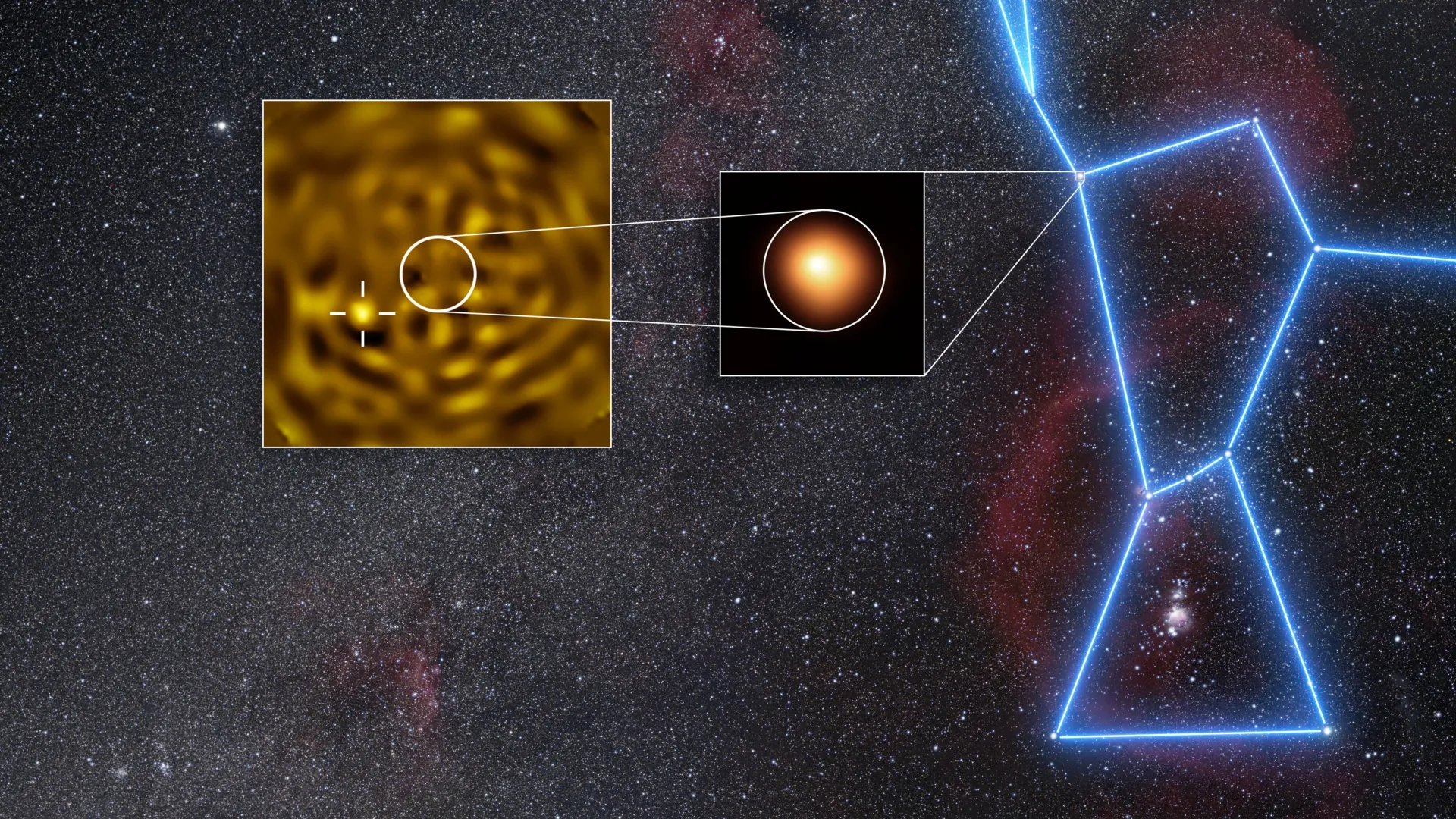
Astronomers now have their strongest evidence yet that Betelgeuse, one of the best-known stars in the night sky, has a stellar companion. A team led by French astronomer Miguel Montargès used the European Southern Observatory’s Very Large Telescope (ESO’s VLT) to capture the clearest image so far of what is believed to be Betelgeuse B, a star orbiting the famous red supergiant.

“This is the conclusion of a century-long quest,” says Montargès.

“We have shown that Betelgeuse is not single, it is accompanied by a faint stellar companion,” says Montargès, astronomer at the Observatoire de Paris — PSL, France, and lead author of the study published today in Astronomy & Astrophysics.

Betelgeuse — a reddish star in the Orion constellation that is easily visible with the naked eye and is known to change in brightness — has been watched by people for thousands of years. Even after centuries of scientific observation, however, the star continues to produce surprises.

A Century-Long Search for Betelgeuse B

“I jumped from my chair when I saw the processed images,” recalls Montargès.

The possibility that Betelgeuse has a companion was first raised roughly a century ago as a potential explanation for some of its changes in brightness. Despite decades of observations, astronomers had been unable to clearly detect such a star.

That changed after Two studies published in 2024 made strong predictions about where the suspected companion should be. The studies indicated that Betelgeuse B would reach its greatest apparent separation from Betelgeuse in December 2024, giving astronomers their best opportunity to see it.

Montargès and his colleagues observed Betelgeuse with ESO’s VLT that December. They then spent several months carefully processing and analyzing the observations.

“Honestly, I thought we did not have the sensitivity to detect Betelgeuse B as it was predicted,” explains Montargès. “Because it is more massive than predicted, we see it!”

Scientists had initially estimated that the companion would have roughly the same mass as the Sun. The new observations instead suggest that Betelgeuse B is considerably larger, with about two to three times the Sun’s mass.

“The fact that we can still discover a nearby companion, more massive and brighter than the Sun, around such a well-studied star is remarkable,” says Montargès. “These are among the best moments in science: seeing something new, unexpected.”

The Clearest Image Yet of Betelgeuse’s Companion

The researchers directly imaged Betelgeuse B, meaning they detected light coming from the companion itself. They accomplished this using the SPHERE instrument on ESO’s VLT in Chile’s Atacama Desert.

Previous observations had already provided clues that the companion existed, including a possible direct detection made with the Gemini North Telescope in Hawaiʻi, USA. The latest VLT observations, however, provide the strongest evidence so far and the clearest image yet of Betelgeuse B.

“It is remarkable to see how SPHERE and advanced post-processing techniques, originally developed to find exoplanets, also excel at detecting a companion around a massive, evolved star like Betelgeuse,” says co-author Anthony Boccaletti, also an astronomer at the Observatoire de Paris.

The case is not considered completely closed yet. Astronomers want another observation showing the candidate companion where its orbit predicts it should next appear.

“To be certain that the companion is really there, we still need to observe it in one year on the other side of the star, but there is very little space left for doubt,” adds Montargès.

Betelgeuse’s Famous Dimming Event

Betelgeuse attracted worldwide attention several years ago when its brightness noticeably dropped. Because the evolved supergiant is expected to eventually end its life in a supernova explosion, the dramatic dimming prompted speculation that the star might be preparing to explode.

That turned out not to be the explanation. A team led by Montargès studied the star with ESO’s VLT and found that a cloud of dust was instead blocking part of Betelgeuse’s light.

Now the likely discovery of Betelgeuse B introduces another factor astronomers must consider when studying the star’s evolution.

Could the Companion Affect Betelgeuse’s Supernova?

Researchers will now investigate whether Betelgeuse B could influence the future evolution of the red supergiant, including its eventual supernova explosion.

“The question is truly opened whether this companion is going to have an impact on the evolution of the red supergiant,” concludes Montargès.

The research was presented in a paper titled “VLT/SPHERE images the candidate companion of Betelgeuse” to appear in Astronomy & Astrophysics.

The team is composed of M. Montargès (Laboratoire d’Instrumentation et de Recherche en Astrophysique, Observatoire de Paris, Université PSL, Sorbonne Université, Université Paris Cité, CY Cergy Paris Université, CNRS, France [LIRA]), A. Boccaletti (LIRA), O. Flasseur (Universite Claude Bernard Lyon 1, Centre de Recherche Astrophysique de Lyon UMR5574, ENS de Lyon, CNRS, France), A. de Koter (University of Amsterdam, Anton Pannekoek Institute for Astronomy, The Netherlands), J. Milli (Univ. Grenoble Alpes, CNRS, IPAG, France), P. Kervella (French-Chilean Laboratory for Astronomy, IRL 3386, CNRS and U. de Chile, Chile and LIRA), S. Ridgway (National Optical Astronomy Observatory, USA), E. Bordier (I. Physikalisches Institut der Universität zu Köln, Germany), E. Lagadec (Université Côte dAzur, Observatoire de la Côte dAzur, CNRS, Laboratoire Lagrange, France), A. K. Dupree (Center for Astrophysics-Harvard & Smithsonian, USA), F. Backs (Institute of Astronomy, KU Leuven, Belgium), T. Calderwood (American Association of Variable Star Observers, USA [AAVSO]), and P. Morgan (AAVSO).

Share Button

Your dislike of eating bugs may be 9,000 years old

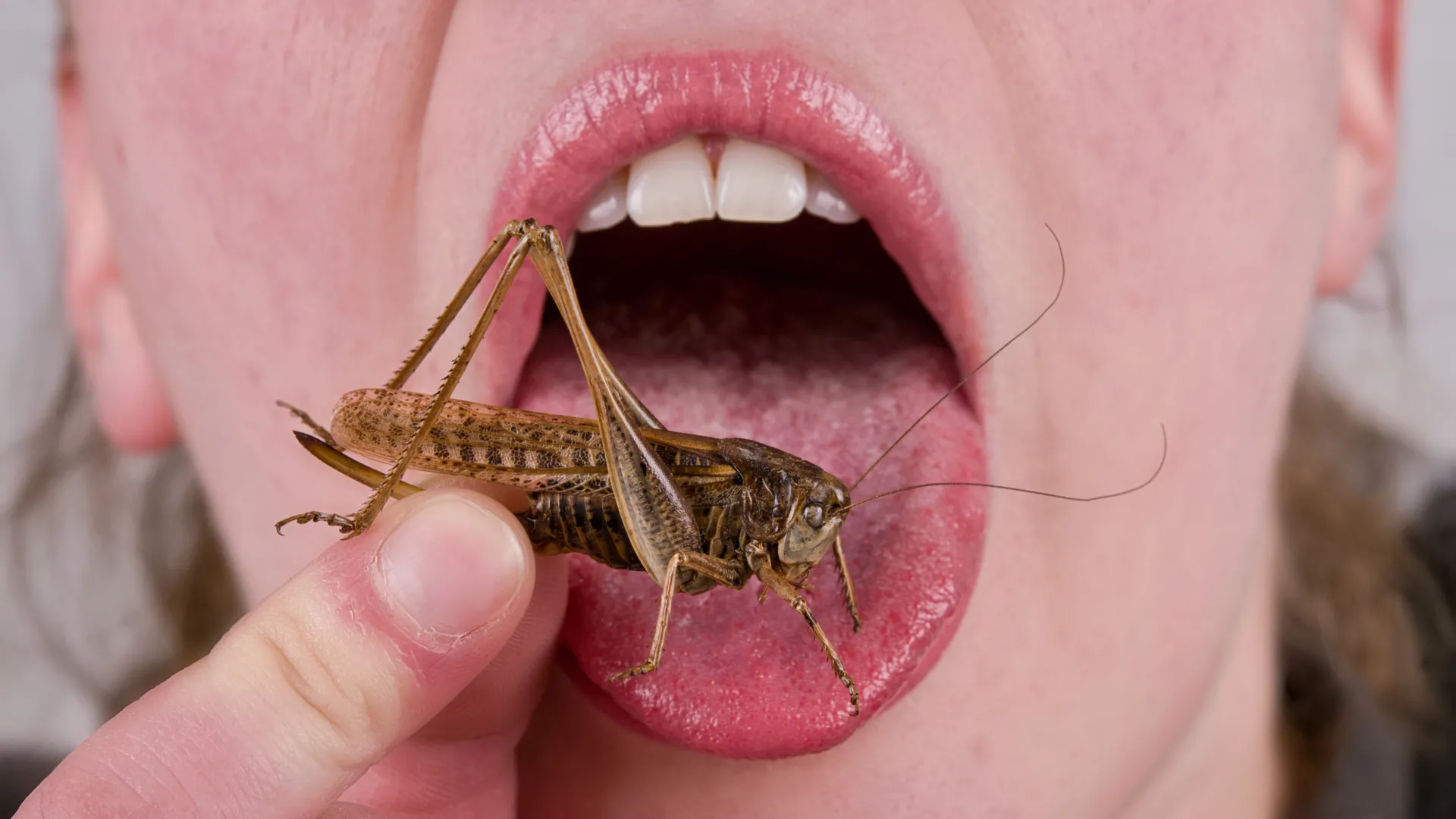
As the global population grows and climate change places increasing pressure on food systems, researchers and policymakers are looking more closely at alternative sources of nutrition. Insects are one possible option. A total of 1,611 insect species are classified as edible, and organizations including the Food and Agriculture Organization of the United Nations (FAO) have highlighted insects as a potentially sustainable food source.

Even so, many Western societies remain strongly resistant to entomophagy, or eating insects, despite the fact that hundreds of millions of people around the world already include insects in their diets. Culture may help explain that reluctance, but scientists have not known how far back it goes or what other forces may have shaped it.

Researchers from the Institute of Evolutionary Biology (IBE), a joint center of the Spanish National Research Council (CSIC) and Pompeu Fabra University (UPF), have now used genomic evidence to reconstruct patterns of insect consumption stretching back thousands of years. Their findings, published in Science Advances, indicate that eating insects was probably occasional and accidental in Europe, Central and East Asia, while it appears to have been more common in tropical regions and among Neanderthals. The work offers new insights into human evolution, ecology, and modern attitudes toward insect-based foods.

Ancient Teeth Reveal Insect Eating in Eurasia

To search for direct signs of insect consumption, the IBE researchers examined 745 samples of dental calculus (tartar) from anatomically modern humans dating back as far as 33,000 years. Dental tartar can trap and preserve DNA from species that were regularly eaten, providing researchers with a record of ancient diets.

The results suggest that modern humans living in northern Eurasia did not regularly eat insects. The team also examined genes involved in breaking down chitin, a major component of insect exoskeletons. Among North Eurasian populations, chitinase genes contain mutations associated with a reduced ability to digest insect exoskeletons. That genetic pattern has persisted for roughly 9,000 years, dating back to the rise of agriculture.

“The scarce presence of insects in the diet of northern Eurasians suggests that the absence of entomophagy is not solely due to recent cultural factors, but also to a long ecological and evolutionary history,” says Pablo Librado, principal investigator at the IBE who led the study.

Neanderthals Show More Evidence of Eating Insects

The picture was different for Neanderthals. Although they lived in many of the same environments as anatomically modern humans, their dental calculus contained considerably more insect DNA.

The amount detected in Neanderthal samples was similar to levels found in western chimpanzees, which use insects to supplement their diets on the savanna, particularly during droughts.

Among the most common genetic traces in Neanderthal tartar were remains from Diptera, the insect group that includes flies and mosquitoes. Mosquito DNA was especially abundant. The results support a recent hypothesis that Neanderthals may have regularly eaten animal carcasses containing fly larvae.

The strong presence of mosquito remains also lends support to the idea that prey carcasses may sometimes have been stored in ponds or marshy environments, where mosquitoes would have laid their eggs.

Genetic evidence points in the same direction. Neanderthal chitinase genes appear to have supported more efficient insect digestion, a pattern also detected in the only Denisovan specimen included in the analysis.

Tropical Populations Retained Insect-Digesting Genes

The researchers also investigated genes involved in digesting the chitin found in insect exoskeletons. These genes are active in the stomach and produce the enzymes chitinase acid (CHIA) and chitobiase (CTBS).

Across both ancient and modern samples, populations living closer to tropical regions were more likely to carry genetic variants associated with higher expression of these enzymes.

“Large quantities of insects need to be ingested to compensate for the high caloric expenditure involved in their collection. In the tropics, there is a greater availability of social insects, such as termites and locusts: their biomass and diversity allow for sustainable exploitation throughout the year, which even contributes to pest control,” explains Manuel Piñero, a predoctoral researcher at the IBE and first author of the study.

As human populations expanded toward higher latitudes, expression of these digestive enzymes gradually declined. The geographic pattern has remained in place for at least 9,000 years and appears to reflect the gradual abandonment of insect eating among European populations.

Why Insect Eating Declined in Europe

The findings suggest that Western reluctance to eat insects may have roots that extend far beyond recent customs or religious traditions.

“Beyond cultural or religious factors, our results suggest that the reduced availability of insects in non-tropical areas may have been a key factor in the abandonment of entomophagy, leading to a reduced capacity to digest insect exoskeletons,” Librado comments.

In other words, ecology may have helped shape both dietary behavior and human biology. In regions where insects were less abundant and harder to collect in large quantities, they may simply have become less worthwhile as a food source over time.

Could Insects Return to the Menu?

Modern food production changes that equation. Industrial processing can make it possible to use the nutritional benefits of insects without requiring people to directly digest as much of the chitin in their exoskeletons. Insect farming also makes large-scale production possible.

The Ancient Population Genomics research group led by Pablo Librado at the IBE is now studying how insect domestication develops. Researchers are using species recently approved for human consumption as models and comparing the genomes of farmed insects with those of pre-domestication individuals preserved in entomological collections.

“We investigate the evolution of domestication in animals, which also gives us information to improve the exploitation of insects for consumption, both as animal feed and for human consumption,” Librado concludes.

Share Button

UK salmonella cases nearing 500 as egg investigations continue

Close to 500 people have become ill with salmonella linked to imported eggs, say UK authorities who are investigating more clusters.

Share Button