The hidden ways light at night damages your brain, mood, and metabolism

In a comprehensive Genomic Press Innovators & Ideas interview published today, distinguished neuroscientist Dr. Randy J. Nelson shares insights from his pioneering research on how disrupted circadian rhythms affect brain function and overall health. The interview, published in Brain Medicine, traces Dr. Nelson’s unconventional path from farm work and autopsy assistant to becoming one of the world’s leading authorities on biological rhythms.

Dr. Nelson, who chairs the Department of Neuroscience at West Virginia University, has spent the past decade uncovering the hidden dangers of artificial light exposure. His research demonstrates that light at night doesn’t just affect sleep quality; it fundamentally alters immune function, triggers neuroinflammation, disrupts metabolism, and influences mood regulation.

From Turkey Processing Plant to Top Research Institution

The interview reveals Dr. Nelson’s remarkable journey to academic prominence. After working night shifts at a turkey processing plant during high school and later conducting postmortem examinations at two Cleveland hospitals, he eventually found his way to the University of California, San Diego, through an unexpected job opportunity at the San Diego Zoo.

“My path to academia is typical in the sense that it is not ‘typical,'” Dr. Nelson reflects in the interview. His unique background, including becoming the first person in the United States to simultaneously earn two separate PhDs (in Psychology and Endocrinology from UC Berkeley), shaped his integrative approach to neuroscience research.

Circadian Disruption: A Modern Health Crisis

Dr. Nelson’s laboratory has published groundbreaking findings on how exposure to artificial light at night affects multiple body systems. The research goes beyond simple sleep disturbance to reveal profound effects on physiological processes that evolved over millions of years to function in sync with natural light-dark cycles.

Key areas of impact identified by Dr. Nelson’s research include immune system dysfunction, where light exposure at inappropriate times can suppress typical immune responses or trigger excessive inflammation. The work also demonstrates clear links between circadian disruption and metabolic disorders, potentially contributing to the obesity epidemic. Perhaps most concerningly, the research shows direct effects on mood regulation, with implications for understanding depression and anxiety disorders.

What specific wavelengths of light are most disruptive to circadian rhythms? How quickly can the body recover from chronic light exposure? What is the contribution of time-of-day as a biological variable? These questions drive ongoing investigations in Dr. Nelson’s laboratory.

Translating Discovery to Clinical Practice

Moving beyond foundational research, Dr. Nelson’s team currently conducts clinical trials examining whether blocking disruptive light effects can improve outcomes for intensive care patients. Two major trials focus on stroke recovery and cardiac surgery patients, populations particularly vulnerable to the harsh lighting conditions typical of hospital ICUs.

“Circadian rhythms are a fundamental aspect of biology, and much is known from foundational science about them,” Dr. Nelson explains. “However, little of this foundational science has been translated to clinical medicine.”

The research also extends to healthcare workers themselves. A third clinical trial investigates whether bright blue light visors can help night shift nurses reset their circadian rhythms, potentially improving their sleep quality, cognitive performance, and mood. Could similar interventions help other shift workers across various industries maintain better health despite irregular schedules?

Time as a Biological Variable

One of Dr. Nelson’s most provocative proposals involves recognizing time-of-day as a crucial biological variable in all research. He argues that experimental results can vary dramatically depending on when studies are conducted, yet this information rarely appears in scientific publications.

“The answer to an experimental question may depend in part on the time-of-day when the question is asked,” Dr. Nelson notes. This observation has profound implications for research reproducibility and could explain why some studies fail to replicate previous findings.

Building the Next Generation of Neuroscientists

Throughout his career at Johns Hopkins University, Ohio State University, and now West Virginia University, Dr. Nelson has mentored 25 PhD students and 16 postdoctoral researchers. His leadership philosophy emphasizes creating supportive environments where young scientists can thrive. His mentoring philosophy has been featured in a recent Society for Neuroscience Neuronline podcast.

As current president of the Association of Medical School Neuroscience Department Chairs, Dr. Nelson advocates for resources and policies that support early-career researchers. He particularly values helping faculty members navigate the challenging early stages of their careers through strategic resource allocation and mentorship.

What role might circadian rhythm research play in addressing the mental health crisis among graduate students and postdocs? How can academic institutions better support work-life integration for researchers studying around-the-clock biological processes?

A Vision for Healthier Living

Dr. Nelson’s research carries immediate practical implications for public health. Simple interventions like reducing evening screen time, using warmer light colors after sunset, and maintaining consistent sleep schedules could significantly impact population health. His work suggests that respecting our evolutionary heritage by aligning modern life more closely with natural light patterns could prevent numerous chronic health conditions. He recently published a trade book with Oxford University Press entitled, “Dark Matters,” to help the general public appreciate the importance of good circadian hygiene for health and wellness.

The interview also touches on Dr. Nelson’s personal interests, including travel, biking, and gardening, activities that keep him connected to natural rhythms. His favorite place remains Southern California, where his academic journey began through that serendipitous opportunity at the San Diego Zoo decades ago. Dr. Randy J. Nelson’s Genomic Press interview is part of a larger series called Innovators & Ideas that highlights the people behind today’s most influential scientific breakthroughs. Each interview in the series offers a blend of cutting-edge research and personal reflections, providing readers with a comprehensive view of the scientists shaping the future. By combining a focus on professional achievements with personal insights, this interview style invites a richer narrative that both engages and educates readers. This format provides an ideal starting point for profiles that explore the scientist’s impact on the field, while also touching on broader human themes.


Share Button

How safe are wireless headphones?

Looking at hearing protection – from noise-cancelling headphones to ear plugs

Share Button

How a ‘seated salsa’ can help your lower back

It’s hard to tone your lower back muscles, but this handy exercise can help.

Share Button

Support network helped us to breastfeed, say mums

Two mums who struggled to breastfed their babies say a peer support group helped them.

Share Button

What really happens to your body when you stop weight loss drugs like Ozempic

Patients prescribed drugs to help them lose weight may experience a rebound in weight gain after halting their prescription, finds a meta-analysis published in BMC Medicine. The study, which analyses data for patients receiving weight loss drugs across 11 randomised trials, suggests that while the amount of weight regain varies depending on the specific drug, there is a broad trend in associated weight regain after the course of medication concluded.

Six anti-obesity medications (AOMs) have been approved by the US FDA for use in assisting with weight loss, including orlistat, phentermine-topiramate, and semaglutide. Glucagon-like peptide-1 (GLP-1) — a therapeutic developed to assist with diabetes — has also increasingly been prescribed to help patients lose weight. However, recent studies have suggested that patients prescribed AOMs may regain weight in the months after stopping taking these medications.

Xiaoling Cai, Linong Ji, and colleagues conducted a meta-analysis of 11 studies from around the world investigating weight change in patients after they stopped taking AOMs. Overall, the authors analysed data from 1,574 participants in treatment groups and 893 in control groups. Weight change was measured by changes in body weight and BMI after stopping medication. Of the 11 studies included in the meta-analysis: six focused on GLP-1 receptor agonists (RAs); one focused on GLP-1 and GLP dual Ras; one study focused on orlistat; two studies on phentermine-topiramate; and one study on naltexone-bupriopion.

The authors controlled for different contributing factors, including medication type, the presence of diabetes, and the presence or absence of lifestyle changes like diet or exercise. Their analysis found that AOMs were associated with significant weight loss while being used, followed by weight regain starting eight weeks after AOM discontinuation, with weight regain then continuing for an average of 20 weeks before plateauing. Weight regain varied with follow-up, with study participants experiencing significant periods of weight regain at eight, 12, and 20 weeks after AOM discontinuation. The amount of weight regained depended on several factors, including the type of medication taken by participants and the consistency of their lifestyle change. For example, participants who completed a 36-week treatment of tirzepatide, a commercially available GLP-1 RA, regained almost half the weight previously lost after switching to a placebo.

The authors note the meta-analysis did not include studies of lifestyle interventions and bariatric surgery, reducing the degree to which different weight loss approaches could be compared within the context of the study. They also note that weight regain has been reported with other weight loss methods, such as gastric bypass and vertical banded gastroplasty.

Share Button

A walk-in fishermen’s clinic saved Tom from sepsis – and could transform the NHS

Tom Parker was treated in one of 70 harbour health clinics after breaking his fibula fishing at sea.

Share Button

Daily weight loss pill could help patients lose 12% of body weight

Trials of a daily obesity pill showed patients lost about 12% of their body weight over 72 weeks.

Share Button

Hubble just exposed a rare and violent star collision

University of Warwick astronomers have uncovered compelling evidence that a nearby white dwarf is in fact the remnant of two stars merging — a rare stellar discovery revealed through Hubble Space Telescope ultraviolet observations of carbon in the star’s hot atmosphere.

White dwarfs are the dense cores left behind when stars exhaust their fuel and collapse. They are Earth-sized stellar embers weighing typically half as much as the Sun, made up of carbon-oxygen cores with surface layers of helium and hydrogen. While white dwarfs are common in the universe, those with exceptionally high mass (weighing more than the Sun) are rare and enigmatic.

In a paper published on August 6 in Nature Astronomy, Warwick astronomers report on their investigations of a known high-mass white dwarf 130 light-years away, called WD 0525+526. With a mass 20% larger than our Sun, WD 0525+526 is considered “ultra-massive,” and how this star came to be is not fully understood.

Such a white dwarf could form from the collapse of a massive star. However, ultraviolet data from the Hubble Space Telescope revealed WD 0525+526 to have small amounts of carbon rising from its core into its hydrogen-rich atmosphere — suggesting this white dwarf did not originate from a single massive star.

“In optical light (the kind of light we see with our eyes), WD 0525+526 looks like a heavy but otherwise ordinary white dwarf,” said first author Dr Snehalata Sahu, Research Fellow at the University of Warwick. “However, through ultraviolet observations obtained with Hubble, we were able to detect faint carbon signatures that were not visible to optical telescopes.

“Finding small amounts of carbon in the atmosphere is a telltale sign that this massive white dwarf is likely to be a be the remnant of a merger between two stars colliding. It also tells us there may be many more merger remnants like this masquerading as common pure-hydrogen atmosphere white dwarfs. Only ultraviolet observations would be able to reveal them to us.”

Normally, hydrogen and helium form a thick barrier-like envelope around a white dwarf core, keeping elements like carbon hidden. In a merger of two stars, the hydrogen and helium layers can burn off almost completely as the stars combine. The resulting single star has a very thin envelope that no longer prevents carbon from reaching the surface — this is exactly what is found on WD 0525+526.

Antoine Bédard, Warwick Prize Fellow in the Astronomy and Astrophysics group at Warwick and co-first author said, “We measured the hydrogen and helium layers to be ten-billion times thinner than in typical white dwarfs. We think these layers were stripped away in the merger, and this is what now allows carbon to appear on the surface.

“But this remnant is also unusual: it has about 100,000 times less carbon on its surface compared to other merger remnants. The low carbon level, together with the star’s high temperature (nearly four times hotter than the Sun), tells us WD 0525+526 is much earlier in its post-merger evolution than those previously found. This discovery helps us build a better understand the fate of binary star systems, which is critical for related phenomena like supernova explosions.”

Adding to the mystery is how carbon reaches the surface at all in this much hotter star. The other merger remnants are later in their evolution and cool enough for convection to bring carbon to the surface. But WD 0525+526 is far too hot for that process. Instead, the team identified a subtler form of mixing called semi-convection, seen here for the first time in a white dwarf. This process allows small amounts of carbon to slowly rise into the star’s hydrogen-rich atmosphere.

“Finding clear evidence of mergers in individual white dwarfs is rare,” added Professor Boris Gänsicke, Department of Physics, University of Warwick, who obtained the Hubble data for this study. “But ultraviolet spectroscopy gives us the ability to detect these signs early, when the carbon is still invisible at optical wavelengths. Because the Earth’s atmosphere blocks ultraviolet light, these observations must be carried out from space, and currently only Hubble can do this job.

“Hubble just turned 35 years old, and while still going strong, it is very important that we start planning for a new space telescope that will eventually replace it.”

As WD 0525+526 continues to evolve and cool, it is expected that more carbon will emerge at its surface over time. For now, its ultraviolet glow offers a rare glimpse into the earliest stage of a stellar merger’s aftermath — and a new benchmark for how binary stars end their lives.

Share Button

Extra-strong nicotine pouches packaged like children’s sweets

Nicotine products designed to appeal to children are being openly sold in shops in Scotland.

Share Button

This prehistoric predator survived global warming by eating bones

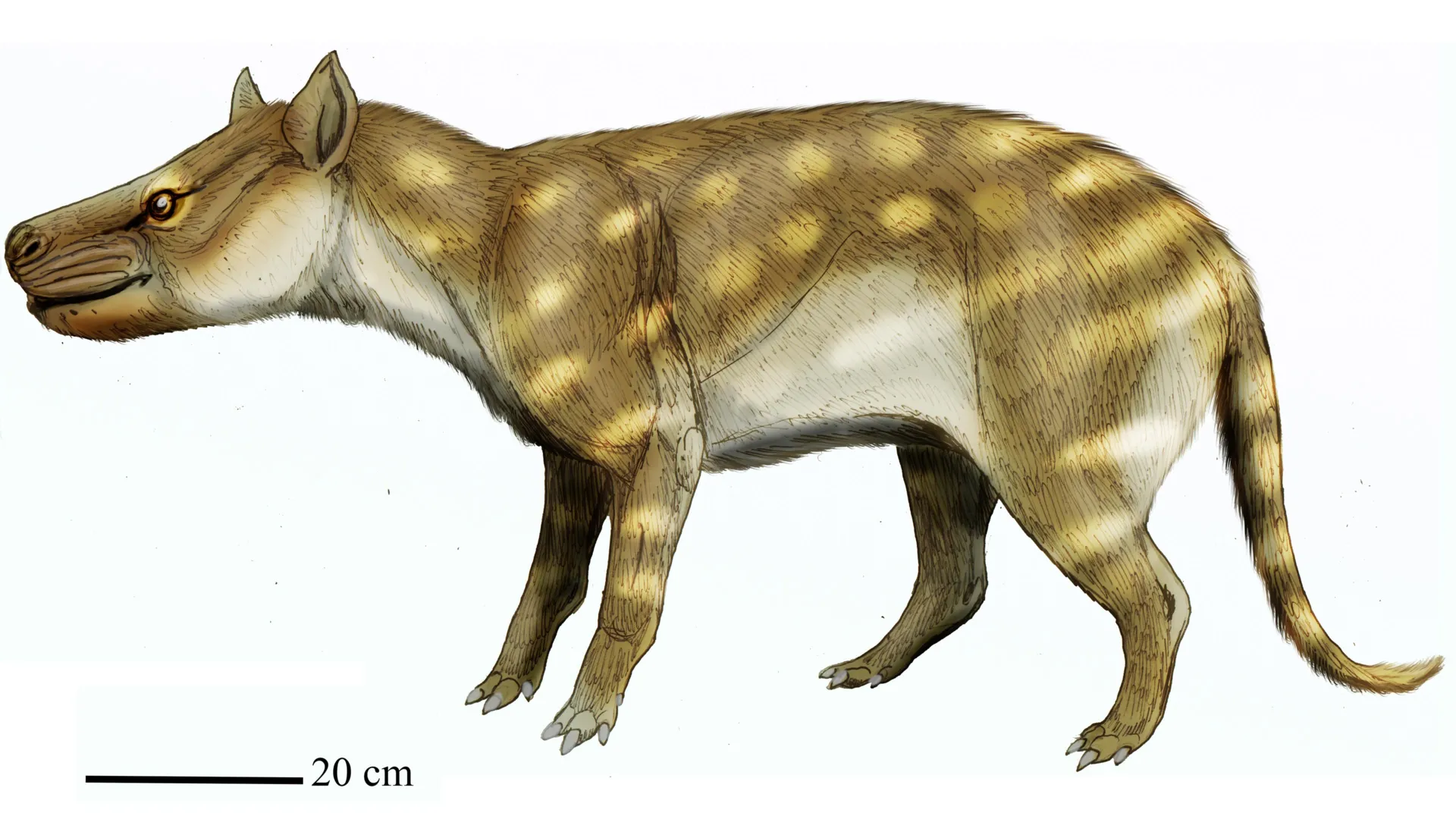
About 56 million years ago, when Earth experienced a dramatic rise in global temperatures, one meat-eating mammal responded in a surprising way: It started eating more bones.

That’s the conclusion reached by a Rutgers-led team of researchers, whose recent study of fossil teeth from the extinct predator Dissacus praenuntius reveals how animals adapted to a period of extreme climate change known as the Paleocene-Eocene Thermal Maximum (PETM). The findings, published in the journal Palaeogeography, Palaeoclimatology, Palaeoecology, could help scientists predict how today’s wildlife might respond to modern global warming.

“What happened during the PETM very much mirrors what’s happening today and what will happen in the future,” said Andrew Schwartz, a doctoral student in the Department of Anthropology at the School of Arts and Sciences, who led the research. “We’re seeing the same patterns. Carbon dioxide levels are rising, temperatures are higher and ecosystems are being disrupted.”

Associate Professor Robert Scott of the Department of Anthropology is a co-author of the study.

Schwartz, Scott and another colleague used a technique called dental microwear texture analysis to study the tiny pits and scratches left on fossilized teeth. These marks reveal what kinds of food the animal was chewing in the weeks before it died.

The ancient omnivore was about the size of a jackal or a coyote and likely consumed a mix of meat and other food sources like fruits and insects. “They looked superficially like wolves with oversized heads,” Schwartz said, describing them as “super weird mammals.” “Their teeth were kind of like hyenas. But they had little tiny hooves on each of their toes.”

Before this period of rising temperatures, Dissacus had a diet similar to modern cheetahs, eating mostly tough flesh. But during and after this ancient period, its teeth showed signs of crunching harder materials, such as bones.

“We found that their dental microwear looked more like that of lions and hyenas,” Schwartz said. “That suggests they were eating more brittle food, which were probably bones, because their usual prey was smaller or less available.”

This dietary shift happened alongside a modest reduction in body size, likely because of food scarcity. While earlier hypotheses blamed shrinking animals on hotter temperatures alone, this latest research suggests that limited food played a bigger role, Schwartz said.

This period of rapid global warming lasted about 200,000 years, but the changes it triggered were fast and dramatic. Schwartz said studies of the past like his can offer practical lessons for today and what comes next.

“One of the best ways to know what’s going to happen in the future is to look back at the past,” he said. “How did animals change? How did ecosystems respond?”

The findings also highlight the importance of dietary flexibility, he said. Animals that can eat a variety of foods are more likely to survive environmental stress.

“In the short term, it’s great to be the best at what you do,” Schwartz said. “But in the long term, it’s risky. Generalists, meaning animals that are good at a lot of things, are more likely to survive when the environment changes.”

Such an insight may be helpful for modern conservation biologists, allowing them to identify which species today may be most vulnerable, he said. Animals with narrow diets, such as pandas, may struggle as their habitats shrink. But adaptable species, including jackals or raccoons, might fare better.

“We already see this happening,” Schwartz said. “In my earlier research, jackals in Africa started eating more bones and insects over time, probably because of habitat loss and climate stress.”

The study also showed that rapid climate warming as seen during the ancient past can lead to major changes in ecosystems, including shifts in available prey and changes in predator behavior. This may suggest that modern climate change could similarly disrupt food webs and force animals to adapt, or risk extinction, he said.

Even though Dissacus was a successful and adaptable animal that lived for about 15 million years, it eventually went extinct. Scientists think this happened because of changes in the environment and competition from other animals, Schwartz said.

Schwartz conducted his research using a combination of fieldwork and lab analysis, focusing on fossil specimens from the Bighorn Basin in Wyoming, a site with a rich and continuous fossil record spanning millions of years. Schwartz chose the location because it preserves a detailed sequence of environmental and ecological changes during the ancient period of climate warming.

Schwartz has been interested in paleontology, specifically dinosaurs, since he was a boy, journeying with his father, an amateur fossil hunter, on treks through New Jersey’s rivers and streams. Now, as a late-stage doctoral student, he hopes to use ancient fossils to answer urgent questions about the future.

He also wants to inspire the next generation of researchers.

“I love sharing this work,” he said. “If I see a kid in a museum looking at a dinosaur, I say, ‘Hey, I’m a paleontologist. You can do this, too.'”

In addition to Schwartz and Scott, Larisa DeSantis of Vanderbilt University is an author of the study.

Share Button