Crushing vs. Slashing: New skull scans reveal how giant dinosaurs killed

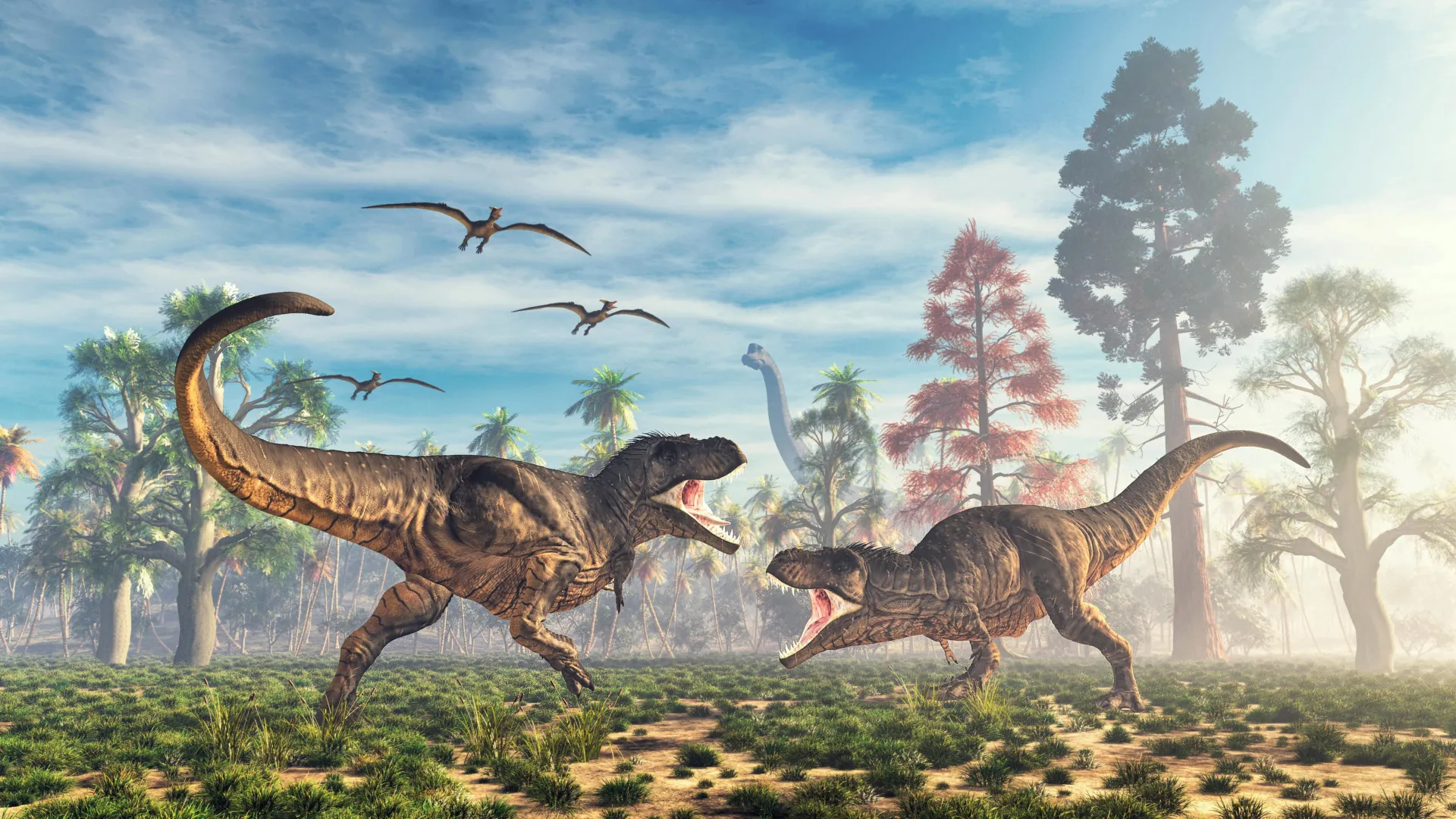
A new analysis of the bite strength of 18 species of carnivorous dinosaurs shows that while the Tyrannasaurus rex skull was optimized for quick, strong bites like a crocodile, other giant, predatory dinosaurs that walked on two legs — including spinosaurs and allosaurs — had much weaker bites and instead specialized in slashing and ripping flesh. Reported in the Cell Press journal Current Biology on August 4, these findings demonstrate that meat-eating dinosaurs followed different evolutionary paths in terms of skull design and feeding style despite their similarly gigantic sizes.

“Carnivorous dinosaurs took very different paths as they evolved into giants in terms of feeding biomechanics and possible behaviors,” said Andrew Rowe of the University of Bristol, UK.

“Tyrannosaurs evolved skulls built for strength and crushing bites, while other lineages had comparatively weaker but more specialized skulls, suggesting a diversity of feeding strategies even at massive sizes. In other words, there wasn’t one ‘best’ skull design for being a predatory giant; several designs functioned perfectly well.”

Rowe has always been fascinated by big carnivorous dinosaurs, and he considers them interesting subjects for exploring basic questions in organismal biology. In this study, he and co-author Emily Rayfield wanted to know how bipedalism — or walking on two legs — influenced skull biomechanics and feeding techniques.

It was previously known that despite reaching similar sizes, predatory dinosaurs evolved in very different parts of the world at different times and had very different skull shapes. For Rowe and Rayfield, those facts raised questions about whether their skulls were functionally similar under the surface or if there were notable differences in their predatory lifestyles. As there are no massive, bipedal carnivores alive today — ever since the end-Cretaceous mass extinction event — the authors note that studying these animals offers intriguing insights into a way of life which has since disappeared.

To examine the relationship between body size and skull biomechanics, the authors used 3D technologies including CT scans and surface scans analyze the skull mechanics, quantify the feeding performance, and measure the bite strength across 18 species of therapod, a group of carnivorous dinosaurs ranging from small to giant. While they expected some differences between species, they were surprised when their analyses showed clear biomechanical divergence.

“Tyrannosaurids like T. rex had skulls that were optimized for high bite forces at the cost of higher skull stress,” Rowe says. “But in some other giants, like Giganotosaurus, we calculated stress patterns suggesting a relatively lighter bite. It drove home how evolution can produce multiple ‘solutions’ to life as a large, carnivorous biped.”

Skull stress didn’t show a pattern of increase with size. Some smaller therapods experienced greater stress than some larger species due to increased muscle volume and bite forces. The findings show that being a predatory biped didn’t always equate to being a bone-crushing giant. Unlike T. rex, some dinosaurs, including the spinosaurs and allosaurs, became giants while maintaining weaker bites more suited for slashing at prey and stripping flesh.

“I tend to compare Allosaurus to a modern Komodo dragon in terms of feeding style,” Rowe says. “Large tyrannosaur skulls were instead optimized like modern crocodiles with high bite forces that crushed prey. This biomechanical diversity suggests that dinosaur ecosystems supported a wider range of giant carnivore ecologies than we often assume, with less competition and more specialization.”

This research was supported by funding from the Biotechnology and Biological Sciences Research Council.

Share Button

Scientists just cracked the code to editing entire chromosomes flawlessly

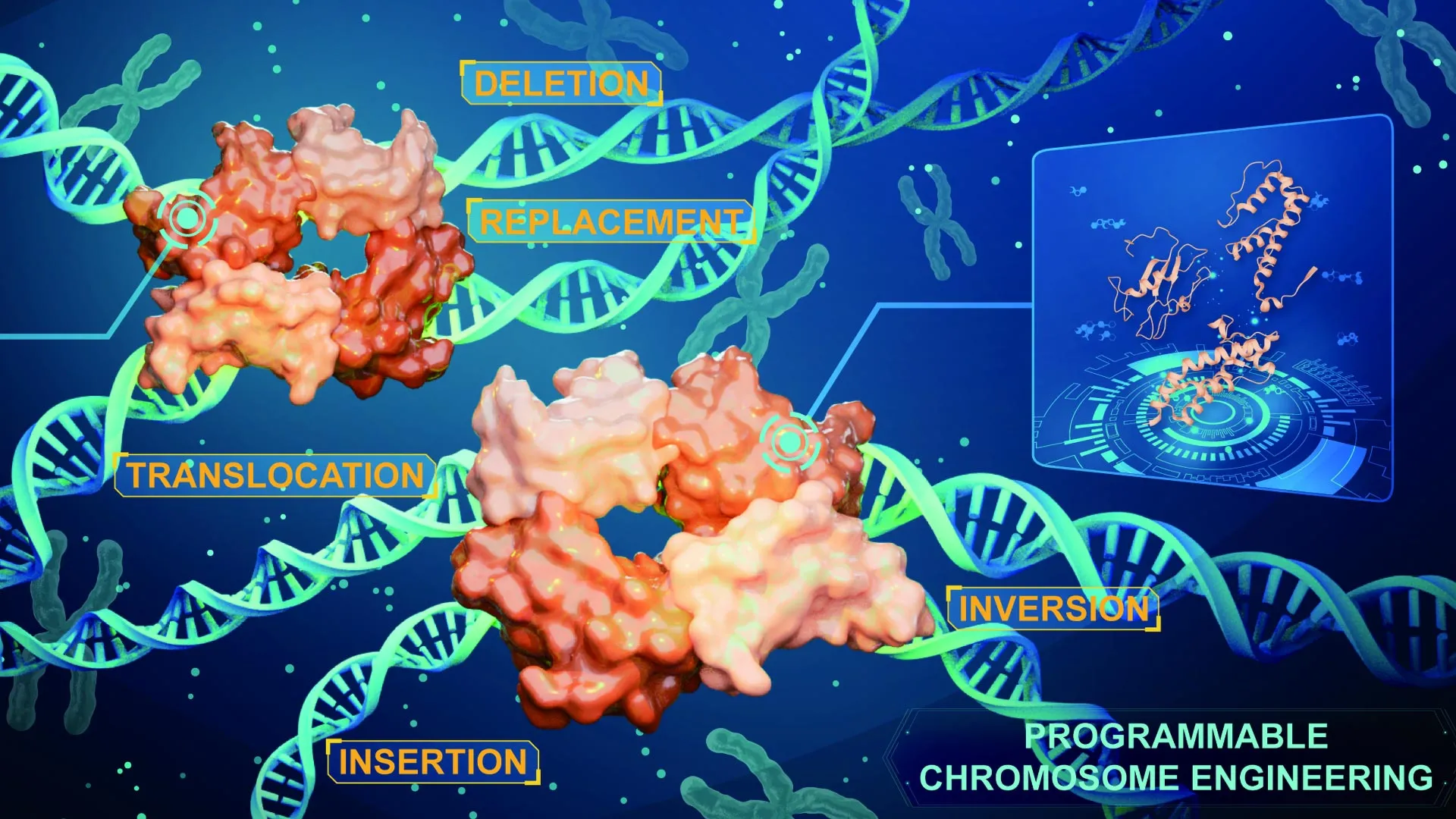
A team of Chinese researchers led by Prof. GAO Caixia from the Institute of Genetics and Developmental Biology of the Chinese Academy of Sciences has developed two new genome editing technologies, known collectively as Programmable Chromosome Engineering (PCE) systems.

The study, published online in Cell on August 4, achieves multiple types of precise DNA manipulations ranging from kilobase to megabase scale in higher organisms, especially plants.

Extensive research has demonstrated the immense potential of the site-specific recombinase Cre-Lox system for precise chromosomal manipulation. However, its broader application has been hindered by three critical limitations:

  1. Reversible recombination reactions — stemming from the inherent symmetry of Lox sites — can negate desired edits.
  2. The tetrameric nature of Cre recombinase complicates engineering efforts, hindering activity optimization.
  3. Residual Lox sites after recombination may compromise editing precision.

The research team addressed each of these challenges and developed novel methods to advance the state of this technology. First, they built a high-throughput platform for rapid recombination site modification and proposed an asymmetric Lox site design. This led to the development of novel Lox variants that reduce reversible recombination activity by over 10-fold (approaching the background level of negative controls) while retaining high-efficiency forward recombination.

They then leveraged their recently developed AiCE (AI-informed Constraints for protein Engineering), model — a protein-directed evolution system integrating general inverse folding models with structural and evolutionary constraints — to develop AiCErec, a recombinase engineering method. This approach enabled precise optimization of Cre’s multimerization interface, yielding an engineered variant with a recombination efficiency 3.5 times that of wild-type Cre.

Lastly, they designed and refined a scarless editing strategy for recombinases. By harnessing the high editing efficiency of prime editors, they developed Re-pegRNA, a method that uses specifically designed pegRNAs to perform re-prime editing on residual Lox sites, precisely replacing them with the original genomic sequence, thereby ensuring seamless genome modifications.

The integration of these three innovations led to the creation of two programmable platforms, PCE and RePCE. These platforms allow flexible programming of insertion positions and orientations for different Lox sites, enabling precise, scarless manipulation of DNA fragments ranging from kilobase to megabase scale in both plant and animal cells. Key achievements include: targeted integration of large DNA fragments up to 18.8 kb, complete replacement of 5-kb DNA sequences, chromosomal inversions spanning 12 Mb, chromosomal deletions of 4 Mb, and whole-chromosome translocations.

As a proof of concept, the researchers used this technology to create herbicide-resistant rice germplasm with a 315-kb precise inversion, showcasing its transformative potential for genetic engineering and crop improvement.

This pioneering work not only overcomes the historical limitations of the Cre-Lox system but also opens new avenues for precise genome engineering in a variety of organisms.

Share Button

Nurses punched in face at violent children’s unit

Bosses at the Great Western Hospital in Swindon have described the behaviour as “unacceptable”.

Share Button

New town dentist disputes NHS ‘no need’ claim

A new surgery says its repeated offers to treat NHS patients have been turned down by officials.

Share Button

New support helps parents cope with ICU trauma

Charlotte says she feared the worst when her baby was taken into intensive care at St Mary’s Hospital.

Share Button

Obesity jab patients need a plan to stop weight coming back, health experts say

Patients coming off Wegovy or Mounjaro should have support and advice for at least a year afterwards, NHS told.

Share Button

Scientists reexamine 47-year-old fossil and discover a new Jurassic sea monster

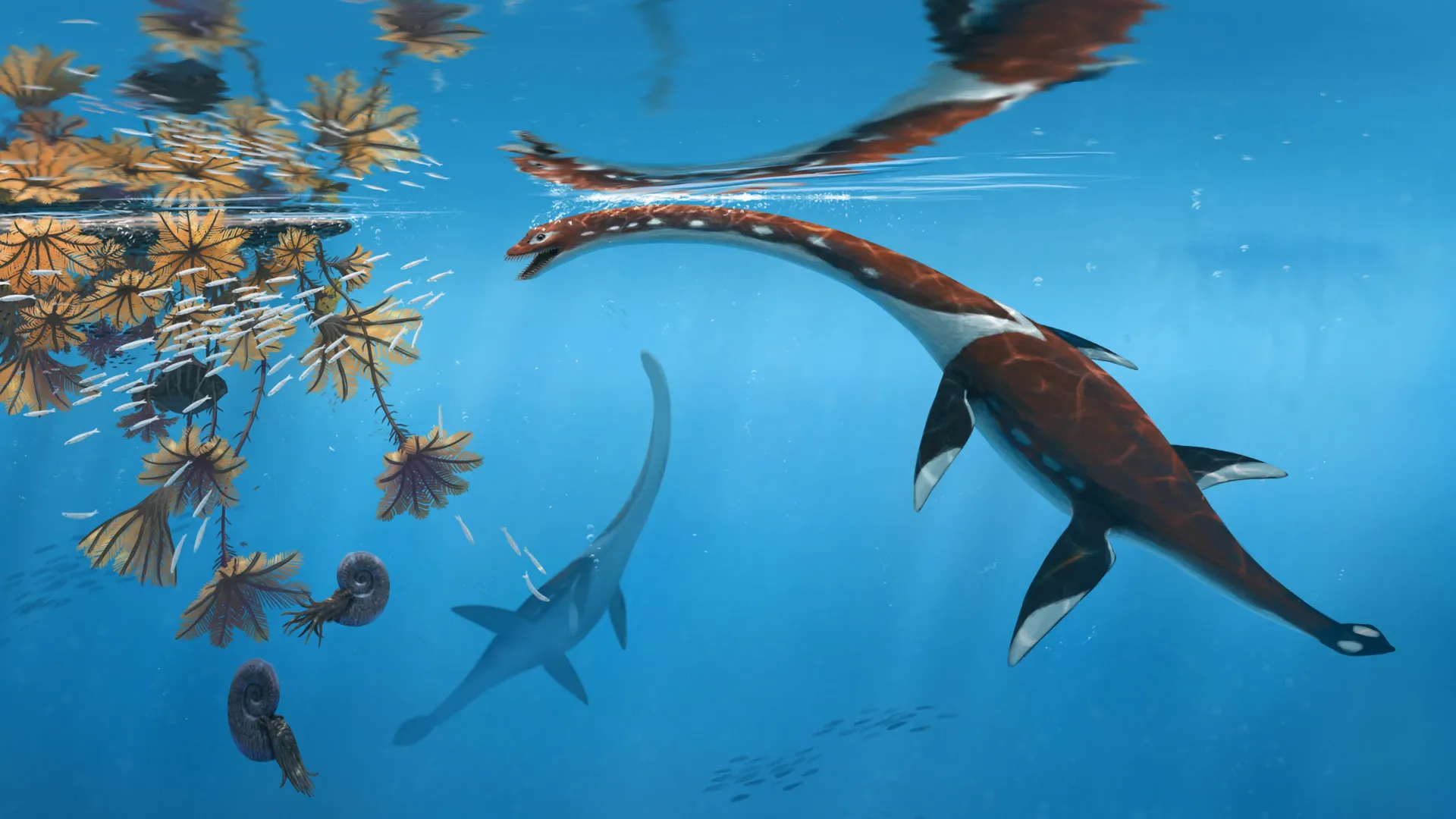
Paleontologists have identified a new species of ancient marine reptile from Germany’s world-renowned Posidonia Shale fossil beds, expanding our understanding of prehistoric ocean ecosystems that existed nearly 183 million years ago.

The newly classified species, named Plesionectes longicollum (“long-necked near-swimmer”), represents a previously unknown type of plesiosauroid — the group of long-necked marine reptiles that inhabited Earth’s oceans during the age of dinosaurs. The specimen is a nearly complete skeleton that even preserves remnants of fossilized soft tissue. It was originally excavated in 1978 from a quarry in Holzmaden, Southwest Germany, but its unique anatomical features have only now been fully recognized through comprehensive scientific analysis.

“This specimen has been in collections for decades, but previous studies never fully explored its distinctive anatomy,” said Sven Sachs of the Naturkunde-Museum Bielefeld, the study’s lead author. “Our detailed examination revealed an unusual combination of skeletal features that clearly distinguish it from all previously known plesiosaurs.”

The research, published by Sven Sachs and co-author Dr. Daniel Madzia from the Polish Academy of Sciences, demonstrates that the Posidonia Shale — already famous for its exceptionally preserved fossils — contained even greater marine reptile diversity than previously recognized.

The Plesionectes specimen is particularly significant as it represents the oldest known plesiosaur from the Holzmaden area. Despite being an immature individual, its distinctive anatomical characteristics were not significantly affected by its developmental stage, warranting classification as an entirely new genus and species.

“This discovery adds another piece to the puzzle of marine ecosystem evolution during a critical time in Earth’s history,” explained Dr. Madzia. “The early Toarcian period when this animal lived was marked by significant environmental changes, including a major oceanic anoxic event that affected marine life worldwide.”

The fossil is permanently housed at the Staatliches Museum für Naturkunde Stuttgart (Stuttgart State Museum of Natural History) where it is cataloged as specimen SMNS 51945.

The Posidonia Shale at Holzmaden has previously yielded five other plesiosaur species, including representatives from all three major plesiosaur lineages. This new addition further cements the formation’s status as one of the world’s most important windows into Jurassic marine life.

Share Button

This star survived its own supernova and shined even brighter

Rich with detail, the spiral galaxy NGC 1309 shines in this NASA/ESA Hubble Space Telescope Picture of the Week. NGC 1309 is situated about 100 million light-years away in the constellation Eridanus.

This stunning Hubble image encompasses NGC 1309’s bluish stars, dark brown gas clouds and pearly white centre, as well as hundreds of distant background galaxies. Nearly every smudge, streak and blob of light in this image is an individual galaxy. The only exception to the extragalactic ensemble is a star, which can be identified near the top of the frame by its diffraction spikes. It is positively neighborly, just a few thousand light-years away in the Milky Way galaxy.

Hubble has turned its attention toward NGC 1309 several times; previous Hubble images of this galaxy were released in 2006 and 2014. Much of NGC 1309’s scientific interest derives from two supernovae, SN 2002fk in 2002 and SN 2012Z in 2012. SN 2002fk was a perfect example of a Type Ia supernova, which happens when the core of a dead star (a white dwarf) explodes.

SN 2012Z, on the other hand, was a bit of a renegade. It was classified as a Type Iax supernova: while its spectrum resembled that of a Type Ia supernova, the explosion wasn’t as bright as expected. Hubble observations showed that in this case, the supernova did not destroy the white dwarf completely, leaving behind a ‘zombie star’ that shone even brighter than it did before the explosion. Hubble observations of NGC 1309 taken across several years also made this the first time the white dwarf progenitor of a supernova has been identified in images taken before the explosion.

Share Button

NASA’s most advanced radar ever will track earthquakes, landslides, and ice loss from space

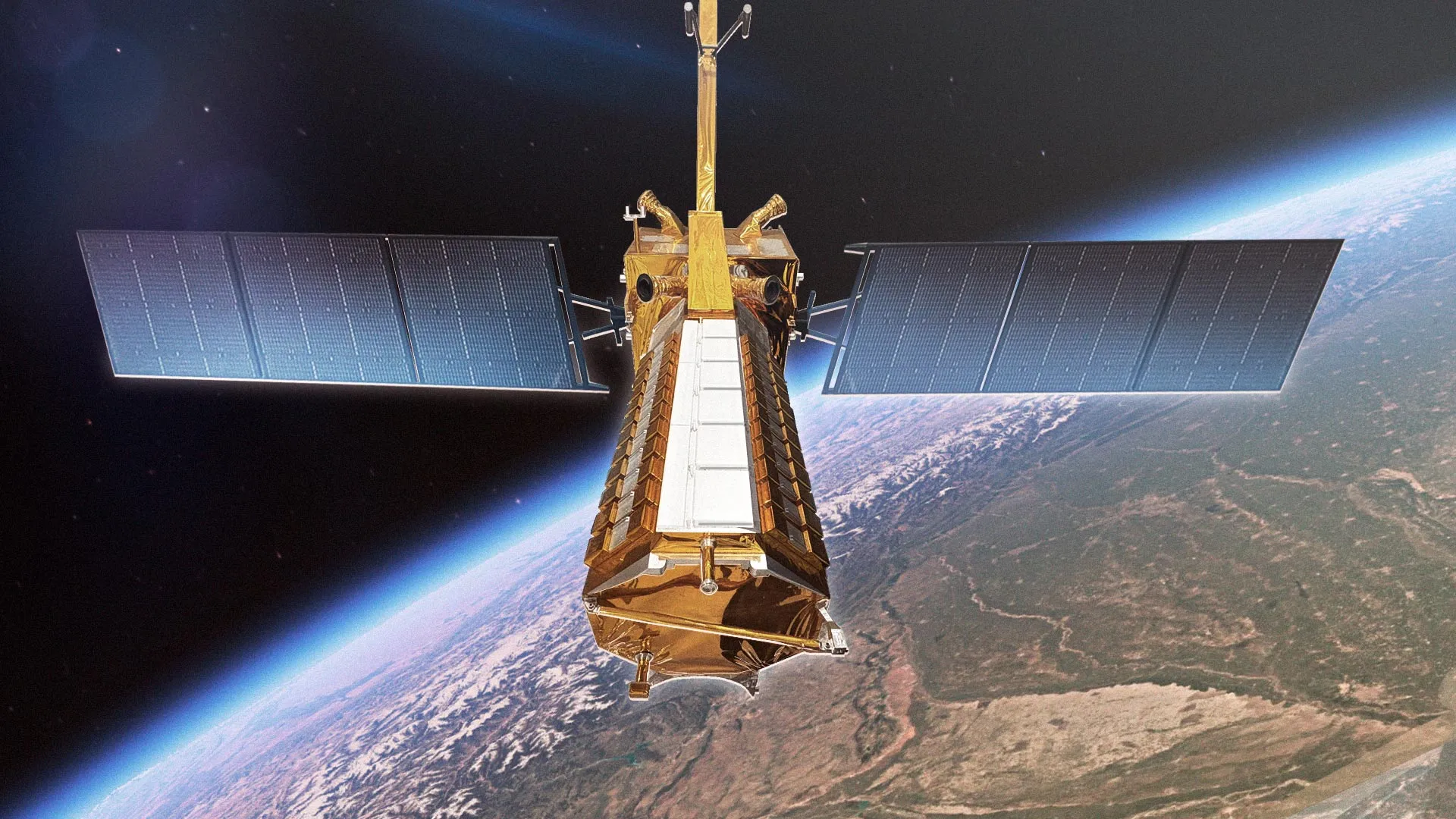
Following a successful launch on July 30, the NISAR satellite will orbit Earth for at least three years, using its sophisticated radar systems to scan nearly all the planet’s land and ice surfaces twice every 12 days. NASA and the Indian Space Research Organisation (ISRO) will jointly operate the spacecraft and gather science of high priority to both the United States and India.

Short for NASA-ISRO Synthetic Aperture Radar, NISAR will help scientists better understand processes involved in natural hazards and catastrophic events, such as earthquakes, volcanic eruptions, and landslides. In addition, it will support monitoring of infrastructure, such as dams, bridges, and roadways. What’s more, the satellite’s cloud-penetrating ability will help urgent-response communities during weather disasters such as hurricanes, storm surges, and floods. And NISAR will provide key global Earth observations, such as changes in ice sheets, glaciers, and sea ice, as well as improve understanding of how deforestation, permafrost loss, and fires affect the carbon cycle.

Along with providing an unprecedented amount of data, the mission breaks new ground with its collaboration between teams of scientists and engineers separated by more than 9,000 miles and 13 time zones.

The first-ever hardware collaboration between NASA and ISRO on an Earth-observing mission, NISAR will carry the most advanced radar system ever launched as part of a NASA or ISRO mission.

About the length of a pickup truck, the satellite’s main body contains engineering systems and a first-of-its-kind dual-radar payload — an L-band system with a 10-inch (25-centimeter) wavelength and an S-band system with a 4-inch (10-centimeter) wavelength. Each system’s signal is sensitive to different sizes of features on Earth’s surface, and each specializes in measuring different attributes, such as moisture content, surface roughness, and motion. These characteristics are important for studying a variety of natural surface conditions, such as the amount of soil moisture available for vegetation to thrive or if land has subsided over time.

When operating together, the satellite’s two radars will collect data synchronized in time and location, extending the sensitivity of the measurements to objects on the surface in a broad range of sizes. For example, S-band data will allow more accurate characterization of shorter plants, such as bushes and shrubs, while L-band data will sense taller vegetation, like trees.

The spacecraft will operate in a Sun-synchronous orbit, with its radar antennas pointed in a configuration that will also offer unprecedented coverage of Antarctica. This is crucial for studying the motion, deformation, and melting of the Antarctic ice sheet as it breaks up and deposits fresh water into the ocean.

Share Button

NHS in England told to keep Welsh patients waiting

One woman says the Welsh NHS “can’t be bothered” to send letters to patients to explain.

Share Button