AI turns immune cells into precision cancer killers—in just weeks

Precision cancer treatment on a larger scale is moving closer after researchers have developed an AI platform that can tailor protein components and arm the patient’s immune cells to fight cancer. The new method, published in the scientific journal Science, demonstrates for the first time, that it is possible to design proteins in the computer for redirecting immune cells to target cancer cells through pMHC molecules.

This dramatically shortens the process of finding effective molecules for cancer treatment from years to a few weeks.

“We are essentially creating a new set of eyes for the immune system. Current methods for individual cancer treatment are based on finding so-called T-cell receptors in the immune system of a patient or donor that can be used for treatment. This is a very time-consuming and challenging process. Our platform designs molecular keys to target cancer cells using the AI platform, and it does so at incredible speed, so that a new lead molecule can be ready within 4-6 weeks,” says Associate Professor at the Technical University of Denmark (DTU) and last author of the study Timothy P. Jenkins.

Targeted missiles against cancer

The AI platform, developed by a team from DTU and the American Scripps Research Institute, aims to solve a major challenge in cancer immunotherapy by demonstrating how scientists can generate target treatments for tumor cells and avoid damaging healthy tissue.

Normally, T cells naturally identify cancer cells by recognizing specific protein fragments, known as peptides, presented on the cell surface by molecules called pMHCs.It is a slow and challenging process to utilize this knowledge for therapy, often because the variation in the body’s own T-cell receptors makes it challenging to create a personalized treatment.

Boosting the body’s immune system

In the study, the researchers tested the strength of the AI platform on a well-known cancer target, NY-ESO-1, which is found in a wide range of cancers. The team succeeded in designing a minibinder that bound tightly to the NY-ESO-1 pMHC molecules. When the designed protein was inserted into T cells, it created a unique new cell product named ‘IMPAC-T’ cells by the researchers, which effectively guided the T cells to kill cancer cells in laboratory experiments.

“It was incredibly exciting to take these minibinders, which were created entirely on a computer, and see them work so effectively in the laboratory,” says postdoc Kristoffer Haurum Johansen, co-author of the study and researcher at DTU.

The researchers also applied the pipeline to design binders for a cancer target identified in a metastatic melanoma patient, successfully generating binders for this target as well. This documented that the method also can be used for tailored immunotherapy against novel cancer targets.

Screening of treatments

A crucial step in the researchers’ innovation was the development of a ‘virtual safety check’. The team used AI to screen their designed minibinders and assess them in relation to pMHC molecules found on healthy cells. This method enabled them to filter out minibinders that could cause dangerous side effects before any experiments were carried out.

“Precision in cancer treatment is crucial. By predicting and ruling out cross-reactions already in the design phase, we were able to reduce the risk associated with the designed proteins and increase the likelihood of designing a safe and effective therapy,” says DTU professor and co-author of the study Sine Reker Hadrup.

Five years to treatment

Timothy Patrick Jenkins expects that it will take up to five years before the new method is ready for initial clinical trials in humans. Once the method is ready, the treatment process will resemble current cancer treatments using genetically modified T cells, known as CAR-T cells, which are currently used to treat lymphoma and leukemia.Patients will first have blood drawn at the hospital, similar to a routine blood test. Their immune cells will then be extracted from this blood sample and modified in the laboratory to carry the AI-designed minibinders. These enhanced immune cells are returned to the patient, where they act like targeted missiles, precisely finding and eliminating cancer cells in the body.


Share Button

Google’s deepfake hunter sees what you can’t—even in videos without faces

In an era where manipulated videos can spread disinformation, bully people, and incite harm, UC Riverside researchers have created a powerful new system to expose these fakes.

Amit Roy-Chowdhury, a professor of electrical and computer engineering, and doctoral candidate Rohit Kundu, both from UCR’s Marlan and Rosemary Bourns College of Engineering, teamed up with Google scientists to develop an artificial intelligence model that detects video tampering — even when manipulations go far beyond face swaps and altered speech. (Roy-Chowdhury is also the co-director of the UC Riverside Artificial Intelligence Research and Education (RAISE) Institute, a new interdisciplinary research center at UCR.)

Their new system, called the Universal Network for Identifying Tampered and synthEtic videos (UNITE), detects forgeries by examining not just faces but full video frames, including backgrounds and motion patterns. This analysis makes it one of the first tools capable of identifying synthetic or doctored videos that do not rely on facial content.

“Deepfakes have evolved,” Kundu said. “They’re not just about face swaps anymore. People are now creating entirely fake videos — from faces to backgrounds — using powerful generative models. Our system is built to catch all of that.”

UNITE’s development comes as text-to-video and image-to-video generation have become widely available online. These AI platforms enable virtually anyone to fabricate highly convincing videos, posing serious risks to individuals, institutions, and democracy itself.

“It’s scary how accessible these tools have become,” Kundu said. “Anyone with moderate skills can bypass safety filters and generate realistic videos of public figures saying things they never said.”

Kundu explained that earlier deepfake detectors focused almost entirely on face cues.

“If there’s no face in the frame, many detectors simply don’t work,” he said. “But disinformation can come in many forms. Altering a scene’s background can distort the truth just as easily.”

To address this, UNITE uses a transformer-based deep learning model to analyze video clips. It detects subtle spatial and temporal inconsistencies — cues often missed by previous systems. The model draws on a foundational AI framework known as SigLIP, which extracts features not bound to a specific person or object. A novel training method, dubbed “attention-diversity loss,” prompts the system to monitor multiple visual regions in each frame, preventing it from focusing solely on faces.

The result is a universal detector capable of flagging a range of forgeries — from simple facial swaps to complex, fully synthetic videos generated without any real footage.

“It’s one model that handles all these scenarios,” Kundu said. “That’s what makes it universal.”

The researchers presented their findings at the high ranking 2025 Conference on Computer Vision and Pattern Recognition (CVPR) in Nashville, Tenn. Titled “Towards a Universal Synthetic Video Detector: From Face or Background Manipulations to Fully AI-Generated Content,” their paper, led by Kundu, outlines UNITE’s architecture and training methodology. Co-authors include Google researchers Hao Xiong, Vishal Mohanty, and Athula Balachandra. Co-sponsored by the IEEE Computer Society and the Computer Vision Foundation, CVPR is among the highest-impact scientific publication venues in the world.

The collaboration with Google, where Kundu interned, provided access to expansive datasets and computing resources needed to train the model on a broad range of synthetic content, including videos generated from text or still images — formats that often stump existing detectors.

Though still in development, UNITE could soon play a vital role in defending against video disinformation. Potential users include social media platforms, fact-checkers, and newsrooms working to prevent manipulated videos from going viral.

“People deserve to know whether what they’re seeing is real,” Kundu said. “And as AI gets better at faking reality, we have to get better at revealing the truth.”

Share Button

Samaritans to close more than 100 branches

The charity’s chief executive says “at least half” of their branches will close in the UK and Ireland.

Share Button

Starmer pleads with resident doctors to halt strike

The PM urges doctors not to follow their union down the “damaging road” of strike action, which starts on Friday.

Share Button

Even without catching COVID, the pandemic may have quietly aged your brain

A new study, led by experts at the University of Nottingham, has found that the Covid-19 pandemic may have accelerated people’s brain health, even if they were never infected with the virus.

What does it mean to grow older, not just in years, but in terms of brain health? Can stress, isolation, and global disruption leave their mark on people’s minds?

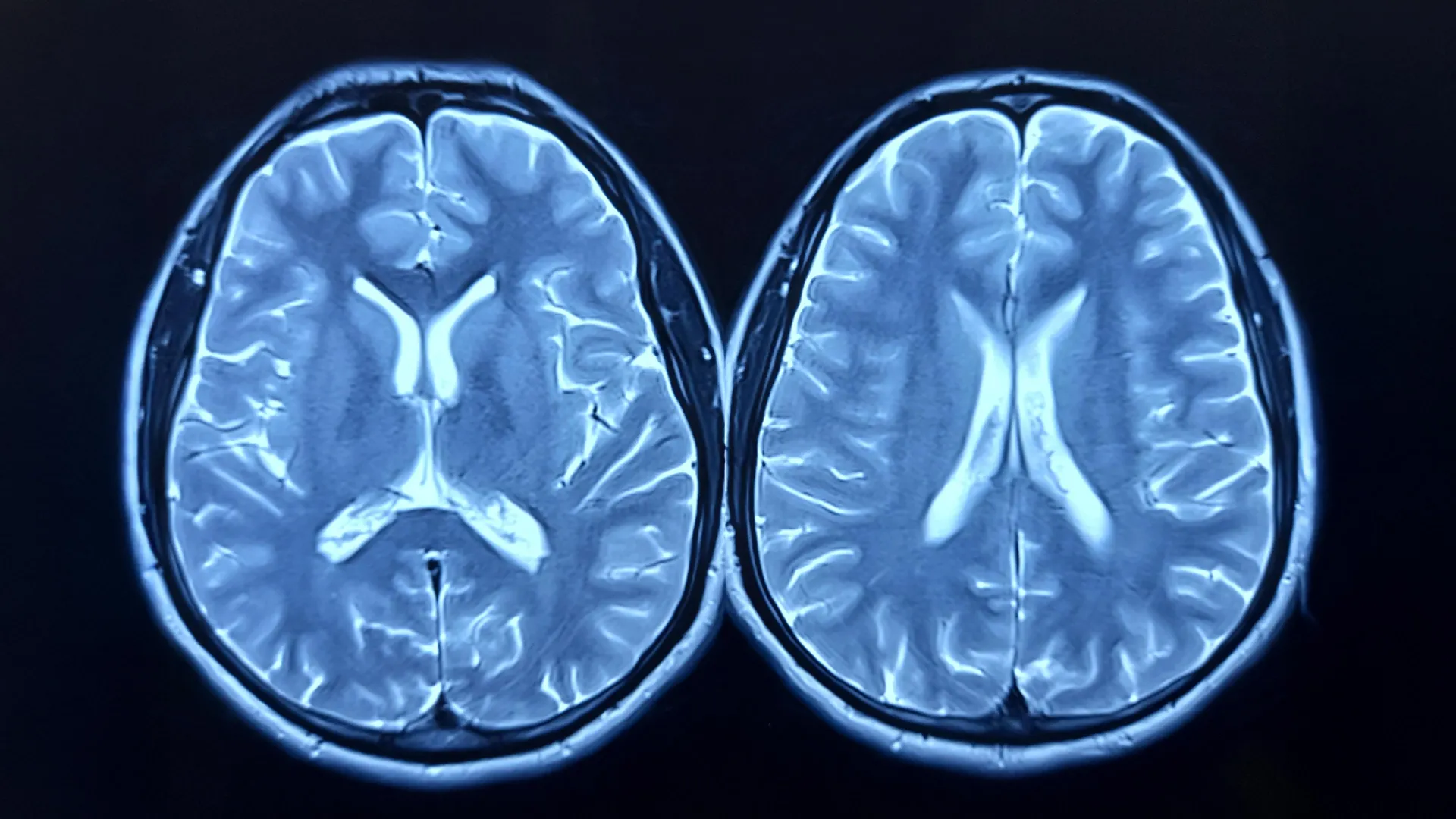
The findings of this new study, which are published in Nature Communications, showed that people who lived through the Covid-19 pandemic showed signs of faster brain aging over time than those scanned entirely before it. The changes were most noticeable in older individuals, in men, and in people from more disadvantaged backgrounds.

Only participants who were infected by Covid-19 between their scans showed a drop in certain cognitive abilities, such as mental flexibility and processing speed. This may suggest that the pandemic’s brain aging effect, on its own (without infection) may not cause symptoms. Also, the authors highlight that the observed brain aging may be reversible.

The study was led by a team of experts from the University’s School of Medicine and was supported by the National Institute for Health and Care Research (NIHR) Nottingham Biomedical Research Centre and the Medical Research Council (MRC) DEMISTIFI program.

Dr Ali-Reza Mohammadi-Nejad led the study, he said: “What surprised me most was that even people who hadn’t had Covid showed significant increases in brain aging rates. It really shows how much the experience of the pandemic itself, everything from isolation to uncertainty, may have affected our brain health.”

The research team looked at longitudinal brain scans from nearly 1,000 healthy adults, taken as part of the UK Biobank study. Some participants had scans before and after the pandemic; others, only before. Using advanced imaging and machine learning, the researchers estimated each person’s “brain age” — how old their brain appeared to be compared to their actual age.

The brain age model was developed using brain scans from over 15,000 healthy individuals, without comorbidities, allowing the researchers to build an accurate model for estimating brain age.

“This study reminds us that brain health is shaped not only by illness, but by our everyday environment,” said Dorothee Auer, Professor of Neuroimaging and senior author on the study. “The pandemic put a strain on people’s lives, especially those already facing disadvantage. We can’t yet test whether the changes we saw will reverse, but it’s certainly possible, and that’s an encouraging thought.”

Stamatios Sotiropoulos, Professor of Computational Neuroimaging, and co-lead author added: “The longitudinal MRI data acquired before and after the pandemic from the UK Biobank gave us a rare window to observe how major life events can affect the brain.”

Share Button

People with eating disorders say cannabis and psychedelics help more than antidepressants

A pioneering international survey of people living with eating disorders has found that cannabis and psychedelics, such as ‘magic mushrooms’ or LSD, were best rated as alleviating symptoms by respondents who self-medicated with the non-prescribed drugs.

The worst-rated drugs were alcohol, tobacco, nicotine and cocaine.

Prescribed drugs, such as antidepressants, were generally not well rated for treating eating-disorder symptoms but were positively rated for effects on general mental health.

The research, led by PhD student Sarah-Catherine Rodan at the University of Sydney’s Lambert Initiative for Cannabinoid Therapeutics, is published on July 22 in JAMA Network Open.

Ms Rodan said: “Our results provide important insights into the lived experiences of people with eating disorders and their drug use, highlighting promising avenues for future research into treatments.

“The findings suggest more research, including large clinical trials, should be undertaken around the beneficial effects of cannabis and psychedelics for people with eating disorders.”

The Lambert Initiative researchers will shortly launch a clinical trial of psilocybin in treating anorexia nervosa in collaboration with the Inside Out Institute at the University of Sydney.

Scope and response of survey

The study analyzed responses from over 7600 self-allocated participants in 83 countries, making it the most comprehensive survey ever conducted on this topic.

The research focused on how people with different types of eating disorders use prescription and non-prescription drugs, and how they perceive these substances’ effects on their mental health and eating disorder symptoms.

The major categories of eating disorders were well-represented in the survey: anorexia nervosa (40%); bulimia nervosa (19%); binge-eating disorder (11%); and avoidant/restrictive food intake disorder (ARFID) (9%). About one third of respondents were not formally diagnosed with an eating disorder but self-reported an eating disorder that caused distress.

Co-morbid mental health conditions, which are often found in these populations, were frequently reported including depression (65%), generalised anxiety disorder (55%), ADHD (33%), drug dependence (15%) and alcohol dependence (9%).

Respondents were predominantly female (94%), with most from English-speaking places, like Australia (30%), the UK (21.3%) and the US (18%).

The results revealed patients with eating disorders have high rates of cannabis and psychedelic use relative to the general populations and rate their effects positively in terms of managing symptoms. Notably, cannabis was highly rated by respondents with restrictive eating disorders such as anorexia and ARFID, most likely because it enhances the rewarding value of food, addressing a core issue in these eating disorders.

In contrast, prescription stimulants such as lisdexamfetamine, which have strong appetite suppressing effects and are sometimes prescribed for binge eating disorder (BED), were positively rated by people with BED but poorly rated by those with restrictive type disorders.

Psychedelics, typically only taken once or twice a year by respondents, were reported to have remarkable long-lasting benefits, supporting recent research showing their therapeutic potential in treating conditions such as depression and anxiety. Conversely, commonly prescribed medications – such as antidepressants – which are typically taken daily, were generally rated as relatively ineffective for reducing ED symptoms but were widely acknowledged to help with overall mental health.

The survey also found that drugs like alcohol, nicotine, and cocaine, although quite widely used, led to negative outcomes on eating disorder symptoms and general mental health.

Ms Rodan said: “These findings highlight an important pattern: with traditional medications often falling short in treating eating disorders directly, while many individuals are self-medicating with substances they perceive as helpful. This underlines the urgent need to better investigate these substances in rigorously controlled clinical trials.”

Next steps: clinical trials

The insights gained by this study have already prompted further research initiatives. The Lambert Initiative, in collaboration with the Inside Out Institute at the University of Sydney, is preparing to launch a clinical trial of psilocybin in treating anorexia nervosa. Additionally, a pilot study examining the therapeutic potential of the non-intoxicating cannabis component, cannabidiol (CBD), in treating severe anorexia in young people, is nearing completion.

Professor Iain McGregor, the senior author on this paper and Academic Director of the Lambert Initiative, said: “This research suggests that cannabis and psychedelics hold significant promise for improving quality of life in individuals suffering eating disorders. This is particularly salient since current pharmacological options for these patients are severely limited and current treatment outcomes so disappointing.

“Of course, rigorous clinical trials are needed to confirm these benefits and better determine safety profiles.”

Ms Rodan said: “I hope this study gives a voice to people living with eating disorders, revealing that their often-stigmatized experiences with drugs might in fact have therapeutic potential. We are extremely grateful to the many thousands of respondents who took the time to provide such detailed responses around their lived experiences. This should spur further research and open new treatment pathways for these challenging conditions.”

The study was funded by the Lambert Initiative for Cannabinoid Therapeutics, a philanthropically funded research program at the University of Sydney. Researchers report funding support from the National Health and Medical Research Council of Australia. Dr Anastasia Suraev reports consulting fees from the Medicinal Cannabis Industry Australia (MCIA). Professor Iain McGregor receives fees from Althea, Jannssen and the MCIA. He also has share options with Kinoxis Therapeutics, consultancies with Psylo and Emyria and patents with Kinoxis.

Share Button

Just 7,000 steps a day could cut health risks, study says

Everyone targets 10,000 steps – but a lower tally could reduce the risk of serious health issues like cancer, dementia and heart disease, a study suggests.

Share Button

Scientists analyzed 100,000 exams and found the best time to take one

To succeed at university, Italian students need to pass interview-style oral exams. Now scientists have found that the time of the exam could be a critical factor influencing their success… or failure. Even when other factors were excluded, the chances of passing were highest around lunchtime, and lowest at the beginning or end of the day.

“We show that academic assessment outcomes vary systematically across the day, with a clear peak in passing rates around midday,” said Prof Carmelo Mario Vicario, director of the Social-Cognitive Neuroscience Lab at the University of Messina and lead author of the article in Frontiers in Psychology. “Students were more likely to pass in late morning compared to early morning or late afternoon.”

“We believe this pattern could extend to job interviews or any evaluative process scheduled throughout the day,” added Vicario. “We would be very interested in investigating whether hiring decisions, too, fluctuate in fairness or outcome depending on time of day.”

Timing is everything

The researchers were inspired by work which showed that judges were most likely to rule in favor of a defendant after meal breaks or at the beginning of a session. However, this could have been influenced by different types of case being presented at different times. So the researchers looked at oral exams, which are more subjective than legal decisions. If the time of day influences people’s judgement, large-scale data on exam outcomes should show evidence of it.

“Oral exams in Italian universities are scheduled at set times, typically lasting 10 to 30 minutes per student,” explained Vicario. “There’s no standardized format: professors ask questions based on the course content, and grades are assigned on the spot. These exams can be highly stressful due to their unpredictable nature and the strong weight they carry in academic progression.”

A database from the University of Messina allowed researchers to access the results of exams conducted between October 2018 and February 2020. The researchers collected the time, date, and outcome of 104,552 assessments delivered by 680 examiners for 1,243 courses. They also used the number of credits granted towards a degree per exam to measure the difficulty of individual exams. This allowed them to exclude the difficulty of the exam as a factor and carry out statistical analysis evaluating the likelihood of passing based on the time when the exam began.

Beating the curve

The researchers found that only 57% of the exams were passed. The passing rate followed a bell curve with a peak at noon: there was no significant difference in your chance of passing if you sat your exam at 11:00 or 13:00, but your chances of passing were lower if you took the exam at 08:00 or 09:00, or at 15:00 or 16:00. The chance of passing was equivalent in the early morning and in the late afternoon.

“These findings have wide-ranging implications,” commented Prof Alessio Avenanti of the University of Bologna, co-author of the study. “They highlight how biological rhythms — often overlooked in decision-making contexts — can subtly but significantly shape the outcome of high-stakes evaluations.”

Although the study can’t identify the mechanisms behind this pattern, the peak in passes at midday is consistent with evidence that cognitive performance improves over the course of the morning before declining during the afternoon. Students’ falling energy levels could lead to diminishing focus, compromising their performance. Professors might also be experiencing decision fatigue, leading them to mark more harshly.

Meanwhile, poorer results earlier in the day could be down to competing chronotypes. People in their early 20s are usually night owls, while people in their 40s or older tend to be morning larks. The students might be least cognitively sharp at the time when the professors are most alert.

“To counteract time-of-day effects, students might benefit from strategies like ensuring quality sleep, avoiding scheduling important exams during personal ‘low’ periods, and taking mental breaks before performance tasks,” suggested Vicario. “For institutions, delaying morning sessions or clustering key assessments in the late morning may improve outcomes.”

But more research is needed to fully understand the factors which contribute to the time of day’s influence on students’ performance, and develop ways of improving the fairness of assessments.

“While we controlled for exam difficulty, we can’t entirely exclude other unmeasured factors,” said Prof Massimo Mucciardi of the University of Messina, senior author. “We couldn’t access detailed student- or examiner-level data such as sleep habits, stress, or chronotype. This is why we encourage follow-up studies using physiological or behavioral measures to uncover the underlying mechanisms.”

Share Button

Doctor strike will harm patients, NHS boss warns

A senior official says the planned walkout will impact both emergency and non-urgent care.

Share Button

Penile cancer medical trial ‘gave me two more years’

Eddie Baker, 83, was given immunotherapy alongside the usual chemotherapy.

Share Button