Yin Productivity

This week I began exploring a yin-based approach to my days. First I journaled about how I might differentiate yin productivity from yang productivity. I figured yang was mainly about deciding, controlling, and directing the flow of action whereas yin would be more about sensing and allowing action to flow through very flexibly. I also figured that yang would be more outcome-oriented whereas yin might be more experience-oriented.

It’s been a very interesting experience to deliberately lean in a yin direction so far, especially yesterday when I opted to use this approach all day. I did my best to release any attachment to getting any particular task done or advancing any specific project. I focused more on sensing what energies wanted to flow through and be part of my day. All throughout the day, I was more attuned to the energy flows and my inner sensing than I was to objective results.

The flow of action was light and breezy. I felt very relaxed and chill. It was like being carried by currents of energy all through the day. I felt like I wasn’t working particularly hard or doing very much. Yet at the end of the day, I reviewed all that I got done, and it was quite a lot.

I got up at 5am, went for a run, and then met Rachelle in the park to go for a walk together. I started listening to a new audiobook (James Fadiman’s Microdosing book) while running. I read some more of Ram Dass’ Be Here Now and also began reading Alexander Shulgin’s PIHKAL book. So I felt inspired to engage with three different books, yet that didn’t feel like too much because all the books had strong energy ties among them. They cover similar ground from different perspectives. What I read from each book seemed to have a synchronous relationship to the flow of the day. If my thinking had been more objective or yang-like, I’d have likely stuck with one book till it was done. It actually felt nicer to float through a few books.

I made clear, crisp decisions in some areas that were a bit stuck and then advanced them with a variety of easy actions. I sensed it was the right timing for those decisions to flow through, like they were finally ready to emerge and resolve themselves. I also did some journaling to further advance some ideas I’d been working on, and that went very smoothly too. Overall I got my life much better aligned with some long-term avenues that have been unfolding.

I also went out twice to run errands, once in the morning and once in the afternoon. On an objective level, that might seem less efficient than batching the errands. However, the second errand wasn’t really on my radar when I followed my inner nudge to go out to do the first one, even though both were related. I felt like perhaps I needed to advance and complete the first errand for the second to energetically arise.

I liked how both trips infused my day with more variety. These errands were short and easy, and I enjoyed doing them very much as part of the day. They got me away from my desk and out and around other people in the city for a bit. I felt like I was keeping the energy swirling and in positive motion. It was toasty outside (105ºF outside during the second errand – that’s about 41ºC), and the sun’s warmth felt so nice to me too. I’m used to the sunny Vegas summers.

When some ideas came to mind about potential actions to take, I wrote some of them down but only one or two at a time. That was mainly to get them out of my head, so I wouldn’t dwell upon them and could mentally relax more, not with the intention of compiling a to-do list like I might have done in yang mode. I ended up eventually doing all of the items I’d written down, yet I only did them if and when I felt their energy inviting me to go in that direction and feeling good motivation to engage. I did them out of sequence from the order I wrote them yet with no feeling of pressure to do them or not. I felt more of a sense of curiosity about them when I wrote them down, not really sure if they’d come through. They were just options and possibilities, not decisions or commitments. Writing these ideas down was a bit like saying, “I see you. Let me know if you want to flow into action later.”

There was a strangeness to the day as well. I felt like I was attuned to a deeper sense of cooperation and coordination with life. I didn’t feel that I was making decisions as much as I was accepting energy-level invitations that I was sensing. I didn’t feel that those invitations were arising from within me (like from my subconscious) as much as I was picking up on signals being broadcast on a more spirity level of reality. Those signals were very present-moment, always shifting as the day progressed. They were often subtle, more like whispers or hints of possible energy flows. Nothing ever felt demanding or mandatory.

Sometimes I felt a more yang-like idea emerge, in which case I acknowledged it as yang energy and declined it. I could feel that some directions would require more force to advance them. I went with options that felt light and breezy, doing my best to flow into action with them as those invites came through – without hesitation or delay. There was no rushing or pressing. It just felt easier to glide into action once I had a clear enough sense of where the flow was inviting me to go.

I feel my inner senses have become even louder and clearer this year, so this was a great way to practice listening to them more closely, especially when the communication is subtle. I don’t feel this would have worked if my mind was cluttered or pre-occupied with predetermined to-dos. The action flow was great, and I actually felt that the day turned out better, both experientially and in terms of what outcomes got advanced, than if I’d tried to control and direct it based on individual goals. The flow of action also felt very well-synched to my mood and energy levels.

I want to float with this approach all throughout this week as best I can. I’m enjoying it immensely so far. Overall I’d say that yesterday’s flow felt marvelous yet also a bit mysterious.

I’m continuing this process today, and writing and sharing this little blog post happened because it showed up as a very yin-feeling invite this morning. I had no goal or even intention to write or publish anything today. I actually wrote and shared this as a personal update in my exploration log in the CGC forums a few hours prior, following a breezy nudge after breakfast. Then later in the morning, I felt the invite to add a bit more detail and publish it here, sensing that others might appreciate it. Perhaps someone would find this idea timely and synchronous relative to their own explorations. So if this does seem synchronous for you, perhaps this is a special invite flowing through for you to give this yin productivity approach a little test in your own life. Please let me know if you do that and how it goes. It’s nice to compare notes on this sort of thing.


Share Button

Fasting twice a week could be a game-changer for type 2 diabetes

Intermittent energy restriction, time-restricted eating and continuous energy restriction can all improve blood sugar levels and body weight in people with obesity and type 2 diabetes, according to a study presented at ENDO 2025, the Endocrine Society’s annual meeting in San Francisco, California.

“This study is the first to compare the effects of three different dietary interventions intermittent energy restriction (IER), time-restricted eating (TRE) and continuous energy restriction (CER) in managing type 2 diabetes with obesity,” said Haohao Zhang, Ph.D., chief physician at The First Affiliated Hospital of Zhengzhou University in Zhengzhou, China.

Although researchers identified improved HbA1c levels, and adverse events were similar across the three groups, the IER group showed greater advantages in reducing fasting blood glucose, improving insulin sensitivity, lowering triglycerides, and strengthening adherence to the dietary interventions.

“The research fills a gap in directly comparing 5:2 intermittent energy restriction with a 10-hour time-restricted eating in patients with obesity and type 2 diabetes. The findings provide scientific evidence for clinicians to choose appropriate dietary strategies when treating such patients,” Zhang said.

Zhang and colleagues performed a single-center, randomized, parallel-controlled trial at the First Affiliated Hospital of Zhengzhou University from November 19, 2021 to November 7, 2024.

Ninety patients were randomly assigned in a 1:1:1 ratio to the IER, TRE or CER group, with consistent weekly caloric intake across all groups. A team of nutritionists supervised the 16-week intervention.

Of those enrolled, 63 completed the study. There were 18 females and 45 males, with an average age of 36.8 years, a mean diabetes duration of 1.5 years, a baseline BMI of 31.7 kg/m², and an HbA1c of 7.42%.

At the end of the study, there were no significant differences in HbA1c reduction and weight loss between the IER, TRE and CER groups. However, the absolute decrease in HbA1c and body weight was greatest in the IER group.

Compared to TRE and CER, IER significantly reduced fasting blood glucose and triglycerides and increased the Matsuda index, a measure of whole-body insulin sensitivity. Uric acid and liver enzyme levels exhibited no statistically significant changes from baseline in any study group.

Two patients in the IER group and the TRE group, and three patients in the CER group, experienced mild hypoglycemia.

The IER group had the highest adherence rate (85%), followed by the CER group at 84% and the TRE group at 78%. Both the IER and CER groups showed statistically significant differences compared with the TRE group.

Zhang said these findings highlight the feasibility and effectiveness of dietary interventions for people who have obesity and type 2 diabetes.

Share Button

Semaglutide melts fat—but may quietly strip away your strength

Women and older adults taking the anti-obesity drug semaglutide may be at higher risk for muscle loss, but higher protein intake may help prevent muscle loss in these patients, according to a small study presented at ENDO 2025, the Endocrine Society’s annual meeting in San Francisco, Calif.

Losing muscle (or lean mass) is a common side effect of weight loss in adults with obesity and may negatively affect metabolism and bone health. This is because muscle helps control blood sugar after meals and plays an important role in keeping bones strong, according to study lead researcher Melanie Haines, M.D., of Massachusetts General Hospital and Harvard Medical School in Boston, Mass.

Approximately 40% of the weight lost from taking semaglutide — a type of weight-loss medication known as a GLP-1 — comes from lean mass, including muscle. It is not yet known who is at highest risk for muscle loss or how it affects blood sugar levels, Haines said.

The researchers studied 40 adults with obesity for three months. Of these patients, 23 were prescribed semaglutide, while 17 followed a diet and lifestyle program for weight loss called Healthy Habits for Life (HHL). The researchers evaluated how their muscle mass changed.

Study participants who were prescribed semaglutide lost more weight than those who participated in the diet and lifestyle program, but the percent of weight loss that was lean mass was similar between the two groups.

After accounting for weight loss, the researchers found that in the semaglutide group, being older, female or eating less protein was linked to greater muscle loss. Also in this group, losing more muscle was linked to less improvement in blood sugar (HbA1c levels).

“Older adults and women may be more likely to lose muscle on semaglutide, but eating more protein may help protect against this,” Haines said. “Losing too much muscle may reduce the benefits of semaglutide on blood sugar control. This means preserving muscle during weight loss with semaglutide may be important to reduce insulin resistance and prevent frailty in people with obesity.”

Haines said that more studies are needed to find the best way to lose fat but keep muscle when using GLP-1 medications.

Share Button

Weight-loss wonder drug Mounjaro/Zepbound shrinks breast cancer tumors

The anti-obesity medication tirzepatide, marketed as Mounjaro for diabetes and Zepbound for obesity, reduced obesity-associated breast cancer growth in a mouse model, according to a study presented at ENDO 2025, the Endocrine Society’s annual meeting in San Francisco, California.

“Obesity is a significant risk factor for breast cancer, and while it is very preliminary data, our studies in mice suggest that these new anti-obesity drugs may be a way to reduce obesity-associated breast cancer risk or improve outcomes,” said study author Amanda Kucinskas, B.S., a Ph.D. candidate in the labs of Drs. Erin Giles and Kanakadurga Singer at the University of Michigan in Ann Arbor, Mich.

Existing research has shown that having obesity can lead to worse breast cancer outcomes compared to those who do not have obesity, and weight loss can improve outcomes. However, there are many challenges with traditional weight loss methods.

Kucinskas and colleagues leveraged tirzepatide, one of a new class of effective anti-obesity medications that target GLP-1 (glucagon-like peptide 1) and GIP (glucose-dependent insulinotropic polypeptide) receptors. The researchers sought to learn whether or not tirzepatide would reduce obesity-associated breast cancer growth.

This mouse study included 16 mice. The 9-week-old C57BL/6 mice were fed a 40% high-fat diet and housed in a warm environment to induce obesity. At 32 weeks of age, the mice with obesity were randomly assigned injections of tirzepatide or a placebo every other day for 16 weeks. Tumor volumes were measured twice weekly.

The researchers found that the anti-obesity drug reduced body weight and body fat by approximately 20% in mice, similar to the amount of weight loss achieved by women on this drug. They found this was primarily due to a loss of adipose mass, with a reduction in adipose depot weights compared to controls.

The anti-obesity drug also reduced tumor volume compared to the controls. At the end of the study, the researchers found that tumor volume was significantly correlated with body weight, total adipose mass and the amount of fat stored in the liver.

“While these are very preliminary results, they suggest that this new anti-obesity drug may also have a beneficial impact on breast cancer outcomes,” Kucinskas said.

Ongoing studies are underway in collaboration with Dr. Steve Hursting’s lab at the University of North Carolina at Chapel Hill to separate the weight loss from the tumor-specific effects of tirzepatide.

Share Button

Biggest human imaging study scans 100,000th person

UK Biobank scientists say the human body can be studied in greater detail than ever thanks to people like Steve.

Share Button

One shot, seven days: Long-acting levodopa gel tackles Parkinson’s tremors

A new weekly injectable drug could transform the lives of more than eight million people living with Parkinson’s disease, potentially replacing the need for multiple daily tablets.

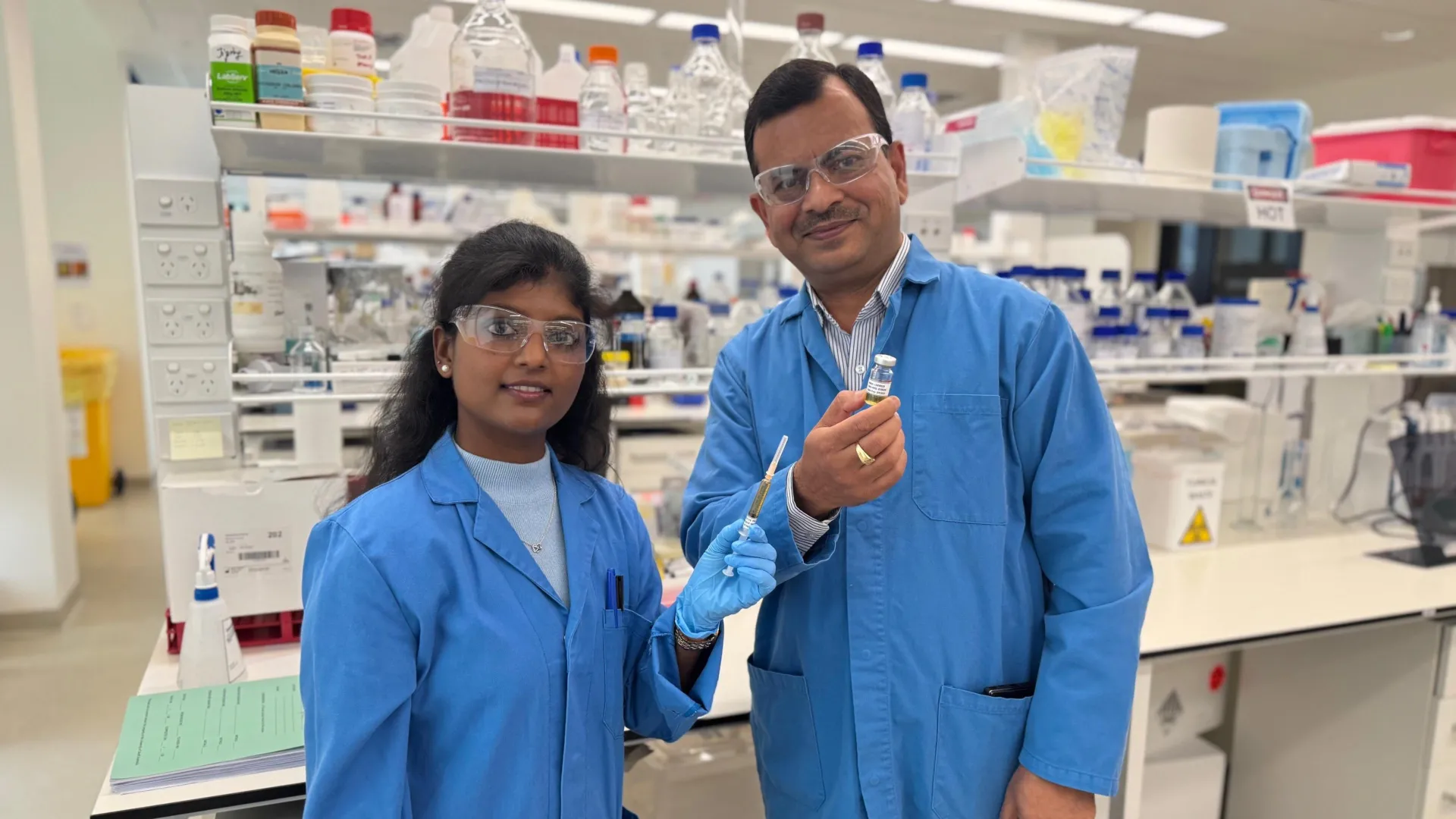
Scientists from the University of South Australia (UniSA) have developed a long-acting injectable formulation that delivers a steady dose of levodopa and carbidopa – two key medications for Parkinson’s – over an entire week.

Their findings have been reported in the journal Drug Delivery and Translational Research.

The biodegradable formulation is injected under the skin or into muscle tissue, where it gradually releases the medication over seven days.

Parkinson’s disease is the second most common neurological disorder, affecting more than 8.5 million people worldwide. Currently there is no cure and the symptoms – tremors, rigidity and slow movement – are managed with oral medications that must be taken several times a day.

The frequent dosing is a burden, especially for elderly patients or those with swallowing difficulties, leading to inconsistent medication levels, more side effects, and reduced effectiveness.

Lead researcher Professor Sanjay Garg, from UniSA’s Centre for Pharmaceutical Innovation, says the newly developed injectable could significantly improve treatment outcomes and patient adherence.

“Our goal was to create a formulation that simplifies treatment, improves patient compliance, and maintains consistent therapeutic levels of medication. This weekly injection could be a game-changer for Parkinson’s care,” Prof Garg says.

“Levodopa is the gold-standard therapy for Parkinson’s, but its short life span means it must be taken several times a day.”

UniSA PhD student Deepa Nakmode says the in-situ implant is designed to release both levodopa and carbidopa steadily over one week, maintaining consistent plasma levels and reducing the risks associated with fluctuating drug concentrations.

“After years of focused research, it’s incredibly rewarding to see our innovation in long-acting injectables for Parkinson’s disease reach this stage. Our invention has now been filed for an Australian patent,” Nakmode says.

The injectable gel combines an FDA-approved biodegradable polymer PLGA with Eudragit L-100, a pH-sensitive polymer, to achieve a controlled and sustained drug release.

Extensive lab tests confirmed the system’s effectiveness and safety:

  • More than 90% of the levodopa dose and more than 81% of the carbidopa dose was released over seven days.
  • The implant degraded by over 80% within a week and showed no significant toxicity in cell viability tests.
  • The formulation can be easily administered through a fine 22-gauge needle, minimising discomfort and eliminating the need for surgical implant.

“The implications of this research are profound,” Prof Garg says. “By reducing the frequency of dosing from multiple times a day to a weekly injection is a major step forward in Parkinson’s therapy. We’re not just improving how the drug is delivered; we’re improving patients’ lives.”

Prof Garg says the technology could also be adapted for other chronic conditions such as cancer, diabetes, neurodegenerative disorders, pain management, and chronic infections that require long-term drug delivery.

The system can be tuned to release drugs over a period ranging from a few days to several weeks depending on therapeutic needs.

UniSA scientists hope to start clinical trials in the near future and are exploring commercialisation opportunities.

Share Button

Why are resident doctors striking and what are they paid?

Resident doctors in England will strike over pay for five days from 25 July.

Share Button

Can zebrafish help humans regrow hearing cells?

While humans can regularly replace certain cells, like those in our blood and gut, we cannot naturally regrow most other parts of the body. For example, when the tiny sensory hair cells in our inner ears are damaged, the result is often permanent hearing loss, deafness, or balance problems. In contrast, animals like fish, frogs, and chicks regenerate sensory hair cells effortlessly.

Now, scientists at the Stowers Institute for Medical Research have identified how two distinct genes guide the regeneration of sensory cells in zebrafish. The discovery improves our understanding of how regeneration works in zebrafish and may guide future studies on hearing loss and regenerative medicine in mammals, including humans.

“Mammals such as ourselves cannot regenerate hair cells in the inner ear,” said Stowers Investigator Tatjana Piotrowski, Ph.D., the study’s co-author. “As we age or are subjected to prolonged noise exposure, we lose our hearing and balance.”

New research from the Piotrowski Lab, published in Nature Communications on July 14, 2025, seeks to understand how cell division is regulated to both promote regeneration of hair cells and to also maintain a steady supply of stem cells. Led by former Stowers Researcher Mark Lush, Ph.D., the team discovered that two different genes regulating cell division each control the growth of two key types of sensory support cells in zebrafish. The finding may help scientists study whether similar processes could be triggered in human cells in the future.

“During normal tissue maintenance and regeneration, cells need to proliferate to replace the cells that are dying or being shed — however, this only works if there are existing cells that can divide to replace them,” said Piotrowski. “To understand how proliferation is regulated, we need to understand how stem cells and their offspring know when to divide and at what point to differentiate.”

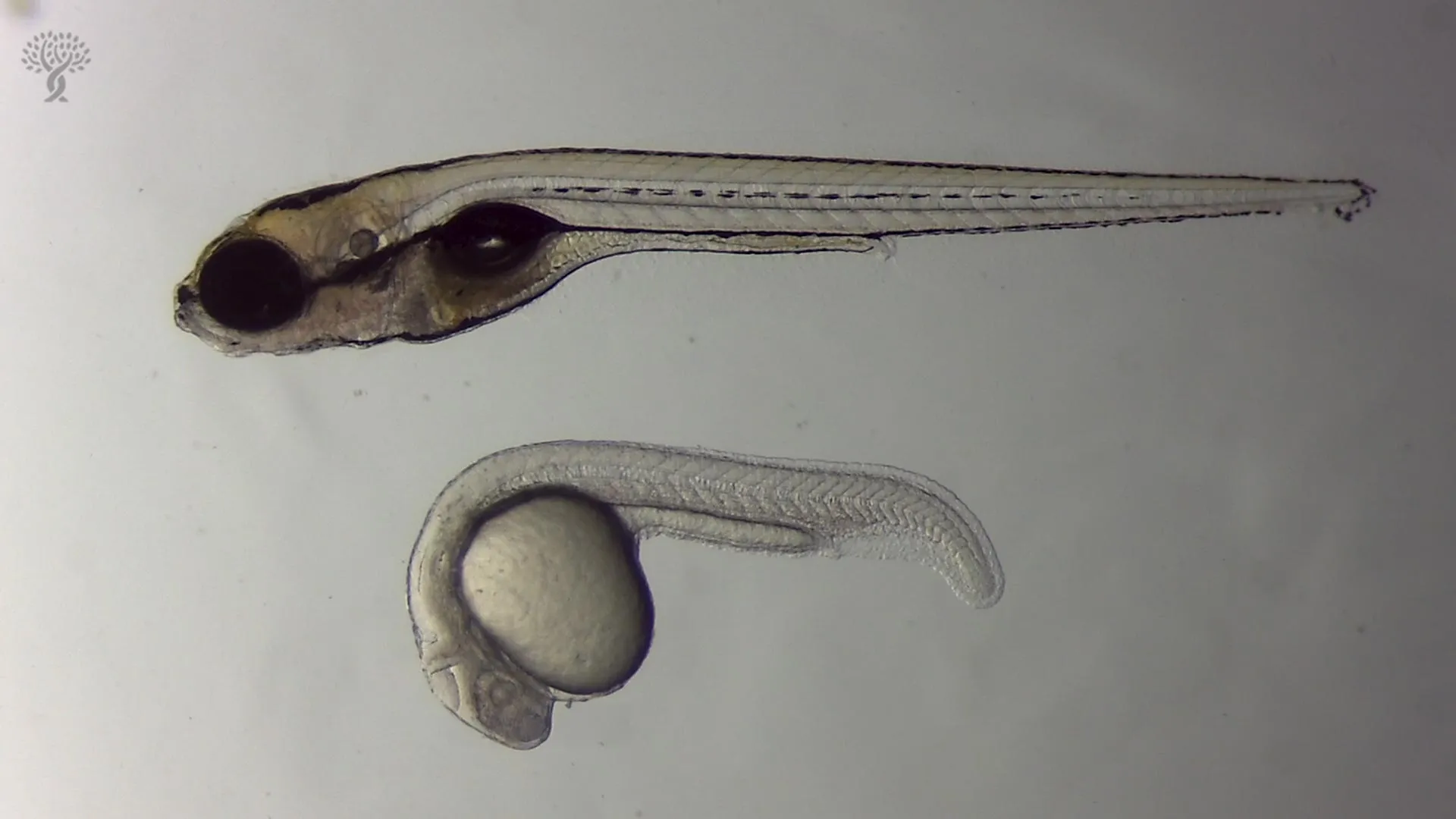
Zebrafish are an excellent system for studying regeneration. Dotted in a straight line from their head to tailfin are sensory organs called neuromasts. Each neuromast resembles a garlic bulb with “hair cells” sprouting from its top. A variety of supporting cells encompass the neuromast to give rise to new hair cells. These sensory cells, which help zebrafish detect water motion, closely resemble those in the human inner ear.

Because zebrafish are transparent during development and have accessible sensory organ systems, scientists can visualize, as well as genetically sequence and modify, each neuromast cell. This allows them to investigate the mechanisms of stem cell renewal, the proliferation of progenitor cells — direct precursors to hair cells — and hair cell regeneration.

“We can manipulate genes and test which ones are important for regeneration,” said Piotrowski. “By understanding how these cells regenerate in zebrafish, we hope to identify why similar regeneration does not occur in mammals and whether it might be possible to encourage this process in the future.”

Two key populations of support cells contribute to regeneration within neuromasts: active stem cells at the neuromast’s edge and progenitor cells near the center. These cells divide symmetrically, which allows the neuromast to continuously make new hair cells while not depleting its stem cells. The team used a sequencing technique to determine which genes were active in each type and found two distinct cyclinD genes present in only one or the other population.

The researchers then genetically altered each gene in the stem and progenitor populations. They discovered that the different cyclinD genes were independently regulating cell division of the two types of cells.

“When we rendered one of these genes non-functional, only one population stopped dividing,” said Piotrowski. “This finding shows that different groups of cells within an organ can be controlled separately, which may help scientists understand cell growth in other tissues, such as the intestine or blood.”

Progenitor cells lacking their cell type-specific cyclinD gene did not proliferate; however, they did form a hair cell, uncoupling cell division with differentiation. Notably, when the stem cell-specific cyclinD gene was engineered to work in progenitor cells, progenitor cell division was restored.

David Raible, Ph.D., a professor at the University of Washington who studies the zebrafish lateral line sensory system, commented on the significance of the new study. “This work illuminates an elegant mechanism for maintaining neuromast stem cells while promoting hair cell regeneration. It may help us investigate whether similar processes exist or could be activated in mammals.”

Because cyclinD genes also regulate proliferation in many human cells, like those in the gut and blood, the team’s findings may have implications beyond hair cell regeneration.

“Insights from zebrafish hair cell regeneration could eventually inform research on other organs and tissues, both those that naturally regenerate and those that do not,” said Piotrowski.

Additional authors include Ya-Yin Tsai, Shiyuan Chen, Daniela Münch, Julia Peloggia, Ph.D., and Jeremy Sandler, Ph.D.

This work was funded by the National Institute on Deafness and Other Communication Disorders of the National Institutes of Health (NIH) (award: 1R01DC015488-01A1), the Hearing Health Foundation, and with institutional support from the Stowers Institute for Medical Research. The content is solely the responsibility of the authors and does not necessarily represent the official views of the NIH.

Share Button

It looked like nothing—then scientists found a world 10x the size of Jupiter

Astronomers have detected a giant exoplanet – between three and ten times the size of Jupiter – hiding in the swirling disc of gas and dust surrounding a young star.

Earlier observations of this star, called MP Mus, suggested that it was all alone without any planets in orbit around it, surrounded by a featureless cloud of gas and dust.

However, a second look at MP Mus, using a combination of results from the Atacama Large Millimeter/submillimeter Array (ALMA) and the European Space Agency’s Gaia mission, suggest that the star is not alone after all.

The international team of astronomers, led by the University of Cambridge, detected a large gas giant in the star’s protoplanetary disc: the pancake-like cloud of gases, dust and ice where the process of planet formation begins. This is the first time that Gaia has detected an exoplanet within a protoplanetary disc. The results, reported in the journal Nature Astronomy, suggest that similar methods could be useful in the hunt for young planets around other stars.

By studying how planets form in the protoplanetary discs around young stars, researchers can learn more about how our own Solar System evolved. Through a process known as core accretion, gravity causes particles in the disc to stick to each other, eventually forming larger solid bodies like asteroids or planets. As young planets form, they start to carve gaps in the disc, like grooves on a vinyl record.

However, observing these young planets is extremely challenging, due to the interference from the gas and dust in the disc. To date, only three robust detections of young planets in a protoplanetary disc have been made.

Dr Álvaro Ribas from Cambridge’s Institute of Astronomy, who led the research, specialises in studying protoplanetary discs. “We first observed this star at the time when we learned that most discs have rings and gaps, and I was hoping to find features around MP Mus that could hint at the presence of a planet or planets,” he said.

Using ALMA, Ribas observed the protoplanetary disc around MP Mus (PDS 66) in 2023. The results showed a young star seemingly all alone in the universe. Its surrounding disc showed none of the gaps where planets might be forming, and was completely flat and featureless.

“Our earlier observations showed a boring, flat disc,” said Ribas. “But this seemed odd to us, since the disc is between seven and ten million years old. In a disc of that age, we would expect to see some evidence of planet formation.”

Now, Ribas and his colleagues from Germany, Chile, and France have given MP Mus another chance. Once again using ALMA, they observed the star at the 3mm range, a longer wavelength than the earlier observations, allowing them to probe deeper into the disc.

The new observations turned up a cavity close to the star and two gaps further out, which were obscured in the earlier observations, suggesting that MP Mus may not be alone after all.

At the same time, Miguel Vioque, a researcher at the European Southern Observatory, was uncovering another piece of the puzzle. Using data from Gaia, he found MP Mus was ‘wobbling’.

“My first reaction was that I must have made a mistake in my calculations, because MP Mus was known to have a featureless disc,” said Vioque. “I was revising my calculations when I saw Álvaro give a talk presenting preliminary results of a newly-discovered inner cavity in the disc, which meant the wobbling I was detecting was real and had a good chance of being caused by a forming planet.”

Using a combination of the Gaia and ALMA observations, along with some computer modelling, the researchers say the wobbling is likely caused by a gas giant – less than ten times the mass of Jupiter – orbiting the star at a distance between one and three times the distance of the Earth to the Sun.

“Our modelling work showed that if you put a giant planet inside the new-found cavity, you can also explain the Gaia signal,” said Ribas. “And using the longer ALMA wavelengths allowed us to see structures we couldn’t see before.”

This is the first time an exoplanet embedded in a protoplanetary disc has been indirectly discovered in this way – by combining precise star movement data from the Gaia with deep observations of the disc. It also means that many more hidden planets might exist in other discs, just waiting to be found.

“We think this might be one of the reasons why it’s hard to detect young planets in protoplanetary discs, because in this case, we needed the ALMA and Gaia data together,” said Ribas. “The longer ALMA wavelength is incredibly useful, but to observe at this wavelength requires more time on the telescope.”

Ribas says that upcoming upgrades to ALMA, as well as future telescopes such as the next generation Very Large Array (ngVLA), may be used to look deeper into more discs and better understand the hidden population of young planets, which could in turn help us learn how our own planet may have formed.

The research was supported in part by the European Union’s Horizon Programme, the European Research Council, and the UK Science and Technology Facilities Council (STFC), part of UK Research and Innovation (UKRI).

Share Button

Woman smuggled baby into UK using fake birth story

A baby will be placed for adoption in UK after being trafficked from Nigeria. She may never know her real parents.

Share Button