What to look for when choosing sunscreen and how to apply it to get the maximum protection.


What to look for when choosing sunscreen and how to apply it to get the maximum protection.
The Covid inquiry will examine the impact of the pandemic on care services, starting on Monday.
Supermarkets will be challenged to sell healthier food, under a new government obesity plan.

Parts of New Orleans and its surrounding wetlands are gradually sinking, and while most of the city remains stable, a new study from Tulane University researchers suggests that sections of the region’s $15 billion post-Katrina flood protection system may need regular upgrades to outpace long-term land subsidence.
The study, published in Science Advances, used satellite radar data to track subtle shifts in ground elevation across Greater New Orleans between 2002 and 2020. The study found that some neighborhoods, wetlands and even sections of floodwalls are sinking by more than an inch per year — with some areas experiencing up to 47 millimeters (nearly 2 inches) of elevation loss annually.
“In a city like New Orleans, where much of the land is already near sea level, even minor drops in elevation can increase flood risk,” said Simone Fiaschi, lead author of the study and a former researcher with Tulane’s Department of River-Coastal Science and Engineering, now employed at TRE-Altamira.
The findings underscore how both natural and human-driven forces are reshaping the city’s landscape. Causes of the sinking — known as subsidence — include natural soil compaction, groundwater pumping, industrial development and the legacy of wetland drainage for urban growth.
The study used a remote sensing technique called InSAR (Interferometric Synthetic Aperture Radar), which detects millimeter-scale changes in land surface elevation by comparing satellite radar images taken over time. This allowed the researchers to build the most detailed map yet of vertical land motion in New Orleans — including areas like wetlands that had previously lacked reliable data.
Among the most troubling findings: some of the concrete floodwalls and levees built to protect the city after Katrina are themselves sinking. In a few cases, parts of the Hurricane and Storm Damage Risk Reduction System (HSDRRS) are losing elevation faster than sea levels are rising, reducing their capacity to block storm surges.
“These results are a wake-up call,” said co-author Prof. Mead Allison, also of Tulane. “We need ongoing monitoring and maintenance to ensure that our flood defenses don’t lose their level of protection beneath us.”
The study also found pockets of sinking around industrial sites, the airport and newer residential developments — areas where soil compression and groundwater withdrawal are likely contributors. In contrast, some areas such as parts of Michoud showed modest land uplift, likely due to the halt of industrial groundwater pumping and recovery of the water table.
Wetlands east of the city, long known for their ecological importance, are also sinking rapidly in places. In some spots, the loss of elevation could transform marshes into open water within a decade if trends continue. This has implications not just for wildlife but also for storm protection, as wetlands help buffer storm surges.
New Orleans, much of which lies below sea level, relies on an elaborate system of levees, pumps and drainage canals to keep water out. As sea levels rise and the ground sinks, the margin for error narrows.
Experts say that without sustained monitoring, including satellite data and ground-based measurements, it’s difficult to know where to reinforce levees or how to plan for future storms.
“This research shows that land movement isn’t uniform, and understanding these patterns is crucial for protecting lives and property in a city where inches truly matter,” Fiaschi said. “However, it’s crucial to remember that our results still require careful ground-truthing. This is especially true for critical areas like the floodwalls, where on-site verification was not possible during this project.”
The study highlights the potential of satellite monitoring to guide infrastructure maintenance and urban planning, not just in New Orleans but in coastal cities worldwide facing similar challenges.
The new pilot teaches children as young as five how to check UV levels and apply sunscreen.
One month on from the disposable vape ban, one mum says it has had little impact on her children’s nicotine consumption.

Astronomers have uncovered a vast cloud of energetic particles — a ‘mini halo’ — surrounding one of the most distant galaxy clusters ever observed, marking a major step forward in understanding the hidden forces that shape the cosmos.
The mini-halo is at a distance so great that it takes light 10 billion years to reach Earth, making it the most distant ever found, doubling the previous distance known to science.
The discovery demonstrates that entire galaxy clusters, among the largest structures in the universe, have been immersed in high-energy particles for most of their existence.
Such a mini-halo consists of highly energetic, charged particles in the vacuum between galaxies in a cluster, which together emanate radio waves which can be detected from Earth.
Accepted for publication in The Astrophysical Journal Letters, with the pre-print version of the paper published today. the findings show that even in the early universe, galaxy clusters were already shaped by energetic processes.
The international team of researchers behind the discovery was co-led by Julie Hlavacek-Larrondo of Université de Montréal and Roland Timmerman of the Institute for Computational Cosmology of Durham University, in the U.K.
The researchers analysed data from the Low Frequency Array (LOFAR) radio telescope, a vast network of over 100,000 small antennae spanning eight European countries. While studying a galaxy cluster named SpARCS1049, the researchers detected a faint, widespread radio signal.They found that it did not emanate from individual galaxies, but from a vast region of space filled with high-energy particles and magnetic fields.
Stretching over a million light-years, this diffuse glow is a telltale sign of a mini-halo,a structure astronomers have only been able to observe in the nearby universe up until now. “It’s as if we’ve discovered a vast cosmic ocean, where entire galaxy clusters are constantly immersed in high-energy particles,” said Hlavacek-Larrondo.
Added Timmerman: “It’s astonishing to find such a strong radio signal at this distance. It means these energetic particles and the processes creating them have been shaping galaxy clusters for nearly the entire history of the universe.”
Two likely explanations
There are two likely explanations behind the formation of the mini-halo.
One is that there are supermassive black holes at the hearts of galaxies within a cluster that can eject streams of high-energy particles into space. However, astronomers are still trying to understand how these particles would be able to migrate away from the black hole to create such a gigantic cloud of particles, while maintaining so much of their energy.
The second explanation is cosmic particle collisions. This is when charged particles within the hot plasma of the galaxy cluster collide at near-light speeds, smashing apart into the highly energetic particles that can be observed from Earth.
This new discovery provides a rare look at what galaxy clusters were like just after they formed, the astronomers say.
It not only shows that galaxy clusters have been infused with these high-energy particles for billions of years more than previously known, but it also allows astronomers to study where these high-energy particles come from.
It suggests that black holes and/or high-energy particle collisions have been enriching the environment of galaxy clusters much earlier than expected, keeping them energized over billions of years.
With newer telescopes being developed such as the Square Kilometer Array (SKA), scientists will be able to detect even fainter signals and further explore the role of magnetic fields, cosmic rays, and energetic processes in shaping the Universe, the astronomers say.
“We are just scratching the surface of how energetic the early Universe really was,” said Hlavacek-Larrondo. “This discovery gives us a new window into how galaxy clusters grow and evolve, driven by both black holes and high-energy particle physics.”
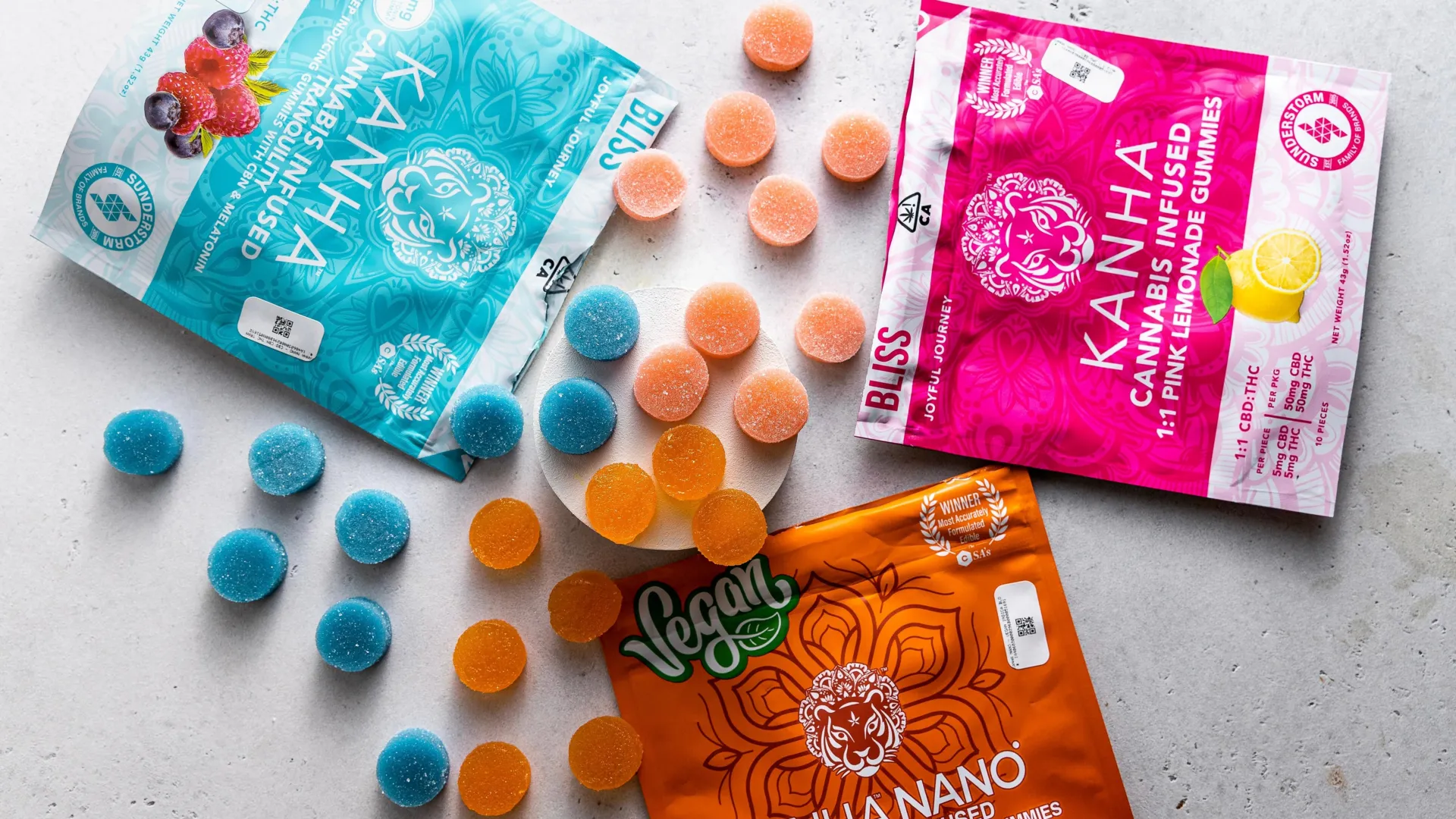
Bright colors, fruit imagery, and labels like “locally made” or “vegan” might seem harmless — but when used on cannabis edibles, they can send misleading messages to teens.
That’s according to a new Washington State University-led study examining how adolescents perceive the packaging of cannabis-infused products such as gummies, chocolates and sodas. Despite regulations barring packaging that targets youth, many teens in the study found these products appealing — often likening them to everyday snacks or health foods.
The research, conducted in collaboration with Public Health – Seattle & King County, is part of a broader effort to reduce accidental cannabis exposure among teens. The findings could help shape new rules aimed at limiting underage appeal.
“What surprised us was how often these products were interpreted as healthy or natural,” said Jessica Willoughby, associate professor in WSU’s Murrow College of Communication and co- author of the study, published in the Journal of Health Communication. “When you combine that with vibrant packaging and familiar fruit flavors, it’s easy to see how these items start to look like snacks — not something potentially harmful or illegal for teens.”
Researchers conducted virtual focus groups and interviews with 28 Washington teens, ages 13 to 17, using real product photos from stores to prompt discussion. With parental permission, participants shared which packaging elements caught their eye and why.
The teens consistently pointed to bright, colorful designs and packaging that resembled healthy snacks as particularly appealing. Some said they’d display the packaging in their rooms or use it in social media posts. Others said terms like “locally made” and “vegan” made the products feel more aligned with their personal values — even if they knew the items contained cannabis.
“Our findings suggest that teens are drawn not just to the look of these packages, but to what the design represents,” said Stacey Hust, a professor in WSU’s Murrow College and the study’s lead author. “They saw these products as trendy, natural and aspirational — qualities that resonate with their identities and beliefs.”
The study also showed that teens with greater familiarity with cannabis — either through personal use or family exposure — were more likely to notice warning labels and dosage information. Those with less knowledge often overlooked health warnings or didn’t recognize cannabis symbols at all.
The results raise concerns for health educators and policymakers as cannabis edibles become more prevalent. The researchers recommend incorporating teen perspectives into regulatory discussions and increasing cannabis literacy through targeted education efforts.
“Teens are telling us what speaks to them — and sometimes it’s not what adults expect,” said Sarah Ross-Viles, youth cannabis prevention manager with King County and study co-author. “If we’re serious about making cannabis packaging less appealing to youth, we need to use their insights to guide smarter, more effective regulations.”
The WSU team recently worked with Public Health – Seattle & King County health officials and the Washington State Liquor & Cannabis Board to conduct a follow-up quantitative study exploring how packaging elements correlate with perceived teen appeal and intent to use.
While broad changes like plain packaging may ultimately be difficult to implement, the researchers say practical updates — such as clearer warnings and limiting branding that mimics health food — could help reduce youth attraction.
“We’re not calling for a marketing ban,” Hust said. “We’re asking for thoughtful regulations that balance the rights of adult consumers with the need to protect kids.”
Ross-Viles agreed: “This is about ensuring cannabis packaging serves its real purpose — informing adult consumers — without confusing or enticing teens. And now, for the first time, we are getting direct feedback from Washington youth to help make that possible.”
It’s hoped phages could give us new ways of treating infections which are immune to antibiotics.
Roman Kemp & Tom Grennan dive into therapy on the You About? podcast.
