Hidden carbon giants: Satellite data reveals a 40-year Arctic peatland surge

Peatlands across the Arctic are expanding as the climate warms, new research shows.

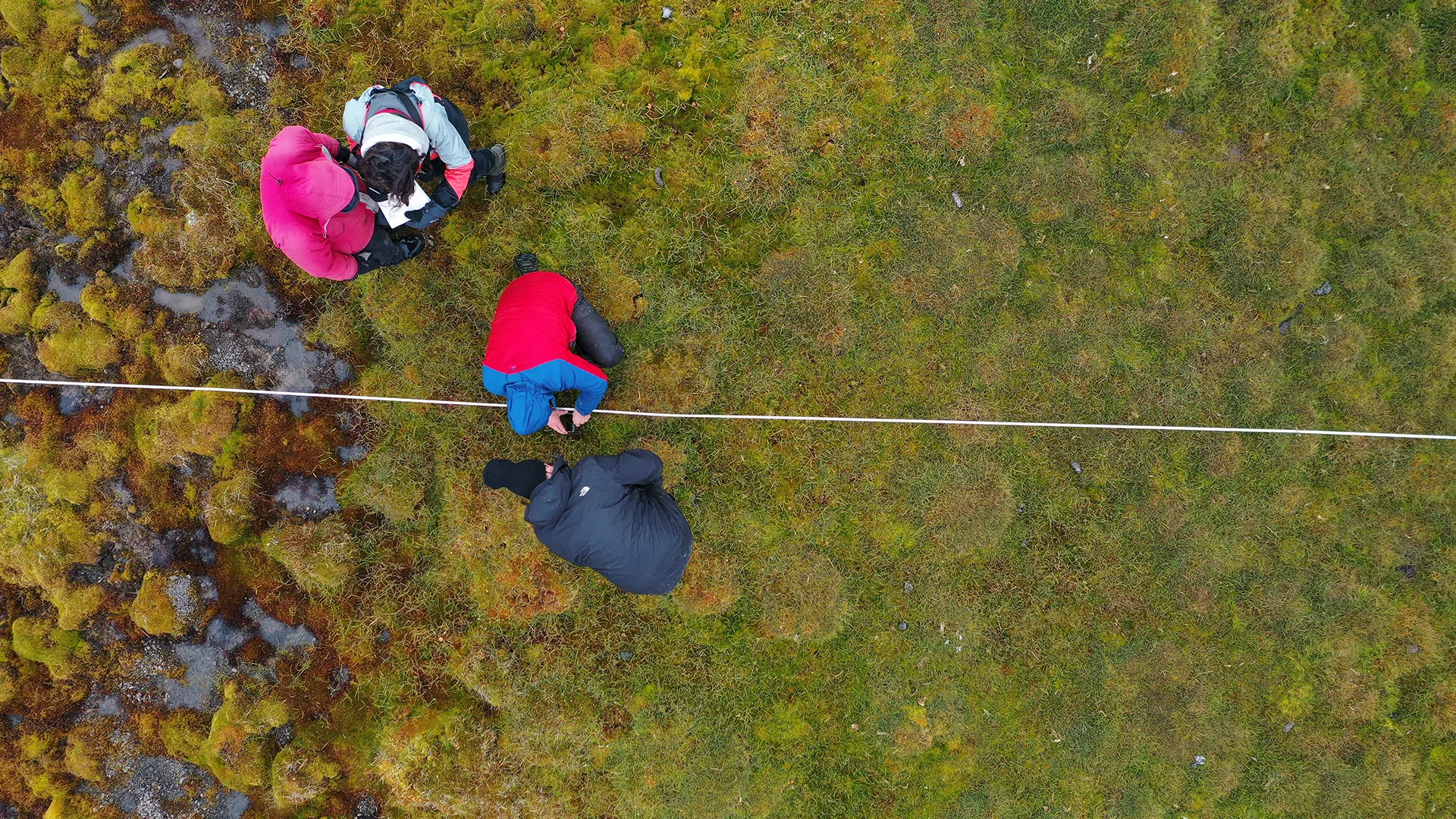
Scientists used satellite data, drones and on-the-ground observations to assess the edges of existing peatlands (waterlogged ecosystems that store vast amounts of carbon).

The study – led by the University of Exeter – found peatlands in the European and Canadian Arctic have expanded outwards in the last 40 years.

While this could slow climate change by storing carbon, the researchers warn that extreme future warming could cause widespread loss of peatlands – releasing that carbon and further accelerating the climate crisis.

“The Arctic has warmed faster than the rest of the planet, with average temperatures increasing by about 4°C in the last four decades,” said Dr Katherine Crichton.

“This has improved growing conditions for plants, causing ‘greening’ of the Arctic. We wanted to identify if this greening could be from peatland plant communities.

“We know from paleo records that warmer periods in Earth’s history led to more carbon being stored in peatlands.

“Our new study puts these pieces together to examine whether our warming climate is causing peatland expansion – and we find strong evidence that it is.”

Peatlands cover just 3% of Earth’s surface but they store about 600 billion tons of carbon – more than all the world’s forest biomass combined.

The Arctic has large peatland areas but these peter out in the far north, where harsh conditions limit plant growth.

In the new study, researchers examined 16 sites – a range of peatlands in both the low and high Arctic – and compared data from 1985-95 with the last 15-20 years.

They found strong evidence of expansion at more than two thirds of sites (measured by “peak-summer greening” – increased growth of peatland-forming plants at the edges of existing peatlands).

The largest changes were found in places with the highest increases in summer temperature, such as the Norwegian islands of Svalbard.

“Our findings suggest Arctic peatlands are an increasingly important natural carbon sink, at least in the near term,” said Professor Karen Anderson, from the Environment and Sustainability Institute on Exeter’s Penryn Campus in Cornwall.

“But if temperatures continue to rise, we are likely to see changes in rainfall, and we are not sure how sustainable new or existing peatlands will be. Plus we could see increases of methane emissions at the same time.

“So – while our study gives us some positive news – it does not detract from the urgent need to reduce greenhouse gas emissions and stabilize our climate.”

The story behind the study

This study took researchers on an unexpected journey that included COVID lockdowns, polar bear safety training and dragging a canoe overland.

Like many research projects, it started with pilot studies – one extracting and analyzing peatland samples in Canada and Finland, the other testing “remote sensing” with drones and satellites.

The team wanted to combine these to find out how climate change is affecting Arctic peatlands. They started applying for funding in 2013, and got their first rejection in 2015. Two more rejections came the following year. In 2018, they finally got a grant – and the project started in summer 2019.

Dr Crichton used Google Earth Engine to identify possible study sites, and Professor Angela Gallego-Sala went on the first fieldwork expedition – to Svalbard, where she received training on avoiding encounters with hungry polar bears.

With the research finally making progress, COVID lockdowns halted fieldwork and lab work. While this hampered the project, Dr Crichton’s computer-based work could continue. “I was still at my desk using Google Earth Engine,” she said. “Lockdown didn’t make any difference to the work I was doing.”

So Dr Crichton continued identifying fieldwork sites, analyzing data and applying for permits – paving the way for fieldwork in Canada in 2021-22. On one of those expeditions, Professor Gallego-Sala stayed at a basic research station on Bylot Island where the washing facility was a “half-frozen lake.” She said: “It was light all the time. You could do fieldwork all day long and all night if you wanted to.”

From that research station, the team visited remote sites via helicopter. Many sites had no name, and the pilot wanted names in order to arrange pick-ups – so sites got informal names including “Glacial Nirvana” and “Angela’s Paradise.” At each site, the team extracted peatland cores to learn about the history of the peatland and how it might be changing.

At Salluit in northern Canada, the team had an Inuit guide for expeditions out into the peatland – during which they saw wildlife including black bears and reindeer, and caught fish and mussels for dinner each evening. When the team laid out their plan one day, the guide shrugged and said: “You can go wherever you want.” He did not mention that their plan would leave their canoe stuck on a large area of sand at low tide.

The three female researchers had to push the stranded boat overland, while the guide sat in it. “We pushed it a long way through the sand,” Professor Gallego-Sala said. “It was pretty tough – but it was also hilarious, and we managed to get it out.”

“Meanwhile, I’m still sat at my computer by the way,” said Dr Crichton, laughing. But this work provided a crucial component – allowing comparison between peatland cores and long-term satellite data that shows peatland edges getting greener as vegetation spreads.

Professor Gallego-Sala added: “Going out for fieldwork is a short time in comparison to the rest of the work. There is lots of lab work to analyse the samples, then extensive data analysis before the findings can be written into a published paper.”

The study is part of a project called Increased Accumulation in Arctic Peatlands (ICAAP), funded by the Natural Environment Research Council.

The paper, published in the journal Communications Earth and Environment, is entitled: “Satellite data indicates recent Arctic peatland expansion with warming.”


Share Button

Flash floods in the Alps: How climate change is supercharging summer storms

Intense, short-lived summer downpours are expected to become both more frequent and more intense across Alpine regions as the climate warms. In a new study, scientists from the University of Lausanne (UNIL) and the University of Padova analyzed data from nearly 300 mountain weather stations and found that a 2°C rise in regional temperature could double the frequency of these extreme events.

In June 2018, the city of Lausanne in Switzerland experienced an extreme and short-lived rainfall episode, with 41 millimeters of precipitation falling in just 10 minutes. Large parts of the city were flooded, resulting in estimated damage of 32 million Swiss Francs. These short, extreme events, often causing severe damage to property and posing risks to lives, are still very rare in Switzerland today. However, with the rise in temperatures caused by global warming, they are likely to become more frequent in the future, particularly over the Alpine mountains and their surroundings. Warm air retains more moisture (around 7% more per degree) and intensifies thunderstorm activity. As the Alpine region is warming faster than the global average, it is particularly hard hit. It is therefore urgent to assess the impact of global warming in these regions. In a new study published in npj Climate and Atmospheric Science (a Nature portfolio journal), scientists from UNIL’s Faculty of Geosciences and Environment, in collaboration with the University of Padua (UNIPD) have demonstrated that an average temperature rise of 2°C could double the frequency of short-lived summer rainstorms in the Alpine region. With such warming, an intense storm currently expected every 50 years could occur every 25 years in the future.

To obtain these results, the researchers examined data from almost 300 weather stations in the European Alps, spread across Switzerland, Germany, Austria, France, and Italy. They focused on record-breaking rainfall events (lasting from 10 minutes to an hour) between 1991 and 2020, as well as temperatures associated with these storms.

Based on these observations, a statistical model incorporating physics principles has been developed to establish a link between temperature and rainfall frequency, and then to simulate the future frequency of extreme precipitation using regional climate projections. “Our results show that an average temperature rise of 1°C would already be highly problematic,” warns Nadav Peleg, researcher at UNIL and first author of the study. “The sudden and massive arrival of large volumes of water prevents the soil from absorbing the excess. This can trigger flash floods and debris flows, leading to infrastructure damage and, in some cases, casualties,” he adds. “It is therefore crucial to understand how these events may evolve with climate change in order to plan appropriate adaptation strategies, such as improving urban drainage infrastructure where necessary.” Francesco Marra, researcher at UNIPD and one of the main authors of the study adds: “An increase of 1°C is not hypothetical, it is likely to occur in the coming decades. We are already witnessing a tendency for summer storms to intensify, and this trend is only expected to worsen in the years ahead.”

Share Button

Fitness trackers are failing millions — this fix could change everything

For many, fitness trackers have become indispensable tools for monitoring how many calories they’ve burned in a day. But for those living with obesity, who are known to exhibit differences in walking gait, speed, energy burned and more, these devices often inaccurately measure activity — until now.

h

For many, fitness trackers have become indispensable tools for monitoring how many calories they’ve burned in a day. But for those living with obesity, who are known to exhibit differences in walking gait, speed, energy burned and more, these devices often inaccurately measure activity — until now.

Scientists at Northwestern University have developed a new algorithm that enables smartwatches to more accurately monitor the calories burned by people with obesity during various physical activities.

The technology bridges a critical gap in fitness technology, said Nabil Alshurafa, whose Northwestern lab, HABits Lab, created and tested the open-source, dominant-wrist algorithm specifically tuned for people with obesity. It is transparent, rigorously testable and ready for other researchers to build upon. Their next step is to deploy an activity-monitoring app later this year that will be available for both iOS and Android use.

“People with obesity could gain major health insights from activity trackers, but most current devices miss the mark,” said Alshurafa, associate professor of behavioral medicine at Northwestern University Feinberg School of Medicine.

Current activity-monitoring algorithms that fitness trackers use were built for people without obesity. Hip-worn trackers often misread energy burn because of gait changes and device tilt in people with higher body weight, Alshurafa said. And lastly, wrist-worn models promise better comfort, adherence and accuracy across body types, but no one has rigorously tested or calibrated them for this group, he said.

“Without a validated algorithm for wrist devices, we’re still in the dark about exactly how much activity and energy people with obesity really get each day — slowing our ability to tailor interventions and improve health outcomes,” said Alshurafa, whose team tested his lab’s algorithm against 11 state-of-the-art algorithms designed by researchers using research-grade devices and used wearable cameras to catch every moment when wrist sensors missed the mark on calorie burn.

The findings will be published on June 19 in Nature Scientific Reports.

The exercise class that motivated the research

Alshurafa was motivated to create the algorithm after attending an exercise class with his mother-in-law who has obesity.

“She worked harder than anyone else, yet when we glanced at the leaderboard, her numbers barely registered,” Alshurafa said. “That moment hit me: fitness shouldn’t feel like a trap for the people who need it most.”

Algorithm rivals gold-standard methods

By using data from commercial fitness trackers, the new model rivals gold-standard methods of measuring energy burn and can estimate how much energy someone with obesity is using every minute, achieving over 95% accuracy in real-world situations. This advancement makes it easier for more people with obesity to track their daily activities and energy use, Alshurafa said.

How the study measured energy burn

In one group, 27 study participants wore a fitness tracker and metabolic cart — a mask that measures the volume of oxygen the wearer inhales and the volume of carbon dioxide the wearer exhales to calculate their energy burn (in kilocalories/kCals) and resting metabolic rate. The study participants went through a set of physical activities to measure their energy burn during each task. The scientists then looked at the fitness tracker results to see how they compared to the metabolic cart results.

In another group, 25 study participants wore a fitness tracker and body camera while just living their lives. The body camera allowed the scientists to visually confirm when the algorithm over- or under-estimated kCals.

At times, Alshurafa said he would challenge study participants to do as many pushups as they could in five minutes.

“Many couldn’t drop to the floor, but each one crushed wall-pushups, their arms shaking with effort,” he said, “We celebrate ‘standard’ workouts as the ultimate test, but those standards leave out so many people. These experiences showed me we must rethink how gyms, trackers and exercise programs measure success — so no one’s hard work goes unseen.”

The study is titled, “Developing and comparing a new BMI inclusive energy burn algorithm on wrist-worn wearables.”

Other Northwestern authors include lead author Boyang Wei, and Christopher Romano and Bonnie Nolan. This work also was done in collaboration with Mahdi Pedram and Whitney A. Morelli, formerly of Northwestern.

Funding for the study was provided by the National Institute of Diabetes and Digestive and Kidney Diseases (grants K25DK113242-01A1 and R01DK129843-01), the National Science Foundation (grant 1915847), the National Institute of Biomedical Imaging and Bioengineering (grant R21EB030305-01) and the National Institutes of Health’s National Center for Advancing Translational Sciences (grant UL1TR001422).

Share Button

How does a £1.6m fine affect an NHS trust?

How will the largest fine over maternity deaths impact the NHS and the families it failed?

Share Button

‘I was poisoned by fake Botox’

In recent weeks 28 cases of botulism caused by fake Botox are recorded in the north-east of England.

Share Button

Leeds maternity units downgraded to ‘inadequate’

Trust told to take immediate action to improve after unannounced inspections prompted by parent concerns.

Share Button

Six ways to keep your home and yourself cool in hot weather

Six simple things you can do to help keep your house cool when temperatures rise.

Share Button

UK hits hottest day of the year as heatwave approaches

Alerts across England are in force until Monday morning and come as heatwave conditions are expected.

Share Button

Thinking AI models emit 50x more CO2—and often for nothing

No matter which questions we ask an AI, the model will come up with an answer. To produce this information – regardless of whether than answer is correct or not – the model uses tokens. Tokens are words or parts of words that are converted into a string of numbers that can be processed by the LLM.

This conversion, as well as other computing processes, produce CO2 emissions. Many users, however, are unaware of the substantial carbon footprint associated with these technologies. Now, researchers in Germany measured and compared CO2 emissions of different, already trained, LLMs using a set of standardized questions.

“The environmental impact of questioning trained LLMs is strongly determined by their reasoning approach, with explicit reasoning processes significantly driving up energy consumption and carbon emissions,” said first author Maximilian Dauner, a researcher at Hochschule München University of Applied Sciences and first author of the Frontiers in Communication study. “We found that reasoning-enabled models produced up to 50 times more CO2 emissions than concise response models.”

‘Thinking’ AI causes most emissions

The researchers evaluated 14 LLMs ranging from seven to 72 billion parameters on 1,000 benchmark questions across diverse subjects. Parameters determine how LLMs learn and process information.

Reasoning models, on average, created 543.5 ‘thinking’ tokens per questions, whereas concise models required just 37.7 tokens per question. Thinking tokens are additional tokens that reasoning LLMs generate before producing an answer. A higher token footprint always means higher CO2 emissions. It doesn’t, however, necessarily mean the resulting answers are more correct, as elaborate detail that is not always essential for correctness.

The most accurate model was the reasoning-enabled Cogito model with 70 billion parameters, reaching 84.9% accuracy. The model produced three times more CO2 emissions than similar sized models that generated concise answers. “Currently, we see a clear accuracy-sustainability trade-off inherent in LLM technologies,” said Dauner. “None of the models that kept emissions below 500 grams of CO2 equivalent achieved higher than 80% accuracy on answering the 1,000 questions correctly.” CO2 equivalent is the unit used to measure the climate impact of various greenhouse gases.

Subject matter also resulted in significantly different levels of CO2 emissions. Questions that required lengthy reasoning processes, for example abstract algebra or philosophy, led to up to six times higher emissions than more straightforward subjects, like high school history.

Practicing thoughtful use

The researchers said they hope their work will cause people to make more informed decisions about their own AI use. “Users can significantly reduce emissions by prompting AI to generate concise answers or limiting the use of high-capacity models to tasks that genuinely require that power,” Dauner pointed out.

Choice of model, for instance, can make a significant difference in CO2 emissions. For example, having DeepSeek R1 (70 billion parameters) answer 600,000 questions would create CO2 emissions equal to a round-trip flight from London to New York. Meanwhile, Qwen 2.5 (72 billion parameters) can answer more than three times as many questions (about 1.9 million) with similar accuracy rates while generating the same emissions.

The researchers said that their results may be impacted by the choice of hardware used in the study, an emission factor that may vary regionally depending on local energy grid mixes, and the examined models. These factors may limit the generalizability of the results.

“If users know the exact CO2 cost of their AI-generated outputs, such as casually turning themselves into an action figure, they might be more selective and thoughtful about when and how they use these technologies,” Dauner concluded.

Share Button

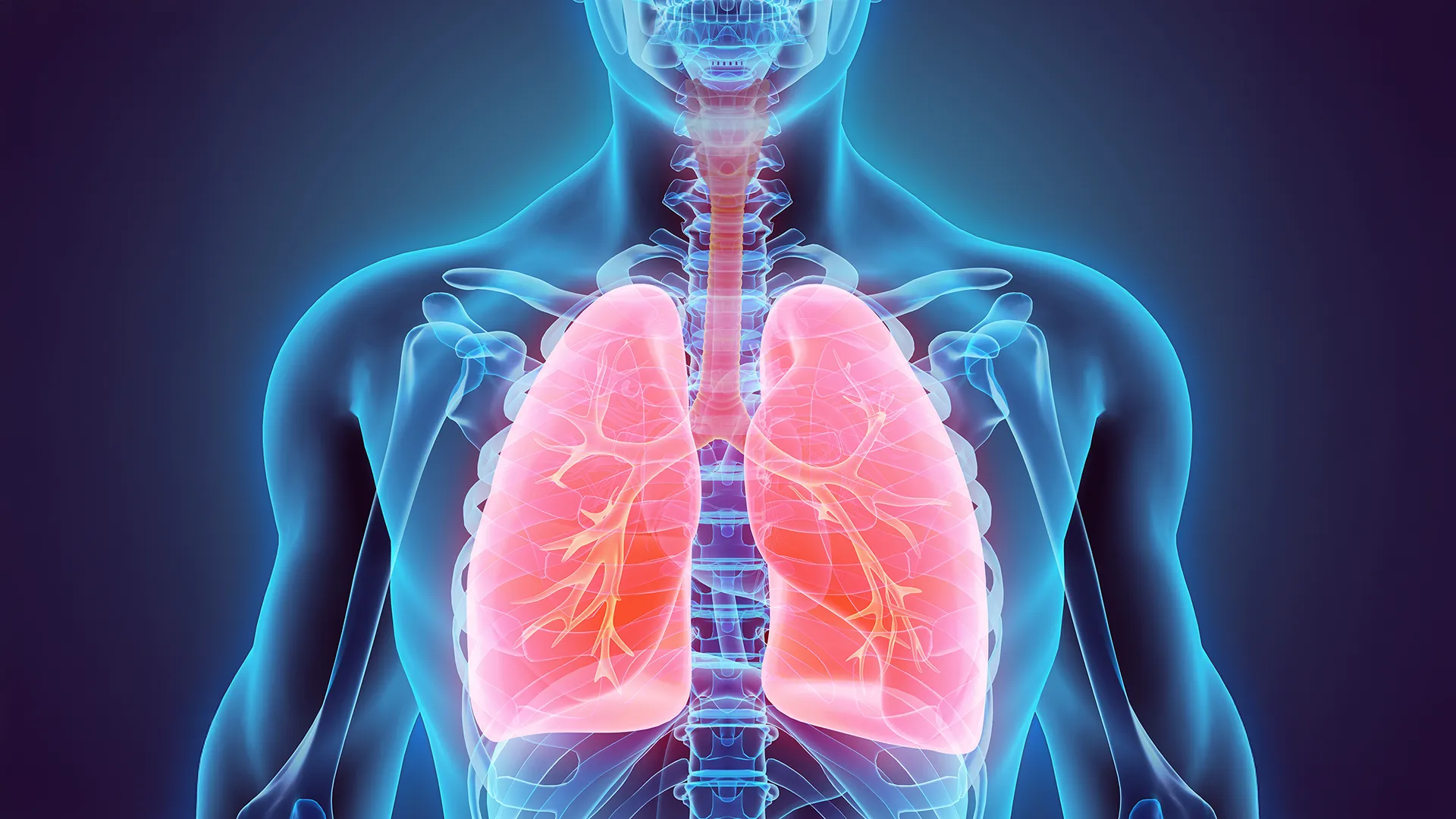
Microscopic heist: How lung bacteria forge weapons to steal iron and survive

Bacteria of the genus Pandoraea have not been studied much to date. Their name is reminiscent of Pandora’s box from Greek mythology, which is a symbol of uncontrollable dangers. “We have been working with an antibiotic-resistant bacterium,” says Elena Herzog. She is the first author of the publication and works as a doctoral researcher in the team of Christian Hertweck, the head of the study at the Leibniz Institute for Natural Product Research and Infection Biology (Leibniz-HKI). However, like so many things in nature, these pathogenic bacteria do not only have negative properties. “Pandoraea bacteria not only harbor risks. They also produce natural products with an antibacterial effect.”

Despite the high health risk posed by Pandoraea, their molecular properties were hardly known until now. “We only knew that these bacteria occur in nature and that they can be pathogenic because they have been found in the lung microbiome of patients with cystic fibrosis or sepsis,” explains Herzog.

The race for iron

As for most living organisms, iron is also essential for bacteria. “Iron plays a central role in enzymes and the respiratory chain of living organisms, for example,” explains Herzog. Particularly in iron-poor environments such as the human body, the conditions for sufficient absorption of the element are anything but ideal. Many microorganisms therefore produce so-called siderophores: small molecules that bind iron from the environment and transport it into the cell.

“However, there were no known virulence or niche factors in the Pandoraea bacteria that could help them survive,” says Herzog. The research team therefore wanted to find out how Pandoraea strains can survive in such a competitive environment.

Using bioinformatic analyses, the team identified a previously unknown gene cluster called pan. It codes for a non-ribosomal peptide synthetase – a typical enzyme for the production of siderophores. “We started with a gene cluster analysis and specifically searched for genes that could be responsible for the production of siderophores,” reports Herzog.

Through targeted inactivation of genes as well as culture-based methods and state-of-the-art analytical techniques – including mass spectrometry, NMR spectroscopy, chemical degradation and derivatization – the researchers from Jena succeeded in isolating two new natural products and elucidating their chemical structure: Pandorabactin A and B. Both are able to complex iron and could play an important role in how Pandoraea strains survive in difficult environments. “The molecules help the bacteria to take up iron when it is scarce in their environment,” says Herzog.

Less iron, fewer competitors

Bioassays have also shown that pandorabactins inhibit the growth of other bacteria such as Pseudomonas, Mycobacterium and Stenotrophomonas by removing iron from these competitors.

Analyses of sputum samples from the lungs of cystic fibrosis patients further revealed that the detection of the pan gene cluster correlates with changes in the lung microbiome. Pandorabactins could therefore have a direct influence on microbial communities in diseased lungs.

“However, it is still too early to derive medical applications from these findings,” emphasizes Herzog. Nevertheless, the discovery provides important information on the survival strategies of bacteria of the genus Pandoraea and on the complex competition for vital resources in the human body.

The study was carried out in close cooperation between the Leibniz-HKI and the universities of Jena, Heidelberg and Hong Kong. It was conducted as part of the “Balance of the Microverse” Cluster of Excellence and the ChemBioSys Collaborative Research Center and was funded by the German Research Foundation. The imaging mass spectrometer used for the analyses was funded by the Free State of Thuringia and co-financed by the European Union.

Share Button