People Say 50 Is The New 30. Here’s What I Discovered About Aging As A 56-Year-Old Who Actually Looks 56.

I was in a Zoom meeting last week when I caught my own reflection in the corner of the screen and did something I’ve probably done more times than I’d like to admit: I reached up and pulled the skin at my jaw back, just slightly, just to see what I looked like. Nobody noticed. But I did.

That’s the part no one really talks about when you decide to age naturally. It isn’t one clean, triumphant choice. It’s the same choice, made over and over again, some days more convincingly than others.

I’m 56. I look 56. And I’m working on being OK with that.

A girlfriend put it plainly recently. She said the goal at this stage is to look in the mirror and accept the woman you see today, not long for the one from 10 years ago. I asked if she’d managed it. She laughed. “Absolutely not,” she said. “But I hope that for you.”

I’ve been thinking about that ever since. Not because it was comforting exactly, but because it was honest. This isn’t something you arrive at. It’s something you practice — badly and repeatedly — on an indefinite timeline with no graduation ceremony.

"This is my junior year high school yearbook photo," the author writes. "This was around the time I started believing my nose needed fixing."
“This is my junior year high school yearbook photo,” the author writes. “This was around the time I started believing my nose needed fixing.”

Courtesy of Kellie Walenciak

We live in a culture that has decided the highest compliment you can pay a woman over 50 is to tell her she doesn’t look it. I still love hearing that, if I’m being honest. In the moment, it feels like a small victory — proof I’m outrunning my own biological clock. But lately it lands differently, because I’m not sure what I’m supposed to be winning anymore, or why I’d want to.

Fifty is not the new 30. Fifty is 50. And when we spend our energy rebranding decades rather than inhabiting them, we aren’t empowering ourselves, we’re erasing ourselves.

I think about my 20-year-old daughter standing at the beginning of the decades I’m leaving behind. I don’t want to be in competition with her, or with her friends, or with the version of myself that existed when I was her age. I’ve already lived those years. They belong to her now. What I want is something different and harder to name — to be healthy, present and fully here for the life I’m actually living.

She’s also the reason I’ve landed where I have. I’ve spent years telling her she doesn’t need to change anything about herself — that who she is, as she is, is enough. At some point, I realized I couldn’t keep saying that out loud while quietly negotiating with my own reflection. It doesn’t hold. Not with her. Not with me.

Some women I admire have found that too. I see it in women like Jodie Foster and Helen Mirren, who aren’t trying to pass as younger than they are, but, instead, are carrying themselves like women who have somewhere better to be than chasing their own reflection. There’s a specific freedom in that. I recognize it even when I can’t quite access it.

"This is me in my early 20s, shortly after my nose surgery," the author writes. "The photo was taken by my doctor."
“This is me in my early 20s, shortly after my nose surgery,” the author writes. “The photo was taken by my doctor.”

Courtesy of Kellie Walenciak

There’s an entire industry — projected to be worth over $90 billion — built on the premise that your natural face is a problem requiring a solution. I won’t pretend the pressure isn’t real, or that I’m immune to it. Perimenopause has made sure of that. My body is changing in ways I didn’t anticipate, and some days I barely recognize parts of it.

I’ve also been here before. When I was 23, I had my nose done by a well-known New Jersey surgeon. At the time, it felt like a solution. I had spent years reacting to other people’s reactions — comments, jokes, the kind of small things that stick. The surgery “fixed” it. And for a while, that felt like relief.

But when I look back now, I don’t feel that way about it. Not because I dislike how I look, but because I can see what I lost. My old nose was fine. More than fine. It had something this one doesn’t. Character, maybe. It had something that belonged to me before I changed it.

I’ve come close to injections, even going so far as to make an appointment and then canceling it one hour before. Something always pulls me back. Part of it is practical. I don’t want to start something I have to maintain. But part of it is simpler than that. I don’t want to spend my time thinking about my face that much. I can hear my daughter in those moments, too, and everything I’ve ever told her about not needing to change a thing.

We’re brutal to ourselves in real time. A few years from now, we’ll look back at a photo from today and think, I looked great, and wonder why we couldn’t see it then.

The author with her daughter Sienna.

Courtesy of Kellie Walenciak

I’m not judging women who go the route I’ve chosen not to travel. I understand the pressure completely because I’ve felt it, I’ve googled it, I’ve sat with it seriously enough to wonder which weekend would work. This isn’t a story about being above any of that. It’s a story about what pulled me back.

And what it comes down to, for me, is a different kind of math. The money I might spend maintaining a version of my face that isn’t real could take me to London, buy me a bike, pay for an improv class or a long, lazy weekend in Manhattan. Those things change how I feel about being alive. A tighter jawline would not.

My face at 56 tells a specific story. It holds the children I’ve raised, the losses I’ve absorbed and the years I spent figuring out who I actually am. I’m not interested in editing any of that out.

Some days I believe that completely. Other days I’m in a Zoom meeting, pulling at my jaw, hoping nobody sees.

Both things are true. And maybe that’s exactly what 56 looks like.

The author (front right) out to dinner with friends. “My friends are all turning 60 this year, including one who told me the goal is to accept the woman you see in the mirror," she writes.
The author (front right) out to dinner with friends. “My friends are all turning 60 this year, including one who told me the goal is to accept the woman you see in the mirror,” she writes.

Courtesy of Kellie Walenciak

Kellie Walenciak is a senior corporate communications professional and freelance writer who specializes in leadership, workplace culture and the human side of work. Her writing delves into themes of identity, second chances, and the ways we interpret and reshape the stories we tell ourselves.

Do you have a compelling personal story you’d like to see published on HuffPost? Find out what we’re looking for here and send us a pitch at pitch@huffpost.com.

Share Button

Scientists catch a hidden electronic state forming in just 30 femtoseconds

Researchers in Japan have captured an extraordinarily fast electronic transformation inside a metal-organic framework, observing a fleeting state and the hidden state that followed within just 30 femtoseconds. The team from Science Tokyo, Tohoku University, and Nagoya Institute of Technology combined ultrafast laser spectroscopy with theoretical calculations to uncover a previously unknown intermediate electronic state that helps drive the transformation. The discovery offers new clues about how light could eventually be used to rapidly control the properties of advanced materials.

Materials can behave in unexpected ways after absorbing light. In some cases, light pushes them into photoinduced states with properties that are very different from those they display under ordinary conditions. These states give researchers another way to alter material behavior beyond conventional approaches such as heating or cooling. Learning exactly how they form could be important for developing future photoresponsive materials and advanced optical technologies.

Capturing a Transformation in Femtoseconds

One of the biggest challenges is speed. The first steps in forming a photoinduced state can unfold on the femtosecond (fs) timescale (a millionth of a billionth of a second), making them exceptionally difficult to observe.

To investigate these earliest moments, a team led by Assistant Professor Tadahiko Ishikawa from the Department of Chemistry, School of Science, Institute of Science Tokyo (Science Tokyo), Japan, worked with then doctoral student Samiran Banu (currently a Special Postdoctoral Researcher at RIKEN) and collaborators at Tohoku University and Nagoya Institute of Technology, Japan.

The researchers focused on a metal-organic framework (MOF), a material constructed by connecting metal ions with organic molecules. Their goal was to determine exactly how a photoinduced hidden state develops. The findings were published in the journal Physical Review Letters.

“We found that the photoinduced hidden state forms within 30 fs through a previously unknown intermediate electronic state,” says Ishikawa.

Ultrafast Lasers Reveal a Hidden State

To follow the transformation, the researchers used time-resolved reflectance spectroscopy and ultrashort laser pulses lasting only six fs. The method allowed them to measure how the light reflected by the material changed almost immediately after the MOF absorbed a laser pulse.

With this extremely fine time resolution, the team tracked rapid changes in the material’s electronic behavior. Within 30 fs, its reflectance spectrum shifted dramatically and developed features linked to the appearance of a new optical absorption band. Those changes indicated that the photoinduced hidden state had formed.

Experiments alone, however, could not fully explain what was happening. The researchers therefore combined their measurements with theoretical calculations to reconstruct the sequence of events inside the material.

A Fleeting Electronic State Comes First

The analysis showed that immediately after absorbing light, the material briefly entered an intermediate electronic state. During this moment, electronic bonds between neighboring sites alternated between stronger and weaker in a repeating pattern. This configuration is known as a bond-order wave state.

The state existed only briefly. It was followed by small movements in the positions of atoms within the material, and those structural changes ultimately produced the photoinduced hidden state.

Theoretical calculations also suggested that the newly formed state may be polar. In such a state, positive and negative electrical charges are distributed unevenly across the material. If these photoinduced polar states can be reliably created and controlled, they could provide new ways to manipulate electronic properties using light.

“By revealing intermediate states, our method could help design materials that can be efficiently controlled using light,” explains Ishikawa.

Toward Materials Controlled by Light

Beyond showing how a photoinduced hidden state develops, the research points to a possible strategy for manipulating material properties with extremely short pulses of light. Being able to create and control these temporary states could contribute to new photoresponsive materials designed for high-speed electronics, optoelectronic devices, and other technologies that require precise control over how materials behave.

Future research could extend the same experimental and theoretical approach to other types of materials. By exposing the previously invisible steps that occur during ultrafast transformations, scientists may move closer to designing materials whose properties can be deliberately and efficiently controlled with light.

Share Button

2,200-year-old Roman shipwreck reveals ancient waterproofing secrets

For as long as people have traveled by sea, ships have needed protection from water, salt, microorganisms, and marine animals such as worms. Yet until the mid-20th century, researchers paid relatively little attention to the non-wood materials used in ancient shipbuilding. Waterproofing materials in particular remain understudied.

A new study published in Frontiers in Materials is helping fill that gap. Researchers in France and Croatia analyzed the protective coating on the Roman Republic shipwreck Ilovik-Paržine 1, which sank about 2,200 years ago off the coast of what is now Croatia.

“In archaeology, little attention is paid to organic waterproofing materials. Yet they are essential for navigation at sea or on rivers and are true witnesses of past naval technologies,” said first author Dr. Armelle Charrié, an archaeometrist at the Laboratory of Mass Spectrometry of Interactions and Systems in Strasbourg. “Studying the coatings, we found two different kinds on this vessel: one made of pine tar, also called pitch, and the other of a mixture of pine tar and beeswax. Analysis of pollen in the coating made it possible to identify the plant taxa present in the immediate environment during the construction or repairs of the ship.”

Pine Tar and Beeswax Protected the Hull

The wreck was discovered in 2016, and both the vessel and its cargo have been investigated several times since then. This study is the first to combine molecular and pollen analysis to identify the ship’s coatings and reconstruct the vegetation present when those materials were produced and applied to the hull.

The research was carried out through a collaboration between the Department for Underwater Archaeology of the Croatian Conservation Institute and the ‘ADRIBOATS’ program of the Centre Camille Jullian at Aix-Marseille University in France.

“Some regions throughout the Adriatic have particular characteristics that led local populations to develop a specific shipbuilding style,” said Charrié. “Only studies like ours offer an overview of these traditions which bear witness to genuine know-how and diverse traditions.”

To investigate the coatings, the researchers performed structural, molecular, and pollen analyses. They used methods including mass spectrometry, which can identify and measure unknown substances within complex organic mixtures.

The team analyzed 10 coating samples to determine the biological origins of the natural materials used on the vessel. Molecular fingerprinting revealed compounds associated with pine trees, showing that every sample was dominated by heated coniferous resin or coniferous tar, also called pitch.

One sample, however, contained a different formulation made from beeswax and tar. This mixture – known to Greek shipbuilders as zopissa – improves the adhesive’s flexibility and is easier to apply when hot.

Ancient Pollen Preserved in Sticky Pitch

Because pitch is naturally sticky, it can capture pollen from nearby vegetation and preserve it for long periods. By studying the types of pollen trapped in the coatings and measuring their relative abundance, the researchers were able to narrow down where some of the pitch may have been produced or reapplied during repairs.

The pollen recovered from Ilovik-Paržine 1 pointed to a wide range of environments. Some came from landscapes typical of Mediterranean and Adriatic coasts and valleys, including forests of holly oak and pine as well as matorral – a kind of Mediterranean shrubland – where olive and hazel trees grow.

Alder and ash pollen indicated vegetation associated with riverbanks and seashores, which occur along the coast and in the nearby hinterland. Small amounts of fir and beech were also present. These trees are associated with mountainous terrain and are characteristic of the north-eastern Adriatic coast, where the mountain ranges of Istria and Dalmatia lie relatively close to the sea.

Evidence of Repeated Repairs Across the Adriatic

The analysis also suggests that the vessel received four to five separate batches of coating over time. The stern and central section appear to have been covered with the same material, while researchers identified three distinct coating batches at the bow.

That pattern may indicate that the ship was repaired repeatedly, with materials obtained from different locations around the Mediterranean.

Earlier research on the vessel’s ballast pointed to Brundisium – today Brindisi – on the south-eastern coast of Italy as the place where the ship was built. The new pollen evidence suggests that some of its coatings may also have been applied in that area.

Other layers, however, may have been added along the north-eastern Adriatic coast, close to where the wreck was ultimately found.

“While it seems obvious that ships sailing long distances need repairs, it’s simply not easy to demonstrate this,” concluded Charrié. “Pollen has been very useful in identifying different coatings where the molecular profiles were identical.”

Share Button

Wellness habits you can start now – at no (or little) cost

Living a healthy life doesn’t have to just be about pricey studio classes and luxury retreats.

Share Button

Schizophrenia’s lost brain connections follow a surprising pattern

Researchers, including a Rutgers professor, have gained a clearer view of the biological changes associated with schizophrenia by directly measuring synaptic connections in the living human brain. The team used specialized positron emission tomography (PET) imaging to examine these crucial points of communication between brain cells.

The study, published in Molecular Psychiatry, was led by senior authors Avram Holmes, associate professor of psychiatry at Robert Wood Johnson Medical School and core faculty member of the Center for Advanced Human Brain Imaging Research within the Rutgers Brain Health Institute, and Rajiv Radhakrishnan, associate professor of psychiatry and radiology and biomedical imaging at Yale University. First author Sidhant Chopra, formerly a postdoctoral fellow in the Holmes Lab, is a McKenzie Research Fellow at Orygen, Australia’s Centre of Excellence in Youth Mental Health, and the University of Melbourne in Australia.

Measuring the Brain’s Synaptic Connections

Synapses are tiny junctions that allow brain cells to communicate with one another across neural circuits. Problems involving these connections are believed to play a role in the cognitive and emotional symptoms of schizophrenia. Until now, however, scientists have had a limited understanding of exactly where synaptic loss occurs in the brains of living people because conventional imaging methods such as magnetic resonance imaging cannot specifically measure synapses.

The research involved 122 people, including 29 diagnosed with schizophrenia, making it one of the largest synaptic density PET imaging studies conducted so far. Compared with healthy participants, people with schizophrenia showed a pronounced and widespread reduction in synaptic connections across several parts of the brain. These included frontal and temporal regions as well as areas involved in memory and emotion. The loss was also considerably greater on the left side of the brain than on the right.

Researchers found that this synaptic pattern did not match the changes in brain volume typically seen with standard MRI scans. That distinction suggests synaptic loss and changes in brain volume may reflect separate biological processes rather than two imaging methods capturing the same underlying change.

A Molecular Pattern Behind Synaptic Loss

The team also discovered that the brain regions showing the greatest synaptic losses tended to contain high concentrations of receptors for important neurotransmitters, including serotonin, gamma-aminobutyric acid and glutamate. The finding suggests that the molecular characteristics of individual brain regions may influence how vulnerable they are to changes associated with schizophrenia.

To explore how synaptic loss might move through the brain, the researchers used computer simulations based on the brain’s structural connections. Their modeling identified an area in the left frontal lobe as a likely starting point from which synaptic loss could spread into connected regions.

“These findings suggest that in schizophrenia, synaptic loss is not random,” Chopra said. “Rather, it follows the brain’s molecular and connectivity architecture, which could eventually help identify where and how to intervene.”

“This detailed mapping of synaptic vulnerability could eventually help identify where and how to intervene to preserve or restore brain function, such as emerging therapies to prevent and regrow synapses,” Holmes added.

Toward More Precise Schizophrenia Treatments

The researchers said future work will build on these results by investigating how synaptic loss changes over time and how it responds to clinical treatments. A better understanding of that progression could ultimately help researchers develop more precise and personalized approaches to schizophrenia care.

Share Button

Are eggs safe to eat? Your salmonella questions answered

The UK Health Security Agency (UKHSA) has recently declared a national outbreak of salmonella food poisoning after one person died and hundreds more fell ill with the bug.

Share Button

Why is postpartum psychosis central in the Lindsay Clancy trial?

Lindsay Clancy’s defence argues that Clancy was suffering from postpartum psychosis when she killed her children. She has pleaded not guilty to murder.

Share Button

‘No Longer Have That Ugly Hanging Look’: This Discreet Solution Can Help You Wear Heavy Earrings Again

As we age, collagen production slows, gravity has its way, and our skin naturally sags. And while most are focused on sagging in the face and neck, you may have also noticed that your earrings hang a little lower than they once did and, in some cases, your piercings may be dangerously close to tearing. If this sounds like a problem you’re all too familiar with, you may find an answer in these $8 patches that make earlobes look instantly perky and prevent future piercing tearing down the road.

It may be helpful to think of the Lobe Wonder stickers as a bra for your earlobes, as they offer support and lift even your dangliest, heaviest earrings, while also disguising torn piercings. Made of a clear, latex-free, and hypoallergenic material, these universally sized patches simply adhere to the back of your ear as you slide the post of your desired earring through your piercing and the patch, before securing with an earring back.

“I’m 60, and my piercings were stretched and damaged before my earlobes started stretching with age. [These] not only give me a nice clean look, but they also lift my earlobes,” one Amazon shopper wrote.

Another reviewer pointed out that she considered expensive surgery to repair a torn piercing, but these patches proved to be a much more affordable alternative.

The Lobe Wonder patches can also be used to stop already torn piercings from tearing further and prevent future lobe stretching. Plus, reviewers insist that these invisible stickers make heavy earrings actually comfortable to wear all day long.

According to one reviewer, they now have “what looks like a perky new hole,” and all of their earrings look great again. You too may be able to revive this one pesky problem, or read more from other happy Lobe Wonder customers ahead.

Promising Amazon reviews:

“They stick and do not move and do their job! My earlobes are so thin and I’ve been wearing heavy earrings for decades now. These things help lift them up and no longer have that ugly hanging look and I’m no longer afraid of my earlobes ripping eventually over time. Get them!” — Alex S.

“Perky earrings again.These Lobe Wonder earlobe support patches are awesome! TMI- my left earlobe piercing has a dreaded tear from an old accident which makes some earrings hard to wear because the earring just hangs in the tear and I personally just hate seeing my earring in that hole. I saw these and gave them a try. So glad I did and now I have what looks like a perky new hole and so far for the past two weeks all of my earrings look great again. When I get home and remove my jewelry I forget the patch is even on the back of my ear, it’s very comfortable and I find myself checking my earrings in the mirror and I love what I see. Great thin little product that’s clear in color and my husband can’t see it when I asked him. Love!“ — Janet Thacker

“I love these for my heavy earrings. My ears use to hurt after wearing my wearing more than 4 hours but this has helped me wear them comfortably all day.” — My Home Favorites

“As i’ve gotten older, my earring holes stretched, and I was limited as to what I could wear. I know that surgery is available, but extremely expensive and not guaranteed. And I cannot do that. I found these, and they worked.I was pleasantly surprised. I did find other ones made out of a more durable material. But I find myself using both depending on the type of earring. Super easy to use.They are clear.There is no color so you can’t even see them. The size seems to be a one size fits all and they worked perfectly for me. And I fallen asleep with them and they stayed on. The appearance is clear, so you don’t even see them. And they totally work for people with the same issues.Totally suitable for people with stretched lobes. Good luck, ladies, I highly recommend or gentlemen too.” — BLMC

“I love these little earring patches. My earlobes have become thinner as I have grown older. Easy to put in. Can’t feel them. Earrings sit perfectly.
Some reviewers struggled to put these on. What works best for me is to insert my earring push the patch onto the post and then apply earring backs.
I am so pleased with these. Highly recommend!” — Margie

If you want to shop for more helpful problems that can address some of the more niche signs of aging, take a look at the products below:

Amazon

A crepe-reducing body cream for fragile skin

Because crepey skin is very thin and lacks elasticity, it can be at higher risk for tearing or bruising, which can make treating it important to prevent infection, beyond aesthetic concerns. The DerMend moisturizing cream is meant for mature skin and contains all kinds of skin-nourishing ingredients: hyaluronic acid and ceramides for hydration, glycolic acid to exfoliate, and retinol plus niacinamides to help improve the appearance of crepey wrinkles. It can be used on both the face and body, and can smooth and tighten sagging skin in addition to its hydrating qualities.

Amazon

The famous Japanese persimmon soap, formulated to combat nonenal odors

Of course, we have to include the soap that has been at the forefront of nonenal odor (also known as “old person smell”), a specific odor humans naturally begin to emit starting around the age of 40. The formula features a dense concentration of persimmon extract with more deodorizing tannins than competitors, as well as green tea extract, which is rich in antioxidants (declining skin antioxidants are one of the causes of “old person smell”). Reviewers claim that the soap’s odor elimination lasts for days, and you can use the bar on areas where nonenal odors are strongest, like the back of the neck and behind the ears.

Amazon

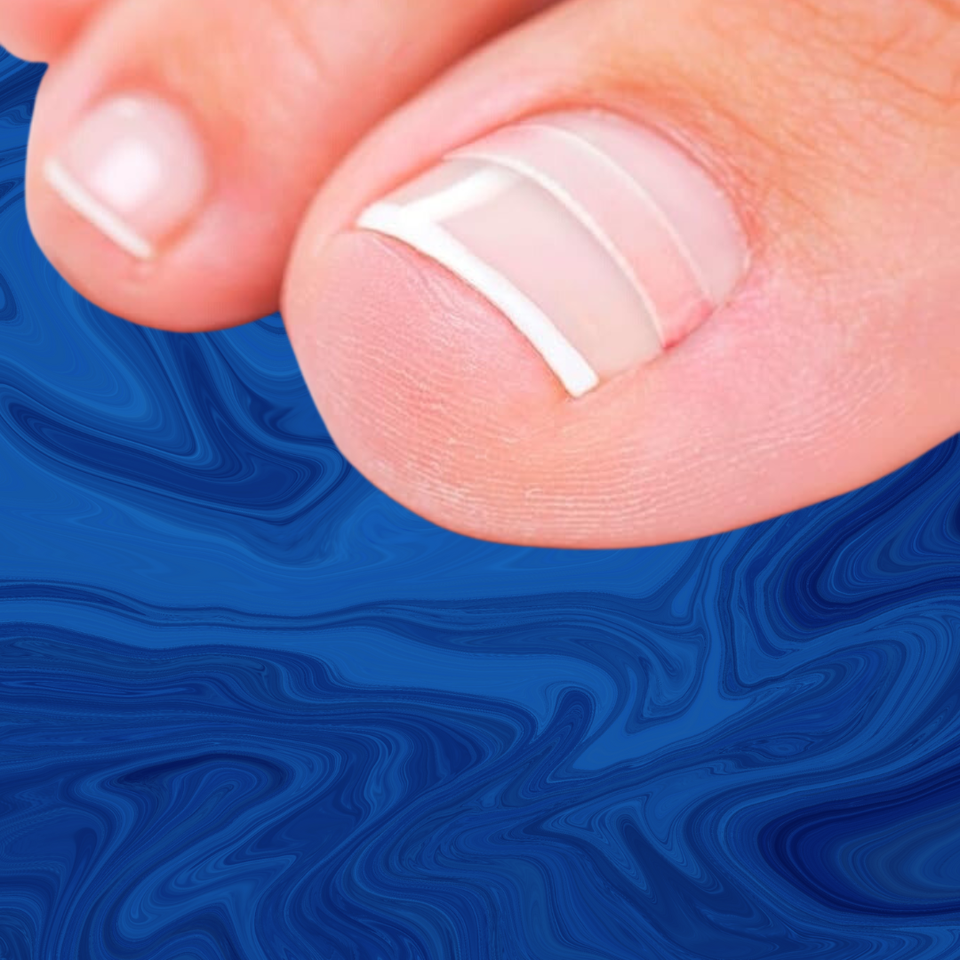
A Curve Correct ingrown toenail correction kit

Years of cramming your feet into tight footwear, whether dress shoes or heels, may mean you now deal with uncomfortable, painful ingrown toenails. But there is a treatment for those with chronic ingrowns: Curve Correct braces. They are meant to gradually straighten curved nails so they don’t hurt every time your toes accidentally brush them against the floor or inside footwear. Older reviewers echo this sentiment, calling it a “process…[that’s] so worth it.”

(Note: While you may feel mild discomfort when you first apply the brace, you should not feel any pain. If you do feel pain, immediately take the brace off and apply it later with less pressure.)

Share Button

The “Asian water tower” is losing 24 billion tonnes of groundwater every year

Groundwater reserves beneath High Mountain Asia (HMA), often called the “Asian Water Tower,” are shrinking at an alarming pace, according to a new satellite-based study. The region provides water that supports farming, cities, and ecosystems across more than a dozen downstream countries, making it a critical resource for hundreds of millions of people. Researchers estimate that groundwater storage is declining by about 24.2 billion tonnes each year.

The research was led by Prof. Shudong Wang of the Aerospace Information Research Institute of the Chinese Academy of Sciences (AIRCAS). The team sought to overcome two major obstacles to understanding groundwater in the region: limited on-the-ground data and the extremely complex mountainous landscape. The findings were recently published in Environmental Research Letters.

AI and Satellites Reveal Two Decades of Change

To build a clearer picture of what is happening underground, the researchers created an artificial intelligence (AI) powered assessment model that combines observations from multiple satellites, Earth system modeling, and explainable AI.

Using this approach, they reconstructed about 20 years of groundwater storage (GWS) changes across High Mountain Asia. The system also helped identify the main forces driving those changes and allowed the researchers to explore how groundwater risks could develop under future scenarios.

The results show that roughly two-thirds of HMA experienced declining groundwater storage between 2003 and 2020. The largest losses occurred in heavily populated downstream basins where irrigation demands are high, including the Ganges-Brahmaputra, Indus and Amu Darya basins. Some inland areas at higher elevations, however, experienced localized increases in groundwater storage.

Climate and Human Water Use Drive the Decline

Climate-related forces explain nearly half of the observed variation in GWS, with changes involving the cryosphere playing an especially important role.

At the same time, human withdrawals of groundwater have become an increasingly significant source of depletion, particularly in downstream agricultural regions that rely heavily on irrigation. The influence of human water use became even more pronounced after 2010.

Researchers also project that groundwater losses will continue if current patterns of water use remain in place. In some locations, increased glacier melt could temporarily reduce the pace of groundwater decline around the 2060s. But this “buffer effect” cannot continue indefinitely and is expected to be followed by faster losses.

If present water use patterns do not change, groundwater depletion could accelerate further, increasing the threat to agricultural areas downstream that depend on these reserves.

A New Way to Track Groundwater in Mountain Regions

For the analysis, the researchers used a framework guided by existing scientific knowledge while also drawing on large amounts of observational data. Information from multiple satellite sensors was used to estimate GWS changes over the past 20 years.

The framework incorporates a lightweight Transformer architecture designed to account for hydrological memory and delayed effects within mountainous catchments. The researchers also used explainable machine learning methods to determine the physical factors associated with the groundwater changes identified by the system.

To test the reliability of the results, the team compared its findings with thousands of measurements from groundwater wells as well as independent datasets. Those comparisons provided additional support for the study’s conclusions.

By combining remote sensing observations, established hydrological knowledge, and interpretable AI methods, the framework helps address long-standing difficulties in studying High Mountain Asia, including rugged terrain and incomplete information about human water use.

The research was funded by the National Key R&D Program of China and the Key Program of the National Natural Science Foundation of China (NSFC).

Share Button

Why are women going to London for abortions?

Kate Morgan explains why some Welsh women are travelling to London for abortions.

Share Button